
 ">
5 Viral Backpacking Tips That Suck — and 5 That Don’t
Stop listening to viral backpacking hacks.
There are a lot of backpacking tips you can find on the internet, and some of them suck, and some of them don’t suck. And I’m gonna give you five that do, and five that don’t.
Hi, I’m Jabba, the real hiking, biking, triple crowner, yada yada, I’ve done them all, okay?
So I’m the expert here. You’re gonna pay attention.
Tip That Sucks: “Embrace the Suck”
This does not help the person who is feeling down, feeling mentally drained, feeling physically spent.
Sometimes you gotta listen to your body and not just, quote unquote, “embrace the suck.” Sometimes you gotta embrace what your body’s telling you.
Machoism is too much. Let’s get away from it.
Look, there’s been a time or two where I have, quote unquote, “embraced the suck”. And oftentimes that just leads to further injuring myself. I’ve gotten really bad tendonitis. I’ve gotten stress fractures. I mean, the list goes on.
Every hiker who has pushed through serious pain will tell you that’s a recipe for disaster. And you might be having to embrace going home early if that’s the case.
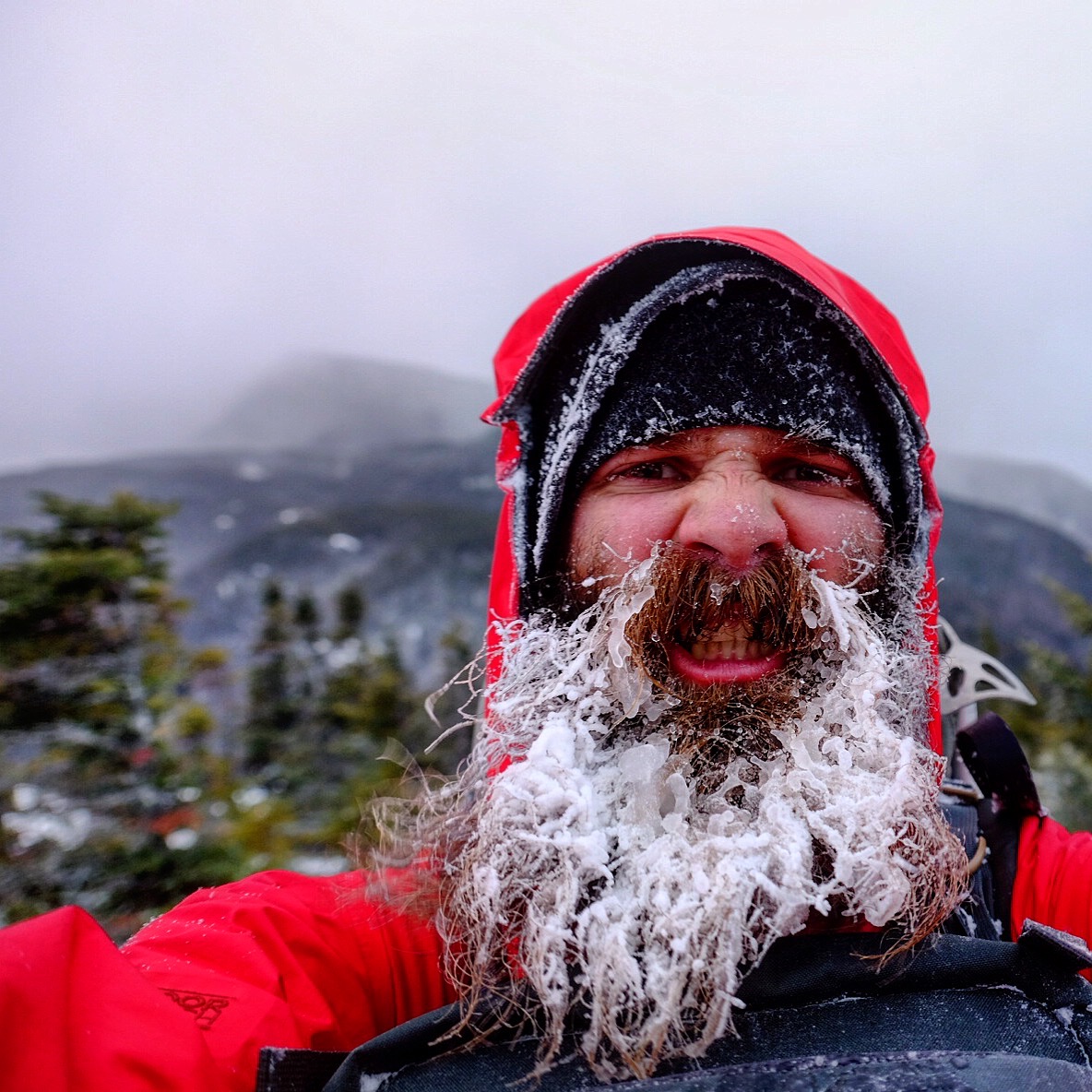
Photo via Jabba, The Real Hiking Viking.
Tip That Doesn’t Suck: Get Comfortable Being Uncomfortable
Most discomfort passes.
Your body is resilient. Your mind is resilient. So maybe come at it from a different direction.
Whether it’s getting off trail or slowing down or telling the friend group that you’re hiking with, “Maybe I shouldn’t be hiking at the pace that y’all are because I’m just not capable of keeping up with that pace to keep my body healthy.”
So don’t be a hero. Listen to your body.
Tip That Sucks: “Pack Your Fears”
What does packing your fears look like?
It looks like carrying too many electronics. It looks like carrying too much water. It looks like way too many clothes. It looks like carrying luxury items that you don’t use daily.
What you really need to do is go out on a hike — maybe a couple of days — and really look at what you’re using on a day-to-day basis.
Because once you’re out on trail, you’re probably gonna realize, “Oh, I don’t need half of this stuff,” and you’re gonna ship it home. If you can mitigate how much you’re bringing on trail, you can mitigate lots of disasters like pains, injuries, and getting off trail early due to those things.
On my very first thru-hike, I had a 65-liter pack that weighed probably over 55 pounds. And it wasn’t until midway through my second thru-hike, which was on the Continental Divide Trail, that I started realizing how much smarter it was to get rid of half the stuff that I had in my pack.
That would probably be the first piece of advice I would tell myself if I could go back to the Appalachian Trail that very first time: Get rid of half of this crap.
Tip That Doesn’t Suck: Learn First Aid and Self-Rescue
When packing a first aid kit, you don’t need to pack a first aid kit that’s good enough for 10 people. You’re talking about just yourself.
Every hiker needs to be self-sufficient and take care of themselves.
Whether it’s Leukotape, duct tape, athletic tape, some Neosporin, a bit of thread and needle — those things go a long way in the backcountry. Sometimes an Ace bandage is helpful. You need to treat your sprains. You need to treat your small injuries.
And what you really need to not be doing is relying on other hikers to help you out.
So it’s important to carry the skills and not just the gear so you can be self-sufficient.
Tip That Sucks: “Don’t Look at Elevation Profiles”
It’s important to know what your day is going to look like so you can properly plan it out. Going into a day blind is not helpful.
Some people say ignorance is bliss. I say ignorance is ignorant.
Knowledge helps you not only pace yourself, but manage your expectations.
All that to say: proper planning prevents piss-poor performance.
And speaking of pissing—

Photo via Jabba, The Real Hiking Viking.
Tip That Doesn’t Suck: Master Your Water Strategy
Just like with knowing your elevation profile, it can be smart to know when to hydrate and how much to hydrate.
Do you have water on your climb? How much water do you have to bring for the climb? Or can you wait and not carry a bunch of weight uphill?
Being strategic about your water helps you carry minimal water at times. And knowing where water is at the end of your day can help you know if you have to camp with water or if you’re going to camp at water.
Being strategic about your water directly affects your comfort, and it’s a skill you develop.
So plan ahead, don’t be ignorant, and your hike will be better for it.
Tip That Sucks: “Take a Zero Every Week”
So what is a zero? A zero means hiking no miles in a day — taking a full day off.
And this is a rule of thumb for a lot of people because it helps break up your week, but that doesn’t necessarily take into account what the actual trail is doing and what your body’s telling you.
Taking a zero every week is not practical, and it does not account for flexibility. You might have trail towns back to back. You might have four trail towns in a week.
You have to strategically decide what makes sense for you — not just given what you want to do, but also what your body’s telling you to do. If your body says, “Hey, I need another day to get my chores done.” Or, maybe it’s: “Hey, I need another day because the weather sucks.” Or: “Hey, if the weather is gonna be snowing on this mountaintop in two days, maybe I should wait and let that weather pass through so I’m not as miserable on trail.”
Sometimes taking an unplanned zero can make all the difference in the world.

Photo via Jabba, The Real Hiking Viking.
Tip That Doesn’t Suck: Build in Flexibility
Don’t over-plan every single aspect of your hike. Hiking should be flexible.
You can’t account for weather. You can’t account for injuries. You can’t account for side quests that might be really, really fun. I can’t tell you how many times I came across spontaneous trail magic that wasn’t part of my daily plan, but I stayed there anyways. And those are some of my most fun times on trail.
The butterfly effect of being rigid has far-reaching consequences to the amount of fun you could possibly have on your hike. So make your own decisions in the moment and adapt… or suffer.
Tip That Sucks: “Only Eat Ultralight Foods”
What does only eating ultralight foods look like?
You start talking about counting grams, counting calories per ounce, dehydrating your own meals.
And I’m not saying you can’t do that and have fun, but it’s gonna be very time intensive. It’s gonna take up a lot of your brain power to obsess over some of these statistics within your food. And largely, it doesn’t even taste that good.
The obsession with dehydrated meals and bars means you’re eating expensive and joyless food on end for months, when the reality is food is fuel and morale.
Ultimately, the obsession with dehydrated meals and bars just kind of sucks the joy out of your life on trail. And honestly, sometimes I just want to pack out a meatball sub when I’m leaving town. That’s what I want.
I don’t want to eat a dehydrated this and a pemmican that.

Photo via Jabba, The Real Hiking Viking.
Tip That Doesn’t Suck: Dial In Your Trail Food Before You Start
Test your food at home and know what you can stomach day after day.
Because if you don’t like eating something at home, you are not gonna enjoy eating it out on trail. Like for me, I’m done with Clif Bars.
Having food you genuinely enjoy makes all the difference in the world. Don’t wait until day 30 to find out you can’t stomach another protein bar.
I’ve done the packing of resupply boxes that had all the nutritious food, covered every food group — bars, meat, potatoes, whatever. And oftentimes by the fourth, fifth, or sixth resupply box, I’m looking to swap or even just give away my food and go right to the grocery store for the things that I’m craving.
Don’t pack for the thru-hiker you think you’re gonna be. Just pack for the thru-hiker that you are.
Tell Me I’m Wrong.
All right, thanks for sticking with me for the things that do suck and the things that don’t suck when it comes to tips on the trail.
What do you think? You agree? Disagree? You got some other ones that you like more than others? Let us know.
Please make sure you like and subscribe to The Trek.
My name’s Jabba, and I’m the Real Hiking Viking.
The above is a transcription. Minor edits have been made for clarity and readability, while preserving the original message and intent. This video is part of a new series on The Trek’s YouTube. Be sure to check out the full video and subscribe to our YouTube channel.

This website contains affiliate links, which means The Trek may receive a percentage of any product or service you purchase using the links in the articles or advertisements. The buyer pays the same price as they would otherwise, and your purchase helps to support The Trek's ongoing goal to serve you quality backpacking advice and information. Thanks for your support!
To learn more, please visit the About This Site page.

Comments 2
I’ve been backpacking since ‘72, and I have never eaten a commercial packaged meal. Too expensive and usually tastes like garbage. I have, upon occasion, grabbed something from a restaurant and taken it with me. Almost all (better than 99%) of my meals come from leftovers I have dehydrated at home. It’s not that hard, you just cook more than you need, dehydrate, vacuum package, and freeze until needed.
I’m the opposite. I’ve done around 3,000 days in the hills and generally take commercially freeze-dried meals to keep my pack weight down if it’s an issue e.g. hiking with a group who are fitter (and younger) or on a multi-day trip. I do dehydrate my own meals occasionally for overnighters if it’s just me and my partner and we can travel at a leisurely pace (for us). Here in New Zealand, the Real Meals brand is consistently rated as the best available. It’s a bit pricier than other brands but I pad out a single meal with my own dehy vegetables and some more carbs for the 2 of us. I’ve heard people mentioning that some of the brands can cause digestive issues and when I finally asked someone to specify what they were, the answer was ‘flatulence’. That would be from the dehydrated onions I suppose…