
 ">


6 Weird “Real Life” Details Only Thru-Hikers Notice
Thru-hiking gives you a fresh perspective on life. It gets you out of your routine and forces you to look at things a little differently. Many hikers describe the trail changing their views on consumerism, work-life balance, spirituality, and other Big Things.
For me, thru-hiking did shift my perspective in several fundamental ways — but it also made me more attuned to a myriad of tiny, trivial details of “normal” life that I had never noticed before. Here are a few examples.
1. Perfume Smells

Photo: Carlie Gentry
Nothing like spending 95% of your time breathing in a heady mixture of pristine mountain air and suffocating body odor to make the smell of perfumed beauty products seem like a frontal assault on your nostrils.
Thru-hikers often remark in hushed tones on the many overwhelming aromas emitted by passing day hikers — sunscreens, soaps, dryer sheets, etc. — which seem to linger in the air for several minutes after the source has trekked past.
Backpackers tend to avoid heavily perfumed products as much as possible because they might attract bears. In any case, if you’re going 3-7 days at a time between showers, there’s not much point in using fragrances to try to improve your personal aroma.
As a result, whenever we do encounter “town smells,” the result is sensory overload. Even walking down the cleaning-supply aisle at the grocery store during resupply becomes an olfactory nightmare.
Don’t get me wrong. No one’s arguing that thru-hiker smells are in any way superior to, say, Axe Body Spray. It’s just that perfumed products hit different after you’ve spent a decent amount of time away from that sort of thing.
2. Town Water

Nothing can compare to this flavor. Photo: Brian Garner
Hey, I’m all for water treatment. Water treatment improves health outcomes and is the reason I can drink water straight from my tap without having to filter it first.
But I have to admit, after drinking nothing but clean spring water straight from the source for even just a few days, the taste of chlorine in the tap water on town days can be overwhelming, almost like slurping directly from a swimming pool.
Some municipalities chlorinate their water more heavily than others, and other factors like water hardness can also impact taste. But when I’m spending most of my time frontcountry, the flavor is rarely noticeable.
Not so when I’m backpacking. I sometimes struggle to stay hydrated on town days simply because the taste is so unpleasant compared to the water I filter from stream crossings while hiking.
Side note: My AT privilege is probably showing here. Any desert thru-hiker who reads this after having filtered water from a fuzzy green cow tank will probably be rolling their eyes right about now.
3. The Existence of Power Outlets

Photo: Alexander Brown
When thru-hiking, one must take every possible opportunity to charge. My eyes are already scanning the bottom third of the wall as I walk up to the grocery store, searching for a vacant outlet half-concealed behind the vending machines.
Eating in a restaurant? If there are enough tables available that it’s not obnoxious to ask, I always request a table with an outlet nearby.
I carry a battery bank, but if I have a chance to top up my electronics from the grid, I’ll always take it. Better to err on the side of caution. Even to this day, I can’t walk into a Food Lion without mentally cataloging all the sockets near the entrance of the store.
4. Every Vaguely White, Vaguely Rectangular Thing (AT Hikers Know What I Mean)

These kind of scene will make you an expert in spotting white rectangles everywhere. Photo: Peg Leg
Do you have any idea how many white rectangles the average person encounters in a day? No? Go hike the AT and then take a walk through your hometown. Suddenly you’ll find yourself noticing random white signs, paint swatches, and suspiciously boxy lichen patches all over the place.
The AT will develop your backcountry abilities, mental toughness, and physical fitness. But there is no other skill that the trail trains quite like the skill of spotting white blazes.
Spend a few weeks navigating through a snowy forest on a trail marked almost exclusively with white paint and then try not to notice white rectangles everywhere you go for the next eight months.
After 2,200 miles on the AT, your brain will be in pattern recognition overdrive, and everything vaguely white and vaguely orthogonal will look like a blaze to you.
5. “That Looks Like It Would Be a Good Campsite”
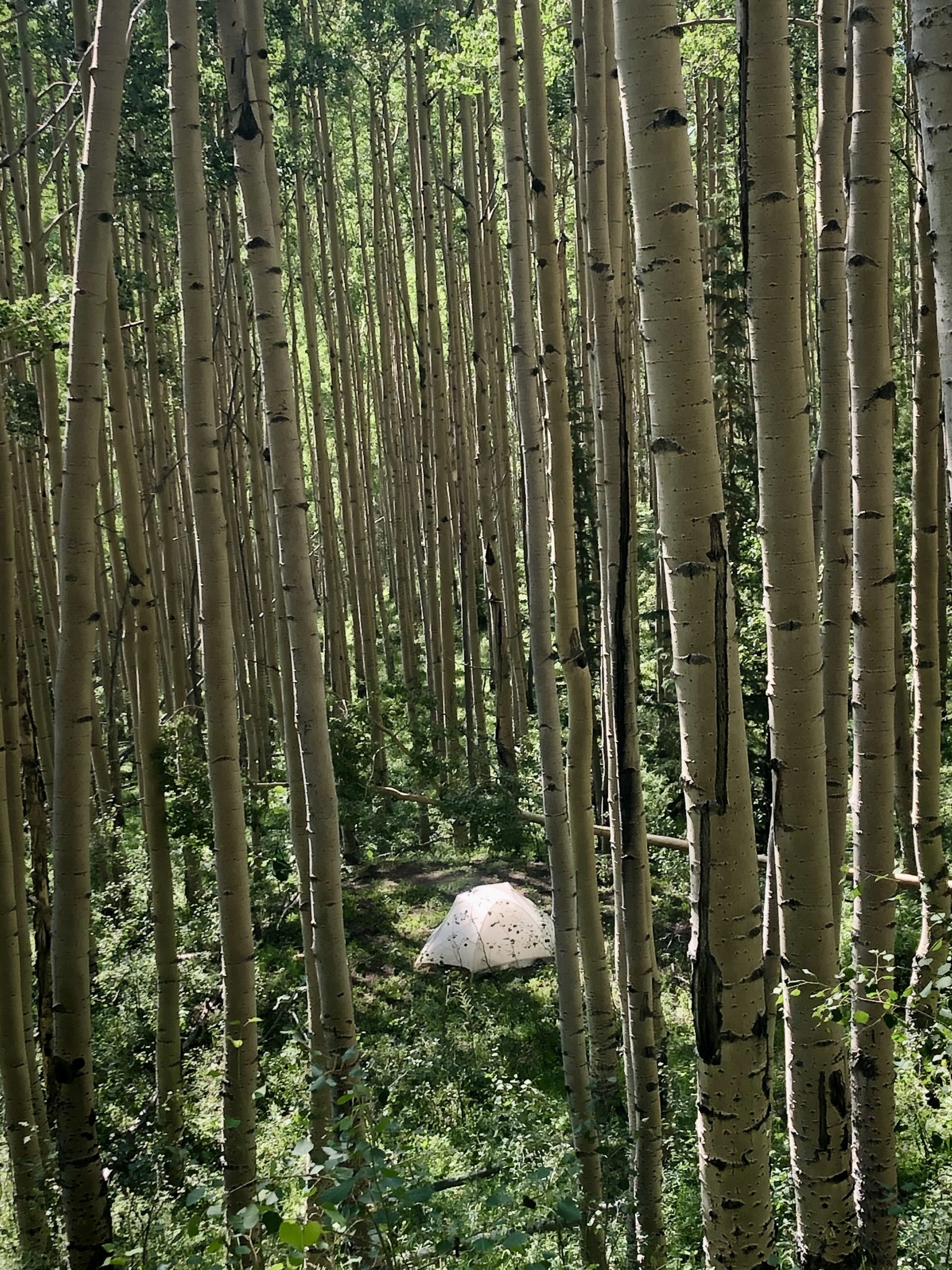
For someone who allegedly loves hiking so much, I pass an awful lot of miles anticipating how great it will feel when I can finally make camp, and my mind occupies itself throughout the day by cataloging all the flat, vegetation-free spots I could potentially pitch a tent on (even if I know I’ll still be hiking for hours).
Much like with the white blaze thing above, once you’ve spent a certain amount of time scanning the surrounding terrain with desperate acuity in search of a flat patch of earth on which to camp, your brain’s pattern recognition superpowers take over and suddenly every flat surface stands out to you as though it had a spotlight trained on it.
I often notice amazing “campsites” while out on day hikes, in city parks, and occasionally in friends’ backyards.
Since we’re on the subject, consider this your friendly reminder to always sleep on durable surfaces and in established campsites, y’all.
6. Trail Couches
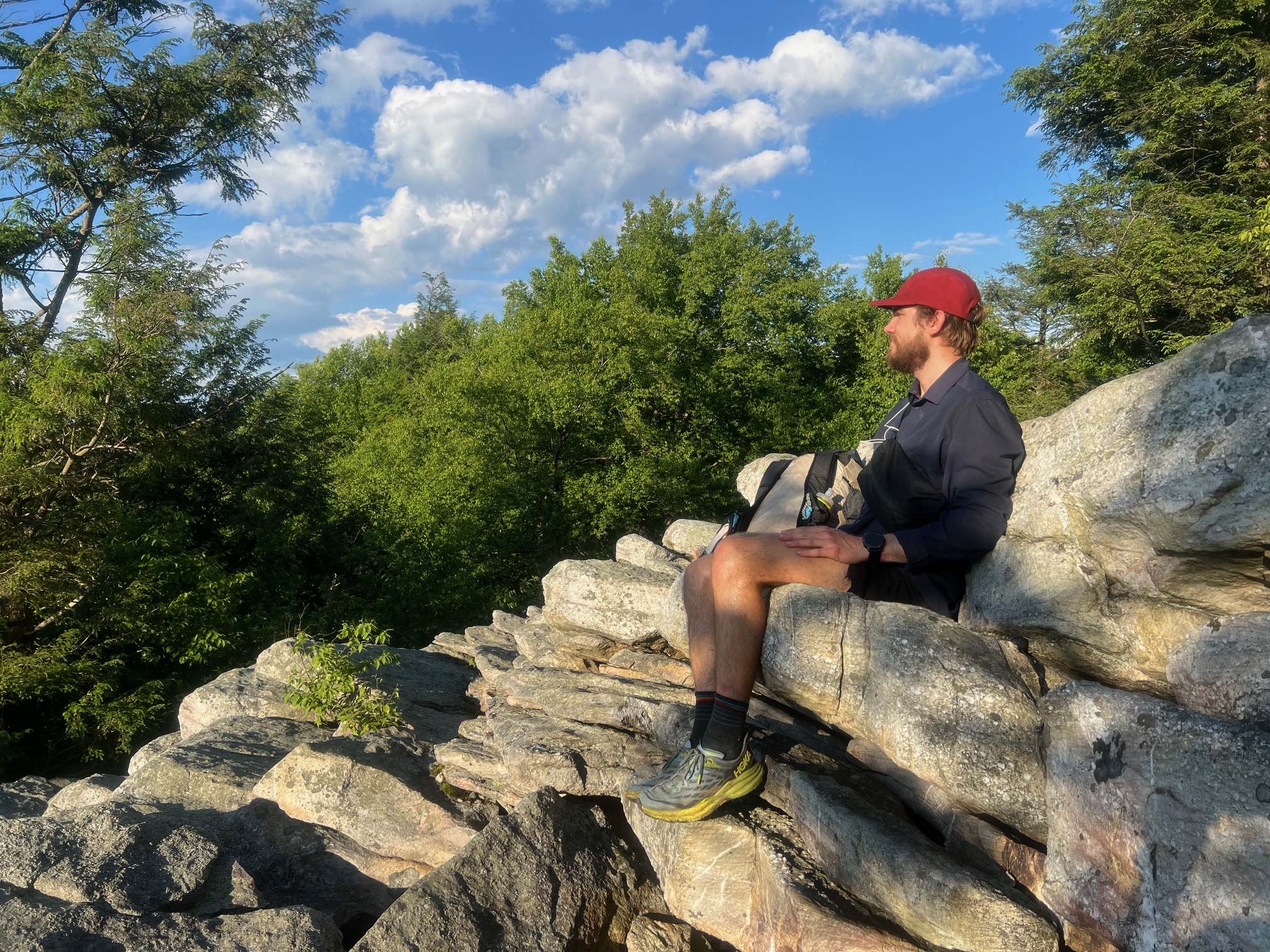
Ahhhhhh. Photo: Mika Byar
Comfortable seating is not a feature most hiking trails are known for. As a result, backpackers become freakishly attuned to the various kind-of smooth rocks and “pretty dry” logs that can serve as makeshift seating arrangements alongside the trail.
My friend Sally Forth used to call them trail couches — and every once in a great while, you’ll find a big rock that’s so comfy, so perfectly ergonomic that it should be illegal. Once you’ve experienced your first really primo rock-sitting experience, there’s no going back, and you’ll be searching everywhere for that next special trail couch.
Thru-hiking changes your perspective in many ways, and I don’t mean to neglect the bigger stuff. Of course, spending an extended period of time in the mountains on a thru-hike will probably also make you more attuned to deeper things like your own thoughts and feelings, the rhythms of the natural world, and the special synchronicity we often describe as “trail magic.”
What are some details you never noticed before thru-hiking but now can’t unsee?
Featured image: Graphic design by Zack Goldmann.

This website contains affiliate links, which means The Trek may receive a percentage of any product or service you purchase using the links in the articles or advertisements. The buyer pays the same price as they would otherwise, and your purchase helps to support The Trek's ongoing goal to serve you quality backpacking advice and information. Thanks for your support!
To learn more, please visit the About This Site page.

Comments 7
Along with ‘I could camp there’, I also play ‘I could drink/not drink that’ at any outdoor water source. Great article!
I came here to say this – I’ve been pointing out good watersources for a decade now.
These are on point! Our family refers to the day hikers as “walking air fresheners” from the detergent and perfume smells!
It’s also easier for thru hikers to notice the change in weather. Or winds picking up, sudden drops in temperature, clouds rolling in unexpectedly, etc! We’re more in tune with nature!
Perfume smells terrible !!!
suspiciously boxy lichen patches gets me on those foggy days , nice to know its not just me
trail couches , nice ! In non sensitive areas and camp site , i will Make stone seats for sunset
I would add- Seeing any stream, creek or other water feature, when off trail and thinking… “that would be a good (or bad) water source.”
The BeFree bladder and leaf photo is by Emily Rahn not Brian Garner. I put that photo in a blog article, plus I recognize my hand and arm.
The best resting spots on the trail are the ones where you can rest your pack on something behind you in a way that it takes the weight off your shoulders without having to take off the pack.