
 ">
7 Facts About the History of the Appalachian Trail You Probably Didn’t Know
Did you know the Appalachian Trail Conservancy turns 100 this year? In celebration of this historic milestone, I’ve compiled a list of often-unknown facts about the AT, ranging from the history of its construction to the misconceptions surrounding Grandma Gatewood.
1) The ideas for both America’s first long-distance hiking trail and America’s longest footpath were conceived on the exact same mountain.
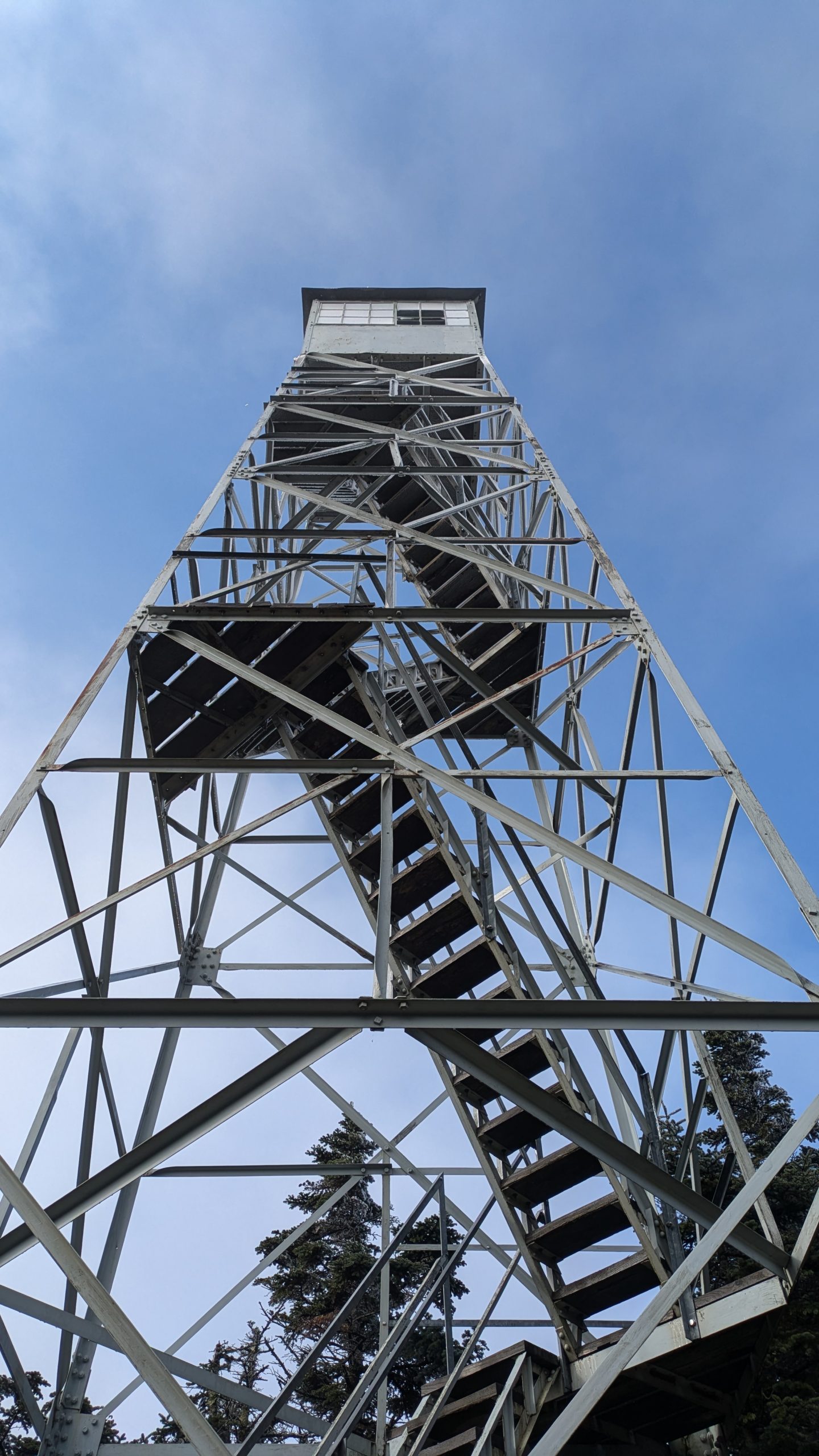
In 1900, a man by the name of Benton MacKaye bushwhacked to the summit of Stratton Mountain in Vermont with a buddy. Finding no view at the top, MacKaye climbed a tree until he got one – and thankfully he did, because what he saw sparked the idea for the Appalachian Trail. “Would a footpath someday reach from where I was then perched?” Benton wondered from his spot in the trees.
Nine years later, James Taylor was sitting in his tent on the side of Stratton Mountain, waiting out the rain, when he too had an idea. What if a trail was created that ran along the spine of the Green Mountains and spanned the entire length of Vermont, from the Canadian border to Massachusetts? Such a trail would drive traffic to Vermont and cause them to fall in love with the mountains and the state.
Of the two men, Taylor was far quicker to act on his idea: by the following year, he had rallied a crew of 23 people to form the Green Mountain Crew and had started cutting what would become the Long Trail. In contrast, it was 21 years before MacKaye published “An Appalachian Trail: A Project in Regional Planning” and a few more years before work on the trail began. Fittingly, the two trails share about 100 miles of the same tread – including, of course, the summit of Stratton Mountain.
2) MacKaye’s original primary intent for the AT was not to be a hiking trail.
The picture Benton MacKaye paints in his 1921 article is not just of a trail stretching along the Appalachian Mountain Range, but of “a project to develop the opportunities—for recreation, recuperation, and employment—in the region of the Appalachian skyline.” His view of the trail as just a means to an end is evidenced by the vocabulary he uses: the word “walk” appears only three times in the eight-page document, and the word “hike” not at all.
Benton lays out four stages to his project: first the trail, second shelter camps, third community camps, and fourth food and farm camps. The first two stages largely came to fruition, but that’s about where the dream stopped and reality began. For the third and fourth stage, MacKaye had envisioned carefully-planned nature-focused communities that “would grow naturally out of the shelter camps,” followed by farms that would spring up to feed the community camps. While the ATC does designate and recognize various towns as trail communities or trail towns today, they’re still in pretty sharp contrast with MacKaye’s strict dictation that “each camp should be a self-owning community and not a real estate venture.”
3) The Northern and Southern Termini were originally planned for different locations – and Springer wasn’t the original Southern Terminus built.
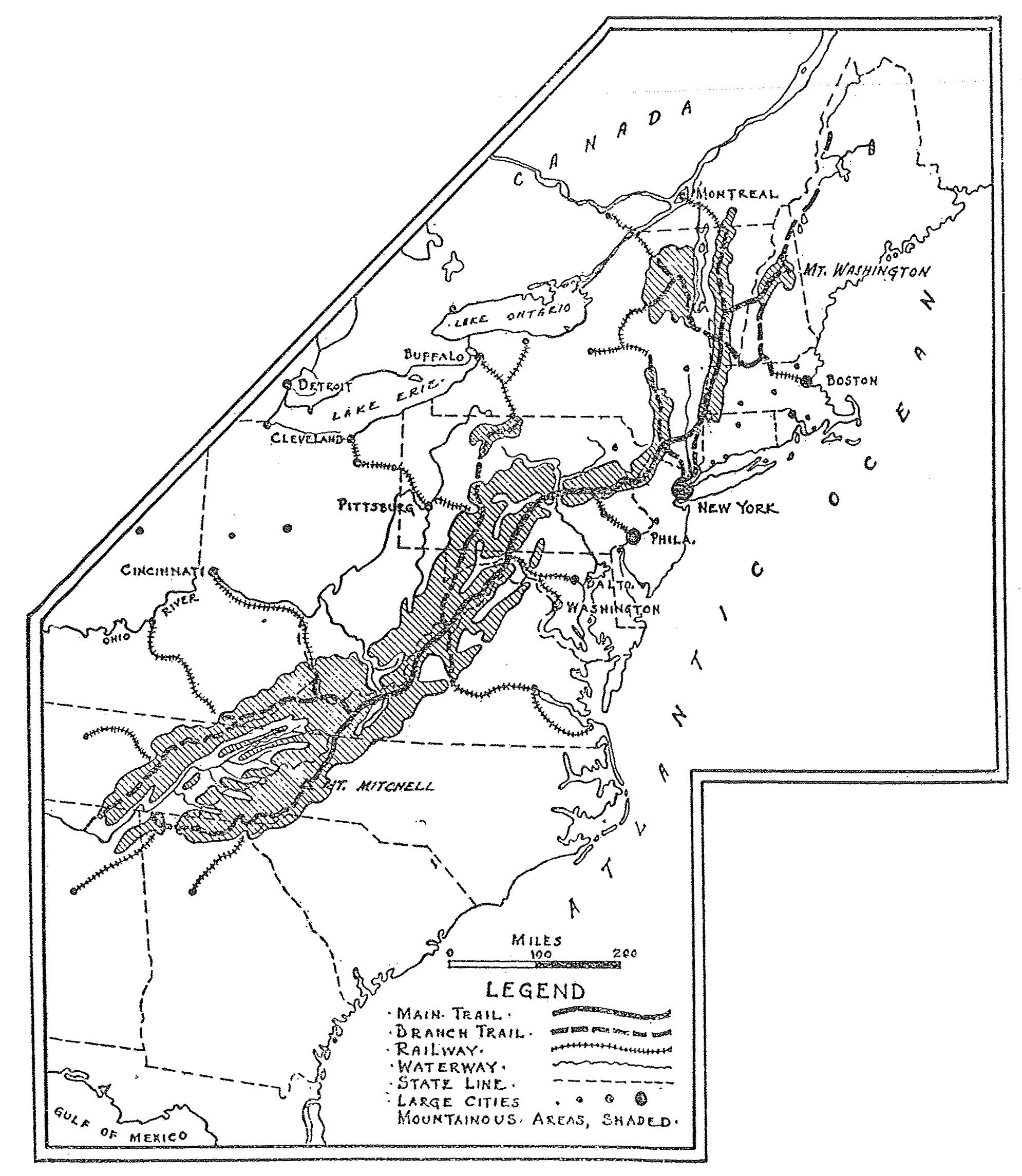
In MacKaye’s 1921 article, he suggests that the Northern Terminus of his proposed trail be located at Mount Washington and the Southern Terminus at Mount Mitchell. The reasoning? Washington is the highest peak in the Northern Appalachian range, and Mitchell the highest peak in the Southern Appalachian range. In the hands of the volunteers, however, this goal soon changed. The phrase “Maine to Georgia” – attributed to Major William Welch, one of the founders of the Appalachian Trail Conference – quickly replaced the original plan.
Personally, I’m glad they did – on top of the amazing trail in Maine and Georgia, “New Hampshire to North Carolina” is just far too clunky!
While Katahdin was a rather obvious choice for the Northern Terminus in Maine due to its storied history and prominence, Georgia didn’t really have a singular standout mountain to offer. As a result, a list of suggested peaks began to grow. Once it was decided that the trail was to be routed through the Smoky Mountains, most of those with opinions fell into one of two camps: Mount Cohutta and Mount Oglethorpe.
The owner of Oglethorpe quickly saw an opportunity to drive traffic to the resort he was building near the summit and began “politickin” to get the Southern Terminus there, going so far as to blaze the trail there before the ATC made it official.
Twenty years in, however, the hiker experience on Oglethorpe was significantly lacking: nearby chicken farms filled the air with an unpleasant aroma, and a road leading directly to the summit meant that it was frequently crowded and suffering from vandalism and graffiti. Private ownership of the land also meant that development was increasing in the area, which was at odds with the design for “a footpath for those who seek fellowship with the wilderness.”
The search for a suitable Southern Terminus was resumed and, this time, Springer Mountain was settled on: it was publicly owned, had no road directly to the summit, and it was already an existing point on the trail, meaning no new trail needed to be constructed. In 1958, it was made official: Springer was the new Southern Terminus of the Appalachian Trail.
4) The very first section of the trail was built at Bear Mountain, NY in 1923.
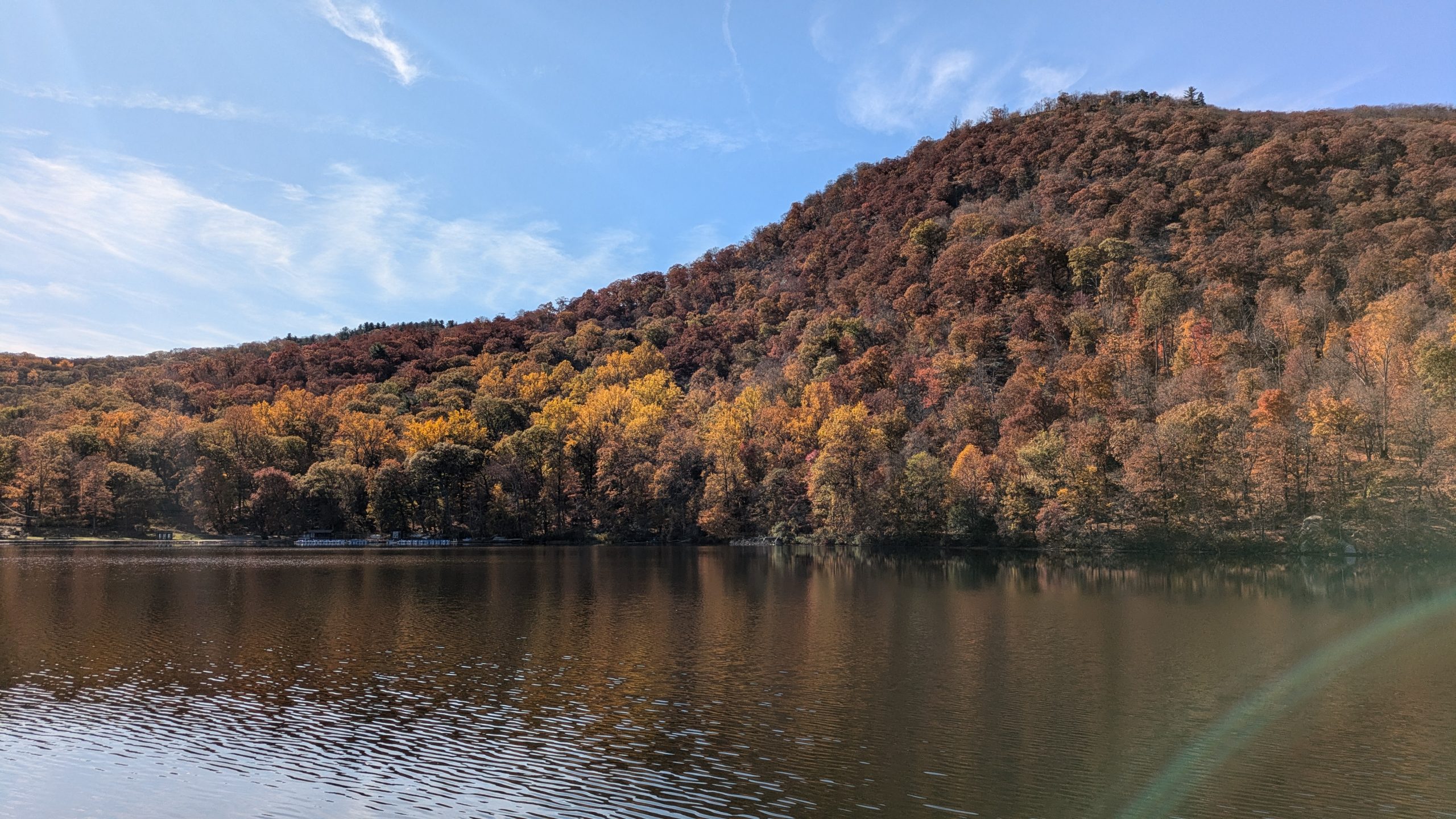
Though New England may be the birthplace of the idea for the Appalachian Trail, the mid-Atlantic region is home to the actual creation of the trail. It may seem ironic that the country’s most populated region generated one of the most iconic images of wilderness, but MacKaye’s vision of an escape from urban life really resonated with New Yorkers. One of these people was a man named Raymond Torrey, who would prove indispensable in jumpstarting the AT.
Torrey was a journalist based out of New York, known for his column on hiking, called “The Long Brown Path,” in the New York Post. The column came on the scene in the late 1910s, when interest in hiking in the NYC area was increasing and hiking clubs were popping up, and the column quickly claimed traction.
When MacKaye was looking to drum up interest in the creation of the trail after his 1921 article was published, Torrey was one of many people MacKaye contacted. On March 21, 1922, MacKaye met with Torrey to share his ideas. Torrey quickly caught MacKaye’s vision and called a meeting on April 6 with several other influential New York outdoorsmen. It was at this meeting that Torrey suggested the development of a New York-New Jersey Trail Conference.
Get the best from The Trek, directly to your inbox
The very next day, Torrey’s column ran with the title “Outings ~~~ A Great Trail from Maine to Georgia,” broadcasting MacKaye’s vision to the wider public for the first time. Torrey didn’t stop there, however – he became a founding member of what would become the New York-New Jersey Trail Conference, which quickly took on the task of creating the AT in their region as one of their primary projects.
Sometime early in 1923, a small group of individuals, gathered and organized by Torrey, gathered near the base of Bear Mountain with mattocks, Pulaskis, and shovels to break ground on the Appalachian Trail. By that October, a trail to the summit had been blazed. The 20+ mile Ramapo-Dunderberg Trail, connecting Bear Mountain State Park to Harrison State Park, was recognized as the very first section of the Appalachian Trail.
Torrey’s efforts are further notable for establishing a precedent of using volunteer labor and calling attention to the need for a larger governing body for the Appalachian Trail: enter the Appalachian Trail Conservancy.
5) The two “founding fathers” of the AT did not get along.

Benton MacKaye and Myron Avery’s relationships to the trail can be described most succinctly as “The Dreamer” and “The Doer”, respectively. Despite the fact that the trail likely would not have been created without either one of them, their differing philosophies and expectations for the trail ultimately drove a schism between them that was never bridged.
I’ve talked a lot about MacKaye so far in this article, but have yet to introduce Avery. He came on the scene with his friend Judge Arthur Perkins after the 1925 first convention of the Appalachian Trail Conference. It was a time when the ATC was appearing to lose steam and was lacking a figurehead – a role that Perkins was very eager to fill, and soon did. Perkins’ health quickly began to fail, however, leading him to ask Avery to take over his role as chairman of the ATC in 1930.
In a gobsmacking 7 years, Avery drove the Appalachian Trail from a rather fledgling state to effective completion – an absolutely incredible feat. Such was his determinedness to see the trail complete, however, that he ended up bulldozing several other supporters of the trail. One such person was Benton MacKaye himself.
As touched on before, MacKaye’s vision for the trail was a grandiose, philosophical, even utopian one, whereas Avery’s vision for the trail was just that: a 2,000 mile hiking trail. This contrast became a point of contention and came to a head most publicly in the U.S. government’s proposed construction of Skyline Drive over top of the existing trail through Shenandoah. MacKaye was furious at the thought of development usurping the wilderness experience he had been proselytizing for so many years now, whereas Avery wasn’t willing to sacrifice progress on the trail, as he needed government assistance via the CCC to complete the trail in Maine, for an ideal.
Multiple heated letters were exchanged between the two before they finally broke off communication altogether. The two founding fathers never exchanged communication again that we know of, and MacKaye stepped away from all his dealings with the Appalachian Trail, only to return after Avery died.
Sources: https://appalachiantrail.org/wp-content/uploads/2020/02/Trail_Years.pdf
6) The Civilian Conservation Corps played a big role in the completion of the trail.
When Myron Avery assumed control of the ATC in 1930, the nation was in the throes of the Great Depression. This would have snuffed out many a fledgling organization, but in the case of the ATC, it ultimately helped catapult the trail to completion.
FDR’s creation of the Civilian Conservation Corps in 1933 to put unemployed young men to work on projects on public lands meant that free labor was suddenly available to the ATC in National Parks and Forests. As a result, most of the trail, shelters, and waysides through Shenandoah and Smoky Mountains National Parks were constructed by the CCC. The CCC also constructed other iconic structures near the southern terminus, such as the building that houses Mountain Crossings at Neels Gap and the Blood Mountain Shelter.
While this was all great for the ATC, where it really needed the most assistance constructing trail was Maine. Here an obstacle arose: 90-95% of the land set aside in Maine for the trail was privately owned, and the CCC wasn’t authorized to work on private land. The one exception was for work that was “in the public interest,” and you better believe the ever-resourceful Myron Avery leveraged the trail’s potential for fighting forest fires to meet this exception.
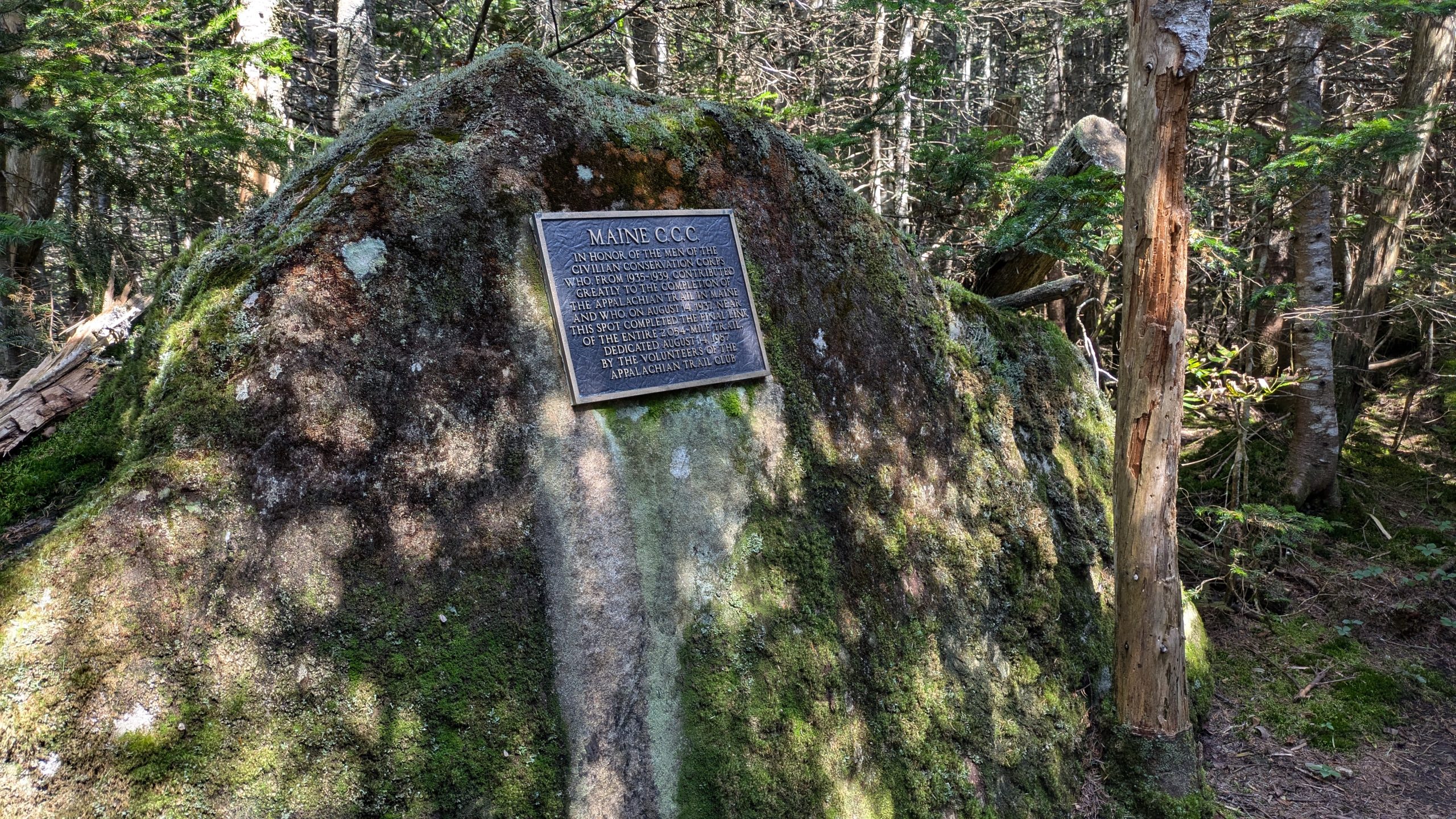
On top of constructing most of the trail in Maine, the CCC even got the honor of constructing the very last original section of the Appalachian Trail. On August 14, 1937, the final two miles, stretching between Sugarloaf and Spalding Mountains, were completed. Katahdin and Oglethorpe, Maine to Georgia, were officially linked by 2000 miles of trail. Today a plaque (pictured above) marks the location.
7) Earl Shaffer and Emma “Grandma” Gatewood were not the first man and woman, respectively, to hike the whole trail.

Earl Shaffer is a rightfully legendary name in the thru-hiking and AT communities, but the title of first person to hike the entire trail actually belongs to an already otherwise legendary person: Myron Avery. The ATC recognizes Avery as becoming the very first 2000-miler in 1936, just six years after Avery assumed control of the ATC.
In contrast, Shaffer was the first to complete the Appalachian Trail in a single year, which, outside of being incredibly impressive, catapulted the trail to national fame and kicked off a tradition of thru-hiking; however, without Avery’s personal physical completion of the trail, Shaffer might never have been able to lay claim to his title 12 years later.
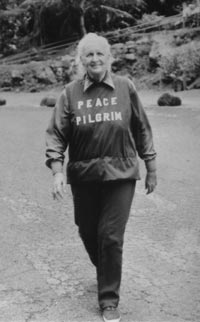
Similarly, the idea that Emma “Grandma” Gatewood was the first woman to thru-hike the AT has been engrained in our minds, and even Google’s search results. Dig a little deeper, however, and you’ll find an important distinction: Gatewood was the first woman to thru-hike alone. The actual title of first woman thru-hiker belongs to Mildred Norman, better known as “Peace Pilgrim.”
She thru-hiked with her friend Richard Lamb in 1952, four years after Shaffer and three years before Gatewood; Norman and Lamb also made history on the same hike by becoming the first AT flip-floppers. Peace Pilgrim’s thru-hike was only the beginning of a lifetime of walking: she would go on to complete six cross-country journeys and died while walking a seventh time, carrying a message of peace with her wherever she went.
Of course, neither Peace Pilgrim nor Myron Avery diminish the stories or importance of Shaffer or Gatewood: both of the latter would go on to complete the AT an astonishing three times – Gatewood being the first person ever to do so – in spite of immense personal trauma they both separately experienced.
What are some of your favorite historical facts about the Appalachian Trail?
Let me know in the comments below!

This website contains affiliate links, which means The Trek may receive a percentage of any product or service you purchase using the links in the articles or advertisements. The buyer pays the same price as they would otherwise, and your purchase helps to support The Trek's ongoing goal to serve you quality backpacking advice and information. Thanks for your support!
To learn more, please visit the About This Site page.
