
 ">

Appalachian Trail Recap: Zero to Hero Pt. 1
Hurricane Helene was always going to be part of my thru-hike. The question was, what would my part be in the recovery?
EDIT: See the bottom of this article for an update from Rebuild Hot Springs Area!
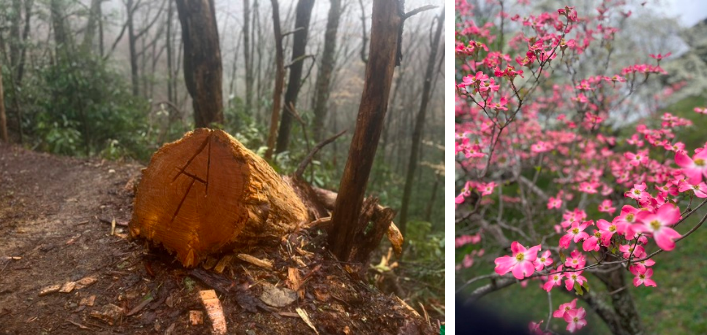
For every downed tree, there were dogwoods starting to bloom
When I first heard the news that Hurricane Helene had made landfall over my beloved Blue Ridge Mountains, I was several thousand miles away on a farm in Montana. What set in was more than one type of survivor’s guilt: I was from the coast of North Carolina. A storm of that force would have caused severe damage to my hometown as well, but we could handle it. We had the infrastructure, the experience, and the acknowledgement that these kinds of weather events were the cost of living on the beach. But this place, previously deemed a “climate haven,” was now a harbinger– a reminder that nowhere is safe from the impacts of climate change.
Another type of guilt and grief cocktail stirred within me as well: why wasn’t I there? I knew I wasn’t the world’s gift to Appalachia, so what difference could one person possibly make? The instinct to help is what makes us human, but it’s crucial to balance that impetus with the actual needs of the affected communities. How could I show up authentically for them?
As was the case with many prospective class of 2025 A.T. thru-hikers, my mind instantly turned to images of Helene from the Trail. What did it look like? Would the legendary trail towns of North Carolina, Tennessee, and southwest Virginia be ready for us? In that clouded period when no one had any real answers, I realized what my role would be in the storm rebuilding efforts. I knew that my own little part would best be served not as a mere passerby, but as an Appalachian Trail thru-hiker making a very special detour.
After 200+ miles of wondering and waiting, we exited the Smokies with our sights set on Hot Springs, NC. It holds a special place in many northbound (NOBO) thru-hikers’ hearts as the first town they pass directly through. But what would it hold for us now, only five months after the storm?
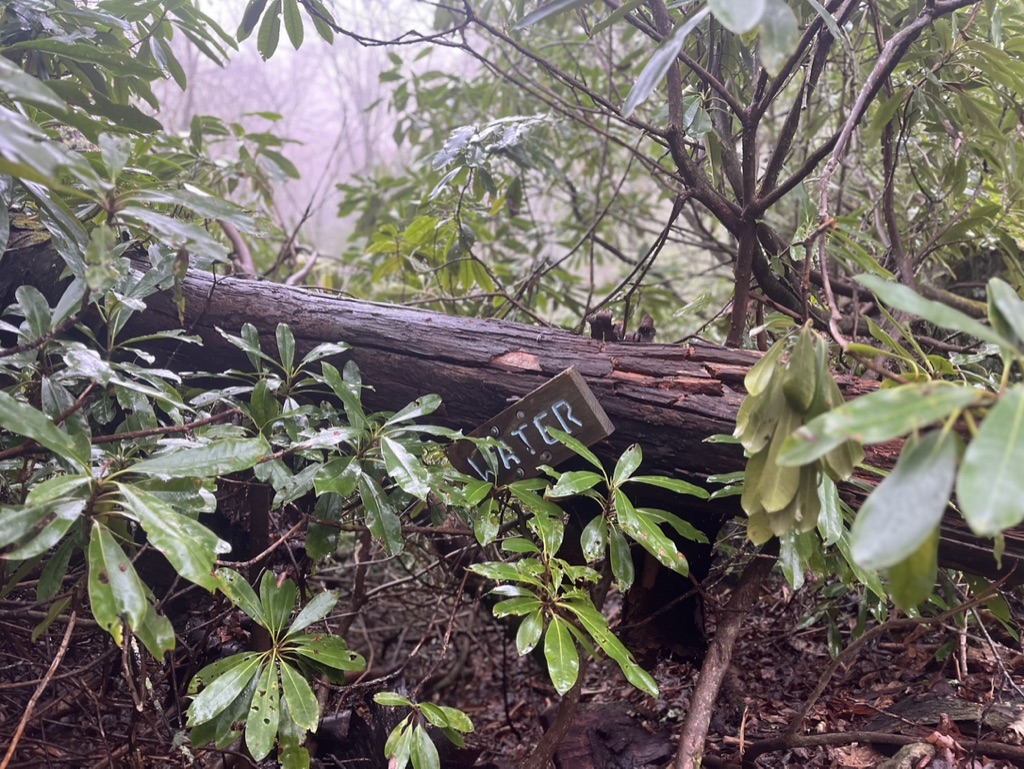
Hikers and trail towns were united in their gratitude for water filters clean drinking water.
Gifts Among the Grief
The Trail gave us magnificent pause amidst mounting anxieties. We entered Pisgah National Forest: a place that holds so much of my heart and, in some places, lost catastrophic amounts of tree cover. Pisgah welcomed us in its classic fashion: lightning preceded hail, which preceded a otherworldly sunset. “Pisgah in springtime, baby!” I called out to my friends as we weathered the sudden tempest. In all its chaotic glory, I was home.
The next morning on our clouded trip up to Max Patch, I found one of the treasures I had been most looking forward to on Trail. Ramps season was upon us! Before I left for the Trail, my friend and chosen family Allison had tattooed this forageable garlicky delight on my forearm. We had both called Appalachia home before our recent relocation to Chicago; and while the two places might seem to be polar opposites, ramps united them. After all, the name “Chicago” derives from the Miami-Illinois word “šikaakwa:” the indigenous name for these wild onions that once grew prominently around the Chicago River’s banks and continue to populate the wild areas outside the city. In short, ramps represent home. I couldn’t help but feel like the Trail was providing these delicacies as a token of good faith. “Just keep going,” it would say. “There’s hard times ahead, but there’s beauties too.”

Showing my ramps tattoo their real life counterparts for the first time
Reunions and Rebuilding
Our walk into Hot Springs brought cause for more celebration: it was our first 20-mile day! Were we… getting the hang of this? On the other side, we were met with the most glorious, massive cinnamon buns at the Smoky Mountain Diner. It was one of two restaurants operating in town at the time, but the lively spirit inside emphasized everyone’s gratitude. This was especially true when a class of 1977 thru-hiker picked up our tab. He thanked us for being there. We thanked him for being there too.

A cinnamon bun the size of your face is as good a “welcome back to your favorite place in the world” gift as any
Post-breakfast, I split from most of my tramily and waited to reunite with my friend Sarina, a.k.a. “Flavortown.” I had bestowed that name upon them as we led a guided trip through Pisgah the year prior, both of us unwilling to let a lightning storm get in the way of a well-seasoned communal dinner. But today was not about hiking; it was about helping.
While I waited for Flavortown to arrive, I visited the temporary library the town had set up in the basement of a church. The library had flooded, and they lost 80% of their collection including the entirety of their children’s section. To this day, you can “adopt a book” for their new library here. As I sat there, a man entered to chat with the librarian. His back was to me, but I recognized his posture, the way he cradled a coffee cup, and his voice as he spoke about the need for more shelves, benches, and wall art. I was in such a state of disbelief that all I could get out was, “what’s your name?” But I knew exactly who this was.
In a previous life, I worked in the film and television industry as everything from an on-set production assistant to an assistant director. My first job after the pandemic shutdown had been as a set-decoration assistant on a network television series. And now, five years later and several hundred miles away, my boss Jungle stood before me.
Work had dried up in my hometown. As Jungle had watched the events of Helene unfold, he thought about the warehouses of furniture and decor that were sitting around unused. He decided his time and skills would be better served here in Hot Springs and was doing what he could to help rebuild the library. On any given day I’m quick to get on my soapbox and explain all the ways the film industry is good for the communities it touches; and here we stood.
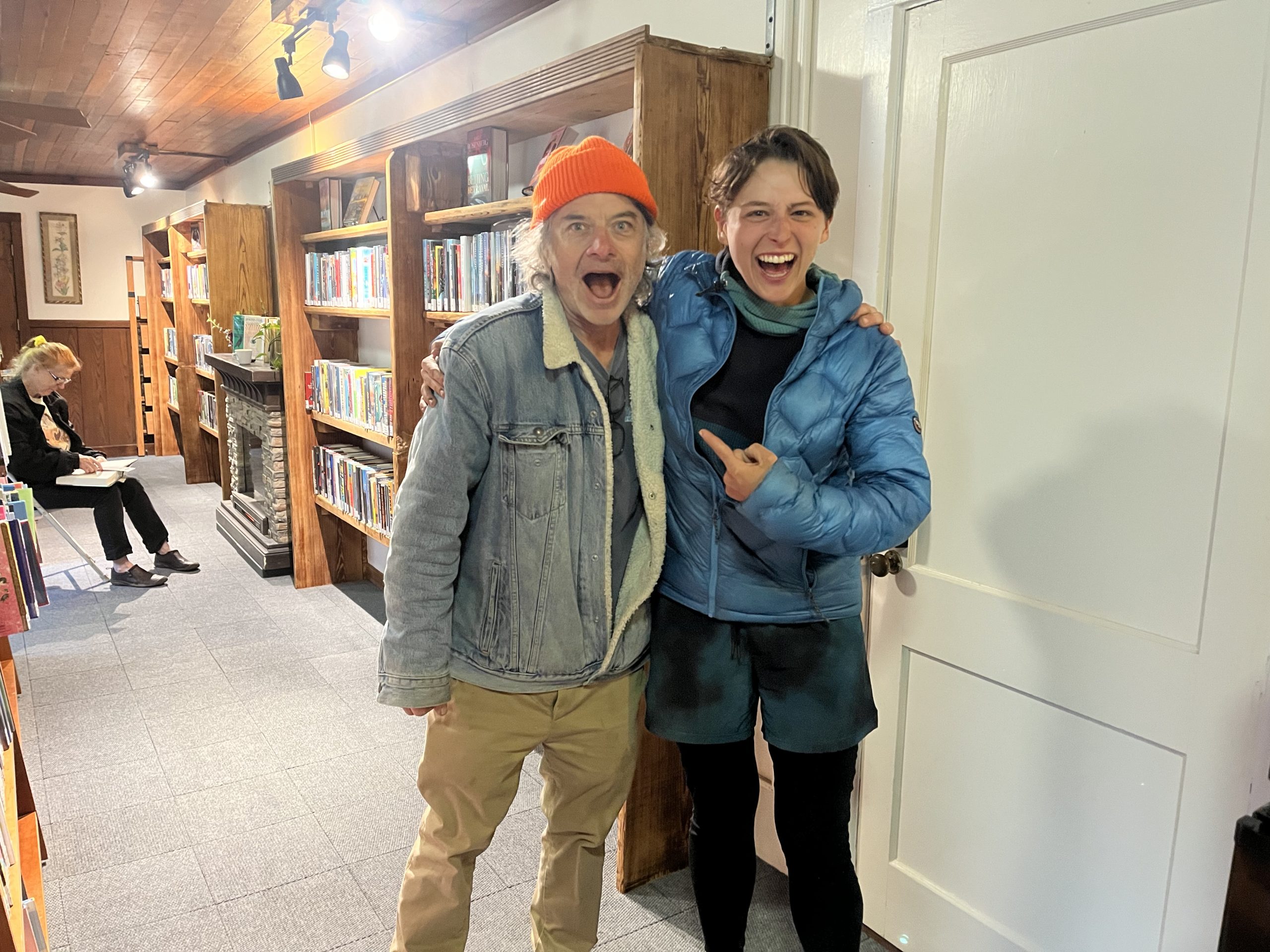
An unlikely reunion
“Everyone Stepped in and Did What They Do Best”
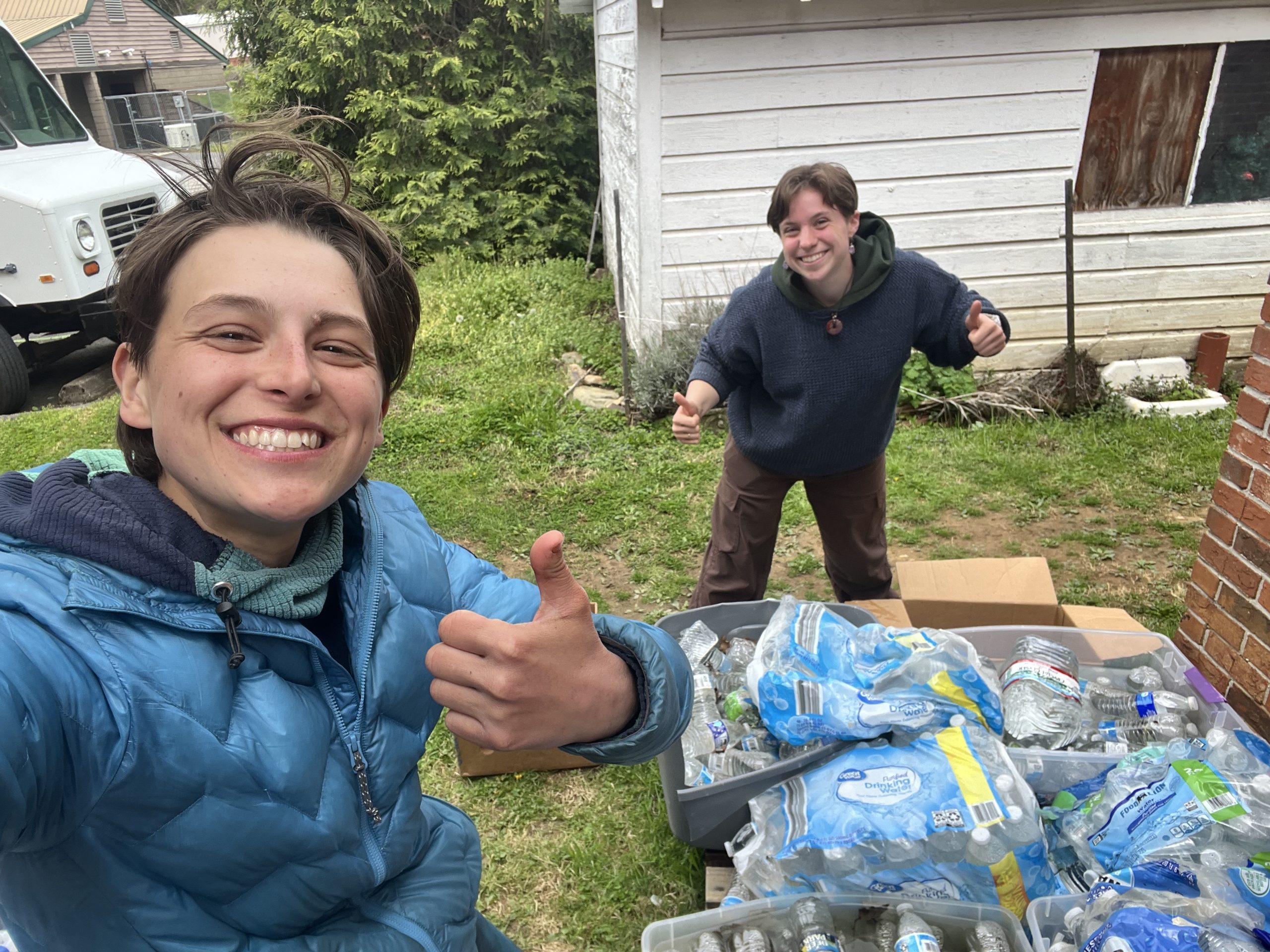
Community care is always worth a zero day
Shortly thereafter, Flavortown arrived and they, Pep and I headed over to the HQ of Rebuild Hot Springs, the community-driven effort to… rebuild Hot Springs. We were tasked with organizing bottles of water that would be distributed to surrounding areas that still lacked clean access. We then moved to the food pantry. As we shelved instant mashed potatoes and ramen, I couldn’t help but think about how the room housed all a thru-hikers’ wildest resupply dreams. And yet, here it meant something totally different. It made our complaining of the meals’ blandness seem so trivial by comparison.
In talking to Mandy, one of the volunteer organizers, we learned that there had been no loss of life in Hot Springs during the hurricane.
“That’s good at least,” I said.
“Yeah. We found a lot of bodies though.”
The French Broad River arrives in Hot Springs by way of more populated areas like Asheville that had also seen devastating loss. It was in its unique northward flow that debris, uprooted vegetation, and corpses had washed through town.
“But we saved ourselves,” Mandy said.
She went on to tell us tales of neighbors using whitewater rafts to evacuate people from second story windows and trash still in trees from when the water levels were highest. But she also shared stories of the ways the town came together and immediately took to organizing the cleanup efforts.
“Everyone stepped in and did what they do best.”
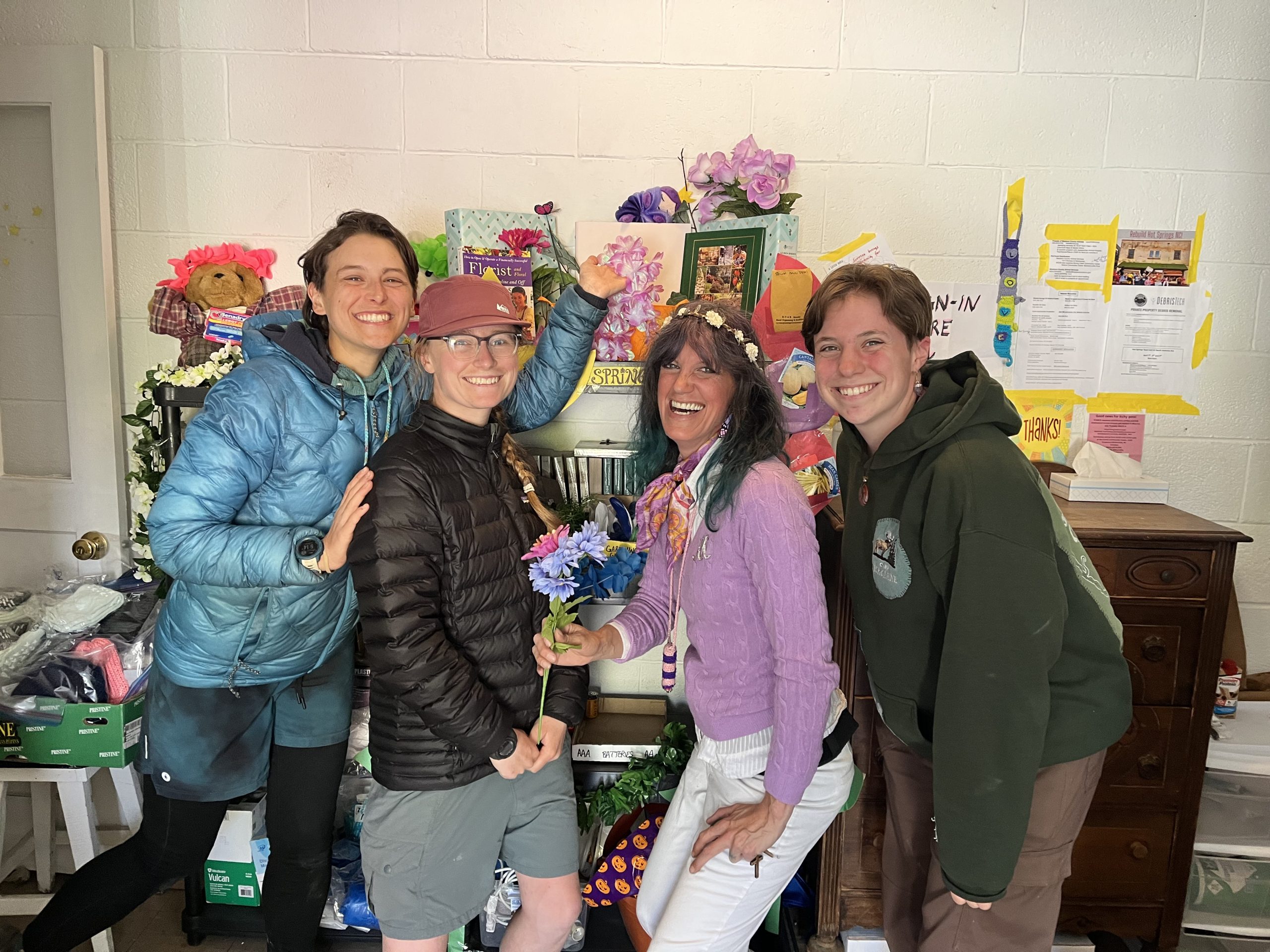
Pep, Mandy, and Flavortown keeping spirits high while rebuilding Hot Springs
As the the rainy morning gave way to welcoming rays of springtime sun, more hikers showed up and divided into teams. Some did river cleanup. Some helped with construction. We even set up some small Easter decorations. We may not have had much in terms of equipment, proper work attire, or passable body odors; but places like Hot Springs are what make the Appalachian Trail, the Appalachian Trail. There was more work to be done. But perhaps the situation was summed up best by a message left on a cardboard box that held our water bottles.
“Sorry for the mess. It won’t last long.”
Day 31: Campsite (NOBO Mile 240.5)
Day 32: Brown Gap Spring Shelter (251.9)
Day 33: Deer Park Mountain Shelter (272)
Days 34-37: Asheville, NC
Update: Here is a comment left on this article from the fine folks at the Rebuild Hot Springs Area:
Thank you for lending a hand here in Hot Springs after Helene. It means the world to know that hikers like y’all, passing through on your own journeys, took the time to stop and help when our town needed it most. Since your visit in the spring, we’ve made incredible progress—roads repaired, homes restored, businesses reopened, and hearts beginning to heal—but there’s still a long way to go.
The Appalachian Trail brings us so many kind and giving souls, and the hikers who showed up for us after the storm will always be part of this community’s story. Thank you for walking beside us, both on the Trail and through recovery.

This website contains affiliate links, which means The Trek may receive a percentage of any product or service you purchase using the links in the articles or advertisements. The buyer pays the same price as they would otherwise, and your purchase helps to support The Trek's ongoing goal to serve you quality backpacking advice and information. Thanks for your support!
To learn more, please visit the About This Site page.

Comments 2
Peebz,
Thank you for lending a hand here in Hot Springs after Helene. It means the world to know that hikers like y’all, passing through on your own journeys, took the time to stop and help when our town needed it most. Since your visit in the spring, we’ve made incredible progress—roads repaired, homes restored, businesses reopened, and hearts beginning to heal—but there’s still a long way to go.
The Appalachian Trail brings us so many kind and giving souls, and the hikers who showed up for us after the storm will always be part of this community’s story. Thank you for walking beside us, both on the Trail and through recovery.
-Rebuild Hot Springs Area
This is so wonderful to hear! I am forever in awe of the way the community came together, and even more grateful that you welcomed us with open arms in the midst of it all. I’m already planning my return to the area and can’t wait to celebrate how much all the hard work has paid off!