
 ">


Do You Actually Need a Satellite Messenger on the Appalachian Trail?
Do you actually need a satellite messenger on the Appalachian Trail? Well, no, not strictly speaking — but many hikers bring one anyway, and here’s why.
Although satellite messengers are quite expensive and do add some weight to your pack, many of us feel the peace of mind is worth it.
It’s true that the Appalachian Trail is a popular trek with frequent road crossings and relatively decent cell service. That might give you the impression that there will always be other people around to lend a helping hand, and that accessible bailout points will always be near at hand if you run into trouble.
But make no mistake: even on the “crowded” AT, you will likely have days when you encounter very few, if any, other hikers. Some road crossings marked on the map will turn out to be little-used with virtually no hitchhiking potential. There will be under-maintained sections of trail where it’s easy to stray off course. And although it’s true that you’ll have cell service for at least part of most days, it’s spotty and there are still plenty of dead zones.
I’m not saying these things to fearmonger. The AT is no more dangerous than any hiking trail and a good deal more acessible than many. Taking steps to be as self-reliant as possible in an emergency situation should simply be a prerequisite for any backpacker on any trail, white-blazed or otherwise.
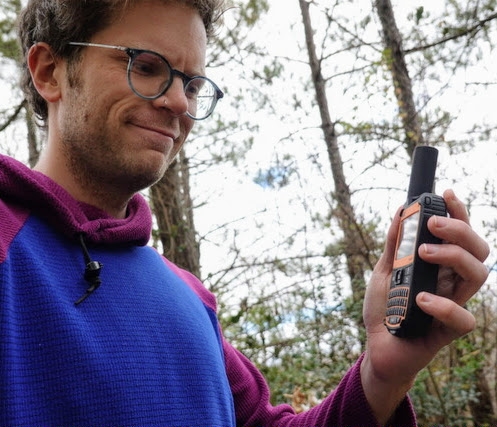
Photo: Carl Stanfield
Of Course People Successfully Hike Without a GPS Device. That Isn’t the Point.
As I said, of course you don’t absolutely need to carry a satellite device on the AT. People were successfully thru-hiking this trail for decades before such devices even existed. It is not essential in the same way that a sleeping bag or an adequate supply of food are essential.
But the main point of these devices is to be there in an unforseen emergency: a situation that is very unlikely to arise but would be very bad if it did. It’s something you carry to better prepare yourself for the small chance of something going significantly wrong in the backcountry. Most hikers can get away without every needing one, and thank goodness for that — but if things do go wrong and you have no way to call for help, I bet you’ll wish you had a GPS unit.
Hikers in the old days didn’t have that option, but I’m willing to bet that if the technology had been available back then, many of them would have chosen to carry it.
In any case, it isn’t only about your own peace of mind, but that of your loved ones back home. How many thru-hikers have I spoken to who told me they were carrying a SPOT or a Garmin or a Zoleo at the behest of their spouse or parent back home? Hiking is hard, but it’s also difficult to go about your daily life back home, not hearing from your loved one for days on end and wondering if they’re all right. This is one way to lessen that burden for them.
More Than Just an SOS Button
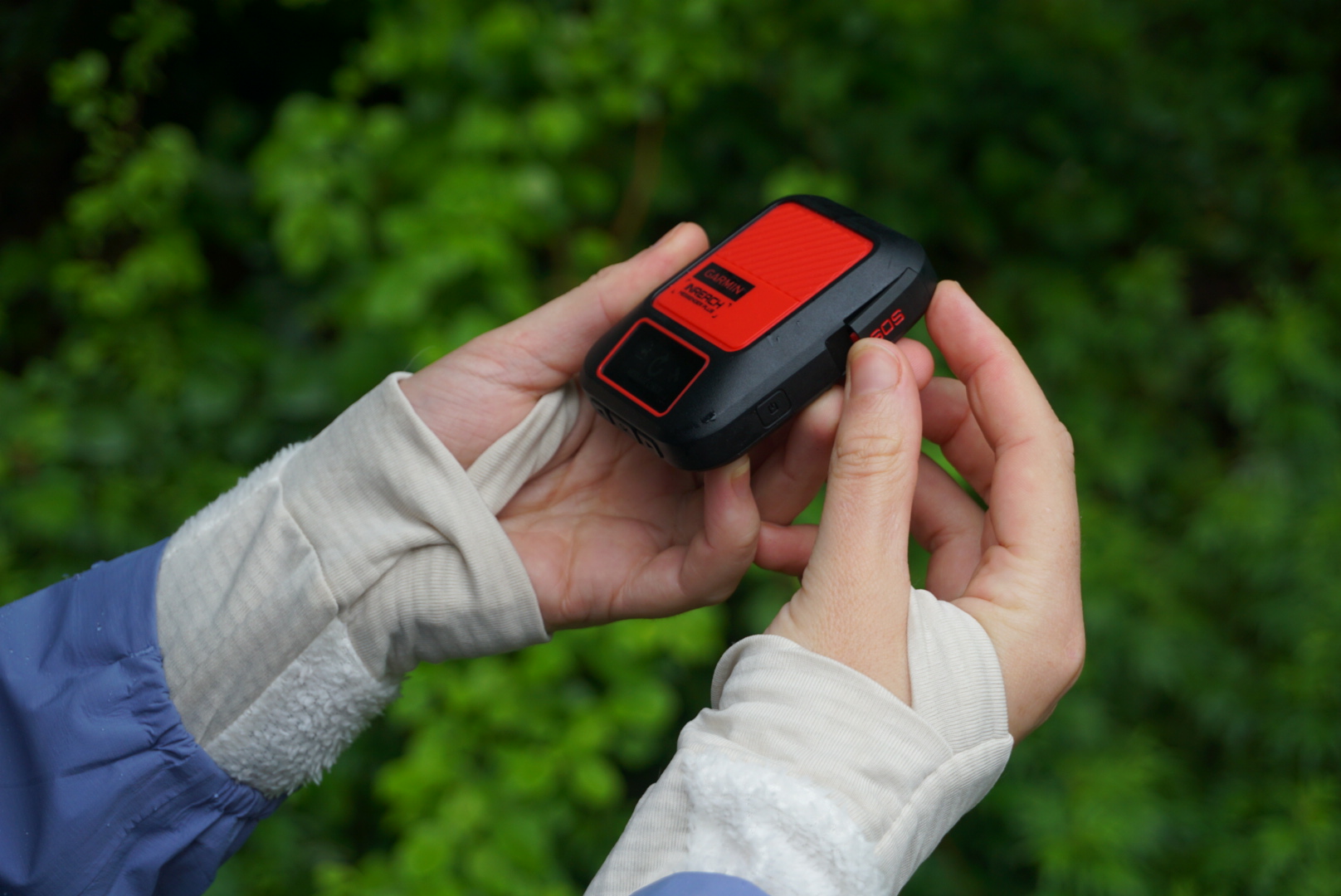
Photo: Katie Jackson
Also, most satellite messengers these days are just that: messengers. They’re not only for sending out SOS alerts, but also for casual two-way texting with friends and family on and off the trail. Many also have weather forecasting and simple navigation features. They’re quite useful for staying connected without having to bother about cell service.
If you’re torn between wanting to stay in touch with follks back home and wanting to unplug from civilization, a satellite messenger is a perfect compromise. Satellite messaging isn’t nearly as automatic as regular texting. You get just enough connectivity without ending up glued to a screen all day.
Dedicated Satellite Messenger vs. Built-in iPhone Satellite Messaging?

Photo: Katie Jackson
Nowadays many smartphones have built-in satellite messaging capabilities. Perhaps you have a modern iPhone, or your carrier offers satellite connectivity when there’s no cell service, and you’re wondering if the expense and extra weight of a dedicated GPS device is worth it.
For now, I’m continuing to carry my satellite messenger — a Zoleo, in my case — and recommend that others do the same.
Why? Well, as I said above, a huge benefit of these devices is the peace of mind they confer. Dedicated GPS devices are rugged and can withstand a lot of rough treatment — much more than any smartphone. That extra durablility could come into play in an actual emergency — say, if you take a bad fall or get swept away in a stream crossing. They also have long-lasting batteries and leave your phone battery free for navigation, music, photography, etc.
So can you backpack the Appalachian Trail without a satellite messenger?
Sure.
But even on a relatively “tame” trail like the AT, there will be times in the course of a long hike when you feel lonely and wish you could talk to someone back home. There will be times when you worry, at least a bit, about your safety. And you can believe your family back home will probably worry even more.
This technology exists, and it can at least mitigate, if not completely solve, those problems. So why not budget for it right from the start and enjoy your hike with less worry hanging over your head?
Featured image: Photo via Katie Jackson

This website contains affiliate links, which means The Trek may receive a percentage of any product or service you purchase using the links in the articles or advertisements. The buyer pays the same price as they would otherwise, and your purchase helps to support The Trek's ongoing goal to serve you quality backpacking advice and information. Thanks for your support!
To learn more, please visit the About This Site page.

Comments 3
Kelly, I always enjoy and learn from your posts. I am guilty of not writing comments, but I read each of your posts. Thank you so much for what you provide for us hikers.
Sad that someone needs to keep in touch,etc. I really thought the whole idea of being outside was to NOT SOCIALIZE!!! Been on hiking/backpacking/ kayaking trips all over the world( West/ Alaska/Alps,etc) and never considered ever getting one-and they are expensive!- as a buddy says” that’s for beginners”
Hi Kelly, got to call you on this one for AT hikers (and not on a satellite messenger)…
Yes, if you must have “peace of mind” 24/7 then yup you need one of these.
If someone is hiking the AT and worrying about “under-maintained sections of trail where it’s easy to stray off course”, then they are not paying attention. And, yes, in the winter, it may be hard to see the footpath, especially if one is lucky enough to be making “first tracks” on a snowy section. I find most AT hikers (of all kinds) go astray because they are looking down at the 5ft of footpath right in front of them rather than being present. Admittedly, this can be difficult after one’s 3rd consecutive 20 mile day…
And, there are indeed the **extremely**rare accidents/incidents when instant communications could make a difference in life and limb situations. Over 16 million people were on the AT in 2025. There were a handful of life threatening incidents. The odds are very small in encountering an issue where instant communication is critical to life safety (and even smaller that it will be in a mobile dead zone). Fortunately, we are all still able to hike our own hike, including how we communicate with others.
Thanks again for another thoughtful article!