
 ">
Exactly 100 Years Ago, an Act of Congress Transformed the American Hiking Experience
Ask anyone who’s thru-hiked the Appalachian Trail about their experiences in Great Smoky Mountains National Park and Shenandoah National Park — or in hiker lingo, the “Smokies” and the “Shennies” — and you’re almost guaranteed to be met with some strong opinions and wild stories.
And for good reason: national parks mean both tighter restrictions (like the strict shelter rules in the Smokies) and more amenities (blackberry milkshakes in the Shennies) — respectively the bane and the joy of a thru-hiker’s experience.
The parks also bring up unique logistical challenges and questions. Should you resupply in the Appalachian Disneyworld that is Gatlinburg, or push through and rely on Standing Bear’s long-expired resupply options? Should you enjoy the waysides and “flat” terrain of the Shennies, or take a change of pace and load off my back by aqua-blazing?
All these factors, combined with famous landmarks like Skyline Drive and Kuwohi (formerly Clingmans Dome) and frequent black bear sightings/terrorizings, make the AT’s two national parks an iconic experience, regardless of whether you loathe or love them. And today, as someone who undoubtedly falls in the “love” category for both the National Parks and the AT, we celebrate the 100th anniversary of the creation of these two parks.
-
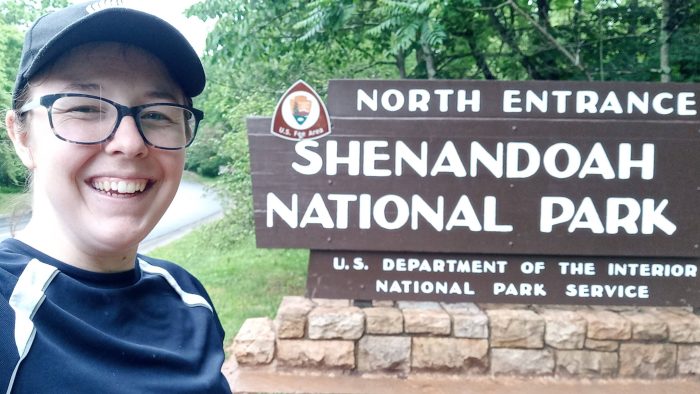
- From the author’s first trip to Shenandoah
-
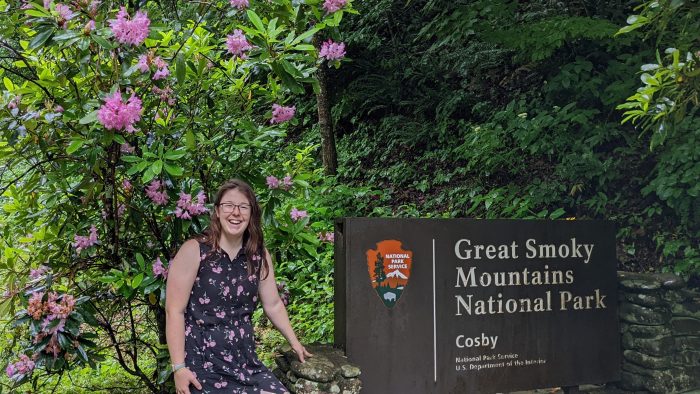
- From the author’s third trip to the Smokies
The Race To Establish a National Park in Southern Appalachia
On May 22nd, 1926 — exactly 100 years ago today — President Calvin Coolidge signed legislation creating Shenandoah National Park and the Great Smoky Mountains National Park, setting off a major change of course for the National Park Service and the Appalachian Trail.
It’s easy to see how this legislation would hugely impact the AT, which had only begun construction a few years earlier, but why was this such a big deal for the Park Service? Well, prior to this bill, every National Park except Maine’s Acadia had been located west of the Mississippi River. There’s several reasons for this, but arguably the largest deterrent for eastern parks was this: by the time the conservation movement started gaining momentum in the 19th century, much of the East Coast had already been settled and established for decades, if not centuries.
Creating an eastern national park would almost inevitably require citizens, towns and companies to uproot: a huge, messy prospect. In contrast, Western parks up to this point had solely been established on land already owned by, or donated to, the federal government, which required far less displacement of white settlers and their livelihoods.
Even so, the conservation movement couldn’t be confined to the west. Around the 1890s, people in the Southern Appalachian region began uniting over a shared vision of a public land preserve.
However, these interests ran up against the problem of land ownership: how does one choose which farmers have to be displaced, which natural features are the most worthy of protection, which communities get to profit the most from tourism, and — thorniest of all — which timber companies get forced out?
Advancements in logging technology in the early 20th century meant that swaths of timberland previously inaccessible to corporations were now being clear-cut. Time was running out for wilderness in Southern Appalachia.
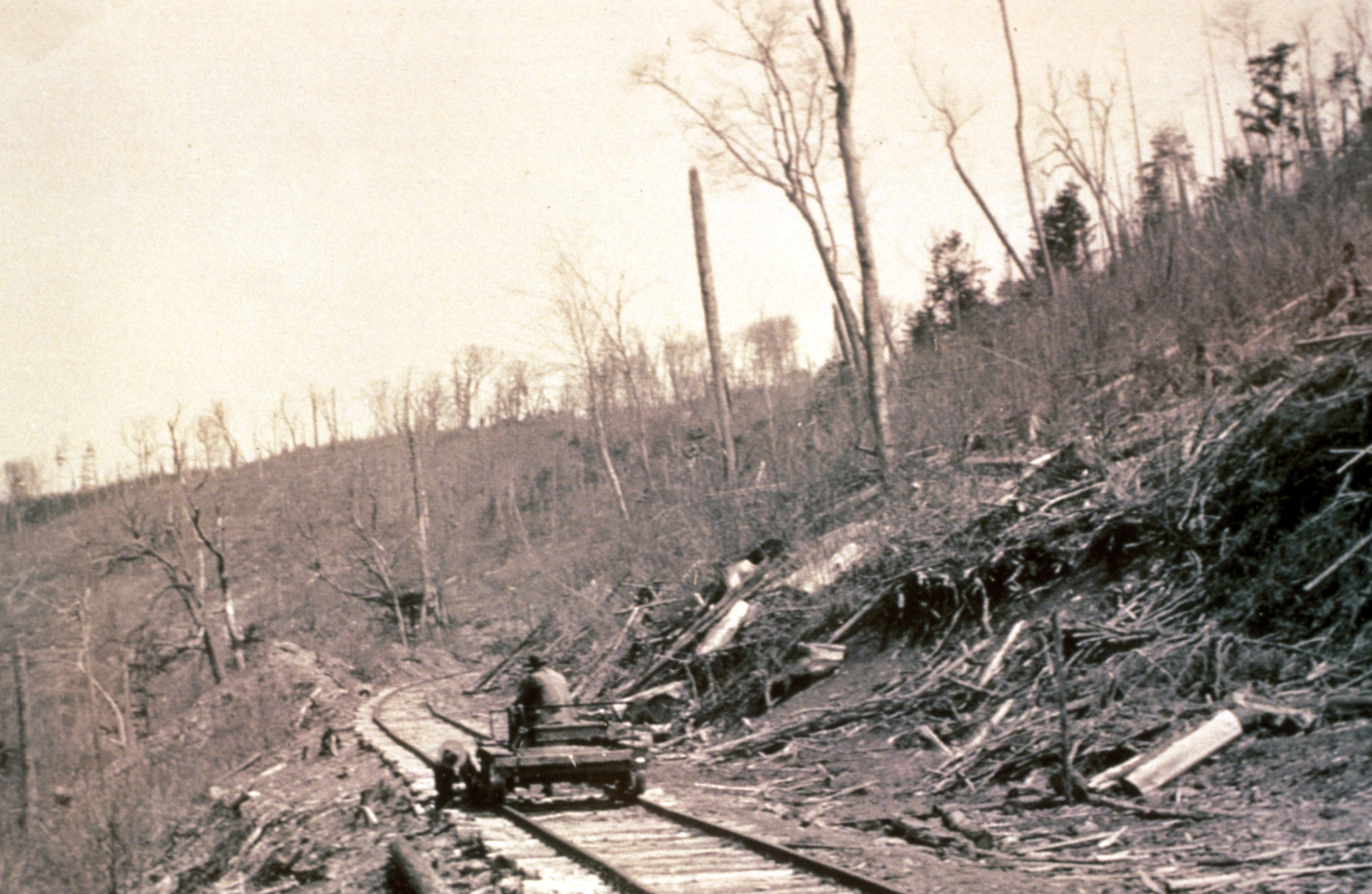
Logging near Cataloochee, one future site of Great Smoky Mountains National Park. Credit goes to NPS
Enter: The Father of the National Park Service
Finally, in 1923, National Park Service director Stephen Mather decided it was time something was done. Mather — known as the father of the NPS — had wanted more eastern parks from the beginning. A native Chicagoan, he had rallied the troops at home to try to create a “Sand Dunes National Park” on Lake Michigan just months after being appointed as director.
The effort initially failed: they faced severe opposition from behemoth companies like U.S. Steel due to the value of the waterfront property they were trying to protect; issues with Mather’s mental health; and uncertainties in how land ownership would be worked out.
The final nail in the coffin was the beginning of World War I: conservation had no choice but to take a backseat. By the time the war was over, corporations had encroached on the dunes enough that Mather decided the remaining land was better suited for a state park than a national park.
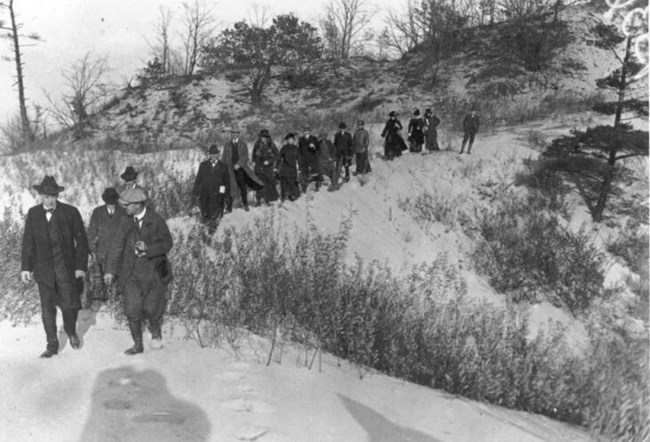
Mather, left, at the Indiana Dunes; credit Archives of Indiana Dunes National Park
Establishment of the Southern Appalachian National Park Committee
Perhaps it was this failed venture, combined with the knowledge that parts of Southern Appalachian would face the same fate without action, that spurred Mather to gather interested parties at the prestigious Cosmos Club in D.C. one evening in December 1923. Whatever his specific motivation, Mather’s efforts this time were fruitful: the dinner guests resolved to press for a park in southern Appalachia.
Mather approached President Coolidge’s Secretary of the Interior Hubert Work with the idea, and Work in turn asked Congress to create a Southern Appalachian National Park Committee (SANPC) to evaluate potential sites. The resolution passed on February 24, 1924, and Work quickly appointed five members to serve on the committee.
By spring, the committee was broadly distributing a questionnaire inviting groups to submit a proposal for a new park site. Conservation groups across the region responded heartily, resulting in over 30 land studies, but two sites eventually rose to the top.
Ann and W.P. Davis and the Vision for a Great Smoky Mountains National Park
One was the Great Smoky Mountains in Tennessee. The idea is traditionally attributed to Anna Davis, who in 1923 had traveled to Yellowstone National Park with her husband W.P. On the train ride back home she mused to her husband, “We have seen some beautiful country. Grand mountains but nothing more majestic than our own great Smokies.” Why, she wondered aloud, should the East Coast have only tiny Acadia National Park?
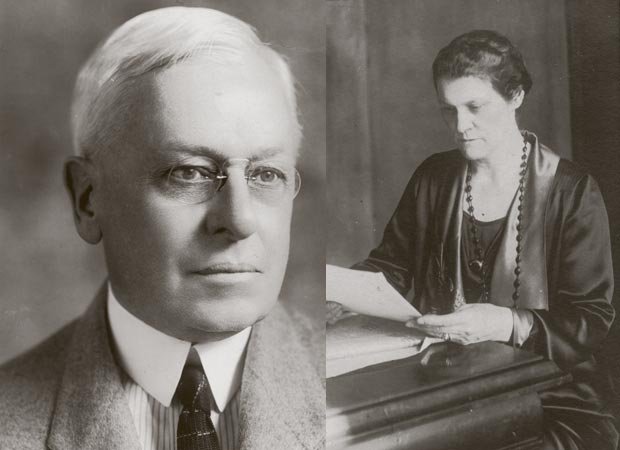
W.P. and Anna May Davis. Photos: GSMNP Library
The idea grew on her husband, and the Davises quickly began sharing it with anyone who would listen. W.P. was well-situated to spread the idea, as he served on the board of directors for both the Knoxville Chamber of Commerce and the Knoxville Automobile Club.
Surprisingly, it was the latter that would prove most influential: in 1924 the club helped establish the Great Smoky Mountains Conservation Association (GSMCA), which soon attracted both influential politicians and knowledgeable explorers and resulted in a force to be reckoned with.
When the SANPC came to Ashville to review area proposals in July of 1924, the Smokies weren’t even in the official running, but W.P. made sure he had a seat at the table and brought along photographs to prove his case. The committee was so impressed by what they saw that they set up an expedition to Mt. LeConte to see the Smokies’ beauty for themselves. The experience lived up to the photographs, and the proposal for the Smokies as a national park rose to the top.
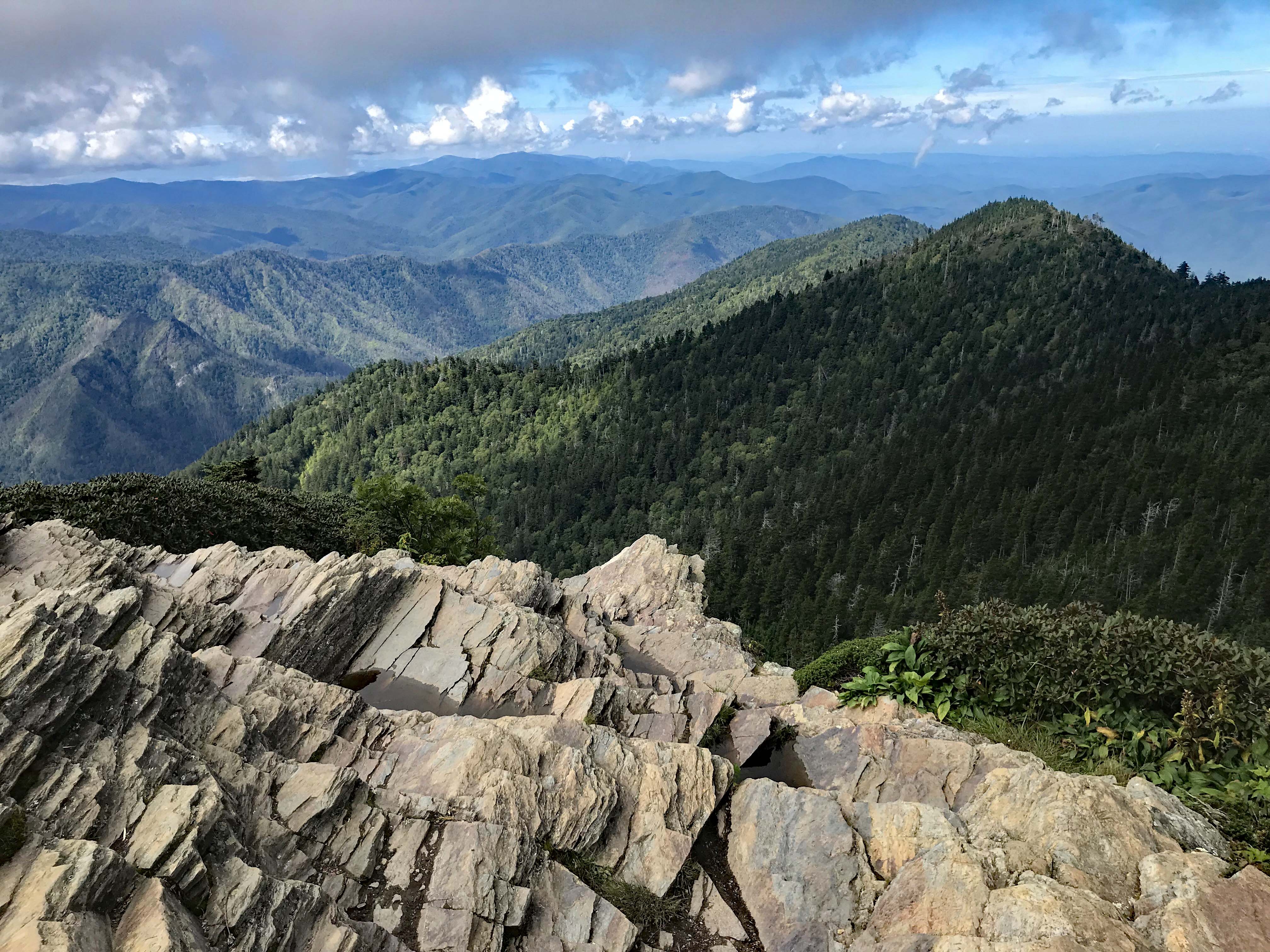
The view from Mt. Leconte, the iconic Smoky Mountains peak that first captured the hearts of the SANPC. Photo: Jim Rahtz
George Freeman Pollock and the Vision for a Shenandoah National Park
The second site was, of course, Shenandoah in Virginia. Here too, local conservationists were eager to have their homeland designated a national park: in the course of just two weeks, area businessman put together a convention designed to show off the wonders of Shenandoah Valley — just one month before the SANPC was created.
At this convention, 1000 delegates representing 13 counties gathered, and a Chamber of Commerce for Shenandoah Valley, including a Board of Directors, was established. The day after Congress authorized the creation of the SANPC, this board met and passed a resolution calling for the creation of a national park in the valley, though in a slightly different location than the current park.
In June 1924, George Freeman Pollock, owner and manager of the popular Skyland Resort, decided to fill out an SANPC questionnaire proposing a park along the spine of the Blue Ridge, with Skyland at the heart. The Shenandoah Valley Chamber of Commerce quickly pivoted to back Pollock’s proposal, and preparations for a visit from the SANPC began immediately. Towers were built to reveal sweeping views, trails were blazed, and locals were encouraged to be on their best behavior: the commissioners were coming.
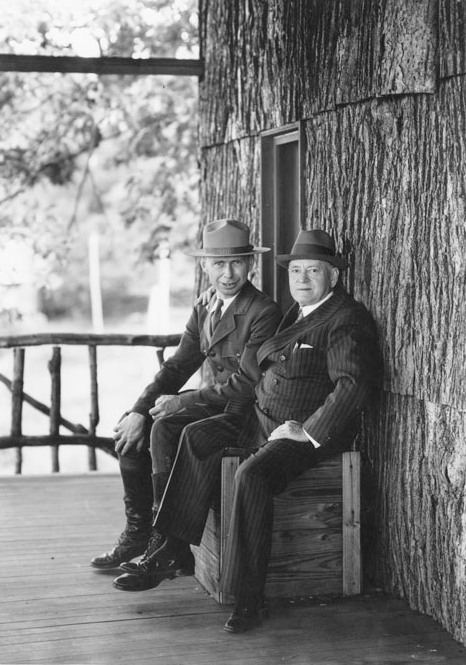
George Freeman Pollock sits with Shenandoah NP superintendent James R. Lasiter in 1936. Source: NPS
Shenandoah and GSMNP Before the House of Representatives
Fast forward to January 29, 1925: the date when the SANPC’s report was sent to the House of Representatives. In it, the committee revealed that it had narrowed their selection to two sites. In principal, the Smokies was their top choice: “The Great Smoky Mountains easily stand first, because of the height of mountains, depth of valleys, ruggedness of the area, and the unexampled variety of trees, shrubs, and plants,” the report stated.
In practice, however, the ruggedness that drew the committee members to the Smokies also created problems of accessibility, and its greater distance from population-dense areas didn’t win it any favors. For these reasons, the commission ultimately selected Shenandoah as their top choice for a southeastern national park, noting its proximity to over 40 million Americans and potential for a scenic drive along the ridge. Their choice of Shenandoah wasn’t a dismissal of the Smokies, however:
“We hope (Shenandoah) will be made into a national park,” the SANPC wrote, “and that its success will encourage the Congress to create a second park in the Great Smoky Mountains.”
Congress must have been feeling generous, because on February 21, 1925, it passed legislation allocating $20,000 for the survey of not one, but three sites: Shenandoah, the Smokies, and Kentucky’s Mammoth Cave. Of course, there was a caveat: Congress had no intention of breaking the mold on land acquisition for parks, so it would be up to local and state governments to acquire the land, either through accepting donations or purchasing it outright.
All three sites rose to the challenge, and in May, Congress determined that each had raised enough funds to merit park creation. On May 22, 1926, President Calvin Coolidge signed legislation authorizing the creation of Shenandoah National Park and Great Smoky Mountains National Park. (Legislation for Mammoth Cave would follow a few days later.)
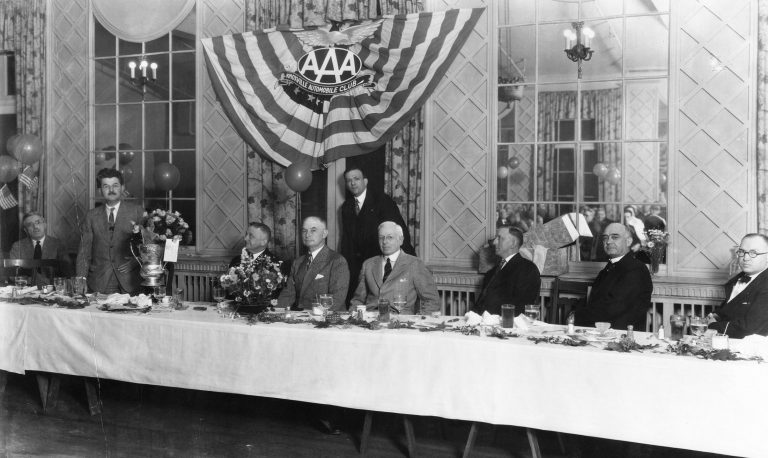
The Knoxville Auto Club’s celebration upon the dedication of Great Smoky Mountains National Park; credit Thompson Photograph Collection
A Happy Ending for All?
While there was much celebrating, the work was far from over: each park would have to meet an acreage quote before it could be officially dedicated as a park. The Smokies reached that goal June 15, 1934, and Shenandoah followed not long after on December 26, 1935.
While I’m excited to be celebrating the 100th anniversary of two amazing parks, I want to acknowledge that the creation of the parks wasn’t a happy ending for everyone. The anticipated issue of land ownership proved to be as ugly, if not uglier, than expected.
Some locals left quietly without a fight; others weren’t about to sell their land that had been in the family for decades for any old price. Communication from the governments involved was frequently bungled, unclear and even sometimes retracted.
Similar to the Native Americans before them, many long-time residents were forced out (albeit with more payment), their homes burnt behind them to ensure they didn’t return. Thankfully, some agreements were reached that allowed residents to remain on the land until their passing.
Today, thanks to the foresight of Anna and W.P. Davis, Stephen Mather, George Freeman Pollock, and many, many others, these two parks have been protected for the enjoyment of the country. Year over year, GSMNP now sees the most visitors of all the national parks, ringing in at a whopping 12 million in 2024. Shenandoah that same year saw a respectable 1.7 million, including many AT hikers. The AT simply would not be the same without them.
Further Reading
The National Park Service: A Brief History
Shenandoah National Park: From Idea to Reality
Great Smoky Mountains National Park Stories: Creating a National Park
Featured image: The Great Smoky Mountains photographed in 2022 by Trek bloggers Eric and Hayley

This website contains affiliate links, which means The Trek may receive a percentage of any product or service you purchase using the links in the articles or advertisements. The buyer pays the same price as they would otherwise, and your purchase helps to support The Trek's ongoing goal to serve you quality backpacking advice and information. Thanks for your support!
To learn more, please visit the About This Site page.
