
 ">


First Case of Rare and Potentially Deadly Tick-Borne Virus Confirmed in New York
Researchers have confirmed the first human case of Bourbon virus, a rare and potentially fatal tick-borne disease with no cure, in New York State. What’s more, they believe the virus may have been circulating undetected in the state for years, since its symptoms closely resemble those of other tick-borne illnesses and there is no widely available commercial test for the condition.
The discovery was made as part of a recently published study in the American Journal of Tropical Medicine and Hygiene, which analyzed 107 cases of presumed tick-borne illness in Suffolk County, New York between 2019 and 2024.
The patient was Michael Larkin, 67, of Long Island. Larkin endured five years of symptoms including fever, headaches, and night sweats after being bitten by two lone star ticks outside his home in 2021. He tested negative for Lyme disease and his symptoms didn’t respond to antibiotics, eventually leading him to participate in the yearlong study that led to his diagnosis in April 2026.
What is Bourbon virus?
Bourbon virus was first discovered in Bourbon County, Kansas in 2014. Until now, the handful of confirmed cases have been primarily reported in the Midwest and parts of the South. However, the researchers involved in this study have suggested that more cases of the virus in New York state have likely been misdiagnosed, as the condition’s symptoms — which include fever, fatigue, rash, headache, body aches and nausea — mimic those of other tickborne diseases.
“There are a lot of lone star ticks in New York and in the Northeast … the Bourbon virus is likely more prevalent than we think in our region and other cases are likely not being diagnosed,” said Luis Marcos, MD, the study’s lead author, in a news release.
Bourbon virus RNA had previously been isolated from a tick that was removed from a patient in Suffolk County in 2019; that patient had symptoms that were consistent with the virus, but blood samples were not available to confirm whether they were infected. In contrast, this 2026 study is the first time a case of Bourbon virus infection was confirmed with blood samples in New York.
How To Protect Yourself
Bourbon virus is transmitted by the lone star tick, along with other conditions including tularemia, alpha-gal, and ehrlichiosis. Adult female lone star ticks have a distinctive white spot on a reddish body, while males may have white streaks or spots. They measure around 3-4mm long when unfed.
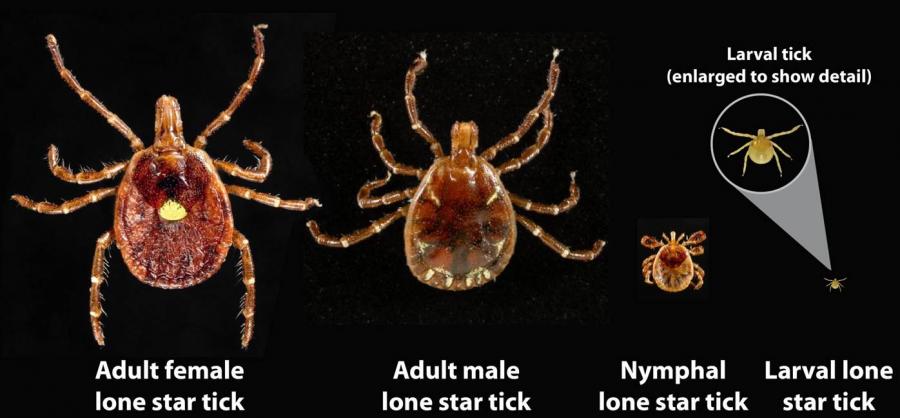
CDC lone star tick identification guide.
There is no vaccine or medicine for Bourbon virus, which has proven fatal in at least two cases. The only way to reduce your risk of infection is to take steps to avoid being bitten by ticks. Wearing high socks and long pants/long sleeves, treating clothes with permethrin, using bug spray, and performing nightly tick checks can help hikers and anyone who spends time outdoors to stay safe from ticks.
If you are bitten, carefully remove the tick as soon as possible by grasping it close to your skin surface with tweezers or a tick key and pulling it out with steady, even pressure. There is a right and wrong way to remove a tick safely, so please read up on the CDC’s guidelines here. Check yourself for other ticks and monitor the bite area for a developing rash, which could indicate tick-borne infection (but note that the absence of a rash doesn’t necessarily mean you haven’t been infected).
Noting the species of tick that bit you can provide an important diagnosis clue if you do end up developing symptoms. Take a picture of the tick if you can.
Featured image: An adult female Lone Star tick. Photo: Robert Webster

This website contains affiliate links, which means The Trek may receive a percentage of any product or service you purchase using the links in the articles or advertisements. The buyer pays the same price as they would otherwise, and your purchase helps to support The Trek's ongoing goal to serve you quality backpacking advice and information. Thanks for your support!
To learn more, please visit the About This Site page.

Comments 2
They should pay people who hike the Appalachian Trail on all but the northernmost segments. 😆 And not because of this deadly tick-born disease (although being careful not to catch diseases or get mugged is part of it). It’s mostly just because of the relative quality of the trail compared to others! What say you, AT fans?
As for getting mugged on the PCT, unless the SoCal gang bangers are marathon or 10k runners, they aren’t going anywhere, especially at altitude in the Sierras. “Yo, homes, stop for a minute. I gotta pull my pants up, bro!” 😆