
 ">

Getting Better Trail Legs in New England
As of September 4th, I’ve finished over 193 miles of the 338 I need to complete the Appalachian Trail. However, these miles do not include the White Mountains, which have been described as “15 percent of the AT, and 85 percent of the work.” I don’t know if those claims are accurate, but I am in for a test starting tomorrow, when I slackpack The Kinsman.
Finishing Vermont
While it was challenging, I came to enjoy the AT in Vermont. There were lovely views when the AT provided a break in the trees, or the trail traversed a field.
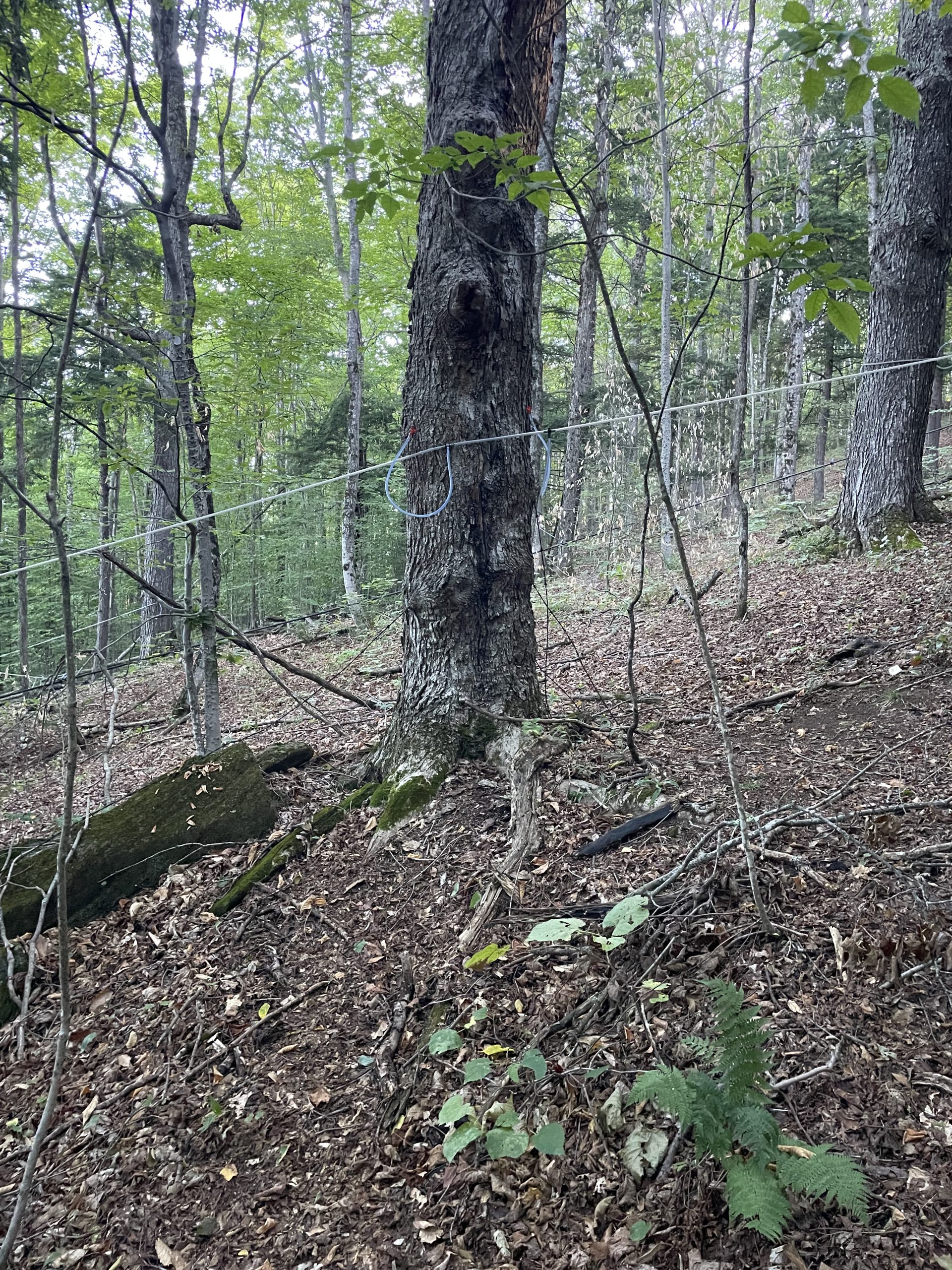
I was surprised to see plastic tubes that connnected maple trees alongside the AT in two different areas. I suspect that these are sugar tap lines connecting sugar maple trees. The trees were different from the sugar maple in our side yard in Pennsylvania. These maples were tall and thin, with the canopy just visible well above the trail. I could make out the maple leaves. Our sugar maple at home has a wider canopy, and many heavy branches missing from their northern kin. The plastic tubes remind me of the low-pressure irrigation lines used in peach orchards back home.
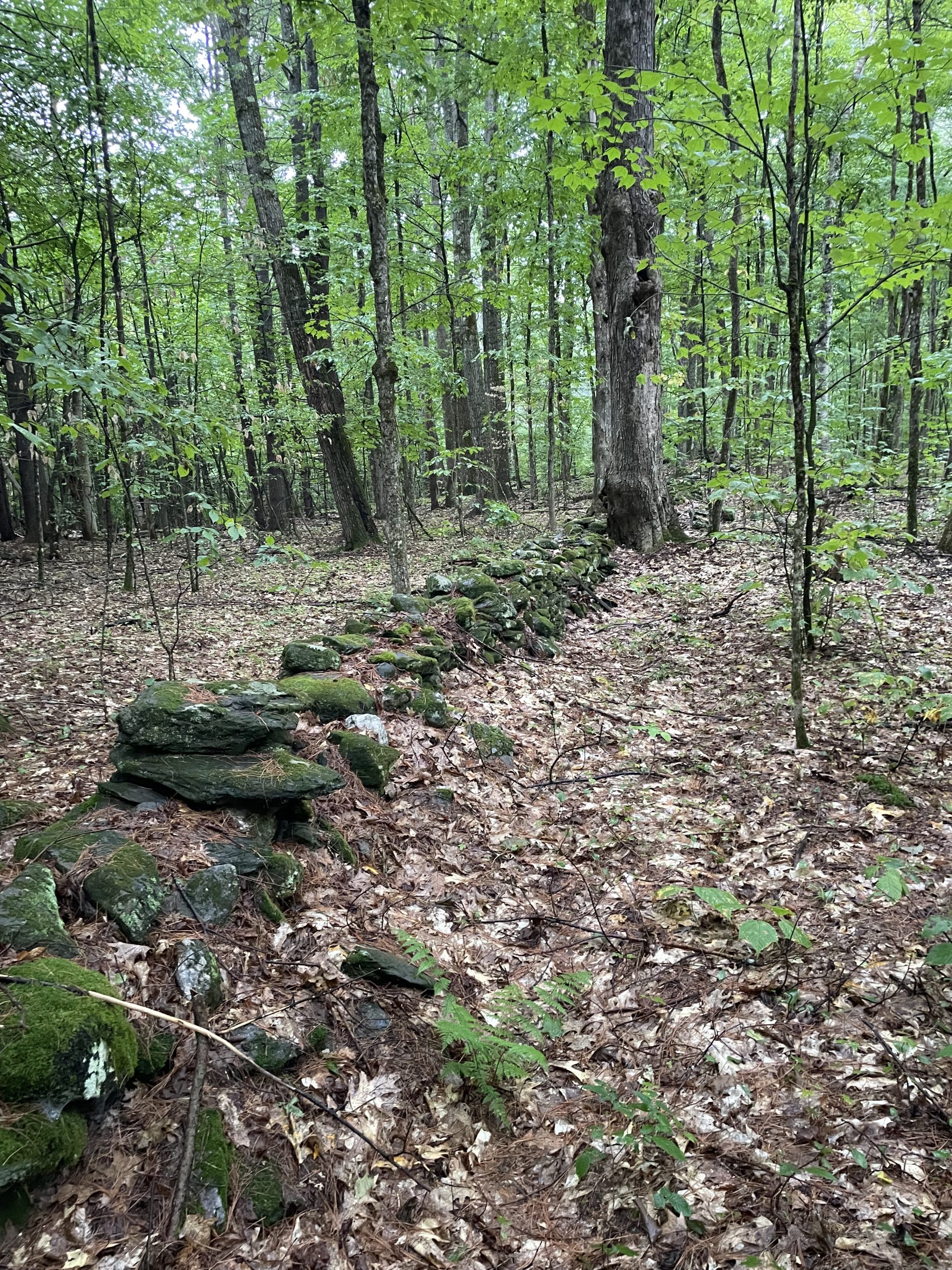
I was also amazed by the number, frequency and size of stone fences I saw in the woods of Vermont, and which have continued in New Hampshire. Each one of these represents a former farm. The maturity of the forest suggests these woods have been here for well over 100 years. The size of the stones, and the height of the walls, demonstrate immense work by the former inhabitants. Did the soil wear thin? Did better paying jobs develop in mill towns? Where are their descendants, and do they know that these silent monuments exist to the work ethic of their ancestors? These thoughts populate my mind when I cross one of these stone walls.
A Sheep Farm in the Hills
Central and I camped near Pomfret Creek one afternoon, providing us with a view through the trees of a neighboring, regional road. Later that afternoon I heard an unusual animal cry accompanying the sound of a vehicle. Soon, a farm utility vehicle – like a larger, all-terrain golf cart – came down the road, with a driver and border collie in the front seats, and a farmhand and a ewe in the rear ones. I had heard the sheep’s cry, which I heard again as they drove past us. I smiled as I realized sheep farms still exist in part of Vermont (even though I wished I had been faster with my camera).
Camping With Captain Stache
Central and I were lucky to camp in the backyard of Captain Stache and Scooter when we camped in West Hartford, Vermont. This lovely couple has made their yard available for hikers for decades, with water, a lovely campsite, a gazebo, and a privy – with toilet paper! – all available for free. That evening we viewed a regional Amtrak train speeding north on the tracks in the woods behind their property. Unfortunately, this couple will be relocating to Nebraska soon. Thank you for your selfless suppport of hikers through the years!
On to New Hampshire
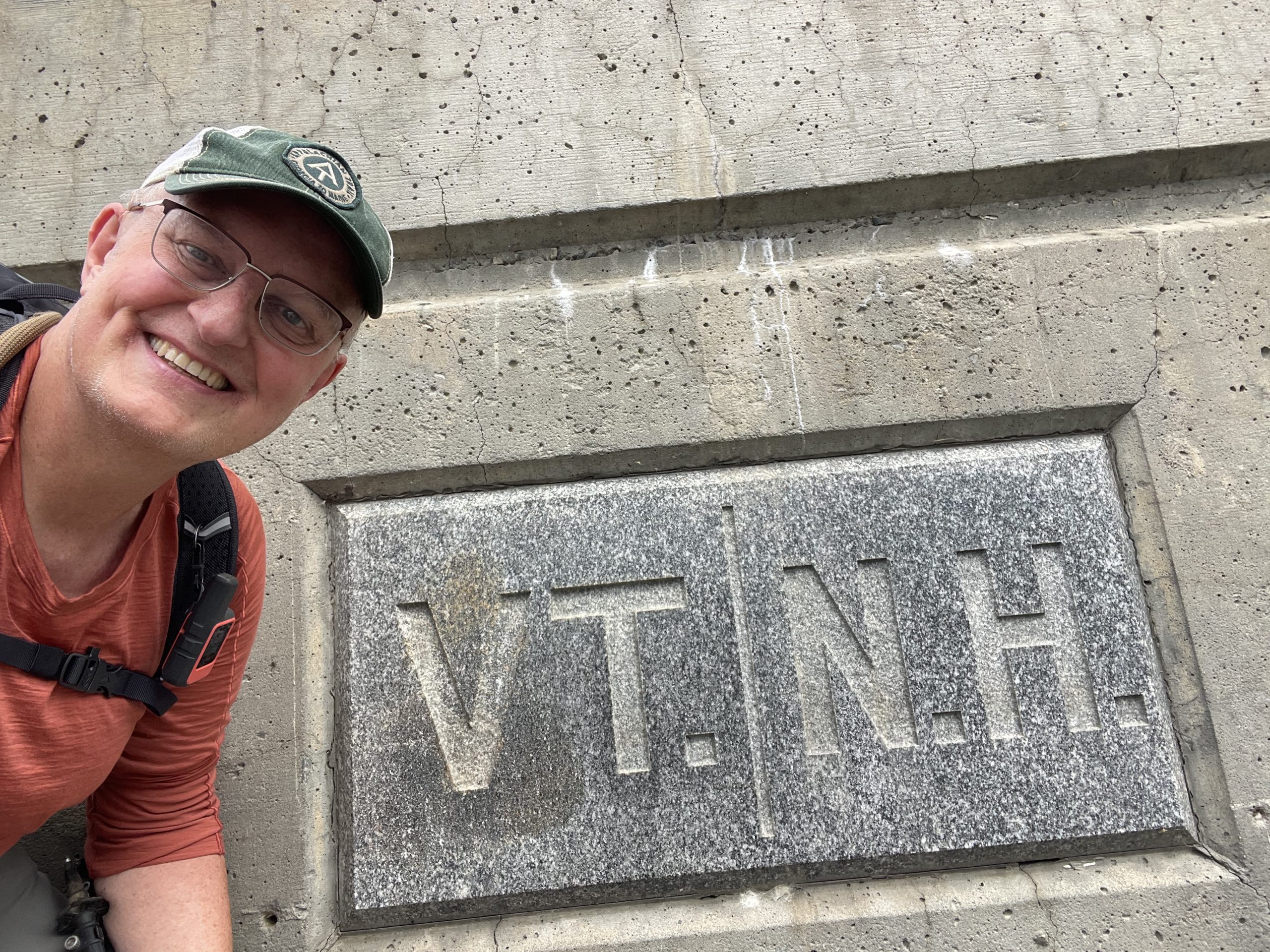
I soon descended through Norwich, crossed the Connnecticut River, and found myself in Hanover, New Hampshire. The change was startling, as the bustle of this lovely college town was a strong contrast to the woods I had inhabited.
The next morning I circled behind the Dartmouth Colllege practice fields, and started climbing the trail to the tune of techno-pop, whistles and cheering football players, creating another sharp contrast, which faded within 30 minutes.
New Hampshire has been beautiful, with the trail getting rockier than it had been in Vermont (which surprised me!).
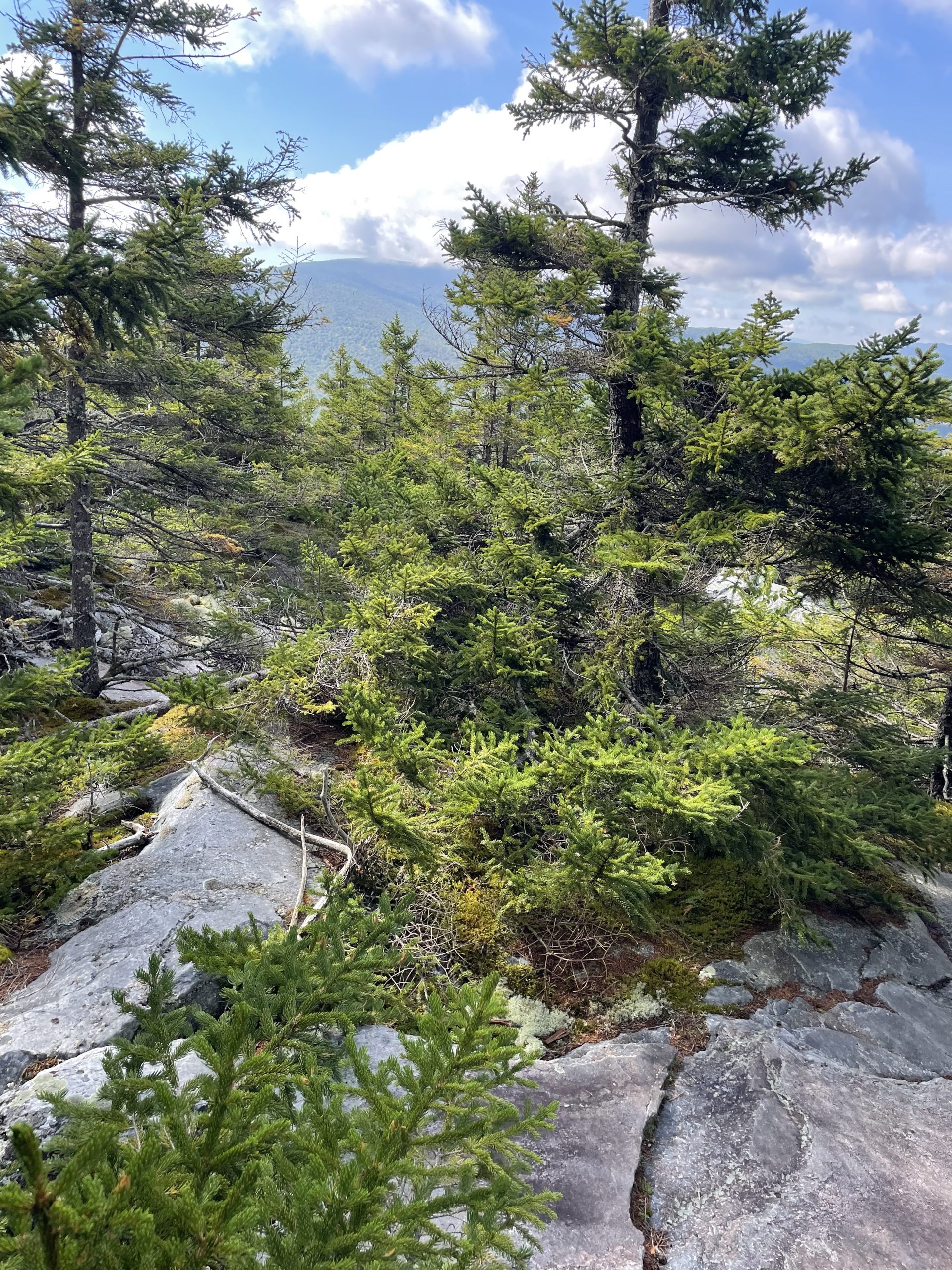
The ascents and descents seem constant, which is helpful in preparing my legs and body for the whites. Fear? No, probably something closer to profound respect and a desire to get on with this.
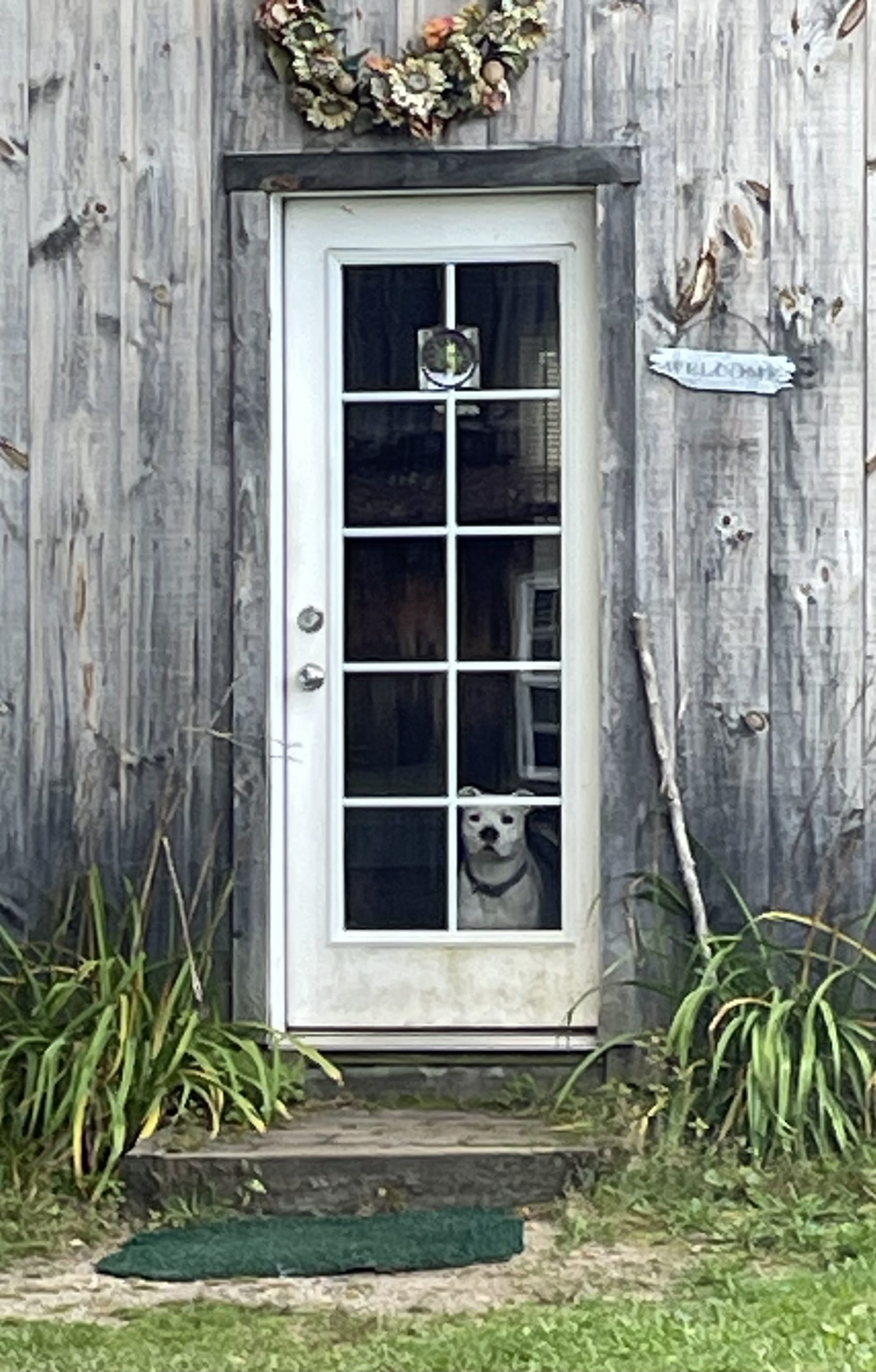
As I head into the Whites, I leave you with a photo of Robo, a lovely pup that has been accompanying his owner Lip on the AT. He missed his owner’s temporary absence at the Hikers Welcome Hostel, and was anxious to get on with the trail. So am I.
New England is lovely, folks. More to follow. Hogmaw out.

This website contains affiliate links, which means The Trek may receive a percentage of any product or service you purchase using the links in the articles or advertisements. The buyer pays the same price as they would otherwise, and your purchase helps to support The Trek's ongoing goal to serve you quality backpacking advice and information. Thanks for your support!
To learn more, please visit the About This Site page.