
 ">


Is the Appalachian Trail Too Crowded? Here’s What Hikers Actually Report
Much is made of how crowded the Appalachian Trail supposedly is. Stories on the internet sometimes make it sound like you’ll never have a moment’s peace on this trail, let alone a pristine wilderness experience.
And to be sure, I have encountered some pretty significant crowds on occasion. But most of the time, it just feels like a normal trail: not exactly “pristine,” perhaps, but overall peaceful. And it appears I’m not the only one who feels that way.
In recent years, The Trek has started asking AT thru-hikers whether crowding affected their trail experience as part of our annual AT Thru-Hiker Survey. We also ask how often they hiked and camped alone and how often they struggled to find space at a campsite or shelter.
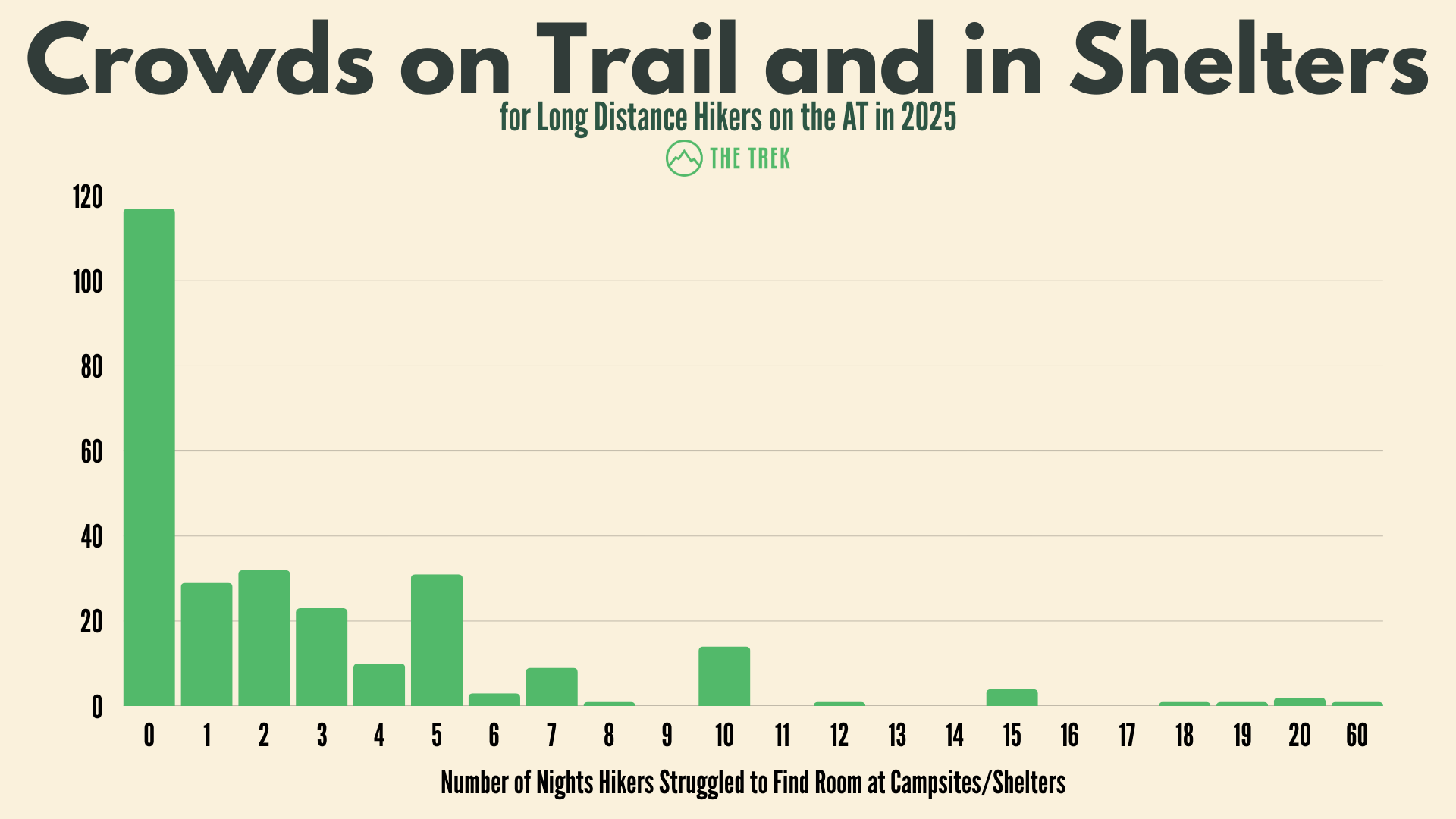
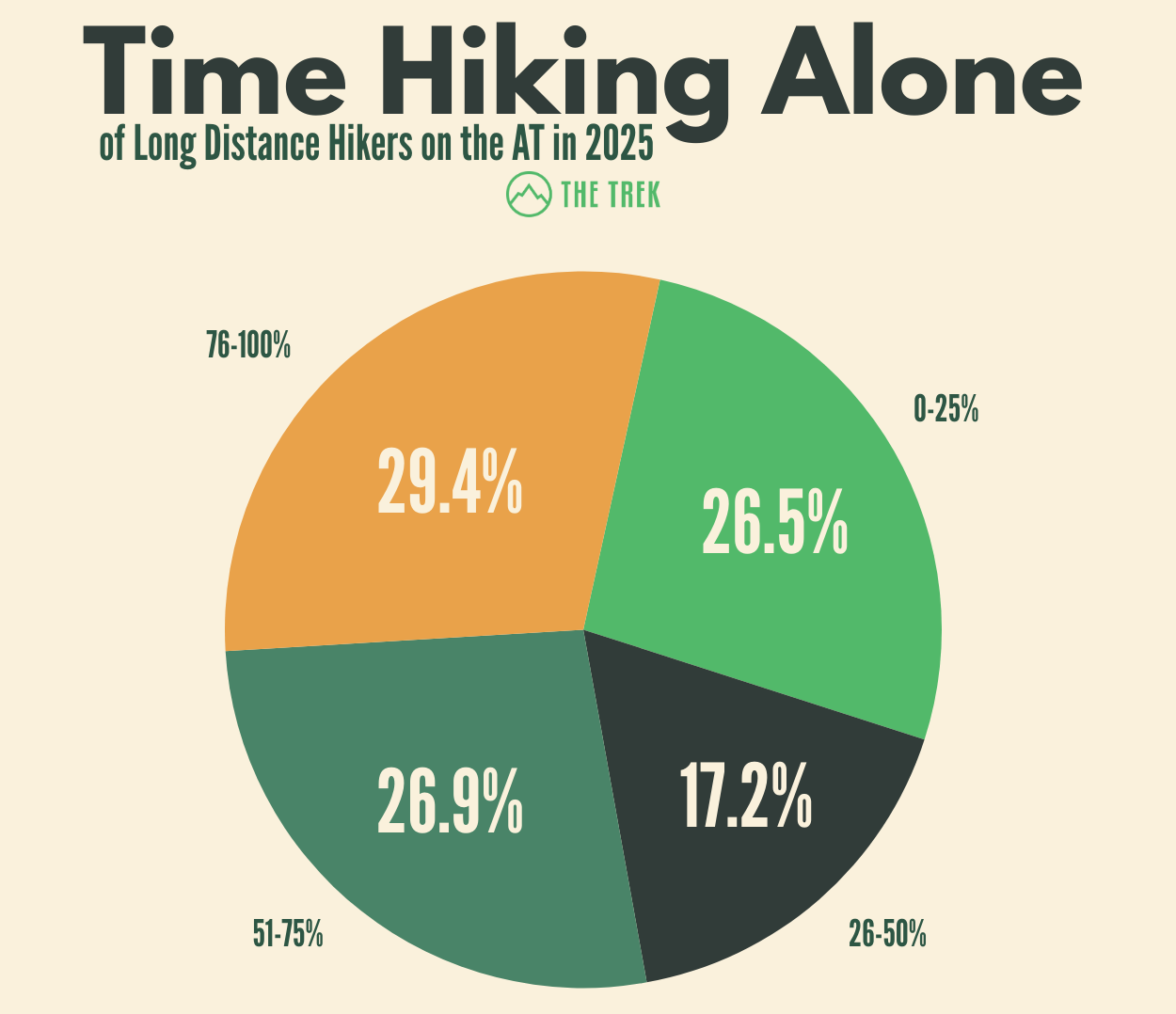
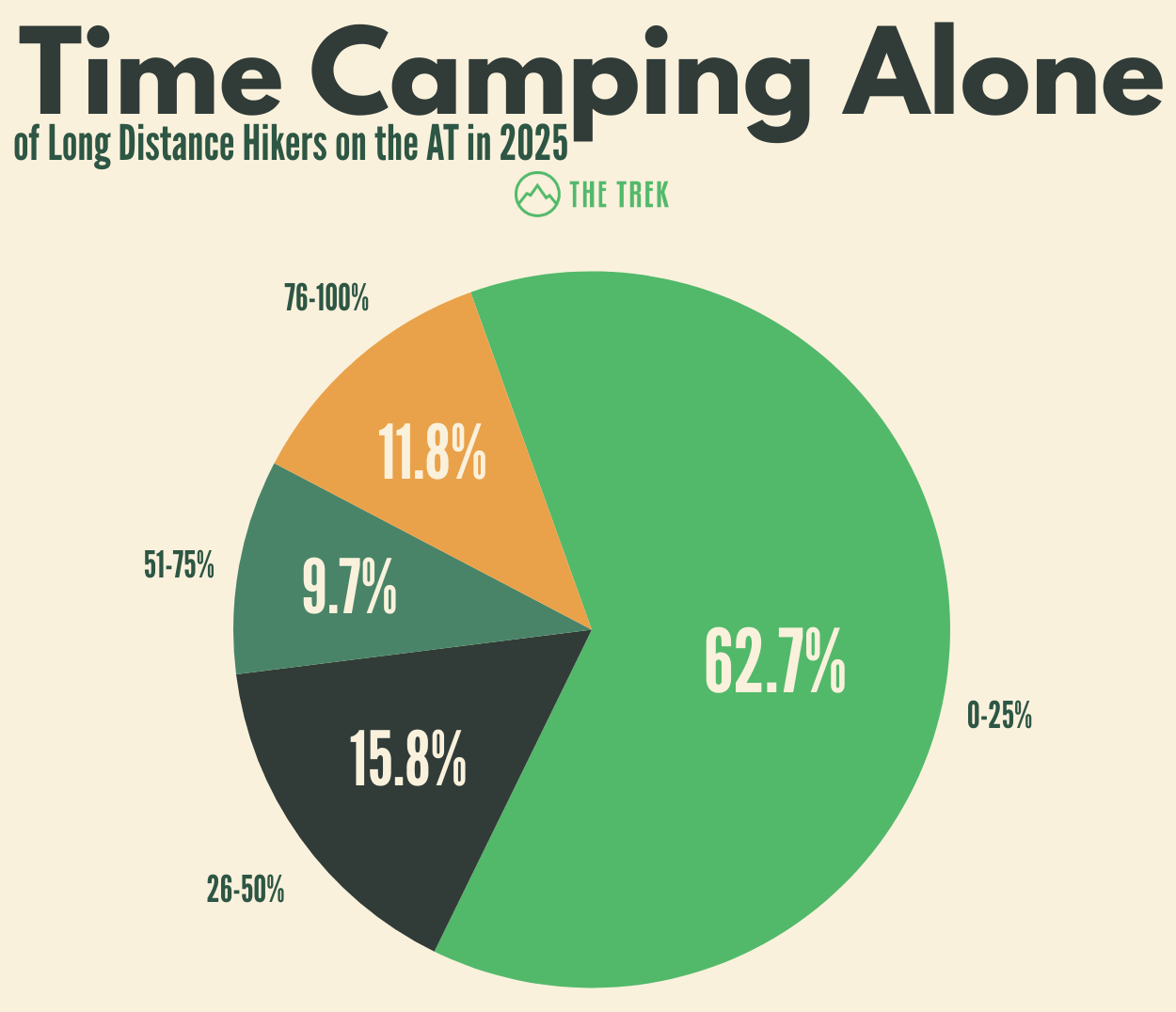
The results are clear: most hikers were not bothered by crowding and rarely struggled to find space to camp at night. Almost 30% reported hiking alone 75% of the time or more last year. Most hikers rarely camped alone, but even then, about a fifth of the hikers we surveyed said they camped alone at least 50% of the time.
This jibes with my personal experience. When I thru-hiked in 2018, my itinerary put me slightly ahead of the bubble. There were a few days when I saw almost no one, and I had shelters and large campsites to myself several times in the earliest weeks. Far from being too crowded, it was actually a bit lonelier than I would have liked. By summer, the trail had filled out a bit and I had gotten to know all the thru-hikers in my vicinity as we leapfrogged each other up the trail.
My AT experience was, for the most part, a perfect balance of just-enough-but-not-too-many people. I could camp alone in a solo stealth site as often as I wanted, but if I wanted company, I could usually find it at the nearest shelter.
Timing Matters
One major caveat to all of the above: there is a seasonal aspect to the crowding on the AT. If you start hiking north from Springer Mountain in March, you will be in the heart of the thru-hiker bubble and, at least at first, it may well feel as egregiously crowded as the stories say. In The Trek’s AT survey, we asked hikers to name the highest number of hikers they saw at a single campsite or shelter. The most commonly reported answer was 20 people at a single campsite (reported by nearly 60 people).
The Appalachian Trail Conservancy asks thru-hikers to voluntarily register their start dates in an effort to monitor and control crowding near the southern terminus. Registrations are capped at 50 per day, and it’s common for them to max out on certain days in March. That’s not counting thru-hikers who don’t register, or weekend and day hikers with whom you’ll also be sharing trail space.

Crowds on Katahdin in September 2022. Photo: Matthew Podolsky
In 2022 I did some section hiking and trail magic in Virginia that coincided with the bubble. Even that far north, I was shocked by how crowded the trail felt: at campsites, tent cities overspilled into vast tent suburbs, and I dared not approach the privies. Mind you, 2022 was the peak of the Covid-induced backpacking craze.
Similarly, you will see a big surge in crowds on holiday weekends, especially close to major population centers.
One of my first trips on the AT was a short weekend trip on the Maryland AT over Indigenous Peoples Day weekend. Major holiday? Check. Close to a city? Double check. Suffice to say the trail certainly lived up to the “overcrowded” reputation on that trip. Again: timing really matters when it comes to avoiding big crowds on the AT.
READ NEXT –
- How To Choose the Perfect Appalachian Trail Start Date
- These Are the Best Hostels on the Appalachian Trail, According To Thru-Hikers
It’s All Relative
Another caveat: Although, in general, I don’t find the AT objectively crowded — and many fellow hikers seem to agree — it certainly sees a lot of foot traffic compared to the PCT and CDT.
The AT runs through some of the most populous regions of the United States and passes close to Atlanta, DC, New York, and Boston. It is also the oldest and most famous of the US long trails — indeed, it might even be said it is the most famous long-distance hiking trails in the world.
It follows that more people will visit it in a year. In recent years, over a thousand people have completed the AT annually, compared to roughly 600 to 1000 on the PCT and less than 200 a year on the CDT (the highest number of CDT completions in a single year was 209 in 2023). And that’s just successful thru-hikers. When you add all hikers to the picture, the total annual visitor count to the AT is estimated to be in the millions.
This doesn’t mean you’ll be battling with throngs of people every day on trail, but it does, arguably, change the character of the trail compared to more remote treks.
Everyone Says It: The People Are Part of the Appeal
The number of people on the AT can be a good thing or a bad thing depending on your perspective. Some hikers want solitude and a true wilderness experience that tests their self-reliance. Others are eager to meet new friends with whom to share the adventure. Most of us fall somewhere in the middle: sometimes craving alone time, sometimes the company of fellow hikers.
The good news is you can find both on the AT. If you have a strong preference for solitude most of the time and really don’t want to encounter other people, the AT admittedly probably is not the trail for you. But for the rest, don’t let the stories of horrible overcrowding put you off. By hiking a little off-season or southbound, and by intentionally targeting small stealth campsites at night, you can absolutely get alone time — yet in most sections and seasons, you will still be able to find company if you seek it out.
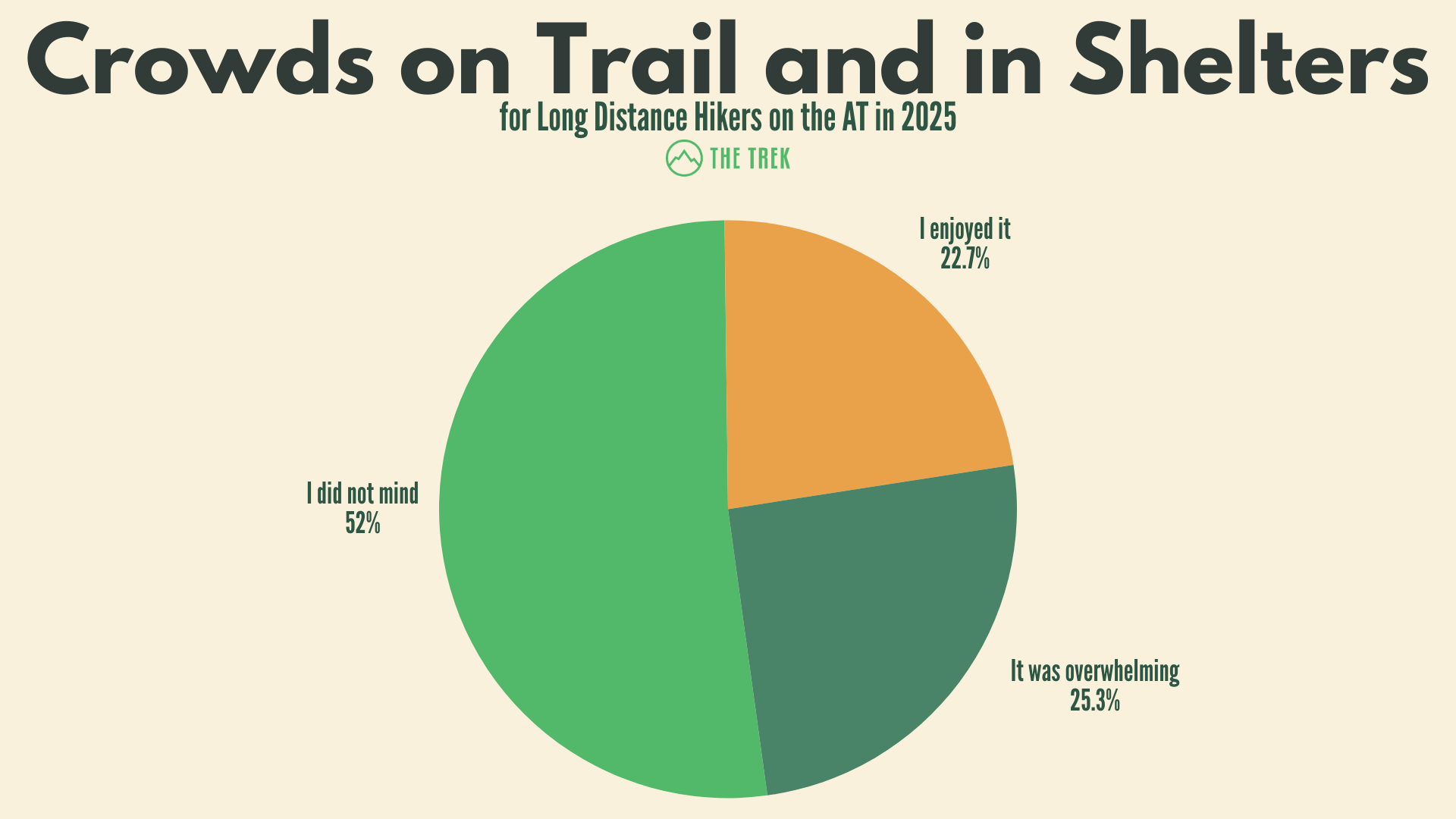
Most hikers in The Trek’s 2025 AT Thru-Hiker Survey said they did not mind (or even enjoyed) the number of people they encountered on trail and at camp. Community is often touted as one of the biggest draws of the AT and something that makes it stand out compared to other long trails.
p.s.

Donating or volunteering to support trail maintenance is perhaps the most direct way you can help address overcrowding impacts on the AT. Photo: Colleen Goldhorn
I do need to note before closing that overcrowding also has an environmental cost in the form of increased erosion, trampled vegetation, compacted soils, degraded water sources, and more litter. For hikers who love company, there are many wonderful things about the energy and sense of fellowship in the heart of the bubble — but it also causes real problems, and it doesn’t do to ignore that.
Beyond practicing Leave No Trace Principles, you can help tackle this issue by registering your start date, choosing to start well outside of the bubble, and donating or volunteering to support trail maintenance activities.
Featured image: Matthew Podolsky

This website contains affiliate links, which means The Trek may receive a percentage of any product or service you purchase using the links in the articles or advertisements. The buyer pays the same price as they would otherwise, and your purchase helps to support The Trek's ongoing goal to serve you quality backpacking advice and information. Thanks for your support!
To learn more, please visit the About This Site page.

Comments 1
Ibex! Your article accurately sums up my experience on the Appalachian Trail in 2018 when we met, and in 2019.
Being ahead of the bubble helped with overcrowding, and being willing to stealth camp where legal. I encountered large crowds after Clingmam’s Dome, and in the Smokies. Otherwise, it was a mostly solo-hike.
Cheers to you!!
Spice