
 ">


Should You Bring a Sun Umbrella on the Appalachian Trail?
They’re a little quirky, a little unconventional, but hiking umbrellas have become a popular backpacking accessory in recent years. They’re especially handy on arid western trails, where hikers can walk miles in the burning sun with zero natural shade. An umbrella means you can make your own shade. It also means you can protect yourself from mild to moderate rain without having to don your stuffy rain jacket.
Yes, they sure are swell. So you might be wondering if those magical benefits would transfer to the east coast. Is it worth carrying a hiking umbrella on the Appalachian Trail?
They’re less common on this trail for several reasons, which I will get into shortly. However, some AT hikers do carry them. They’re very much optional (on any trail), but on the AT they get even further into luxury-item territory than they do on western trails like the PCT or AZT.
Here are some of the benefits of carrying an umbrella on the AT, as well as a few reasons you might not want to.
They Only Weigh a Little Bit and Can Make Your Life a Whole Lot More Comfortable in the Rain
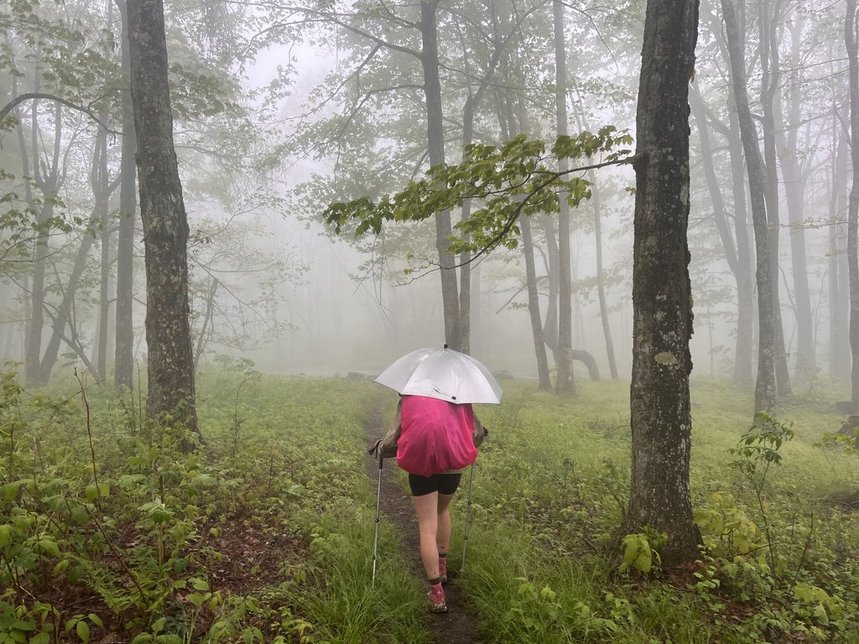
Photo: Lauren “Mothra” Mullen
You may have heard that it rains quite often on the AT. Out west, umbrellas are most useful for protecting you from sun. But your biggest weather obstacle on the Appalachian Trail will almost certainly be wet weather. And an umbrella can help you there too.
First: every AT thru-hiker should be packing a decent poncho or rain jacket whether they bring an umbrella or not. Anything else would be insanity. I cannot stress enough how wet this trail is.
But sometimes it only rains lightly, or it rains a lot and stays very hot and humid at the same time. Many hikers choose to hike through those conditions without putting on any rain gear, because even “breathable” rain jackets still trap a lot of heat and sweat and can be even more unpleasant than simply letting the rain fall on you.
However, if you have an umbrella, you can do even better: you can keep the rain off of you without increasing your baseline sweatiness. Huzzah! Huzzah! Huzzah!
Most hiking umbrellas weigh around six ounces, and some weigh even less, so carrying one isn’t a bad idea if you’re not overly worried about base weight. It won’t help in every circumstance, but if it makes even 25% of your hiking days significantly more bearable, that could be worth it, right?
Sun Umbrella Recommendations:
- Gossamer Gear Lightrek Hiking Umbrella (5.7 oz)
- Snow Peak Ultra-Light Umbrella (4.7 oz)
- Six Moon Designs Silver Shadow Carbon Trekking Umbrella (6.8 oz)
Umbrellas Are Wide and the AT Has a Lot of Trees

On the other hand, umbrellas are generally rather wide, which can sometimes be impractical in the AT’s green tunnel. Most of the trail is open enough for you and your umbrella to comfortably pass. However, spending 90% of your time hiking through the forest is still a very different use case from hiking primarily through open desert and alpine landscapes.
Out west, your surroundings will provide for completely unimpeded umbrella use most of the time, with minimal vegetation to get in your way. On the AT, overgrown flora, low branches, and rhododendron tunnels will sometimes encroach on the trail and make it difficult to pass by with an umbrella. You will manage, I’m sure, but it might be somewhat more annoying than on, say, the PCT.
You Need Your Hands More on the AT
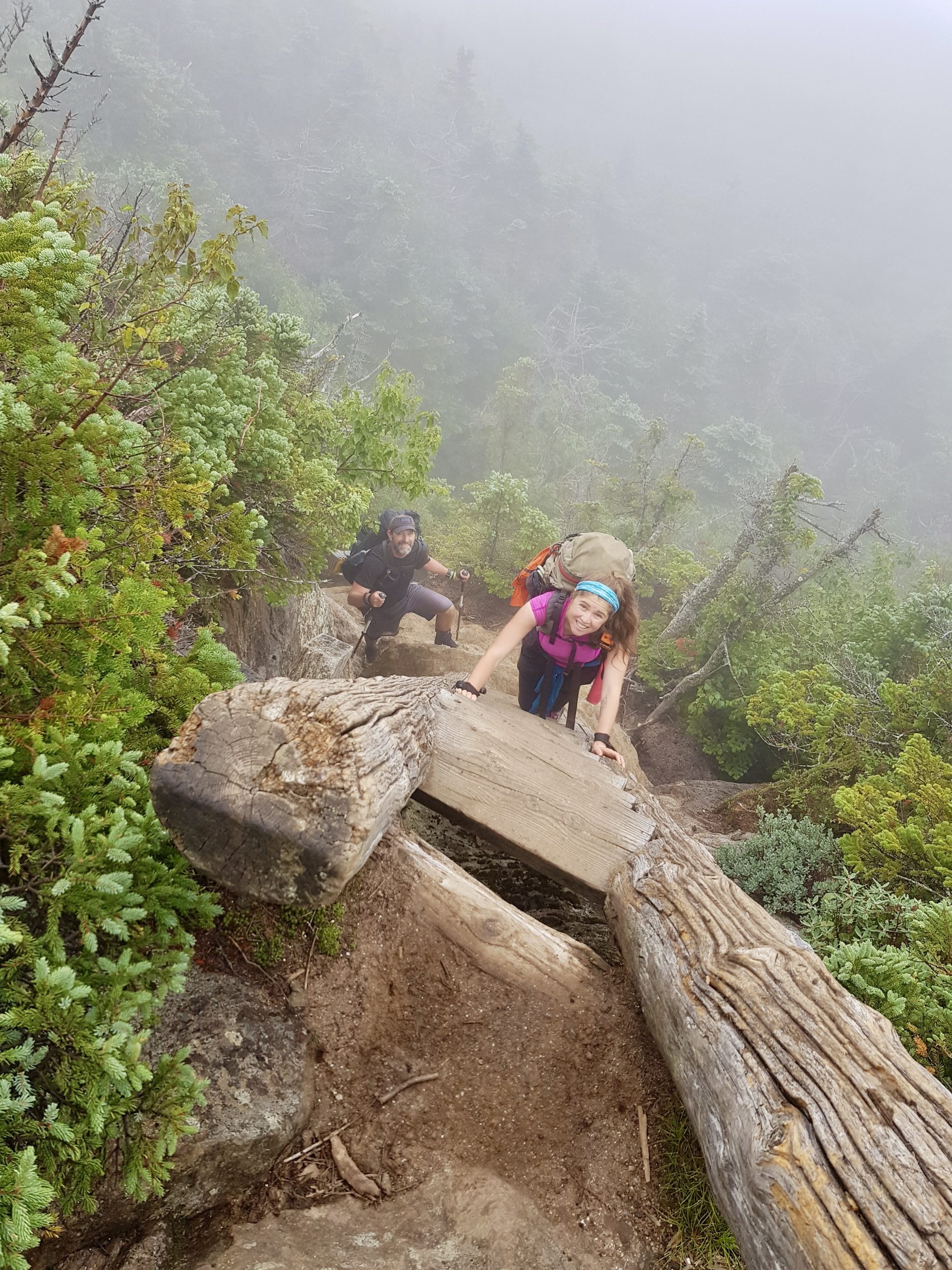
Despite its low elevation, the AT has a steeper gradient and rockier, rootier treadway than the western trails. Most people use their trekking poles almost constantly.
Once you’re in the Whites and Southern Maine, umbrella use will often be out of the question. You’ll be doing frequent rock scrambling and will need your hands free.
Hands-free umbrella clips are a thing, but they’re not exactly foolproof, and it’s tough to get your umbrella set up at the perfect angle, to say nothing of making micro-adjustments throughout the day. Some hikers choose to simply hold the umbrella in their hand when they want to use it. This works great if you’re swinging your legs on a gently graded trail but would kind of suck most of the time on the AT.
You’ll definitely want a hands-free kit if you plan to use one on the AT. You’ll just have to fiddle with it until you’re comfortable with the setup.
You Generally Don’t Need To Make Your Own Shade on the AT (and Much Good It Will Do You Anyway)

Photo: Alex “GPS” Brown
There are a few exposed spots on the AT, and of course the trees don’t provide 100% sun protection. But in general, you will have enough shade most of the time without needing an umbrella to make more.
Also consider that the east coast is humid, meaning the temperature difference between sun and shade is considerably less than in arid environments. That air moisture holds heat and distributes it more evenly.
If you want to bring an umbrella on the AT, do it for rain protection rather than sun protection. And be clear that it will only help you some of the time. If it’s windy or the trail is overgrown, you won’t be able to use it. If it’s cold or raining especially heavily, you’ll need to wear rain gear anyway.
Some Hikers Carry Umbrellas on the AT and Like Them

Photo: Twist-Tie and Spreadsheet
All this being said, some AT hikers carry umbrellas and love them, including some of The Trek’s very own bloggers. 2025 AT blogger Lauren “Mothra” Mullen said of hers, “The trail is wide enough to have it, and just having a little bit of controlled dry space in front of your face is so, so nice when it is downpouring. Having this umbrella meant that I could hike without my rain jacket and could listen to my headphones while hiking in the rain.” You can read Mothra’s full accounting of her umbrella and other gear she loved on the AT here.
If you don’t mind carrying a few extra ounces to take the edge off some, but not all, rainy days, by all means: an umbrella is a wonderful luxury item to bring on the Appalachian Trail.
Featured image: Lauren “Mothra” Mullen

This website contains affiliate links, which means The Trek may receive a percentage of any product or service you purchase using the links in the articles or advertisements. The buyer pays the same price as they would otherwise, and your purchase helps to support The Trek's ongoing goal to serve you quality backpacking advice and information. Thanks for your support!
To learn more, please visit the About This Site page.

Comments 2
Kelly, Great article! Loved seeing one of our photos: going over the styles in Virginia with an umbrella was a snap-worthy event. Neither The Historian or I ever feel unhappy about the little extra weight. We both wear glasses and having the umbrella keep them dry is a boon. I also find that the sound of the rain on the umbrella is comforting. I would never have guessed, but it evokes the same feeling of being sung in your tent knowing at least part of you (the upper part) is dry. On our just completed Long Trail hike this summer, we used them to cover our packs while we put up our tent in the rain. I have also wedged one in a tree limb to eat under on a rainy or sunny day. Finally, your point about all the trees on the AT (and LT) is important. What I did not expect, though, was how easily the small umbrella’s with their slippery fabric would slide by the vegetation. Out of 3+ months on the AT and 6 weeks on the LT, we have one “wound” on one umbrella that I fixed with some repair tape (the cap on one tip fell off). The one thing we sometimes feel grumpy about is the amount of light they cut out. On the really gray days, hunkered under the umbrella feels darker. Overall, we are totally committed to carrying the weight and don’t really put it in a luxury category.
I would say a great idea: “• Lawton Ginter, in his book, I HIKE p173 said it best for me:
“[The umbrella] “Gave me the opportunity to lollygag a bit. You see, most hikers walk very quickly in the pouring rain. Granted, most waterproof jackets keep the rain from seeping in but the cold rain zaps the heat from your body due to convection. It’s just a simple fact of allowing the cold water to land on your chest and shoulders for hours on end. With the umbrella, the rain never hits your chest and shoulders and subsequently allows you to stay warmer. It is like walking with a small tent over your head all day.. The other thing that hikers wearing only rain jackets typically don’t do is they don’t take breaks. Who wants to take a break in the pouring rain on the side of the trail to only get more soaked and more cold. I took breaks every hour or so with the umbrella. I could squeeze in and get my entire body under the umbrella’s perimeter.
Also nice to not have the hood of your rain jacket or poncho making that cowling over your head. Umbrella gives you much better field of view instead of blinders.”
• Ray Jardine in his book BEYOND BACKPACKING also praises the umbrella. And entire chapter “Umbrella” on the topic. “You ever seen hikers in rain jackets lounging around at rest stops,—out in the open–during a heavy rain? It doesn’t happen. But the umbrella makes those rest stops quite plausible.” p.105