
 ">


Top Stoves, Filters, Rain Gear, and More on the Appalachian Trail: 2025 Thru-Hiker Survey
The 2025 AT survey is officially wrapping up! In this final installment, we’re diving into water filters, stoves, rain gear, and the essential small gear choices, like power banks, trekking poles, and GPS devices. We will also dive into the choices hikers made around luxury items, just in case you’re looking for inspiration to help make your hike a little bit more comfortable.
This year, we received 279 responses from the AT Class of 2025. If you’re using this as a resource to help plan your 2026 AT hike, make sure to sign up to take the survey yourself next year! Hit the button below to be notified when the 2026 AT Thru-Hiker Survey opens for submissions so you can help the Class of 2027 in their trail planning.
Sign Up to Take the 2026 AT Thru-Hiker Survey!
Quick Navigation
Water Treatment
Illness
Top Stoves
Top Power Banks
Top GPS Devices
Top Rain Gear
Top Trekking Poles
Menstruation
Luxury Items
Summary of Results
Water Treatment
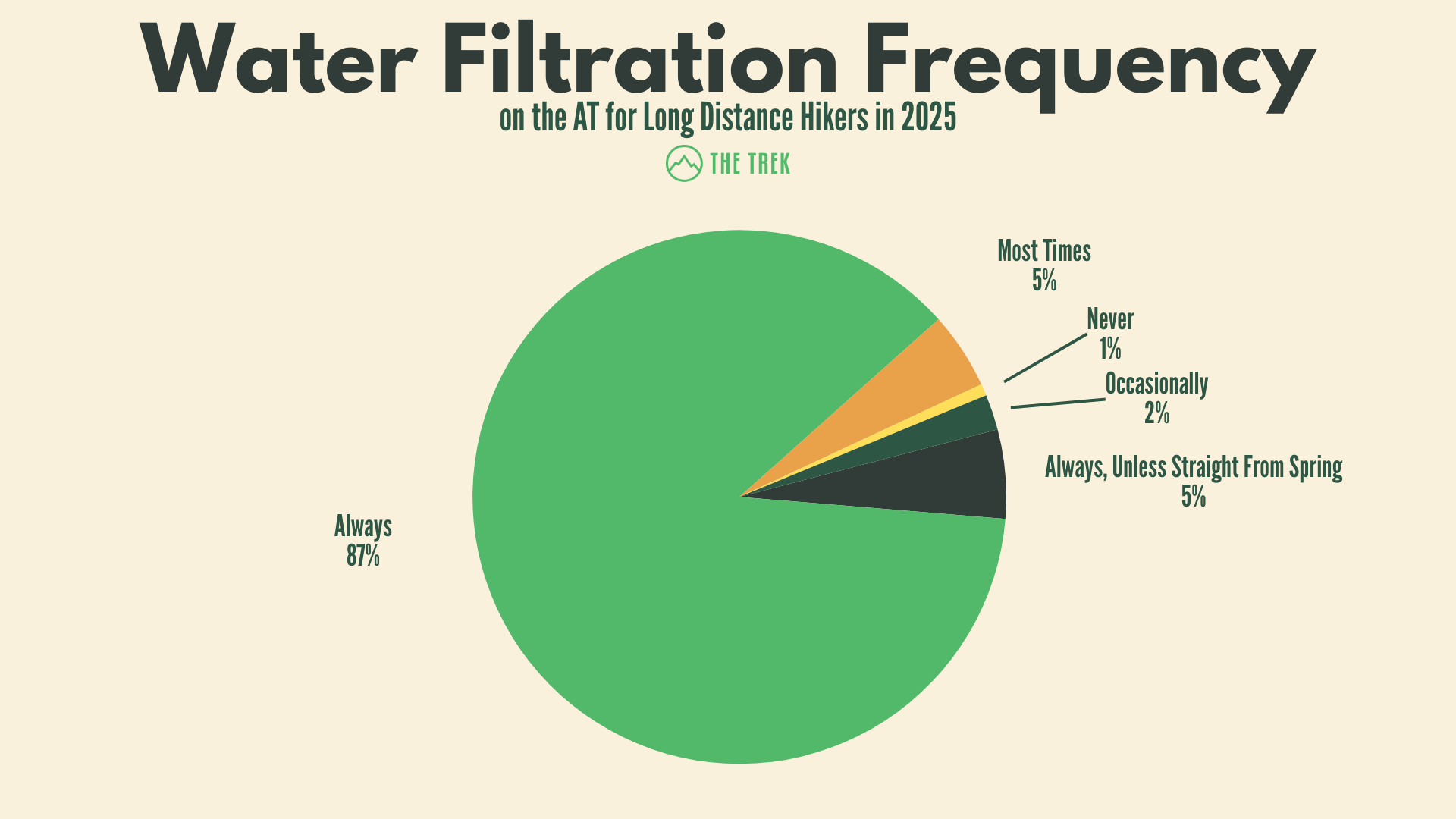
We asked hikers how frequently filtered their water. The majority of hikers (87%) said they always filter their water, which was similar to last year’s number of 84%. 97% of hikers filtered their water at least most of the time — on top of the 87% who always filtered, 5% claimed to filter most times, and another 5% only made an exception for water collected straight from a spring. Only two hikers this year claim to have never filtered their water.
Water Treatment Type
Water treatment is commonly done via five methods:
- A filter that water is pushed through manually, making it ready to drink instantly. This is usually attached to a dirty water bottle or pouch. In our survey we break the filter category down into small (e.g. Sawyer Mini) and mid-size filters (e.g. the Sawyer Squeeze).
- A pump that filters the water (e.g. the MSR MiniWorks). This requires no wait time.
- Liquid chemical treatments, which take a few minutes to react before the water is safe to drink (e.g. Aquamira).
- Tablets (e.g., Aquatabs), which operate the same way as liquid treatments. Tablet treatments have been around longer than liquid treatments and, while small, are bulkier than liquid options.
- Devices inserted into the water bottle or bag that use UV rays to treat the water (e.g. the Steripen).
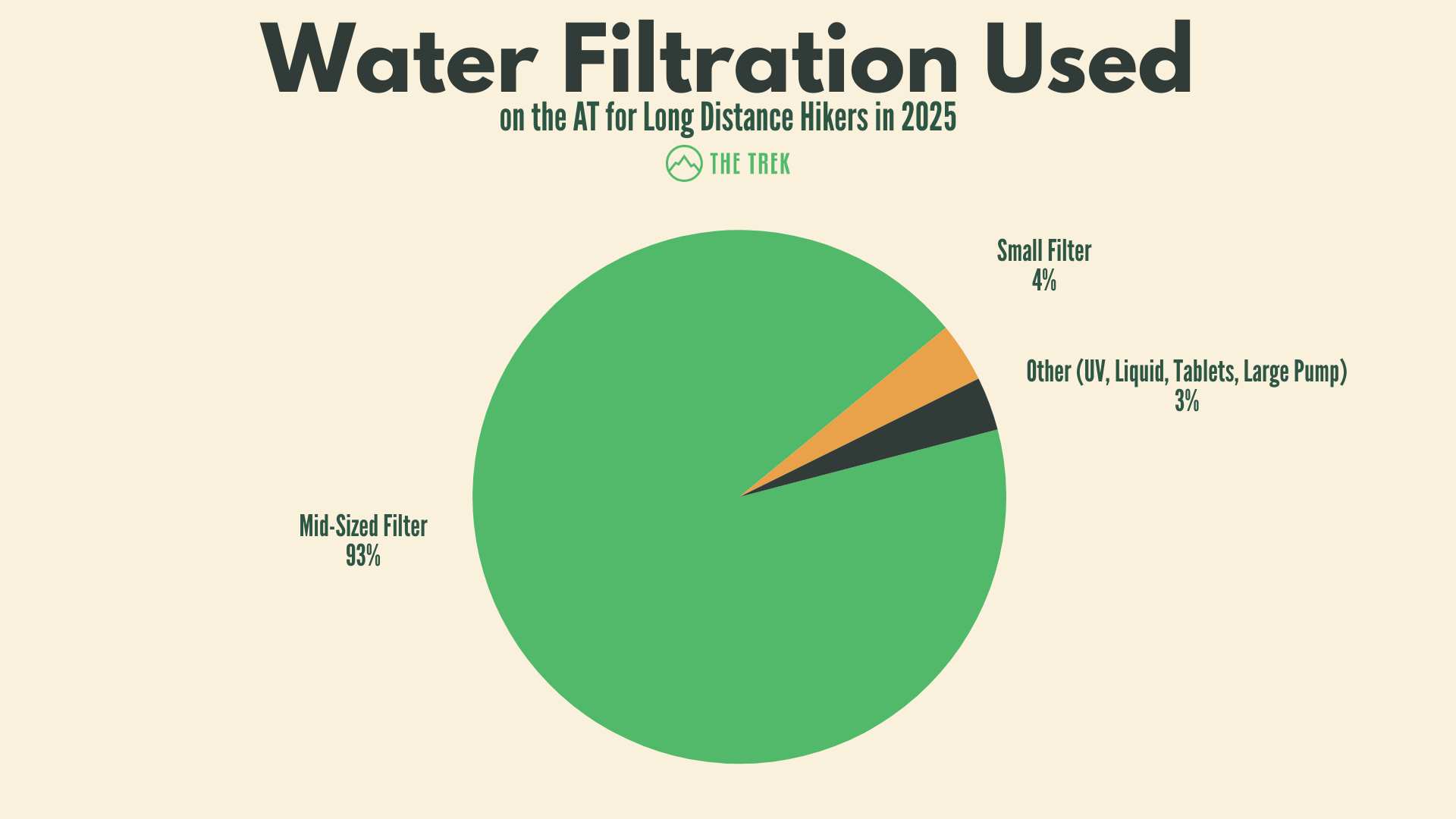
Mid-size water filters are once again the most popular choice among hikers by a huge margin. The percentage has changed very little from previous years, rising to 93% from 92% of hikers using this filter type last year. The remaining 8% of hikers used multiple other less popular treatment types. Several hikers did mention carrying tablets or liquid chemical treatment as a backup method.
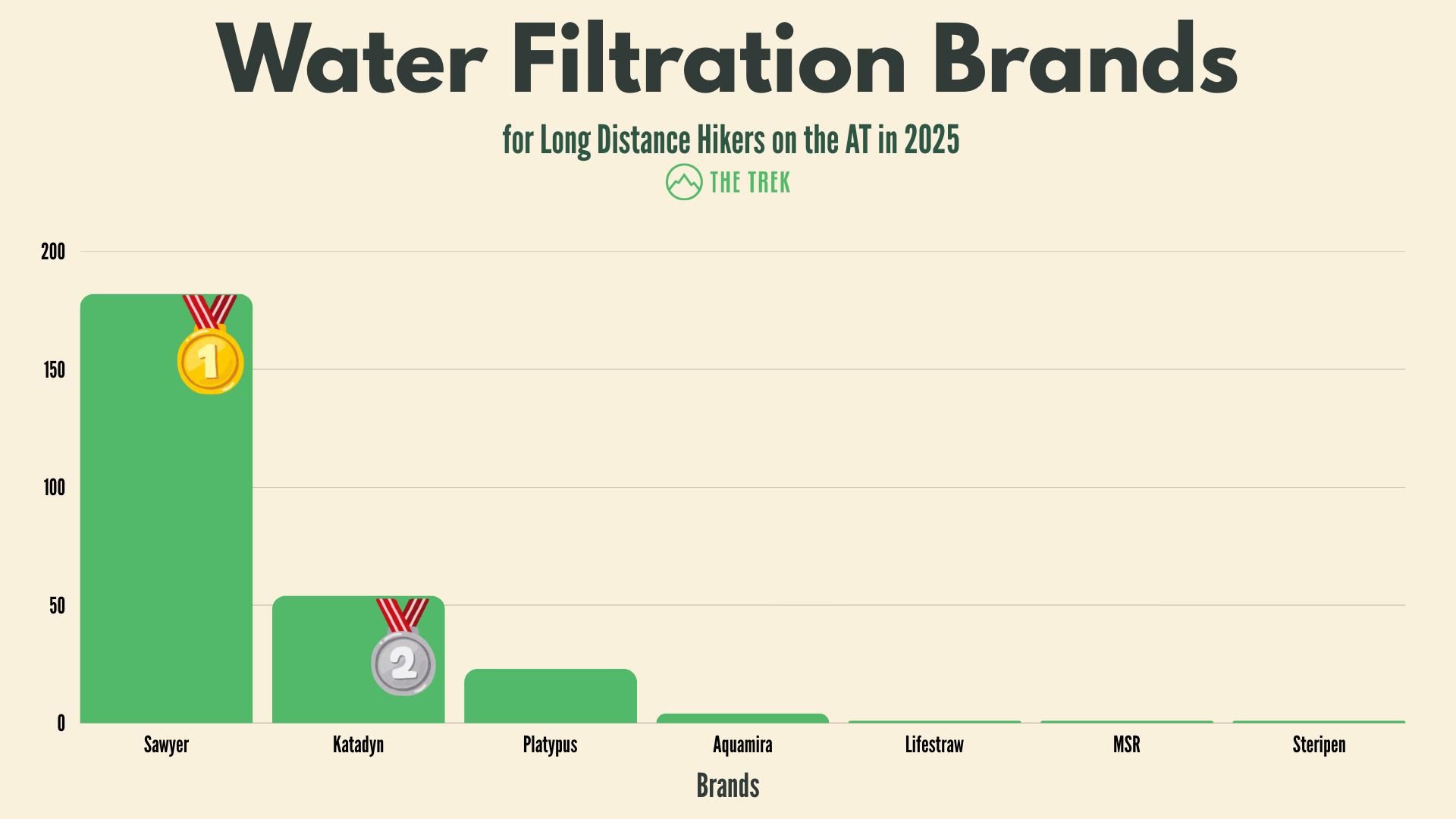
The most popular brand of filter mentioned was Sawyer, used by over 170 hikers, and the Sawyer Squeeze was the most popular model. The Katadyn BeFree and Platypus QuickDraw were also mentioned frequently. Exact numbers for each filter are hard to capture, as many didn’t remember the model name or switched models frequently.
Illnesses on Trail
We asked hikers about multiple types of illnesses or diseases they may have encountered on trail, including waterborne illness, norovirus, and tickborne illnesses. 4% of respondents (12 hikers) stated they contracted a waterborne illness such as giardia at some point during their hike.
Of those 12 hikers, seven were part of the group that always filtered their water, four more were from the group that filtered except for springs, and one was one of the two hikers who never filtered their water. Another way to look at it is this: 2.5% of hikers who always filtered their water got sick, 27% of hikers who filtered everything except spring water got sick, and 50% of hikers who never filtered their water got sick. We are admittedly working with a small sample of hikers reporting waterborne illness on the AT, but still — just something to think about!
We also asked hikers whether they contracted norovirus and where they got it. Notably, 24% of hikers in our survey contracted norovirus during their hike, which doubles last year’s number of 12%.
It’s difficult to pinpoint any particular location where it was most common, but Pennsylvania, North Carolina, and Virginia (particularly Daleville) were mentioned frequently. Multiple hikers mentioned they suffered from norovirus in Damascus or shortly after Trail Days.
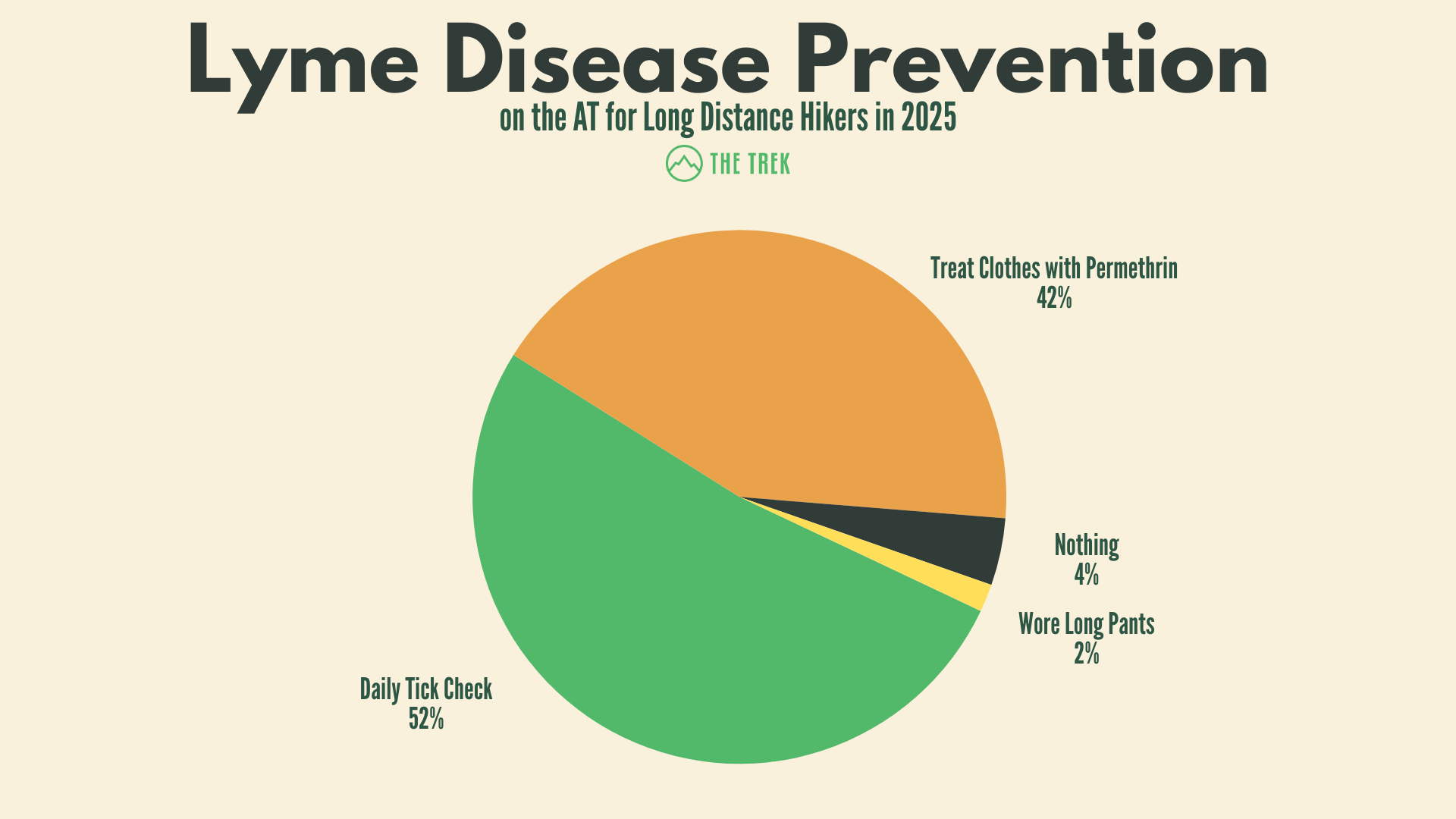
We asked hikers about their prevention tactics against ticks and Lyme disease. Many hikers used multiple prevention methods, with the combination of treating their clothes with permethrin and checking for ticks daily being the most popular options. One hiker said they carried doxycycline — a prescription antibiotic that is often used to treat Lyme disease —just in case.
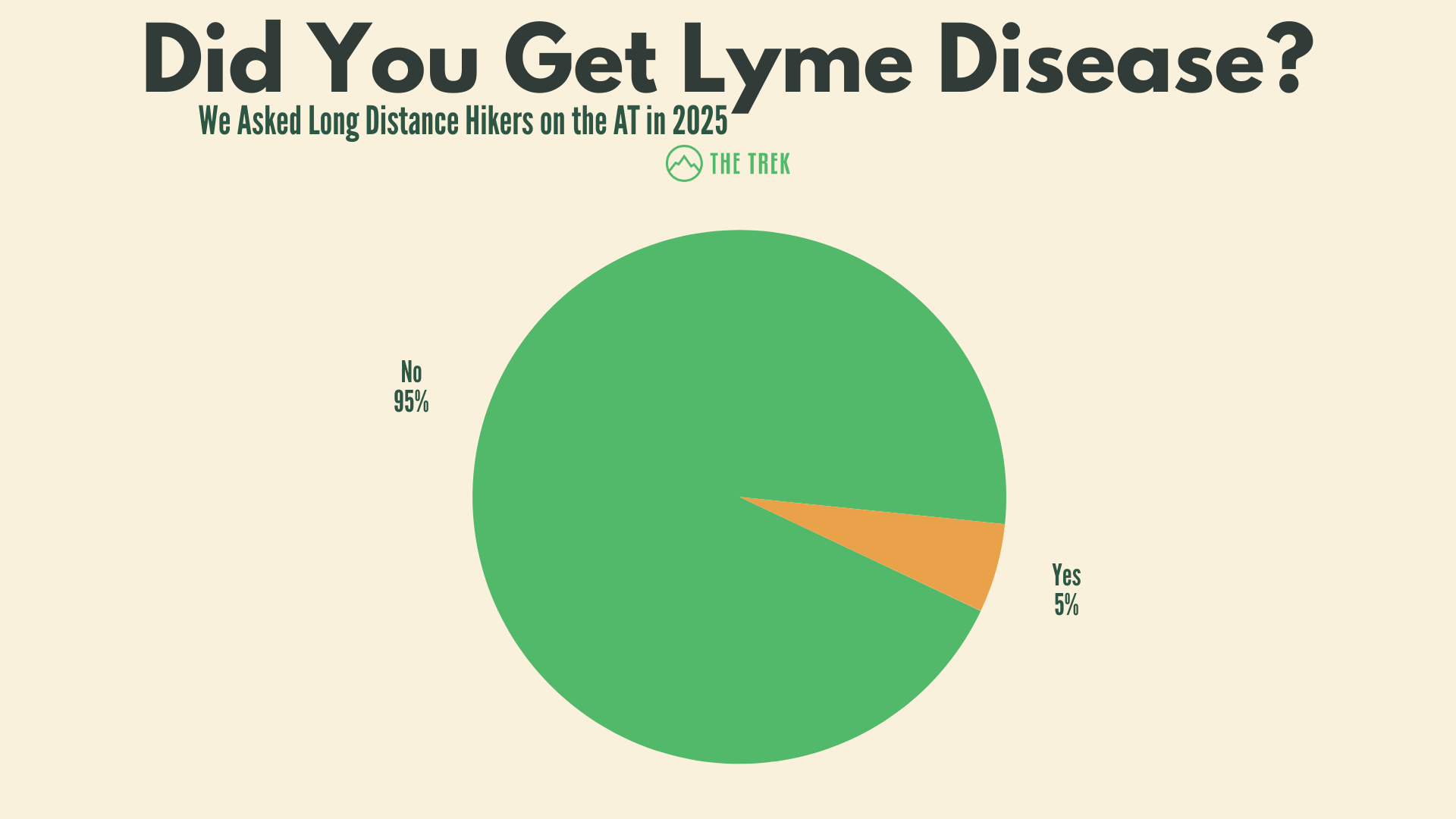
Regardless of their preventive measures, 18 hikers (5%) contracted Lyme disease this year. Of those 18 hikers, five reported only checking for ticks daily, three only treated their clothes with permethrin, and ten did both as prevention tactics.
Type of Stove
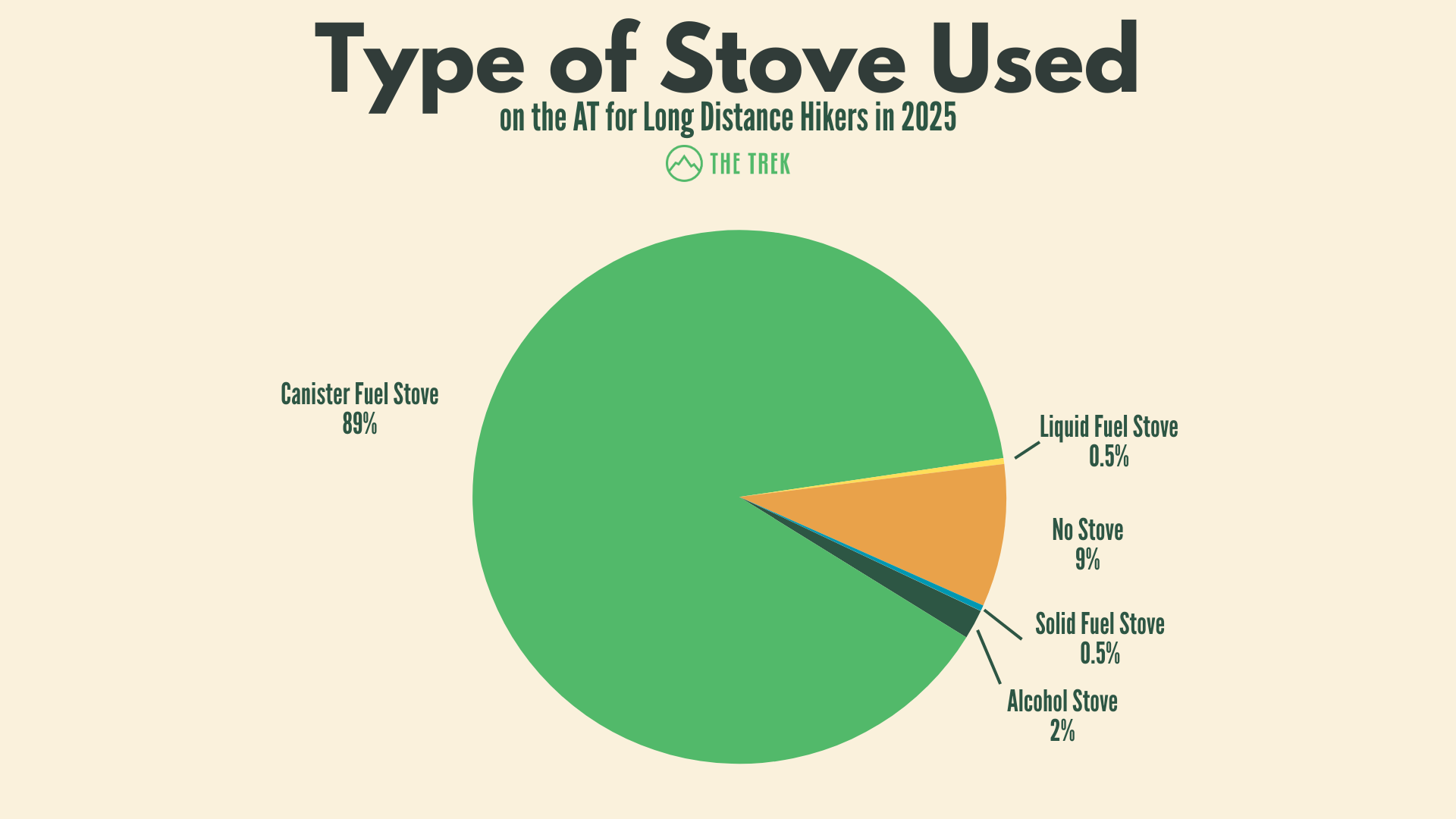
Canister stoves were once again the most popular stove type, used by 89% of hikers this year. 9% of hikers went stoveless, while even fewer used alcohol or liquid stoves.
17% of hikers swapped out their stoves along the way. When switching, the most popular switch was to send their stove home. 9% of hikers sent their stove home and went without one, 8% switched to a different model of stove (usually another canister stove), and just 1% replaced their stove with the same model.
Top Stoves
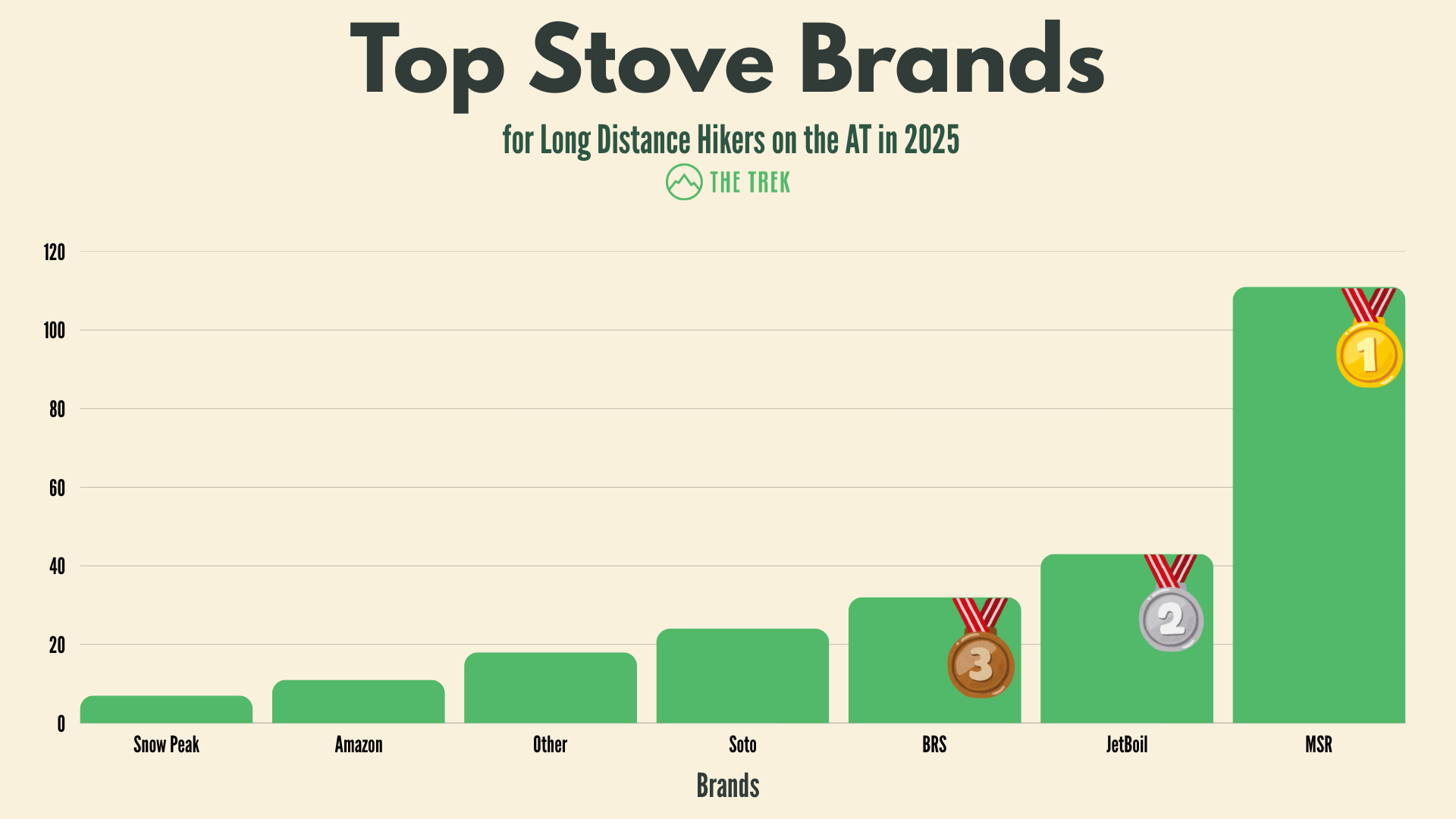
Once again, the top stove model this year was the MSR PocketRocket. This canister stove has held the top spot since at least 2017. Below are the most popular stove brands and their common models, followed by a table of the most popular models.
1) MSR (110)
- PocketRocket (102)
2) JetBoil (40)
3) BRS (28)
- 3000T (27)
4) Soto (23)
- Windmaster (14)
- Amicus (7)
5) Snow Peak (3)
There were no notable models for Snow Peak, as most hikers using that brand declined to mention the model they used.
Top Stoves on the AT in 2025
| Rank | Model | Responses |
|---|---|---|
| 1 | MSR PocketRocket (all versions) | 112 |
| 2 | BRS 3000T | 27 |
| 3 | JetBoil Flash | 15 |
| 4 | Soto Windmaster | 14 |
| 5 | JetBoil Stash | 12 |
Power Banks
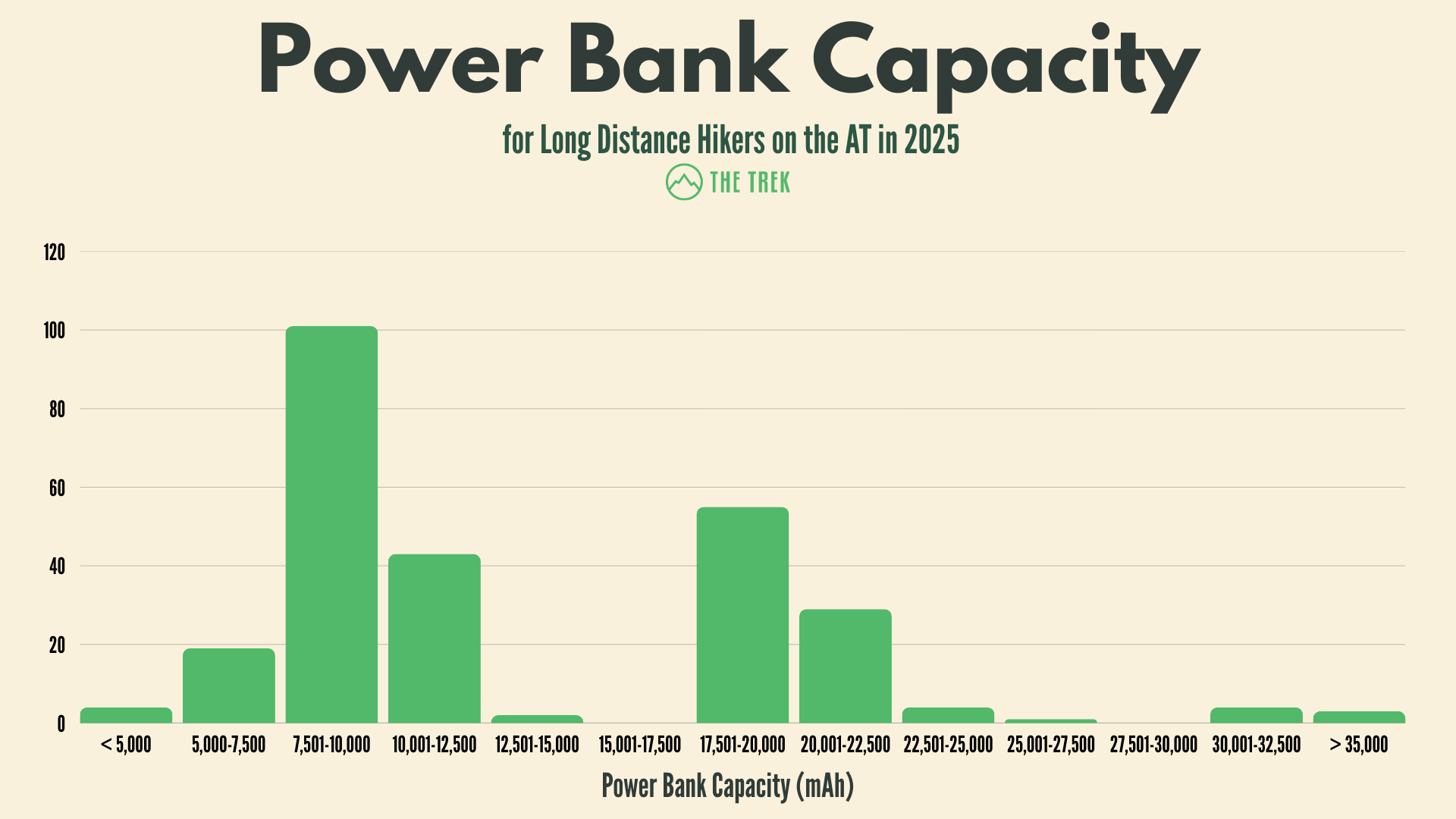
Almost every hiker this year (99%) carried a power bank. The capacities of their power banks varied, with a cluster around 10,000 mAh and another, smaller bump around 20,000 mAh. 10,000 and 20,000 mAh are some of the most standard battery bank sizes, so it makes sense for hikers to fall around these capacities.
The 7501-10,000 mAh range was the most popular by quite a bit, with 39% of hikers carrying a power bank within that capacity range. 10,000 mAh is sufficient to deliver two full charges to most modern smartphones. Recalling that most thru-hikers are resupplying every three to five days, it makes sense that this power bank size is the most popular.
The most popular model of power banks were difficult to determine, with so many offerings from each brand and hikers not remembering exactly what model they had. Among the many brands listed, two were decidedly the most popular.
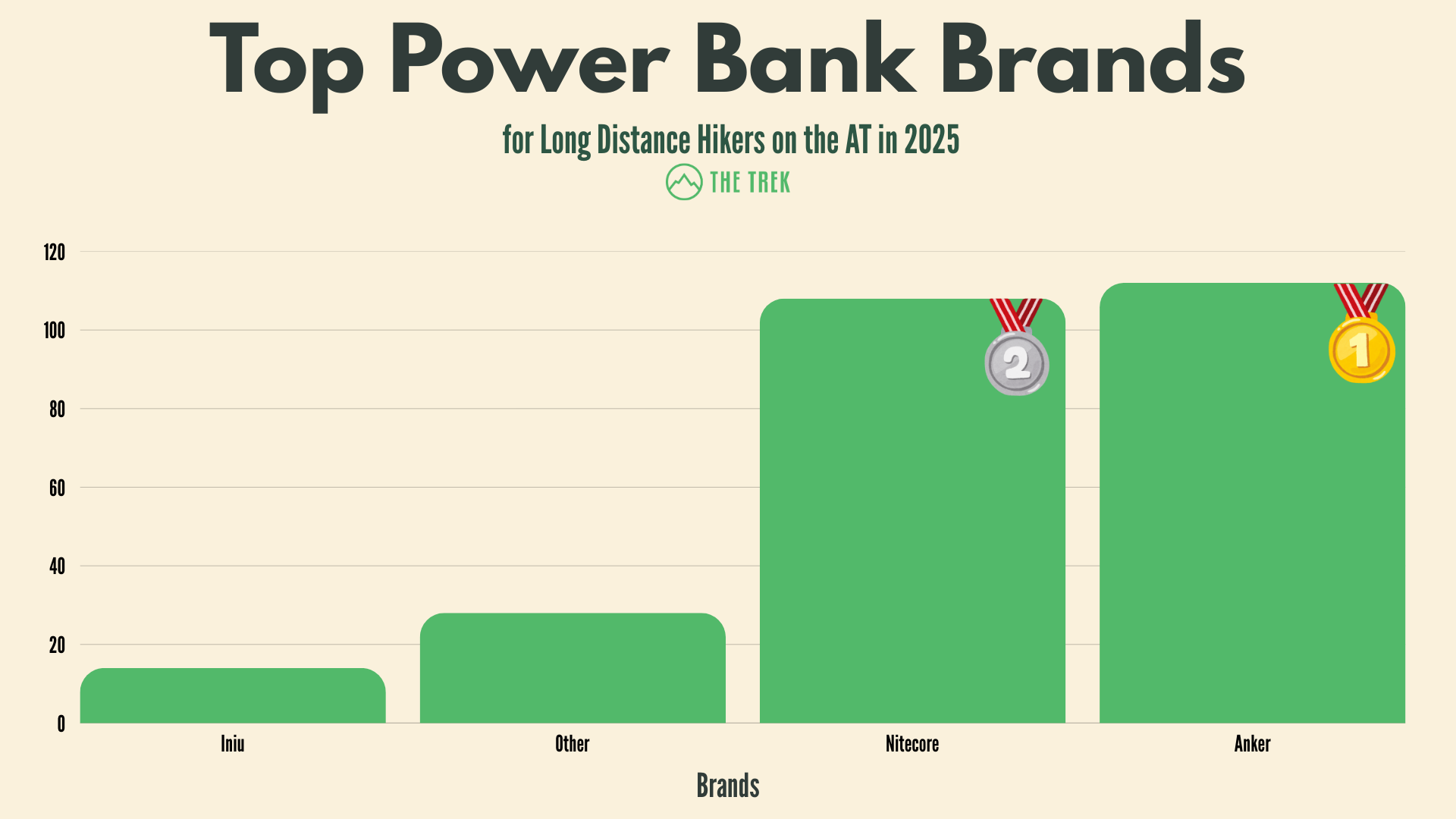

Anker was the number one brand this year in a very tight race, with 168 hikers using their brand of power bank. Nitecore narrowly lost its claim on the top spot this year, falling to second place with 123 hikers using Anker power banks. The only model of power bank that was a clear favorite was Nitecore’s NB1000.
GPS Devices
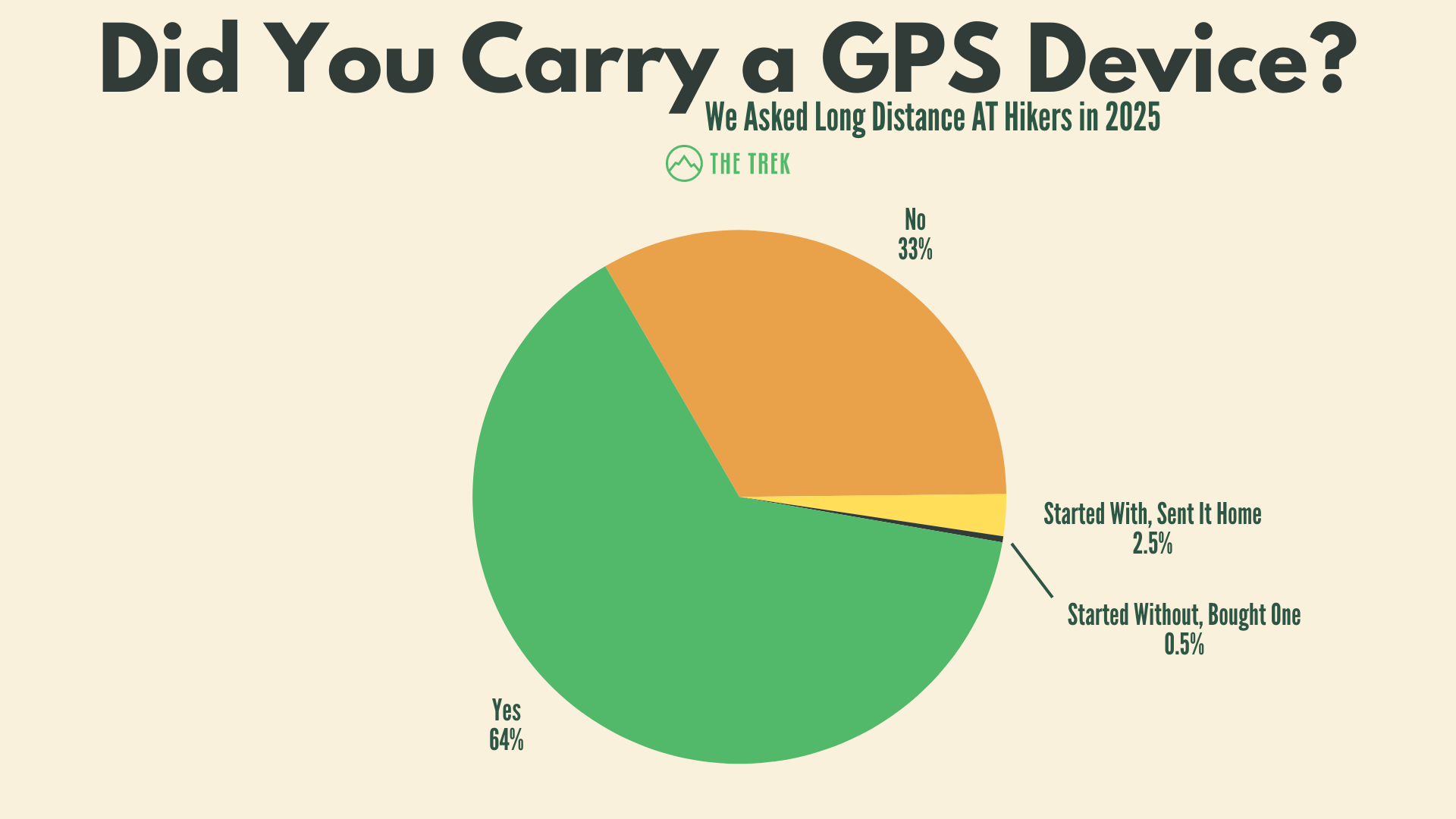
We asked hikers about their GPS devices and if they used them for the second time this year. The amount of hikers using GPS devices stayed mostly consistent. Garmin was overwhelmingly the most popular brand, with 190 hikers using one of their GPS devices. Specifically, Garmin’s inReach Mini 2 was the most popular model. Other brands and models were used by very few hikers in comparison. The top few brands and their satisfaction ratings are listed in the table below.
This year is also the first year we saw hikers using the iPhone’s satellite messaging option, with one hiker citing it as their emergency GPS option.

Top GPS Device Brands on the AT in 2025
| Rank | Brand | Responses |
|---|---|---|
| 1 | Garmin | 190 |
| 2 | Zoleo | 4 |
| 3 | Spot | 3 |
Rain Gear
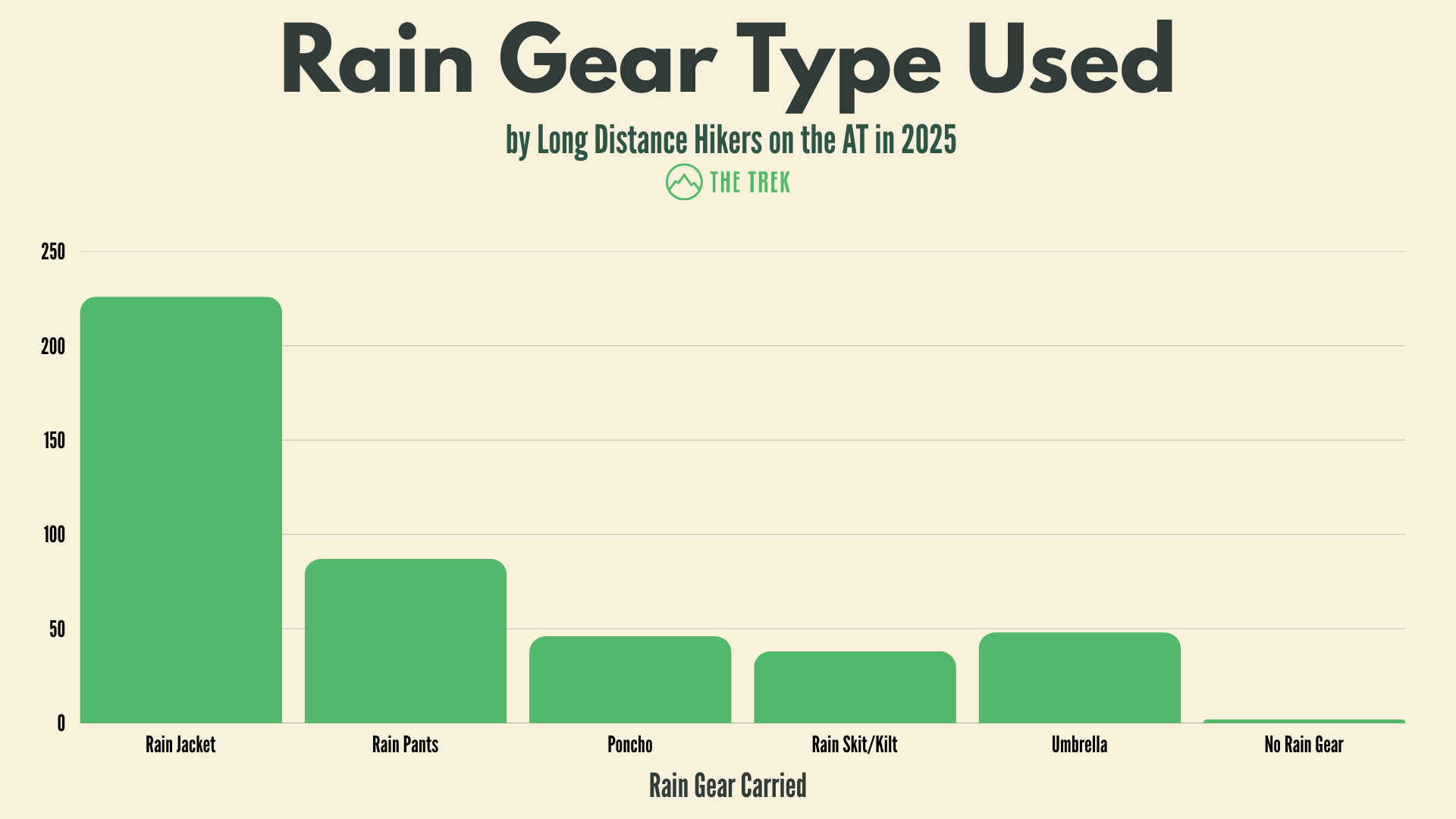
We asked hikers about the type of rain gear they used this year and their favorite brands and models, adding for the first time the option of a rain skirt/kilt. A rain jacket was the most popular option, though most hikers used a combination of items.
For those who took a combined approach, pairing a rain jacket and rain pants was the most popular option. The next most popular combination was rain jacket and umbrella. Umbrella use varies widely year-to-year, but 56 hikers opted to carry an umbrella in 2025.
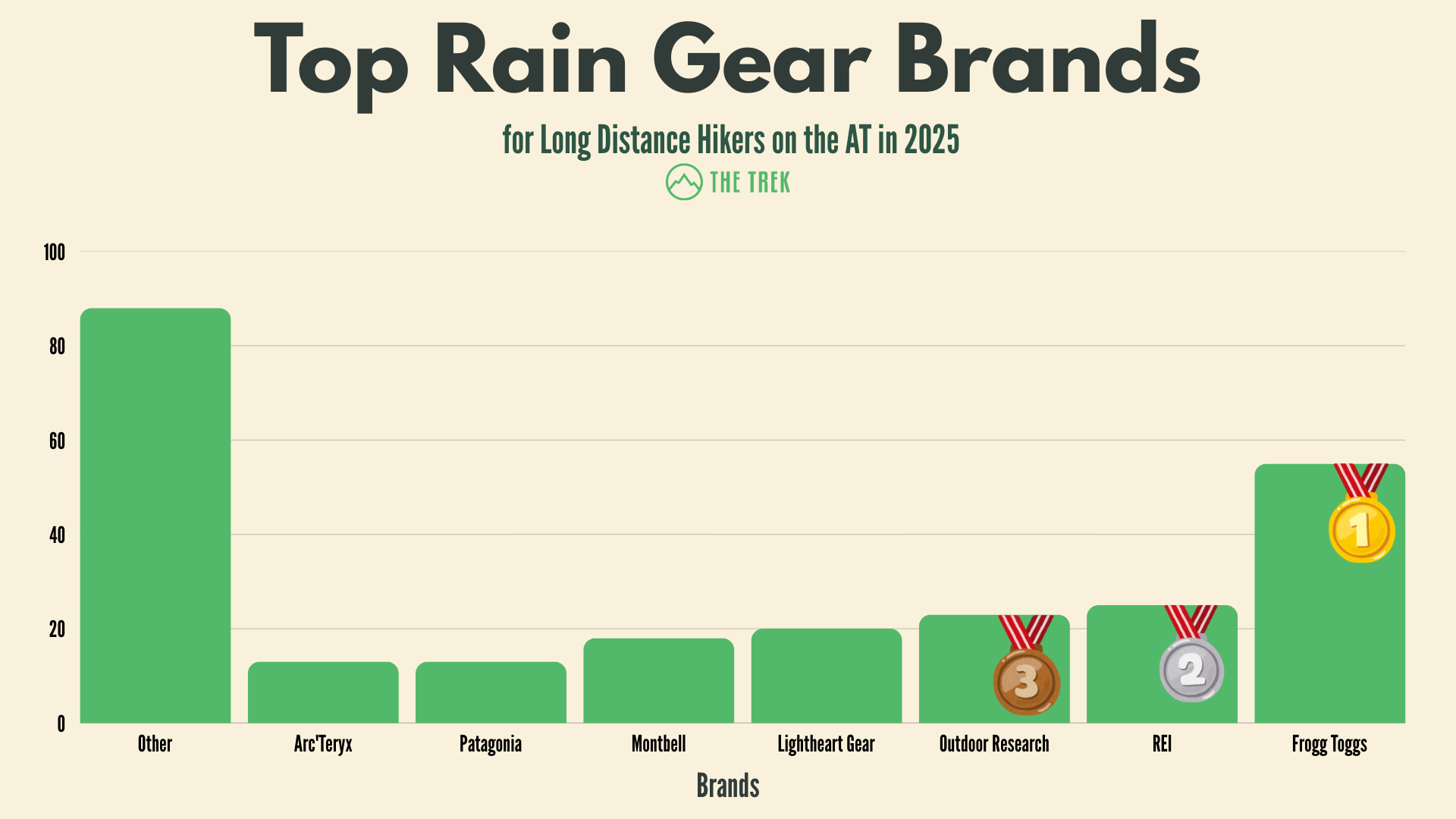
Frogg Toggs was once again the top brand and model of rain gear used by hikers, perhaps due to its reputation as an affordable and easily replaceable option. Below are the tables of the remaining top brands and models. Hikers typically reported a mismatch of brands between the items they used; No one brand seems to have a hold on “rain gear” in general, which can be visualized by the height of the “Other” category, covering the sum of all brands receiving fewer than three votes.

Top Rain Gear Brands on the AT in 2025
| Rank | Model | Responses |
|---|---|---|
| 1 | Frogg Toggs | 58 |
| 2 | Outdoor Research | 28 |
| 3 | REI | 27 |
| 7 | LightHeart Gear | 23 |
| 6 | Montbell | 19 |
| 4 | Patagonia | 15 |
| 5 | Marmot | 14 |
| 8 | Arc'teryx | 14 |
Top Rain Gear Models on the AT in 2025
| Rank | Model | Responses |
|---|---|---|
| 1 | Frogg Toggs Ultra-Lite Rain Suit | 59 |
| 4 | LightHeart Gear Rain Jacket | 16 |
| 3 | Patagonia Torrentshell | 13 |
| 5 | Montbell Versalite | 12 |
| 2 | Outdoor Research Helium | 11 |
Trekking Poles
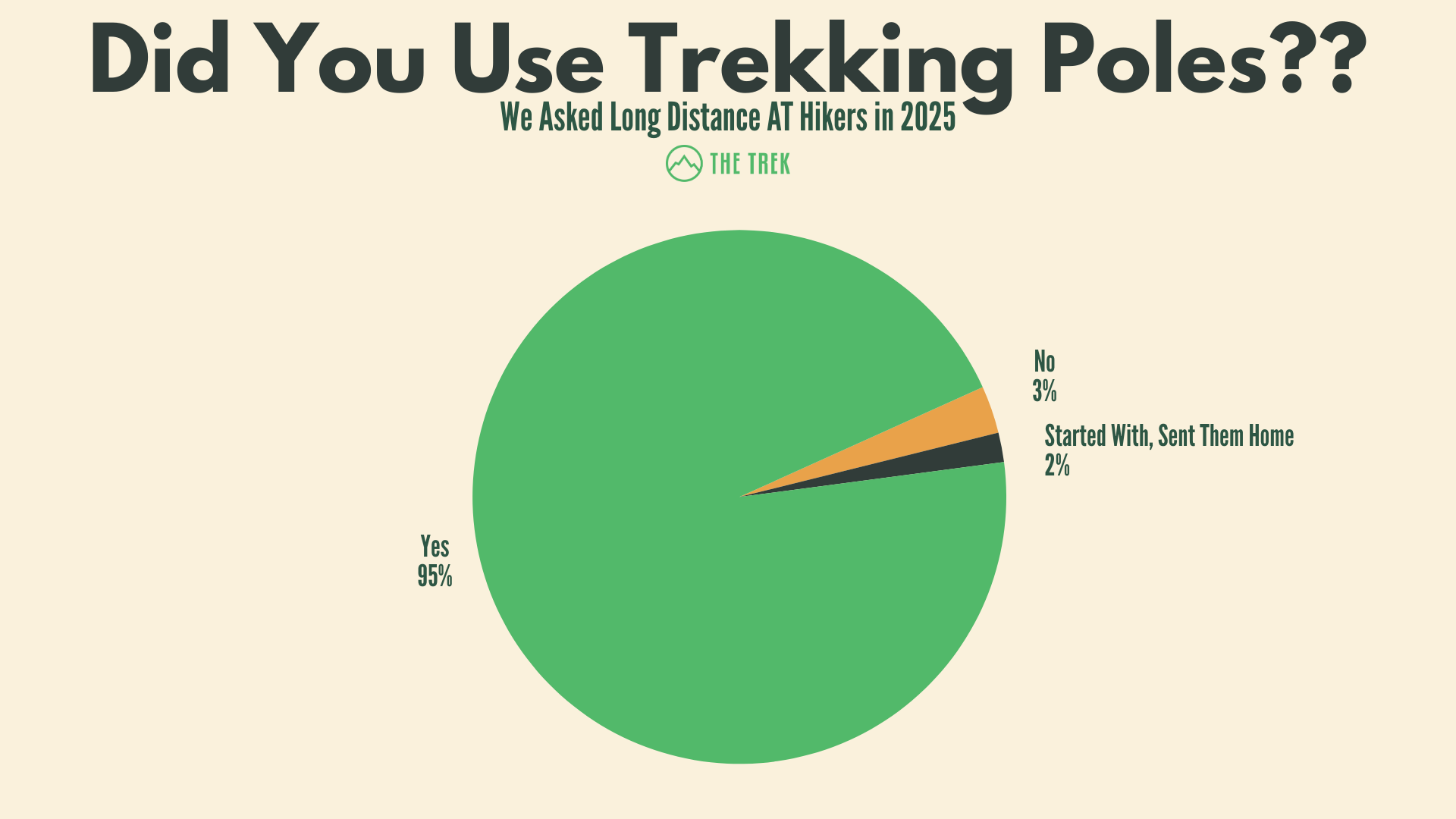
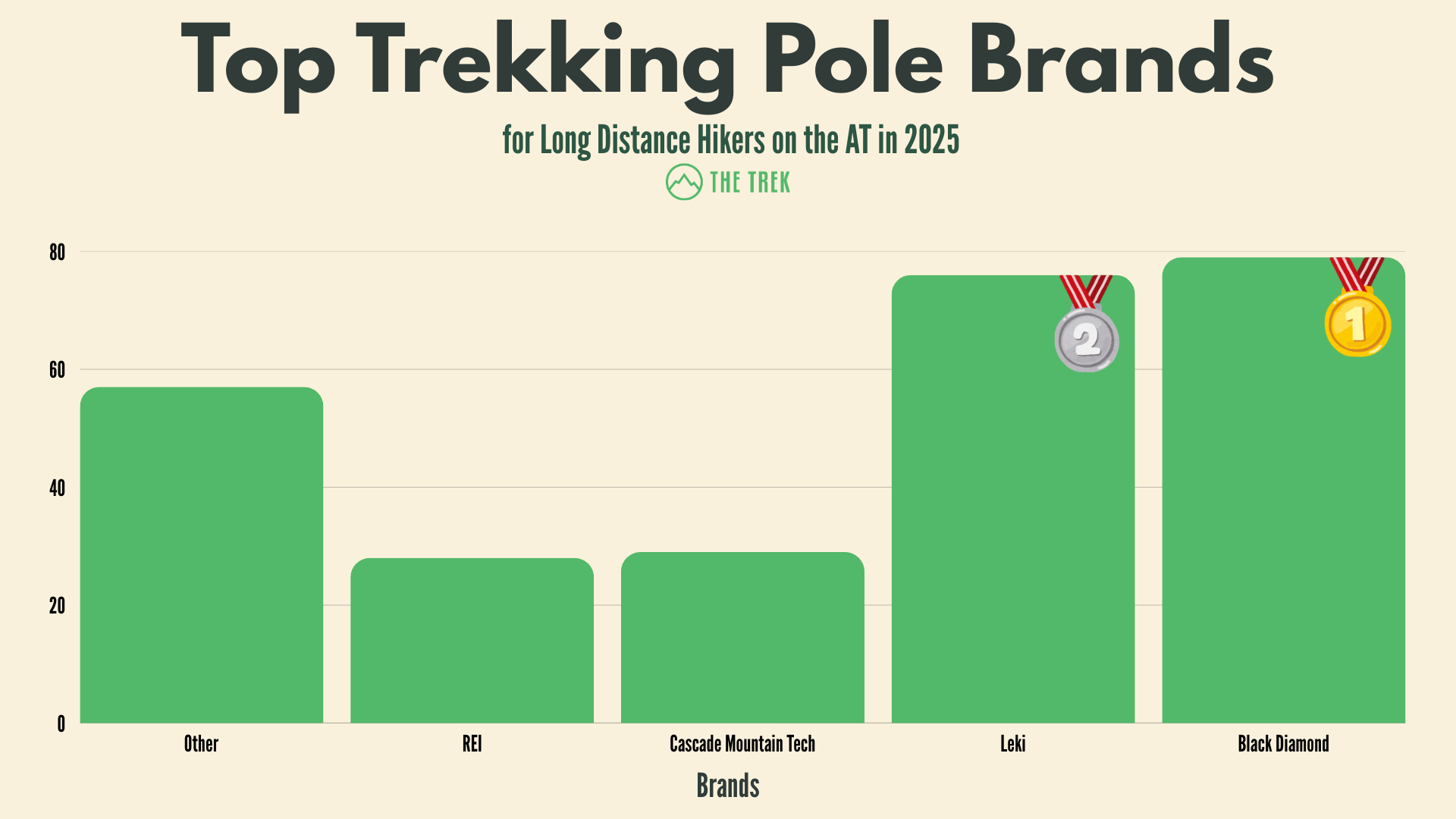
We asked hikers about their trekking pole use, what type of trekking poles they used, and their favorite models. Almost all hikers used trekking poles, consistent with last year’s results. The split between carbon fiber vs. aluminum was also the same this year, with 56% of hikers using aluminum and 40% going for carbon fiber. Black Diamond was the most popular brand, with Leki not far behind. The top brands are listed below.
Top Trekking Poles on the AT in 2025
| Rank | Brand | Responses | Average Satisfaction |
|---|---|---|---|
| 1 | Black Diamond | 126 | 9.0 |
| 2 | Leki | 76 | 8.9 |
| 3 | REI | 31 | 8.8 |
| 4 | Cascade Mountain Tech | 31 | 8.5 |
Menstruation
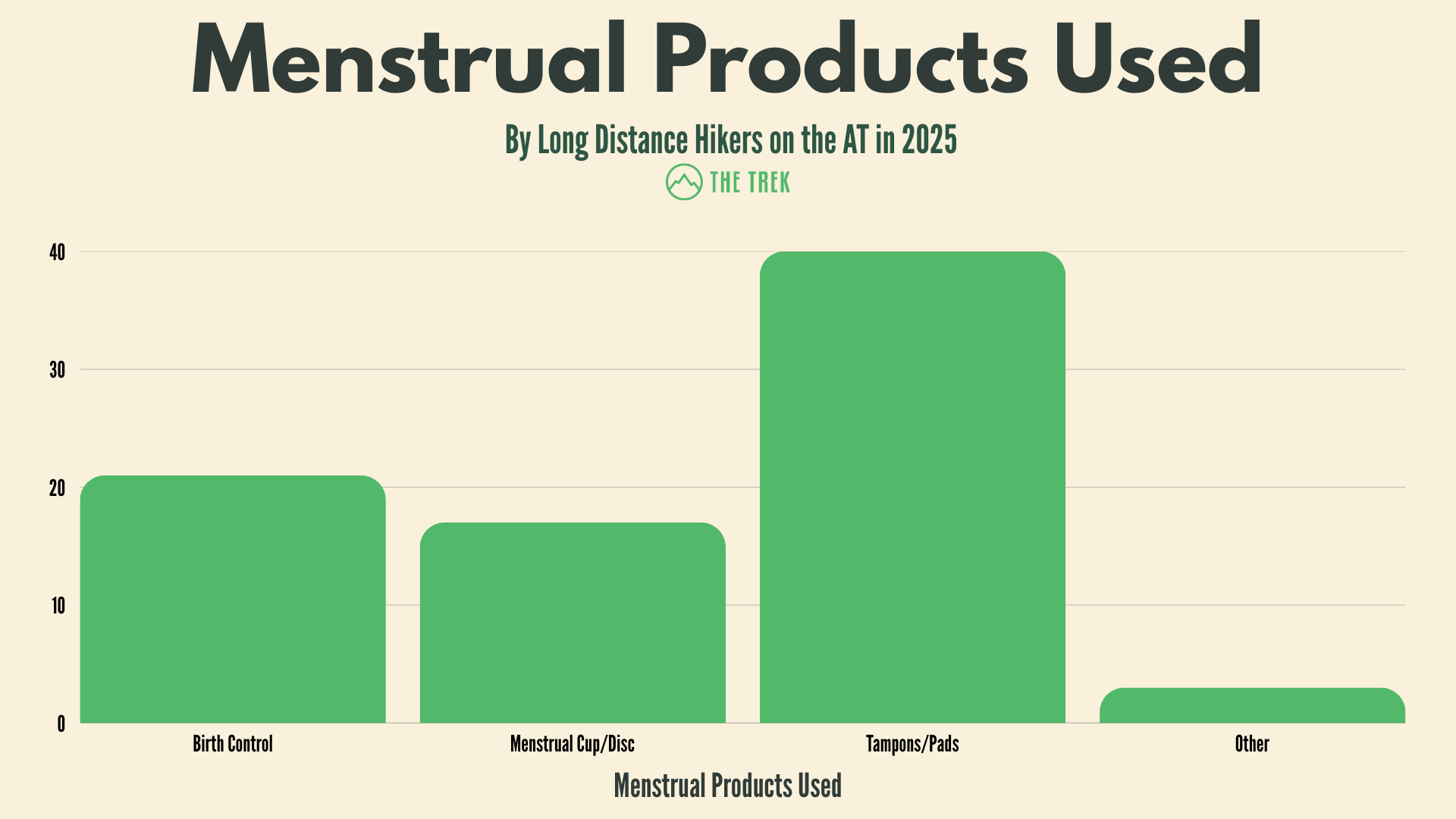
We asked hikers who menstruate what type of products they used for that purpose. Each type of menstrual product was used widely and many hikers used a combination of multiple products. Tampons and pads were the most commonly used menstrual product overall.
Luxury Items
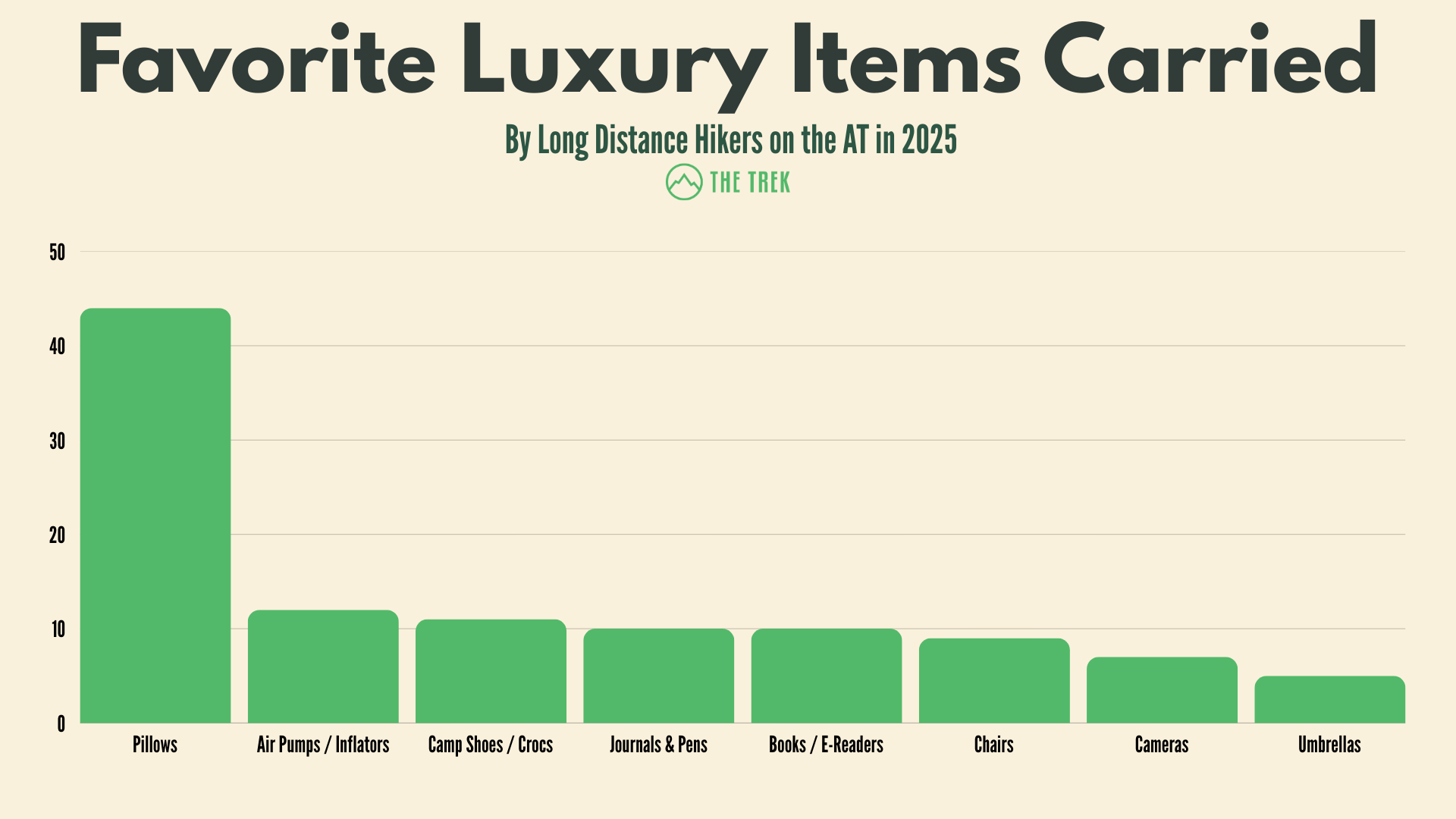
Last but not least, we also asked hikers if they carried a luxury item and what it was. About three-quarters (74%) of hikers said they carried a luxury item and some listed multiple items. The list of items was long and diverse. Some of the more popular luxury items are listed above, but this is by no means a complete list.
A new popular luxury item this year was electric air pumps to blow up a sleeping pad, with Flextail being a commonly mentioned brand. However, the pillow reigns supreme as the most common luxury item carried.
Summary
- The majority of hikers always filtered their water from natural sources.
- Mid-size filters, such as the Sawyer Squeeze, were the most popular type of water treatment, used by 93% of hikers
- 24% of hikers contracted norovirus, 4% of hikers contracted a waterborne illness, and 5% of hikers contracted Lyme disease during their hike. Many hikers treated their clothes or gear with permethrin to prevent Lyme disease, most checked daily for ticks — many hikers did both.
- The majority of hikers used a canister fuel stove, with the MSR PocketRocket being the most popular.
- The most popular power bank capacity was 7,501-10,000 mAh, with Anker and Nitecore being the most popular brands.
- 65% of hikers used a GPS device, with Garmin being the most popular brand.
- Rain jackets were the most popular type of rain gear used, although many hikers took a combination approach involving rain pants, umbrellas, rain skirts, or ponchos as well. Frogg Toggs were the most popular rain gear.
- Almost all hikers used trekking poles, with aluminum being slightly more popular than carbon fiber. Black Diamond was the most popular brand.
- All types of menstrual products are widely used on the AT, but tampons and pads are the most popular.
Thank you!
Congratulations to all the Appalachian Trail hikers this year — and a huge thank you to all of you who took the time to fill out the survey! The survey couldn’t have been possible without the hikers who answered all our questions. Don’t forget to check out the other posts from this year’s survey linked above.
More from the 2025 AT Thru-Hiker Survey:

This website contains affiliate links, which means The Trek may receive a percentage of any product or service you purchase using the links in the articles or advertisements. The buyer pays the same price as they would otherwise, and your purchase helps to support The Trek's ongoing goal to serve you quality backpacking advice and information. Thanks for your support!
To learn more, please visit the About This Site page.
