
 ">


Trail Community Pushes Back on Plans To Demolish 2 Popular Appalachian Trail Shelters
More than one year after the National Park Service (NPS) announced plans to demolish two historic Appalachian Trail shelters in Pennsylvania, a local trail club is leading a campaign to save the structures, citing their practical and historical value to hikers.
The shelters on the chopping block are 501 Shelter at northbound mile 1197 and Eckville Shelter at mile 1236. While most of the AT’s 250-plus shelters are primitive three-sided lean-tos, both Eckville and 501 are fully enclosed structures with running water and electricity. Both have long had volunteer caretakers living on-site to maintain the properties and assist hikers. This is still the case at Eckville, which remains operational; 501 Shelter was permanently closed last year in anticipation of the demolition.
The NPS reportedly intends to carry out the demolition in late 2026 or early 2027 but has not confirmed an exact timeline. According to reporting by Outside, the agency has said that the shelters are slated for removal because they do not meet safety standards and are located too close to roads, and as part of a larger campaign to rewild the AT.
The NPS did not immediately respond to a request for comment for this story.
“NPS has planned removal of these sites for years,” said Luke Weir of the Appalachian Trail Conservancy (ATC) in an email to The Trek, adding that the shelters do not comply with modern NPS housing, volunteer, and visitor use policies.
“In the past, other nonconforming structures, from sheds to houses and even a rundown old motel, have been similarly removed from the AT corridor,” Weir said. “The action is consistent with ATC policy and Overnight Site Planning Guidance, revised in 2023, which recommends locating ‘overnight sites at least two miles from motorized access points’ to promote a remote backcountry experience where possible.”
Yet proponents of the two shelters say an exception should be made because of their unique cultural value and usefulness for hikers. The Blue Mountain Eagle Climbing Club (BMECC), which maintains a 65-mile stretch of the AT encompassing both shelters, has launched a campaign to fight the demolition called SOS: Save Our Shelters.
SOS: Save Our Shelters
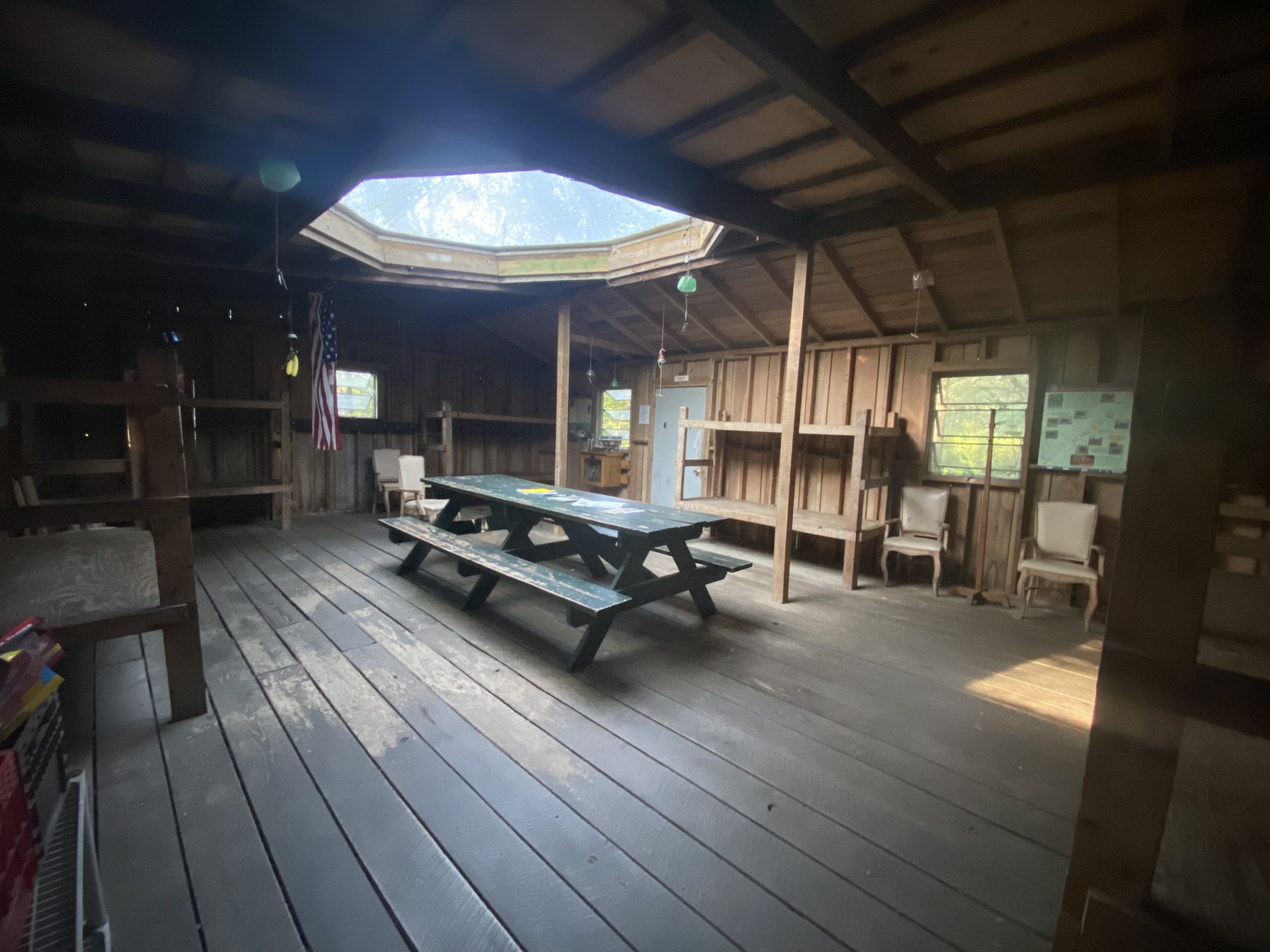
The interior of the 501 Shelter photographed in 2025. The shelter has since closed permanently.
“We are not ready to throw away our valued shelters and the infrastructure that the AT offers for people to get out in nature,” said campaign co-chair Daree Sicher in an email to The Trek.
The campaign argues that the two buildings provide safe haven for hikers in adverse conditions, as well as valuable access to reliable clean water.
On this topic, the ATC’s Weir pointed to the trail’s Comprehensive Plan. “Shelters are a tradition on the AT, but use of the Trail should not depend on them. No attempt is made to provide such amenities for every potential user, so each person must be prepared to do without them. Shelter density and design should be consistent with a sense of the natural,” the plan reads.
Removing 501 Shelter leaves a 19-mile stretch of the AT without a shelter between William Penn and Eagle’s Nest shelters. If Eckville is also demolished, hikers would face another shelter-free stretch of roughly 16 miles between Windsor Furnace and Allentown Hiking Club shelters.
Appalachian Trail History
The shelters themselves remain popular with hikers, many of whom see them as a cherished part of AT culture.
The Eckville Shelter’s current caretaker, Mick Charowsky, is a former thru-hiker who has stewarded the property for 40 years. 501 Shelter, meanwhile, was perhaps most famous among AT hikers as the only backcountry shelter on the AT where you could order a pizza for delivery before its closure.
Save Our Shelters has started a petition asking the NPS to preserve the shelters and is urging members of the trail community to contact the NPS and their elected officials to oppose the demolition.
“It’s a damn shame because these resources are invaluable to hikers and even offer a reason for us to spend money in these small towns,” wrote AT thru-hiker and Trek blogger Sara in a 2025 blog post about the planned demolition of the two buildings.
Featured image: Jen Brown

This website contains affiliate links, which means The Trek may receive a percentage of any product or service you purchase using the links in the articles or advertisements. The buyer pays the same price as they would otherwise, and your purchase helps to support The Trek's ongoing goal to serve you quality backpacking advice and information. Thanks for your support!
To learn more, please visit the About This Site page.

Comments 4
The argument on both sides of keeping or removing the 501 and Eckville shelters are valid, for the AT in general. This however is not a generality, it is specifically contemplating the amputation of a cherished part of AT history. Just because these shelter are unique to the rest of the AT should not make them wrong. If they are cared for by the community they should be kept in the community.
My daughter and I have stayed at both shelters and want to keep them. Petition signed!!
501 is not the only shelter where you can have food delivered. Partnership in Virginia and RPH in New York are two that I can think of right off.
This is just dumb, and hypocritical as hell…”the agency has said that the shelters are slated for removal because they do not meet safety standards and are located too close to roads”… seriously, think about this. Consider Maryland where at least 3 shelters are within 2 miles of a road, one of them 0.2 mile from a road, and one close enough to an interstate you can hear traffic 24/7. Are they planning on demolishing them too? And wait a second…”safety standards”? The most dangerous things I’ve experienced on the trail have been road crossings, angry squirrels and my own klutzyness. Maybe focus on building safe ways to get over/under roads and protecting the environment we cherish from destruction.