
 ">


The Best Backpacking Packs for Thru-Hiking in 2026
Your backpacking pack is one of the most important components of your backpacking setup. Your style of pack goes hand in hand with your style of hiking. They need to complement each other, regardless of whether you’re a luxury camper or an ultralight fast packer. The best backpacks for thru-hiking are the ones that fit your specific wants and needs.
We based our 2026 list of the best backpacking packs on recommendations from Trek writers, our gear testing team, our annual Appalachian Trail thru-hiker survey, and an extensive comparison of price, weight, features, durability, and intended use.
That said, there’s no one-size-fits-all. There are many different types of backpackers and a dizzying array of backpack models to serve their unique needs. Remember that gear trends come and go, and ultimately it’s up to you to decide what works best for your packing style and intended use. Did we leave out your favorite? Feel free to yell at us in the comments. We’re always open to testing new gear.
A note on pack volume: where available, we broke pack capacity down into the volume of the main compartment + volume of exterior pockets. This wasn’t possible in all cases, as some manufacturers (looking at you, Osprey and Granite Gear) only report the overall volume.
Quick Navigation
Best Backpacking Packs for Thru-Hiking:
- Gossamer Gear Mariposa (Most Comfortable Ultralight Pack)
- ULA Circuit (Most Popular Backpack on the PCT)
- Osprey Exos/Eja (Most Popular Backpack on the AT)
- Osprey Aura/Atmos (Best Fully-Featured Backpack)
- Granite Gear Crown3 60 (Most Versatile Backpacking Pack)
- Mountain Laurel Designs Prophet (Best Frameless Pack)
- Durston Kakwa 40 (Most Capable / Best Budget Ultralight Pack)
- Zpacks Arc Haul Ultra (Best Ultralight Pack)
- Atom Packs Prospector (Best Made-to-Order Pack)
- Nashville Cutaway (Best Fastpacking Pack)
- Zpacks Super Nero (Lightest Backpacking Pack)
- Symbiosis Gear Aspen (Best Backpacking Pack for Women)
Best Backpacking Packs for Thru-Hiking FAQs:
- What Capacity Do You Need?
- Features to Look for in the Best Backpacking Packs
- Ultralight, Midweight, or Fully-Featured?
- Torso Size
- More of the Best Backpacking Gear
LISTEN NEXT –
Best Backpacking Packs for Thru-Hiking in 2026
Gossamer Gear Mariposa — Most Comfortable Pack
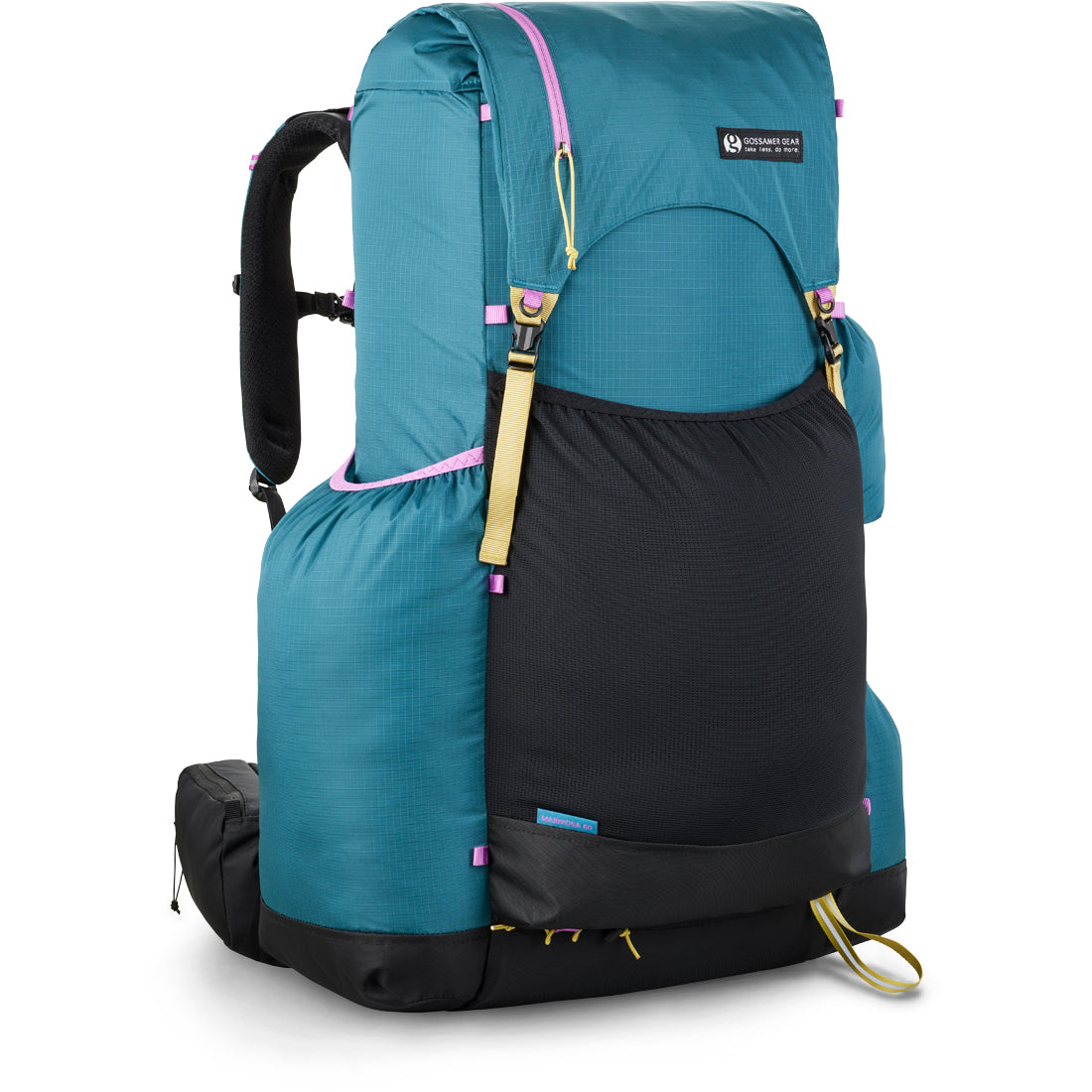
Best backpacking packs for thru-hiking: Gossamer Gear Mariposa.
MSRP: $315
Weight: 34.2 oz (medium w/ medium straight belt)
Volume: 36 + 24 liters
Maximum load capacity: Up to 35 pounds
Why We Love This Pack
There are certainly lighter 60-liter packs on the market, but none that carry a full load as comfortably as Gossamer Gear’s Mariposa. We hear this consistently from our own writers and reviewers, as well as from forums and other backpacking sites: the Mariposa is just a gosh dang comfortable load-out.
GG updated its flagship pack in 2024 with a redesigned frame and load lifters, as well as more choices of hip belt size and style. The Mariposa also now comes in a cool new colorway, which is always exciting.
For thru-hikers who want the supportive, well-ventilated comfort of a fully-featured pack, only without all the unnecessary bells and whistles (and weight), look no further than this fan favorite. The Mariposa seems to do everything well, managing to strike a delicate balance between streamlined simplicity and luxurious comfort. A feature-rich, quality pack at a fair price.
Features
- Hip belt: Choose between straight or curved and customize the size. The 2024 update saw the introduction of the PVT frame, which is meant to pivot with your stride for more comfortable weight distribution. Yes, it has pockets.
-
Eight pockets: Two large, asymmetrical mesh side pockets are accessible while wearing the pack. There’s also a third stretchy side pocket on your right side as you wear the pack — plus a large front pocket, a top lid compartment, two hip belt pockets, and the iconic back pocket where the removable sit pad lives.
-
Customization: Three torso lengths, three hip belt sizes, and two hip belt styles for a more custom fit.
-
Breathability: Airmesh fabric on shoulder straps and hip belt for less friction, more cushion, and more comfort.
-
Attachments and extras: Trekking pole hardware for storing poles on the outside of the pack, plus a lash loop for an ice axe, a sit pad that doubles as extra back cushioning, and a removable stay.
Nobody’s Perfect
Gossamer Gear now sends their medium and large packs with a medium straight hip belt installed and their small packs with a small/medium curved hip belt, as these sizes fit most customers. If you want a different hip belt size or style, you’ll have to purchase it separately and then return the installed version to the company for a refund. Not a huge deal, just know that the process will be a little clunky if you need to swap.
The price and weight of the Mariposa both increased a little bit with last year’s redesign.
READ NEXT – Gossamer Gear Mariposa Review
More packs like this: ULA Circuit, Hyperlite Mountain Gear Windrider, Gossamer Gear Gorilla
ULA Circuit — PCT Thru-Hikers’ Favorite Pack
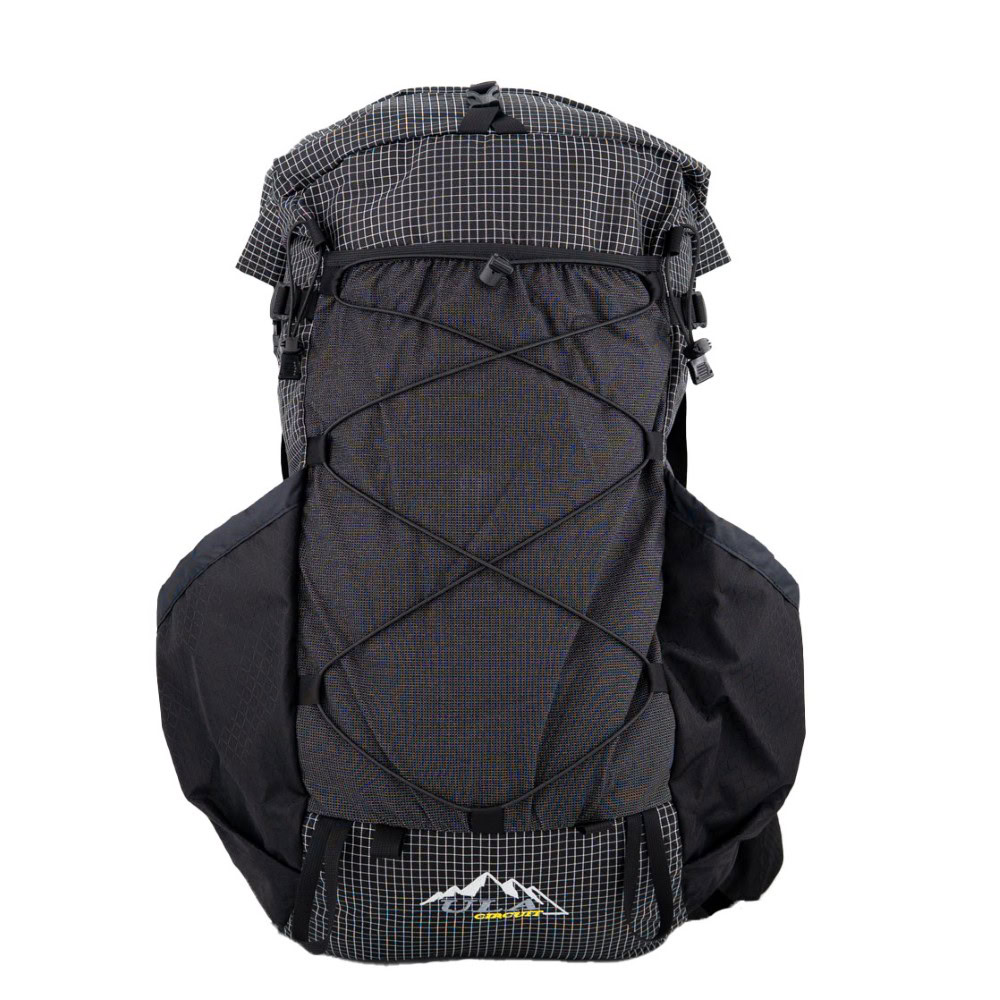
Best backpacking packs for thru-hiking: ULA Circuit
MSRP: $300
Weight: 38.5 ounces
Volume: 39 + 29 liters
Maximum load capacity: Up to 35 pounds
Why We Love This Pack
The ULA Circuit has been the most commonly used pack on the PCT for six years running, according to Halfway Anywhere’s most recent (2025) PCT thru-hiker survey. While it’s far from the lightest pack on this list, the Circuit makes up for this with exceptional build quality/durability, comfort, and carrying capacity — all crucial features for the long food and water carries and rugged terrain of the PCT.
A reader asked us what makes the Circuit’s carrying capacity so noteworthy — its 39 liters of main-compartment volume aren’t that exceptional on paper, after all. Yet not every pack with a 40L main compartment distributes that volume the same way, and plenty can’t accommodate a large bear canister inside, where the Circuit can (again, important on the PCT). It also has jumbo hip belt pockets, which are increasingly a rarity in today’s UL-first market. ULA has also introduced a small-volume (48L total) Circuit for those who find the standard Circuit overkill.
An aluminum stay, carbon fiber loop, and dense foam panel form a rigid frame that molds to your back over time. This makes the pack incredibly comfortable, keeping weight stable and as close to your back as possible. The Circuit is made from 400D Robic fabric, ULA’s fabric of choice due to its toughness per ounce .
ULA’s famous customer support also means that once you’ve given your pack a thorough beating by means of a thru-hike, you can send the pack back for a free tune-up to get it back to full health.
There is also an Ultra version of the Circuit available, which is a little more expensive but cuts a few ounces and is more weatherproof.
Even the standard Robic Circuit now features an UltraStretch mesh pocket thanks to a 2024 update, which also included standard ice axe/trekking pole loops and attachment points for optional Y- and bottom strap kits.
Features
- Roll-top closure and compression straps: The roll-top closure, paired with the top and side compression straps, gives this bag flexibility based on the volume of your bag. This allows for big carries out of town but a more snug pack when returning to civilization.
- Dual hip belt pockets: The large hip belt pockets are big enough for the largest of phones and the hungriest of snackers.
- Large side pockets: The side pockets are big enough to carry two SmartWater bottles each, can be cinched down with the built-in drawstrings, and are positioned well for easy reach when hiking.
- Large mesh front pocket: The elastic front pocket and drawcords provide easy access to rain gear or storage of bulky items.
- Padded contoured shoulder straps and back: The padded back panel and shoulder straps are very comfortable, if not a little sweaty.
- Hydration bladder, hand loops, stash pocket: The pack comes with a few extra features that can be removed to save about three ounces (85 grams) of weight.
Nobody’s Perfect
This pack isn’t the best in wet conditions as the fabric soaks through and gets heavy, in addition to the need to carry a bag liner/trash compactor bag (remember that Ultra version?). The back panel and shoulder straps can get very sweaty and are dirt magnets, so make sure to put the pack down on its front/bottom.
And yes, there are other packs on this list that weigh less and can still handle the load of a typical PCT thru-hiker. We should note that while the Circuit remains the most popular pack in Mac’s most PCT survey, it wasn’t the highest-rated.
More packs like this: ULA CDT, ULA OHM 2.0, Mountainsmith Zerk 40
READ NEXT — ULA Circuit Backpack Review
Osprey Exos (Men’s) | Osprey Eja (Women’s) — AT Thru-Hikers’ Favorite Pack

Best backpacking packs for thru-hiking: Osprey Exos/Eja (Eja pictured)
MSRP: $265
Weight: 43 – 46 ounces
Volume: 48 liters (38L and 58L versions also available)
Maximum load capacity: Up to 35 pounds
Why We Love This Pack
Osprey has redesigned this popular pack a few times over the years with more durable face fabric, updating the mesh front pocket, and finally reintroducing hip belt pockets after their inexplicable elimination. Throughout it all, this pack has remained a perennial favorite among thru-hikers (the Exos and Eja combined have ranked as the most popular pack on the AT nearly every year since we started tracking these things with our AT hiker survey in 2015). Our 2025 list of the top backpacks on the AT is still forthcoming, but spoiler alert, the Exo/Eja combination still comes out on top by quite a bit.
It’s an ideal middle-of-the-road model, striking a nice balance between luxe and lightweight, built with lighter materials and some pared-down features. Durability has increased over the years with the aforementioned material updates, and the Exos’s trampoline-style suspension is famously comfortable. The ventilated mesh system keeps your back cool while holding the pack tight against your body.
The Exos also comes in a 38 and 58L variety, and the women’s version can be found here. The Exos has worked well as a unisex pack since its initial release, but Osprey also released the women’s-specific Eja several years ago for those who want a more dialed fit.
Eja / Exos Pro
Osprey also offers a 55L “pro” version of this pack with a more minimalist design and lighter materials. The XS/S Eja Pro weighs 31 ounces, while the M/L Exos Pro weighs 35 ounces. Both packs cost $290. That’s roughly a three-quarter-pound weight reduction for an extra $50, which is a very reasonable markup in the UL world.
Like the standard version, the Pro has a removable lid. The lidless pack’s total weight can drop to two pounds or less, aka proper ultralight territory — an extraordinary achievement for a pack with such a well-developed suspension system.
We haven’t tested the Eja/Exos Pro yet, but some users say the water bottle pockets are larger and stretchier than on the original, addressing one of the biggest pain points associated with this pack. You can find other backpacks in this price and weight range, but probably not with a suspension system to rival Osprey’s famous comfort and breathability.
Features
- Removable top lid: The “brain” is a luxury we don’t often get with the lighter-weight packs. This version has two zippered pockets. It can be removed to save weight, and hikers can instead utilize the flap underneath for protection over the top of the pack.
- AirSpeed suspension: Osprey’s proprietary suspension system is comprised of tensioned mesh with generous space for airflow in every direction.
- Adjustable hip belt: Osprey’s update to this pack came with an adjustable hip belt, good for hikers dropping serious pounds on a thru-hike.
Nobody’s Perfect
We were stoked when Osprey brought the hip belt pockets back a few years ago, and they now appear here to stay, but they’re too small for a cell phone. The side water bottle pockets are tight and difficult to access while the pack is on (the best method is to feed the bottle through the little hole in the front part of the pocket). The compression straps are a bit fiddly, are tied to the hip belt itself in an inconvenient way, and run right over top of the water bottle pocket, putting the functionality of both features at odds with each other.
More packs like this: Granite Gear Crown3 60, REI Flash 55, Gregory Maven/Paragon
READ NEXT – Osprey Eja 48 Review
Osprey Aura AG 65 (Women’s) | Atmos AG 65 (Men’s) — Best Fully-Featured Pack

Best backpacking packs for thru-hiking: Osprey Aura/Atmos (Atmos pictured)
MSRP: $340
Weight: 71-77 ounces
Volume: 65 liters
Maximum load capacity: Up to 40 pounds
Why We Love This Pack
The trend of the 21st century has very much been towards lighter, simpler packs, and each year, more new thru-hikers lean in that direction. However, for backpackers looking for more comfort with heavier loads, padding, and organization options, the Osprey Atmos/Aura is a great option and continues to be one of the best and most popular fully-featured backpacking packs on long-distance trails.
Osprey’s classic suspension system comes into play for bigger loads, and the ultra-padded hip belt and shoulder straps mold to your body for added comfort. The Aura comes in 65 and 50-liter options. The Atmos is the men’s version of this pack and also comes in 65 and 50-liter options.
With ample organizational space and easy-to-use adjustments, this pack is a good choice for a beginner who’s just learning to fit and load out a pack properly.
Features
- Front opening: The front opens vertically for easy access to the main compartment.
- Pockets on pockets on pockets: A pack that weighs 4.5 pounds comes flush with pockets and organizational options.
- Top lid: Two zippered pockets are ideal for stashing quick-access snacks and small items.
- Anti-Gravity suspension: The mother of all comfort for heavier packs.
Nobody’s Perfect
This pack weighs 4.5 pounds empty, which is more than double the weight of the most popular ultralight packs. That’s the main thing working against it, but it makes sense considering the durable materials and feature-rich design. If you want a lightweight carrier, this is not the pack for you, but the fact is that plenty of AT hikers still choose this pack every year and report high levels of satisfaction with it.
More packs like this: Gregory Deva, Gregory Baltoro, Osprey Aether, Osprey Ariel
Granite Gear Crown3 60 Unisex | Women’s (Most Versatile Pack)
Best backpacking packs for thru-hiking: Granite Gear Crown3 60
- MSRP: $260
- Weight: 38 oz
- Volume: 60L
- Maximum load capacity: 25 – 43 pounds, depending on frame configuration
Why We Love This Pack
Every year I contemplate whether the Granite Gear Crown3 60 really still deserves a place in our top backpack recommendations amid such a diverse field of competition. And every year, I find myself unable to remove it, due largely to my own undying love for this clever, rock-solid little backpack. (This is Kelly writing by the way. Hi.)
At nearly 42 ounces, the Granite Gear Crown3 60 is hardly ultralight, but it does a great job of bridging the ever-widening divide between traditional, fully-featured load haulers like the 4.5-pound Osprey Aura/Atmos and the absurdly light 11-ounce Zpacks Nero Ultra. Its simple, straightforward design makes it intuitive for even a complete novice to backpacking.
Where the Crown shines is in its versatility.
The top lid is removable, so you can leave it behind to save almost four ounces, BUT much more excitingly, you can also clip the brain to the sternum straps for an oversized chest pocket, or clip it to the removable hip belt to create a high-capacity waist pack for day hikes. (The brain stuffed with extra clothes also makes an exceptional camp pillow, apropos of nothing.)
The plastic frame sheet can be removed to shave 6.5 ounces for ultralight loads or reinforced with an aluminum stay to turn it into a heavy-duty load hauler.
The Crown3 also accommodates a fairly broad range of sizes: both the women’s and unisex packs come in multiple torso lengths and feature Granite Gear’s exceptionally adjustable Re-Fit hip belt.
Features
- Re-Fit hip belt: Hip belt is adjustable via a simple velcro closure between 26 and 42 inches on the unisex fit and 24 and 40 inches on the women’s fit.
- Removable and reinforce-able frame: A removable frame is a nice feature that can add flexibility to a pack and give ultralight newbs a chance to dip their toes in the frameless backpacking pool. But the Crown3 stands out because not only is the frame removable, but you can also go in the opposite direction and beef it up with an extra aluminum stay (sold separately) if you anticipate hauling heavier loads.
- Dual sternum straps: Another unique feature of this pack is that it has not one but two sternum straps, adding more stability and another chance to fine-tune the fit. The secondary strap also makes it possible to clip in the removable brain and wear it as a chest strap instead, providing easy access to a high-volume pocket without having to take your pack off. The dual sternum straps are removable, so you can remove one or both if they’re not useful for you.
- Shock cord bottle holders: Both shoulder straps have a pair of shock cord loops that can be used to hold a small water bottle.
- Undyed version available: The white-and-grey undyed colorway reduces water waste by 55%, according to Granite Gear.
Nobody’s Perfect
You could view the Crown as a bridge between ultralight and fully featured, or as a jack of all trades and master of none. At 42 ounces, it’s neither a tricked-out traditional pack nor a streamlined minimalist. Much as I love it, I’ll be hte first to admit that on my last few hikes, I’ve left the Crown at home in favor of a more ultralight option.
The chest strap configuration is a great idea but can look a bit silly, which is admittedly a Me problem. The back suspension system is not the most breathable.
More packs like this: Granite Gear Blaze 60, Osprey Exos / Eja, Gregory Focal / Facet
READ NEXT – Granite Gear Crown30 60 Review
Mountain Laurel Designs Prophet 48 (Best Frameless Backpacking Pack)

Best backpacking packs for thru-hiking: Mountain Laurel Designs Prophet
MSRP: $245 – $325
Weight: 17 ounces
Volume: 32 + 16 liters
Maximum load capacity: Up to 25 pounds
Why We Love This Pack
Mountain Laurel Designs has gained steady popularity on long-distance trails over the past few years. Just be sure you’re ready to commit to a UL, frameless pack before taking the dive.
The hip belt provides ample cushion for a pack of this weight, and the generous pockets allow for external organization. The pack can hold a standard bear canister and has a roll-top closure with a Y-strap to secure gear on top of the pack. It sits close to your back for stability.
The pack is unisex, with curved shoulder straps that should fit comfortably on most men and women. There are enough sizing options that finding the right fit isn’t an issue. You can also size up to the Exodus or down to the Burn if the Prophet doesn’t suit your torso size and/or you really want to dial the fit. The Prophet is available in both Ultra X and UltraGrid 200D ripstop, with added reinforcement on high-abrasion areas.
No major updates to this pack since last year, other than a slight color alteration in the UltraGrid.
Features
- Side pockets: Pockets are deep and can hold water bottles as well as bladders.
- Padded shoulder straps: For a UL pack, the Prophet has some seriously comfortable shoulder straps. Straps are three inches wide, made of SuperWick mesh lined with foam padding. “Love them, best of all my packs,” said gear reviewer Alexander “GPS” Brown of the shoulder straps.
- Roll-top closure: A Y-strap cinches down over the top of the closure, compressing the load as it decreases between resupplies.
- Hybrid design on external pockets: The classic large front and side pockets are durable ripstop with mesh corners for draining.
Nobody’s Perfect
We’ve noted this, but this pack is for ultralight hikers. Heavier pack loads won’t feel as supported. There’s a learning curve when it comes to frameless packs, so you should be an experienced backpacker (and/or willing to put in time and effort to learn how to use the Prophet) if you choose this pack.
More packs like this: Pa’lante Packs V2, Mountain Laurel Designs Burn, ULA CDT
Durston Gear Kakwa 40 (Most Capable/Best Budget Ultralight Pack)
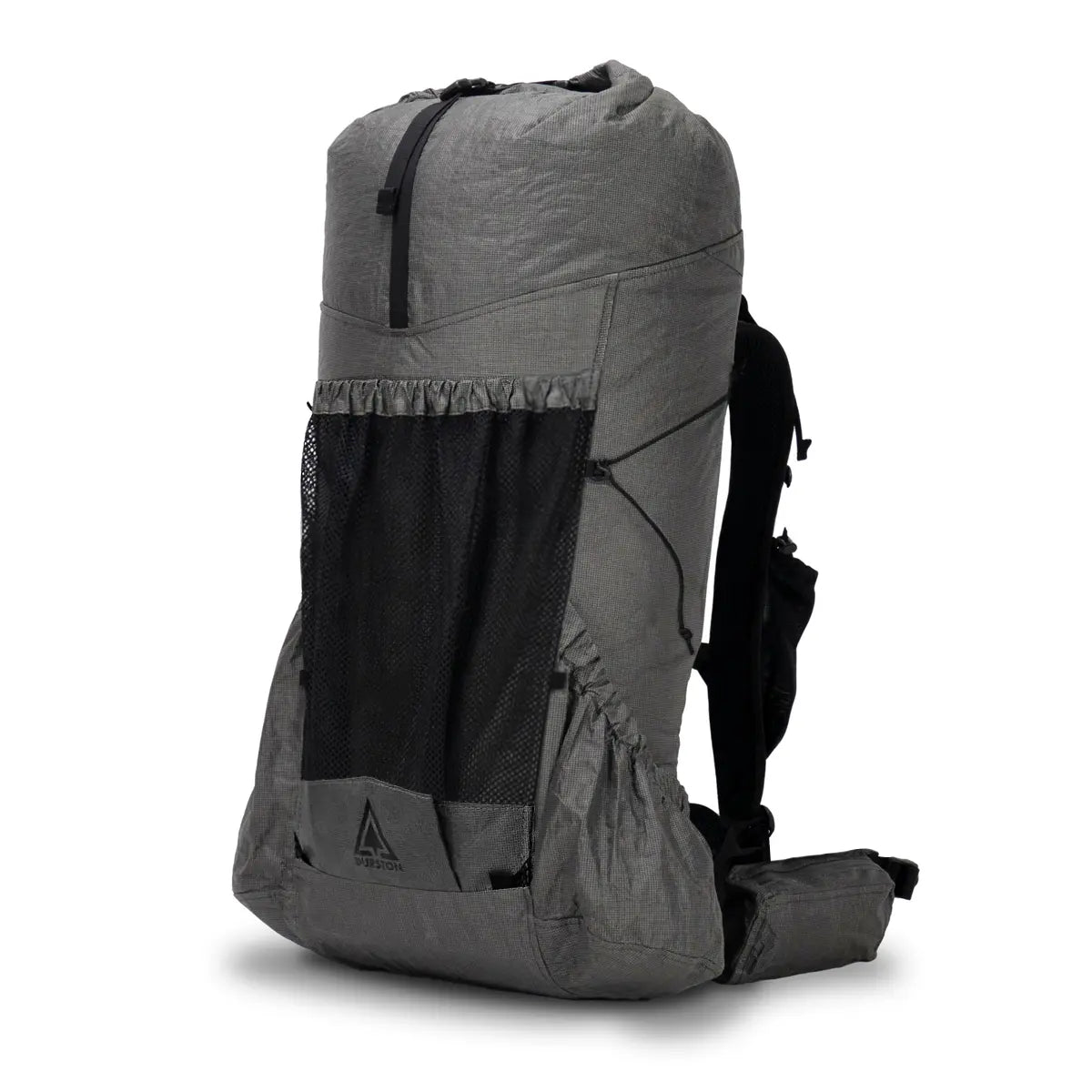
Best backpacking packs for thru-hiking: Durston Gear Kakwa 40
MSRP: $190 – $250
Weight: 28 oz (medium Ultra100) | 29.6 oz (UltraGrid)
Volume: 40 + 15 liters
Maximum load capacity: 45 pounds
Why We Love This Pack
The Kakwa might just be the most feature-rich ultralight pack available. Every stitch, pocket, and buckle has been carefully considered by designer Dan Durston to contribute to his vision of a backpack that makes few sacrifices.
The result? An incredibly durable pack that can comfortably haul heavier-than-average loads and comes equipped with handy features such as shoulder pockets. Oh yeah, and it also weighs less than two pounds and is one of the cheaper picks on this list (especially if you go for the $190 UltraGrid version of the pack), hence the additional “Best Value” award.
Seriously, if you’re looking for an ultralight pack but aren’t ready to give up your load capacity by going frameless, then the Kakwa should be a serious consideration. Its versatility makes it a competent choice for going fast and light on the AT or for hauling huge water loads on the CDT. The 45-pound max carry is the highest on this list and will be overkill for the majority of use cases.
And don’t be put off by the minimal 40-liter capacity. If you need more space, the Kakwa is also available in a 55-liter version. This is the same affordable, premium pack, just with more space.
Features
- EPL 200 Ultra fabric: Colloquially known as Ultra 200, this 200-denier woven laminate is the next great thing in ultralight fabrics since Dyneema Composite Fabric (DCF/DCH). Ultra utilizes the same Dyneema unicorn hairs that make DCF super strong for the weight, weaving them with polyester for more puncture and abrasion resistance.
- There is also a slightly heavier UltraGrid Kakwa: it costs less (just $190) and weighs about two ounces more.
- U frame: Made from a single aluminum tube bent into a shape that kind of resembles an inverted U, the Kakwa frame is the invisible hero of this pack. The horizontal crossbar provides another dimension of stiffness that is often lacking in ultralight backpacks, and allows the Kakwa to carry heavy loads more comfortably and resist barreling.
- QuickPocket: A vertical zippered pocket integrated into the left side pocket offers secure storage for items that might be too large for the hip belt pockets. Think paper maps, gloves, beanie, snacks, or a large cell phone.
- Shoulder strap pockets: Each shoulder strap rocks a stretchy, cinch-top pocket. Yet another option for keeping essentials and snacks within reach.
- Load lifters: Adjustable straps connect the top of each shoulder strap with the pack’s frame. Often absent in ultralight packs, these little wonders help transfer weight off of the shoulders when the load gets heavy and can help dial in how snuggly the pack contacts one’s back.
Nobody’s Perfect
There’s not a lot to nitpick about the Kakwa, but hikers who love a cavernously stretchy outer mesh pocket might find the no-stretch Kakwa mesh (chosen for durability) a little restricting. And call us greedy, but more color options wouldn’t go amiss.
More packs like this: Gossamer Gear G4-20, Atom Packs Prospector, NatureHike Multifunctional Mountain Bag (for a less UL but truly budget option)
READ NEXT – Durston Kakwa 40 Backpack Review
ZPacks Arc Haul Ultra (Best Ultralight Suspension System)

Best backpacking packs for thru-hiking: Zpacks Arc Haul Ultra
MSRP: $399
Weight: 21.4 ounces
Volume: 47 + 13 liters
Maximum load capacity: 40 pounds
Why We Love This Pack
Zpacks replaced the old gridstop Arc Haul with the more durable, slightly lighter Arc Haul Ultra in 2022. Ultralight stays provide stable weight transfer from shoulders to hips, while the Lycra back panel keeps the pack suspended off your back for airflow — much needed during hot or humid hikes.
The pack doesn’t have hip belt pockets (sadness) but can be customized with optional add-ons like a hip belt pouch or fanny pack. The removable hip belt has two straps for dual adjustment, and the torso length can be dialed in too. The pack can be ordered with two different sizes of shoulder straps or a vest-style shoulder harness (for an extra %50 and 3.6 oz).
Like all good UL packs, the Arc Haul Ultra features a stretchy mesh back pocket for stashing wet or quick-access gear.
Zpacks’ suspension system continues to impress. The Arc Haul Ultra carries weight extremely well for something so light: 40 pounds of carrying capacity in a scant 22-ounce package is hard to argue with.
One of our contributors pointed out that a pack with 60 liters and 40 pounds of capacity isn’t necessarily in the “ultralight” spirit, but we couldn’t fit “Best Pack for Non-Minimalists Who Like a Few Luxuries and/or Need a Bear Can but Still Want a Sub-Two-Pound Pack” on one line.
Features
- Absorbent, padded straps: The multilayer mesh on the shoulder straps and hip belt are cushy and absorb sweat while helping keep you cool.
- Vest harness option: We’re excited that Zpacks is finally offering vest straps, which distribute weight across the chest differently and also offer handy storage options.
- Roll-top closure and seam-sealing: This bag is highly water-resistant, with taped seams and a waterproof coating on the inside of the material. The roll-top closure lets you shrink your pack as your load lightens between resupplies.
- Fits all standard bear canisters: The Arc Haul Ultra will fit all standard bear canisters, as long as you stand it on its end in the upper half of the pack. This includes the BV500, which did not fit in previous versions of the Arc Haul.
- Angled side pockets: Durable side pockets fit several liters of water and are angled to help you grab bottles on the go.
Nobody’s Perfect
We like hip belt pockets, and you’ll have to buy those separately with the Arc Haul Ultra (which is already pretty dang expensive to begin with). More than other brands, Zpacks gets knocked for a lack of durability and quality control, with repairs on the suspension being an often-reported issue.
More packs like this: Zpacks Arc Blast
READ NEXT – Zpacks Arc Haul Ultra Review
Atom Packs Prospector (Best Custom Backpacking Pack)

Best backpacking packs for thru-hiking: Atom Packs Prospector
MSRP: $372+ (40L size)
Weight: 31.5 oz*
Volume: 40, 50, or 60L
Maximum load capacity: 42 pounds
*base model
Why We Love This Pack
Formerly called the Mo, this sharp-looking backpack has been growing in popularity for years, and commenters have been threatening to revolt if we didn’t add it to our top picks.
This is far from the only made-to-order backpacking pack on the market, but the sheer number of custom features offered by UK-based Atom Packs sets the Prospector apart from the competition. You can even add a custom avocado pocket! On the left OR the right side.
The pack weighs about two pounds plus or minus a few ounces, depending on the size and features you pick. With a 42-pound max load out and enough space to fit a large bear can, the Prospector is a sensible choice for weight-conscious thru-hikers on even the longest and most rugged trails. Indeed, it was the highest-rated pack on the PCT according to Halfway Anywhere’s 2025 PCT thru-hiker survey.
Our tester found the pack extremely comfortable even under a substantial load, thanks to the weight distribution and well-placed lumbar pad — and this testimony seems to jibe with feedback we’ve heard from other hikers.
Also, the pockets. We love having more options than less: not just optional hip belt pockets, but also your choice of a bottom sleeve and even shoulder strap pockets (and the aforementioned whimsical avocado pocket. Did we already mention the avocado pocket?). The water bottle pockets are 2.5L apiece and are easy to access.
Features
- Removable hip belt: The hip belt features dual-adjustable webbing straps so you can dial in the fit to perfectly hug your hips and, like the Durston Kakwa, the straps tension by pulling in toward the middle rather than out away from your body. Pockets are available as optional add-ons. The belt can also be removed altogether to save about two extra ounces.
- Lumbar pad: A combination EVA foam and spacer mesh lumbar pad provides extra cushioning and support against the small of your back.
- S-shaped shoulder straps: S-straps are more ergonomic than traditional J-straps overall. Atom Packs also integrates load lifters to aid with weight distribution.
- Removable back panel: The foam back panel provides a little extra cushioning, but you can also pull it out to save almost an ounce.
- Ecopak EPX200: The main body is made with Ecopak, a waterproof UL fabric that’s a little cheaper and a little heavier than Ultra.
Nobody’s Perfect
US customers: this pack is shipping from the UK, and shipping costs $35 as of this writing, so be sure to factor that into your budget calculations. (Taxes and import duties are already factored into the price of the pack at checkout so no surprise fees there.) On the other hand, the existence of this company is a boon for UK-based ultralight enthusiasts.
We’d love to see an Ultra version of the pack introduced at some point. Also, it’s not seam taped, unlike the LiteAF Curve (which we would call the Prospector’s top competitor in the custom backpack space).
READ NEXT – Atom Packs Prospector Review (2020, yes I know we really need an updated review)
More packs like this: LiteAF Curve Full Suspension, Durston Gear Kakwa
Nashville Cutaway (Best Fastpacking Pack)
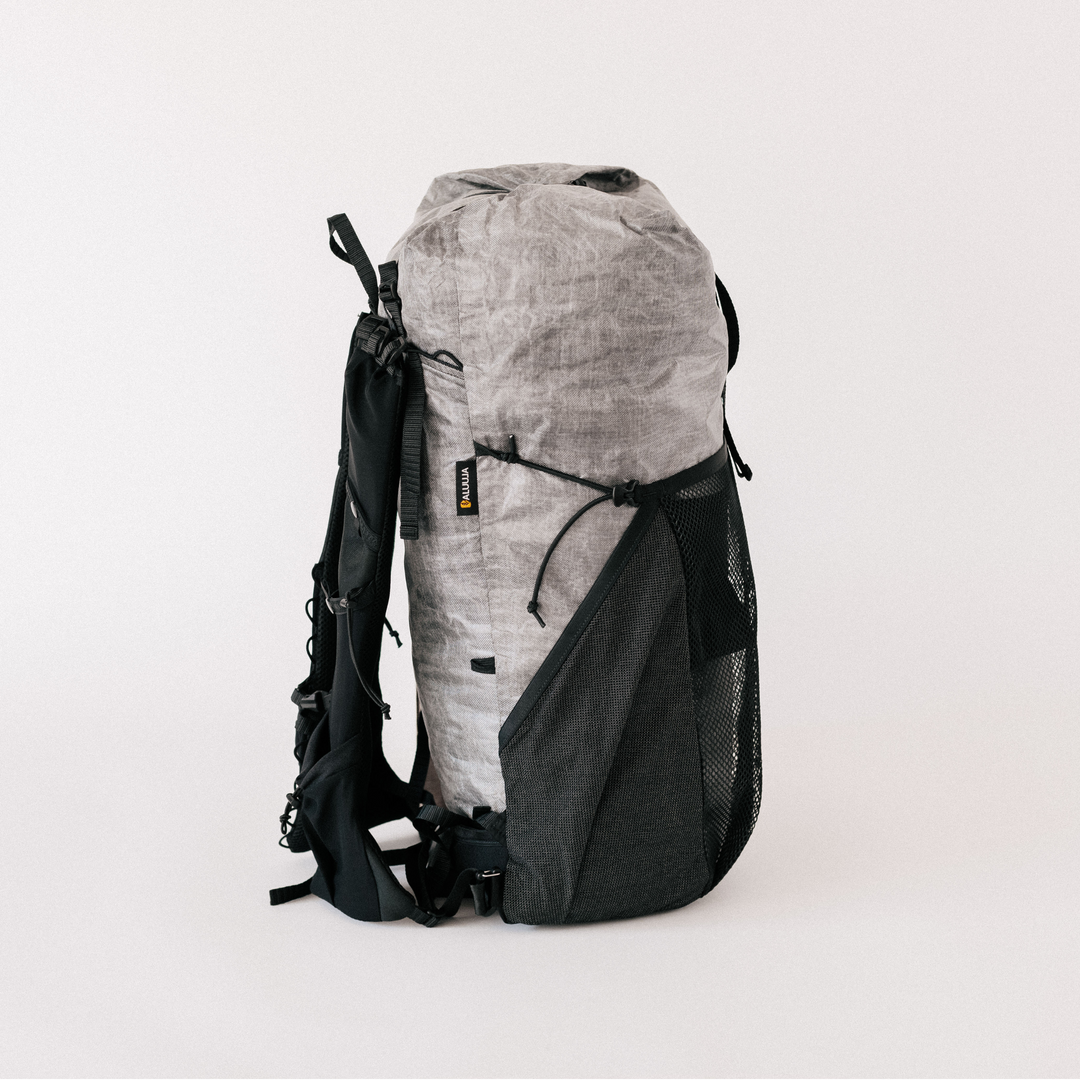
Best backpacking packs for thru-hiking: Nashville Cutaway
MSRP: $350*
Weight: 15.8 oz
Volume: 34 + 10.5 liters (also 25 + 8 and 43 + 12)
Maximum load capacity: 25 pounds (per manufacturer)
*Price and weight are based on 18″ UltraGrid pack + 17.5″ shoulder straps + 1 standard and 1 elastic sternum strap. Doesn’t include accessories such as one-inch hipbelt or side compression straps (which can be purchased a la carte). You can get a stock Cutaway if you don’t care about customizing the fabric and colors.
Why We Love This Pack
The Cutaway is by far the most recommended running-vest-style pack for hikers looking to travel fast and light. At 15 ounces (admittedly that’s not counting any accessories you may choose to add, such as a sternum strap or side compression straps), it’s the lightest backpack on this list.
The compact, frameless design is such that you should be able to fully access any external pocket on the pack while wearing it, while the shoulder harness disperses weight across the chest and keeps the pack snug when moving at speed. Shoulder strap water bottle pockets make hydration easy.
The custom Cutaway is made to order with custom colors and your choice of EPX200, Ultra 100X or 200X, Venom Gridstop ECO, Ultragrid, or Aluula Graflyte. The stock Cutaway is with Venom or ALUULA only. A variety of add-ons, like ice-axe loops and a 1″ webbing hipbelt, are also available.
READ NEXT – Nashville Cutaway Review
Features
- US-made: Nashville packs are handmade in Tennessee.
- Still keeps the classics: Traditional features like the roll-top closure with opposing buckles and classic mesh stow pocket on the front keep this pack feeling familiar.
- Pockets for days: Six pockets on the shoulder strap provide easy access to drinks, snacks, and smaller essentials.
- Bottom pocket: Stretchy pocket sewn along the bottom of the pack is easy to reach.
Nobody’s Perfect
As with most bespoke cottage gear, future Cutaway owners have to contend with long wait times for custom packs (6-8 weeks as of this writing). This is not a last-minute purchase.
With a 25-pound recommended load limit, this pack is optimized for true fast-and-light minimalists. If you’re not a fastpacker, and especially if you have older or bulkier gear (or you can’t leave the luxury items at home), this is not the pack for you.
More Packs Like This: Mountainsmith Zerk 40, Six Moon Designs Flight 30, Ultimate Direction Fastpack 30
Zpacks Super Nero (Lightest Backpacking Pack)

Best backpacking packs for thru-hiking: Zpacks Super Nero
- MSRP: $279
- Weight: 12.6 oz
- Volume: 50L (30 and 38L packs in the Nero series also available)
- Maximum load capacity: 20 pounds
Why We Love This Pack
I mean, how can you not love the idea of a 12-ounce, 50-liter backpack? That’s just wild. Do note that this weight is with standard straps and no hip belt. The weight can go as high as 19.7 ounces if you choose a large padded hip belt and vest-style shoulder straps.
But considering that this pack has a max recommended load of just 20 pounds and is meant for true UL hikers, you probably don’t even need a hip belt anyway. And the vest straps are purely a matter of personal preference: you might love the idea of a more distributed harness system (to say nothing of those shoulder strap pockets!) and consider the four-ounce weight penalty worth it.
Point is, in its lightest configuration, you won’t find another similarly sized pack as light as this. Our reviewer, Alex, sums it up best: “the Super Nero is an absurdly light pack that makes a few compromises on comfort and long-term durability to achieve its feather-light weight. It exists to cut base weights by any means and is best for experienced, ultralight-focused hikers.”
If you have more compact gear, the 38L Nero and the 30L Sub Nero are in the same pack line and will save you an ounce or two, respectively.
Features
- Interchangeable shoulder straps: Choose between standard 3-inch-wide S-straps (2.5-inch for the small/women’s straps) or a vest harness for an extra $50. The vest straps also come with pockets.
- Frameless: Zpacks foregoes the frame in this superlight pack to keep the weight as low as possible.
- Seam taped: You should probably still use a pack liner, but the fact that the seams are taped dramatically improves this pack’s water resistance (it’s made with waterproof Utra 100x to begin with). Also, seam taping improves the strength of the seams, boosting durability.
- Adjustable torso: The hip belt can be moved up or down between three positions to adjust the torso length (assuming you’re using the hip belt). Can be adjusted between 18 and 22 inches (a suitabe range for most adults, but won’t fit people on either end of the torso length spectrum).
- Comes with foam sit pad: 1-ounce closed-cell foam sit pad (11″ x 15.5″) provides extra back cushioning and support. Held in place with shock cord.
Nobody’s Perfect
Alex tested both shoulder strap styles and found both quite uncomfortable with minimal usable padding. We would also love to see the size range expanded over time: the 18 to 22-inch torso length limit will exclude shorter and taller hikers, while the lack of a small padded hip belt option makes this pack less functional for lean builds.
More Packs Like This: Durston Wapta, Pa’lante Ultralight, Mountain Laurel Designs Prophet
Symbiosis Aspen (Best Women’s Ultralight Backpack)

Best backpacking packs for thru-hiking: Symbiosis Aspen
- MSRP: $299
- Weight: 25 oz
- Volume: 38 + 10 liters
- Maximum load capacity: 20 pounds
Symbiosis Gear describes the Aspen as “the backpack for people with boobs.” This isn’t the only backpack designed specifically with female bodies in mind, but it is pretty much the only true ultralight women’s pack. The Osprey Eja is a great female-specific pack, for instance, but it weighs almost three pounds. The Aspen weighs barely more than 1.5, and our reviewer says it’s the most comfortable pack she’s ever worn.
The S-curve shoulder straps, paired with a three-way-adjustable, elasticized sternum strap, make it easier to dial in the fit through the chest area regardless of your body type. The Aspen was created by a woman — Mellow, the owner and founder of Symbiosis — who had been struggling to find a pack that fit her properly on the PCT.
Beyond the boob-friendly fit, it’s just a solid backpack overall. It’s frameless, so it will work best for hikers with a true ultralight setup. Special pockets always make us happy, and the Aspen delivers with an easy-to-access bottom pocket and shoulder strap pocket for your phone. 38 liters should be enough capacity for most UL hikers, but an extra-long Y-strap on top will come in handy for strapping down extra gear if needed.
Features
- Stretchy sternum strap: Contours to a wide variety of body types without constricting your chest. You can adjust where the strap sits on your chest via a daisy chain attachment system.
- Spacer mesh on back panel to improve airflow: Reviewer Ariella notes that the pack features more cushioning in the back panel and shoulder straps than other ultralight packs she’s tried.
- Stowable webbing waist belt: The 1.5″ webbing waist belt is non-load-bearing and can be stowed out of the way inside the side water bottle pockets when you don’t want to use it. It fits up to 50″.
- 420d Extreema: The majority of the pack is made with 420d Extreema, a highly durable, abrasion-resistant, and water-resistant reinforced Robic nylon.
Nobody’s Perfect
Like all frameless packs, your carrying capacity will be limited to about 20 pounds with the Aspen (our reviewer pushed it to about 25 without issue). This is not an entry-level pack and won’t be appropriate for every use case.
The phone pocket is very convenient, but loose enough on top that the contents of the pocket could spill on a technical trail that involves a lot of scrambling.
More Packs Like This: Zpacks Women’s Arc Haul Ultra 60, Osprey Eja Pro
READ NEXT – Symbiosis Aspen Review
The Best Backpacks for Thru-Hiking: FAQs
What size backpack do you need for thru-hiking?
This depends on what you’re doing. If you just have one pack for all your outings, a 50L pack (or thereabouts) is the safest option. 50-55 liters will carry everything you need for the majority of treks while preventing you from overpacking. A smaller pack (35- 45-liter range) is only smart for experienced long-distance backpackers with ultralight setups. If you pack heavier items, or your trail requires special gear or longer water/food carries, look for something in the 60- to 65-liter range.
One of our spec categories is “maximum load capacity,” but keep in mind that we’ve found manufacturers tend to be a bit generous when listing maximum weight capacity for their packs. Err on the side of caution when loading the bag. If our reviewers recommend a weight, it means they’ve personally tested it and can attest to the load limit. But again … these are not scientific load recommendations.
Per conventional wisdom, your backpack should be the last piece of gear you buy. That way you can size the volume of your gear and know for sure what size of pack you need.
READ NEXT –
What are the most important features to look for in the best backpacks for thru-hiking?

I realize I do not know how to have my picture taken. Now that we’re clear on that, the HMG 3400 Southwest has some great features (large hip belt pockets, deep front pocket), but I miss having a top lid, and I had to get my shoulder pocket separately. When you choose a lighter pack, you lose some features.
It depends on how much on-the-go convenience you want. Here are a few features (mostly pockets, let’s be real) to look for when you choose a pack.
Brain: Brains (or “top lids”) have more space than hip belt pockets and more protection than front mesh pockets. They’re a great addition for mid-size items you don’t want to get lost in your pack. When I went to a more lightweight pack, I definitely missed the top lid. Many brains are removable with zippered pockets on the top and bottom.
Hip belt: A hip belt is a must for many hikers. It offers support and weight distribution, especially critical if you are carrying a heavier load. Look for a padded hip belt with easily adjustable buckles. You’ll probably go down a size or two on a thru-hike, and if the belt doesn’t cinch all the way down, it won’t offer enough weight distribution to make it worthwhile. Pockets on the hip belt are clutch, perfect for a headlamp, small water filter, and snacks. Some ultralight hikers opt-out and use fanny packs, which they can around town to keep valuables close.
READ NEXT – The Best Fanny Packs for Thru-Hiking
Sternum strap: Another way to keep your pack load close to your body and relieve pressure off your shoulders. This is easily adjustable and should sit flat under your collarbone. The Six Moon Designs Swift X has two sternum straps, which provide double the surface area for weight distribution. Our tester also said they reduced chafing.
Load lifters: These are important for heavier loads and are often found on mid-range and fully-featured packs. They attach to the pack body (or frame, like the Zpacks Arc Haul) and shoulder straps, and can tighten to secure the pack load closer to your body, which reduces direct loading on the tops of your shoulders. Release the load lifters to counterbalance a steep descent. Tighten them against your body for steep climbs to keep the weight close.
Side pockets: These are where your water bottles go. If you like to be able to reach your water bottles while walking, look for side pockets with an angled cut so you can grab them and put them back without asking for help. The material should be stretchy but durable, and comfortably fit at least a one-liter bottle of water. Also, they should be tall enough that a water bottle won’t fall out.
Shoulder pockets: Shoulder-strap pockets are great. It’s kind of a bummer that they aren’t on more packs these days. Do I sound old? I loved the stretchy mesh pockets on my 2015 Exos. I kept my phone in there for quick access for pictures, and also gummy worms. You can buy shoulder pockets separately from a few different companies (I have this one from Hyperlite) but they can be clunky.
—Maggie Slepian
Fully Featured, Ultralight, or Somewhere in Between?

Sometimes even ultralight hikers carry a full load. This Elemental Horizons Kalais XT is packed with fishing gear, a six-pack, and a jar of salsa.
This depends on your packing style. People with a sub-10-pound base weight can confidently carry a frameless pack. But if you’re hitting a trail with long water carries, remember that water weighs two pounds per liter, and will bring up your total weight.
Lay out your gear. Now weigh it. Do you carry over 20 pounds as a base weight? You’ll need a burlier pack like the Osprey Atmos/Aura or Gregory Deva. Ten- to 15-pound base weight? A mid-weight pack like the Gossamer Gear Mariposa or Durston Kakwa will work well. Less than a ten-pound base weight? You’re a candidate for a smaller capacity, frameless pack like a Pa’lante Pack, MLD Prophet, or ULA CDT.
We’ve written at length about the temptation of going ultralight. But if your hiking style and pack load aren’t conducive to a 35-liter frameless pack with no hip belt, you’ll be ditching it at the next road crossing and hitching a ride to the nearest gear shop.
That said, the weight of a 70-liter, fully padded pack can be six pounds or more empty. While these are the best backpacking packs for carrying truly heavy loads, most thru-hikers with modern gear — even if it’s not ultralight gear — just don’t need this much capacity. In any case, many thru-hikers ditch enough equipment within the first few hundred miles to not warrant the extra suspension and padding.
Midweight models like the Mariposa, Exos, or Swift X have enough features and suspension to carry around 30-35 pounds comfortably, but without the beefy buckles, memory foam hip belts, and enormous capacity to bring your base weight too high for happiness.
—Maggie Slepian
PSA: Packs Come in Different Torso Sizes

I mistakenly ordered a size small Gossamer Gear G4-20 (left). The torso was a few inches too short, making the hip belt float around my waist like a technical tutu. I exchanged it for a medium (right), which fits well. You can see the shoulder straps extending straight back, and the hip belt sitting, well, on my hips.
A pack is something you wear, therefore they come in different sizes. This may sound obvious, but it came as a surprise to me when I bought my first backpacking pack (and apparently I still can’t figure it out). Your shoulder straps should extend straight out from your shoulders, not drop down (torso too short) or extend up (torso too long). Some packs have adjustable torso sizes, while others are fixed.
Having the wrong size pack means the pack won’t distribute the weight as it was designed to. You will feel fatigue in your shoulders as it pulls back, while not sitting correctly on your hips.
Most outfitters can measure you for a pack. If you’re doing it at home, torso length is calculated as the distance from your seventh cervical vertebra (the prominent bump in your spine at the top of your shoulders when you drop chin to chest) straight down the spine to the top of your iliac crest (hip bone).
Also! Don’t assume that because you’re a certain size in one brand, you’re that size all around. I am a Small in Hyperlite Mountain Gear and ULA, but a Medium in Gossamer Gear, and I blew it by ordering my G4-20 in a small. If you can, it’s always better to try the pack on. If you can’t try it on, most companies have reference pages where you can measure your torso and know what size to order, along with instructions for measuring your torso to their specifications.
—Maggie Slepian
READ NEXT — How To Adjust Your Backpack Fit
Why Should You Trust Us?
Because we’re so incredibly intelligent, of course! Attractive, too. (Not to mention extremely humble).
But if that isn’t enough to impress you, there’s also the fact that everyone who contributed to this article is an experienced thru-hiker with thousands of on-trail miles under their belt. We’re gear nerds who love putting our equipment to the test on trails long and short, and we’ve tried dozens of packs in pursuit of a better backcountry experience.
Moreover, we survey hundreds of Appalachian Trail thru-hikers every year to learn about their behaviors, demographics, and—you guessed it—gear preferences. That means our picks for the best thru-hiking backpacks aren’t just our opinions: they’re based on years of feedback from the thru-hiking community.
Check out AT hikers’ favorite thru-hiking backpacks from the 2022, 2023, and 2024 thru-hiker surveys. (2025 survey forthcoming … stay tuned!)

Competence and backpacking proficiency personified.
More of the Best Backpacking Gear of the Year
Original article by Maggie Slepian. Alex “GPS” Brown and Rachel Shoemaker contributed to the 2022 update of this list. Owen Eigenbrot refreshed it for 2023/2024. Aaaaaand most recently Kelly Floro did the 2025 and 2026 updates.
Featured image: Graphic design by Chris Helm.
Frequently Asked Questions (FAQ)
What is the most popular backpack for the Appalachian Trail?
The Osprey Exos (Men’s) and Eja (Women’s) have consistently ranked as the most popular packs on the AT in our annual surveys since 2015. Notably, our 2025 AT Hiker Survey found that the ULA Circuit and Durston Gear Kakwa were tied for the second-most popular spot.
What backpack do most PCT thru-hikers use?
The ULA Circuit is the most commonly used pack on the Pacific Crest Trail, favored for its durability and ability to carry the heavy food and water loads required for the trail.
What size backpack do I need for a thru-hike?
Most thru-hikers find that a 40 to 60-liter pack provides the ideal balance of space for gear and food while keeping the weight manageable.
What is the best ultralight backpack with a frame?
The Durston Kakwa 40 and Zpacks Arc Haul Ultra are top choices for hikers seeking an ultralight weight (under 2 lbs) with a frame. Additionally, the Hyperlite Mountain Gear Southwest received the highest satisfaction rating from hikers in our most recent survey.
How do I measure my torso size for a backpacking pack?
To find your size, measure from your C7 vertebra (the bony bump at the base of your neck) down to the iliac crest (the top of your hip bones).

This website contains affiliate links, which means The Trek may receive a percentage of any product or service you purchase using the links in the articles or advertisements. The buyer pays the same price as they would otherwise, and your purchase helps to support The Trek's ongoing goal to serve you quality backpacking advice and information. Thanks for your support!
To learn more, please visit the About This Site page.

Comments 42
I can’t believe that this review did not include the most versatile, midweight pack on the market: the Granite Gear Blaze A.C.60. For women like myself that have extremely short torsos (14.5″) there are almost NO PACKS that will fit me. But the Blaze A.C.60 not only fits me, but at less than three pounds has a fully functional frame and suspension system and user friendly pockets and compression system.
Granite Gear for the win!
On the Exos 48. I just bought one. And you know those tight side pockets you talk about? Those are perfect! This is the first pack that I (with my mangoed shoulders due to a past life of motorcycle racing) can get my water bottle in and out while wearing the pack. And I can put my snacks and such in those side pockets (that I put in the hipbelt pockets that I have on my other packs and that they took away on the Exos. I wouldn’t trust them with my phone but I plan to use it for my bear spray as well. Love the pack. Great southeast summer pack (hot and humid) due to the awesome aeration on the back (primary reason I bought it). In other words, all those who moan about the hipbelt pockets, they just relocated it by tightening up the mesh on the side pockets. I have only put 40 miles on it so far, small things are staying in it for me.
Did you all check out the Seek Outside Flight? I think it’s a better option than the Osprey Aura/Atmos for heavier loads– and it’s half the weight. It’s also most excellent for anyone with shoulder problems who needs more weight going to the hipbelt than most UL hikers.
What – No external frames? sorry – love my old Camp Trails Astral Cruiser!
So glad you put SWD back on the list after repping them a few years ago. Bought mine two years ago and they are great. The customization is everything you could want as a gear geek. It is the unicorn of backpacks!!! My dealings with the customer service has been excellent as well. All my questions were answered thoroughly within a day or two.
The fact that a Waymark Pack didn’t even make this list is very surprising to me.
What, no AtomPacks MO or ATOM+, very strange biased list indeed.
The Prospector is the new name for the MO 🙂 A brand that pleases me no end being from the UK.
I’m disappointed that you included Zpacks. Their quality control is poor and customer service is atrocious. They have shown they aren’t interested in supporting hikers.
I can’t chose! I’m going crazy with this decision and my window frame (PCT end of April) is tightening up! hahaha
I’m always surprised the Gregory Zulu never shows up on any list. It’s full featured, very comfortable, not terribly heavy and works really well for me as a section hiker.
I’m a big fan of the Granite Gear Crown 2 60. In the 2 lb range, with a lot of the features of full, traditional packs, but not the 5 lb weight, and in many case can be purchased for $150 or less.
Lite AF does have the prettiest packs! Rainbow Sparkle is the prettiest pattern they have. You chose the wrong pattern to highlight.
I feel like the tent and backpack “best of” articles have been recycled for the past few years, with only minor tweaks. Maybe because things haven’t changed that much, or certain brands haven’t gained as much traction as some readers would like. This is supposedly based on surveys of thru hikers of the big three trails, or so we think… Hopefully the writer/editor isn’t being journalistically lazy and just reposting an old article and is actually making sure it’s up to date in all realms of current trends.
Sorry to burst some commenters’ bubbles, but those budget friendly weigh-a-ton Ozark Trail packs and those lesser known European or mom & pop brands aren’t always going to make the top three list…because not enough thru hikers use them for thru hiking. (pick a reason…price, weight, availability)
I’ve got a few packs mentioned here and in comments… ULA, LiteAF, SeekOutside, Volpi, GossamerGear, DurstonGear, a few army russacks, some random packs from Bass Pro & Walmart, and even an old Kelty (which I gave to a friend). They all have their pro’s & con’s and all serve their own purpose. I’d choose my Circuit, Curve 40L or Kakwa 40 for overnight hikes, and my Catalyst or Unaweep 4800 for winter trips.
I have an older model Exos 58. Great bag. Love the back meshing and the overall comfort. I’m taking it on my AT thru-hike this year.
That said, I’m very confused about the comment about the Exos’ hip pockets. Osprey updated the Exos last year (2022) and it has hip pockets now. If you follow the link to REI in the section about the Exos you can see the model using them in some of the photos.
I think I understand my confusion better now. There’s a footnote at the bottom of this article that this is an update to an original article. My guess is the paragraph about the Exos missing its hip pockets was overlooked during the update.
This also explains why the 2023 list “posted” in January already has comments from February and March. Its because it’s the same article as last year, just updated. The comments are from older iterations of this article.
I understand the ease of updating a large article instead of starting from scratch, but I wish that information that is repeated from the prior update is vetted for accuracy before being posted again.
Great article! We all have different preferences. I’m currently really happy with my frameless Volpi UL40 for shorter/summer trips – if I ever get serious about cutting luxuries it’ll work for a thru hike – and my Granite Gear Crown 60 for trips where I want to carry more voluminous gear. I’m awaiting delivery of Durston’s new Kakwa 55L pack, which may replace my Granite Gear pack as it promises lighter weight, more features, and waterproof material.
I may have missed it, but where does the article mention ‘fit’.
All the packs have pros/cons supporters/retractors, etc; but all of the choices will only work if the require hiker gets a pack that is the correct measurement for their torso
I had a incorrectly fitting pack for a 600mile hike and vowed to spend the time understanding and getting a fitted pack. I got one for the AT (it is in the list) that was properly measured to my body. There were days when I forgot I even had a pack on
It is a game changer
Maybe someone here can clear up something that’s been confusing me. I frequently see comments on how “spacious” the ULA Circuit is (this article included). But when I look at the actual specs of the pack, it’s the same internal 40L as half the other packs on this list. So how come on the Circuit it’s “one of the roomiest packs you can get”, while on something like the Kakwa we’re cautioned to not be “put off by the minimal 40-liter capacity”. And yes, I get that there’s an external capacity component here, but I (and I expect most others) don’t count external volume the same way we do internal volume due to how we load the pack (ie it doesn’t really matter how deep the side pockets are to me, they’re still just going to be holding mostly smart water bottles).
I am not familiar with all the backpacks mention. I have been using my Mariposa for almost four years. I use the large side pocket for my tent and stakes. The bottom smaller external side pocket is where I carry my cook system the top external side pocket is where I carry my potty bag and camp gloves. Also, there is a zippered pocket on the very top that I carry my spoon and my water filter and CNoc bag. The back mesh pocket is where I carry rain gear, sit pad, camp shoes and extra water bottle I fill and use for camp. Just saying that the external pockets are an intricate part of the overall capacity for me.
Disappointed that no AtomPacks made it onto the list. Atom+ and The Mo are superb packs in all sizes (and custom colourways & extras are a huge bonus), definitely not to be missed out on if you’re testing “the best”!
I, too, am surprised by the lack of AtomPacks. Although I don’t doubt your research is high quality, and much of my research is based on The Trek, you can’t go five minutes of backpack searching without AtomPacks being hailed as one of the absolute best, with only cost or lead time being noted as a barrier to ownership. I’ll be going for a Mo Custom for the AT next year and have the great joy of being able to get it made in the colours of the charity I’ll be raising money for. I know another hiker going out to start the AT in less than two weeks who has a Mo as well, and we’d both come to the decision of that pack totally independently, I only found out when he shared his lighterpack.com link!
No Osprey Exos Pro? Lighter than the Exos, with a mesh pocket in the back.
Curious why you didn’t include Hyperlite Mountain Gear packs. They are just as popular if not more so than most the backpacks in your article.
Thanks,
Stan
Northern Ultralight Sundown. Best pack I’ve ever owned. Perfect for the PCT in my opinion.
The Prospector is the new name for the MO 🙂 A brand that pleases me no end being from the UK.
as “angry HMG owner doesn’t like our list.”
I’m curious about the methodology behind The Trek’s current “Best Backpacking Packs for Thru-Hiking” list, specifically the complete omission of Hyperlite Mountain Gear.
Looking at the last three years of available thru-hiker survey data from The Trek and Halfway Anywhere across the AT, PCT, and CDT, HMG’s Southwest/Windrider/Junction platform is consistently among the most-used and/or highest-rated packs on the Triple Crown trails.
Across those nine trail-years (2023–2025):
• HMG was #1 in CDT usage in 2023 and 2025.
• HMG was #2 in PCT usage in 2023 and #3 in both 2024 and 2025.
• The Southwest had the highest satisfaction score in The Trek’s AT top-model table in both 2024 (8.93) and 2025 (9.00).
• HMG was the highest-rated pack family in Halfway Anywhere’s 2024 CDT survey (9.08) and #2 in 2025 (8.62).
• The underlying surveys represent roughly 3,900 responses across those nine trail-years, although response counts vary by individual question.
This isn’t an argument that HMG makes the objectively “best” backpack. I own one and can identify several things I think competitors do better.
What I don’t understand is how one of the most consistently used and highly rated thru-hiking pack platforms in the available survey data fails to make a “Best Backpacking Packs for Thru-Hiking” list at all.
Given that The Trek’s own survey data strongly supports HMG as a major thru-hiking pack, I’d genuinely like to understand the selection methodology and what criteria excluded it.
I’m particularly interested because gear buying guides inevitably create questions about affiliate, advertising, and other commercial relationships. I’m not claiming those relationships determined the result—but when an empirical standout in your own data disappears entirely from an editorial “best” list, transparency about the methodology matters.
What specifically kept HMG off the list?