
 ">


The Best Backpacking Quilts for Thru-Hiking in 2026
Quilts are all the rage these days, and it’s easy to see why. They’re more streamlined than sleeping bags, and when used correctly, they can still be incredibly warm and comfortable. Emphasis on when used correctly. If you want to thrive (and most importantly, survive) with just a backpacking quilt, you’ll need to know how to choose one that suits your needs. Because a crappy night’s sleep is the fastest way to ruin the trip of a lifetime, you should opt for one of the best possible backpacking quilts for your next hike.
Note: we’re dealing specifically with quilts here, not sleeping bags in general. If you want to learn more about mummy sleeping bags instead, see our picks for The Best Backpacking Sleeping Bags for Thru-Hiking in 2026. If you want to educate yourself on the finer points of the backpacking quilt/sleeping bag market, check out The Ultimate Guide to Backpacking Sleeping Bags and Quilts for All Budgets.
Quick Navigation
Best backpacking quilts for thru-hiking:
- Enlightened Equipment Revelation (AT Thru-Hikers’ Top Choice)
- Western Mountaineering AstraLite (Best Ultralight Backpacking Quilt)
- Hammock Gear Burrow (Fan Favorite Quilt)
- UGQ Bandit (Most Customizable Quilt)
- Zenbivy Core (Best Budget Backpacking Quilt)
- Katabatic Flex (Best Quilt for Side Sleepers)
- Enlightened Equipment Enigma Apex (Best Synthetic Quilt)
- Feathered Friends Flicker (Best Hybrid Quilt)
- Zpacks Twin (Best Two-Person Quilt)
Best Backpacking Quilts for Thru-Hiking: FAQs
Backpacking quilts are expensive and weirdly complicated. Before we get into the best backpacking quilts for thru-hiking, here are a few pointers to help make the decision easier.
Are sleeping bags or quilts better for thru-hiking?
Data suggests that quilts are more popular than traditional sleeping bags for thru-hiking. Quilts are more weight-efficient, but they tend to feel a bit draftier/not as warm as sleeping bags on the whole.
Quilts are essentially sleeping bags without the underside, saving the weight of a full-length zipper and part of the bulk. The idea is that when you lie on a down-insulated sleeping bag, the down compresses enough that it no longer insulates. Instead, it’s your sleeping pad that provides most of your insulation from the ground.
The general consensus is that most quilt models are not quite as warm as a mummy bag with the same rating. That being said, they are rapidly growing in popularity among thru-hikers: two-thirds of respondents to our annual Appalachian Trail Thru-Hiker Survey reported using a quilt on the AT in 2025.
Quilt aficionados appreciate the weight savings and freedom of movement their sleep system affords them. If you opt for a quilt, be sure to get a model wide enough to tuck around your shoulders to avoid drafts. Because you’ll be missing out on the thermal benefits of a traditional insulated mummy hood, you may want to consider wearing a beanie or a separate down hood on cold nights. If you tend to sleep cold and prefer a snug, tucked-in feel, go for a traditional mummy bag.
What quilt temperature rating should I use for thru-hiking?
Most thru-hikers on the Triple Crown trails should be fine with a quilt rated between 15 and 30 degrees Fahrenheit. You know yourself, though. If you tend to sleep cold, opt for something rated to a lower temperature. When in doubt, the rule of thumb is to pack a quilt rated at least 10 degrees lower than the lowest temperature you expect to encounter on your hike. Alternatively, carry a lighter quilt supplemented with a liner or your puffy jacket.
It’s important to keep in mind that, unlike traditional sleeping bags, there is no industry-standard temperature rating system for quilts. Individual brands assign ratings according to their own in-house protocols (with varying degrees of transparency). This means you can’t reliably make an apples-to-apples comparison of quilt warmth across brands and models.
Furthermore, there’s so much variability in individual comfort levels and backcountry conditions that we have to take advertised temperature ratings with a grain of salt.
On their own, these numbers only tell us so much. When considered alongside factors like fill power, fill weight, and other hikers’ feedback, we can get a better understanding of how warm a quilt is actually likely to keep us.
Learn more about temperature ratings in The Ultimate Guide to Backpacking Sleeping Bags and Quilts for All Budgets.
What are fill power and fill weight in a backpacking quilt?
Fill power indicates how lofty the down is, while fill weight indicates the amount of insulation by weight contained in a quilt. Backpacking quilts should have a fill power of at least 700, while the fill weight will be a function of the bag’s size and temperature rating.
More specifically: fill power refers to the space one ounce of down occupies in a cylindrical container when lofted to full capacity. High-quality down lofts more than lower-quality down, which means you get more warmth for less weight. So 900-fill has a better warmth-to-weight ratio than 700-fill. Look for quilts between 700 and 950 fill power.
While fill power is essentially a measurement of insulation density, fill weight is a measurement of the amount of insulation by weight contained in a quilt.

Should I get a backpacking quilt with water-resistant down?
Getting a quilt with water-resistant down is a good idea but not strictly necessary. Treated down will give you some added protection in case your quilt gets wet, such as from rain or condensation inside of your tent. However, some experts feel that water-resistant down reduces the insulation’s performance under normal conditions.
Treated down will retain its loft and insulating abilities for significantly longer than untreated down, but you still need to prevent your bag from getting saturated. There are a few varieties of treated down on the market—keep an eye out for Nikwax, DriDown, DownTek, and HyperDry.
If you’re really concerned about your down getting wet, a synthetic quilt is another option. Those models tend to be bulkier, though, and there aren’t many synthetic quilt options. Synthetic fill has come a long way in the past few years, but down still has a higher warmth-to-weight ratio overall.

What size backpacking quilt should I get?
Most quilts come in a few different lengths and (sometimes) widths. Smaller people can save weight and space in their packs by opting for shorter and narrower specs. But getting a quilt that’s too small will lead to cold drafts and disappointment, so choose wisely.
Specs will vary from brand to brand, but “regular” length quilts are often designed to fit someone up to 72 inches tall, and “regular” width quilts are in the ballpark of 55 inches wide across the shoulders. (Note that quilt lengths are often listed in terms of the maximum user height, whereas the widths denote the actual measurement of the quilt itself.)
If you’re unsure what size to get, most manufacturers have a size chart on their product page to help you out. Stomach sleepers will need somewhat more length to account for pointed toes, so if you’re a stomach sleeper who’s between sizes, size up. If you toss and turn a lot, you might want a wider option to ensure the edges don’t lift up and let in cold air.
About Our 2026 Picks
Quilts are simpler than tents and packs. They’re essentially bags of feathers, and your biggest decision will be choosing between a quilt or mummy bag (see above). There’s sufficient diversity in the sleeping bag/quilt market that we’ve chosen to break traditional sleeping bags and quilts into separate listings. For this review, we’ll focus on quilts.
Prefer to browse traditional sleeping bags? Head over and check out The Best Backpacking Sleeping Bags for Thru-Hiking instead.
We’ve chosen a selection of quilts that are lightweight, durable, and customizable: thru-hiker-centric models with good warmth-to-weight ratios. Be sure to check out all of the customization options for each model to fit your particular needs—many brands (especially cottage industry) have build-your-own options for fill power, temperature rating (all listings are in Fahrenheit), size, and color.
Since so many of these models offer a range of customization options, we’ve listed the options we used to create the specs for each quilt. We stuck as nearly as possible to 20-degree, regular length/width, 850-fill quilts to keep things consistent.
No matter what you choose, remember to treat your sack-o’-fluff with care. During sunny breaks, shake out your quilt and let it dry in the sun. As often as possible, remove it from the compression sack to allow a full loft, and never store it compressed when you’re not hiking.
The following quilts are listed in no particular order.
The Best Backpacking Quilts for Thru-Hiking in 2026
Enlightened Equipment Revelation (AT Thru-Hikers’ Top Choice)
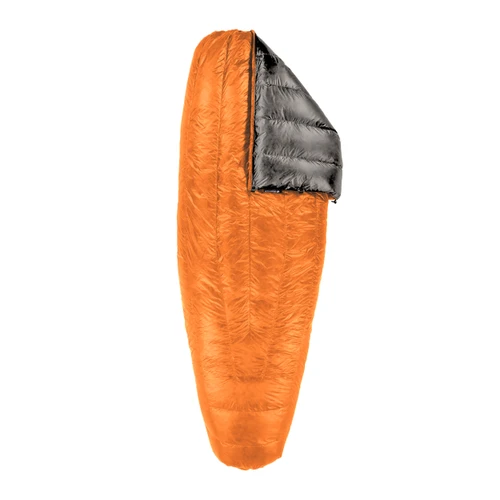
Best backpacking quilts for thru-hiking: Enlightened Equipment Revelation.
Price: $365*
Weight: 23.3 ounces
Fill Weight: 16.1 ounces
Fill Ratio: 0.69
Temperature Rating Options: 50, 40, 30, 20, 10, or 0 degrees
Insulation: 850-950 fill down
*Specs based on 20-degree quilt with 850-fill down, regular length/width, draft collar, and 10D inner and outer fabric
Details
Minnesota-based Enlightened Equipment is one of the original brands to popularize quilts. Their Revelation quilt remains one of the top models for backpackers.
According to our surveys, it’s been the most popular quilt/sleeping bag choice among AT thru-hikers (by a very significant margin) for five years running. Nearly one in five AT thru-hikers in our 2025 survey used the Revelation, which is pretty staggering considering how many quilt models are on the market these days.
The footbox has a 20-inch zipper, plus a shock cord you can tighten around the bottom to further seal heat. Opening the zipper and shock cord all the way will make more of a classic quilt shape. U-shaped baffles keep the down in place and help prevent clumping. The regular width is 54 inches, which is narrower than several others on this list. When in doubt, go wider.
If you like the looks of the Revelation but would prefer a sewn footbox, check out the Enigma. If you want to save Benjamins and/or anticipate your quilt getting wet sometimes, the Revelation APEX has the same design as the standard Revelation but uses synthetic fill.
Materials and Features
Users can choose between 850- or 950-fill on both the stock and customized Revelation. All down comes from an RDS-certified supplier. The face fabric is DWR-treated nylon. This quilt comes with an elastic sleeping pad attachment system to help hold it in place (at no extra cost).
Nobody’s Perfect
This quilt is light enough that the extra space and grams are worth the increased coverage of a wider model, and some users reported draftiness and a higher temperature comfort than listed on the quilt specs.
And just a heads up: custom EE quilts often have a long lead time (roughly 8 weeks as of January 2026).
Read our reviews of the Enlightened Equipment Revelation 10 and the Enlightened Equipment Enigma.
Western Mountaineering AstraLite (Best Ultralight Quilt)

Best backpacking quilts: Western Mountaineering AstraLite.
Price: $535*
Weight: 17 ounces
Fill Weight: 10.5 ounces
Fill Ratio: 0.62
Temperature Rating: 26 degrees
Insulation: 850+ fill down
*Specs based on 26-degree, 850-plus-fill down, regular-length (5’8) quilt
Details
The AstraLite is one of Western Mountaineering’s two quilt offerings alongside the NanoLite. The Astralite’s scant 17-ounce weight penalty is astounding, especially when you consider that this California-based brand is famous for its accurate temperature ratings. The total weight of the AstraLite is similar to just the fill weight of some quilts on this list — though in fairness, the “regular” length AstraLite is somewhat shorter than average, and the 26-degree temperature rating isn’t the warmest on the list.
Materials and Features
The AstraLite features 10 ounces of 850-plus-fill European down arranged in horizontal baffles. The outer shell is 12-denier nylon ExtremeLite, while a soft 10D taffeta liner provides a smoother next-to-skin layer. The top of the quilt is adorned with a deliciously squashy “draft yoke” with a dip in the middle for your face. This draft collar is designed to lie snug around the shoulders and has an elastic drawcord to cinch it tighter when necessary. The footbox of the AstraLite is sewn-through.
Nobody’s Perfect
The AstraLite runs short. Many quilts are actually longer from footbox to collar than the maximum recommended user height, ensuring that even the tallest among us have plenty of quilt to cover their shoulders or even pull the quilt up over their heads. For instance, the 78-inch Enlightened Equipment Revelation is designed for users up to 72 inches tall, and Katabatic says its 69-inch Alsek is recommended for users up to 66 inches.
In contrast, the 68-inch AstraLite is advertised as fitting people up to 72 inches tall, while the 76-inch-long Astralite is designed for people up to 78 inches tall.
The 26-degree quilt also may not be warm enough for some hikers in three-season conditions.
Shop the Western Mountaineering AstraLite
Hammock Gear Burrow (Fan Favorite)
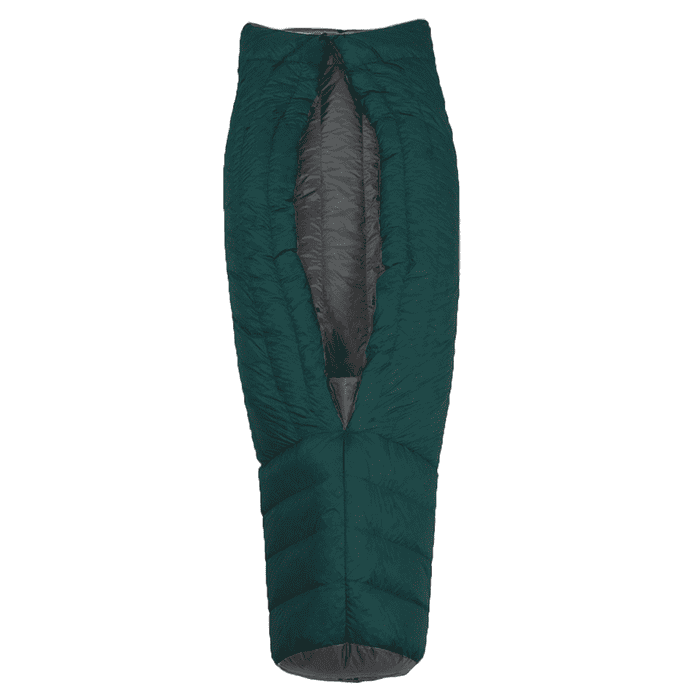
Best backpacking quilts for thru-hiking: Hammock Gear Burrow
Price: $325*
Weight: 25 ounces
Fill Weight: unknown
Fill Ratio: unknown
Temperature Rating: 40, 30, 20, 10, or 0 degrees
Insulation: 850-fill down
*Specs based on a 20-degree, 850-fill quilt, standard length/width, 20D inner and outer fabric, zipper footbox, no draft collar, no overfill, no pad attachment system
Details
The Burrow isn’t the cheapest, lightest, or most customizable quilt on the market, but it’s one of those pieces of gear that has developed a cult following over the years due to a combination of good build quality, accurate temperature ratings, fair pricing, and friendly customer service. Readers have been agitating for more recognition for the Burrow, and even our own staff threatened to revolt if we didn’t consider it for the 2026 list.
Indeed, there is something to be said for a quilt that’s durable enough for thru-hiking and achieves a balance of features while keeping the price under control. It was one of the top quilt models on the Appalachian Trail in 2025, according to our annual thru-hiker survey, though still far eclipsed by more mainstream Enlightened Equipment models.
And it’s a small thing, but Hammock Gear’s current 15-business-day lead time for custom quilt orders is honestly pretty impressive compared to the multi-month waits that are common with other manufacturers.
As the brand name might imply, the Burrow was originally designed as a hammock top quilt, but it works just as well for ground dwellers. Hammock Gear recommends sizing up to the wider 60-inch version for use in a tent to ensure extra coverage.
Materials and Features
The Burrow offers fairly robust customization options, most notably the ability to add up to four ounces (!) of overfill to the quilt. Users can pick the inner and outer fabric, choosing between 10D or 20D nylon (ripstop or taffeta) in a variety of colors.
850-fill down comes standard, and again, you can add anywhere from one to four ounces of overfill if desired. Most brands only offer one or two extra ounces at most, so this is a boon for cold sleepers.
Nobody’s Perfect
While the old duck-down Hammock Gear Economy Burrow was once one of the best budget backpacking quilts on the market, that cheaper option is no longer made and the classic goose-down Burrow is not as good a deal. Mind you, it is a quality product being sold for a reasonable amount — but at its current price point, it’s just not the thru-hiking life hack it once was.
UGQ Bandit (Most Customizable Quilt)

Best backpacking quilts for thru-hiking: UGQ Bandit
Price: $335*
Weight: 22.3 ounces
Fill Weight: 15.9 ounces
Fill Ratio: 0.71
Temperature Rating: 40, 30, 20, 10, or 0 degrees
Insulation: 850-fill duck down or 900-fill goose down
Specs based on a 20-degree, regular length/width quilt, 850-fill down, no overstuff, tapered cut, zippered footbox, no draft collar, MRS20 fabric, no dynamic tension control, no pad attachments
Details
Customization is the name of the game when it comes to the cottage gear industry, and quilts like the UGQ Bandit, Warbonnet Diamondback, and Loco Libre Ghost Pepper allow you to hand-pick a dizzying array of features with your order. On the UGQ Bandit, for instance, you can customize a whopping 14 different features.
Besides the color of the inner and outer fabric, UGQ also gives you control over the cut, length, width, down fill power, footbox style, outer shell material, draft collar, whether and where to overstuff the baffles, and whether you want the brand’s unique dynamic tension control or a pad attachment system.
The Bandit’s crazy fabric prints make it instantly recognizable in the thru-hiking world, but its thoughtful and well-engineered design is what really sets it apart.
Our reviewer’s favorite feature on the Bandit was its “dynamic tension control system.” These adjustable side elastic tensioners, which are concealed along both sides of the quilt, can be tightened to ensure the quilt stays tucked in beneath you, eliminating drafts on chilly nights. Note that we didn’t include this elastic system in the specs above for simplicity’s sake, but you may want to consider adding it for maximum functionality.
Materials and Features
Choose between M10T 10D nylon taffeta, MRS20 20D ripstop nylon, or an array of custom-printed ripstop polyester and nylon options for the outer fabric. The inner lining is always made with MRS20, but you can pick the color.
In terms of insulation, you have your choice between 850-fill Ultima duck down and ultra-premium 900-fill Ultima goose down. UGQ already overstuffs its quilts to 130% of the required fill, but you can choose to add an extra one to two ounces throughout the quilt, or one ounce concentrated in the footbox.
Without overstuff, the Bandit is already 71% down by weight, and that can go as high as 73.7% with two ounces extra down added. That’s a phenomenal ratio — the best on this list — and for hikers who sleep cold, could be a reason to go with the Bandit in and of itself.
Nobody’s Perfect
As with all made-to-order products, the tradeoff for all that customization is a longer lead time. As of late January 2026, UGQ is working with a 7-week lead time on custom quilts, so plan ahead. Interestingly, the brand allows you to pay extra (a lot extra) to cut the line bump your order up in the production queue by as much as four weeks if you’re truly desperate to get it sooner. Which will inevitably be a bit of a drag for customers who didn’t pay for the priority treatment, but again: patience is key when buying made-to-order gear.
Also, some of us struggle with decision-making, and the amount of customization on this bad boy is honestly mind-boggling. The amount of godlike power UGQ offers its customers is great for gear nerds and hikers with specialized needs who want to get the most possible out of their gear. More casual backpackers may consider it overkill.
Read our review of the UGQ Bandit.
Zenbivy Core 25 (Best Budget Backpacking Quilt)
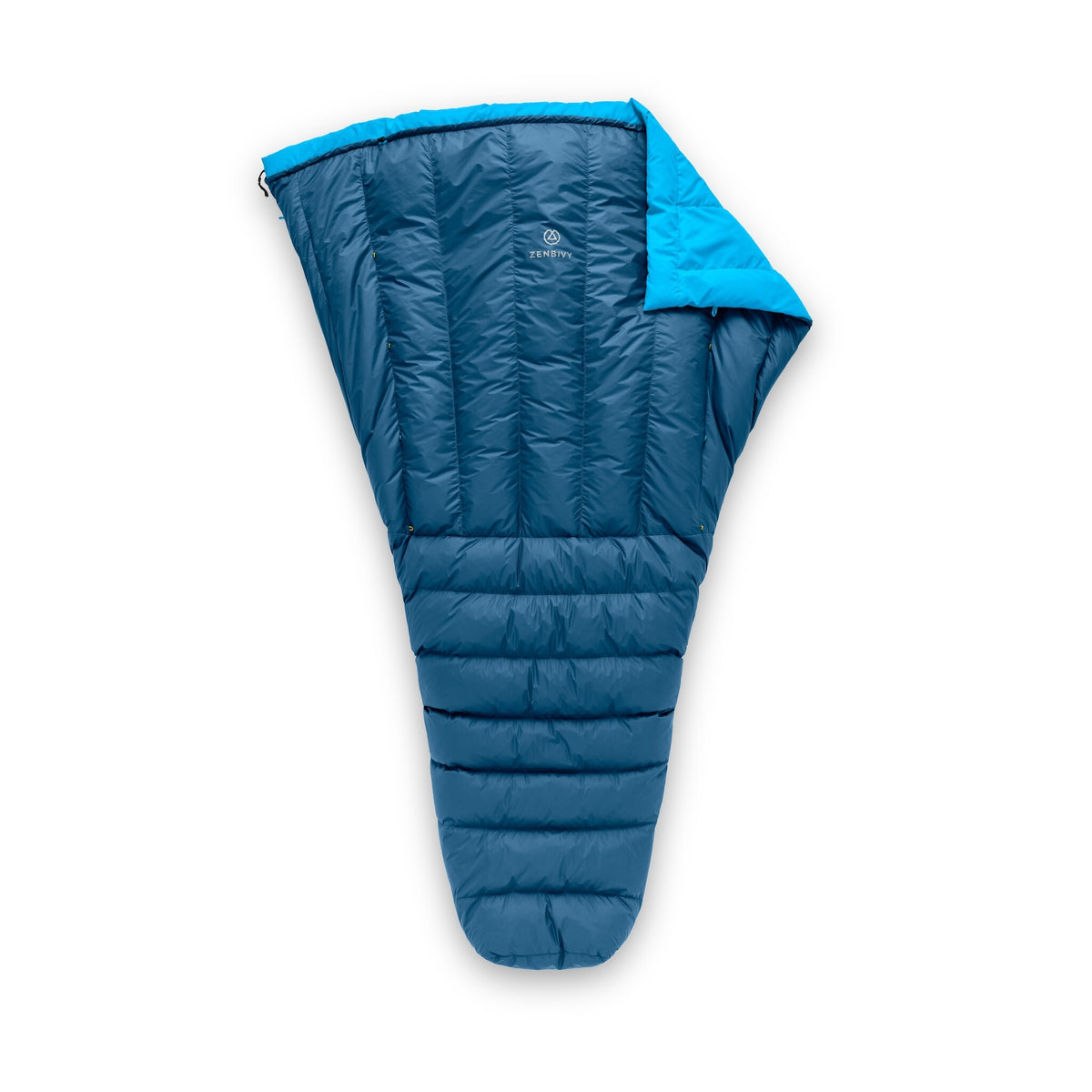
Best backpacking quilts for thru-hiking: Zenbivy Core
- MSRP: $209*
- Weight: 26 oz
- Fill weight: 14 oz
- Fill ratio: 0.54
- Temperature rating: 25 degrees (10-degree also available)
- Insulation: 650-fill duck down; synthetic (240g 1D/3D XD polyester batting) also available
*Specs based on a 25-degree, regular-length down quilt
Details
You may have gathered from this list that backpacking quilts are not cheap. The Zenbivy Core quilt is solidly cheaper than everything else on this list and still falls within the acceptable weight range for backpacking. In fact, in a world that seems to constantly get more expensive, Zenbivy actually lowered the price of this quilt by $40 with its 2025 update.
Zenbivy is perhaps best known for its modular sleep systems. The Core quilt can be paired with a unique fitted sheet+hood that can be integrated with both your sleeping pad (Zenbivy or another brand) and the quilt to form a seamless bed with the draft protection of a mummy bag, minus the constriction. Going for the full Bed setup adds dollars and ounces to your pack, though, so for our best budget-friendly pick, we’re just highlighting the quilt itself.
Materials and Features
The Core quilt is available as a 10- or 25-degree down or a 30-degree synthetic quilt; synthetic is cheaper but too heavy and not warm enough to make sense for this list. We reviewed the Core quilt in 2023, and our reviewer loved the next-to-skin softness of the 50-denier polyester pongee liner compared to typical UL fabrics. The outer shell is a 30-denier nylon taffeta, and the insulation is 650-fill duck down.
Besides the aforementioned modular design, other standout features of the Core quilt are the fast footbox and Kylie-curve. The fast footbox is basically a shallow sewn footbox with an additional clip further up that allows you to cinch the footbox tighter on cold nights.
The Kyle curve is Zenbivy’s patented three-quarter length drawstring along the top of the quilt, which cinches only the center portion of the quilt. That way you can cinch down to cut out drafts without affecting the overall width and fall of the quilt. It’s hard to explain this in words, so here’s a screenshot from Zenbivy’s website that depicts it better:

Nobody’s Perfect
Only just over half of the quilt’s total weight is dedicated to insulation, which is the lowest ratio on this list. This is reflected in its overall warmth: the Core quilt is rated at 25 degrees, but Zenbivy says the comfort rating is more like 35 — which might not be warm enough for some hikers. There’s a 10-degree version of the quilt, but it weighs 35 ounces, at which point you may as well just get a mummy sleeping bag.
To get the most out of this system, you should also have the compatible quilt/hood, which again adds weight and cost to your setup. It’s usable as a standalone quilt, so you could just start there and add the rest when it makes sense.
Read our review of the Zenbivy Core Bed.
Katabatic Flex (Best Quilt for Side Sleepers)

Best backpacking quilts: Katabatic Flex.
Price: $399*
Weight: 23.9 ounces
Fill Weight: 15.4 ounces
Fill Ratio: 0.64
Temperature Rating: 40, 30, 22, 15, or 5 degrees
Insulation: 850-fill water-resistant duck down, 900-fill water-resistant goose down, 900-fill regular goose down
*Specs based on 22-degree, 6′ regular width, 850-fill duck down quilt.
Details
A true “blanket style” quilt, the Flex has a zipper from the base of the footbox (similar to the EE Revelation) that can be unzipped for more ventilation on warmer nights. The footbox is not sewn shut but utilizes an elastic binding that hikers can cinch tight. Because nothing is entirely sealed, drafts and heat loss are inevitable. If in doubt about sizing, go for a wider option to ensure maximum coverage.
Tossing and turning bodes poorly for most quilt users since it tends to introduce drafts. However, the Flex (especially the 58″ wide version) is well-suited to the task. Its generous shoulder width, the ability to fully unzip into blanket mode, and Katabatic’s phenomenally secure pad attachment system all help to minimize airflow even when changing positions throughout the night.
Materials and Features
Users have the option for 850- or 900-fill ExpeDRY treated down, or 900 fill-power untreated down with a variation in pricing. The shell is a tightly woven, DWR-treated Pertex Quantum Ripstop.
The down is strategically distributed throughout the quilt based on heat loss, and the Flex’s differential cut (more shell fabric than liner) means the baffles will always retain loft even when the quilt is wrapped tight around you.
The Flex has a stash pocket, making it easy to keep track of small items like your phone even if you toss and turn overnight. The pocket is insulated, ensuring temperature-sensitive items don’t freeze.
Nobody’s Perfect
While this quilt’s design offers more flexibility in the zippered bottom closure and elastic footbox cinch, it does mean less heat sealing on colder nights. As with all quilts, take the temperature rating with a grain of salt and if you’re on the fence, go for something warmer.
The pad attachment system is ultralight and very effective, but our reviewer wasn’t a huge fan, saying it was just another camp chore and another small item he could potentially lose track of.
Read our review of the Katabatic Flex 22.
Enlightened Equipment Enigma Apex (Best Synthetic Backpacking Quilt)
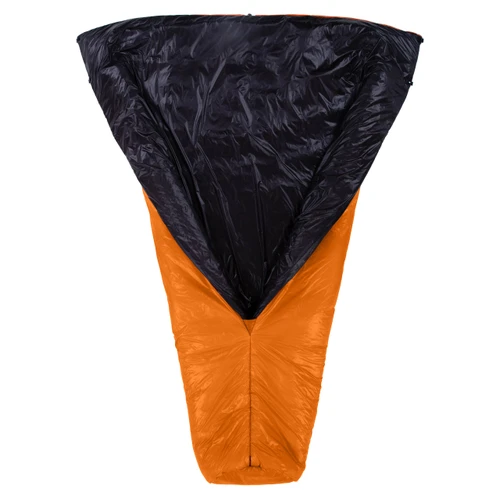
Best backpacking quilts for thru-hiking: Enlightened Equipment Enigma Apex
Price: $250*
Weight: 29.4 ounces
Fill Weight: n/a
Fill Ratio: n/a
Temperature Rating Options: 20, 30, 40, or 50 degrees
Insulation: Climashield Apex
*Specs based on 20-degree, regular length/width quilt, 10D inner and outer fabric
Details
While it still can’t compete with natural down in terms of loft, compression, and the all-important warmth-to-weight ratio, synthetic insulation is getting better all the time. Synthetic fill also has the advantages of being a lot cheaper than down and being much less vulnerable to water (i.e., it stays relatively warm and functional when wet). And as one commenter pointed out, synthetic is really the only viable option for hikers who are vegan or otherwise eschew the use of animal products.
The Enlightened Equipment Enigma Apex is easily our top recommendation for a synthetic quilt. Its Climashield Apex insulation has a fairly plush, lofty feel to it, one of the most convincingly down-like synthetic fills we’ve tried. It otherwise features the same beloved design as the popular down-filled Enigma quilt, which, alongside the EE Revelation, far eclipsed in popularity all other quilts and sleeping bags on the AT last year, according to our 2025 thru-hiker survey.
And at less than 30 ounces for a 20-degree bag, the weight penalty just isn’t that scary.
Materials and Features
The key design difference between the Enigma and the Revelation is that the Enigma features a sewn-closed footbox, in contrast to the Revelation’s drawcord version. The Enigma weighs somewhat less as a result and will have less draft potential around the feet, but it could also feel more constricting for some. The Revelation Apex might be a better choice if you want more versatility.
If you go for the custom Enigma Apex, you can choose between 7, 10, and 20D for both the inner and outer fabric, depending on where you want to land on the ultralight-to-durable spectrum. You can, of course, also customize the fabric colors and choose your quilt’s length and width.
Unlike many quiltmakers, you don’t have to pay extra for EE’s pad attachment system. It comes included with the purchase of your quilt.
Nobody’s Perfect
Besides the use of synthetic fill, there is one notable difference between the Enigma and the Enigma Apex: on the synthetic version, you don’t have the option to add a draft collar.
Beyond that, the key drawbacks are the quilt, in our opinion, are the same as with any synthetic model. For some users synthetic just makes the most sense, but you won’t get the lightest or most compact quilt possible unless you go for natural down.
Shop the Enlightened Equipment Enigma Apex
Feathered Friends Flicker UL 20 (Best Hybrid Quilt)
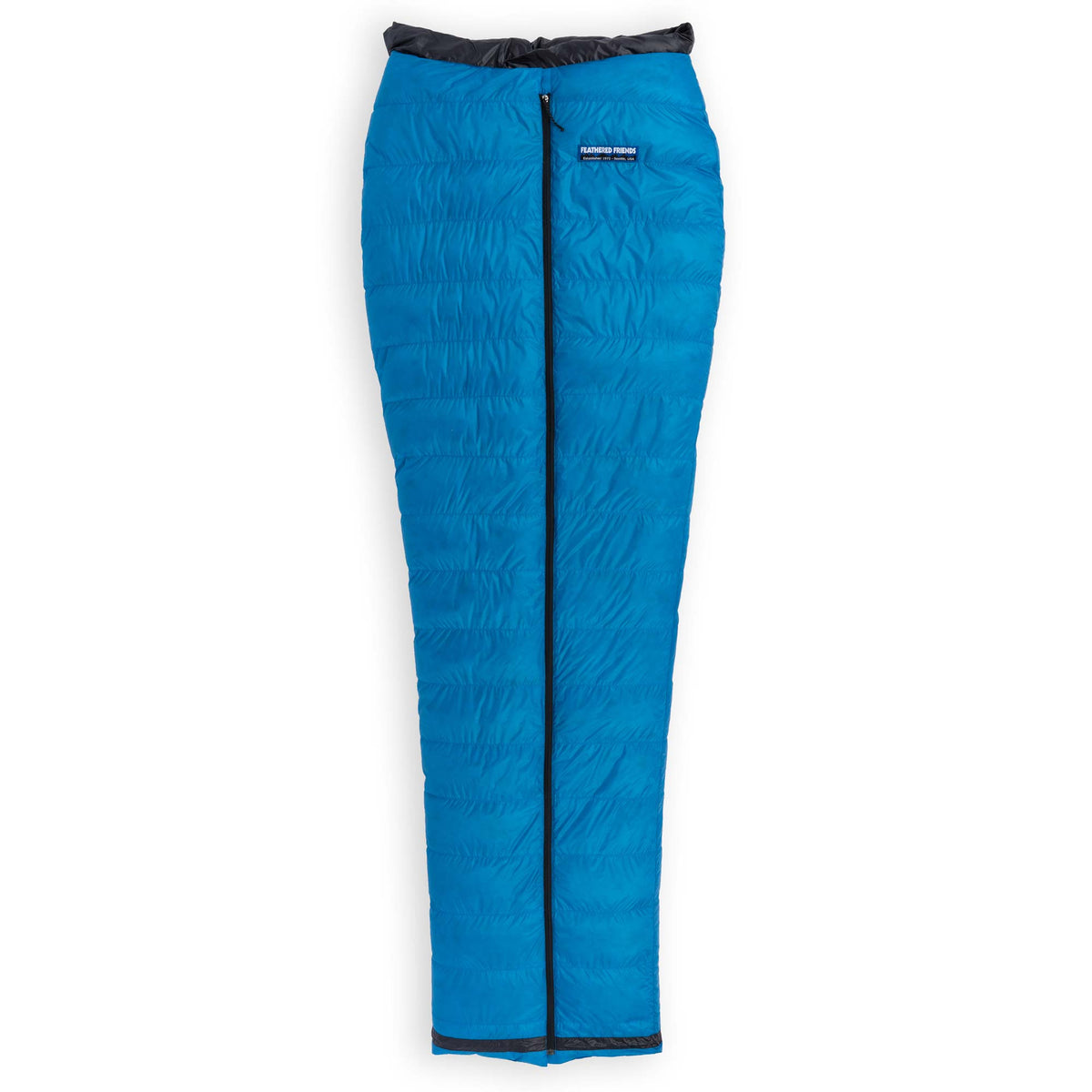
Best backpacking quilts for thru-hiking: Feathered Friends Flicker UL 20.
Price: $559*
Weight: 25.5 ounces
Fill Weight: 14.7 ounces
Fill Ratio: 0.57
Temperature Rating Options: 20, 30, or 40 degrees
Insulation: 950+ fill goose down
*Specs based on 20-degree, regular-length Flicker.
Details
The Flicker could just as easily belong in our Best Sleeping Bags list. Similar to the Zpacks Classic, it can be zipped up to convert the quilt into a fully enclosed, hoodless mummy. The zipper is full-length, stretching down to the footbox. Whether this is a merit or an annoyance is up to you, but it does allow the bag to be fully converted into a blanket in warmer weather, and it’s wide enough in its unfurled state to accommodate two sleepers.
It even has webbing strap attachments that allow it to be converted to a hammock underquilt. It’s certainly not the cheapest bag on this list, but between its comfort/versatility and Feathered Friends’ characteristic attention to detail and use of premium materials, we think it’s worth it.
Materials and Features
Feathered Friends goes all out (as usual) with 15 ounces of 950+ fill goose down, some of the loftiest stuff money can buy. New for this year, the Flicker is made with ultralight Pertex Quantum Pro fabric, plus a Pertex Diamond Fuse 15D lining in the footbox.
Nobody’s Perfect
The full-length center zipper can be annoying, and we prefer the warmth and security of a sewn footbox to Feathered Friends’ drawcord version (but that’s a necessary concession if you want access to blanket mode, and some hikers may prefer the adjustable/ventable nature of the drawcord). There is also no pad attachment system.
At 25 ounces, it’s heavy for a quilt.
Shop the Feathered Friends Flicker UL
Read our review of the Feathered Friends Flicker.
Zpacks Twin Quilt (Best Two-Person Quilt)

Best backpacking quilts for thru-hiking: Zpacks Twin
Price: $579*
Weight: 27.9 ounces
Fill Weight: 20.3 ounces
Fill Ratio: 0.73
Temperature Rating Options: 20 degrees (40-degree version also available)
Insulation: 900-fill Muscovy duck down
*Specs based on medium-length quilt.
Details
We love the idea of a couple’s sleeping bag (if you’re backpacking with your partner, why NOT share pack weight, body heat, and cuddles?), but the reality is often too bulky to be practical. Yet at 28 ounces, the Zpacks Twin weighs less than some one-person quilts. Split between two people, the weight and cost of this quilt work out to be pretty phenomenal, and it packs down to just 8 by 13 inches.
Its dimensions are fairly luxurious: 86 inches wide across the shoulders and hips, tapering to 71 at the footbox, and 74 inches (6 feet) long overall.
Materials and Features
The Twin quilt is built with 0.51 oz/sq yd Ventum ripstop nylon and 900-fill Muscovy duck down. Alongside these premium ultralight materials, the quilt features an exceptionally simple design that’s light on bells and whistles, which is how Zpacks has kept the weight so low.
The quilt has horizontal baffles in the footbox but vertical ones in the main body of the quilt. Some designers prefer horizontal baffles throughout because they allow the user to redistribute down to fine-tune the warmth, but Zpacks says its vertical baffles are optimized to prevent unwanted down migration. (This editor sides with Zpacks on the matter of baffle orientation, but it’s largely down to personal preference.)
Because the design is so simple, the quilt is also reversible, so you can have a black inner lining and blue exterior or vice versa.
Nobody’s Perfect
The Twin Quilt’s primary competitor is the two-person Enlightened Equipment Accomplice. The Accomplice is fully 10 ounces heavier with the same fill ratio, which is most of why we picked the Twin for our 2026 recommendation, but it also offers more customizable features and potentially more warmth.
The Twin Quilt does not have a pad attachment system, nor can you add a draft collar.
Finally, at the end of the day, a double quilt just isn’t for everyone. Quilts already tend to be drafty relative to mummy bags, and it’s even worse with double quilts. And if you ever want to go backpacking without your partner, you’ll need to purchase at least one solo quilt as well.
Why should you trust us?
Because we’re so incredibly intelligent, of course! Attractive, too. (Not to mention extremely humble).
But if that isn’t enough to impress you, there’s also the fact that everyone who contributed to this article is an experienced thru-hiker with thousands of on-trail miles under their belt. We’re gear nerds who love putting our equipment to the test on trails long and short, and we’ve tested dozens of quilts in pursuit of a better night’s sleep in the backcountry.
Moreover, we survey hundreds of Appalachian Trail thru-hikers every year to learn about their behaviors, demographics, and—you guessed it—gear preferences. That means our picks for the best backpacking quilts for thru-hiking aren’t just our opinions: they’re based on years of feedback from the thru-hiking community.
Check out AT hikers’ favorite backpacking sleeping bags and quilts from the 2023, 2024, and 2025 thru-hiker surveys.

Competence and backpacking proficiency personified.
Owen Eigenbrot, Alex “GPS” Brown, and Rachel Shoemaker contributed to this list.
Featured image: Graphic design by Chris Helm.

This website contains affiliate links, which means The Trek may receive a percentage of any product or service you purchase using the links in the articles or advertisements. The buyer pays the same price as they would otherwise, and your purchase helps to support The Trek's ongoing goal to serve you quality backpacking advice and information. Thanks for your support!
To learn more, please visit the About This Site page.

Comments 18
Hey there,
I though all of this was great information for experienced hikers or otherwise. Quilts are always dependent on you physiology, and taking that into mind before a purchase heavily weighs you choices. One little tid-bit I would greatly appreciate more on this site is seeing Nunatak quilt reviews as well as their other gear. I think Nunatak is a very good competitor when matched up with Enlightened Equipment. Both are highly customizable to the user’s preferences, but I believe that Nunatak takes it up a notch. Thanks for all the good work and effort people like you contribute to the community.
I LOVE my Hammock Gear Econ and you’ll only be able to pry it out of my hands when I’m no longer among the living.
15-30 degrees rating! :o. Damn.. That’s a hot hot summer.. I can sleep without anything then ?
Useful information as I’m contemplating a quilt over a bag, but not enough information on synthetic options. I understand the benefits of down versus synthetic but I will not use any animal products so unfortunately none of the specific items in this list seem suitable. It’s the same issue as finding information on many items of clothing, I need to see options other than down and merino.
Advice from more than 15,000 miles. Order wide or extra wide quilts. Ditch the straps – leave them at home. An extra baffle or width of the quilt is better and more comfortable than straps.
I’d be interested to know the names of the other Cottage industry quilts that these were compared to.
The best quilt I’ve found is from Trailheadz. Extremely light, highly customizable, very compressable, and 1000 fill power. It’s one of my favorite pieces of gear!
Love my burrow!
I debated a long time between a new traditional bag and a quilt and am very happy with the quilt. It is light, easy to use and very comfortable.
I particularly love that I can have a leg out or an arm and move around but when needed can pull it all in and be warm and comfy!
My EE Revelation is in the mail right now, actually! This will be my first quilt in 36 years, so we’ll see if it’s not too big of a life change for me lol. Thanks so much for these lists!
Do we know yet if a list for battery packs will come out by the end of February? I need to buy a new/backup one for my AT LASH in April since the Nitecores have been giving so many others longevity issues and want to be ready if/when it happens to mine.