
 ">
Camino Days 3-4: Summer Camp on the Meseta
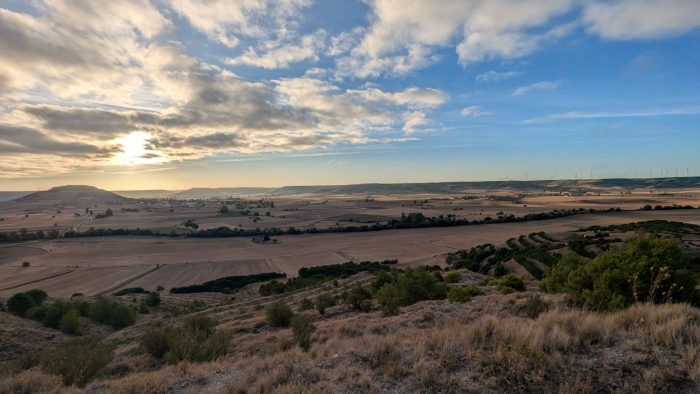
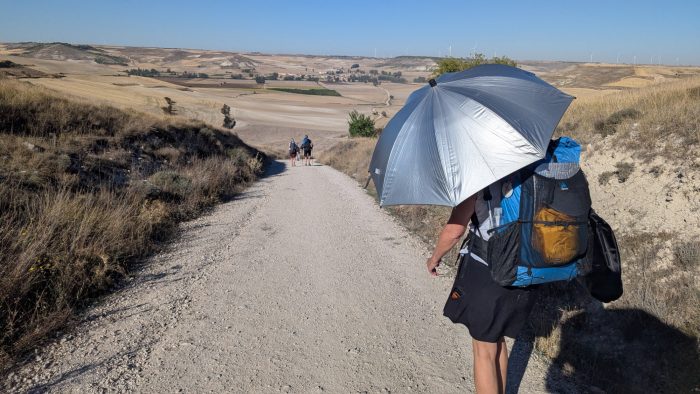
We tried to leave Castrojeriz, but the animated and amusing imp who runs the place made us a toast and coffee breakfast, so it was almost light when we left to climb the big hill outside of town. It feels like we have climbed to another level of the Meseta. The landscape is less rolling, and there are even fewer trees, just stubble of harvested wheat fields. In the distance before us, we see a steady stream of pilgrims marching ahead of us, like a trail of ants on these double-track farm roads.
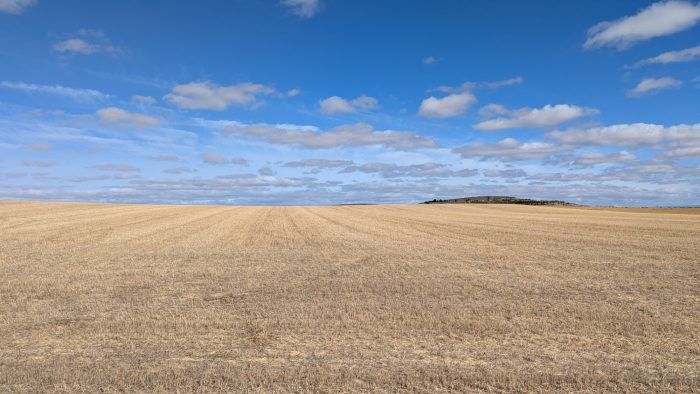
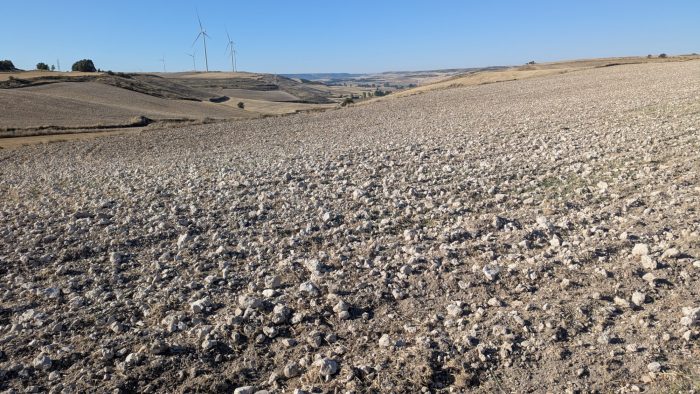
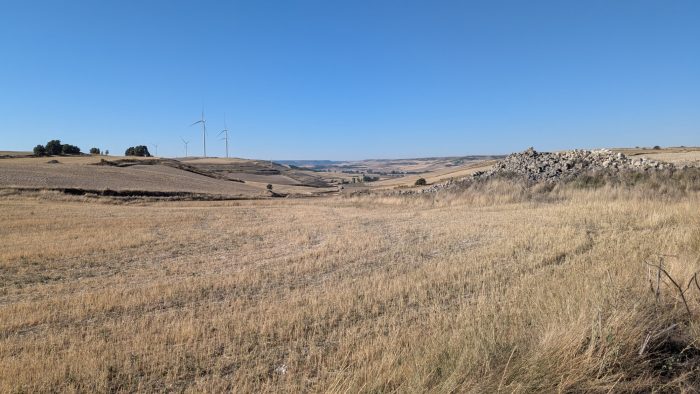
I’m told there was a time each year when my father’s voice would echo down the hallways of ISU’s Davidson Hall: “It is a sin to plow!” On our right, the fields are plowed and ready for the fall planting, but the wind has blown away much of their topsoil, leaving a field of broken stones. The next field, save side. the wheat stubble holds the soil and looks fertile. Dad was right.
We walk to the Hostel of San Nicolás, another 12th-century hospital that took care of traveling pilgrims, and use their toilets and happily add to the donativo box—as if they had been expecting us. I remember it from 2017 because St. Nicolás has a candlelit communal dinner and foot-washing ceremony. We could have stayed, but it was just 9:00 a.m., so we continue on.
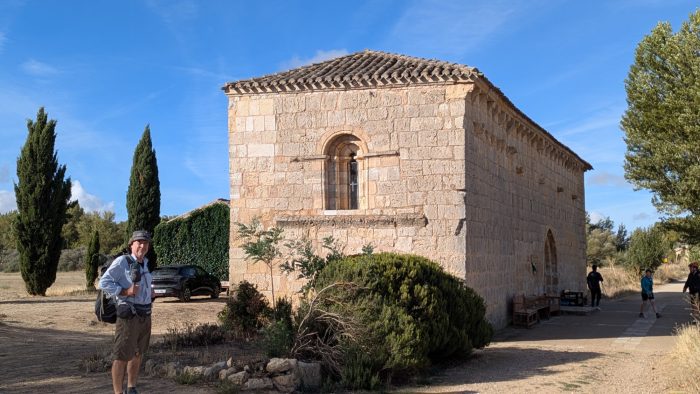
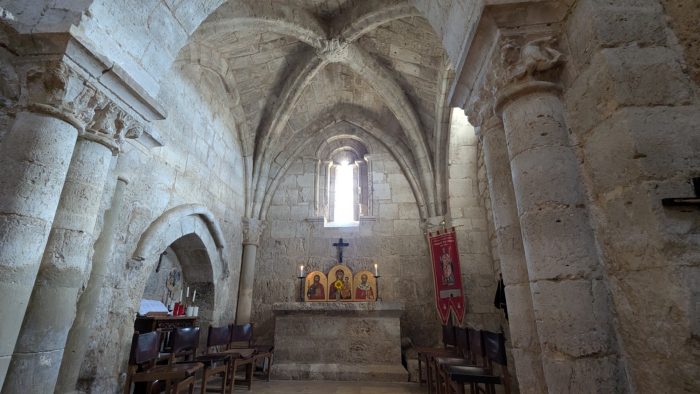
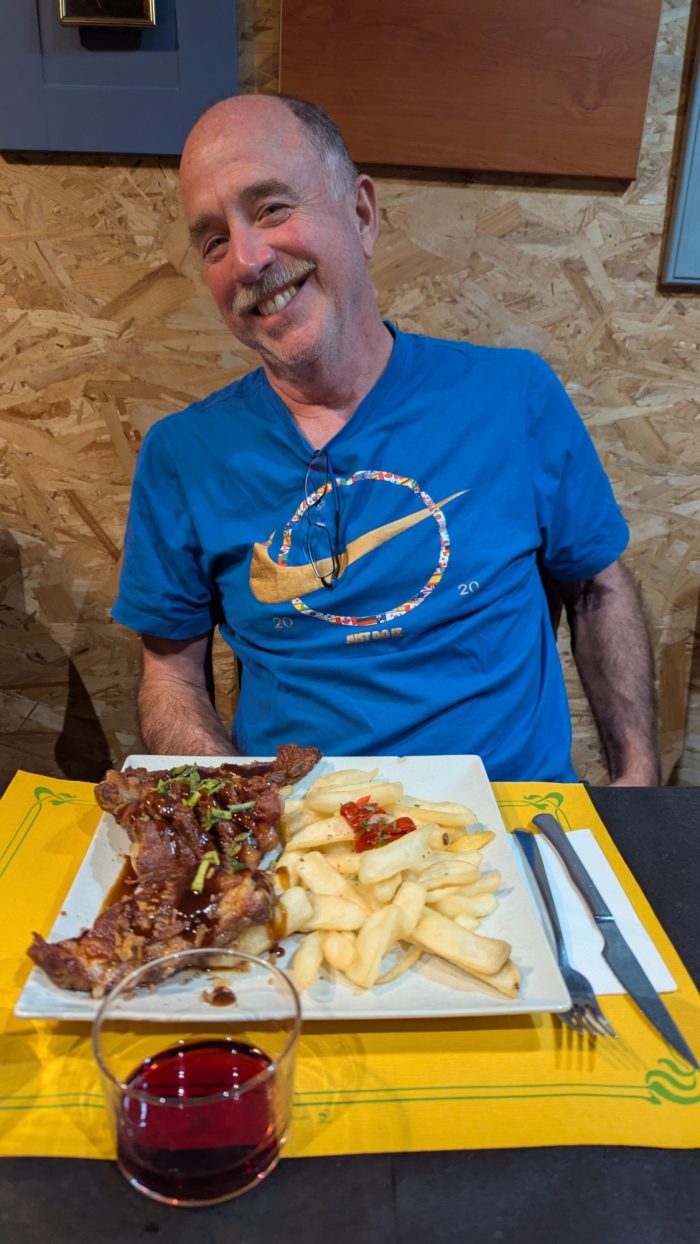
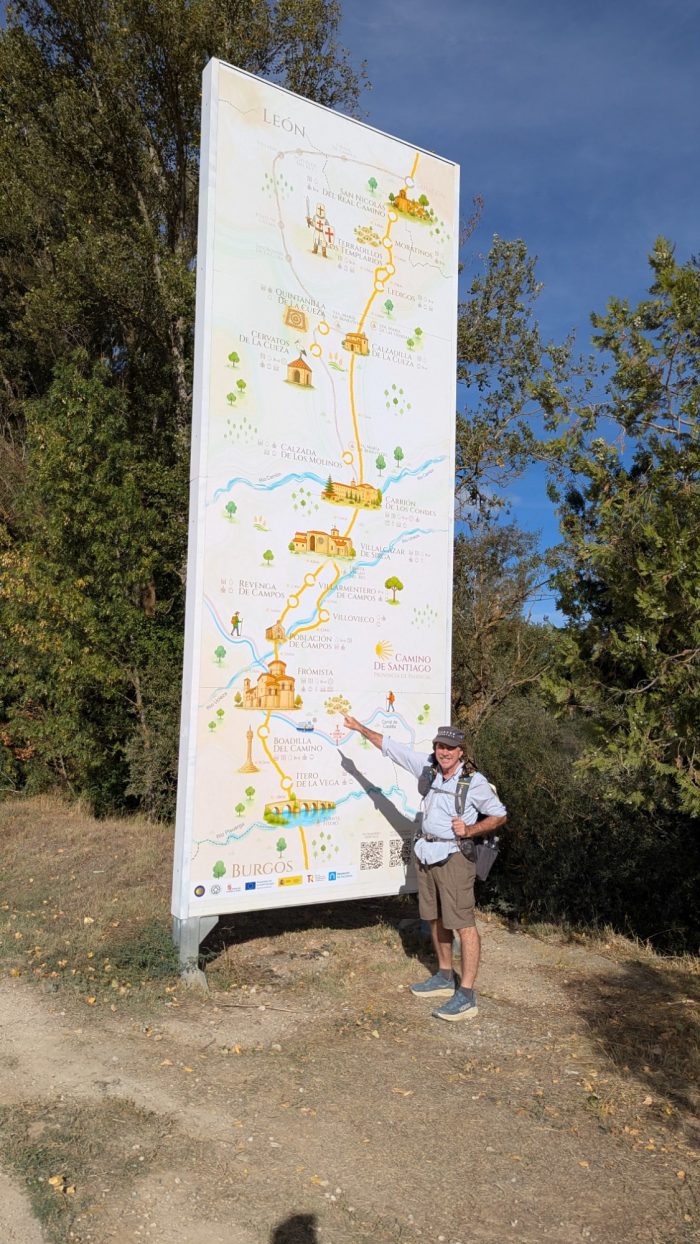
The rest of the way into Frómista is a cascade of rolling hills along the side of the road with very few cars, but a surprising number of pilgrim rest areas. The sunflowers are back, and awake; their yellow faces greeting us. We’ve come 16 miles today, which is starting to feel like too much. Frómista is booked up, but because El Chiringuito Del Camino isn’t listed on the apps, we find a place in it. Next to us is a Michelin-rated restaurant, but this albergue also has a well-regarded Pilgrim meal. I have the ribs, Suzanne the vegetarian plate; both are delicious and plentiful.
The Camino has a sort of summer church camp feel: couples are forming, groups are bonding, and there is a buzz among the younger pilgrims.
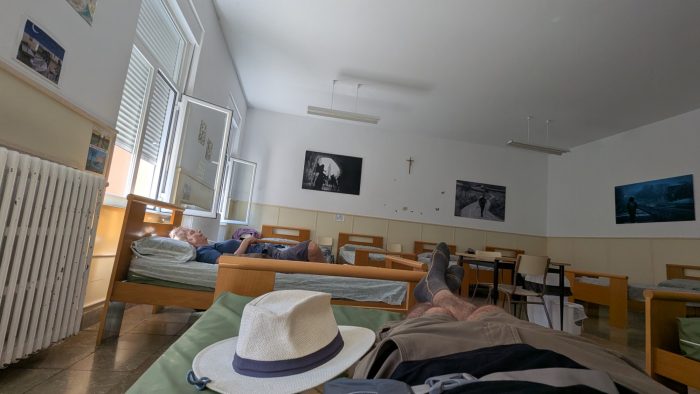
Tonight we’re in the convent, Espíritu Santo, run by nuns with well-established personalities. There is a 6:00 p.m. pilgrims’ blessing with a Korean man playing a long wooden flute he carries, then later a Pilgrims Mass at the nearby church led by a priest who is excited about leading the Mass. For most, it has felt like a holy obligation, one they wouldn’t do otherwise, but at this one the joy is felt. The Mass ends with an adoration of Mary.
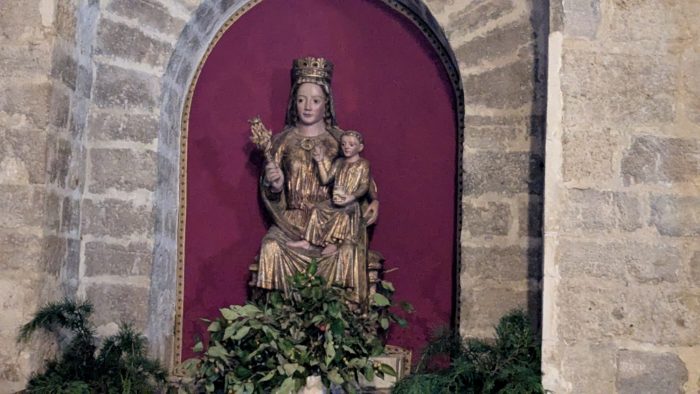
A week ago, on the supposed birthday of Mother Mary, we sang “As I Kneel Before You” in the English Mass, a song that calls her Mother of God, mother of mine and now we’re asked to venerate her. As a United Methodist, this is a bit of a stretch, but I decide to venerate anyway, asking her to intercede on my behalf for my back pain, praying something like, “If you are who they believe you are, could you ask The Father to heal me from my back pain?”
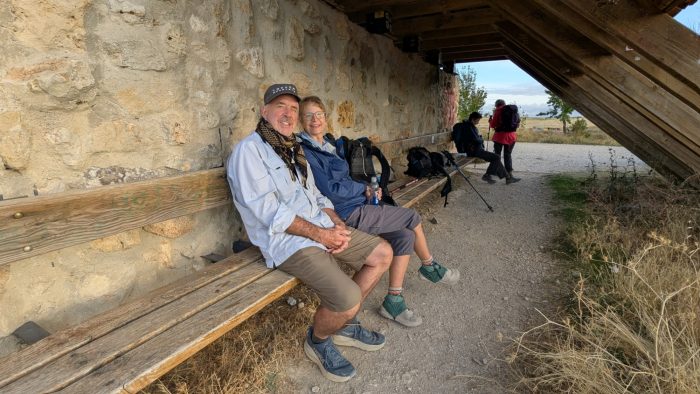
We are finding our rhythm, I think, but maybe not clear on our reason for being on Camino. It’s a 4th round question after where are you from? where did you start? is this your first Camino? and if there is still time, then why?
I finish making dahl that night right before the kitchen is taken over by a group of young people cooking for 26. The stove is a bit tricky, so I offer to help. Understand that to these young adults, people our age are mostly invisible, irrelevant, so when I begin speaking, they look up surprised, confused, and then around to see where my voice is coming from, as if I were an apparition speaking out of the ether.
An enormous amount of food is cooking: lentil stew, salads, something like a meat-sauce spaghetti, and so many noodles. It would feel like summer camp, but for the sheer quantity of wine being consumed, never mind that the sisters have made it quite clear no alcohol.
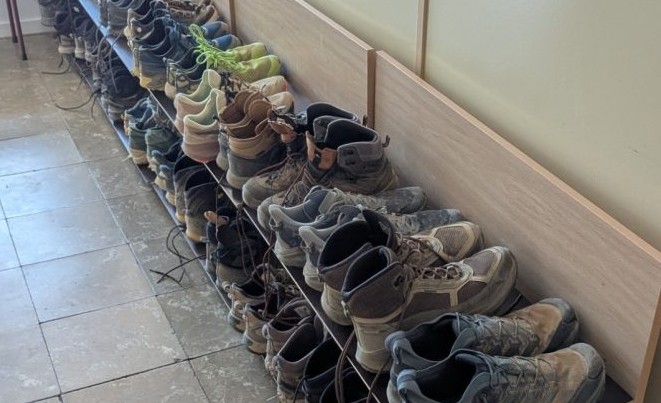
Are we really on the same Camino? I wonder, but the moment I do, I feel I’ve fallen off the Camino: “A Pilgrim does not judge other Pilgrims”. Yet tonight the convent feels anything but sacred, so I’m thankful the sisters had the good sense to put the older couples together in one room, and separate by gender everyone else. So it is like summer camp, girls and boys cabins.

This website contains affiliate links, which means The Trek may receive a percentage of any product or service you purchase using the links in the articles or advertisements. The buyer pays the same price as they would otherwise, and your purchase helps to support The Trek's ongoing goal to serve you quality backpacking advice and information. Thanks for your support!
To learn more, please visit the About This Site page.
