 ">


19. Floating to the Moon
We stood at the edge of the river canyon, looking down into the unknown. The rain had quit two days ago but still the water level would be high. All part of the fun.
Up on the desert plateau we had been in the open, walking in grass and volcanic rocks pitted like the bark of trees. Now we walked over a thousand feet down, almost straight down, down to the river at the heart of the canyon.
Huge trees stood above us, rooted into the banks or holding to the cliffside. The sun slanted in over the rim on the eastern side. The flowing surface steamed in the cold. We checked ourselves and each other. Every pocket was zipped. Our shorts were rolled up or taken off entirely, exposing the lines on our thighs where pale skin had been browned by months of sun. Everything in our packs was wrapped up tightly in plastic and cinched down tight. Time to get wet.
Stepping in hurt, but stepping out hurt more. The cold made us yip like coyotes, and when we squelched out onto the sand on the far side, the blood rushed through our legs and ached terribly. The trail crosses in and out of the Gila river hundreds of times. We were only getting started.
On either side of the river there were boulders and logs, downed trees and debris crushed together into walls and barricades by the pressure of the floods. Since the waters had receded they had dried out, and although some had broken down a bit, they remained. The floodrack created an obstacle course that seemed to never end. Sometimes the cliffs rose straight up out of the water in a bend, forcing us to the inside of the curve. The flowing river was mostly clear of debris, but the silty waters were impossible to see through, and with the loose rocks and invisible drop offs – not to mention the cold- we were pushed to make our crossings as quickly as we could. We found ourselves slogging through quicksand, crashing through willows, crawling under downed trees or traversing them like balance beams, and bracing against the torrent when it was time to cross again.
“Man, this reminds me of the Bob!”
“Oof, don’t remind me.”
Way back in Montana we had all had a time of it traveling through the Bob Marshall Wilderness. Although we hadn’t met each other yet, we had all been there at around the same time and had all had to deal with the fallen trees, flooded waters and general cold.
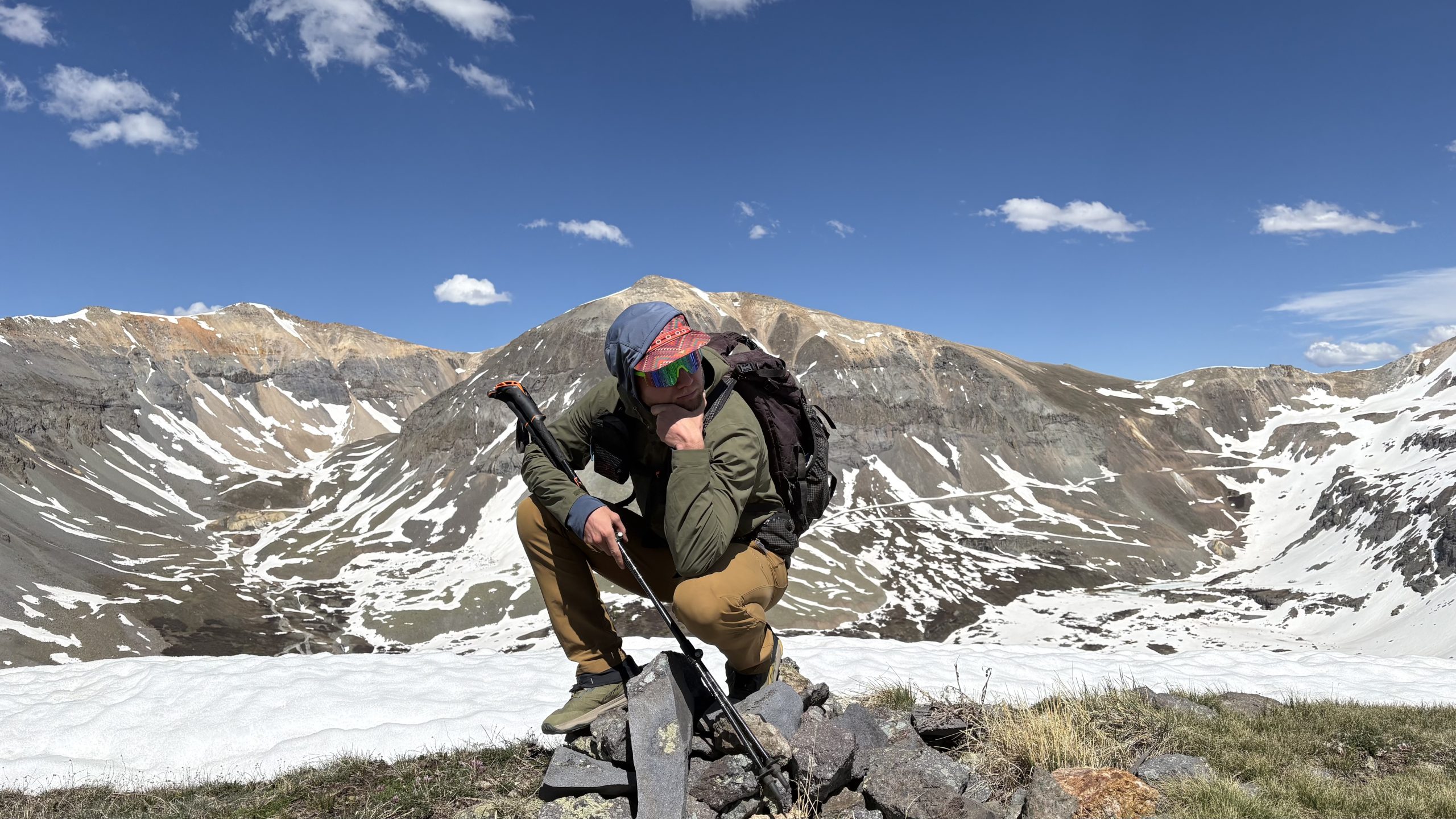
I lifted the heavy curved stick above my head and brought it down in a crushing stroke, breaking an opening through a natural fence of dead tree branches. They broke easily, sending dust and fine bits of bark flying. I gave the air a moment to clear and pushed through. Wonder and Gunslinger followed. I had accidentally left my trekking poles in the backseat of a hitch the day before, but had found this stick on the bank just before the first crossing. Long enough to act as a support for the water crossings, strong enough to break through the environment when needed, and not cool enough to be heartbreaking when it was inevitably lost, broken or left behind: in other words, the perfect stick for my needs.
We stepped out onto a gravel beach and looked up at the cliff wall across the river where the ancients had left their mark. The roofs of caves and overhangs were scored black by generations of cookfires, and the little paths up and down could be seen from most angles. We crossed the deeply gouged meadow on the inside of the river’s wide, shallow curve. The long grass was all flattened and drawn out towards the downstream flow.
“You think this was all from this past week? Or the September floods?”
“I don’t know. Probably September, but I’m sure this week didn’t help much.”
The soft mud and sand had already shown us the tracks of plenty of animals: black bear and fox, mule deer and ringtail cat, iron-shod horses but no people on foot, not since the flood at least. Something dark and sleek slipped into the river and followed its nose upstream
Yesterday I had seen two wild dogs up in the grass, about as different from one another as could be. The first was a dachshund that had run out from behind a set of cattle loading pens, barked once at me and then run back. Nobody around, no collar that I could see, so strange an interaction that it took me a moment to be sure it had actually happened. The second had been a lobo, a Mexican gray wolf of the prairie, rangy and lean, loping along through the tall grass. Desert dogs both, but neither down here at the river.
We crossed again. After noon now, the water was still cold but no longer painfully so. Wonder went first. She faced upstream and used her trekking poles, always keeping three points of contact as she went. Not very far to go, only ten feet across here, but the water reached her hip and the current made the poles in her hands thrum like picked guitar strings. As she ascended the far bank, Gunslinger went. He’s a good bit taller, but he still had to pick his way carefully. He stepped up onto the sand and then it was my turn to make the crossing. I held my stick in both hands and faced upstream, crabbing sideways as they had, moving slowly. A bad step, a rock turned and rolled over my foot on its way downstream. Ow. My feet weren’t numb, not quite, but they were club-like from the cold. Still, I felt that. Just a little blood from one cut on my ankle. Oh well, keep moving.
Dead willows slashing at our legs and left white scratches on the skin. The live ones caught our feet like cables and held us until we could untangle ourselves. Deep black mud under the flowing current, grabbing and holding anything it could.
We reached the junction. We had gone a bit over six miles in almost six hours. We looked at the map and made the call. If we’d had enough food, we could’ve kept going through the river canyon. If we had more time, more food, if the water wasn’t so high, if we knew there wasn’t going to be more rain soon…
We had only done the first of the four segments of the river that the trail ran through. I had wanted to do all four, we had all wanted to do more than just the one, but we were beat. Our feet were waterlogged and raw and our legs were slashed and bruised. We went uphill.
The high route follows the river from the top of the canyon. Sparse forest and dry meadows. An eagle dove into the tall yellow grass and swept away victoriously. We followed the rim of the canyon as it wound in and out, and as the sun declined it provided us with stunning colors. We found our spot, right at the edge of the drop. Nobody set up a tent: we put our energy into a fire instead. The stars came out, then the moon. Full, piercing spotlight of the night, bathing us in silver light. We meditated upon the burning red embers and the echoing calls of the lives of the canyon.
Golden light drenched the walls of the edge. We loaded our gear and swung our packs up and ate the last of our food as we went. A long slow descent as the plateau broke open into the great river valley, the way down decorated by the late blooms of cholla and high red pillars of stone. We reached pavement and dropped our packs, then set out to explore the homes that had been built into the naked caves more than 700 years ago.
We met up with other hikers, friends old and new. We bought food and ate it and bought more. Fresh pizza and homemade ice cream, hard to beat. When we were full and happy, we went down to the hot springs beside the river. Hot water and clear skies. We set up for the night the best that we could – only a few tent stakes found purchase in the hard ground.
I woke in the dark. Cold, shivering, damp. No, wet. I sat up. What the hell?
Everything was covered in condensation. Of course. We’d heard how bad it was from people who had slept by the river last night. Now here we were only a few yards away from it, and it was too late. 2:38am, and not a chance I’d dry out enough to warm up enough to fall asleep again. Damn.
I fought against it for a while but it was no use, so I made the call. I shucked off my quilt and liner and rocked to my feet. Another shiver ran through me as I walked to the steaming pool. I wore every layer of clothing I had but it wasn’t enough, and every one of them landed in a pile on the wooden bench. I stepped down into the hot water.
Yes.
The surface passed my calves, my thighs, and the water splashed gently as I crouched, as my ribs slipped below, as my shoulders dropped back into the heat, and finally my head went under.
Quiet. The odd clicking in my ears from escaping air. The slight burn in my nostrils from the hot water. The gravel bottom pressing into my tired muscles. Exhale. Bubbles from the nose. Chest falling deeper into the pool. Head tipping back. Water tipping in, force it out – exhale – too late. The burn in the sinuses. Slow rise. Forehead breaking the surface. Water running down my face. Breathe in through the mouth, out through the nose, clear the passageway. Wipe water from the eyes, open them.
The blazing moon above, now a day past full. The stones and trees of the riverbank stand motionless in the bright light. The chuckling of the Gila, the pools smoking like volcanic lakes. I lie suspended in the hot water, almost motionless. Silver steam in the cold air, rising from my skin where my chest breaks the waterline.
Almost four in the morning, still hours until dawn. Exhale. My body sinks below the surface again. Not far to go now, to Mexico.
I do not open my eyes, but I can feel the bright moonlight penetrating the waters of the hot spring. What has been a distant future for so long now is just…the future. The near future, even.
I breathe out slowly, deliberately, keeping my nose tilted forward, keeping my airway protected. The trail is drawing to a close, we can all feel it. There is a slowing down of sorts, a carefulness, like the last movements of a painter finishing their masterpiece. An involuntary resistance to the inevitable end.
I feel the tightness in my chest as my lungs reach complete emptiness. I feel the tightness harden as my oxygen depletion reaches maturity. I feel the twitching of my muscles as they cry to be released from stasis, to drive my living being up into the world of air. An involuntary resistance to the inevitable end.
Up. Cold air. Deep breath. Good oxygen. Steady heartbeat. Steady mind. Deep breath. Cold air. Good oxygen. Good life. Good living. An involuntary resistance to the inevitable end, but a worthy one. Good life. Good living.

This website contains affiliate links, which means The Trek may receive a percentage of any product or service you purchase using the links in the articles or advertisements. The buyer pays the same price as they would otherwise, and your purchase helps to support The Trek's ongoing goal to serve you quality backpacking advice and information. Thanks for your support!
To learn more, please visit the About This Site page.