
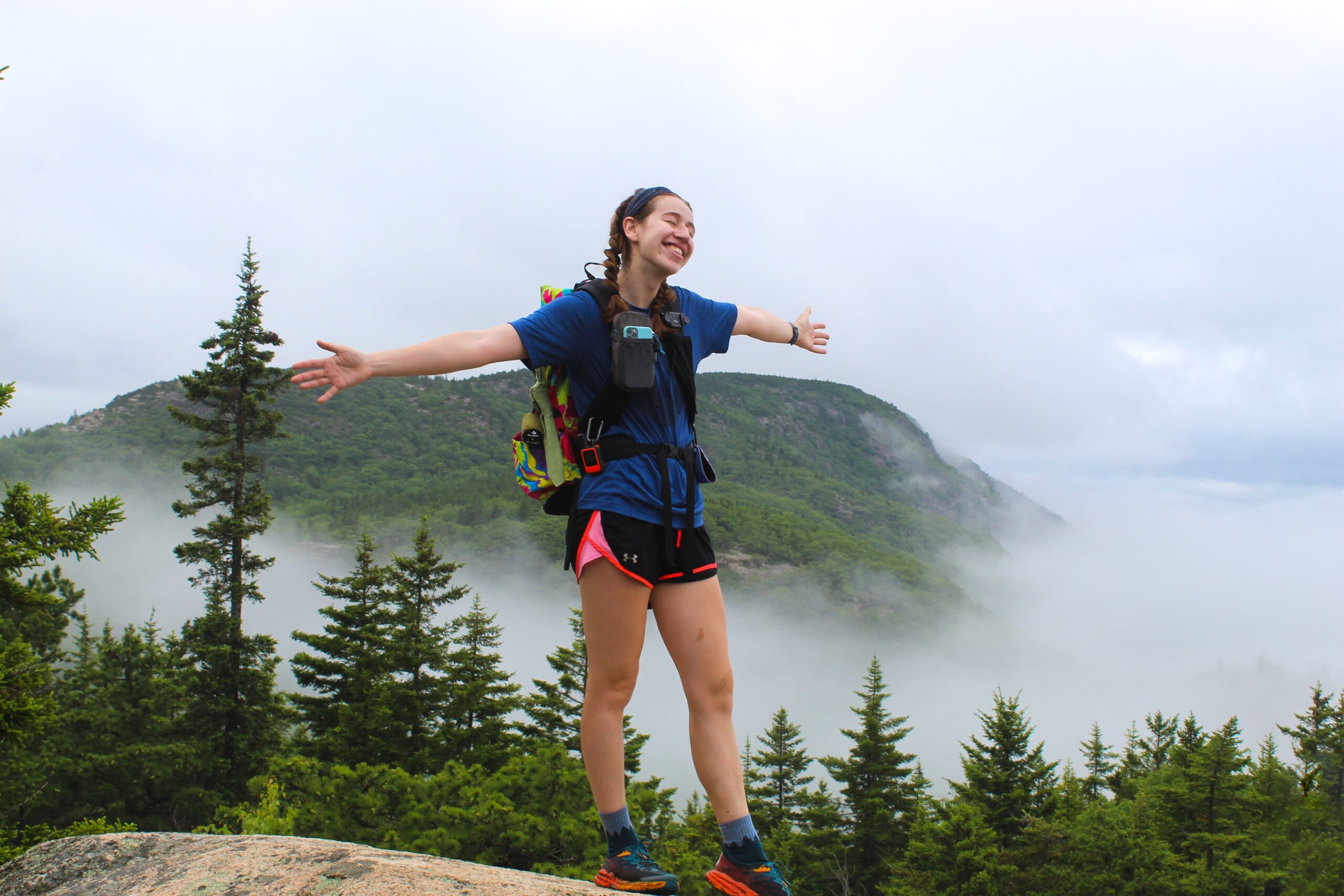
 ">


From a Homemade Tent to Custom Shorts, She Made All Her Own Gear for the CDT
A person’s backpacking gear setup is among the more personal choices they make when planning for a thru-hike. No two hikers will have identical preferences, and the backpacking world seems to be catching on with the rise of custom, made-to-order gear.
Eliza Sweeney takes this concept a bit further than most: she’s thru-hiking the Continental Divide Trail this year with a kit composed almost exclusively of items she sewed herself, including a homemade tent, quilt, and backpack, as well as most of her own clothes.
I talked with Sweeney just two days before she left for the CDT’s Northern Terminus to learn about her unique approach to thru-hiking.
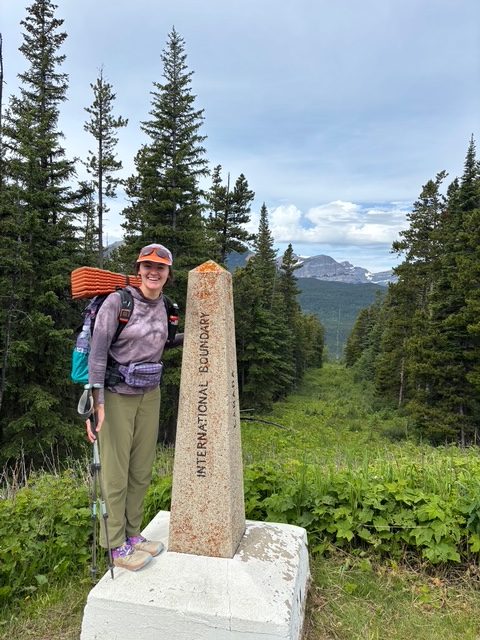
Eliza Sweeney starts the CDT SOBO with a kit she sewed herself. Photo via Eliza Sweeney
Tackling Her Triple Crown Hike
Completion of the CDT will mark the end of Sweeney’s Triple Crown; She previously hiked the Appalachian Trail in 2022 and the Pacific Crest Trail in 2024. Sweeney grew up in Virginia doing a lot of hiking and camping. She first learned about the “intriguing and mysterious” world of thru-hiking by meeting an AT thru-hiker.
Thru-hiking runs in her family: after finishing the PCT two years ago, Sweeney was able to join her dad for a few weeks on his AT thru-hike. “I forgot how hard East Coast hiking is,” she tells me with a laugh, recalling how she struggled to keep pace with her dad, even coming straight from the PCT. Having grown up near the trail, Sweeney finds the beauty in the struggle of the AT. “The Appalachians will always be my home mountains,” she says.
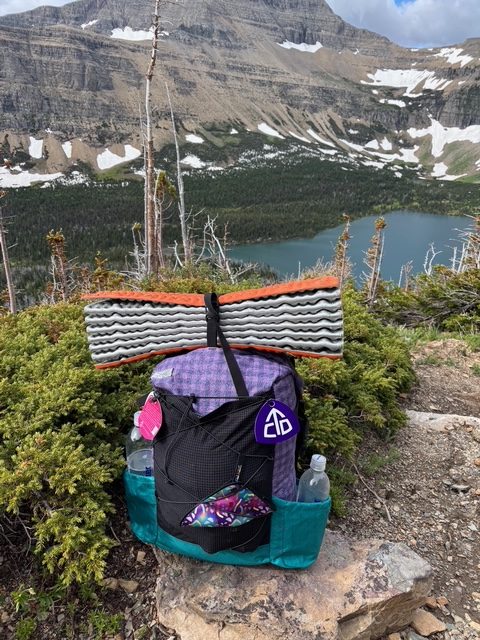
Eliza designed and created her own backpack from top to bottom. Photo via Eliza Sweeney
On Learning to Sew Her Own Custom Backpacking Gear
Sweeney has long had an affinity for what she calls “grandma hobbies” — knitting, crochet, and embroidery — and started learning to sew fairly young. She was already completing basic sewing projects throughout high school, but it wasn’t until she started planning her AT hike during a gap year following high school when she first had the idea to combine her love for the outdoors with her passion for textiles.
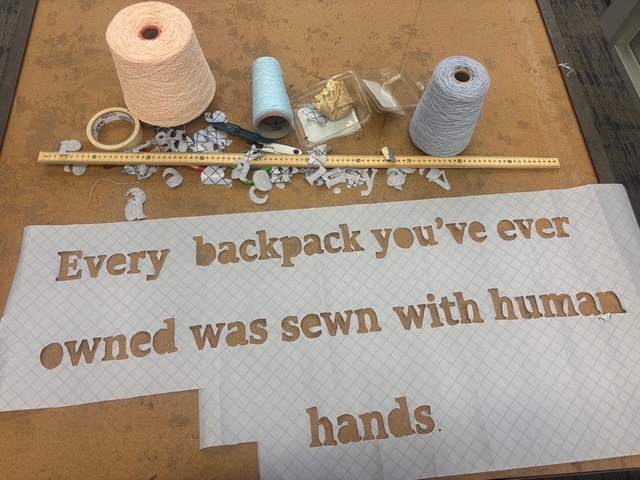
Sweeney is quick to remind me that all backpacking gear is handmade by someone, even if we feel separated from the source of our clothing. Photo via Eliza Sweeney
Making Her Own Gear After the Appalachian Trail
Sweeney went to college to study textiles, hoping to find a way to turn her creative hobby into a viable career, but thought she’d “never know enough to do more than a skirt or a pillow.” Yet after just one class, she was already seeing the potential for more versatile projects. “It’s all the same skills, you just apply it in different ways,” she muses.
Her first gear project was a fanny pack, sewn from an online pattern and some free fabric she found at school. Starting with smaller projects helped her gain confidence, leading to her to gradually attempt more complicated ideas. For her thru-hike of the PCT, she made a handful of items (shorts, rain jacket, fanny pack, etc.). That went so well that she decided to make all of her own gear for the CDT.
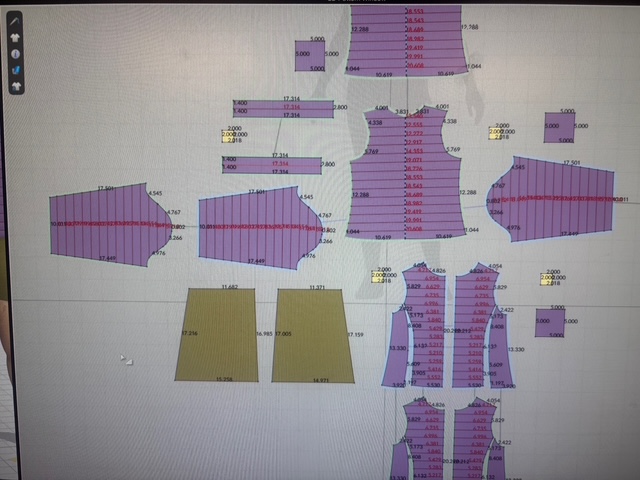
Sweeney had to start planning and sewing her CDT setup many months in advance. Photo via Eliza Sweeney
A Creative Senior Design Project
By planning her CDT hike for the summer after college graduation, Sweeney was able to combine this undertaking with her Senior Design Project. “It was good motivation to have a deadline and have someone else hold me more accountable,” she tells me, laughing again.
Between her senior design capstone and the weeks that followed, she’s sewn more than 20 separate items that will join her on the trail: a rain jacket, shorts, alpha direct fleece, sun hat, down jacket, gaiters, fanny pack, food bag, pants, sun shirt, base layers, quilt, tent, backpack, sleep socks, sports bra, mittens, stuff sacks, and two pairs of underwear.

Sweeney’s Senior Design Project gave background on the CDT while showcasing all the gear and clothing she made in order to hike it. Photo via Eliza Sweeney
As a gear reviewer, I struggle to wrap my head around the Make Your Own Gear (MYOG) movement. How can a private individual — without industrial machinery — make gear fit for the wear and tear of a thru-hike, especially one as rugged as the CDT?
Trial and Error
Sweeney is very patient with me as I, flabbergasted, continue to ask the same question rephrased several different ways: “how is it possible to do this?” The answer, perhaps unsurprisingly, is years and years of practice, dedication, and building talent and confidence.
Her shorts, for example, are sewn from a pattern she’s used before and knows well. Sweeney first made a prototype pair out of a cheaper material before using a more technical fabric to confirm that they would fit and function well.
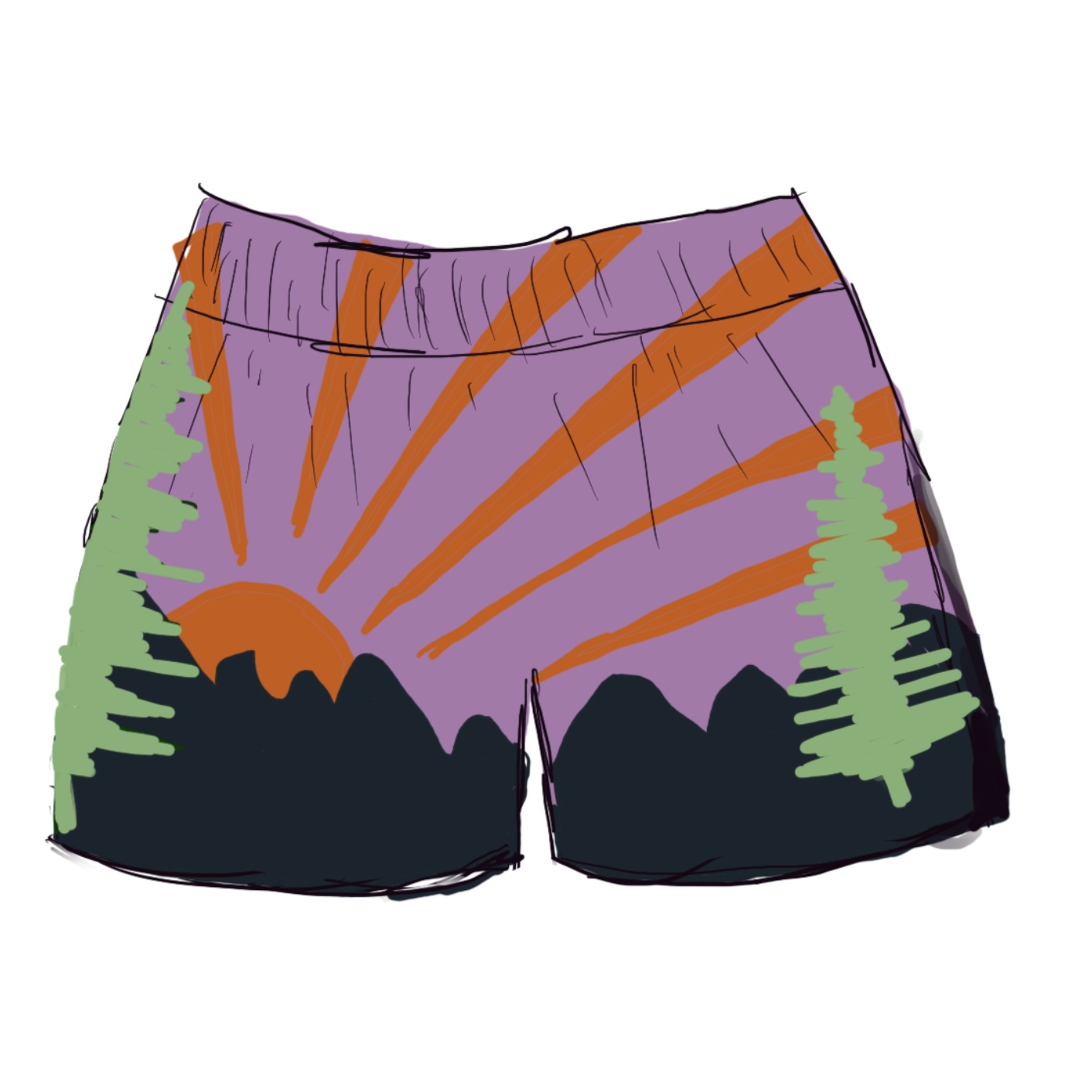
Sweeney’s first concepts of her highly decorated shorts. Illustration via Eliza Sweeney
Developing this talent has involved plenty of mistakes along the way, though Sweeney almost subconsciously rephrases my question about her biggest “sewing failure” into a story about a “frustrating project.” She’d set out to make a base layer set out of a lightweight merino wool, which is not a cheap fabric. After hours of preparing and sewing the material, Eliza tried on the set to realize that a malfunctioning sewing machine had punctured holes up and down every single seam.
Her tent was the hardest gear project she’s made so far. She explains how “the scale of it and then the math of planning it all out and making sure (she) fits inside and that it’s durable” was daunting, especially since there is very little information online about how to sew your own tent. “There are a lot of tarps and hammocks out there,” she says about patterns and gear guides. “But figuring out how to make a tent was scary!”
Working with down insulation was another challenge. “Down is scary,” Sweeney admits, while assuring me that “it is still worth doing the project” despite its difficulty. Projects involving down are infamous for the mess; the light, fluffy plumes go everywhere, are hard to wrangle, and are very expensive. Sweeney had a great tip for this: she worked on her quilt inside a pitched tent, helping her to contain some of the wayward down.
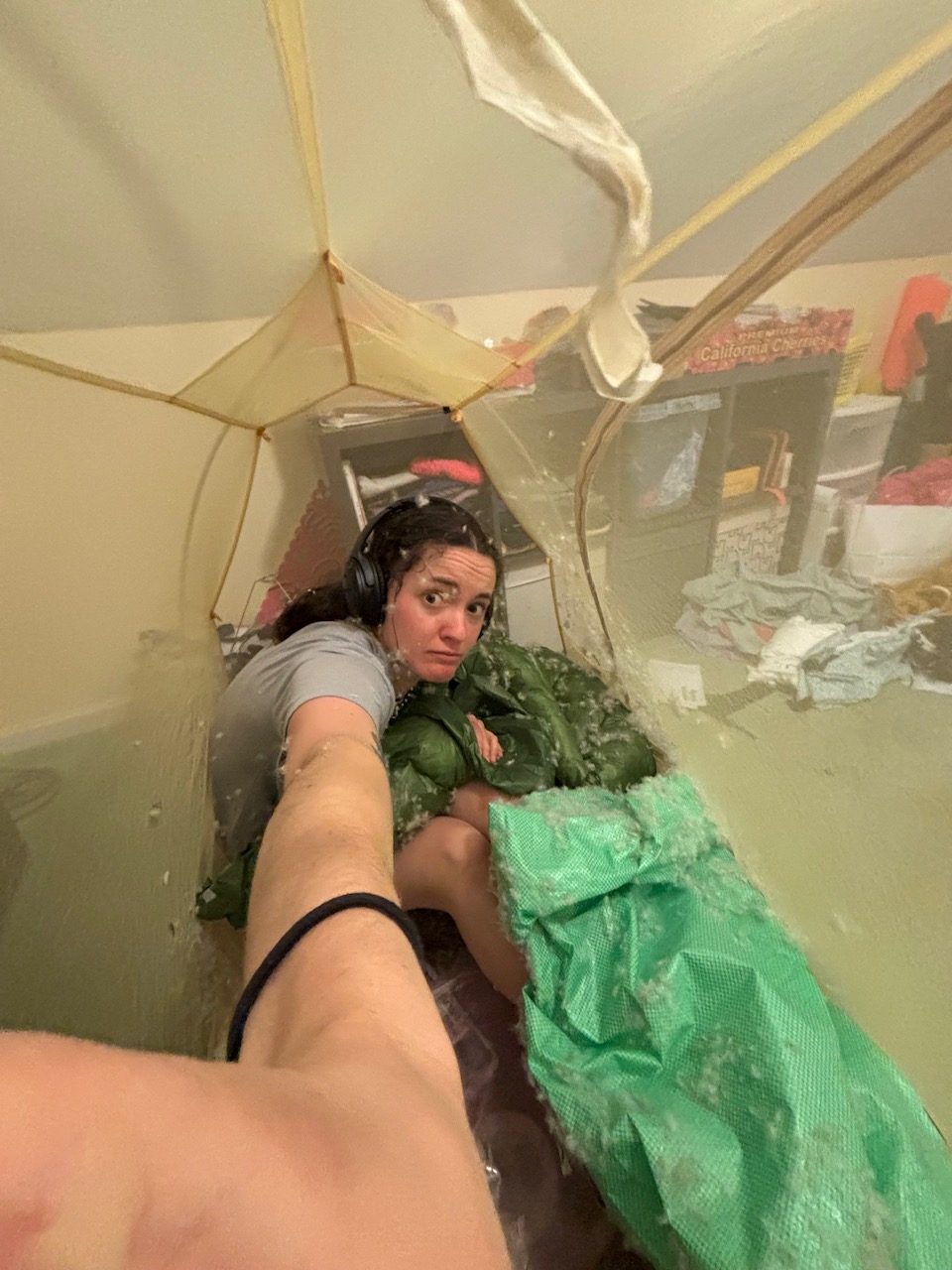
Sweeney worked inside a tent to contain the down explosion. Photo via Eliza Sweeney
A Fully Functioning Backpacking Setup
The result of all this trial and error is a functional gear kit that Sweeney is thrilled with. The great thing about making your own ultralight gear, she says, is that “you can choose all the points where you want to save weight, be less durable, and be fully customized.”
For example, her shorts are ornately decorated to reflect scenery and wildflowers she expects to see on the CDT. It’s “very me,” as she puts it. Using highly customized gear gives her a mental boost. “When you wake up and put the same clothes on every day, but they happen to be a very fun pair of mountain-and-flowers shorts, that makes it more fun.”
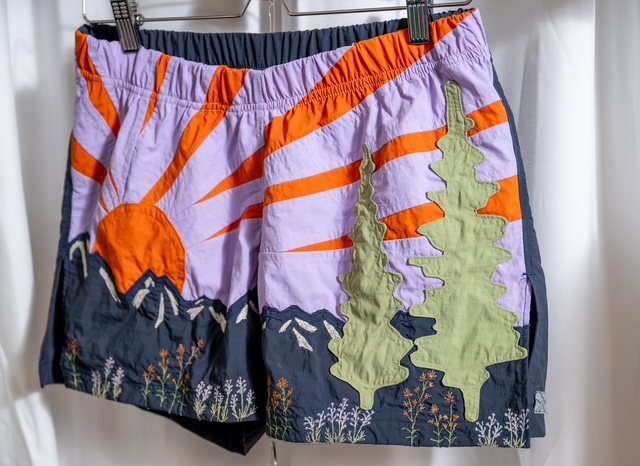
Sweeney’s shorts are decorated with flowers she expects to find on the CDT. Photo via Eliza Sweeney
Her tent, however, she’s nervous about. “You have to put a lot of trust in your tent. That’s the one piece of gear you really have to rely on,” she says. This will be her first time hiking with a trekking pole tent.
At the time of our talk, Sweeney was about 40 hours out from the start of trail, but I ask her if she has anything left to make. She tells me she’s still working on her sports bra, but she’s not too worried. She tells me if it doesn’t turn out great, she’ll use a store-bought one. “Otherwise,” she says “everything is my stuff that I’ve made,” other than her hiking socks and shoes.
What brands does a gear-making aficionado trust to buy socks from? With the relentless wear and tear socks experience on a thru-hike, Sweeney acquiesces that “I just trust a pair of Darn Toughs or Farm to Feet more. Socks are one thing I’m not willing to compromise on.”
Is It Cheaper to Make Your Own Backpacking Gear?
I ask Sweeney if making her own gear has ended up being cheaper for her than it would have been to buy her setup, and she tells me that it depends. Overall, she thinks she has saved money compared to if she’d bought the equivalent of everything she’s made online, but the process of making her own gear has still been expensive. “My down jacket was super lightweight and cost about $100-$150 in materials, but the Zpacks equivalent is probably $400”.
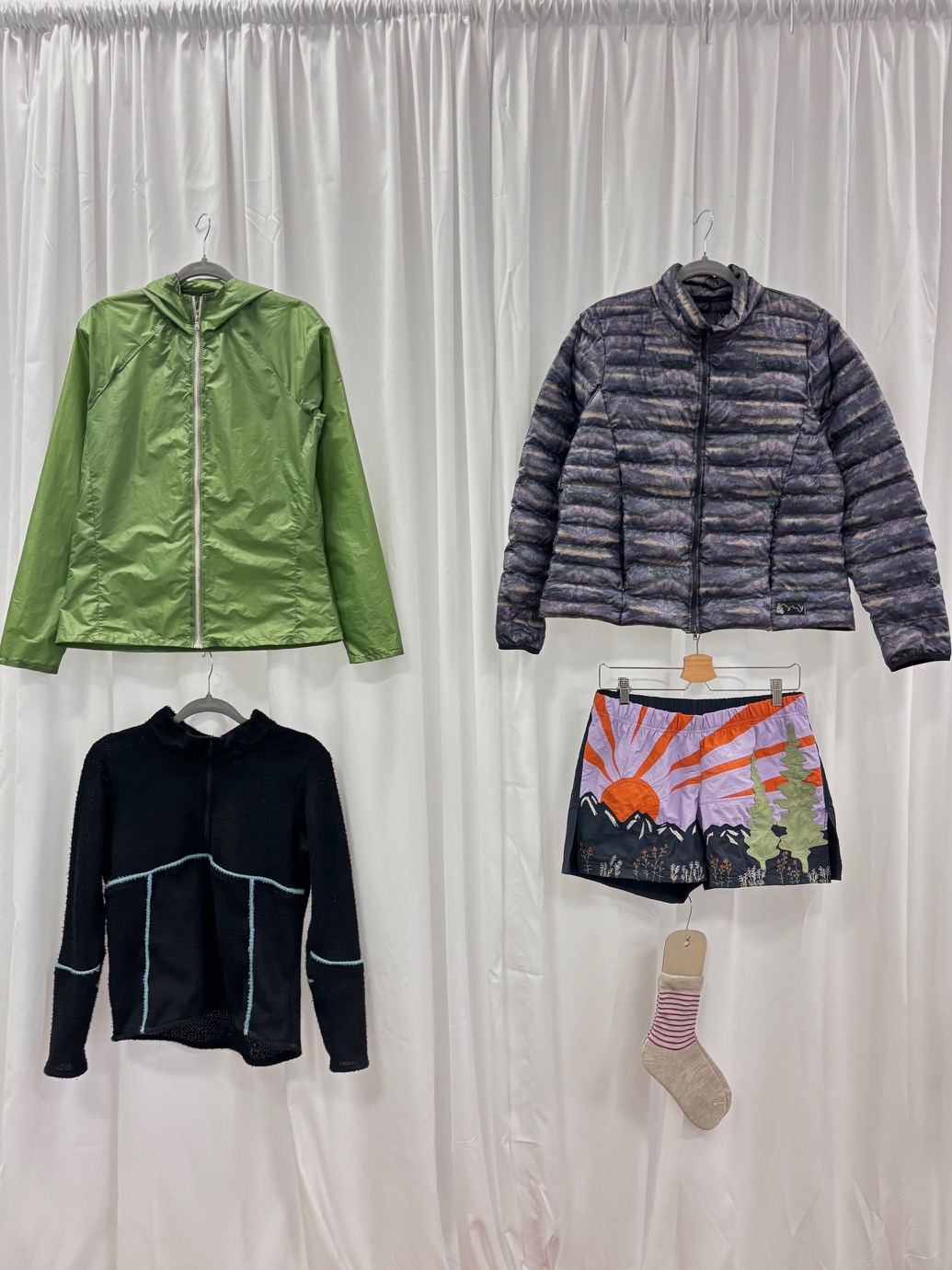
Sweeney’s full clothing setup for the trail. Photo via Eliza Sweeney
Still, she acknowledges that “I’ve made a lot of mistakes to get to this point. The learning part of sewing has a cost to it.” After all, if an inexperienced seamstress such as myself immediately tried to make a down jacket, it certainly would take more than three tries, making the $375 Zpacks Down Jacket the cheaper choice.
Getting Started with MYOG
How can hikers with minimal sewing experience get started with making their own gear?
Sweeney recommends the LearnMYOG website for those looking to dive into making their own gear, giving her stamp of approval to their clear designs and great high performance patterns. Many of the patterns she used for her CDT setup came from LearnMYOG.
Yet while having a good pattern is crucial, Sweeney stresses that it’s just as important to use the right material. Often, she says, the only difference between “outdoor” and regular clothing is the fabric it’s made with. She uses this concept often to turn regular clothing patterns into technical backpacking gear.
For example, her hiking shorts are just a standard shorts pattern made with a technical nylon fabric to make them more durable and breathable. “That’s all that makes them hiking shorts and not pajama shorts,” she laughs.
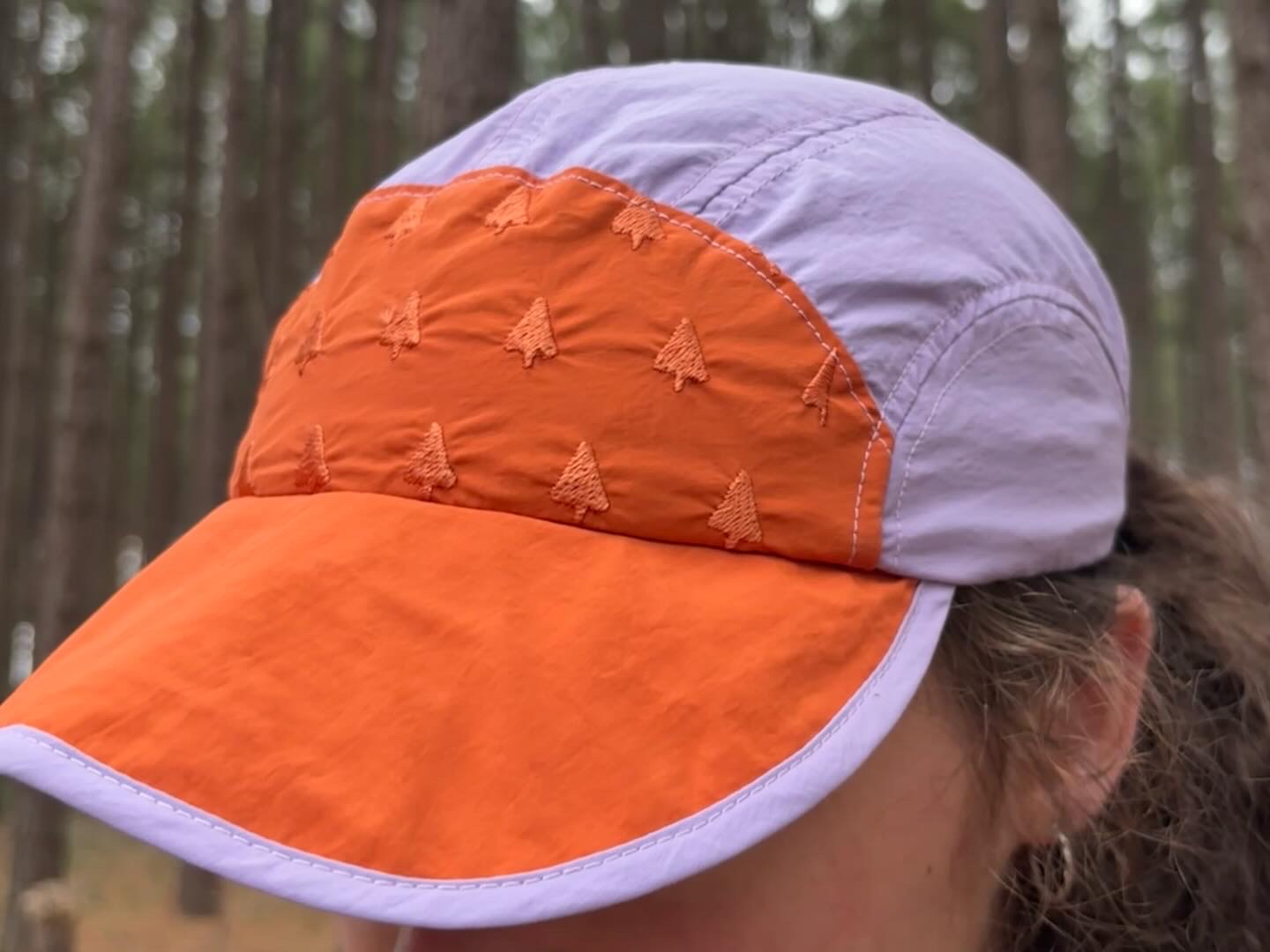
Even Sweeney’s hat is highly decorated and personalized. Photo via Eliza Sweeney
For her materials, Sweeney gets about 90% of it from Ripstop by the Roll. For backpackers based near the West Coast, Sweeney also recommends Discovery Fabrics, a Seattle-based fabric distributor.
Sweeney and her gear are now over 1000 miles into the CDT, staying warm in grizzly country with her handmade quilt, tent, and clothes.
Sweeney feels strongly that the mental block holding us back from making our own gear is often more of an issue than any skill gap. “We have all the access to make our own gear,” she says. “Maybe it just takes a little longer, but material-wise, it’s all available to us.”
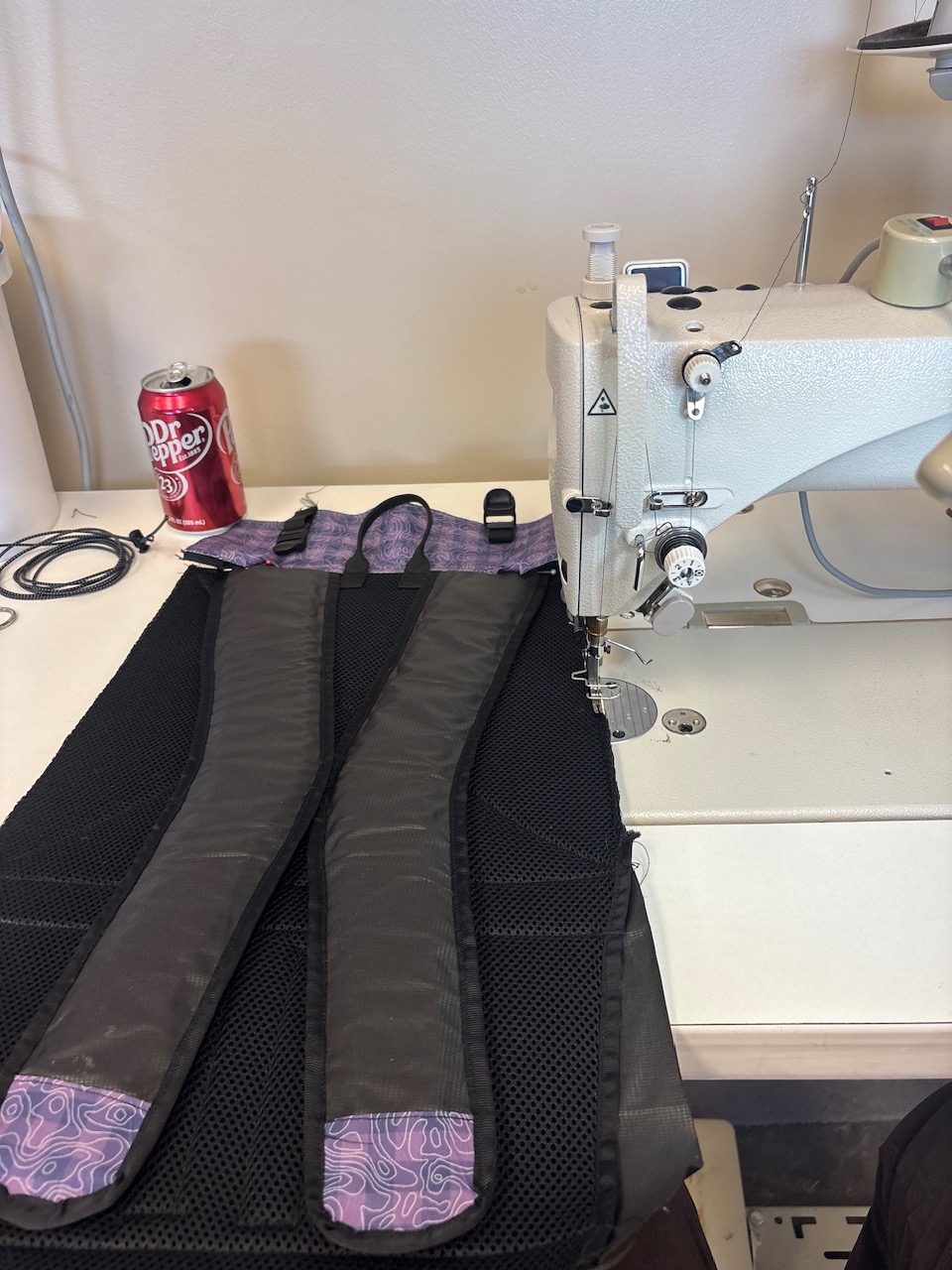
Finishing the sides on her pack. Photo via Eliza Sweeney
Like many consumers, before learning to sew she felt very separated from the manufacturing process of the clothing she wore. “Before I went to school, I thought there was just a machine that would sew things,” she says.
Yet in reality, “all the gear you’ve ever hiked with is actually handmade” — whether on the production floor of a major outdoor manufacturer or in the garage of a passionate cottage gear maker. “Me doing it on my machine doesn’t make it any different … than the gear you buy in a store.”
With enough patience, time, and effort, anything the big brands can do, we can do too.
Featured image via Eliza Sweeney.

This website contains affiliate links, which means The Trek may receive a percentage of any product or service you purchase using the links in the articles or advertisements. The buyer pays the same price as they would otherwise, and your purchase helps to support The Trek's ongoing goal to serve you quality backpacking advice and information. Thanks for your support!
To learn more, please visit the About This Site page.

Comments 1
This is so impressive and fascinating!