
 ">


Getting Frostbite in the Gila: CDT New Mexico
Continental Divide Trail
October 24th – 29th, 2025
The Gila
The upcoming section of trail was a famous one: the Gila Alternate. Right up there with The Winds in Wyoming and Glacier National Park in Montana, “the Gila” (pronounced hee-la) is highly regarded by CDT hikers as one of their favorite sections of the entire trail. This is interesting because it’s not even on the official trail, but 99.9% of hikers take this route. The mountainous red line through this area traverses the Black Range, which I don’t know much about other than hearing it is rather waterless. The Gila is the opposite of waterless. Because the Gila…is a river.
An actual oasis
Remember how I talked about imagining water carries as a pilgrimage to an idyllic oasis? Well, the Gila is an actual oasis. Abundant water surrounded by spired canyon walls, further surrounded by arid desertland. A Colorado River tributary, the Gila River’s headwaters are along the western side of the Continental Divide in the Black Range. From there, it flows southwest for 649 miles through New Mexico and Arizona. It then merges with the Colorado River and together the flow drains into the Gulf of California in northwestern Mexico. Many people don’t realize that it’s one of the longest rivers in the west because of its tendency to run dry in certain areas due to irrigation diversion.
High vs. Low Routes
Within what’s referred to as “the Gila Alt” there are essentially two paths one can take: the High Route and the Low Route. While the High Route has you walking through the woods on the plateau above the river, the Low Route meanders inside the canyon along the river’s banks, crossing it approximately 200 times. These two paths intersect a few different times. There are also additional short paths that connect them, so it is possible to do some of each one, switching partway through.
Excited to get to the river and see photos? I was too! For whatever reason in my mind we’d hit the Gila directly after Pie Town. Maybe it was the way I’d seen this area presented on social media beforehand. Unfortunately, we still had another three to four full days of dull and dry desert walking before we’d get there. I’m not surprised people omit mentioning it and jump right into talk of the river. There’s not much to write home about.
The Long Road to the River
MVP of a trail angel
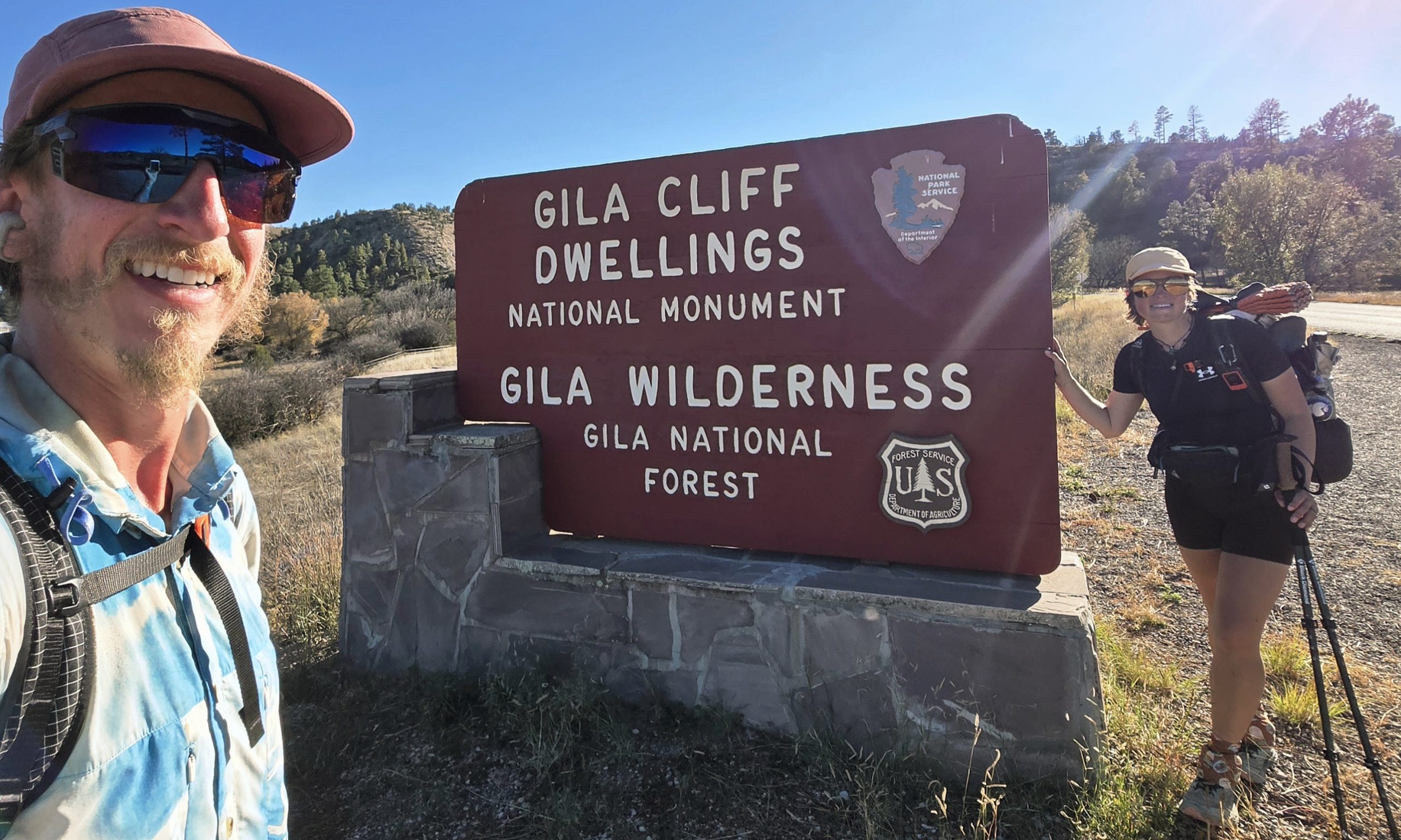
The other problem with the Toaster House in Pie Town not having laundry (besides the communal, once-in-a-blue-moon-but-probably-never-washed sheets and towels) was that we couldn’t wash our clothes there either. Fortunately, an MVP of a trail angel had our backs. Thirteen miles south of Pie Town, the owner of a place called Davila Ranch set up an entire donation-based hiker rest stop on their property. It was similar to the one at TLC ranch, but with even more amenities, including laundry machines (two washers and two dryers), a shower, toilet, sink, refrigerator, and three-walled sheltered pavilion hikers could hang out or sleep under.
Pro Tip: hero thru Pie Town
This place was exactly what we needed! Honestly, if I were to do it again, I’d probably hero through Pie Town—pick up my resupply box and down some pie—then skip the Toaster House to stay at Davila instead. We didn’t end up sleeping there since we wanted to do more than thirteen miles that day. The Gila leg is rather long (about six days) so we didn’t want to add any more onto that by throwing a short day in the mix. But we did take an extended break to do our laundry and shower. I didn’t really need to shower again after I just had at the Toaster House, but I’ll take any and all shower opportunities presented to me while on trail.
On our way out of the ranch, a guy on a dirt bike slowed to a stop to talk to us. It was Davila’s owner. He gave us some useful intel: “By the way, you guys can camp anywhere along this road. I know all the neighbors and they don’t care.” We weren’t sure exactly how far this range of hiker-friendly property owners extended, but it was nice to know some cowboy with a rifle was less likely to yell at us to get off his lawn, or, dirt, here.
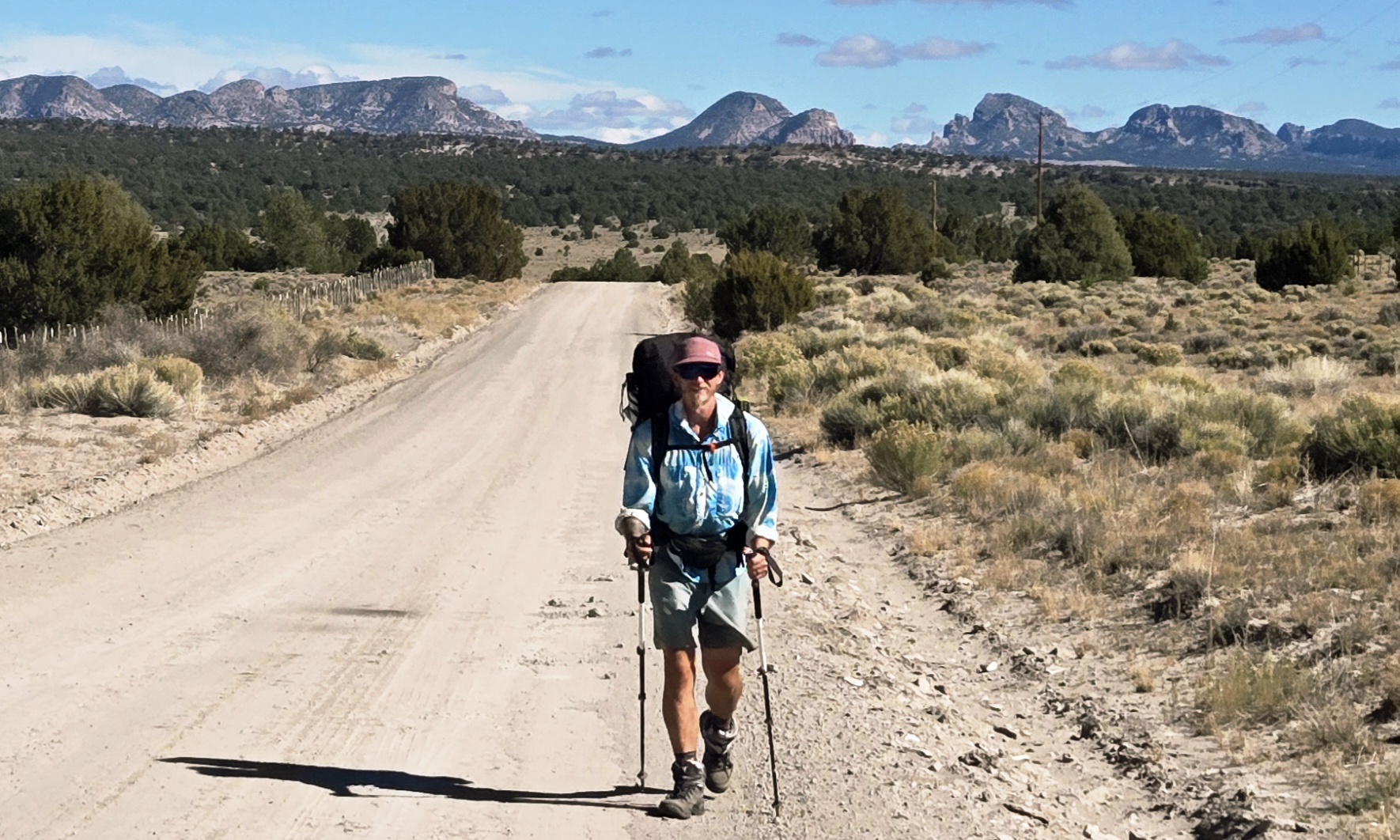
The Show on the road a little ways out from Pie Town.
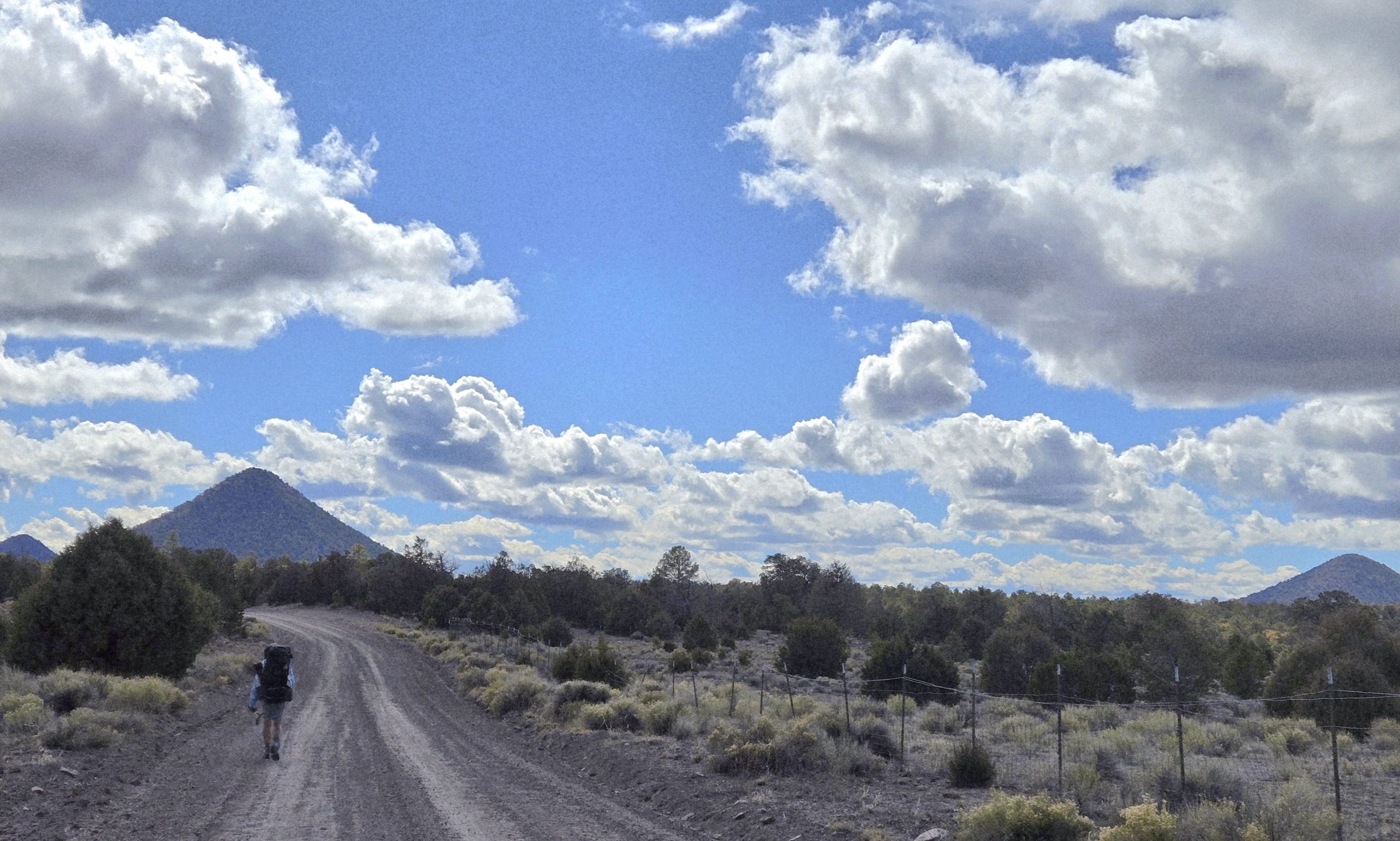
These three hills were perfectly pyramid-shaped.
Bleach treating
I mentioned bleach treating water in my previous two blogs, but they got a bit lengthy and left little room to be able to explain it further. So I’m going to do that here and now. Back in Rawlins, Wyoming I got a great a tip from Merlin. He told us to ask the cleaning staff at the motel for a small cup of bleach and then put it in a travel-sized dropper bottle. That way, you don’t need to buy a giant container of the chemical when you need such a small amount. I did just that, purchasing a small bottle of eye drops, emptying and washing it out, then replacing it with the bleach the housekeeper gave me.
To treat with bleach you only need to add two drops per liter of water, and then wait 30 minutes before drinking. It does have a bit of a chlorine-esque taste, but it wasn’t as bad as I thought it would be. Honestly, maybe weirdly, it grew on me. The water kind of just tasted…clean, fresh.
One thing I would not recommend is adding citrus flavored electrolytes powder to bleached water. It gave it a rather chemical-y flavor. The cobwebbed back corners of my alcoholic brain immediately associated it with Absolut Citron, and it made me want to dry heave at the thought of it. That’s probably just me though. But if you dislike lemon vodka or any kind of synthetic lemon-lime flavoring, better to avoid the citrus and bleach combo.
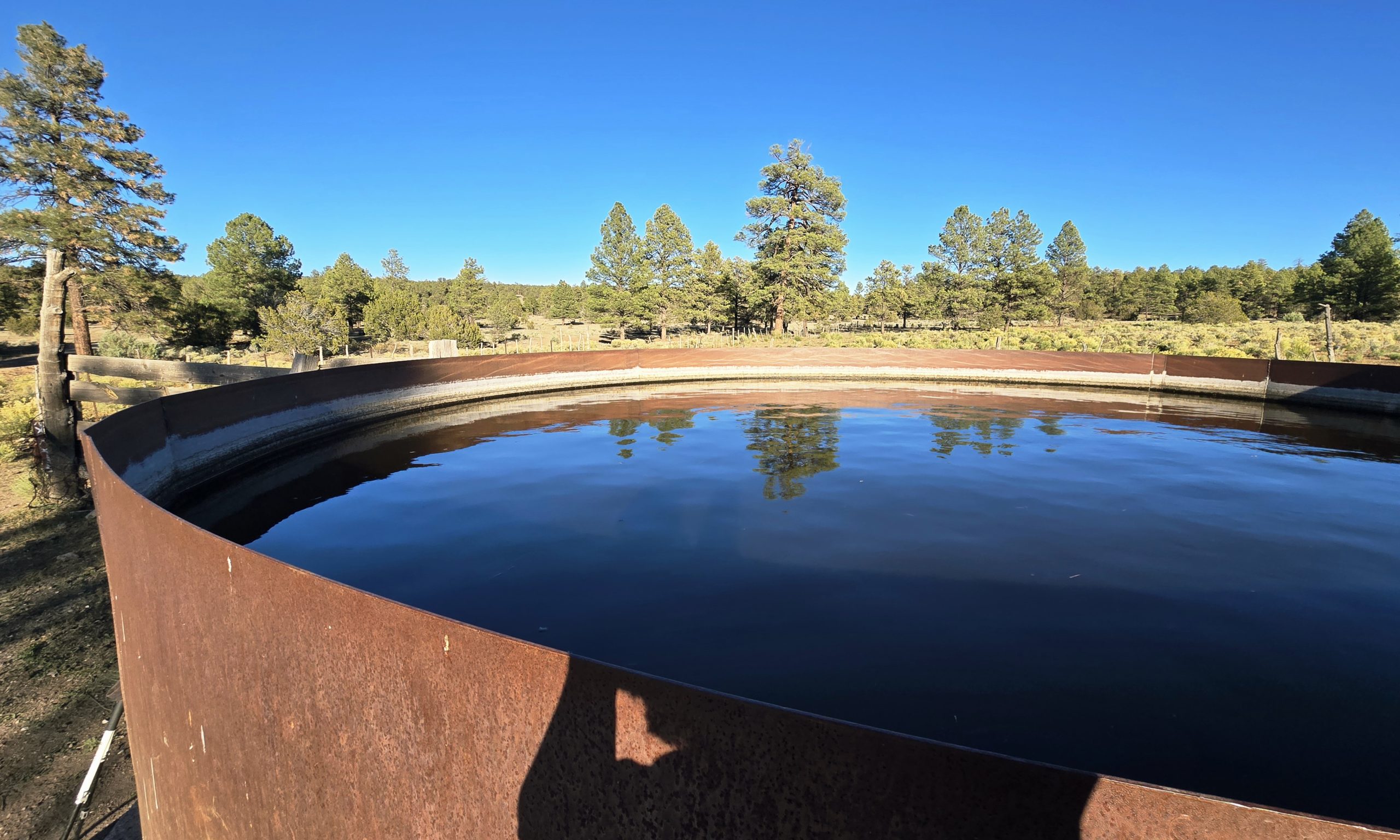
This tank was giant, it had to be about 20 feet in diameter. It also had a ton of little fish swimming in it. I bleached the water from this.
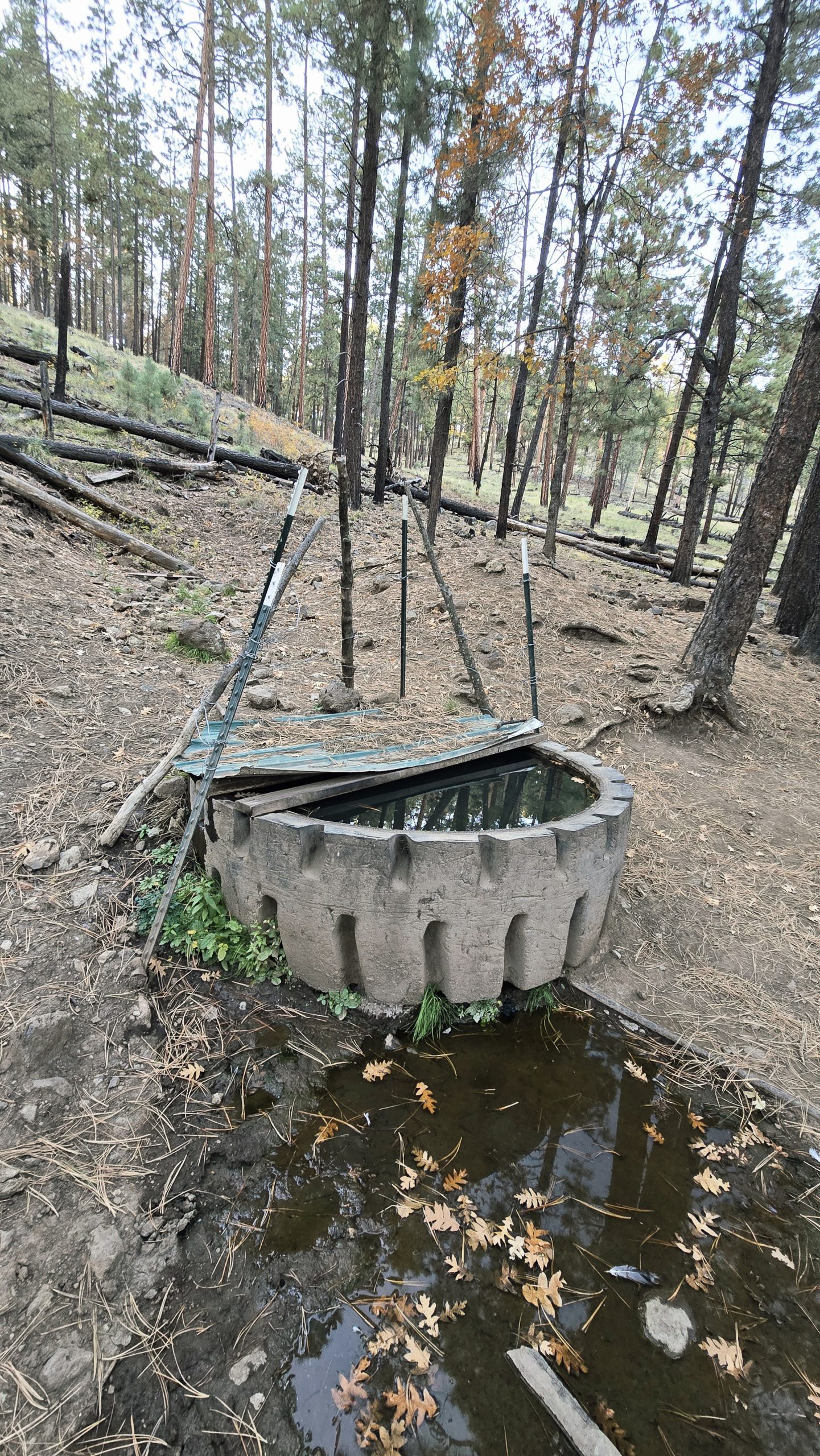
A tire spring. I bleached this water too.
Cistern scavenger hunt
Sometimes finding a water source felt like a scavenger hunt. One in particular was a cistern we had to follow the clues in FarOut to locate. Putting the comments from multiple hikers together, we discerned that we needed to get to a dirt road intersection, take a right, and find a black pipe. Then we were to follow said pipe about a 100 feet to a concrete cistern, which was not THE cistern.
After that, we had to climb over a barbed wire fence using a large rock and carefully maneuvering our legs so not to get snagged. Around 50 feet on the other side of the fence would be a second cistern, which was the one. To extract the water we’d need to push aside the heavy cement covering and it should be filled to the brim. Simple as walking over to the sink and turning on the faucet, really.
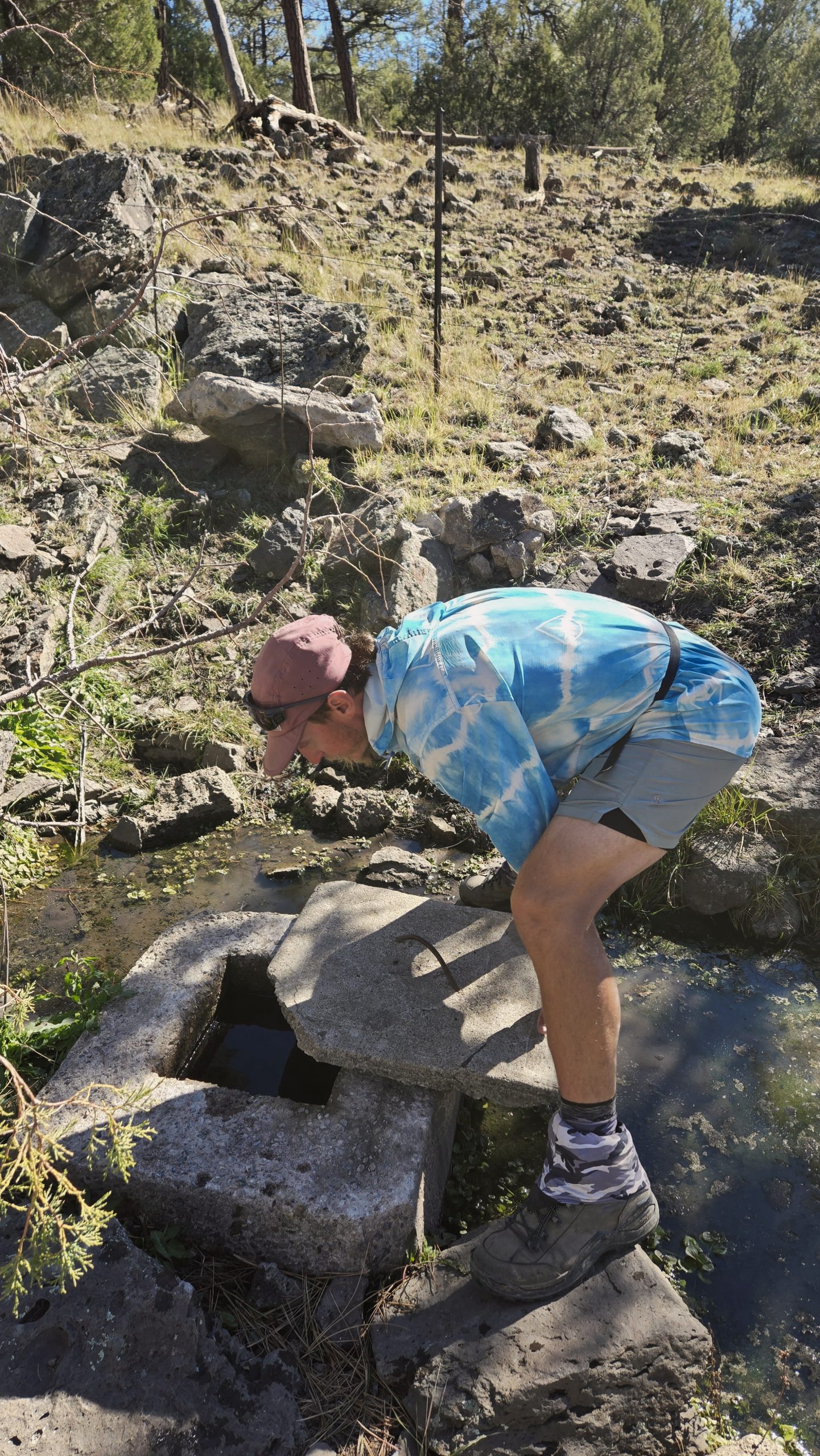
The concrete cistern.
Fleeing winter again
In this section the morning chill returned, suddenly and unexpectedly. Since we’d had some warmer weather pre-Pie Town I figured we were in the clear from the days of frosted tents and cloudy breath. Not so. One morning I’m estimating it had gotten down well below freezing into the 20s. The tent was fully encrusted in a layer of frozen condensation. Another morning, the water spigot at the campground we stayed at had completely frozen. By this point, unfortunately, we’d switched out a lot of our heavier clothing for lighter options thinking we’d traveled far enough south to slip through winter’s grasp. At least we still had our warmer quilts (The Show’s a zero degree and mine a -10); those would have been some miserable nights without them.
Another consequence of the colder weather was the weaning daylight. The late October days had become noticeably shorter. We found ourselves waking up to pitch black and getting to camp as the sky was tinting orange. There were simply less hours to get our 20-odd miles in for the day, meaning less hours to dick around on breaks. We felt the pressure to keep moving throughout the day so we wouldn’t have to set up and cook dinner in the dark. We even began setting the alarm a half hour later, not because we wanted to sleep in, but because we didn’t want to navigate the desert before the sun was up.
Gila: The No Route
Where’s all the water?
The very beginning of the Gila Alternate was inconspicuous. We almost missed the turn-off for the Low Route, which was marked only by a cairn made of just three or four medium-sized rocks. At the cairn, the “trail” turned 90 degrees and dropped swiftly down a grassy sloped bowl without a defined path. Down in the beginnings of a canyon, a half pipe of mixed grass and rock walls rose on either side. Soon we reached a dry creek bed, which we crossed back and forth numerous times. At the time I wondered why the river was totally dry. Now I know it was probably irrigation diversion efforts or because it was autumn, the dry season. I’m curious if this northernmost section of the river is usually flowing for NOBOs or not.
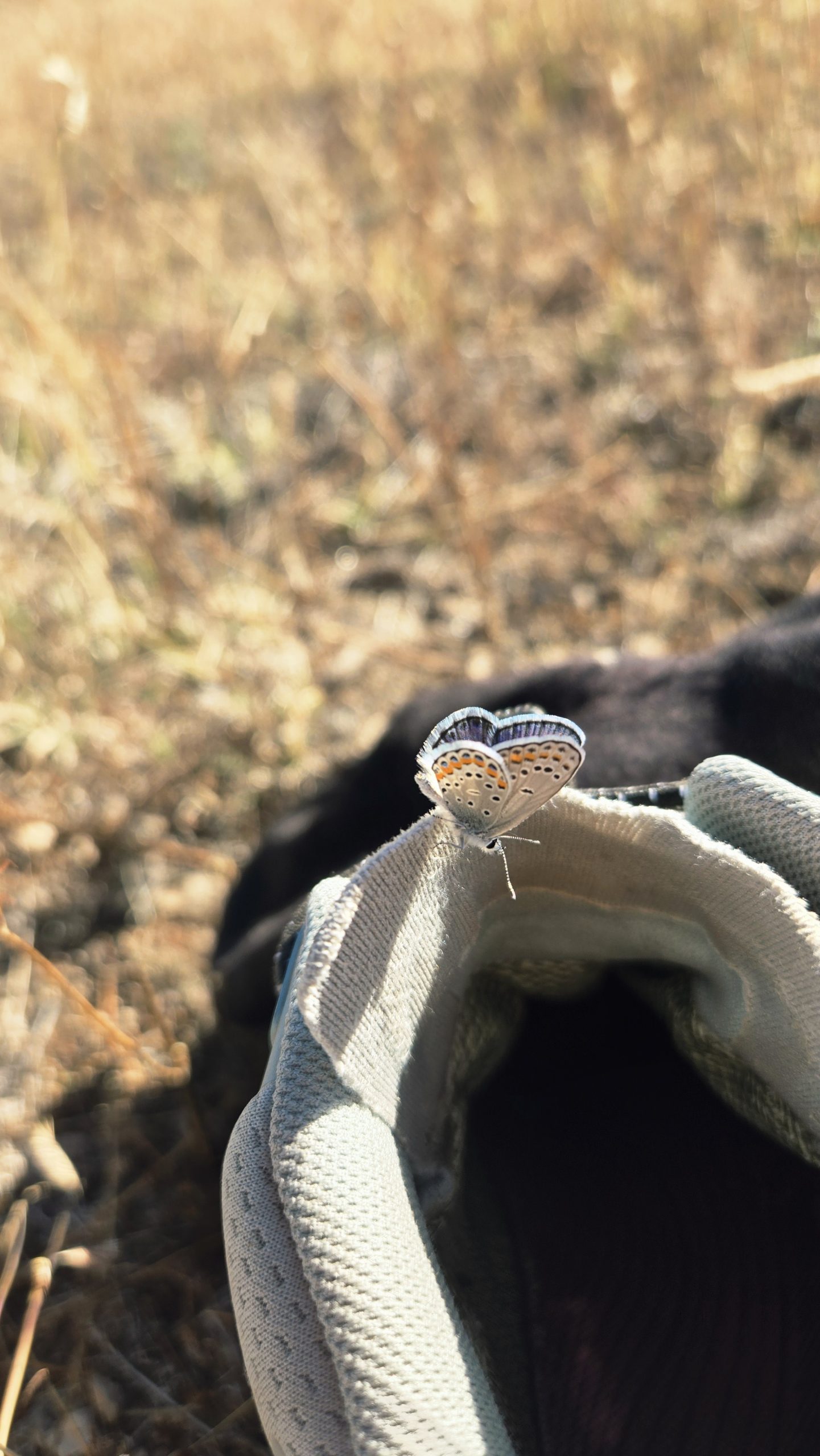
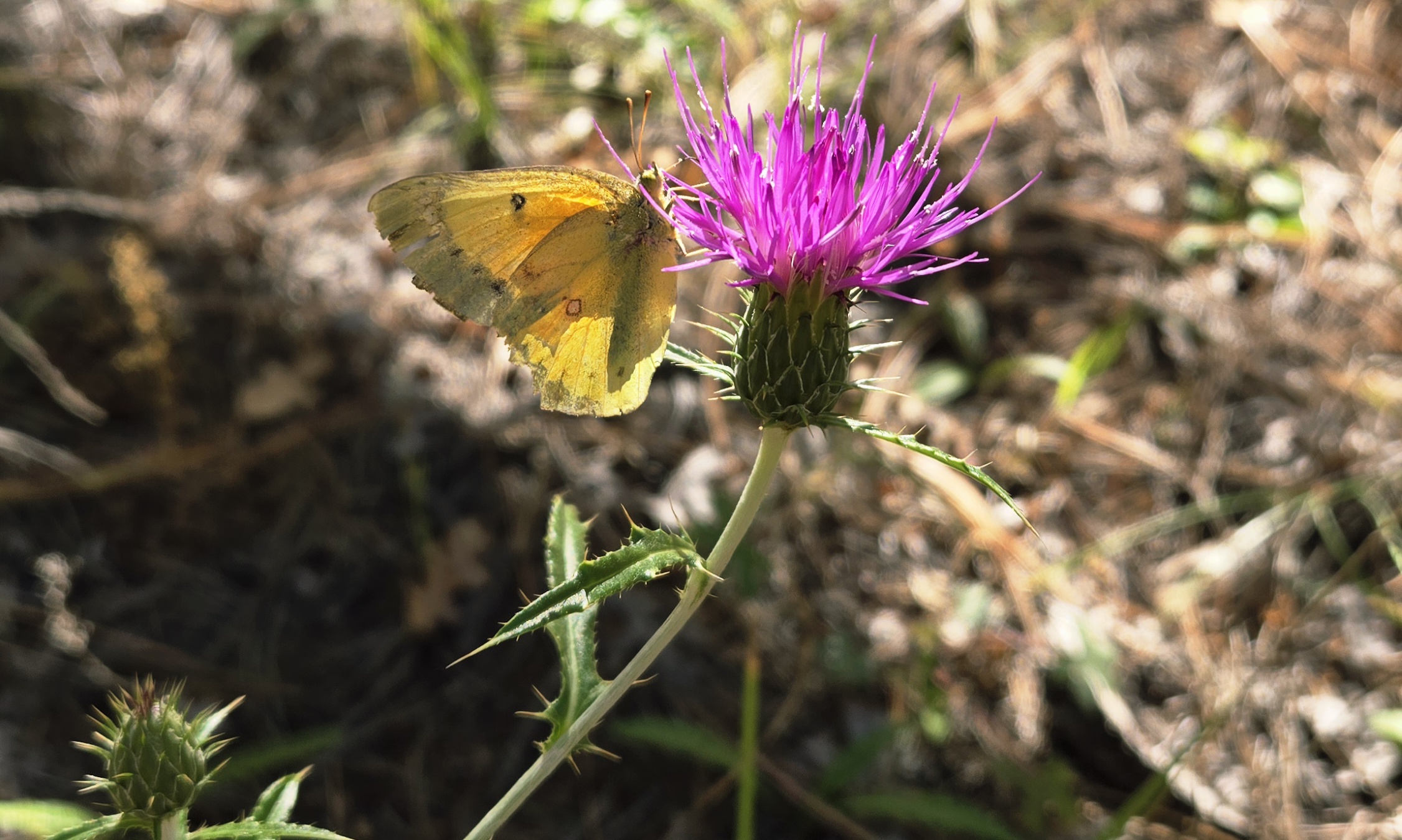
We started seeing butterflies again after not having seen them since the summer, pre-Colorado.
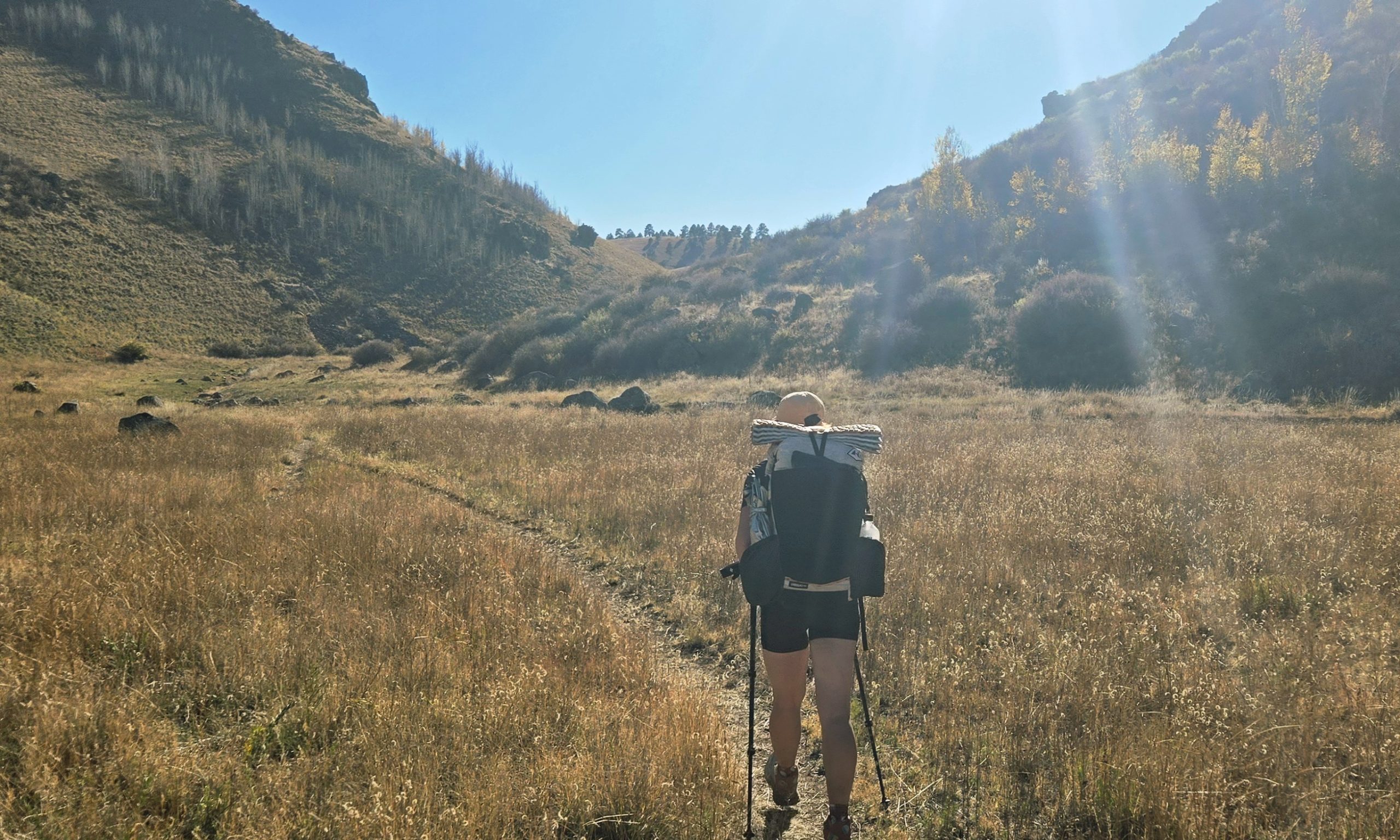
The very beginning of the Gila Alt, right before we hit the dry river bed crossings.
Counting crossings
That night we stayed at Snow Lake, the campground with the frozen spigot. In the morning we began our first flowing crossings of the Gila River. In this area there were signs referring to the river as the “Gilita,” using the Spanish diminutive that evokes littleness or cuteness. I’m not sure exactly where the Gilita officially matures into the Gila, though. I decided to keep track of the number of flowing river crossings we personally did on our route through the Gila. In total, it ended up being 76! In this first section we crossed 20 times, all what we hikers call “dry crossings,” meaning you can rock hop across without getting your feet wet.
Scenic & serene
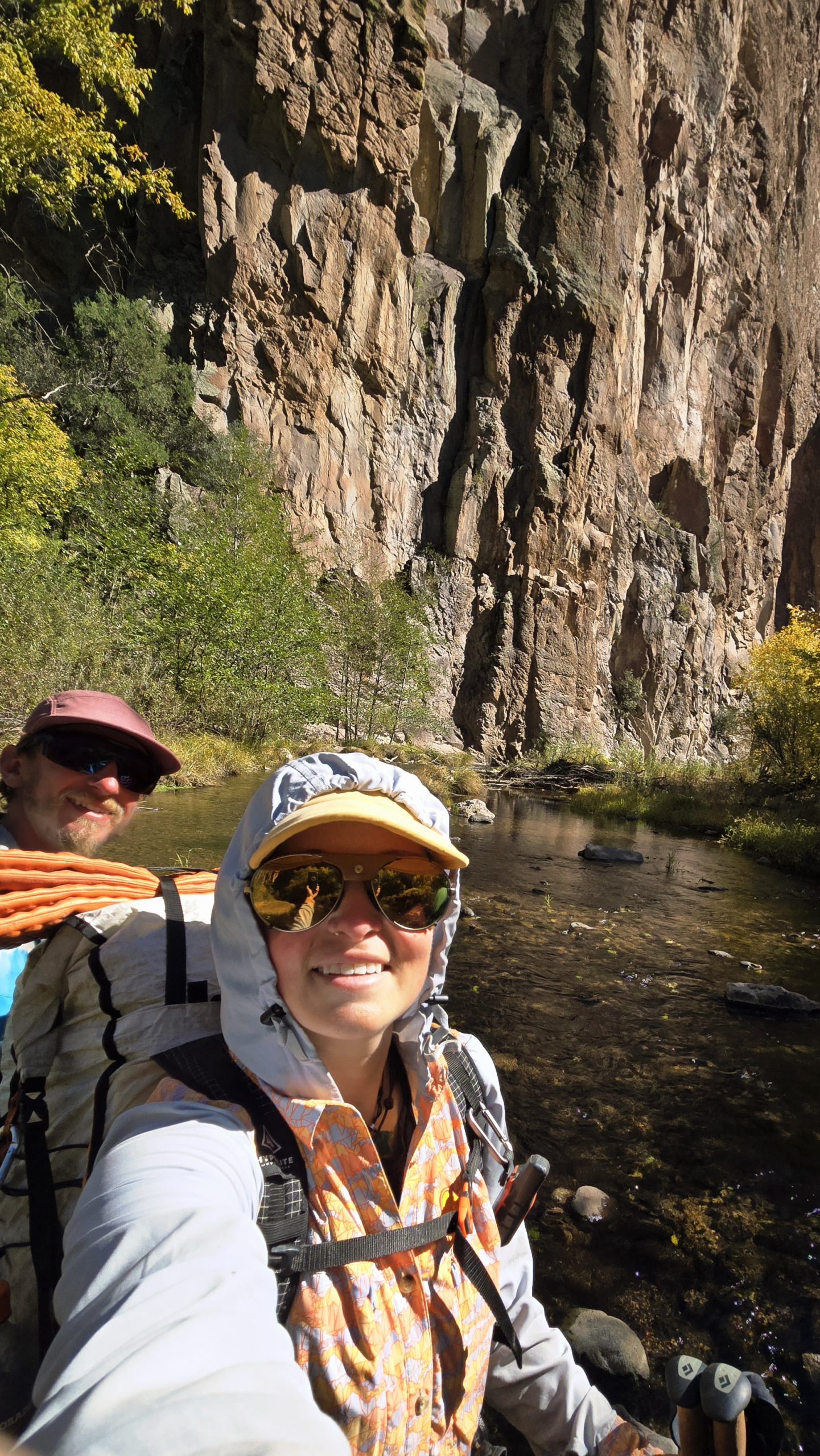
The start to the Low Route was scenic and serene. Fall foliage and summer wildflowers mingled in seasonal transition. Occasional butterflies flittered through the crisp air. The only sound was the babbling earthy-colored river, flowing with us in the same direction we were walking. Pale peach colored cliffs rose alongside it, blocking the morning sun from reaching the canyon floor.
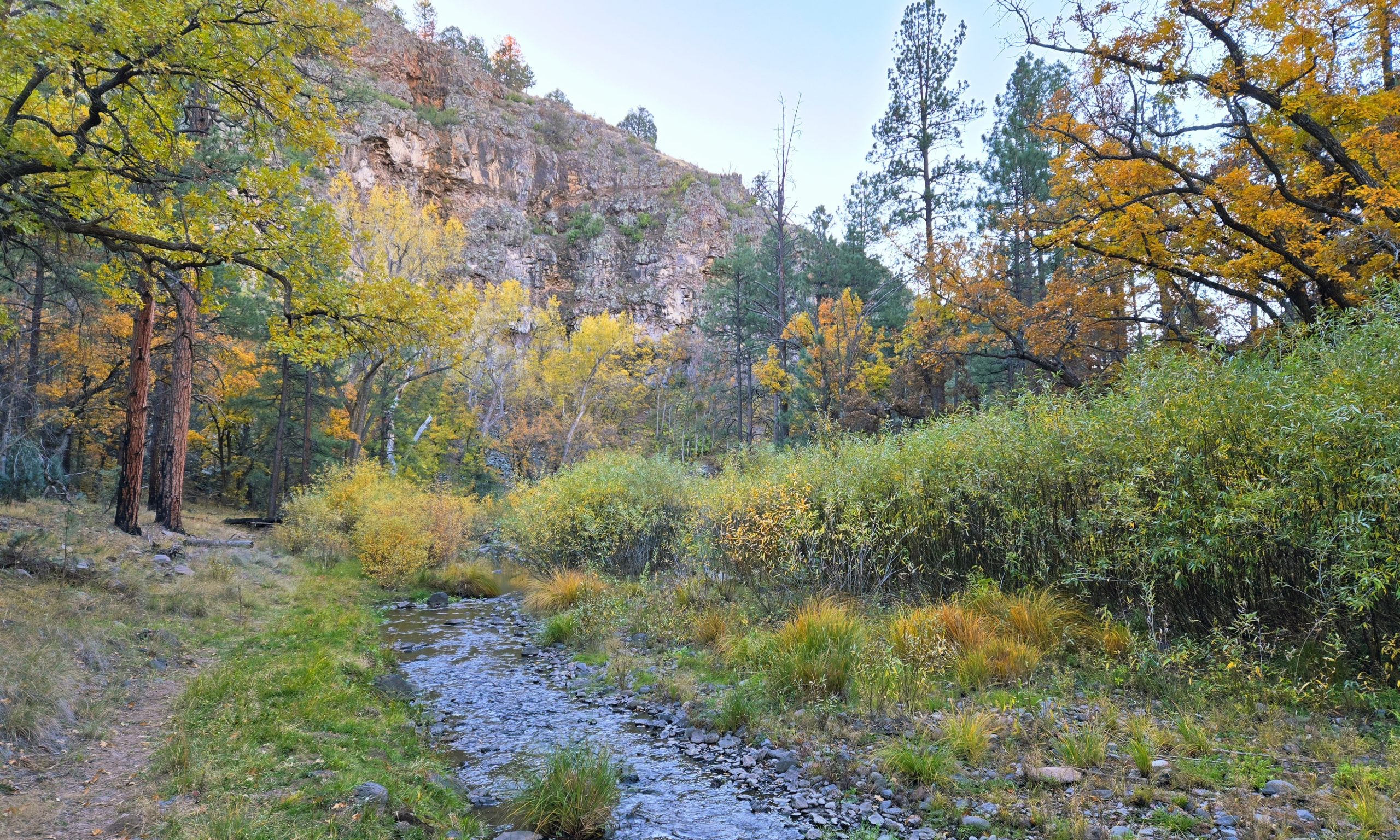
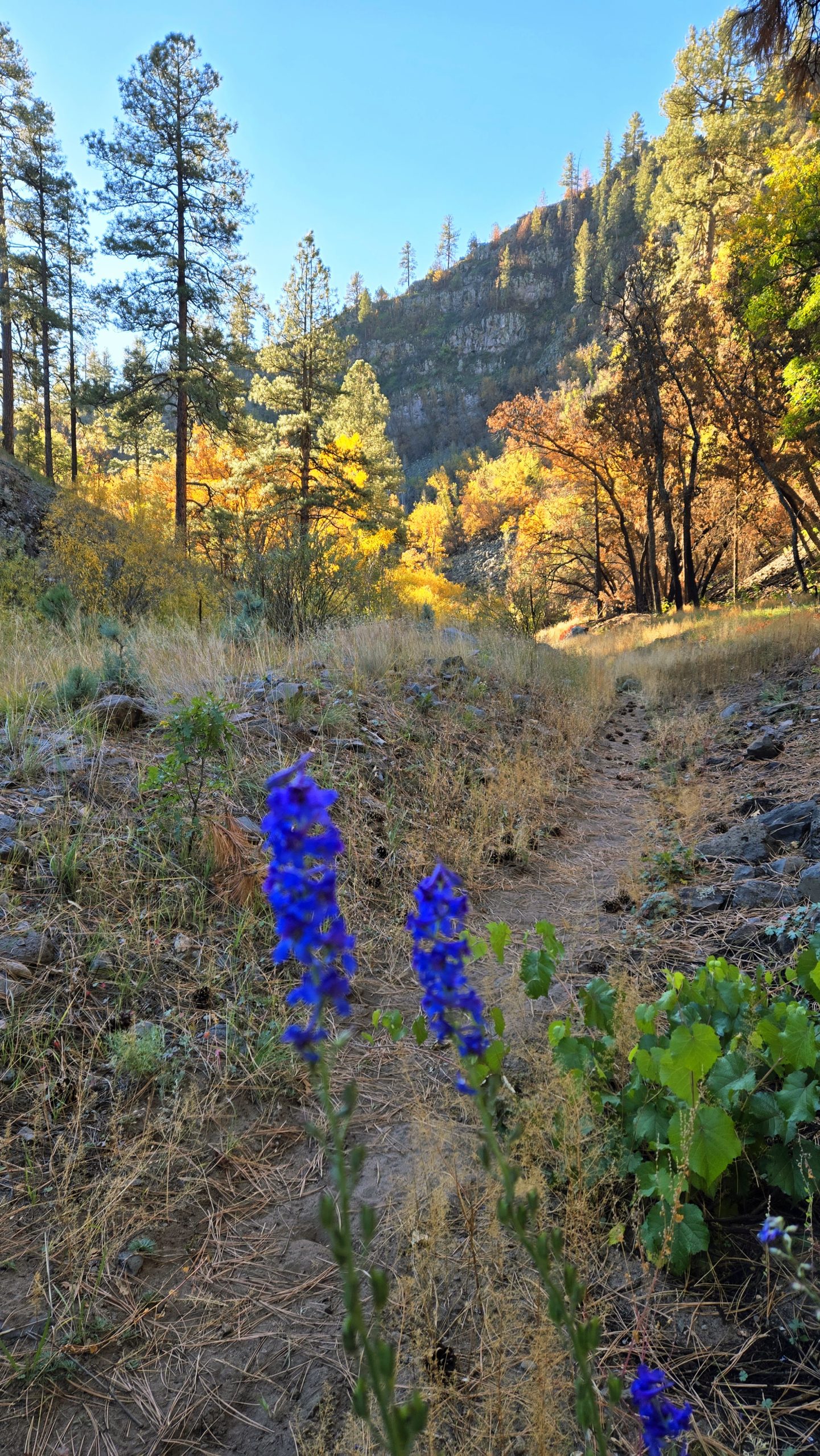
Flowers & foliage are such a unique combo. I can’t say I’ve seen it back home in the northeast. They don’t have overlapping seasons as they seem to here.
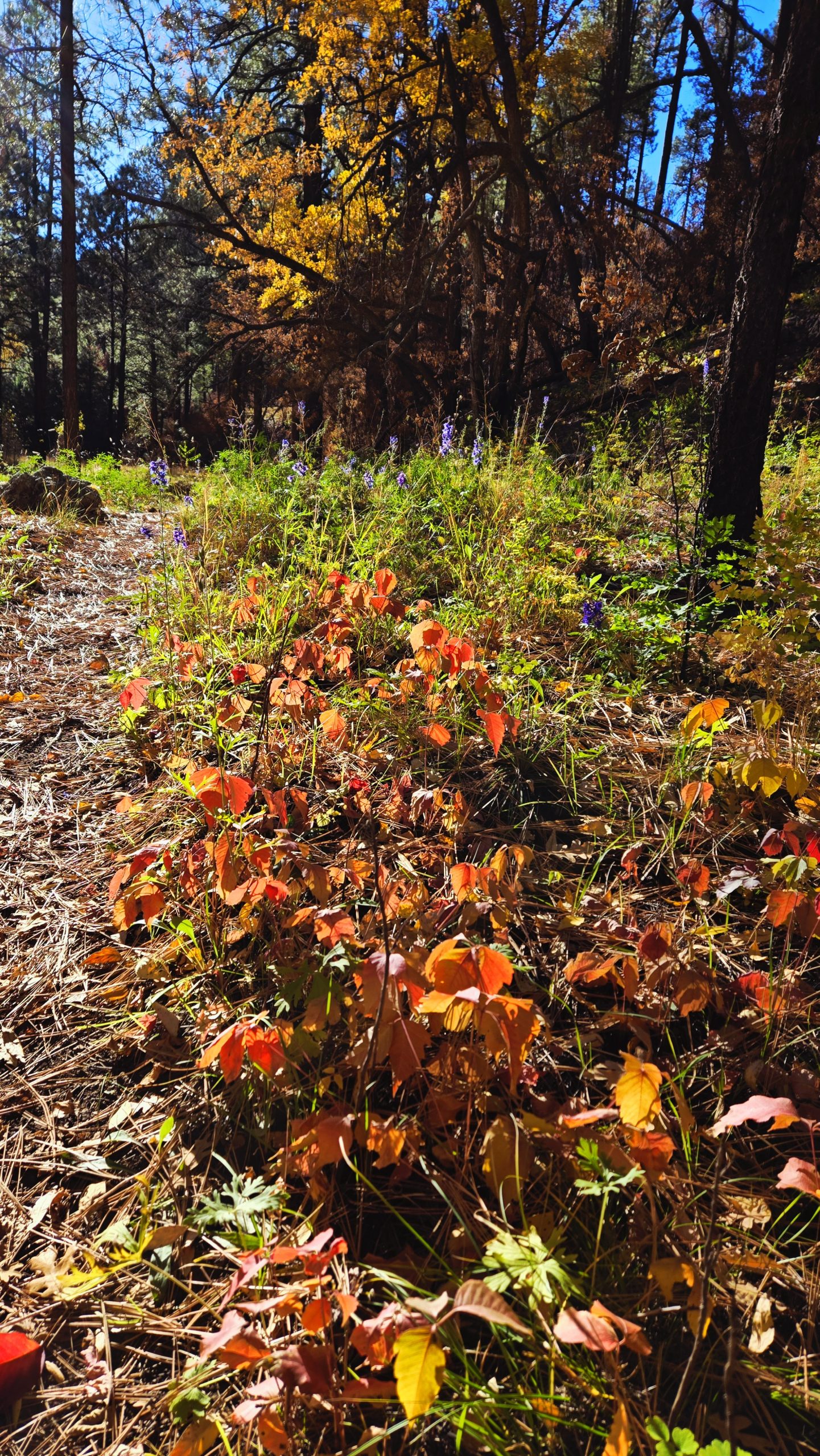
More foliage & flowers.
Gila: The High Route
Waist-deep water
After those first uneventful dry crossings, we reached a point where the Low and High Routes cross paths. Our plan was to switch to the High Route here. We’d gotten intel from our friend Flash (if you remember from my Glacier blog, we hiked the park with him) who was ahead of us. This helped us decide which route to take where. He’d mentioned a spot on the Low Route that had a beaver dam you were required to cross on or near, where he’d waded through waist-deep water. After almost getting swept away in that depth of water in the Sierra on the PCT, I wanted to avoid this area at all costs as a 5’3″ human. In order to avoid it, we could get on the high route for half a day and then rejoin the Low Route a ways after that spot.
A little disappointed
To be honest, I was a little disappointed by the High Route. I think I expected to be walking a lot closer to the rim of the canyon. Close enough that we’d be able to see down into it, or at least across to the far side walls. Maybe there are other areas of the High Route where this is the case, but not the section we did. It was fine, but not much to write home about. Just walking through the woods over gently rolling terrain.
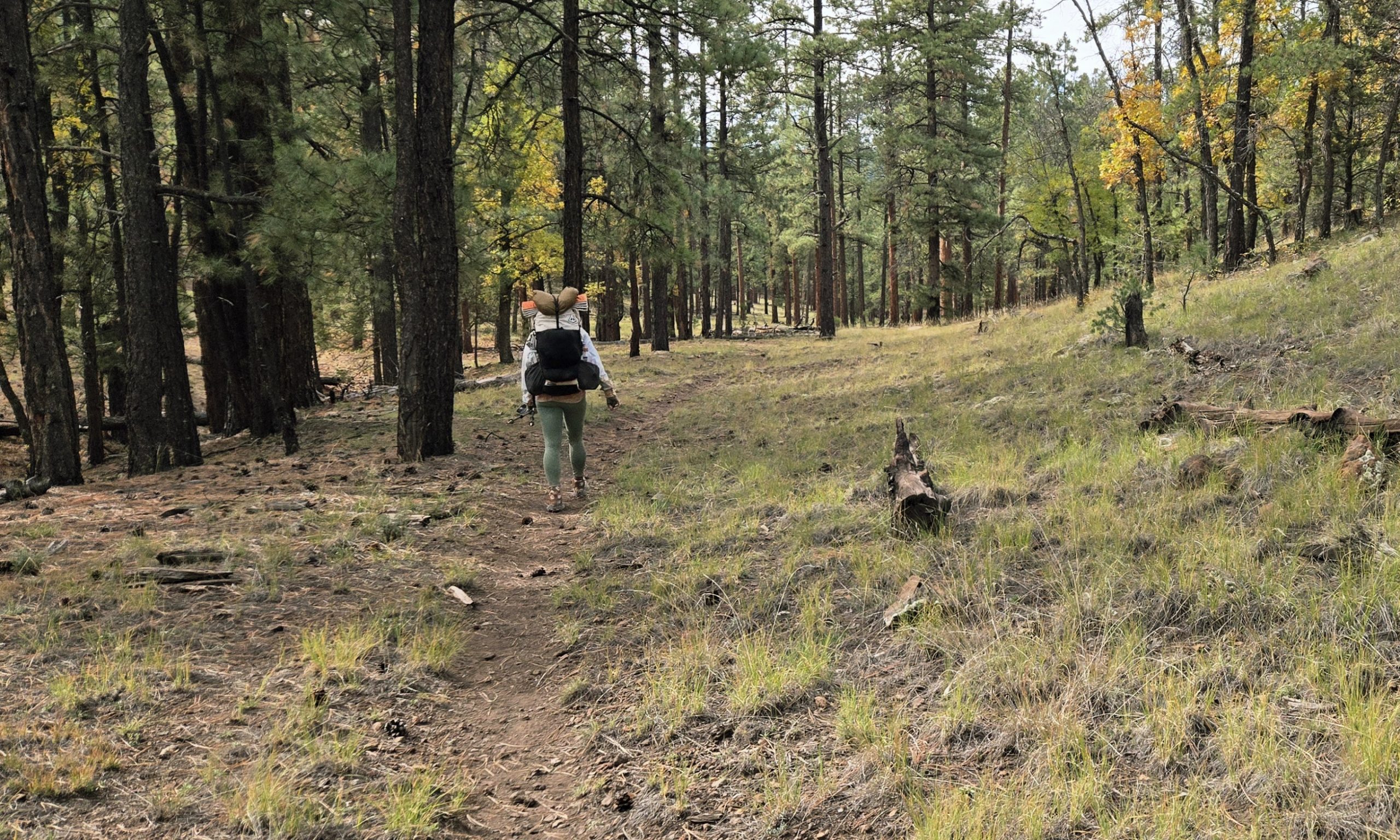
A lot of the High Route we did just looked like this.
Big Bear Connector
We did, however, get some cool canyon views once we turned off on the Big Bear Connector, which, as it’s name suggests, is a trail that connects the High and Low Routes. As a SOBO, it has you switching back and forth down the steep cliffside to the river’s edge inside the canyon. There was a lot of tree cover, but we were able to get some glimpses of the rock faces both on our side and across the way to the opposite one.
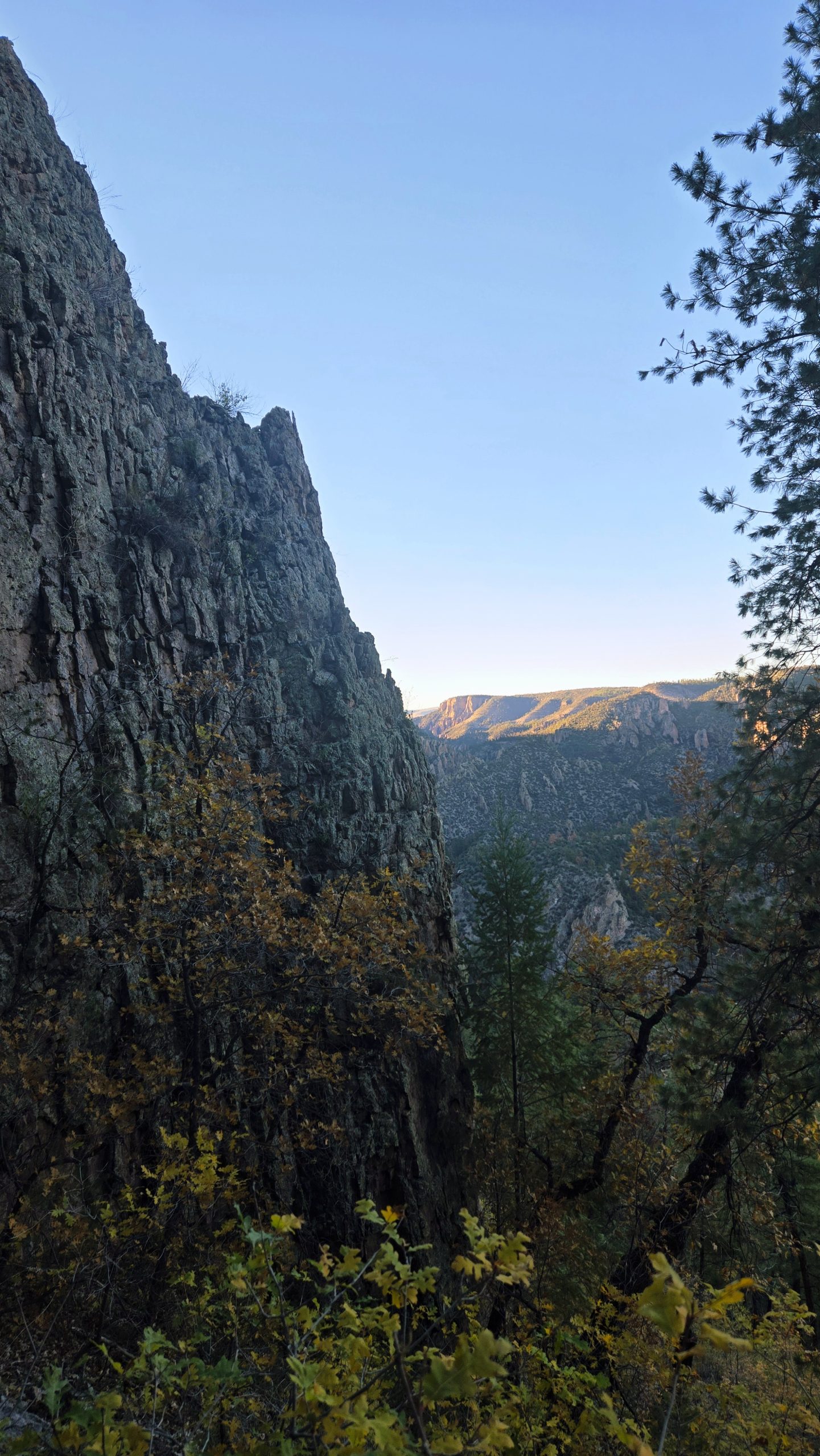
Views from Big Bear Connector.
Gila: The Low Route
I don’t know a whole lot about canyons
Once down at the bottom of the canyon, we made camp in a cluster of trees 100 feet from the river. As we were settling down for the night, I remember it dawning on me for the first time that it could, potentially, be pretty darn cold the next morning for our wet-feet crossings. I didn’t (and still don’t) know a whole lot about canyons. We don’t exactly have them in New England. Do the high rock walls trap warm air within them? Or, do they capture the cold as the sunlight strains to reach the bottom? “I hope we don’t get a frosty morning tomorrow,” I expressed to The Show, “that’s not gonna be good for walking in the water…”
About to be real cold
Second only to opening my eyes in the morning, I immediately shine my headlamp onto the tent above my head. It is, thankfully, frost-free. The Show and I take our time eating breakfast and packing up, as the sun won’t be rising for at least another hour. Packed and heading out around 7:30AM, our first few paces for the day take us through a small field of grass, all crystalized in white. Damn. I thought the unfrosted tent meant we hadn’t hit freezing overnight temperatures, but apparently not. These water crossings are about to be REAL COLD. I don’t realize just how cold until a ways down the trail.
The first couple crossings are easy rock hops over ankle deep water about 10-15 feet across. Maybe we’ll get a bunch more of these and won’t get wet til it warms up a bit? I think, wishfully. Then we get to the third on the day. We can scout a route about halfway across, but then the rock options get fewer and farther between. Dunking our feet is inevitable. We decide it’s officially time to take the literal and proverbial plunge.
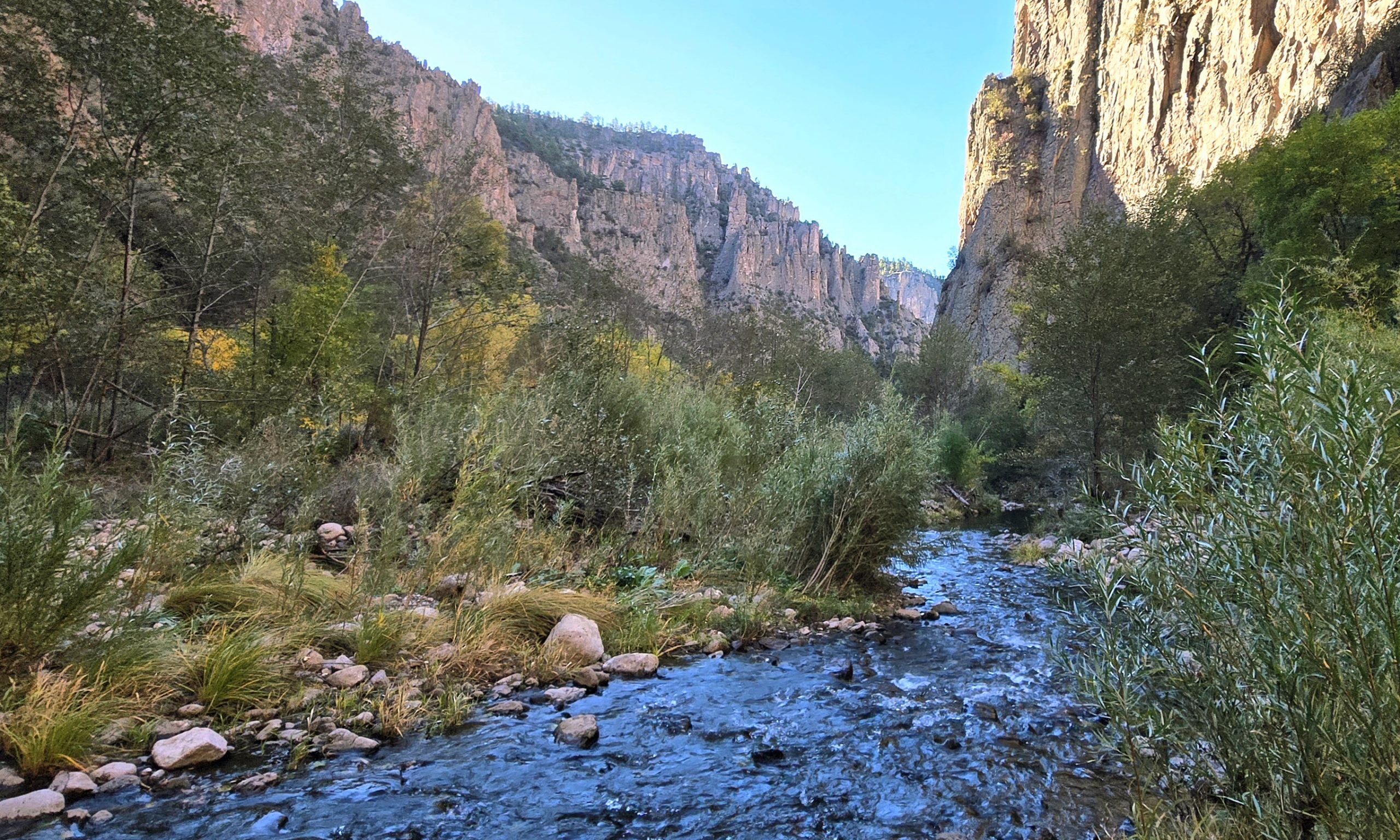
The literal and proverbial plunge
The Show and I change into our NRS neoprene water shoes, leaving our Darn Tough socks on for extra warmth. We roll up our rain pants above the knee so they don’t get wet. Our upper bodies remain bundled in Melly’s, rain jackets—including the hoods on both—buffs, beanies, and mittens. Trying to retain body heat anywhere we can. Ripping off the bandaid, I submerge one foot and then the next in the flow. It’s calf-deep and slow-flowing. It is cold, but nothing I haven’t experienced before with numerous water crossings and ice baths on my resume.
We cross the river a few more times without incident, keeping our water shoes on between crossings. There’s only about a quarter mile at most in between each one, usually less. It would be unreasonably time-consuming and infuriating to have to swap shoes for every single crossing. Walking over dirt and rocks in the water shoes is noticeably uncomfortable in comparison to my Hokas. There’s about a quarter inch of rubbery outsole and zero padding in between my feet and the hard ground.
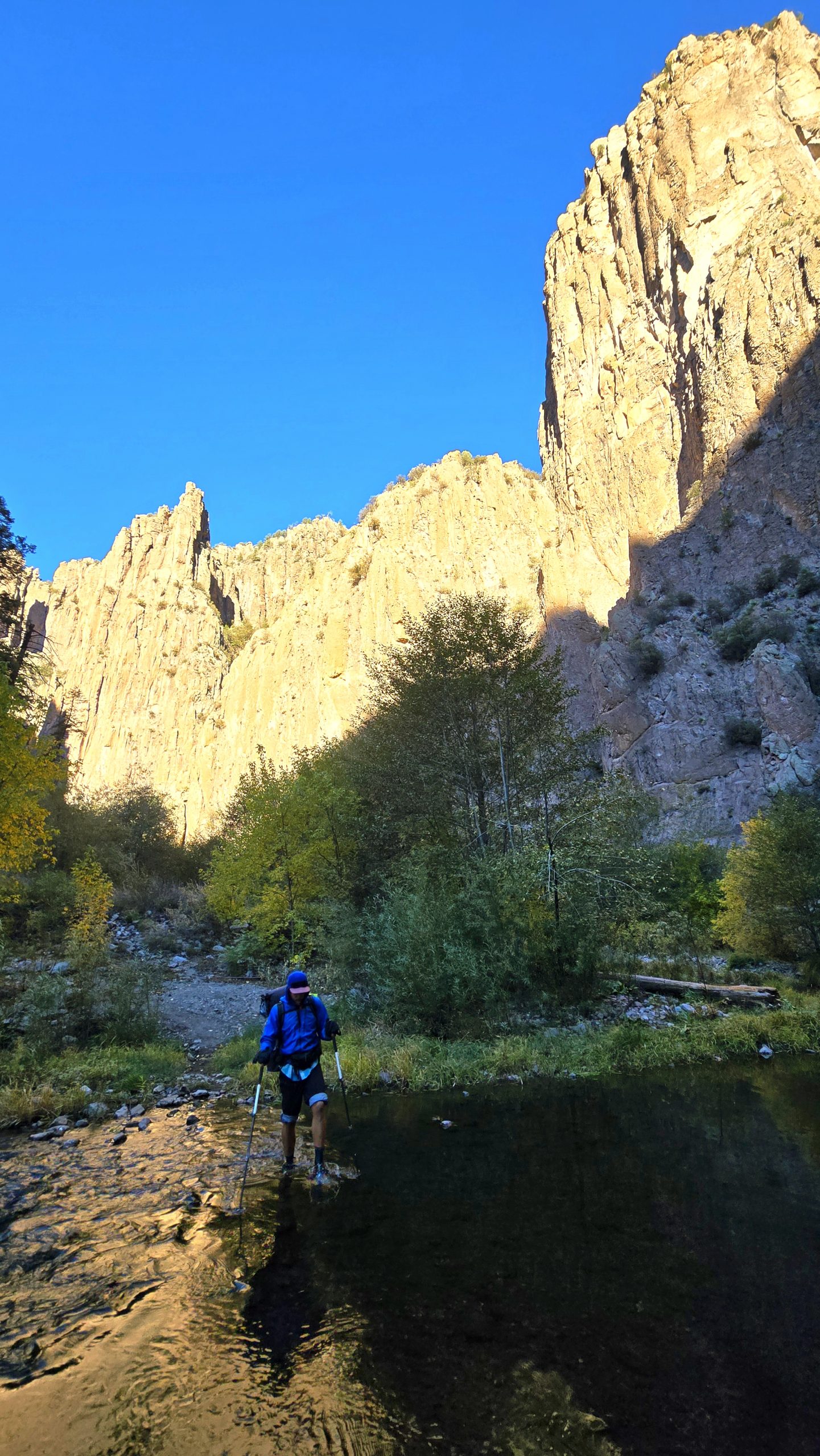
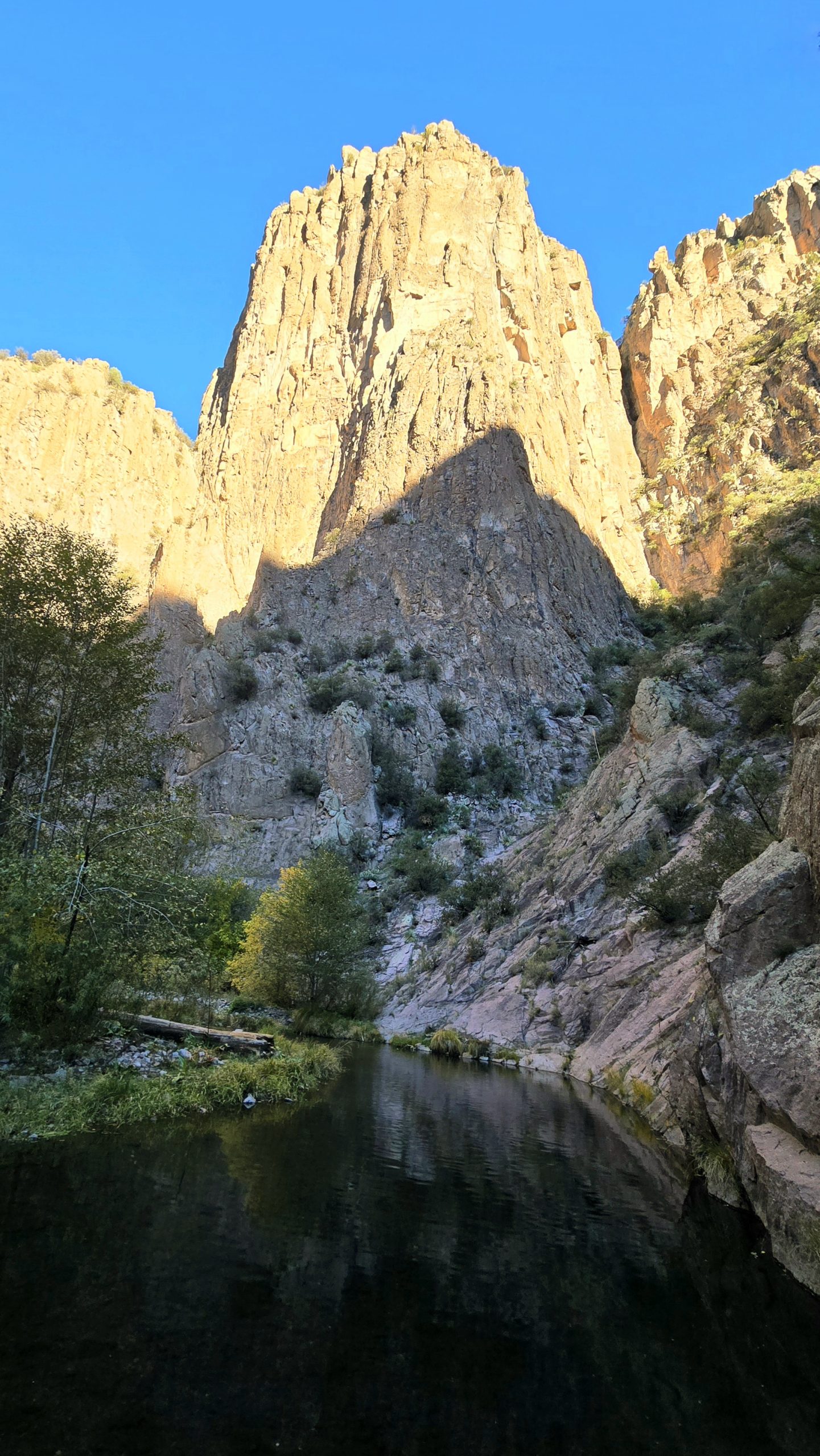
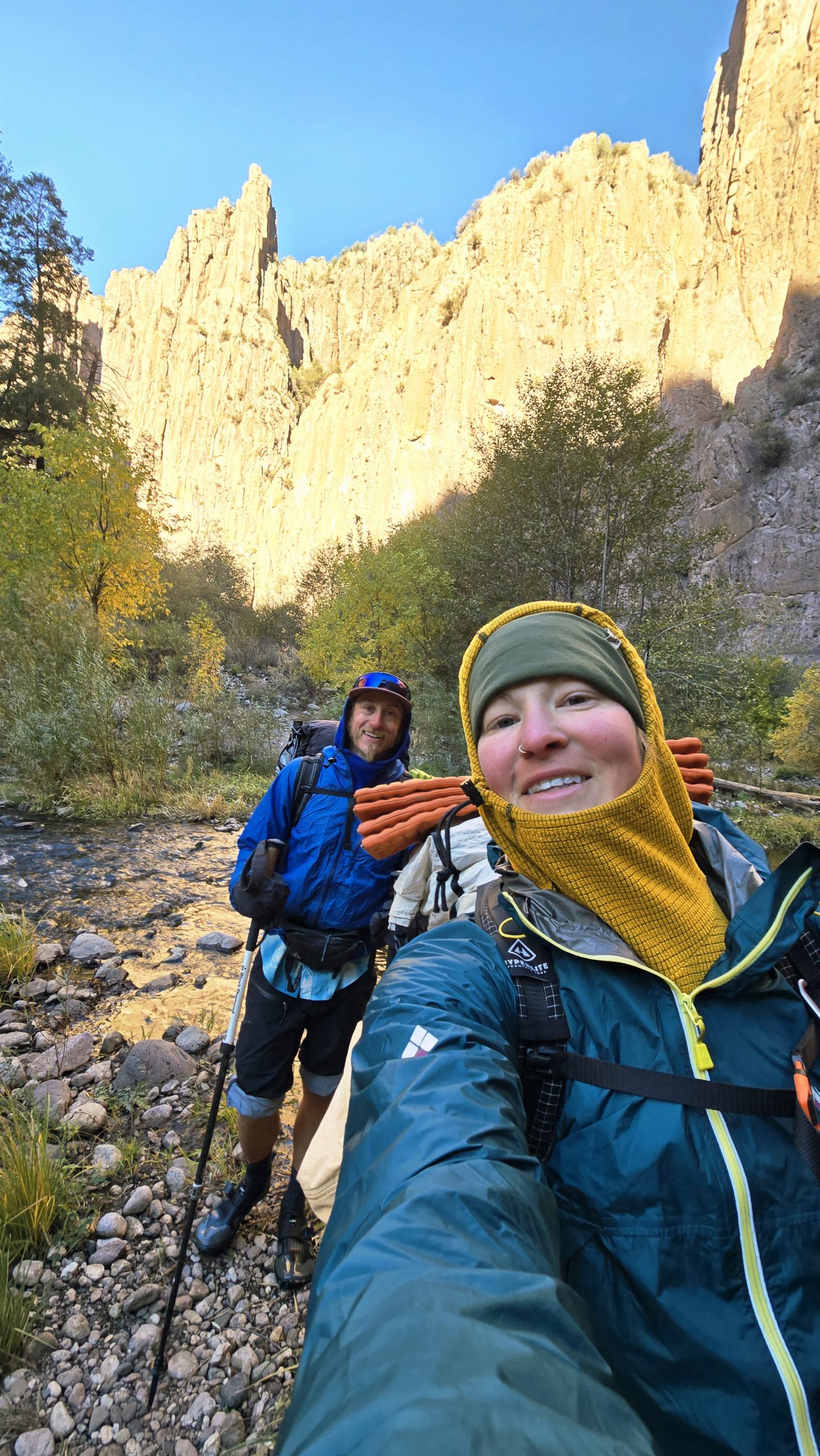
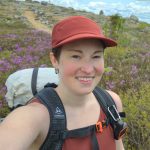
Smiling through the misery. Had to document it, as sucky as it was.
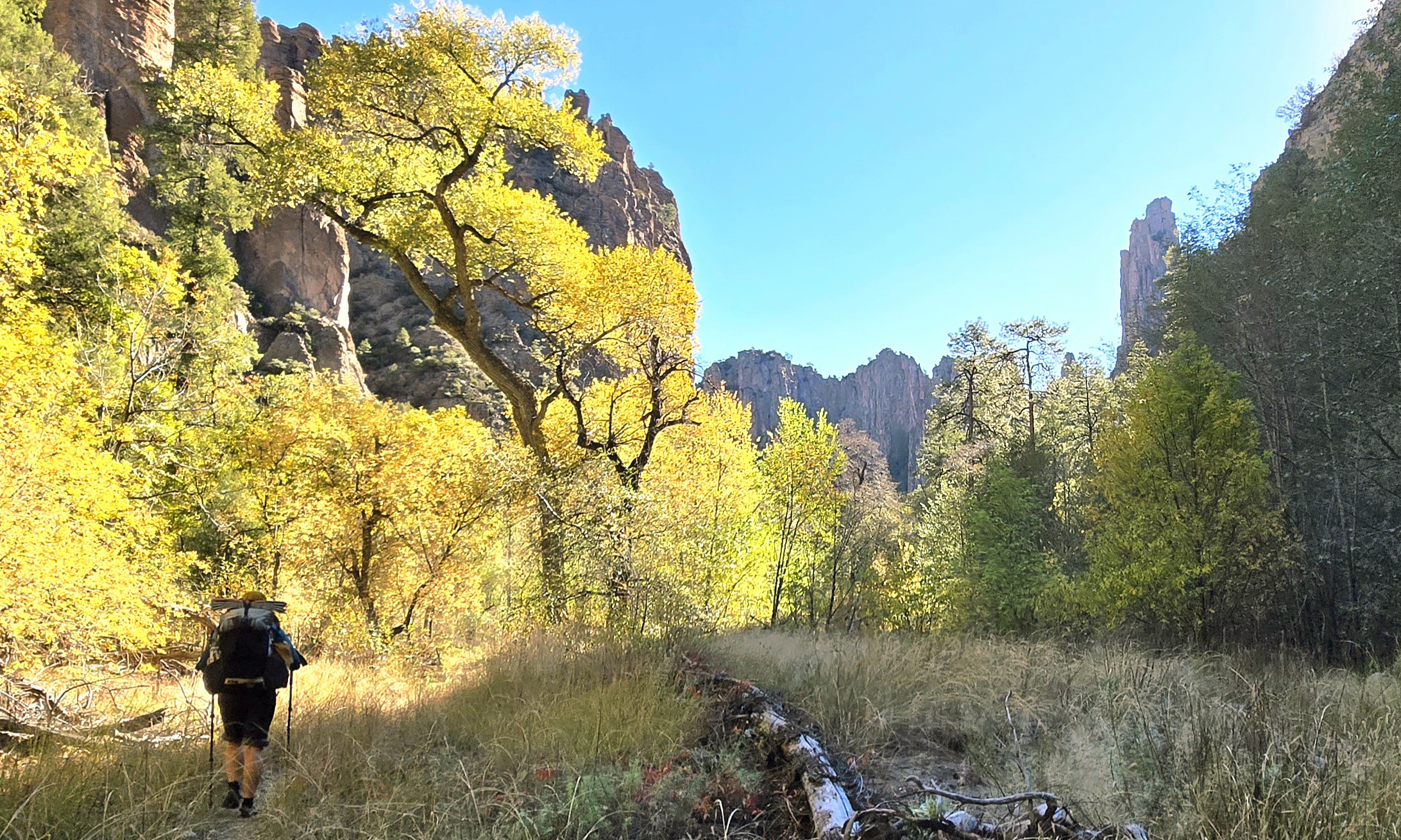
Walking in the water shoes between crossings.
Minor discomfort escalates
Gradually, with an imperceptible turning point, the minor discomfort escalates. My toes, feet, and especially my exposed ankles are somehow both numb and aching at the same time. I have the sensation that I’m walking on wooden stumps. Each step on dry land hits hard and unsupported. Eventually my feet sense the water as warmer than the air; I look forward to the brief wades and dread the in-betweens. The moment I emerge on the opposite riverbank and the frigid morning air hits my soaked lower legs is excruciating, each time. There’s little sun down here in the canyon. It hasn’t gotten high enough in the sky yet to fully penetrate down through the tall walls. “Chilled to the bone” is an accurate cliché. At least my upper body is still comfortable and I’m not shivering. The cold is quarantined below the knees.
Tremendous willpower
Mentally I’m in rough shape. Pushing forward takes tremendous willpower. Both the uncomfortable physical sensation and the fearful intrusive thoughts nip at me constantly. This is a really stupid thing to be doing when it’s this cold out. Our feet have been freezing cold and wet for two hours now. That can’t be good? What if we’re doing some kind of permanent damage to them? Should we legitimately be concerned with getting frostbite from this?
By now we’ve crossed the Gila around 14 times today and traveled 4 miles in minimal support, cold-water-logged water shoes. The only thing keeping me moving is knowing that the Jordan Hot Springs are only two miles away. The springs, which initially seemed like a special treat, I now perceive as a survival necessity. We NEED to get there, and ASAP, to re-warm our feet. I get through those unbearable last two miles by counting my steps, 100 at a time. Telling myself, “just 100 more” over and over and over again.
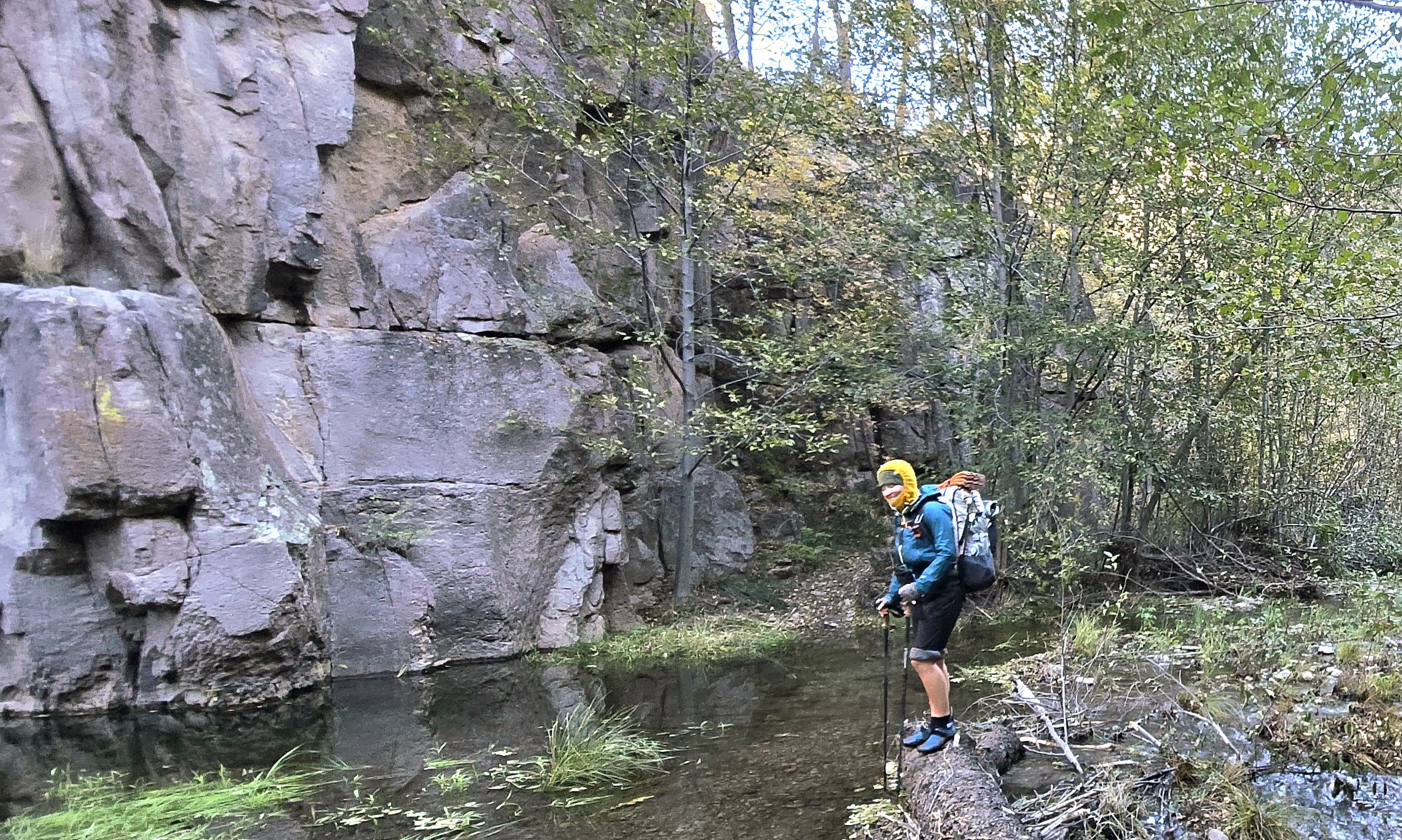
Hesitating on a log before getting back in the cold water for the thousandth time.
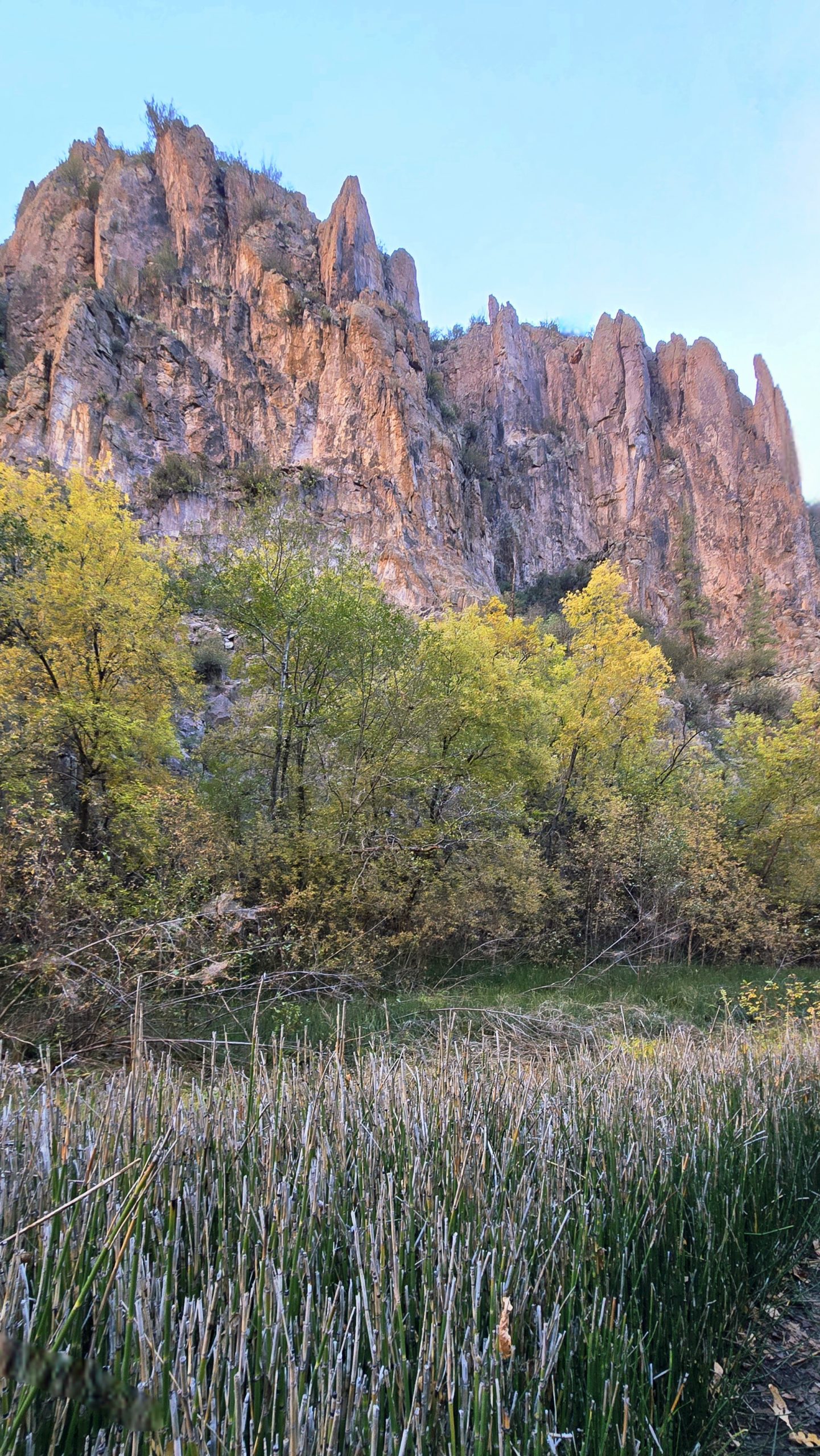
At least the canyon walls were gorgeous to look at.
Dishonesty
At some point we pass a solo guy who’d just emerged from his tent for the day. He’s not another thru-hiker, as far as we can tell. He’s busying himself stoking a small campfire and crouching down next to it bundled up in a puffy coat. I’m jealous of the chill morning he’s having on this chilly morning. As we walk past we all give a simple “hi” to each other. I feel deeply dishonest in this moment, throwing out a casual greeting while on the inside I’m in full paranoia my feet have become a casualty of the river’s cold. Everything in me wants to ask this guy if we can warm our feet by his fire, but I don’t. I keep walking against my will.
Hot Springs Heaven
I’m checking my phone obsessively, calling out “point seven!” and then “half a mile!” and then “almost there, quarter mile!” back to The Show behind me. I’m hoping the callouts are motivating and not demoralizing to him. Closing in on the hot springs, we see another tent with a young woman sitting in it. Again, I feel a pang of jealousy at the relaxing outing she must be having, still in her tent by late morning. We stop and check our maps; the springs have to be close.
“Are you looking for the springs?” the woman asks, crawling out of her tent. We tell her we are and she points us in the correct direction, saying “they’re sooooo lovely, enjoy!” At this point I’m convinced she’s a guardian angel, gatekeeper to Hot Springs Heaven. We made it. I’m incredibly relieved but still pretty fucking worried about the state of our feet. They’ve now been wet and cold for three hours, hiked six miles in improper footwear, and crossed the Gila 41 times today.
We don’t stall but head straight for the springs. They’re stunning and tranquil—a couple turquoise blue, pristinely clear pools surrounded by trees, and entirely empty—but it’s hard to appreciate their beauty in our state of desperation to warm our feet. I’m surprised we even bother to remove our packs, but we do, and immediately plunge our frozen stumps into the steaming pool. At first it feels wonderful, finally a pleasant sensation for the first time in hours.
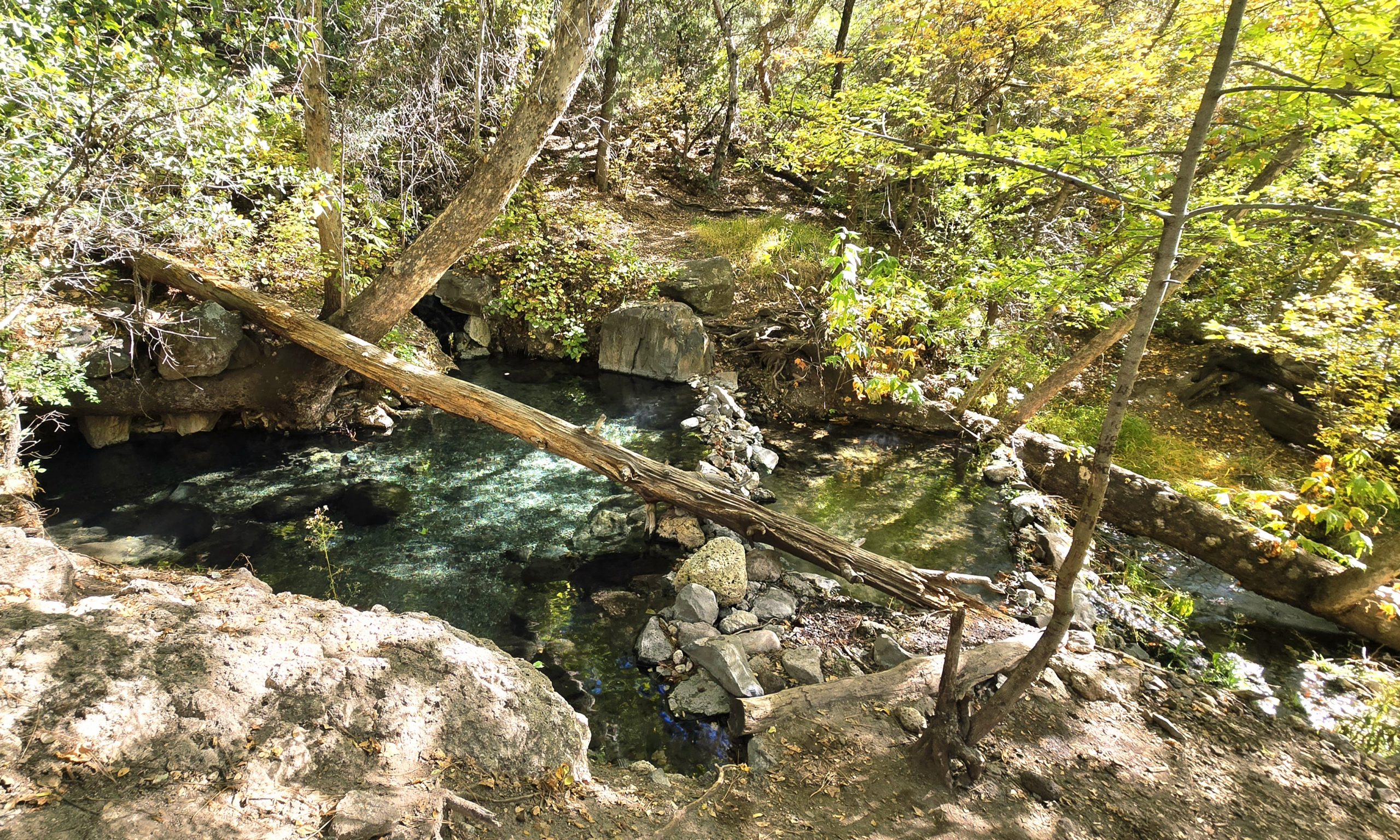
Jordan Hot Springs.
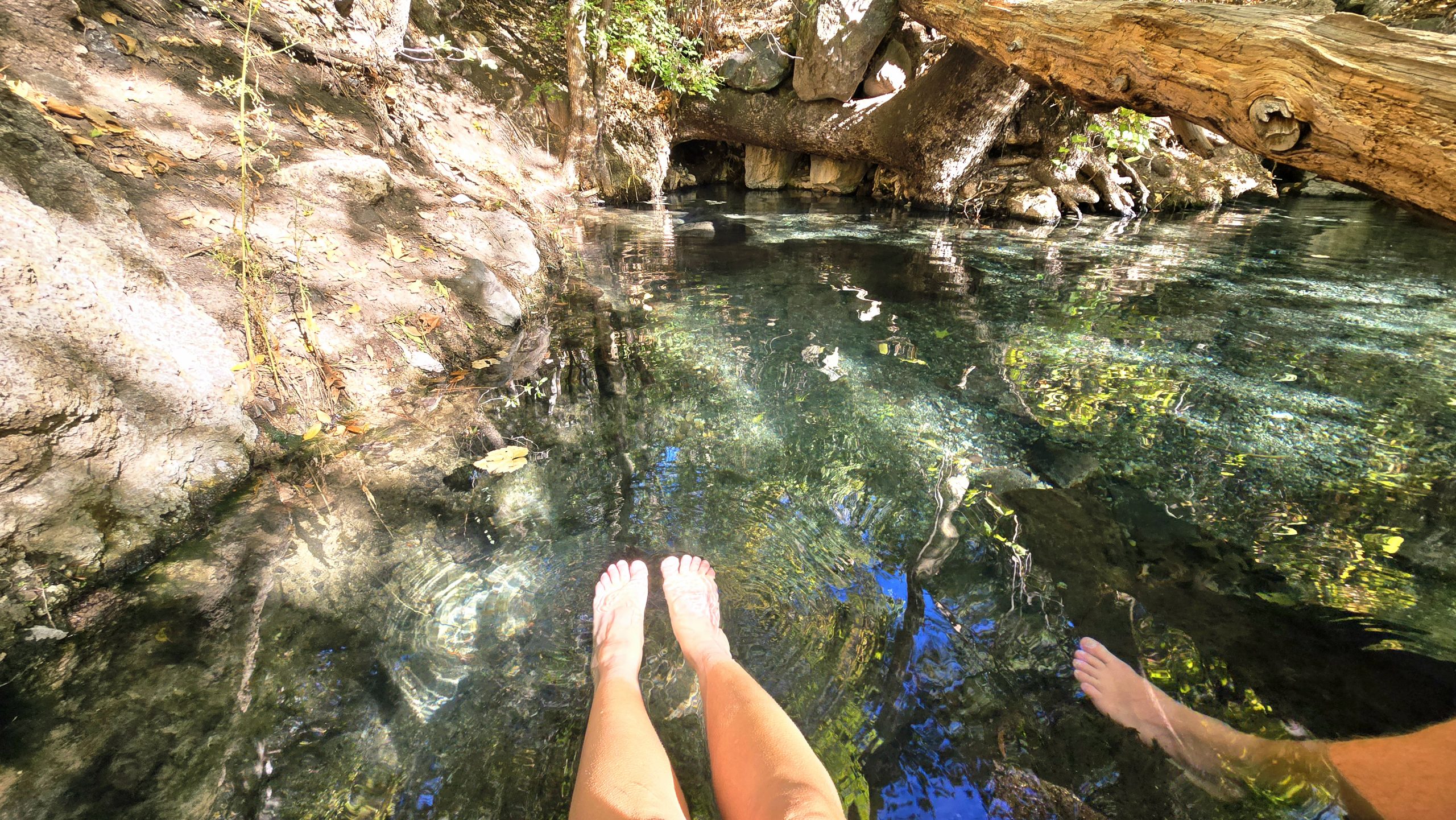
Thawing the dogs in the springs.
Clawing at our dogs
Then, as though hours of sensationlessness had caused feeling to build in them, it bursts forth with the thaw. My ankles and feet begin ITCHING like they never have before. An itch that’s not skin-level, but radiates from the inside. Both of us are ferally clawing at our dogs, like dogs that need to be coned. I peel off my water shoes and socks. My feet are covered in purplish-red splotches. My ankles have engorged, as though they took on some of the abundant water they walked through. Woah. That can’t be good. Isn’t swelling a symptom of frostbite? Could we actually have gotten freaking frostbite from the Gila?
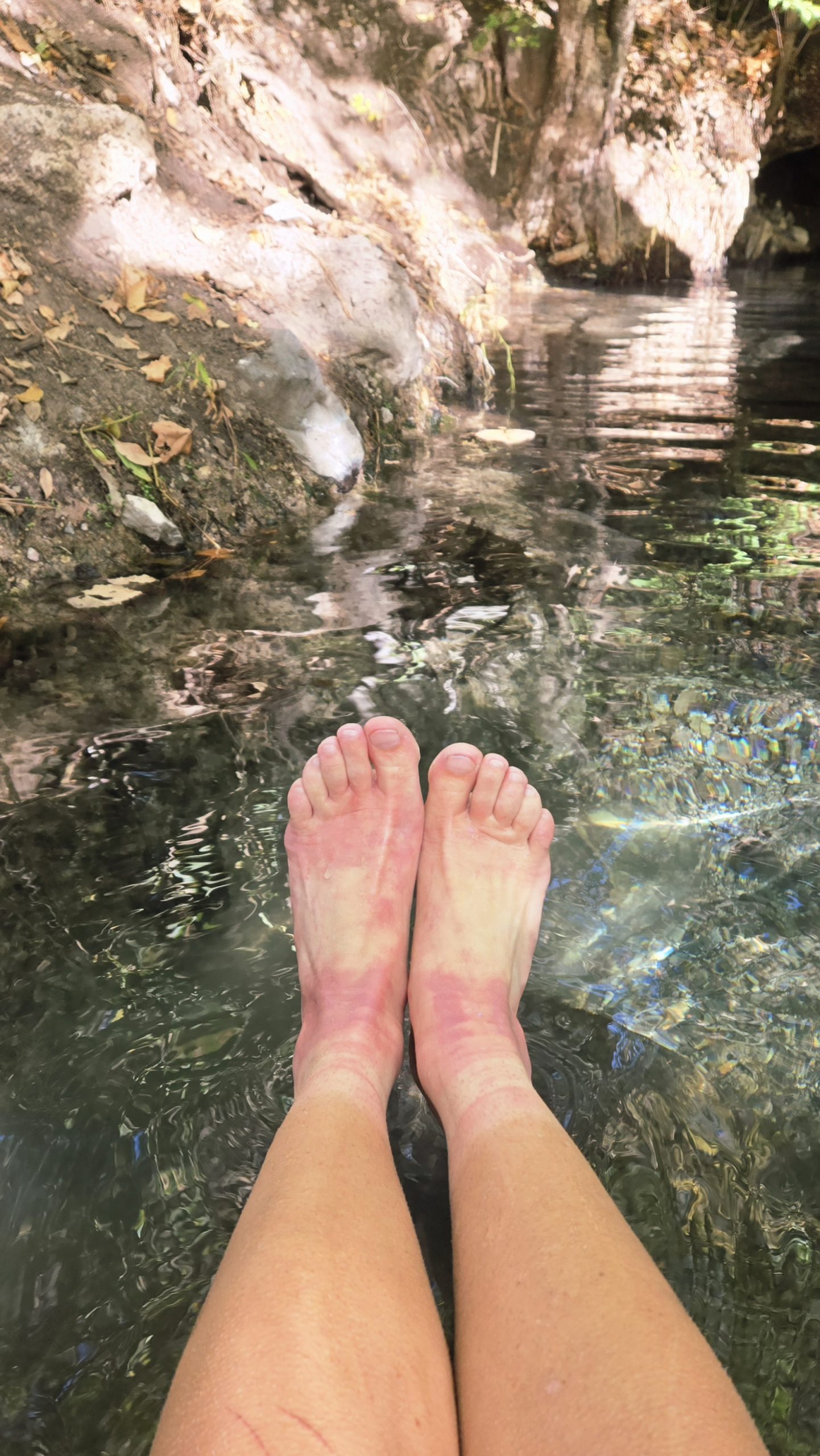
This doesn’t look normal.
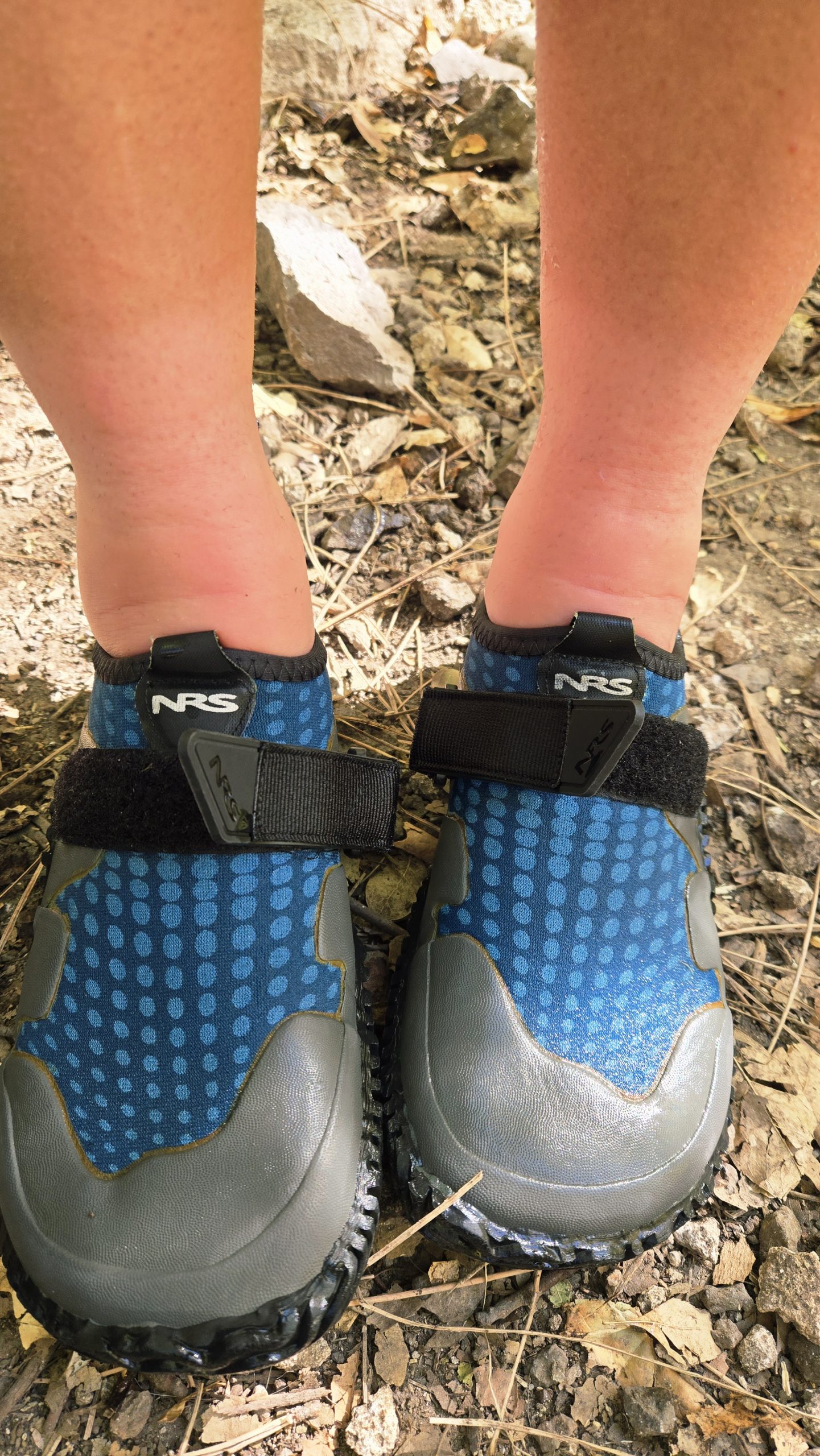
Nor does this. Maybe hard to tell without a “normal” reference point, but the area right above the water shoes was quite swollen.
The “re” that needs to happen here
We soak our feet a bit longer in the cool blue warmth and then seek out a sunny spot nearby. It’s 11AM and the sun is just finally gracing us with its patchy presence. The sunny patch is unfortunately in an area labeled “closed for revegetation.” I decide our needs are dire enough to ignore this sign and sit there anyway. Sorry vegetation, but the “re” that needs to happen here at this moment is “re-warming.” I spread my pad out and stick my cankles in the sun. The Show does the same. His cankles are even worse; they’ve got to be almost twice the size of what they normally are. Yikes. I give him some ibuprofen to reduce inflammation and we hope for the best the swelling will go down on its own. What else can we really do out here?
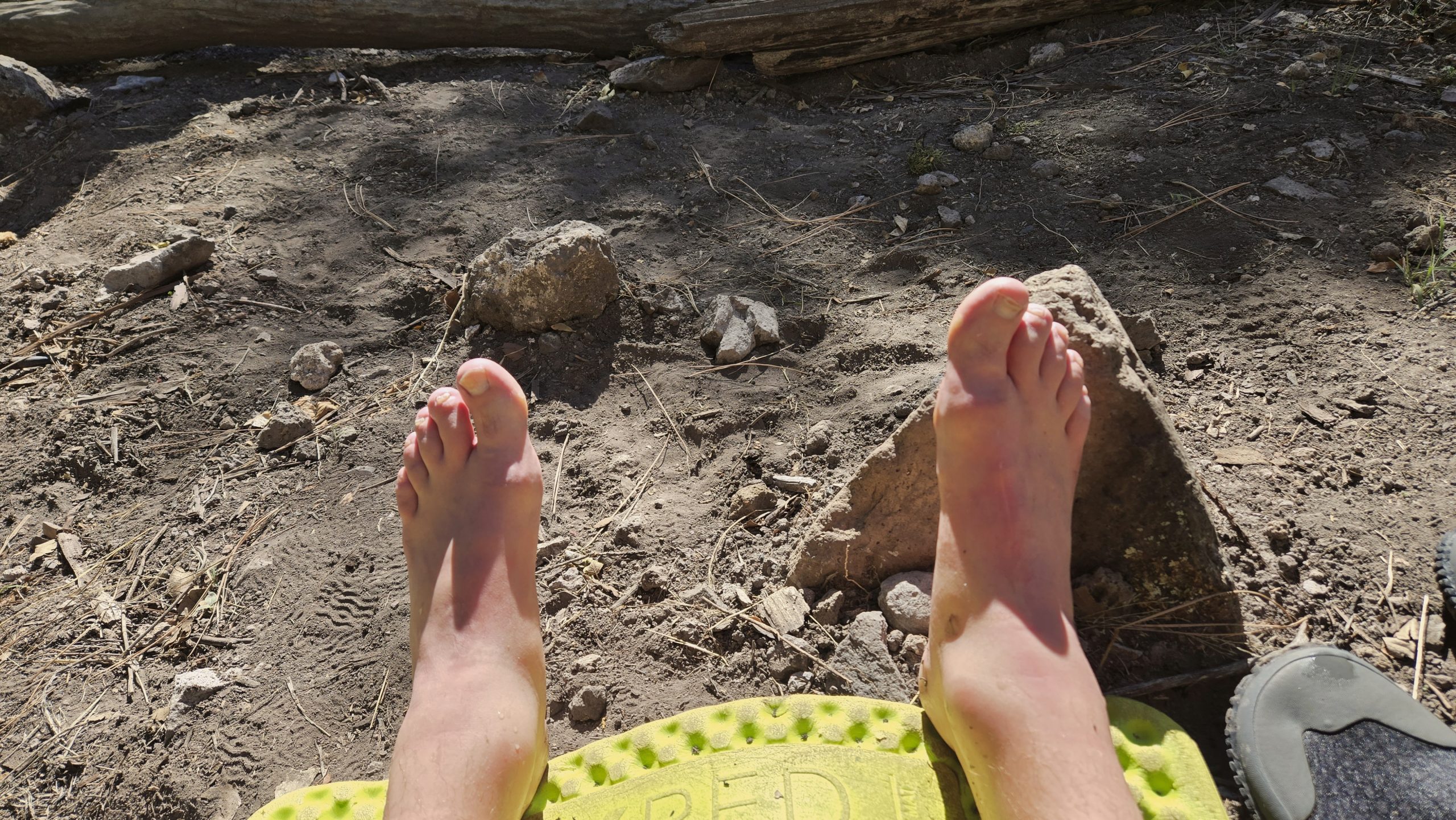
The Show’s HUGE cankles.
We’re done, but not done yet
By noon the swelling seems to have gone down, for both of us, at least a bit. We decide not to do any more of the Low Route. We’ll take whatever trails or roads that exist to avoid it. Fording this river is just too miserable and we don’t want to risk getting (further) cold injuries. We also decide it’s now warm enough that we’re ready to brave the rest of the crossings. Nope, we’re not done yet. We still have three more miles of river oscillating to do before the next opportunity to reunite with the High Route. I dip my wet water shoes and socks into the pool to warm them before putting them back on my feet. We head out again, hoping not to end up back in the same position in another hour, without a hot springs saving grace next time.
THIS is what I expected
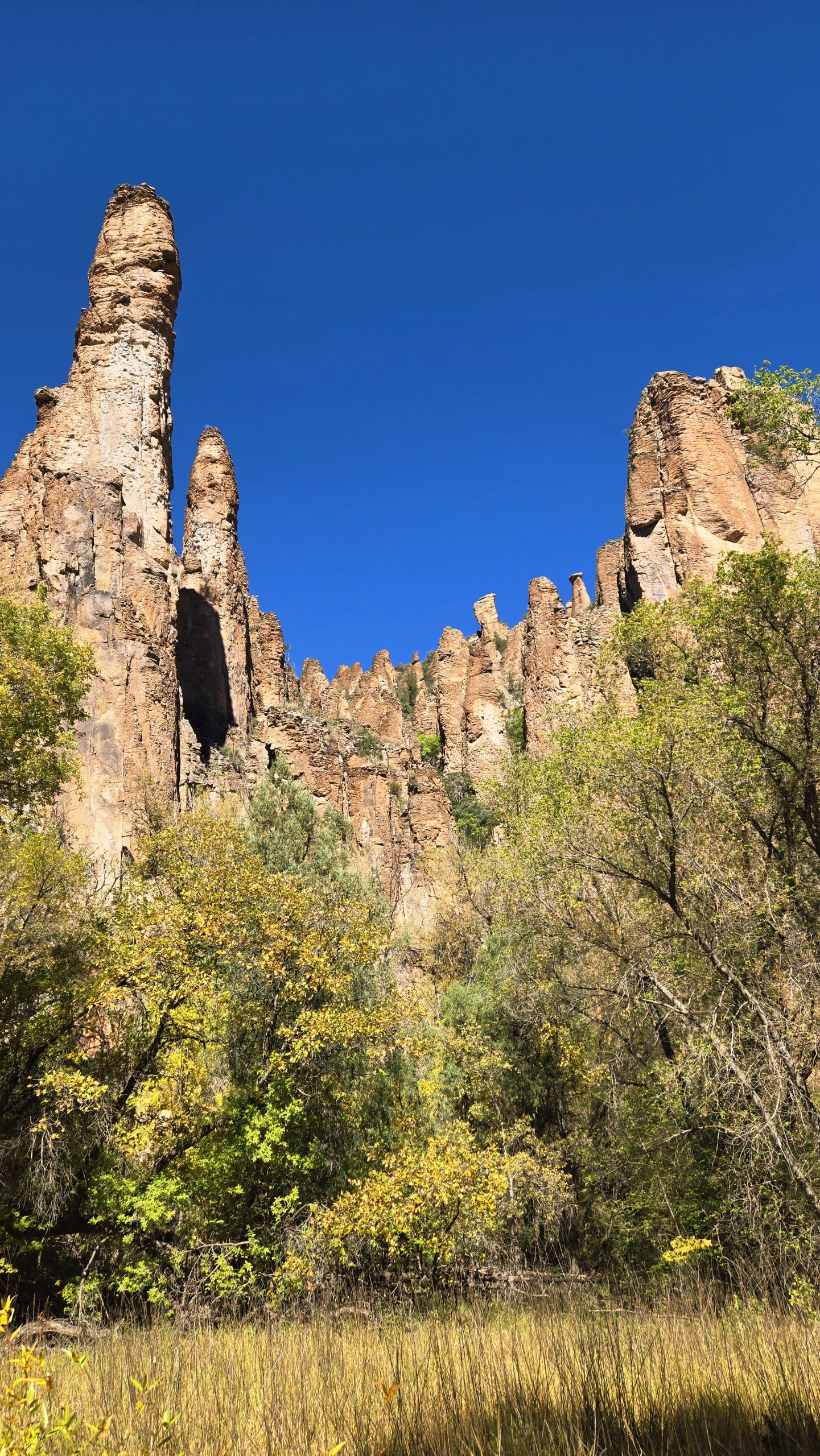
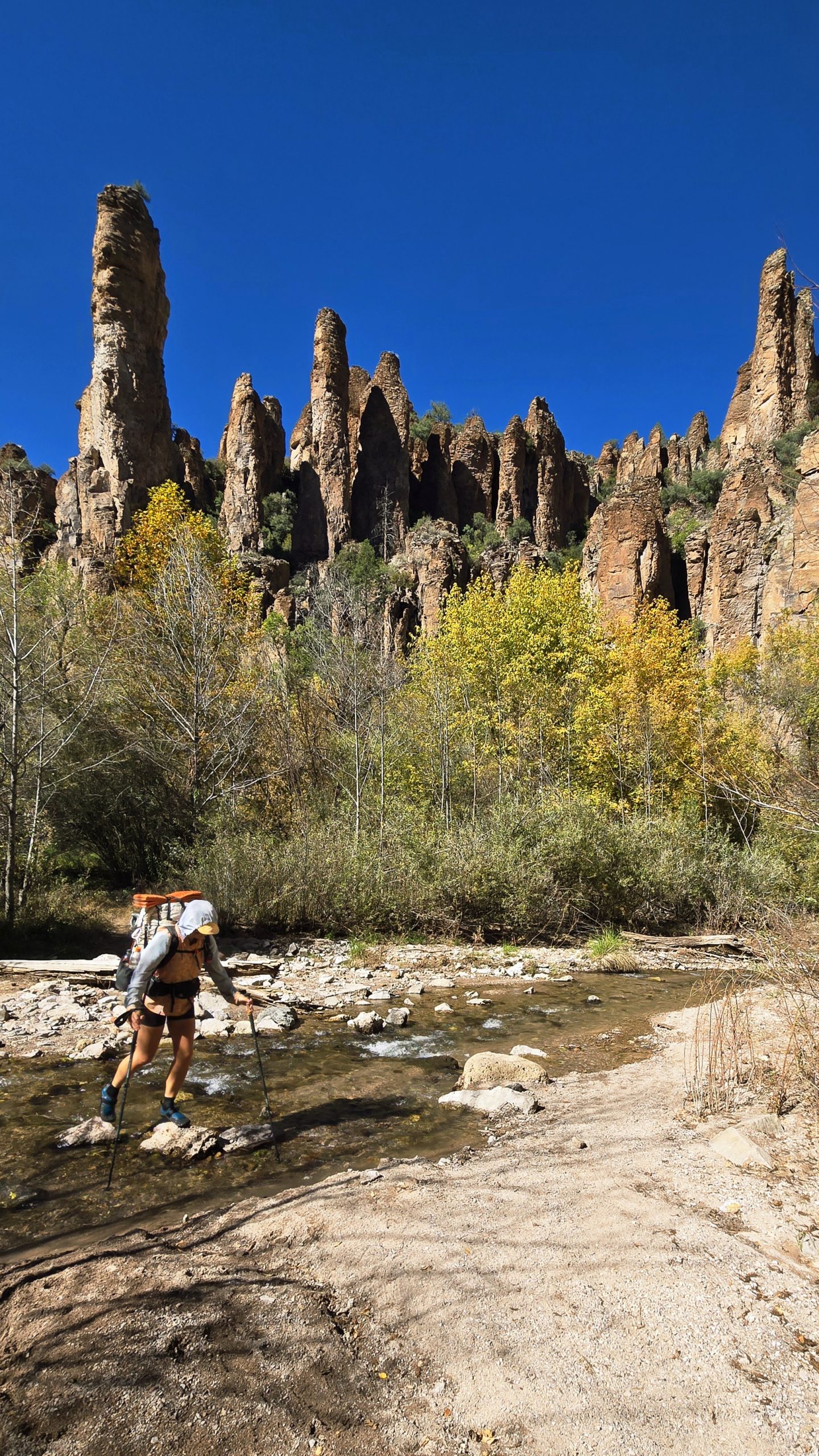
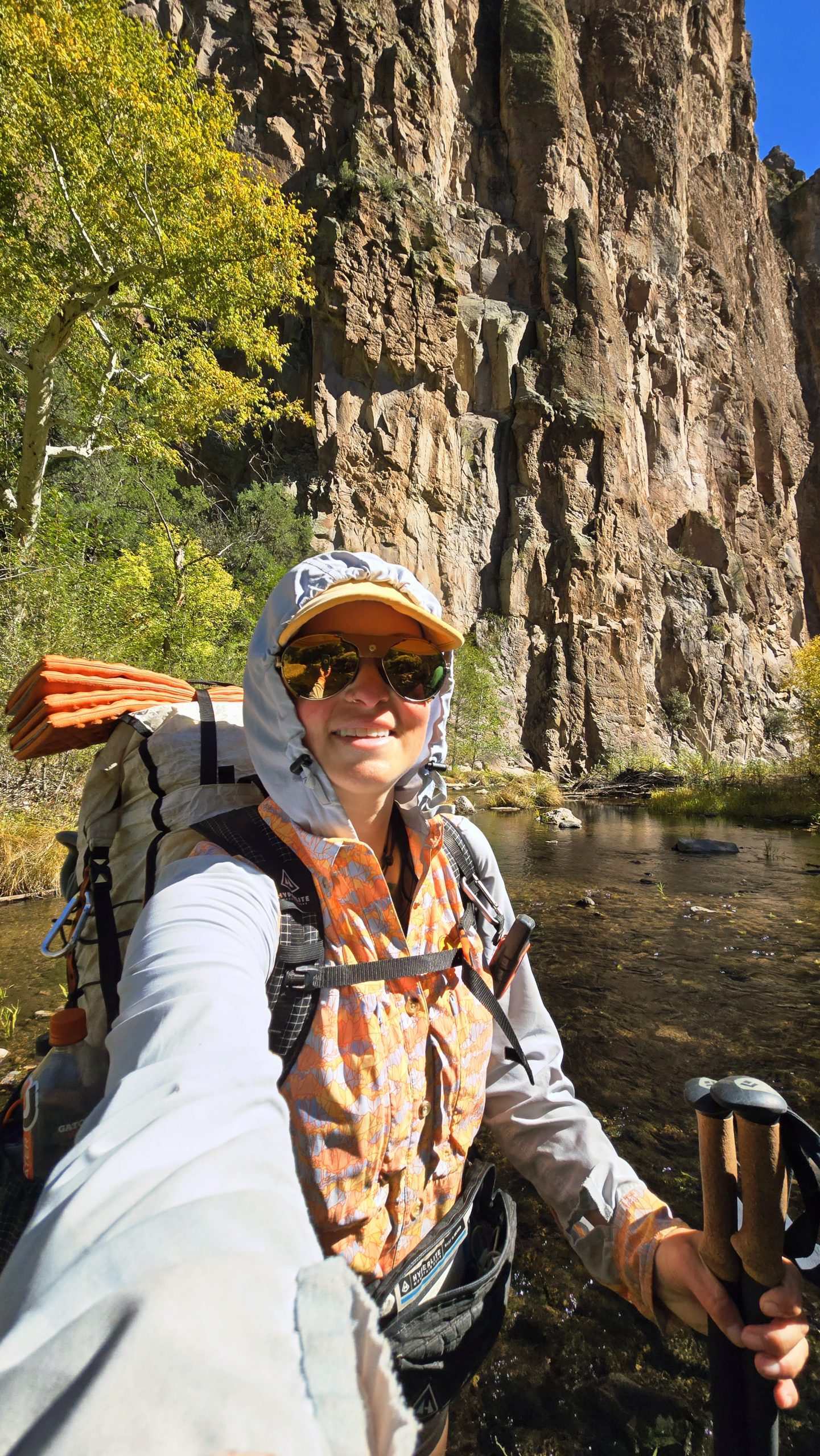
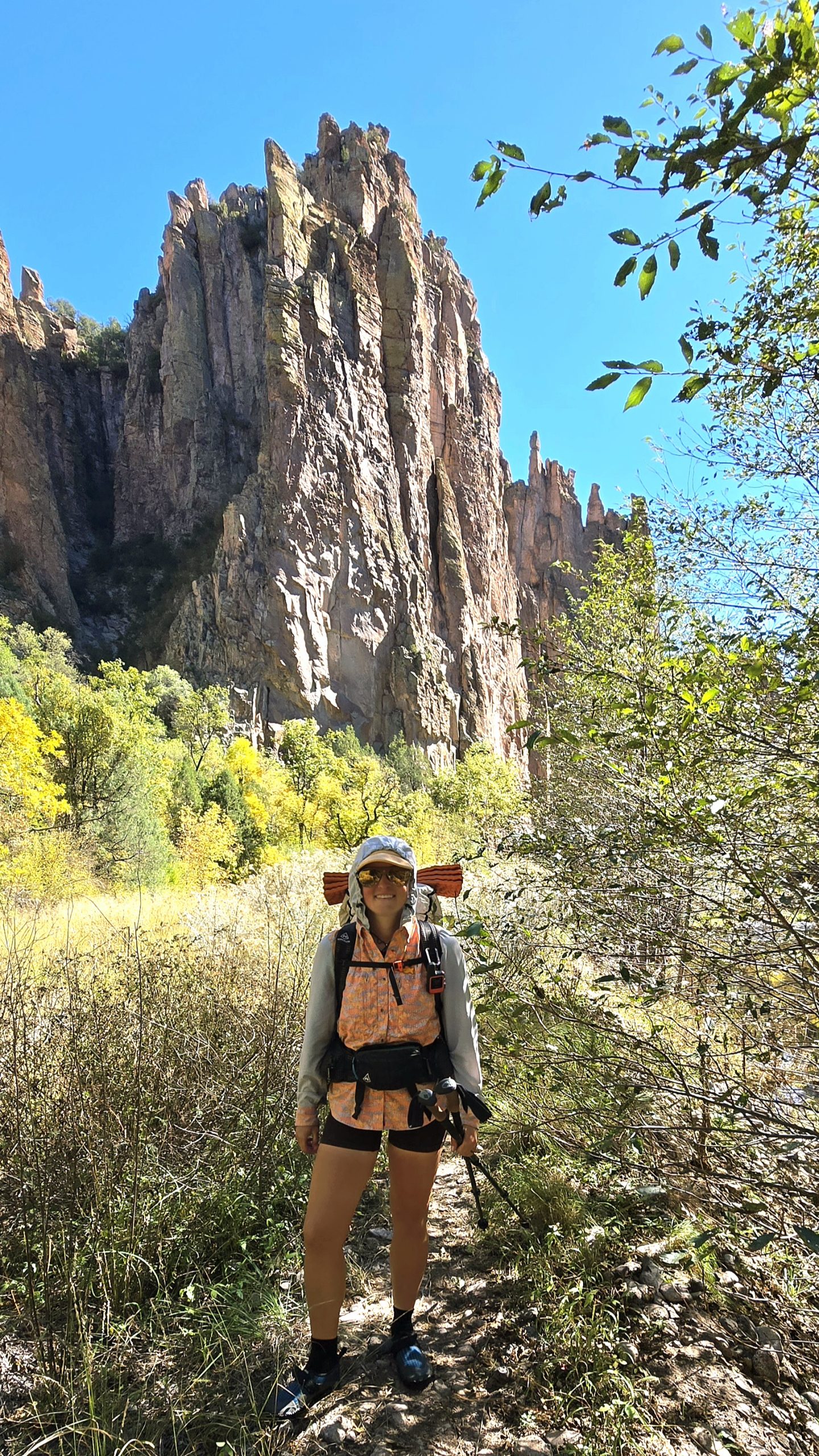
The first crossing of the second round feels…warmer? And not just in a cold-but-perceptually-feels-warm kind of way. Actually warmer. The two of us discuss whether this is because this lower section of river is fed, in part, by the hot springs. Or whether it just makes that much of a difference that it’s midday and 60-something degrees out, as opposed to morning and in the mid-30s. The remaining 15 crossings are a totally different experience in contrast with the morning’s ordeal. I find myself genuinely enjoying splashing through the sun-kissed flow and gazing above me at the spired tops of the muted-orange canyon walls. THIS was the experience I’d expected to have in the Gila. The one thru-hikers rave about when they say it’s one of their favorite sections of trail.
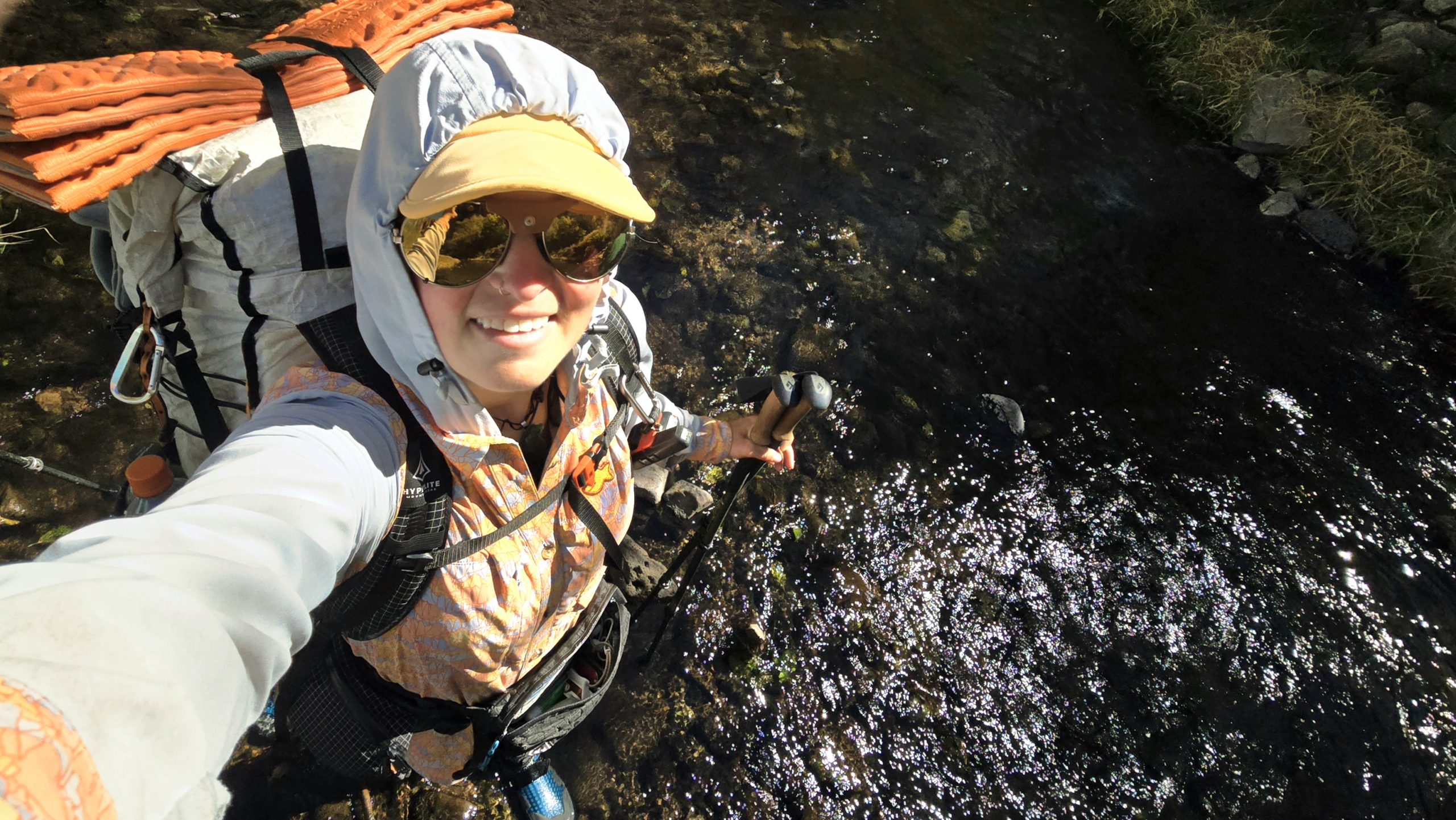
Disappointment & what I’d do differently
I’m honestly a little disappointed with my Gila experience as a late-ish season SOBO. I felt stupid for not considering air and water temperatures when I planned this leg. But I can’t entirely blame myself, because I’ve never been there before and just didn’t know what I didn’t know. If I were to do it again, assuming I’m arriving there at the same time of year (end of October), I’d first of all have worn my waterproof SealSkinz socks with the neoprene water shoes instead of regular socks. That likely would have at least helped trap a little more warmth in.
I’d also, even more importantly, split that day into two short ones. I’d chill until 10AM or noon and start once the weather warms. Then I’d camp near the hot springs and spend that evening relaxing in the pools (fully emerging myself, not just my dogs). The following day I’d again start at 10AM or noon to do the rest. I’m at least glad the Low Route ended on a positive note. Someday I’d love to return and section hike this area in the summer, when the water feels refreshing in the heat rather than dangerous in the cold.
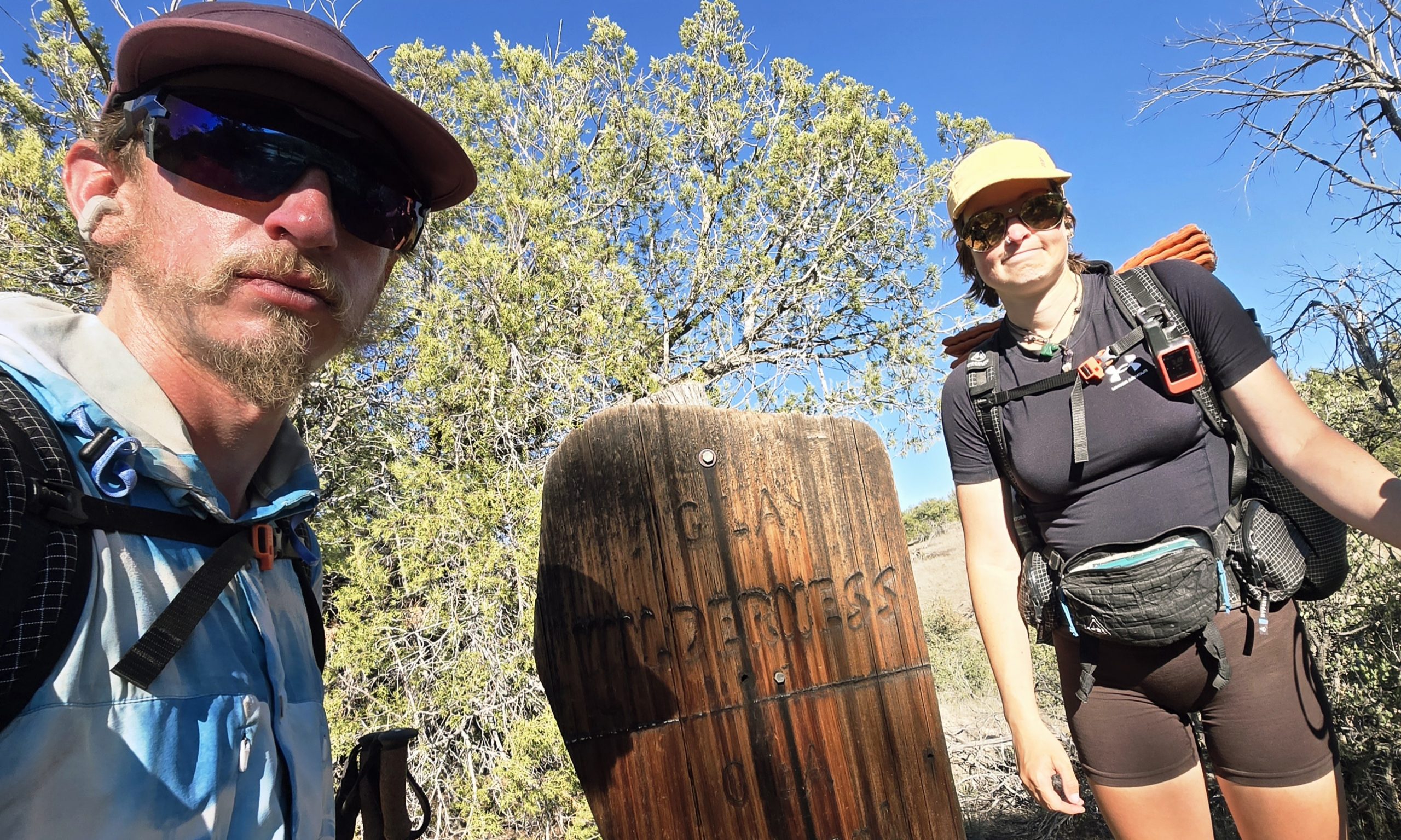
Accurate depiction of how we felt about the Low Route in late October.
Gila: The High Route (Again)
Little Bear Canyon
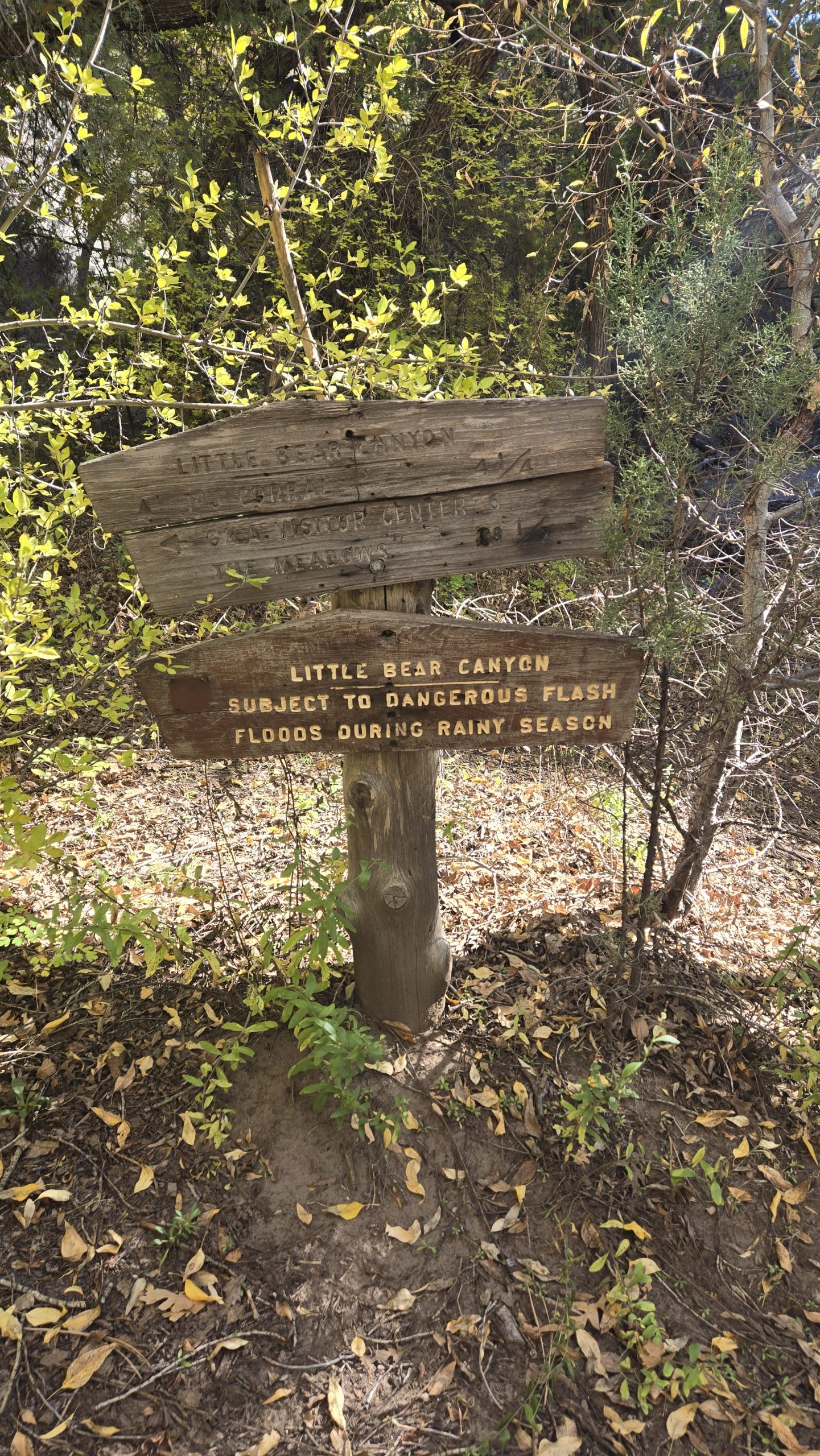
A highlight of the Gila for us was taking Little Bear Canyon, another connector trail between the Low and High Routes. It had the same craggy towering canyon walls we’d been seeing, but they were closer together and didn’t have a freezing cold river running through them. There was a small trickle of a stream flowing through the southern half mile, but it was easy to walk alongside without getting out feet wet. Before entering the canyon a sign warned of the potential for dangerous flash floods. We didn’t have to worry about them then as it wasn’t rainy nor snowmelt season, but I wondered about it. I wish there was a way I could see the powerful surge rip through this giant crevasse in the earth without actually being there and susceptible to its danger.
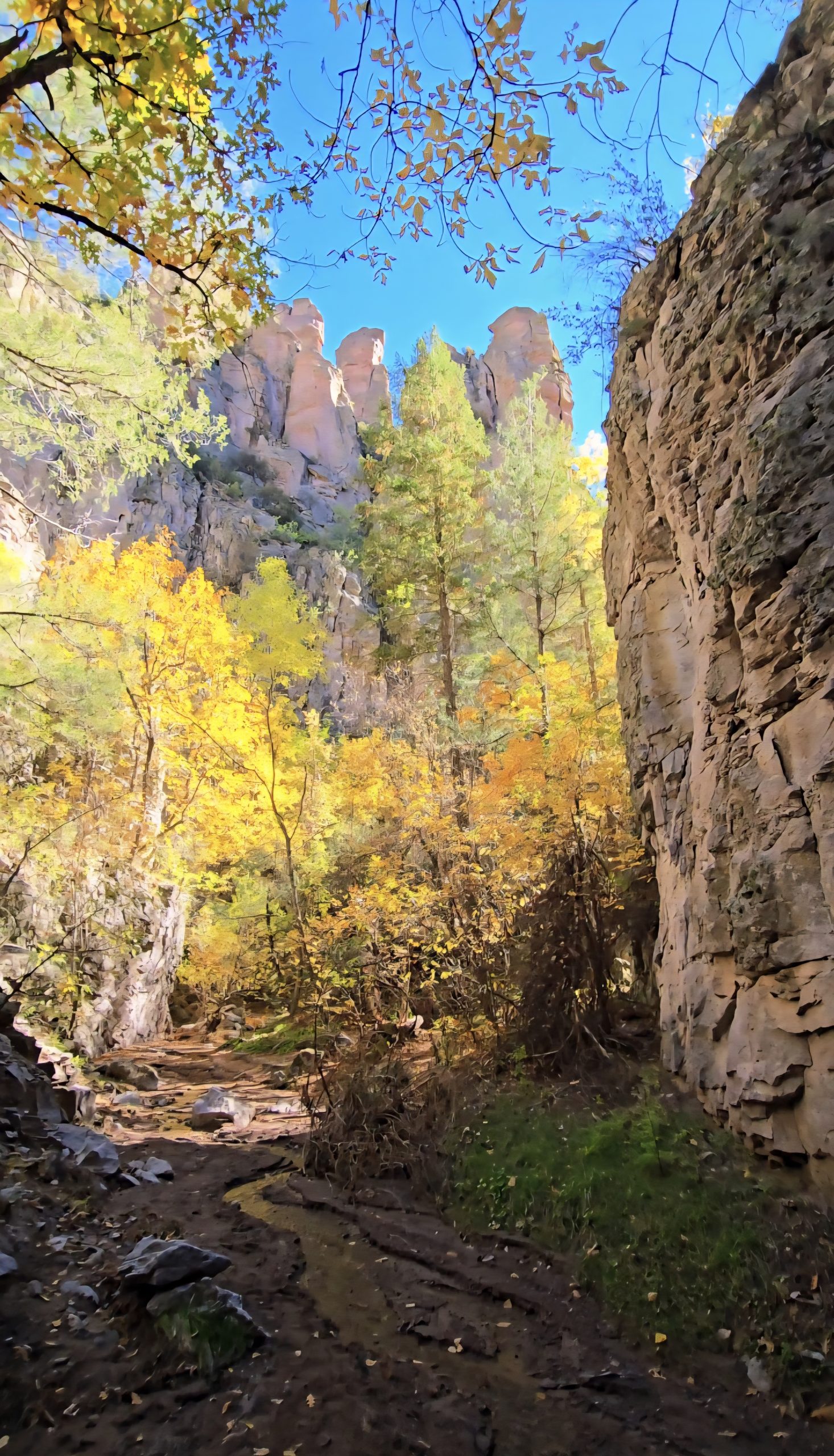
Little Bear Canyon. Sorry it’s a bit fuzzy, it’s a video still.
The High Route to Doc Campbell’s
The remainder of the High Route was uneventful other than sightings of a horny toad and prickly pears with spikey orange mohawks. We walked some trail on top of the canyon which then descended to a trailhead. After that we walked paved roads to our next resupply stop, a remote general store / outdoor outfitter / gift shop called Doc Campbell’s Post, where we’d sent boxes. When we arrived it was on a day they were closed, but per FarOut they would supposedly open for us if we called a number posted outside the building. Even better, when we walked up, we saw the owners outside their house back behind the store. We walked over to them and asked if we could pick up our packages. Not only did we get those, but we were also able to buy some sodas and homemade ice cream.
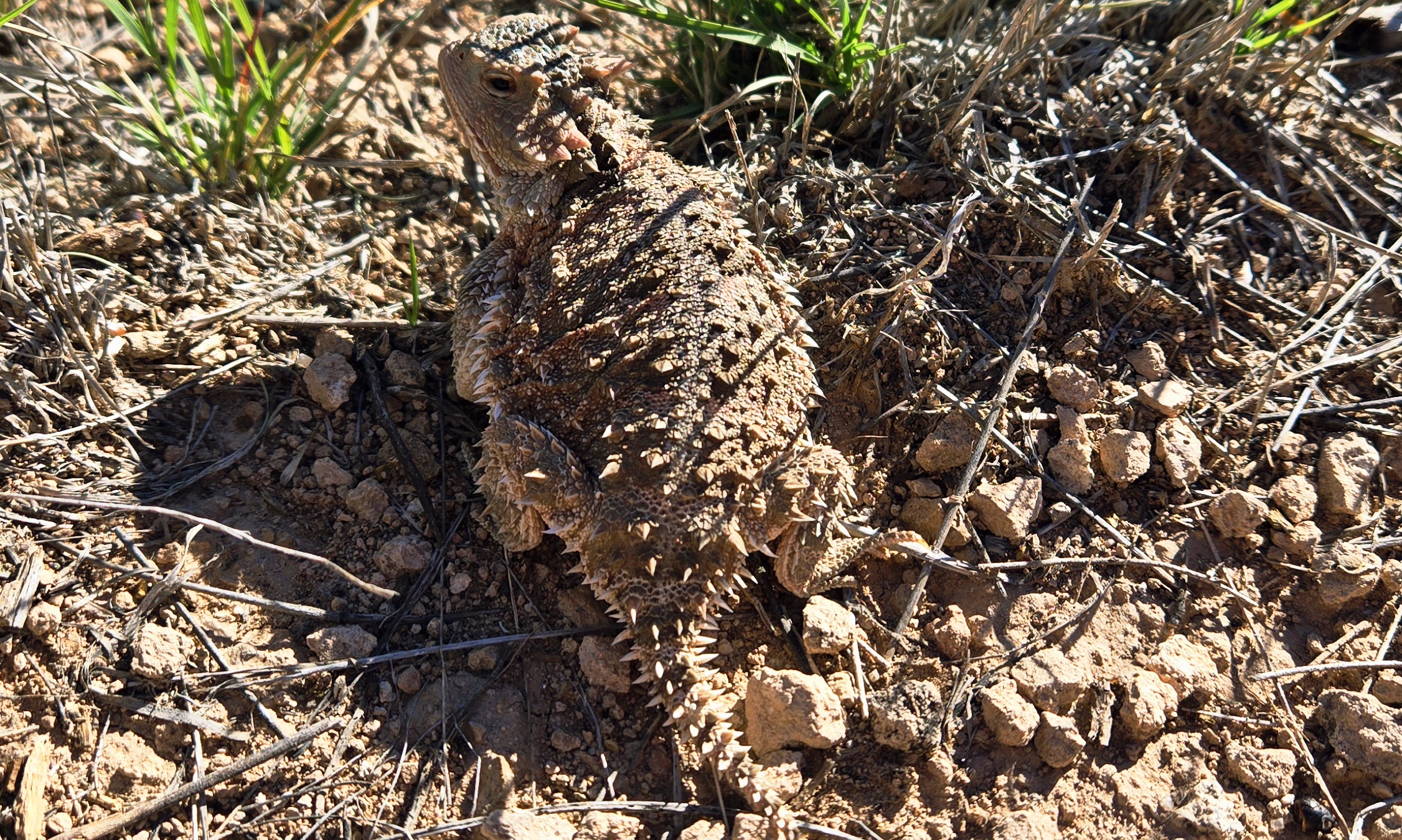
Horny Toad
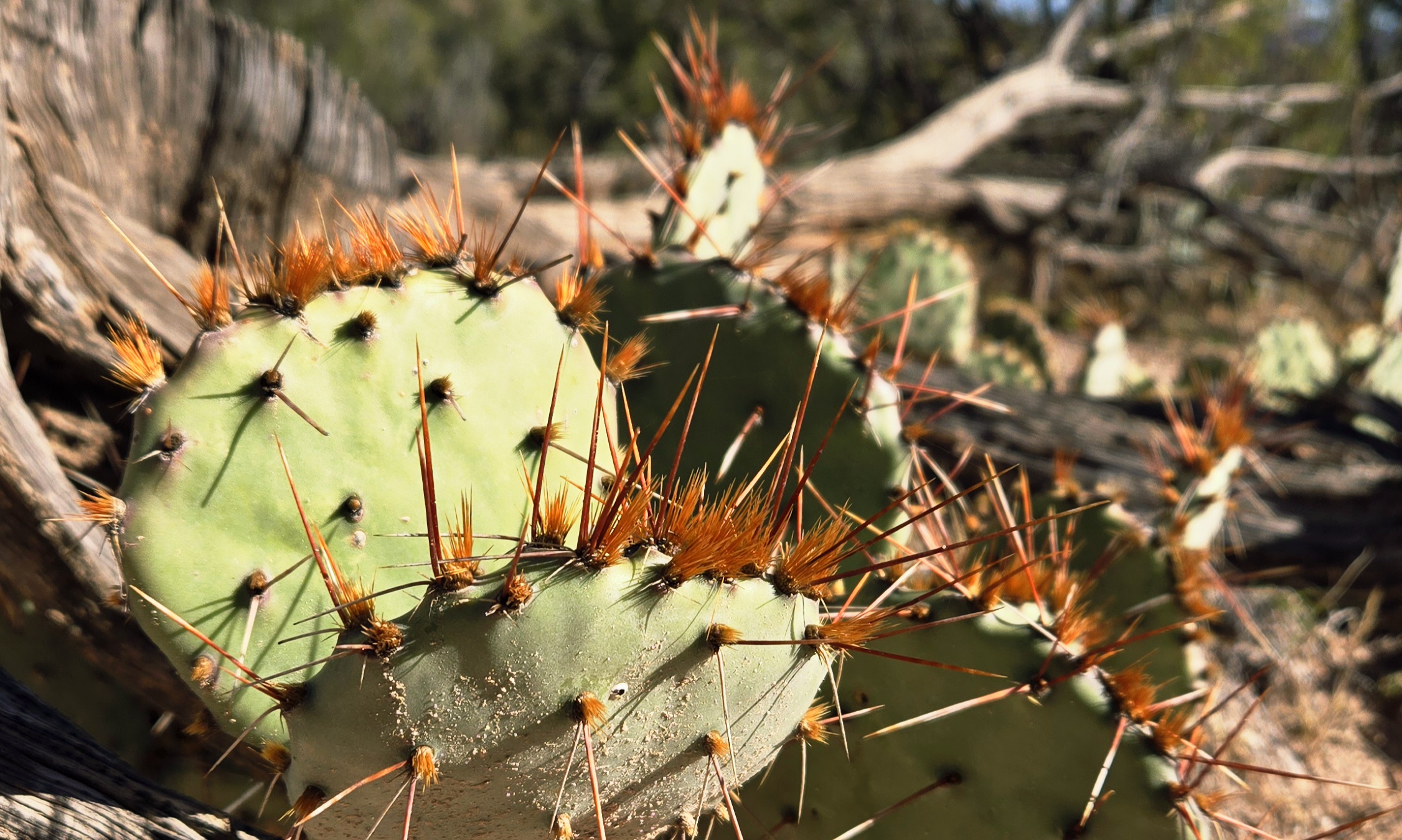
This prickly pear is so punk rock.
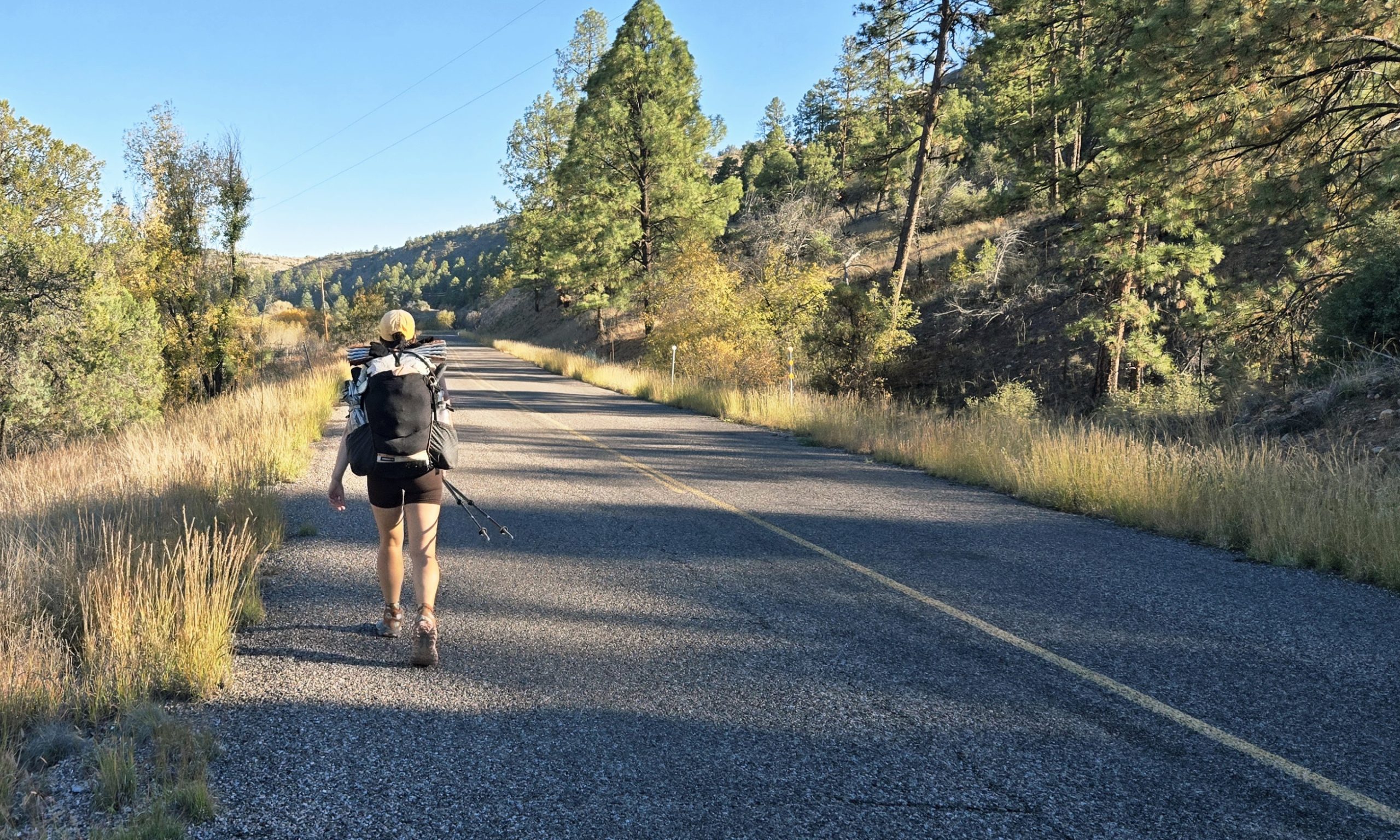
The paved road to Doc’s.
Symptoms of mild frostbite
That evening we stayed across the street at the Gila Hot Springs RV Park, where they let us pitch our tent in a large grassy area. To confirm my curiosity, I connected to the park’s wifi and looked up the symptoms of mild frostbite:
- Redness of the skin
- Sensations of cold, pain, or tingling
- Numbness
- After re-warming:
- red, pink, or blotchy skin coloration
- same sensations as above, but additionally burning or itching
- swelling
- fluid-filled blisters forming 12-36 hours after thawing
Official diagnosis
Well, we had all of those symptoms besides, thankfully, the blisters. Between Google and my extensive medical training history as a WFR (Wilderness First Responder), I feel qualified to make an official diagnosis. Yup, we had frostbite, or more specifically what’s known as “frostnip,” superficial frostbite which doesn’t result in permanent tissue damage.
I also read on Google that the first steps for re-warming are to use warm water (around 100 degrees) rather than dry heat. We were totally going on instinct sticking our feet in the hot springs, but apparently that was the right move! The pools were probably right around that temperature too, if I were to guess. I’m seriously SO grateful we had that resource available to us out in the backcountry. Don’t know what we would have done without it. And I’m grateful we only experienced the beginnings of a cold injury, and didn’t require medical attention or have any long-lasting effects from it.
For even more CDT photos, as well as video content, follow me @kellylevensen on Instagram!
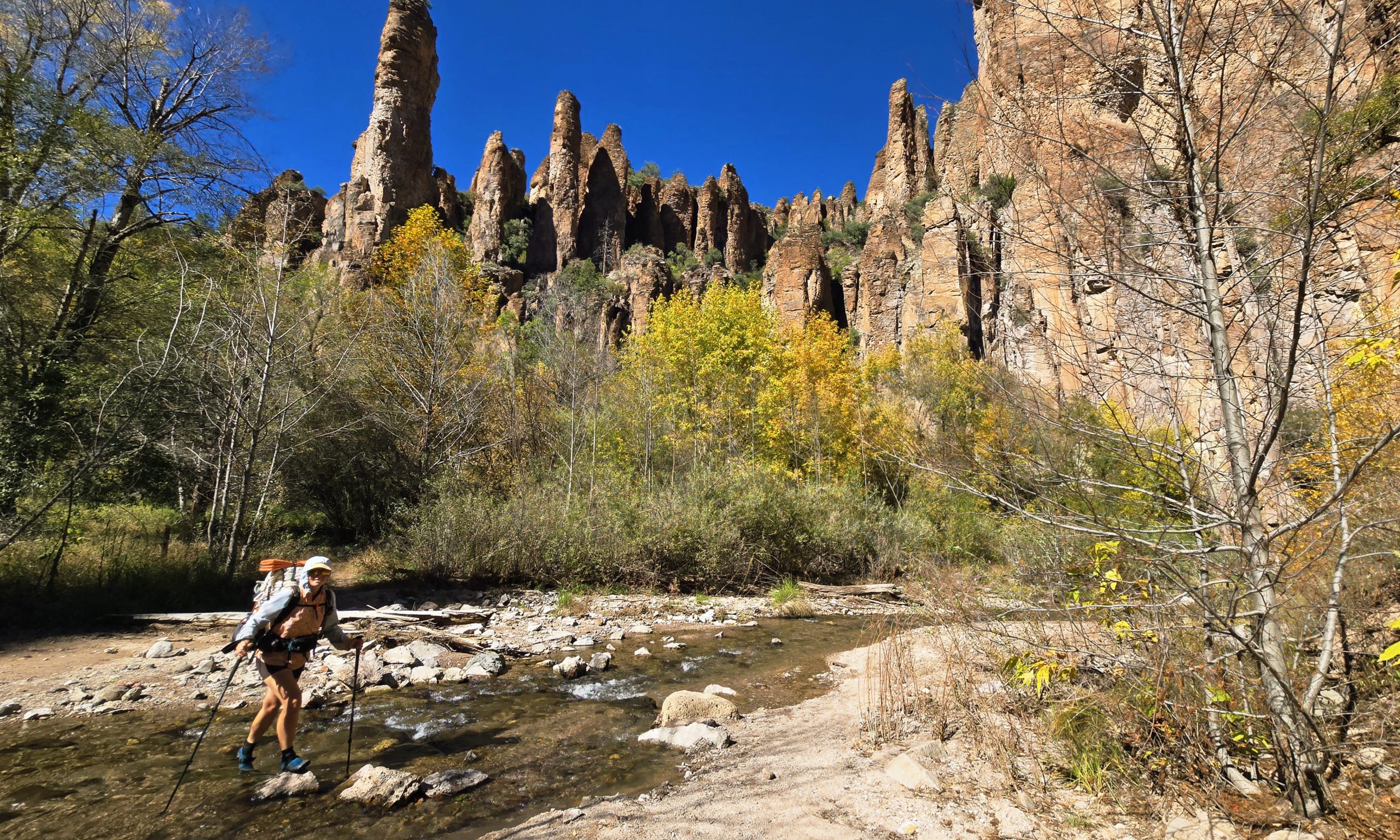
My favorite spot in the Gila – loved all the spires!

This website contains affiliate links, which means The Trek may receive a percentage of any product or service you purchase using the links in the articles or advertisements. The buyer pays the same price as they would otherwise, and your purchase helps to support The Trek's ongoing goal to serve you quality backpacking advice and information. Thanks for your support!
To learn more, please visit the About This Site page.
Comments 4
Dear TS, I’m SO glad you decided to wait to write your blogs until after you finished the trail. The stories you tell, the pictures you share, and your sense of humor make this one of my favorite TREK blogs this year. Thanks for making the winter months brighter for all of us who follow you!
Thanks so much for your kind words PJ! And thanks for following!
I agree with you, I’m very happy with my choice to blog afterwards. There’s no way I could have put this level of time and effort into them from the trail, without a laptop haha.
Hey lady, thanks for sharing. Sounds like a tough experience but you learned some things. What is a SOBO??? I’m new to hiking. I’m 63 and semi-retired and have never walked more than 10 miles in a day, but I would love to do a through hike. Do you ever work as a guide?
Hey Ann! A SOBO is a southbounder, someone that hikes a trail starting at the northern terminus and ending at the southern terminus. That’s exciting that you’re getting into hiking! I think anyone can do a thru-hike with the right preparation and attitude. I wasn’t very experienced either before I did my first one. I do not personally do any guiding, but I know there are plenty of others out there that do!