
 ">


What 800 Miles of Fart-Flavored CDT Cow Troughs Taught Me About Water Filtration
Most of my thru-hikes have been through areas with natural water I can only describe as delicious. My first trail was the Colorado Trail, where early-summer snow runoff gave me flowing streams and ice-cold, crystal-clear water almost the entire way. The same was true for the John Muir Trail.
So, when I set off on a NOBO thru-hike of the Continental Divide Trail, one of my biggest fears was the water conditions through New Mexico. I’d seen the fearmongering online about algae-filled, carcass-laden cow troughs and was truly worried I wouldn’t be able to force any of it down.
Luckily, in my opinion, most of the terrible water pictures from the CDT you see circulating online are the worst of the worst, and you oftentimes don’t even need to stop to filter from that source. Still, some tanks definitely left something to be desired, so I honed my filtering and flavoring strategies over 800 miles until I could get down a liter of cow-flavored water without thinking twice.
Here are 6 things I learned.
1. You Cannot Backflush Too Often
And no, backflushing does not mean you have to carry the syringe with you!
I found that sediment, algae, dead bees, cow poop, and other things I’d rather not think about built up pretty quickly in the dirty side of my Sawyer Squeeze water filter. However, I had great success backflushing just a little bit after each liter filtered using my water bottle’s sport cap, which snapped cleanly onto the top of the filter.
Every time after filtering, I’d flush one or two squeezes through my Sawyer, amounting to maybe a tablespoon or two of water. When I’d get to town, I’d flush more water through if I found a syringe in a hiker box. But even if I couldn’t, the constant backflushing using my regular water bottle on trail was enough to help my filter last my entire thru-hike with wonderful flow.
A quick backwash with a smart cap is enough to keep your filter flowing wonderfully for months. Photo via Katie Jackson
2. Electrolytes Are Great, Pure Sugar Flavoring Is Better
Obviously, there is a use case for electrolytes (shoutout LMNT), but when I’m not actively in need of more salt, I can’t say I personally enjoy salty water all that much.
Yet in some parts of New Mexico and beyond, drinking plain water meant resigning myself to some very cow-y tastes (I miss the days when I couldn’t tell you exactly what a cow pie tastes like). On top of the actual poop left by cows in the tanks, I also needed to contend with sulfurous, egg-flavored water, swampy water filled with algae, and metallic water with rusting pipes soaking inside.
Electrolytes didn’t do much to cover up those strong tastes, but other drink powders punched way above their weight. My two favorites were Skittles packets and fruit punch powders, both found in a Dollar General. Skittles packets tasted like a bunch of melted Skittles dissolved in your water, while the fruit punch, shockingly, tasted like very strong fruit punch.
Both were perhaps a little too sweet to necessarily taste good, but they certainly beat the taste of eggy, swampy, metallic poop water.
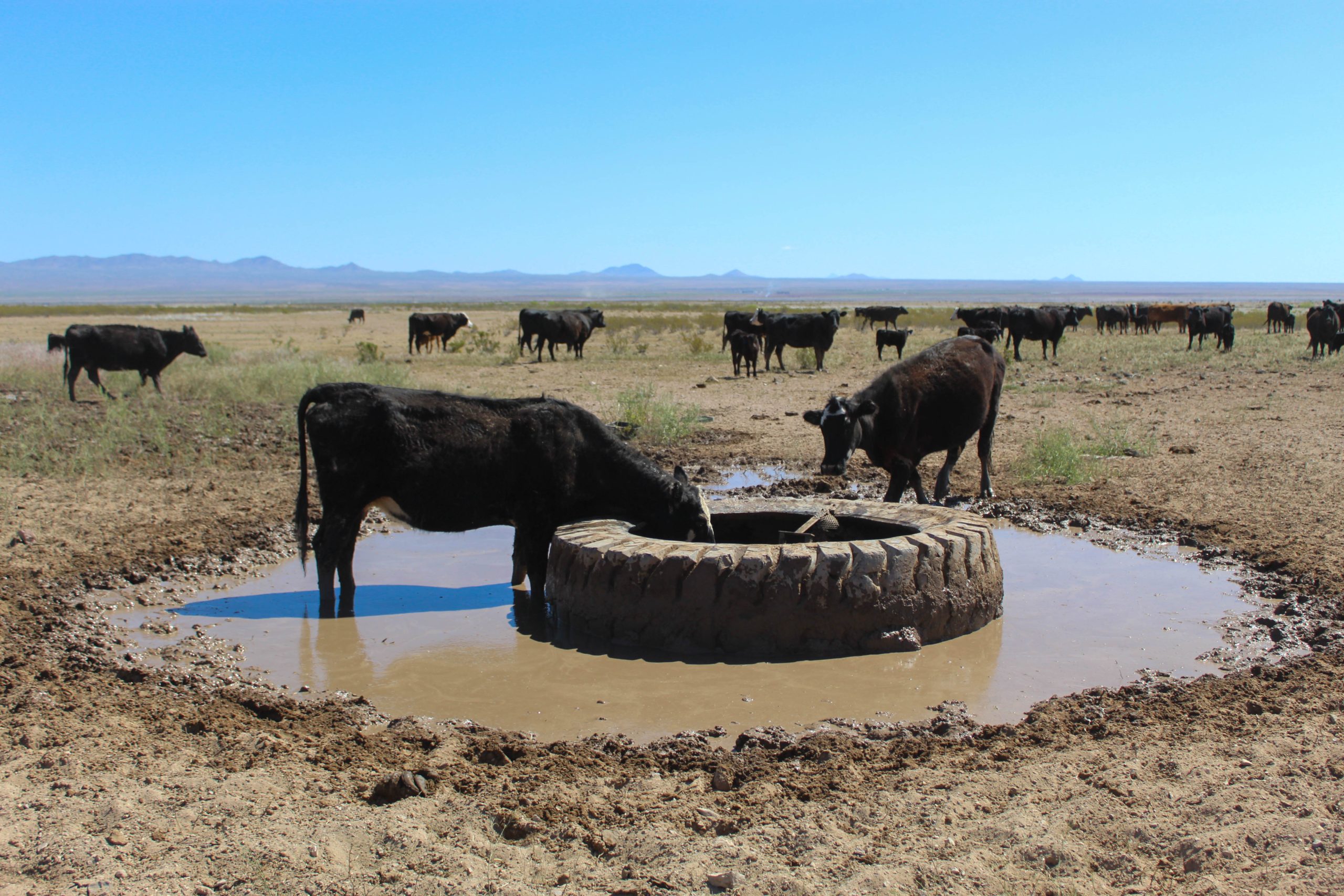
This water source in New Mexico got a good dose of Skittles powder before the first sip. Photo via Katie Jackson
3. Pre-Filter Your Super Dirty Water
Glacial sediment and algae are the two biggest culprits I’ve experienced when it comes to filter clogging. Sure, the Sawyer Squeeze (and other hollow fiber membrane filters) won’t let that stuff pass into your water, but the flow rate will reduce little by little until you’re squeezing as hard as you can just to filter a liter of water in 10 minutes.
The best thing I’ve found in these situations is a pre-filter, where I pass the dirty water through a coarser filter — like a bandana or small towel — before squeezing it through my Sawyer. The bandana catches the biggest chunks of algae and sediment before they even reach my filter, which helps it perform much better.
When you’re collecting your water, pull from the spot with the most movement, which is usually the feed pipe into the cow trough. If you just submerge a bottle or bag into the water, you’ll likely disturb any sediment and algae that has settled into the bottom and have a greater chance of it getting into your collected water.
I feel the need to pre-filter very rarely but, the handful of times I’ve decided to, I’ve known I’m measurably increasing the flow rate and lifespan of my filter.
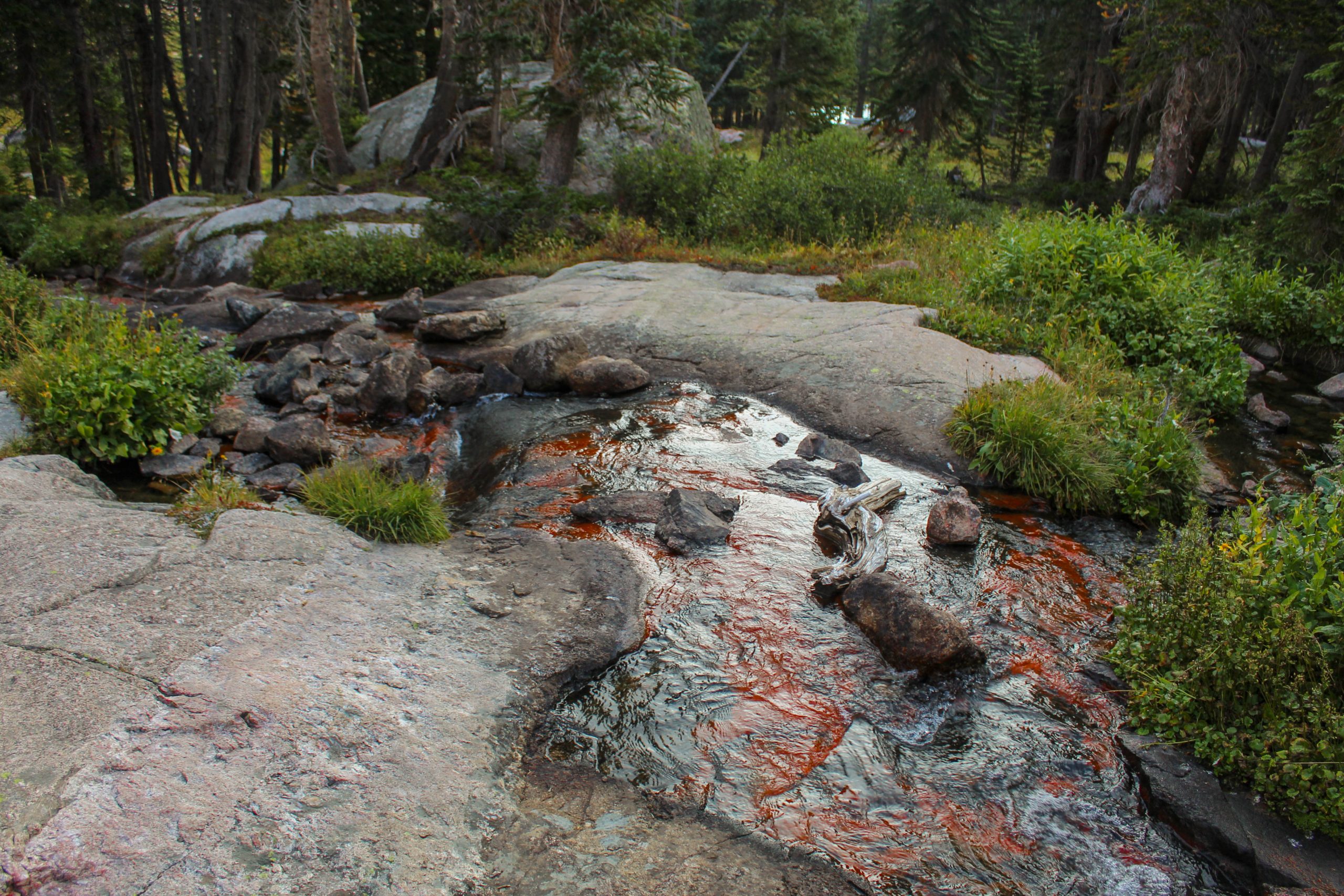
Some heavy sediment and algae are just waiting to gunk up the base of your filter. Photo via Katie Jackson
4. Camel Up and Skip Gross Water Sources
If you’re prepared for a long water carry, you just may be able to skip the grosser water sources!
Especially when maps like FarOut let you see the most up-to-date comments on water sources, you sometimes know when you’re coming up on a particularly grim water situation. On the CDT, I would usually choose to skip water sources when the comments told me about actively decomposing animal carcasses in the tanks, for instance.
Some of this comes down to knowing how much water you should be carrying, and some of it comes down to the art of the camel. When I knew I would have a long (25- to 35-mile) stretch without water, I would drink two full liters at my final water source, fill two more to carry with me, and make a beeline to the next water source I did want to drink from.
This ensured I’d take in four liters of water between the two sources, which was usually enough for me to skip a water source for me on the CDT. However, this strategy depends heavily on your water needs, the temperature, your pace, and the reliability of water sources. Make sure you’re confident in the choices you’re making before choosing to pass by a water source.
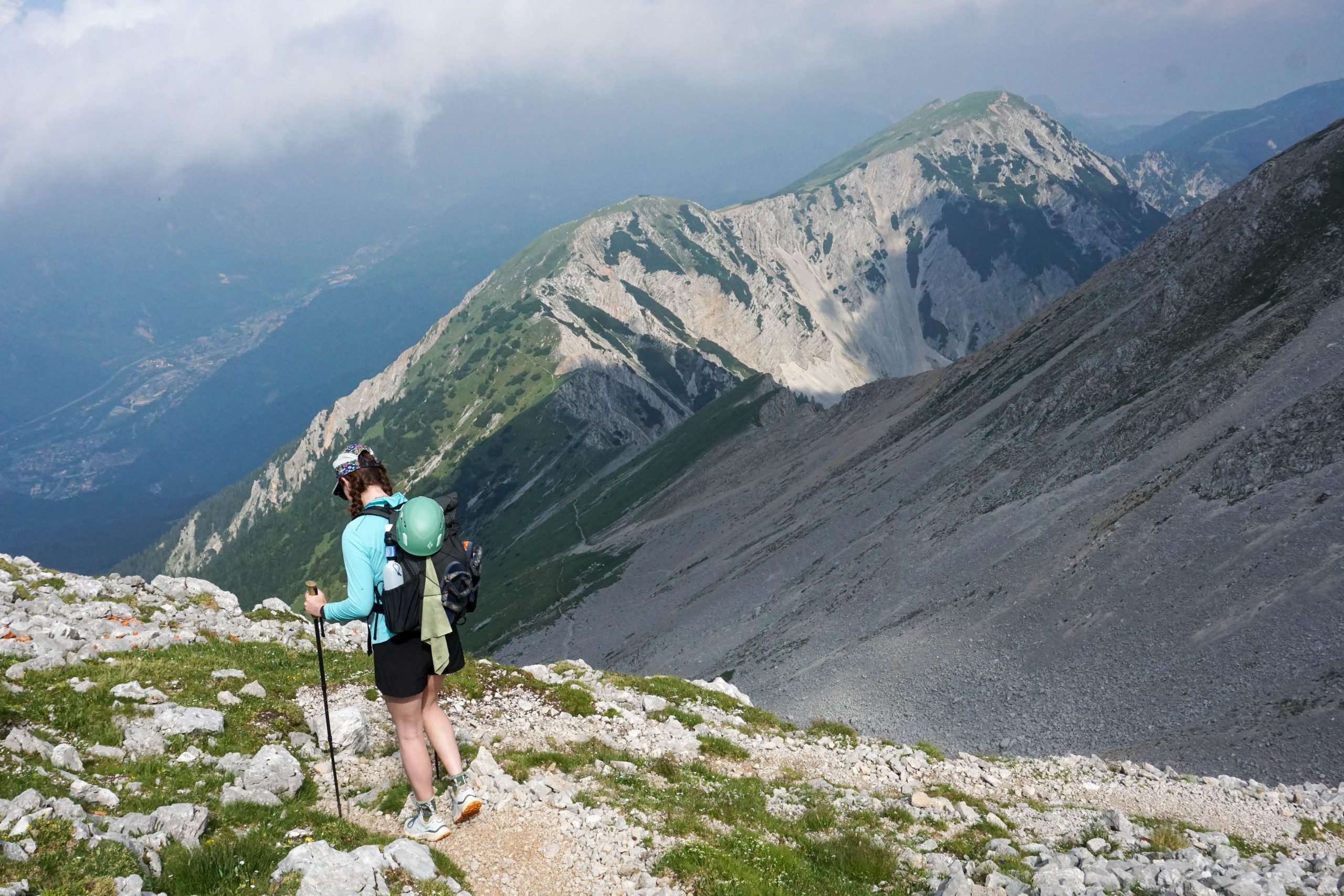
Figuring out your personal comfort level when it comes to how much water you carry with is an individual process that comes with experience. Photo via Katie Jackson
5. Trust Your Filter (And Carry A Backup if You’re Worried)
If you’re using a water filter like a Sawyer Squeeze, Platypus Quickdraw, or Katadyn BeFree, you should feel confident in the filter’s ability to keep you from getting sick. Both the Sawyer Squeeze and Platypus Quickdraw have a pore size of 0.1 micron, while the Katadyn BeFree has a pore size of 0.2 microns.
All three filter out 99.99999% of bacteria, 99.9% of protozoa (including giardia), and microplastics/sediment pieces larger than the pores.
None of the filters will remove norovirus or other viruses. However, waterborne viruses are exceptionally rare in the North American backcountry. The vast majority of norovirus outbreaks on our long-distance trails every year come from person-to-person contact and contaminated surfaces, not from drinking contaminated water.
Personally, I exclusively carry my Sawyer Squeeze as my filtration method and do not feel the need for additional purifiers. Of course, treat your filter kindly by keeping it in your quilt when temperatures risk dipping below freezing in order to keep it fully functional.
Still, the tabs don’t weigh much or take up much space. If you are at higher risk should you contract a waterborne illness, are hiking in an area known for waterborne viruses, or simply want peace of mind, don’t let me talk you out of carrying both a hollow fiber membrane filter and a chemical or UV backup treatment method. Whatever keeps you on the trail and off the toilet is best.
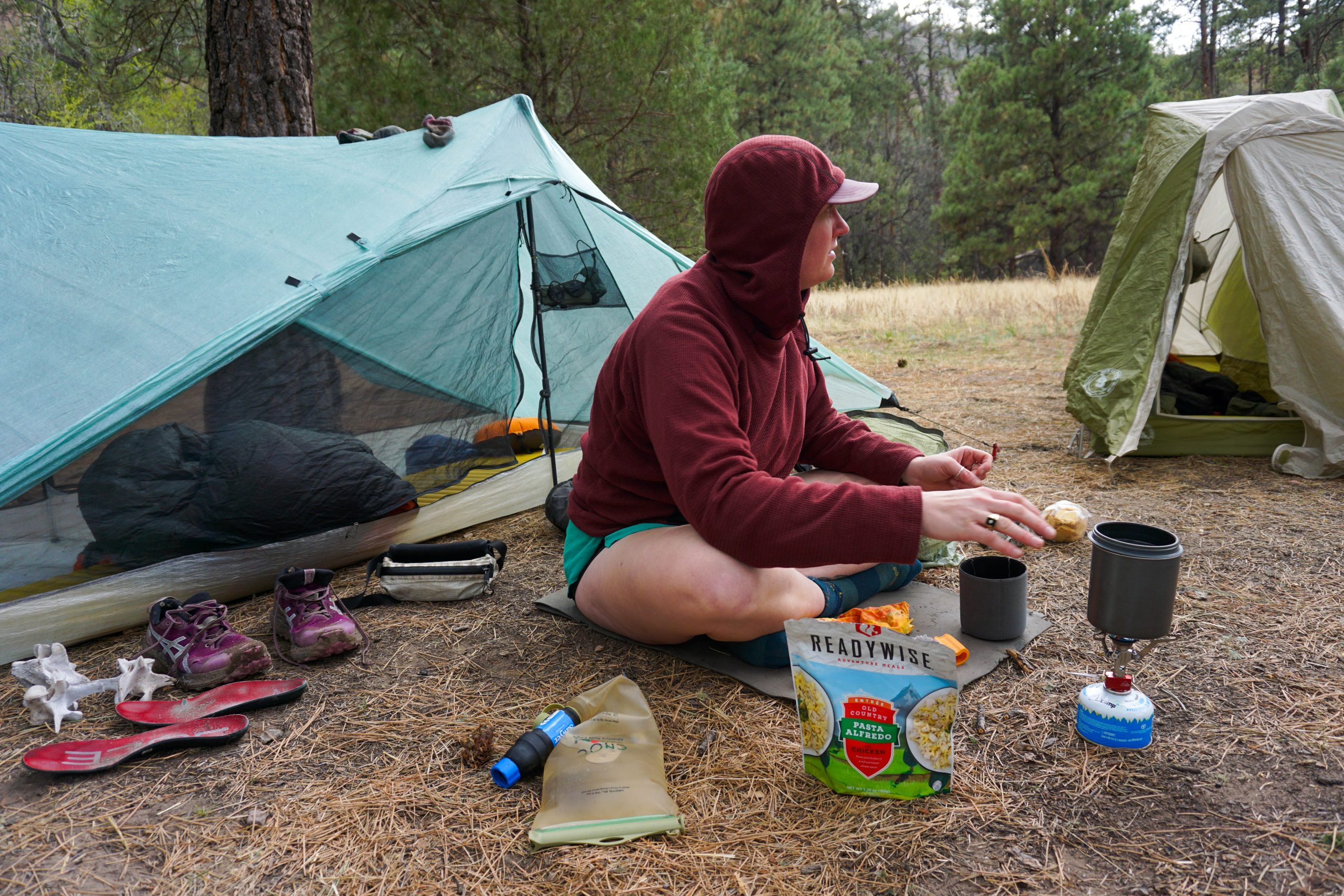
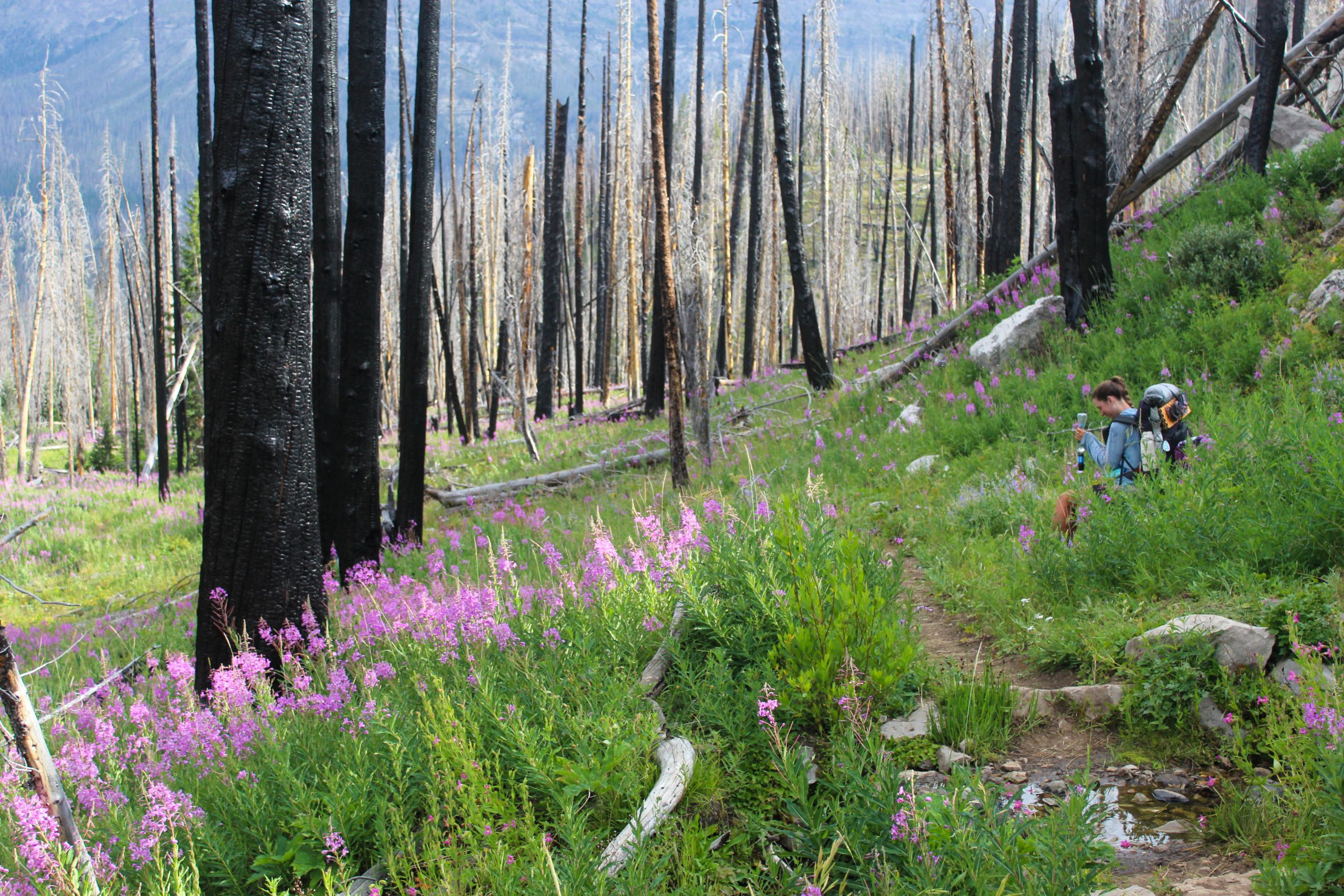
If you only have a hollow fiber membrane filter and are worried about viruses, boiling is a great way to make sure your water is safe. Photo via Katie Jackson
6. Remove Sulfur Smell And Taste From Gassy Water
One specific water source on the CDT had a FarOut comment describing it as “particularly eggy.” My own comment said, “water is… herbaceous.” A text I sent about this source read, “Even after filtering it tasted like someone ate a plate of scrambled eggs and then farted 1 million times.”
You get the point, I’m sure.
This rotten-egg flavor comes from dissolved hydrogen sulfide gas, and you can actually get rid of a lot of it instead of masking it with strong powders! Fill your bottle but leave some headroom at the top, shake the water as hard as you can for a bit, and let the bottle sit with the cap on.
I won’t bore you with the specifics, but thanks to Henry’s Law, this gas does not want to stay inside the water. Shaking the bottle lets the gas rise to the surface of the liquid into that empty space at the top of the bottle. When you open the cap, the gas will release into the air.
This works not only for sulfur-y water, but also for water that tastes super chlorine-y, methane-y, or like any other gas trapped in the water instead of chemically bonded to the water molecules.
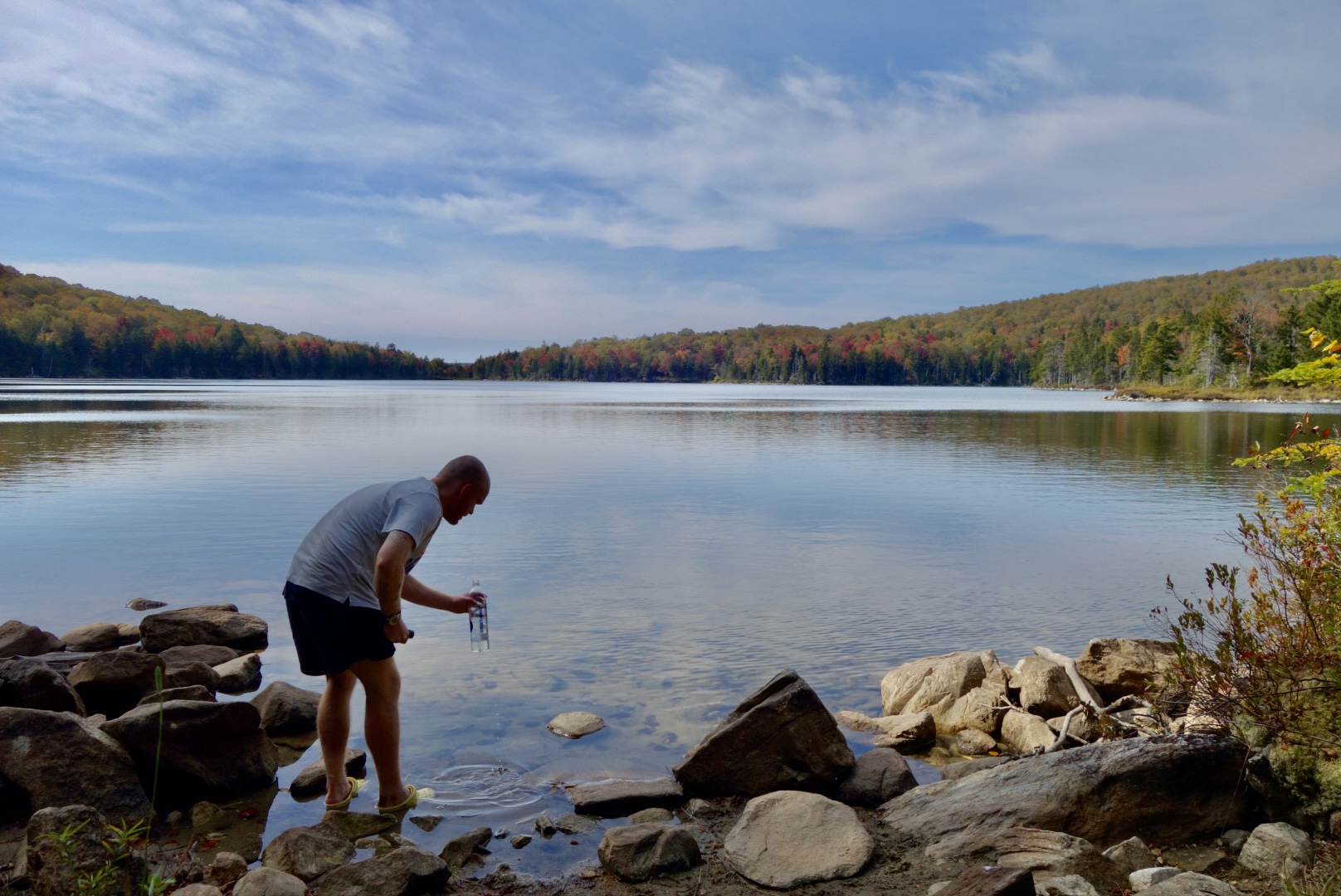
When water tastes bad, I have a really hard time staying hydrated. Photo via Katie Jackson
If you’re walking far enough, odds are that you will encounter some water that you don’t want to drink. I can’t give you tips to make it magically cold and refreshing, but hopefully some of these will make the worst of the worst a bit more palatable.
Happy hiking!
Featured image: Photo via Katie Jackson. Graphic design by Mackenzie Fischer.

This website contains affiliate links, which means The Trek may receive a percentage of any product or service you purchase using the links in the articles or advertisements. The buyer pays the same price as they would otherwise, and your purchase helps to support The Trek's ongoing goal to serve you quality backpacking advice and information. Thanks for your support!
To learn more, please visit the About This Site page.

Comments 3
Just curious why you wouldn’t back flush your filter ALL the time with your water bottle’s sport cap i”rather than using a syringe? And how realistic is it on such a remote trail like the CDT to randomly “find a syringe in a hiker box?”
Great tips! Thanks for taking the time to share!
Definitely a lot of back flushing on the AZT and CDT. I carried a Sawyer Squeeze AND a supply of 5-10 Aqua tabs. The Aqua tabs were a backup in case my Sawyer filter broke or if the water source had possible viral contamination. My Sawyer filter broke in half in the Wind River Range and I still don’t know how. Glad I had a backup. On the AZT I used Aqua Tabs in filtered water a few times because of dead birds in or near the water.