
 ">


Controversial and Hotly Debated Points of Trail Etiquette
Like any community, the hiking world has its unwritten rules, and people love to debate them. What one hiker sees as basic courtesy, another might find completely over the top. After many miles on various trails and a lot of thought about how we all can share these spaces harmoniously, I’ve gathered a list of the most contentious guidelines and their generally accepted best practices.
Who Has the Right of Way? Uphill vs. Downhill
This is a classic discussion, one I’m sure you’ve heard debated before. Generally, hikers going uphill have the right of way. Why? Because it’s harder to stop and restart when climbing. Hikers going downhill usually find it easier to pause, step aside, and get going again. That being said, you should use good judgment in these moments!
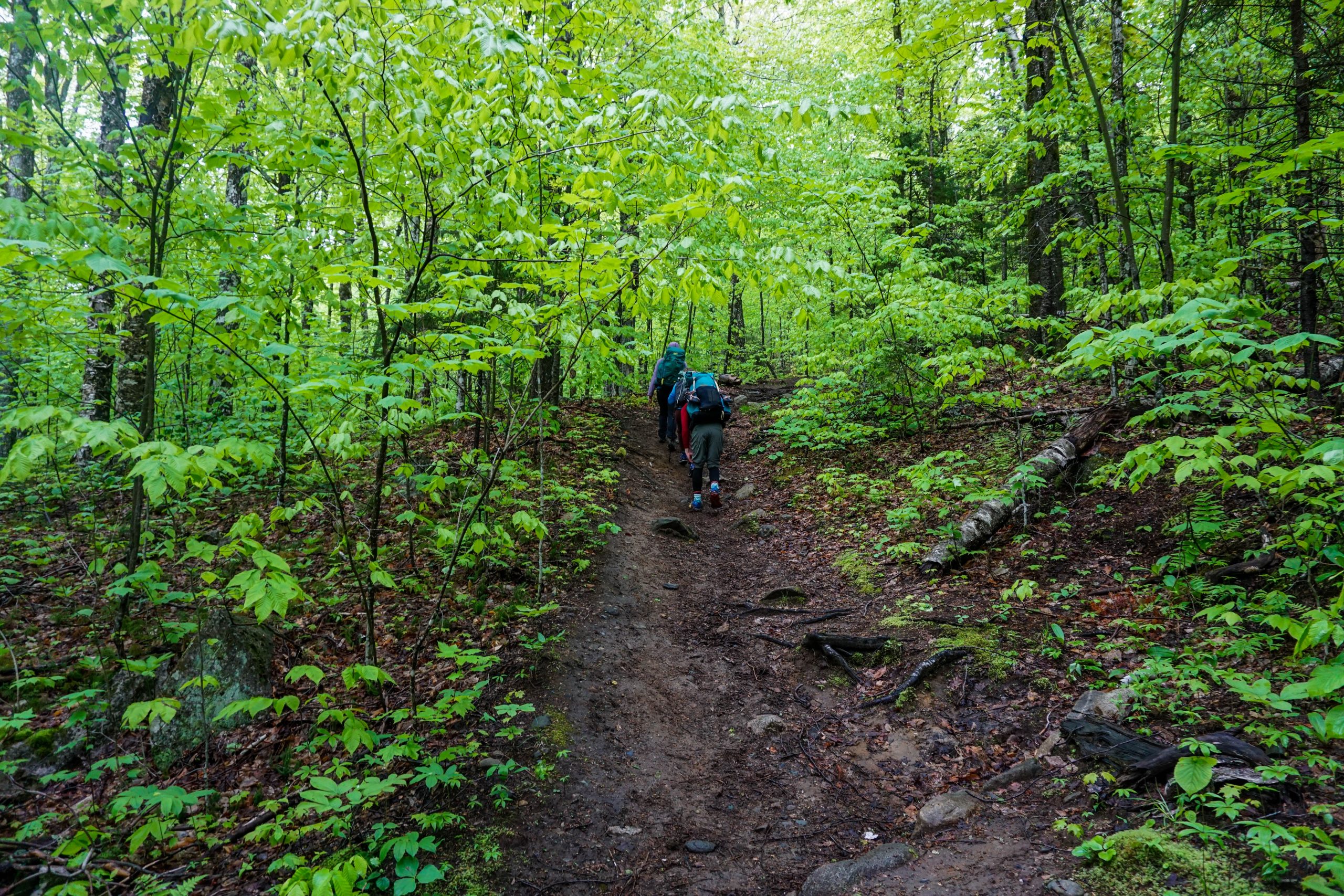
We can all picture the frustration of losing your uphill rhythm when a downhill hiker doesn’t step away to let you pass.
If a downhill hiker is struggling, or an uphill hiker stops for a break and waves you past, adapt. If the trail is wide enough for people to pass side by side, feel free to keep walking! The goal is to keep everyone moving, not to follow rules too strictly.
Personally, I always step aside for downhill trail runners when I am moving uphill. Technically, according to etiquette, I should not have to do this, but I find it much easier to let them blow past me while I take a moment to catch my breath!
Bikers Yield to Hikers and Horses, Horses Yield to No One
This order of yielding is pretty standard and helps keep everyone safe, especially when it comes to not startling animals.
Hikers and bikers should both always yield to horses and other pack animals. Step off the trail on the downhill side if you can, so that the animal will not be scared towards a drop-off. Don’t make sudden or aggressive movements as the animal passes, and try to avoid stepping in any new poop for the rest of the trail. That last one’s not etiquette; It just feels smart.
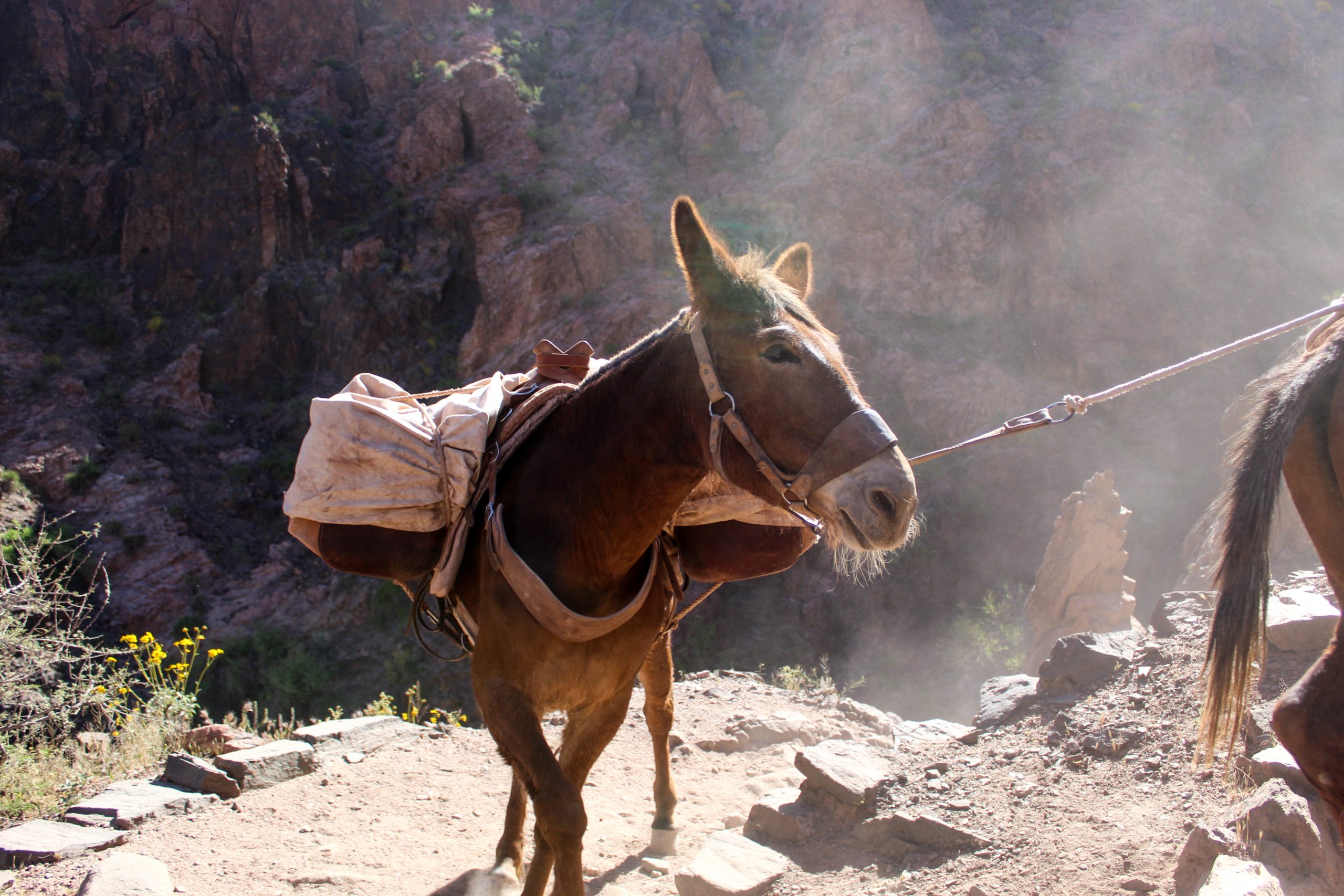
No one wants to play Red Rover with an animal!
Biker guidelines are where things get heated. Bikers should be yielding to hikers on the trail, and need to be riding at a speed and with a level of control that will always allow them to do this. Much like I do for trail runners, I do typically step off the trail for bikers, as I think it’s far easier for me to stop for a second than it is for bikers to stop, get off their bike, and drag everything over to the side of the trail.
That said— nothing enrages me more than an out of control biker blowing past me on a trail without any prior warning or effort made to slow down. Most hikers will stand aside for bikers, but they do not have to, and bikers must always be prepared to yield to hikers, announce their presence, and pass safely.
I Do Not Want to Hear Your Music
Want to start an argument? Just bring a portable speaker on the trail. For many, including me, the sounds of nature are a big part of why we’re out there. Playing music out loud, no matter your taste, ruins that natural sound for others. If you want to listen to music, that’s fine, but that music should be heard only by you. Bring good headphones if you want music, and let everyone else enjoy the peace and quiet they hiked in for.
You Must Leash Your Dog Unless Explicitly Stated Otherwise
I love a good trail dog, but the leash rule is important for wildlife, other hikers, and the dogs themselves. Your dog needs to be on a leash on most multi-use trails and in national parks/forests, unless signs say otherwise. An off-leash dog, even if it’s well-behaved, can still chase wildlife, scare hikers, and get into some dangerous terrain themselves.
Even if your dog doesn’t bite the wildlife, they still can have a very negative impact. For example, in fragile alpine environments, off-leash dogs are known to startle pikas to the point of stress-induced death. These small, sensitive creatures rely on every moment of their short summer to gather food, and being repeatedly scared off can quickly deplete their energy reserves.
Dogs are required to be on leash in almost every National Park, if they are allowed in at all.
Wildlife can be just as dangerous to your dog as your dog can be to wildlife. An unleashed dog can wander into an encounter with a coyote, mountain lion, or a protective moose or elk. Even smaller animals like porcupines or skunks can inflict painful injuries.
Beyond wildlife confrontations, dogs don’t have the terrain knowledge many hikers have, and can easily have a devastating accident. Just a couple of years ago, a dog fell 600 feet off a cornice on Torrey’s Peak, an incident that could have been avoided if the owners had leashed the dog as required.
It’s also incredibly rude to assume everyone wants your dog running up to them. Some people have allergies, others have a fear of dogs, and some simply prefer not to interact. An unleashed dog running towards a stranger, no matter how friendly you know them to be, is not a fun situation. I’ve lost count of how many times dogs have run at me on trails while their owners make weak attempts to call them back before offering a casual ‘he’s friendly!’.
If the trail does not explicitly state that it is for off-leash dogs, your dog needs to be on a leash.
Muddy Patches: Stay on the Trail!
Your first thought when hitting a muddy spot or puddle on trail might be to walk around it to keep your shoes clean. However, Leave No Trace guidelines would ask you to not walk off the trail! This seems harmless, but if many hikers do it, it creates a wider, eroded path that damages fragile plants and dirt.
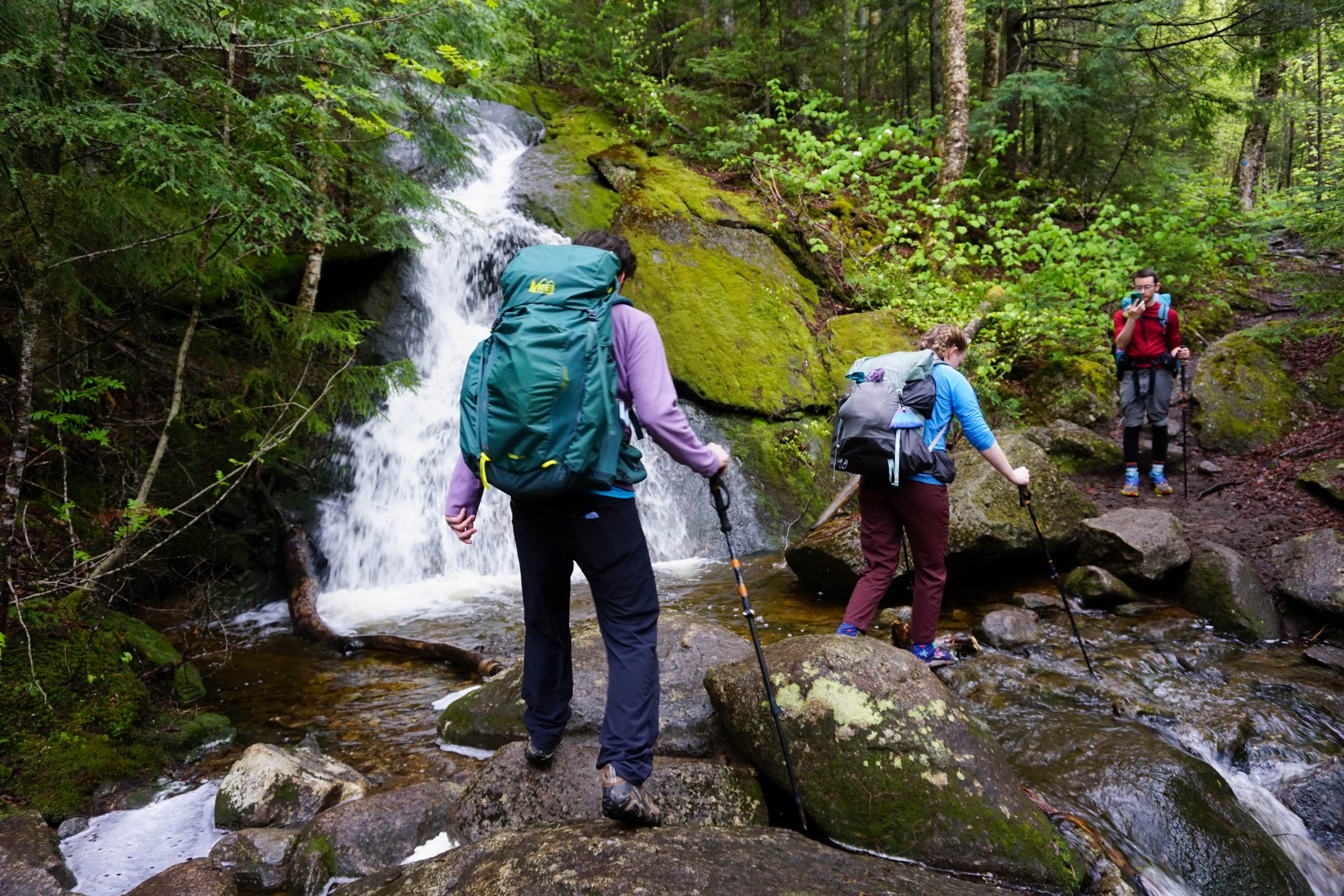
Embrace the probability of your imminent wet feet.
This practice, often called “trail braiding,” widens the trail unnecessarily, impacting more of the natural landscape and increasing erosion. It destroys vegetation alongside the path and can take years for the ecosystem to recover. Instead of widening the trail, walk straight through the mud or puddle. Embrace it! That’s what hiking shoes are for, and it’s far better for the trail.
Pack Out Food Scraps – Even Orange Peels!
Some hikers think “natural” food scraps like banana peels or orange rinds will just disappear. They will, eventually, but not quickly. In a compost bin, peels and rinds take from 1-6 months to disappear but, thanks to typical temperatures, humidity, and oxygen/nitrogen contents, they will last much longer on a trail. Banana peels can take up to two years to break down, while orange peels can persist indefinitely.
While lingering, they attract wildlife, teaching animals to rely on human food, which can be detrimental to their health and natural behaviors. Furthermore, introducing foreign organic matter can subtly change the natural balance of the soil. Some trails see millions of visitors every year, and these small changes add up to some pretty major consequences!
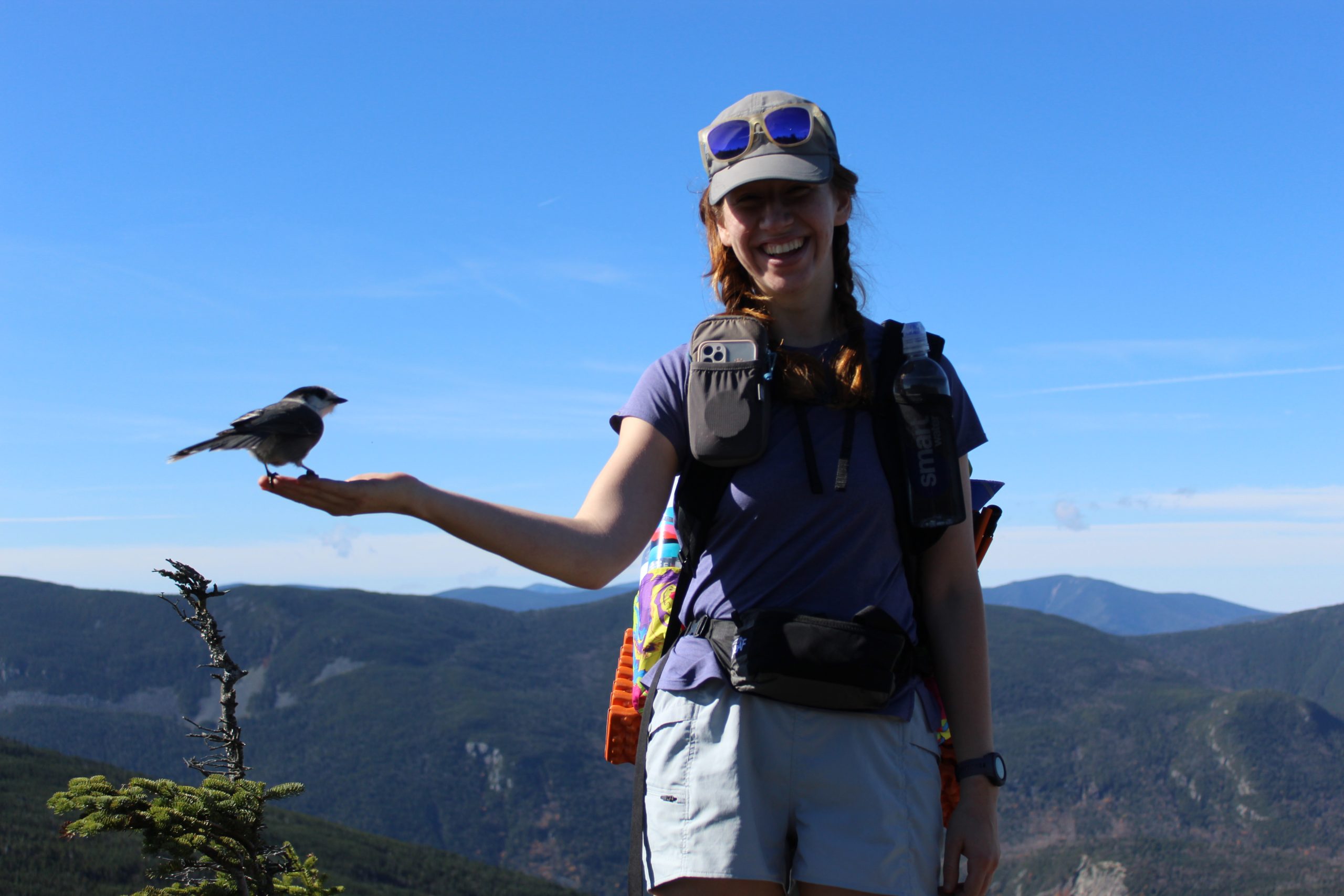
Gray Jays in New Hampshire are so accustomed to being fed that they will come land in your empty hand.
You must pack out every single food scrap, no matter how natural it seems. That includes nut shells, fruit peels, and anything else you brought with you. Leave no trace means leaving the trail just as you found it!
To Sum It Up
While I’d hate to sound like a cairn (ha ha), following these super simple guidelines helps ensure everyone can enjoy their time in the outdoors. Through collective action, our impacts on the landscapes around us build quickly, and it’s important to be mindful of this when spending time in them.

This website contains affiliate links, which means The Trek may receive a percentage of any product or service you purchase using the links in the articles or advertisements. The buyer pays the same price as they would otherwise, and your purchase helps to support The Trek's ongoing goal to serve you quality backpacking advice and information. Thanks for your support!
To learn more, please visit the About This Site page.

Comments 17
Great article! A couple things occurred to me as I read your excellent points. Concerning the right of way issue: as an ex horse rider, I encourage everyone (particularly cyclist) to make noise to make sure that horses are not startled by your sudden appearance on the trail behind or in front. You do not want to share the trail with a spooked horse.
Detail item on the LNT: I live in the Sonoran desert. In many desert ecosystems there is insufficient moisture to sustain the bacteria and other critters that break down organic waste (e.g.: orange peels). That stuff will mummify, but it will not decay. Pack it out.
Music on the trail. A couple years ago, my daughter and I were on the Glen Boulder Trail (a non AT trail on Mt
Washington in NH), when a couple came up behind us with a boom box. Cranking it.
There are SO many people who ought to read this article.
But have a statistical chance of zero of doing so.
I loved everything about your article, except the picture at the end. I feel it perpetuates an unhealthy relationship with wildlife. While your hand may have been empty, photos like this encourage others to feed birds just for the photo op, which is exactly why the jays have become so habituated. It’s a vicious cycle. It’s not good for them and turns them into obnoxious pests. Otherwise, truly you make terrific points. I want to hand out a copy of your piece to everyone I pass playing music, but I doubt they’d care.
Thank you for this, espceially with 1 since that can require some good wisdom to work with.
Regarding mud: Yes go through it and if that annoys you reach out to the local trail stewards are suggest adding rocks, planks, or something else to keep out of the mud.
Regarding dogs. All this and dog waste either being left in the woods without burying or people bagging it and leaving it by the trail. WTF!
Regarding music: This is a hard one. Mainly because we have a certain view of how to engage with the wilderness and a bluetooth speaker isn’t it. For us. But in many other parts of the world, even here, getting out into nature is a social activity and music is part of that social activity. And now that smartphones are ubiquitous among all hikers it makes it easy for everyone.
So a certain amount of tolerance, and cerain amount of education, and a going after egregious examples, see above for the boombox, kindly and firmly will all be required. Basically the wisdom shown in regards to who has right of way on a hill is needed here as well. Because these speakers are not going away.
I agree with every sentence – well done!
A nuance is that among runners, the downhill runner has the right-of-way (even though guidelines written by non-runners don’t say that). This is vital in races – when someone is moving down a technical trail, they can’t readily change their line.
And like you, I always step aside for cyclists – why not? – i can do it w/o breaking stride while they have to completely stop.
In addition to the dictum against external speakers for music – inexcusable, as ear buds work great – I would add perfume to the “don’t bother everyone else list”.
Bottom line: Courtesy is Contagious.
Especially the MUSIC. Blow your brains out using YOUR earphones. Also, being of the male persuasion, I notice this. In my experience so far, it is other members of the male persuasion blasting the noise machines.
3 issues that I’m sure we’ve all run into – marijuana, & huge tramilies. Honest to goodness, smoke whatever you want, I don’t mind. Most people are very polite about this, but some, not so much. Example: the bong smokers at Sarver Hollow at 9 pm. Hacking/spitting/bubbling/loud conversation while there were actually hikers in the shelter trying to sleep. Imagine that….. Yes, I acknowledge they were likely weekenders. Moving along….
Huge tramilies – one ran me out of a shelter in the Shennies a couple years ago. They filled the tent sites, they took over the shelter, the picnic table, the water source, all of it. Of course, there was a lot of alcohol involved (waysides). Yeah, I don’t even know what to say about that. It was heinous, though. I had to pack up and move on the shenanigans were so intense.
Headlamps – It’s usually a good thing to learn how to use your headlamp before you blow someone’s pupils out with your high beam. At least, cover it up until you get the red light working.
Thanks in advance,
Everybody 😉
I meant 3 issues, not “2”. Sorry….don’t know if I can go back to edit.
I would add one thing about horses; it’s a good idea to talk in a calm voice to the horse riders. Sometimes when you step off trail, the horse may not notice you until close, it can startle the horse.
Great article. Confession time: I find it hard to stay on trail when it’s very muddy, especially when wearing trail runners. I do try to stay on the outer edge of the mud. But even so, I realize I am contributing to the widening of the trail. I will try to do better. : )
I’m with you for the most part, but some things need to change.
1. Horses. Screw them. I have lived in Montana for all my 45 years and I hate them (and a lot of the idiots on top of them) with a passion. Thanks so much for covering the trail in piles of poop. You really should just leave it for everyone else to enjoy. I’m so happy that you can carry a big cooler and leave piles of beer cans in a fire pit.
2. Bikes. We’re starting to see problems with hikers on downhill only mountain bike trails. Around Helena things are generally pretty friendly between the two groups (probably because a lotofus do both?), but in other places it’s getting more dicey.
Our Maine and New Hampshire hiking trails have with a few exceptions, thoughtful users. There are a few trails that appeal to the beer and boombox crowd but not many. Biggest problem is loose dogs- it is so common. I knowingly chuckled when the author mentioned the usual communication of “he (or) she is friendly”! Sometimes the dog arrives well ahead of the owner. Loose dogs do not bother me much. Most of my hiking is volunteer trail maintenance. I am armed-shovel, axe, saw. It is the owners who bother me. Probably time the USFS, RMC and AMC be more proactive on dogs on the trails. Then there is the whole other issue of them drinking and walking in water sources. Thanks for your article.
I have a nitpick. Hikers should always yield to bikers who are going uphill. The difficulty of getting started again going uphill on a bike is much more challenging than when hiking, and in some instances it may actually be impossible to restart.
I don’t fully agree with continuing to use a trail that is badly eroded; doing so simply creates even more damage. ” it’s far better for the trail.” I really don’t think that is true. What walking on the side does is make the whole thing bigger, or create multiple pathways. But trying to hike in a 12 inch deep rut in mud is not safe (I got a concussion doing this!) and simply makes the trough deeper, exacerbating the issue. Trail crews need to be actively working on these areas if the goal is to improve or preserve the existing trail.
While hiking the PCT, a fellow thru hiker who shared the same pace as me, had his music going so everyone and everything in the vicinity could enjoy it. After a couple hours of somewhat successfully subduing my annoyance, I finally stopped him and calmly asked if he wanted to borrow my earphones. I clearly remember tho look in his eyes as it dawned on him. He learned a lesson, and I gained a friend; we shared hundreds of miles together on that adventure. When it was time to part ways, I somewhat sadly asked him to return my earphones. Im now wondering if I should carry an extra set of earbuds to donate for such an occasion on future long trails.