
 ">


Do Thru-Hikers Get First Dibs on AT Shelters? And Other Controversial Shelter Etiquette Rules
Sleeping in the shelters on the Appalachian Trail can be a wonderful experience. If it’s rainy, incredibly windy, or you’re just too tired to think about setting up your tent, three walls and a roof can feel like a mansion.
With this convenience comes a shared responsibility to respect the shelter and your fellow hikers. Just as you wouldn’t kick off your muddy boots on someone’s dinner table, there’s an unspoken code of conduct that keeps the peace (and keeps you from being that hiker).
Should snorers be allowed to sleep in the shelters? Do thru-hikers get priority? Is it ever OK to cook (or pitch your tent) inside? In this post, we address some of the most common questions about Appalachian Trail shelter etiquette.
5 Controversial Appalachian Trail Shelter Etiquette Rules

The Priest Shelter in Virginia. Photo: Ian Gray
1) The Early Bird Gets the … Space. But Don’t Be a Hog
Yes, arriving early can secure you a prime spot. But don’t spread your kit across the entire floor if others are still coming in. Condense your gear to your personal sleeping area. If the shelter fills up, be prepared to make room, even if it means shifting a bit closer to your neighbor. And definitely don’t be that person who sets up their tent inside the sleeping area. Remember, shelters are a shared space.
On two separate weekend trips to the White Mountains, I have been woken up and asked to leave the shelter by groups of thru-hikers. I would think this goes without saying, but thru-hikers do not have priority claim to space within a shelter! If you arrive at a shelter and the space has been filled, it’s time to head outside and set up that tent.
Ed. — Having spent a lot of time hiking on and writing about the AT, I can confirm that a surprising number of thru-hikers believe there is some official rule that grants them priority shelter access. PSA: there is not.

I promise— it is not that bad to just go out to a tent pad and set up your tent.
2) Mud Is the Enemy
Your boots, your pack, your person – they’re likely covered in trail grime. Try to knock off as much dirt as possible from your gear before bringing it into the shelter. If you have camp shoes, change into them and either hang your hiking shoes or leave them outside where no one will trip over them. Nobody wants to sleep in a dirt pile. (Most shelters have a broom or brush you can use to clean up any debris that you do track in.)
This also goes for anything else that’s seen a lot of trail time, like trekking poles or wet rain gear. Give them a good shake and try to store them outside rather than cluttering the already limited interior space. A little effort goes a long way!

Most shelters have a broom to help users keep the area clean. Photo: Jill Lapham
3) Quiet Hours are Sacred
This is perhaps the most violated, and most crucial, rule. Generally, 9 p.m. to 6 a.m. are considered quiet hours. This means no loud conversations. Whisper, or better yet, save the deep philosophical discussions for the hike out in the morning.
Use your red light setting on your headlamp if you have one, or keep your white light pointed away from faces. Blinding someone with a full-beam headlamp at 3 a.m. is a quick way to earn an enemy.
Try to organize your gear before dark so you’re not rummaging through crinkly bags when everyone else is trying to sleep. If you’re arriving or departing in the dark, just do your best to minimize noise and disruption.
And while I know this can be a touchy subject, I firmly believe that if you’re a known heavy snorer, you should consider sleeping in your tent. Light sleepers should carry earplugs for sure, but I can’t imagine knowingly keeping up an entire shelter because I just didn’t care to set up camp while on a backpacking trip.

Tumbling Run Shelter in Pennsylvania even has a separate structure for snorers. Photo: Kelly Floro
4) Cook Outside, Eat Outside
Unless it’s pouring rain and absolutely unavoidable, do your cooking outside the shelter. The smell of rehydrated chili mac lingering all night isn’t pleasant, and crumbs attract mice (and bears, if you’re in a busy section!). This also applies to eating strong-smelling snacks. Pack out all your food waste, even tiny crumbs.
Cooking and eating inside shelters can create behavioral problems for wildlife. When animals associate shelters with easy access to human food, they become habituated, which can lead to aggressive encounters and, unfortunately, may result in the animal having to be relocated or even euthanized.

Many shelters have picnic tables where you can comfortably cook and eat outside the sleeping area. Photo: Pot Luck
5) Hang Your Food! Leave No Trace Still Applies
This is non-negotiable. Whether it’s on the bear cables provided or via a proper bear hang, your food (and anything with a scent, like toothpaste or sunscreen) must be hung away from the shelter. Mice are rampant in shelters, and bears are curious. Don’t be the reason someone’s gear gets chewed up by a rodent or a bear gets habituated.
Pack out everything you pack in, and then some. If you see a stray piece of trash, pick it up. Don’t leave food scraps, wrappers, or anything else behind. Before you leave in the morning, give your sleeping area a quick sweep with your hand to ensure you haven’t left anything.
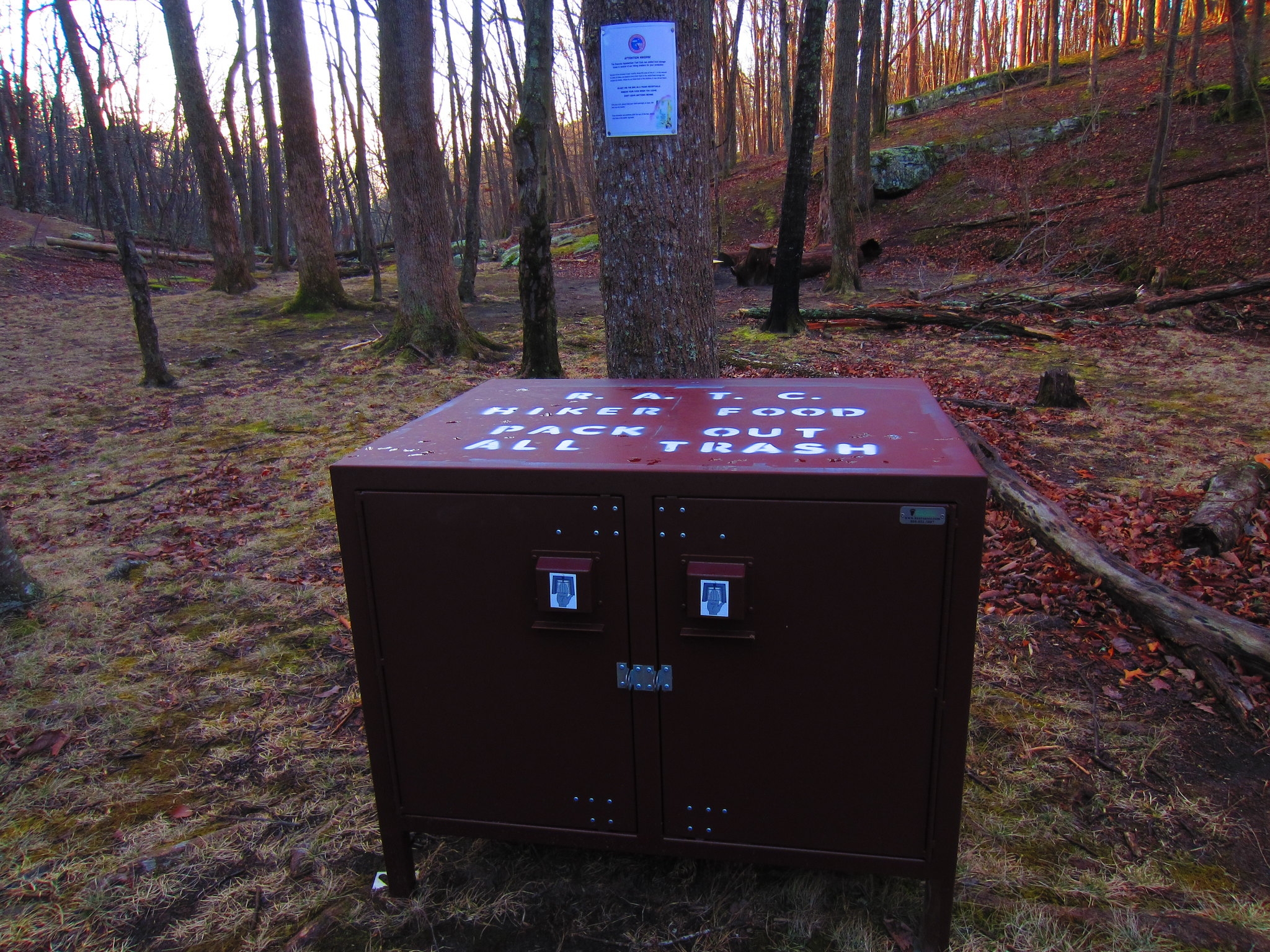
Some high-use shelters, such as Lamberts Meadow Shelter in Virginia (pictured) even have bear lockers for secure food storage. Photo: Raincrow
To Sum It Up
Shelters are not hotel rooms, nor are they private cabins. By practicing a little common sense and a lot of consideration, you contribute to the positive experience of every hiker just looking for a good night’s sleep. Remember: your actions impact more than just your own night. Happy trails, and sleep well!
Featured image: Photo by Nicholas_T; Graphic design by Mackenzie Fischer.

This website contains affiliate links, which means The Trek may receive a percentage of any product or service you purchase using the links in the articles or advertisements. The buyer pays the same price as they would otherwise, and your purchase helps to support The Trek's ongoing goal to serve you quality backpacking advice and information. Thanks for your support!
To learn more, please visit the About This Site page.

Comments 21
Another controversial issue related to AT shelters is whether dogs, especially wet ones, should be allowed in a shelter.
Great post! As a former thru hiker, I believe you hit the main items. (Except dogs, as Sherlock mentioned.). They should only be allowed when you are the only hiker in there.
Definitely NOT a “great post”…what IS your point other than regurgitating pablum? Why did you feel a need to publish this?
We are a 365 24/7 deal out here and reciting the banal that you chose to makes me feel like you just need attention and a participation trophy. Good for you Katie!
Ouch! Why then did you bother to read it?
I must agree. Why is MIZMAN whining. But way. If you snore, you need medical attention. Get help
Whoo-wee, that’s some hiker entitlement. Good job, you referenced a branded cereal (which should have been capitalized) you met your intent of stirring your own troll-ish controversy.
These standard etiquette courtesies should be posted in every shelter. The fact that you reached so violently to the suggestion that hikers should treat each other with respect implies that you’re probably the very person that the article is directed towards.
Holly crap be more of a douche about it why don’t ya
Don’t set up a tent *in* the shelter!
Please don’t smoke IN the shelter.
Good article; helpful.
This was a very helpful article, not a lot of people know shelter etiquette. That includes experienced outdoor enthusiasts. Thank you!
Great article, I learned some new things.
The persistent issue of inconsiderate hikers at shelters was the only downside of my thru-hike. A written poster with these standard etiquette guidelines should be posted in every shelter and the article can’t be published often enough.
During my hike in 2018 I was kicked out of a shelter in the Smokey Mountains by a group of hikers that had reserved the shelter through the park website. And it was confirmed by a ridge runner who checked their paper documents. They were only section hiking over the weekend.
‘had a trail runner in the smokies yelling at the tenter’s to fill the shelter first , then at the shelter told us it was reserved , we should not be in there .. she was totally a diz douch . [ the only trail runner i did not get the name of and cause it was not worth it ] . And yes , next time i hike thru , i will call and reserve just the shelters i need instead of overpaying …..the 40 …[ its like 5 a night to reserve ]
The long standing rule in the Smokies was you had to be in the shelter if there was room but thru hikers had to make way for hikers with reservations. It was always a rule that caused issues because a thru-hike had to set up in the shelter if there was room but could be kicked out if someone with a reservation turned up, no matter how late. Post COVID those rules have changed but those with reservations still have right of way in the shelter over thruhikers.
We arrived earliest but chose to leave the shelter for others, so we considerately tented. We were enjoying a campfire on a Saturday night when at dusk a huge group of hikers piled into the shelter that was only a few feet away from the designated fire ring. They were rude to us and demanded we be quiet so they could sleep…as if their process was supreme. Not all people want to hike ALL DAY at a mad pace, stopping only for and hogging the shelter area, then up at the crack of dawn just to race off up the trail. Our taxes too paid for and upkeep the shelters. Who decided for the rest of us the “etiquette” for structures that essentially belong to us all? Why can’t the mad-paced thru-hikers pitch tents instead of demanding they get to dominate the area, including the only fire pit? If I hadn’t have been with certain others, it would have not been that I gave in so easily. I/we were nice; they were rude and bullying. It seems that if others are already there before you arrive, you are out of turn/line to make any demands. Either hike even faster to get there soonest or pitch your tents. You are not guaranteed a shelter that truncates others’ intended enjoyment of OUR nature. It’s not just a hiking trail, you know?
I agree with you .First there and set up fairly , sets the rules .
As noted – The one camp ground in pa has separate shelters for non- snorers … In other words , Except for that shelter – there is NO rule for snorer’s or non-snorer’s Get over ur privileged thought process !!! !! . [ and remember it when u get older and start . ]
. i loved moderate days or off peak season , , first to shelter – i would sweep the whole shelter of mice and spiders and mud …
. As noted in the pic from the one camp ground in PA , has separate shelter for non- snorers … In other words , Except for that shelter – there is NO rule for snorer’s or non-snorer’s Get over ur privileged thought process !!! !! . [ and remember it when u get older and start . ]
. I use a bear canister instead of hanging cause i found to few proper trees to hang on in 23
. i hope they start setting up cooking/eating pavilions spots a way from the shelters … and potties
.
I agree that if you’re first to the shelter and are going to sleep in it, sweep it. It only takes 3 minutes and other hikers that come in after you will appreciate it.