
 ">

Day 16: Villafranca del Bierzo to La Faba
Day 16: Villafranca del Bierzo to La Faba
Today’s terrain is bimodal: either a brutal, agonizing road walk along hard asphalt, or a peaceful wander through quiet forests and open fields, interspersed with stretches of ancient Roman roads that have withstood the erosion of the ages.
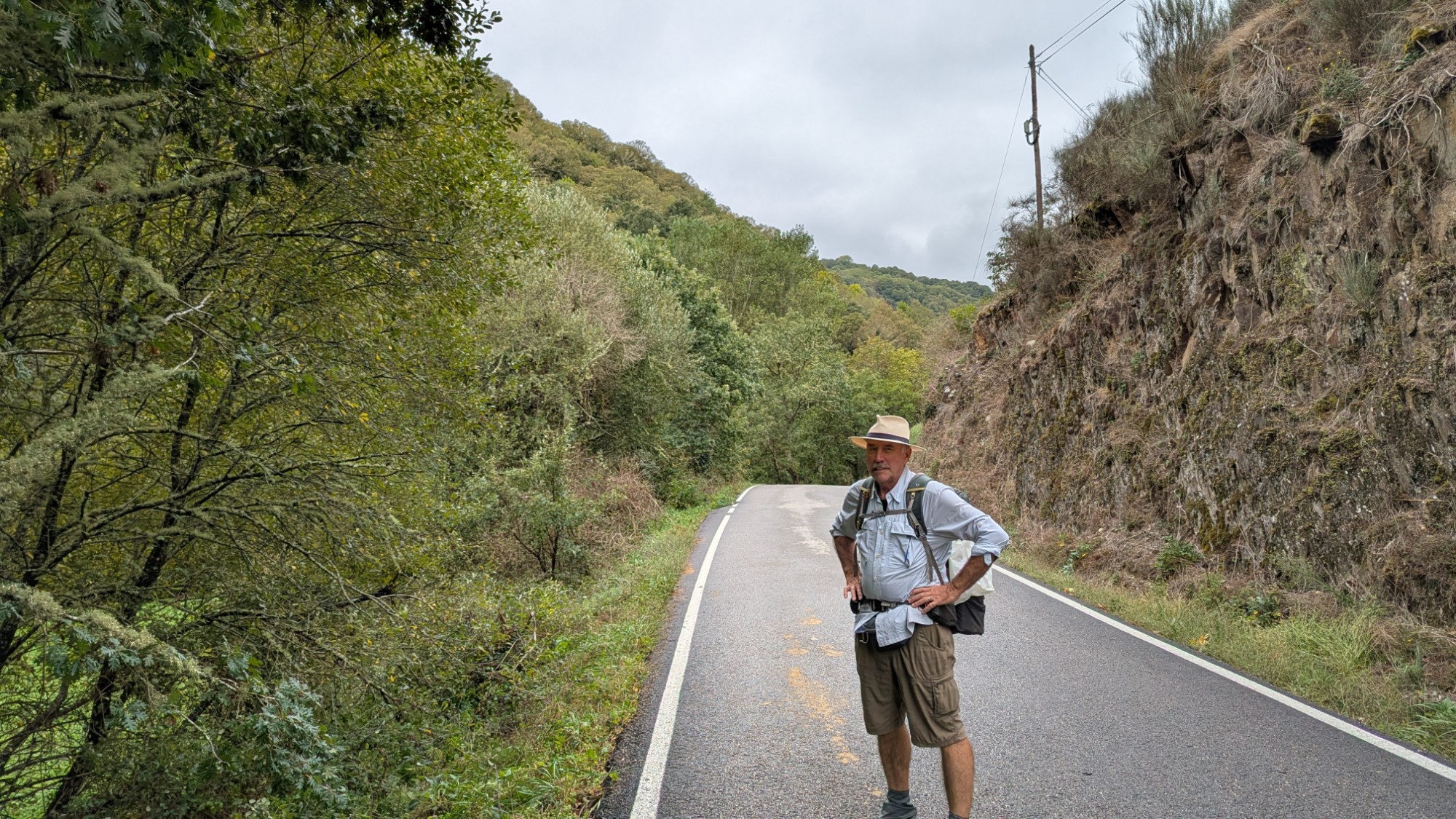
Steve and the long road walk this day.
Today we enter Galicia, where we put away our C’s to replace them with Th’s as the locals do—replathing them. One doesn’t just enter Galicia; one ascends, through the famous ascent of O Cebreiro. First along a paved walk on the road and later by forest path. I thought I remembered this section as being mostly forest and field, but until the last few hours, it has been all asphalt. That is the thing about false memories or expectations: the confrontation with reality rarely goes as expected.
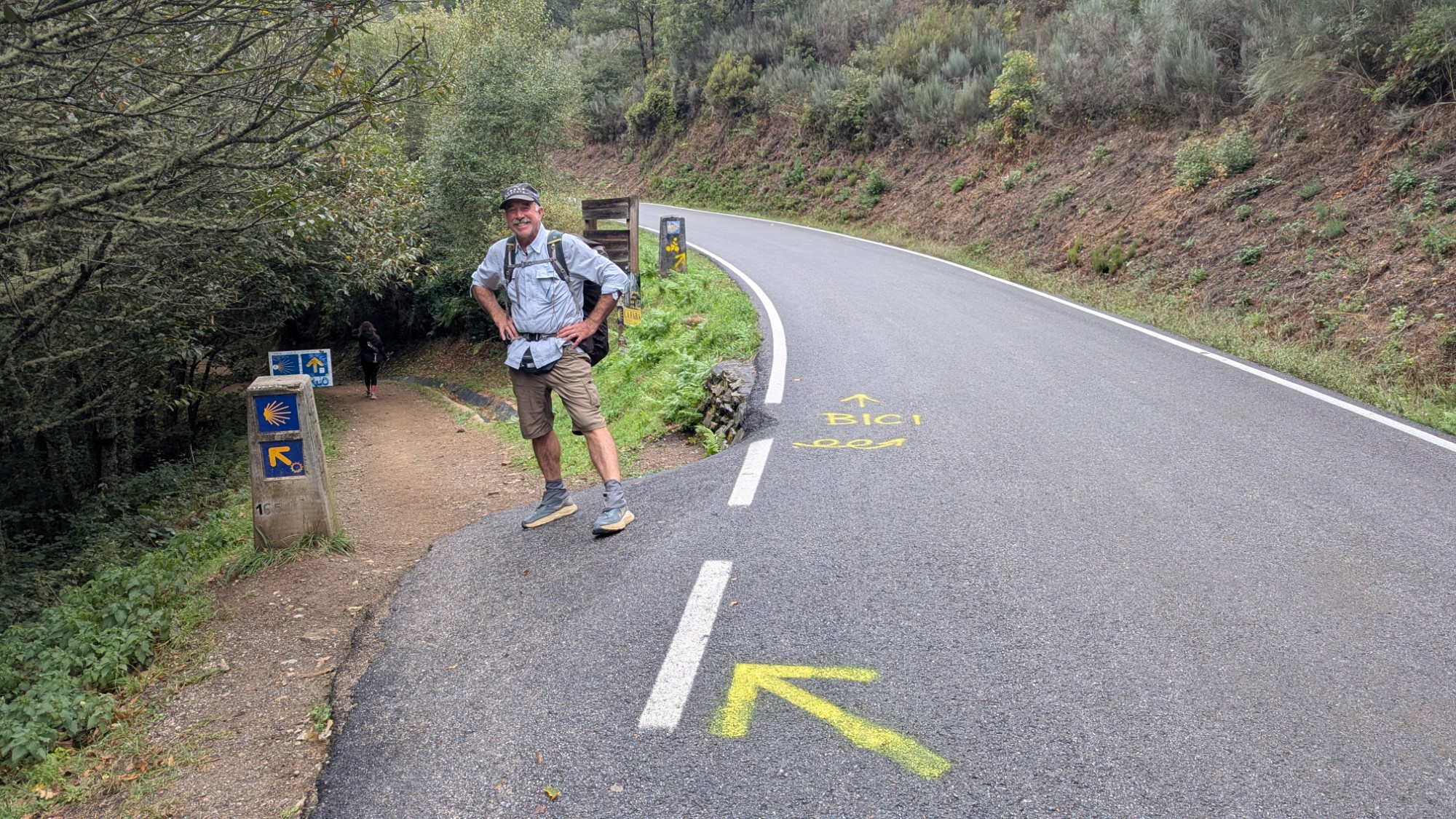
Finally, The Way parts from the road and we begin the section I remembered
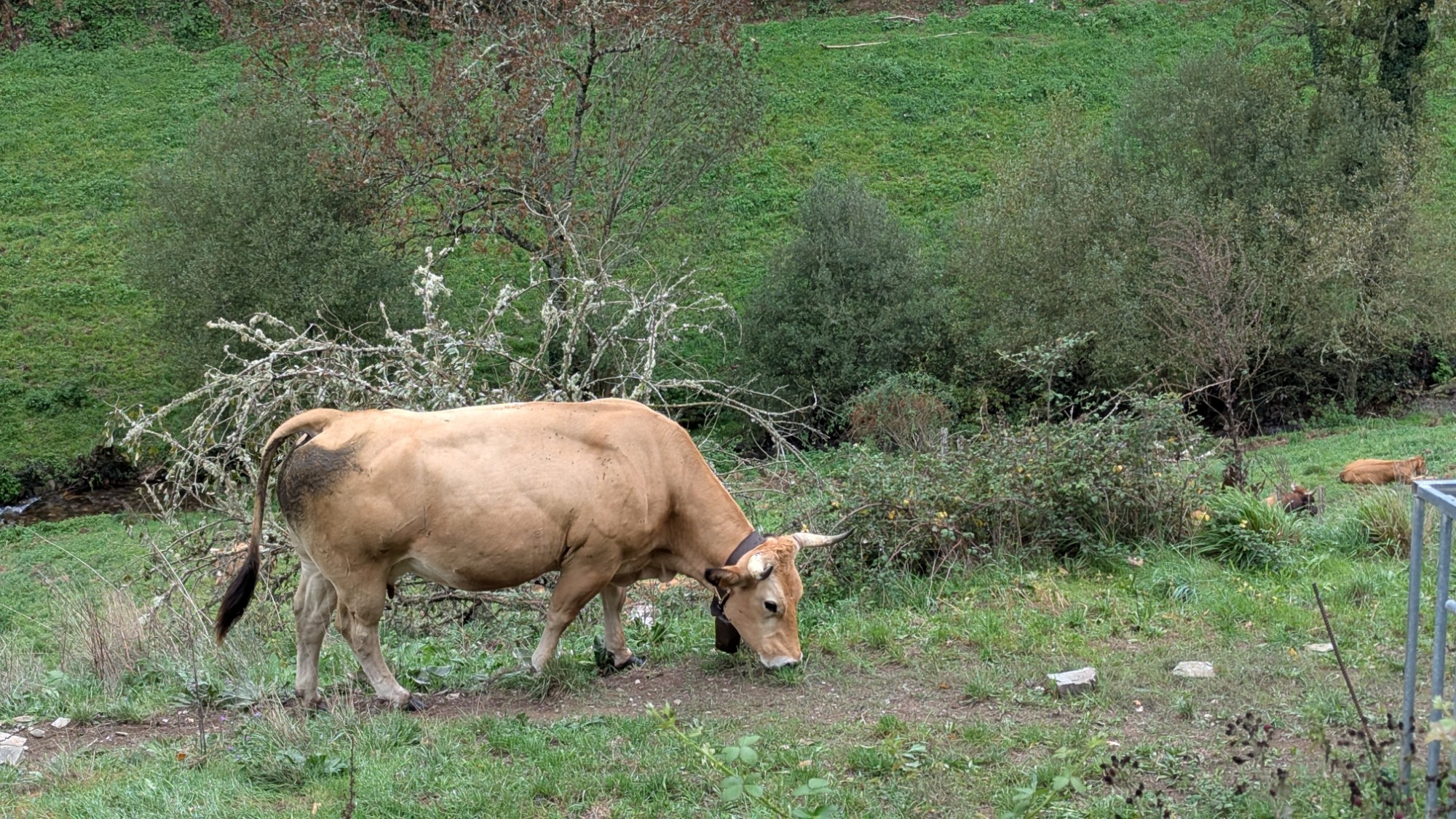
Finally, The Way parts from the road and we begin the section I remembered—the other peak of the bimodal distribution. It is beautiful and peaceful, with steep earthen walls rising on either side of The Way. It smells like Galicia too: a farmer’s dirt track for cattle (watch your step). It is an old Roman road that weaves through the forest, gaining elevation and crossing mountain streams over large stone bridges. It doesn’t take much imagination to feel like we are walking this hundreds of years ago—and indeed, centuries of pilgrims have trodden these exact stones. No signs of civilization appear until we finally reached La Faba, the midpoint of the ascent to O Cebreiro.
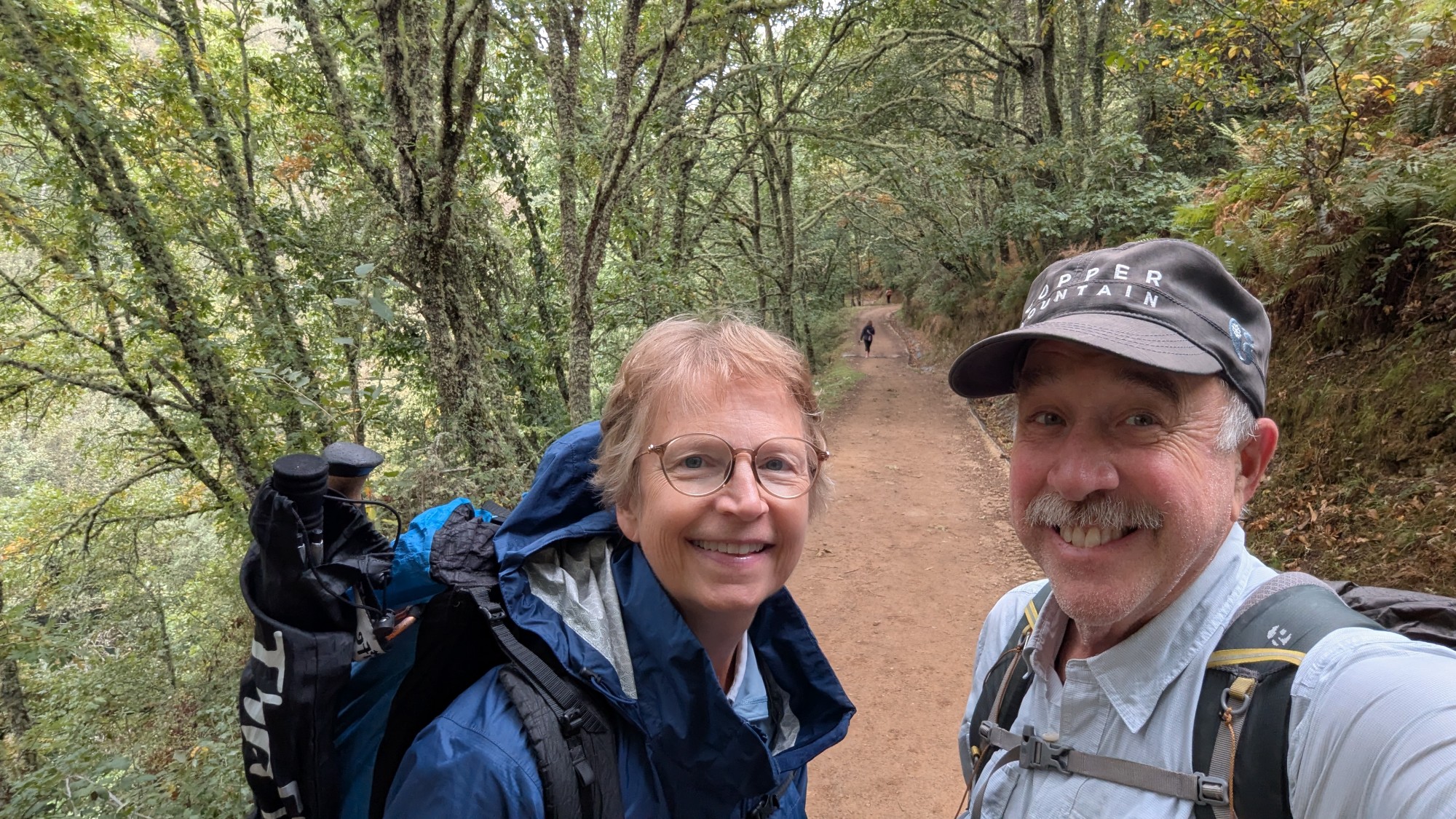
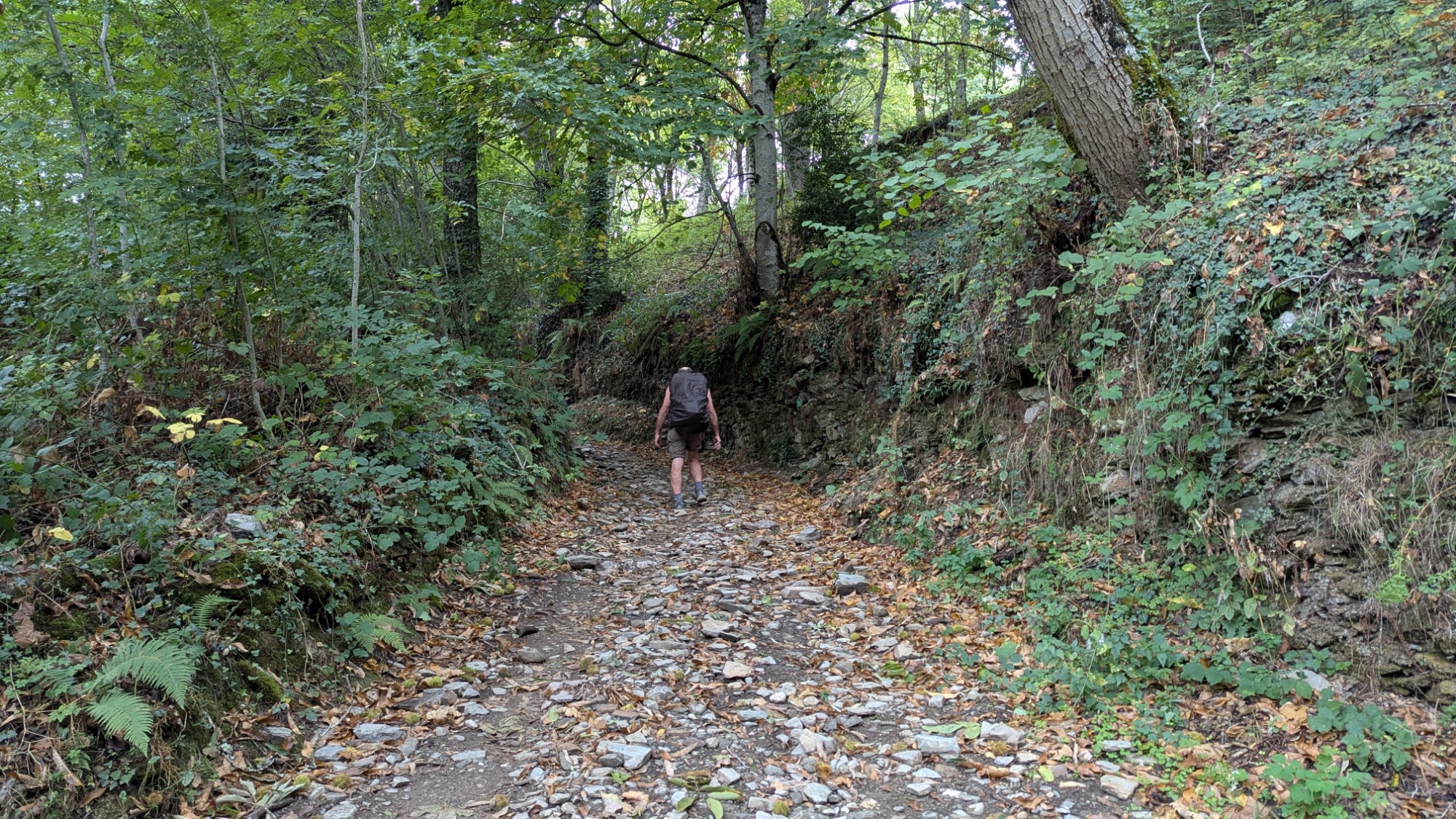
the beautiful forests of the way to O’ Cebreiro
It had been a grueling climb, and now the sky tips its hand. No longer a mere sprinkle here and there, it is fixin’ to dump on us just as the entrance to the Albergue para Peregrinos La Faba comes into view, clearly signboarded. I had stopped here in 2017 for a quick nap and ended up staying the night. We had no illusions of going any further today, especially since we were carrying freeze-dried meals purchased earlier in the day—Europe’s answer to Mountain House.
Like other donativos, there were no advance reservations. We arrive relatively early, so the line ahead of us is only twenty people deep. We knew we’d get a bed, but would it be a lower bunk? There is always a subtle anxiety in the pilgrim check-in process.
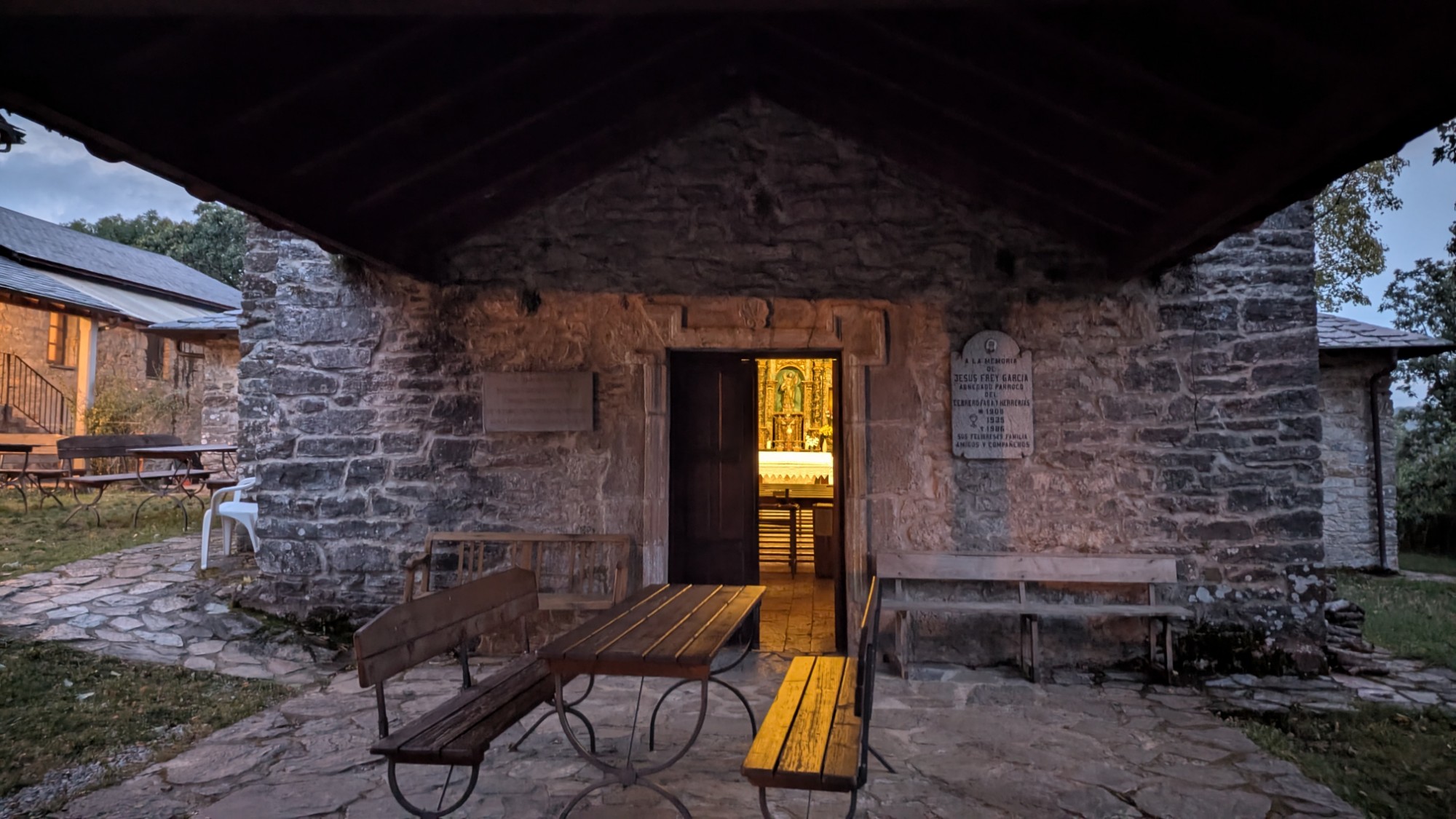
Entrance to the Chapel at La Faba
Solveig, the mid-50s volunteer checking us in, is kind, thoughtful, smiling, and—being German—exceedingly thorough. Karl, the other volunteer, is in his late 70s and wonderfully jovial. He escorts us to the dorm in groups of five to eight, after several batches of us have checked in, cheerfully ordering the “young bucks” to take the upper bunks while assigning us the lower ones. I love donativos!
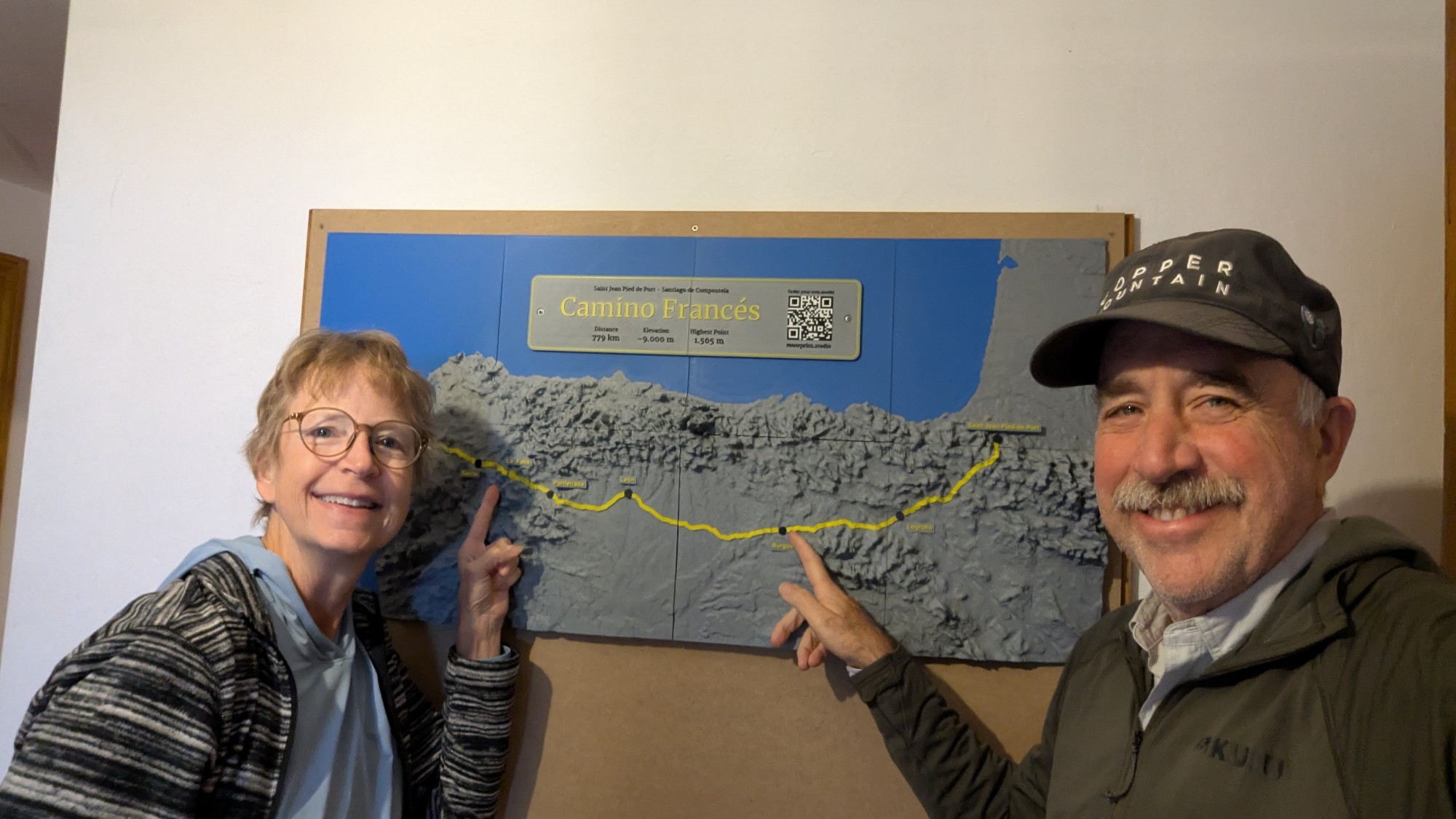
A 3-D printed relief map of the French Way, and us pointing to what we had walked so far.
After the initial check-in rush dies down—though wet, weary pilgrims are still trickling in from the rain—Karl and I chat in between his bed assignments. Like most donativo hosts, Karl and Solveig serve two-week stints, and they are four days into theirs. He has served so many times he’s lost count, but one thing he knows for sure: this would be his last year. That has been a recurring theme I’ve heard at nearly every donativo this trip: veteran volunteers quietly saying “no más.” Yet Karl clearly loves this work and understands its deeper value: “Better to serve for two weeks than to hear a hundred Masses.” His German way of storytelling reminds me of my father whenever his own family heritage came through.
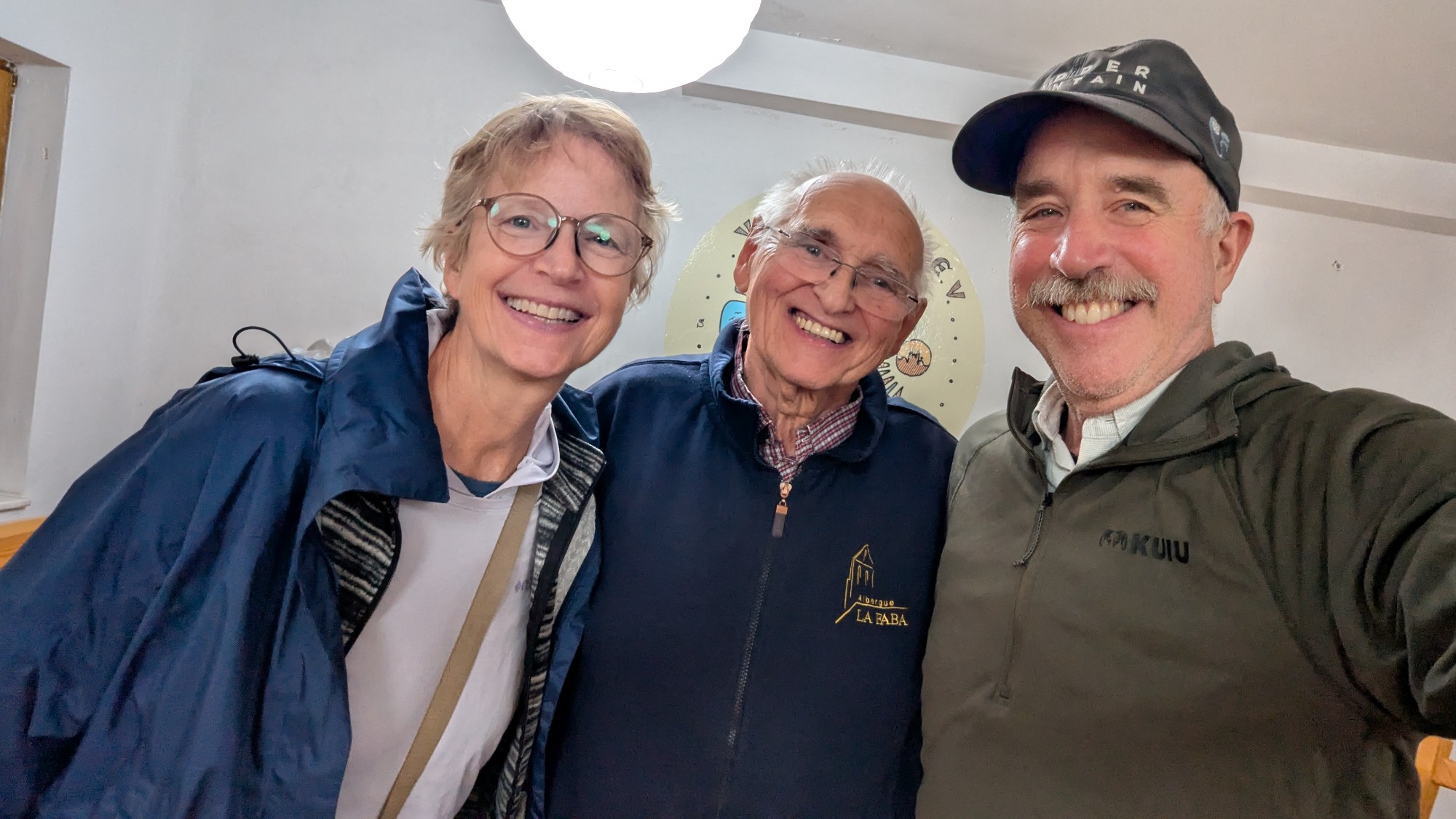
Suzanne, Karl & Steve
“Why do you keep coming back?” I ask him.
He smiles and shares a story. “There once was a villager who ran into a neighbor out in the woods. ‘What are you doing here?’ he asked.
‘I’m searching for God in the forest,’ the neighbor replied.
‘But God is everywhere the same!’ the villager said.” Karl paused, speaking English but phrasing it with a distinct German syntax. “And the neighbor answered: ‘Yes, God is everywhere the same. But me—no.’
That’s why I return,” Karl said gently. “God is the same everywhere. But I am different here.”
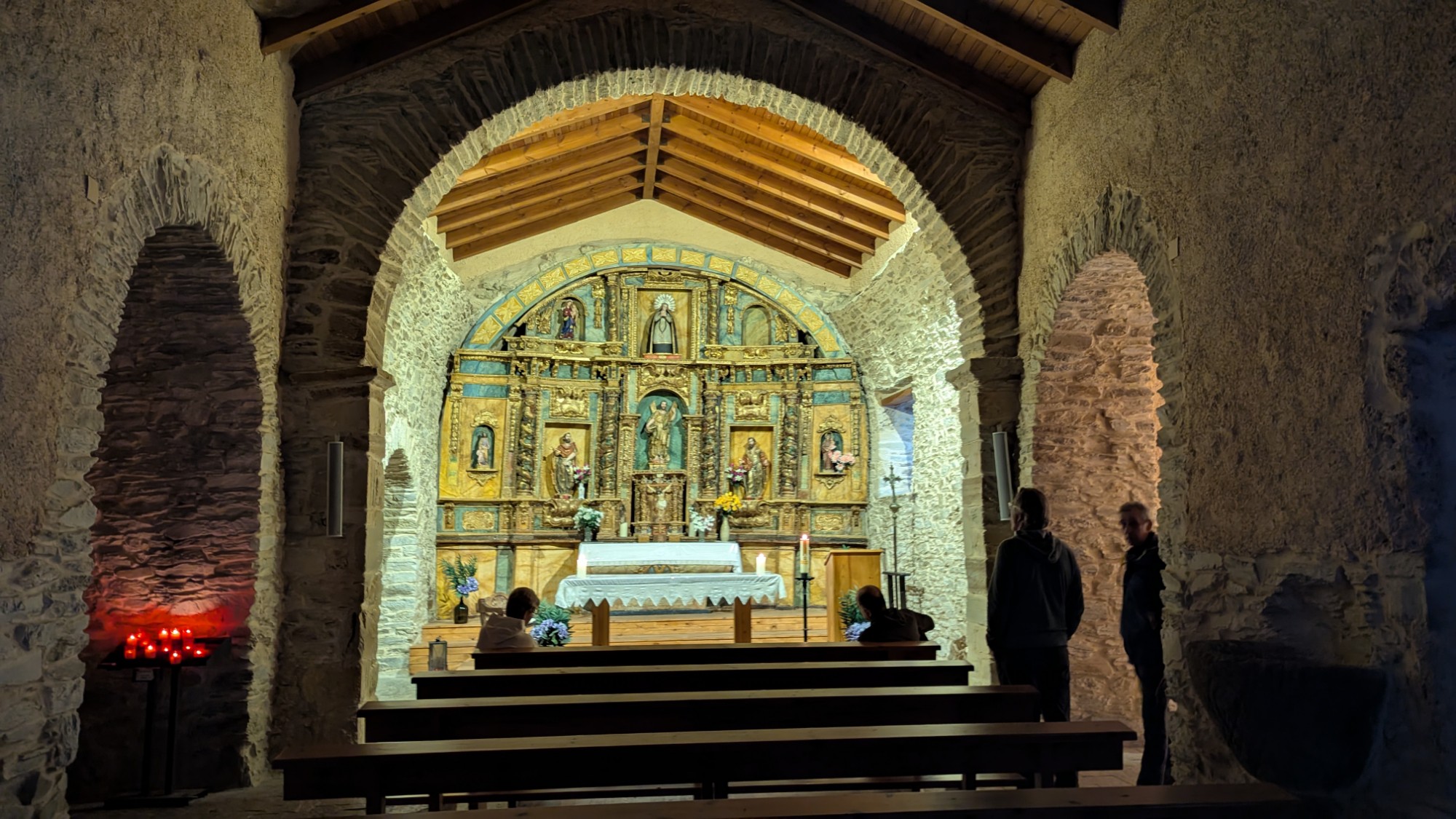
The Chapel of La Faba
La Faba is known for its evening Pilgrim’s Blessing, so when I see a guitar sitting in the common area, I let Solveig know that I play and offer to lead some music from the Taizé Community or traditional hymns during the Blessing. Back in 2017, it was the foot-washing ceremony I remembered most from this sanctuary—pitying the poor soul who washed my feet back then!
As people gather, I start fingerpicking Taizé melodies and lead them in “Amazing Grace”—though in a slow, soulful way they perhaps aren’t used to hearing. Solveig follows with a short, thoughtful reflection. I could see she was still refining her message, and I feel for her; it must be so hard to deliver a spiritual message in a second language. Four down, and ten more chances, I think. At the end of the service, we read a pilgrim’s prayer together—each person reading in their native tongue, yet every voice uniting on the final line: Ultreia et Suseia!
It’s the ancient call-and-response we’ve heard all along The Way: someone calls out “Ultreia!” and we respond “et Suseia!”—Further on, and higher up.
That is us tomorrow: further on, and higher up to O Cebreiro.

This website contains affiliate links, which means The Trek may receive a percentage of any product or service you purchase using the links in the articles or advertisements. The buyer pays the same price as they would otherwise, and your purchase helps to support The Trek's ongoing goal to serve you quality backpacking advice and information. Thanks for your support!
To learn more, please visit the About This Site page.
