
 ">

Drinking Camino Wine Hiker Trash Style
Day 28 from Fonfria to Samos
Today’s Miles: 11.9 miles
Total Camino Miles: 405
Starting the Day in Fonfria
After the meal the lovely old lady cooked last night, we had to partake of her breakfast too. She cooked us a wonderful meal of super fresh bacon (I think they killed the pig across the street last night) and eggs with deep orange yolks.
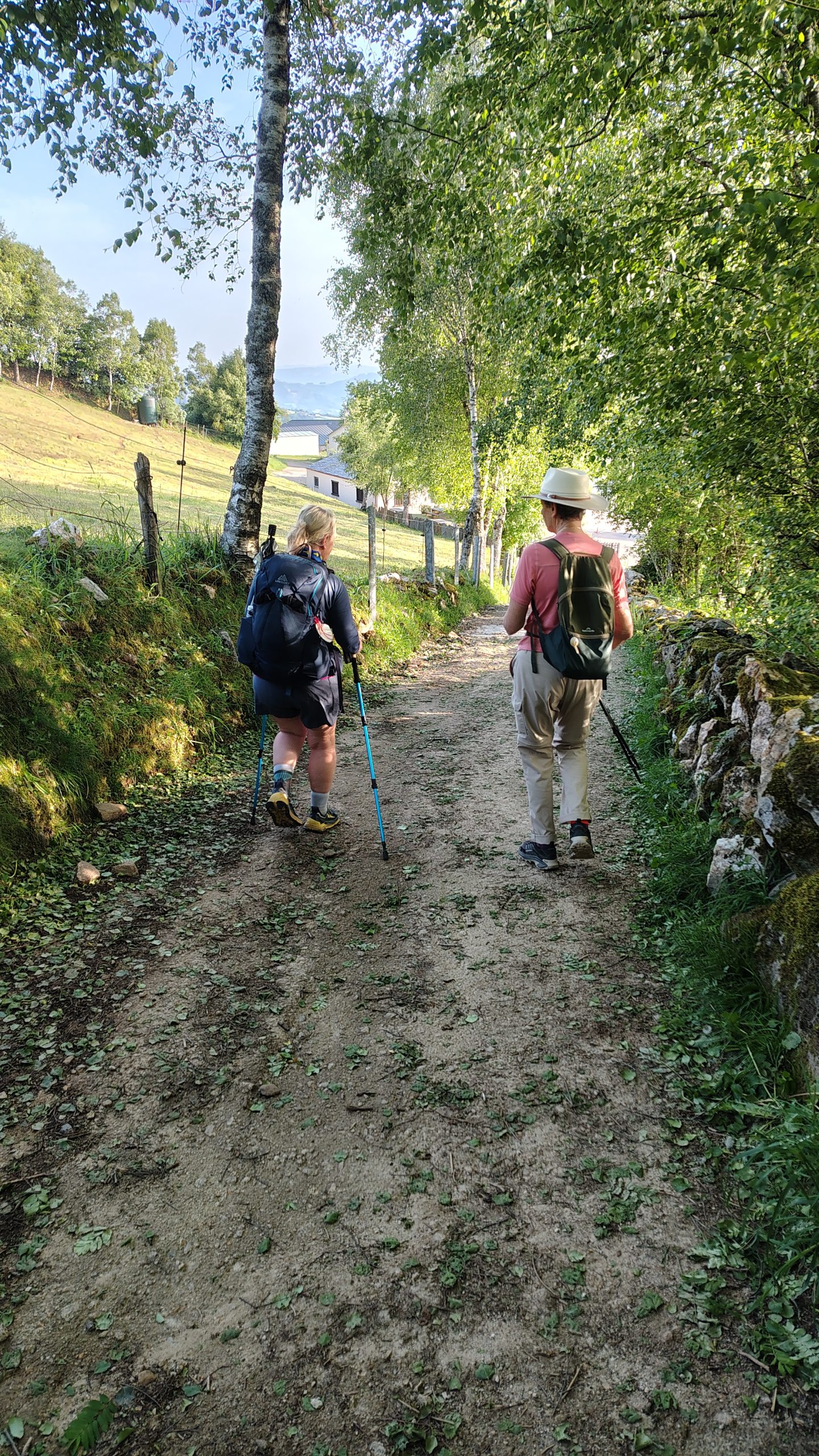
It was such a warm and welcoming stay. We gave her a hug, said goodbye, and got back on the trail at 8:00 AM.
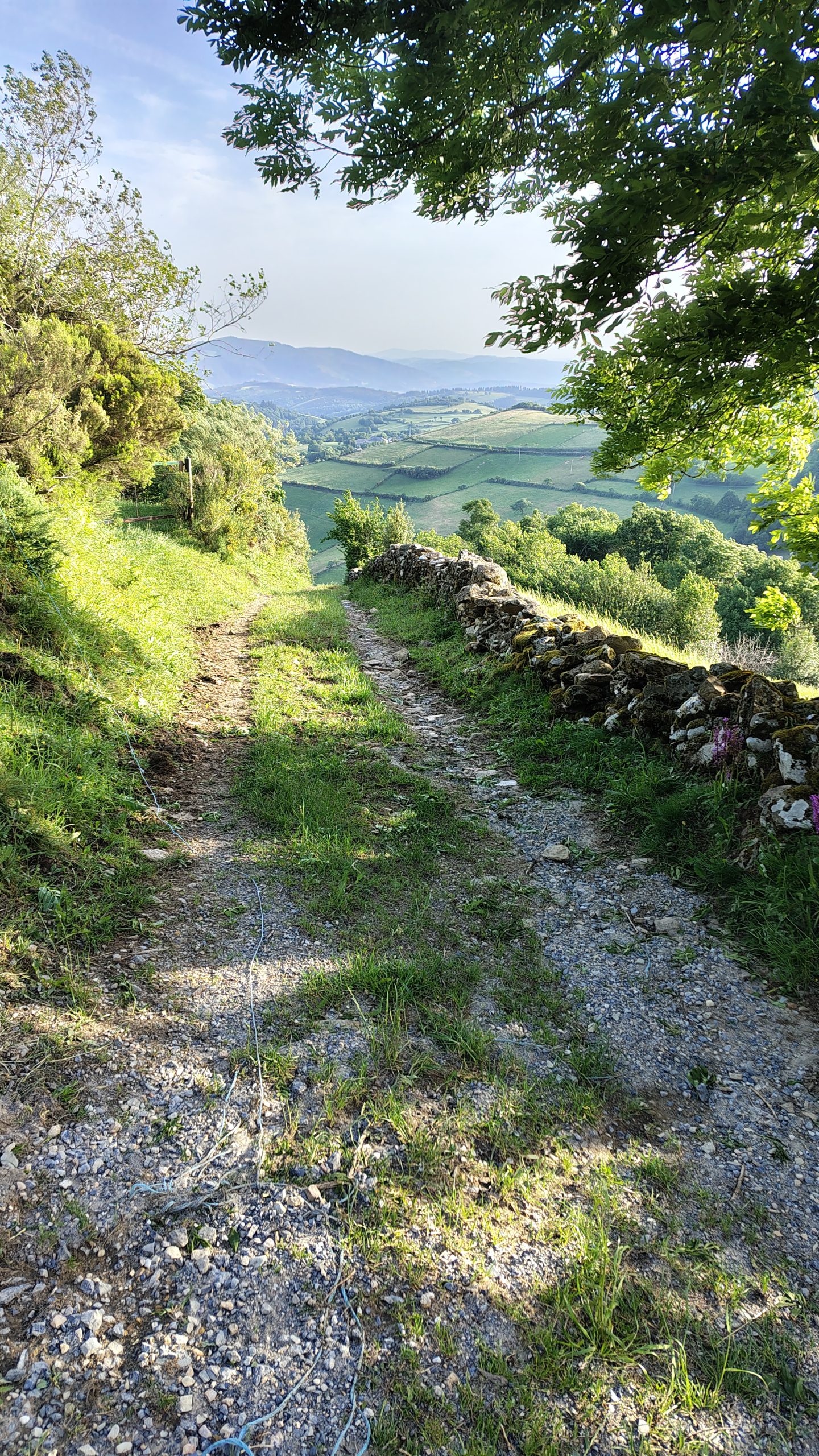
It was a beautiful cool morning, under a bluebird clear sky. The dirt path initially paralleled a paved road before cutting off through the countryside. As we descended, we could see hundreds–if not a thousand–people on the path 1,000 feet below us. We would soon be exiting the Galician Mountains.
Sunken Roads & Green Tunnels
The views were amazing. Off in the distance, we could see that we were leaving the taller mountains behind.
The trail descended sharply into Fillobal, a small town with just a few buildings. Immediately after, we started down an old road again where erosion over time had eaten away at the path, leaving it worn 20 feet deep into the hillside.
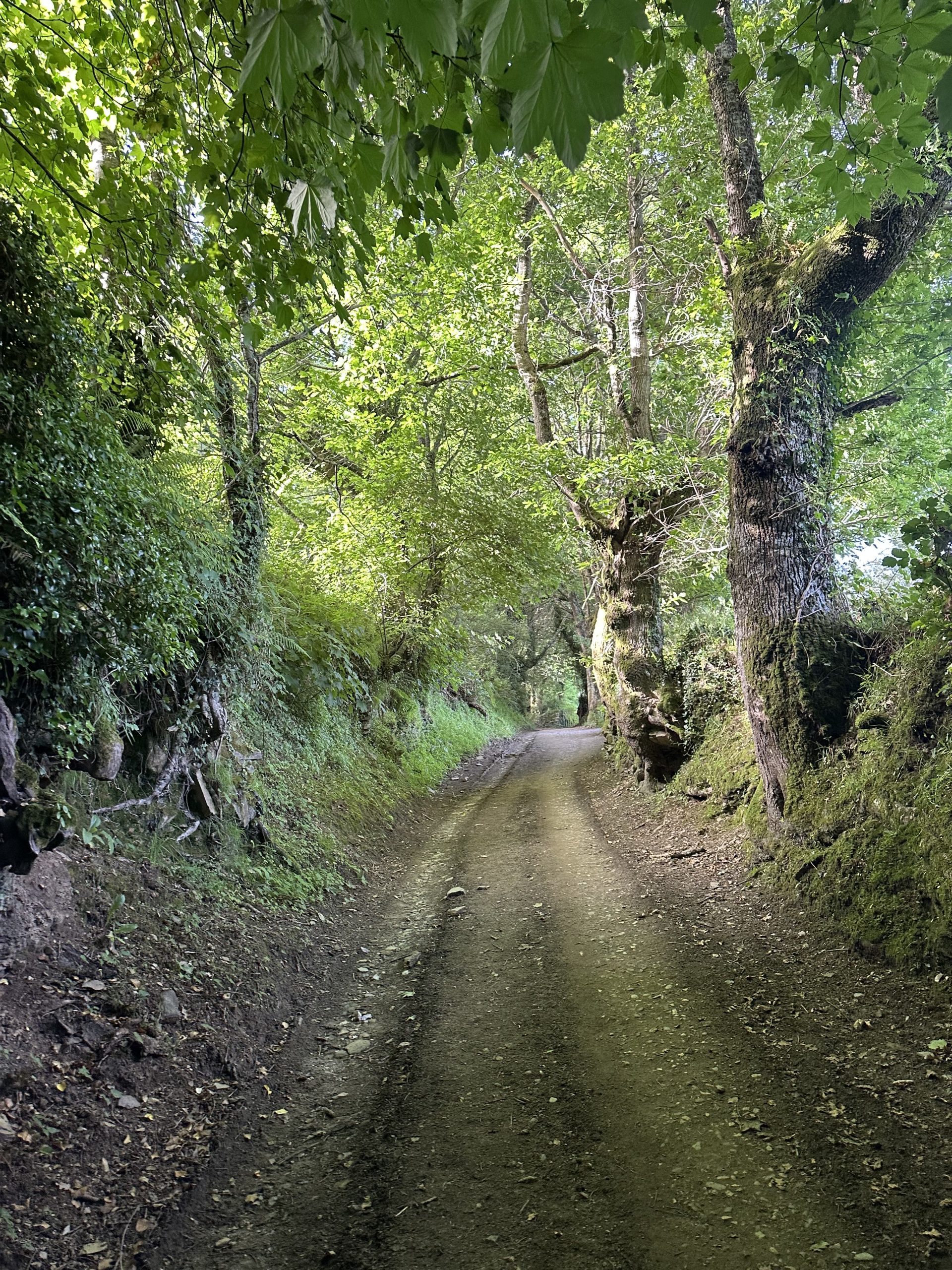
Moving along at a pace of over 3 miles per hour, the path entered a dark forested area that looked like the green tunnel of the Appalachian Trail:
- Flora: Large flanking trees, ferns lining the path, and thick moss covering the trunks.
- Atmosphere: Deep shade, cool air, and limited sunlight.
The Cow Poop Theory Is Born
At the next town of Pasantes, we were disappointed in our hunt for caffeine–there were no cafes in this working farm village.
The “Cow Poop in the Street” theory:
The less traveled, working villages are much more accommodating with better food and friendlier service than the touristy towns like Molinaseca. The best way to spot an authentic town? Look for cow poop on the streets.
Exiting Pasantes, the rock-paved street turned into dirt again as we once again re-entered another green tunnel. This sunken road was a magical, almost fairytale-like experience with even larger trees darkening the deep forest areas around us.
Reconnecting in Triacastela
We continued descending to Triacastela, where we joined with our “tramily”, Jill and Robert. We stopped at a cafe to talk about the nomadic life over coffees and baked goods.
Triacastela is the considered the end of the Galician Mountains. Here, the Camino splits:
- Direct Route: Leads straight to Saria.
- Samos Route: Winds along a river to the 9th century monastery at Samos rejoining the Camino in Saria.
We chose the route to the monastery.
Valley Walk
We walked through a narrow valley with the river below us. The path paralleled a paved road, featuring several boardwalk bridges where the river flowed directly underneath.
The mist from up to 50-foot waterfalls rose from the steep rock canyon walls, providing natural air conditioning against the warming day.
Eventually, the path exited into San Cristo do Real—an almost abandoned time capsule:
- Layout: A compact medieval village with narrow, winding lanes snaking in all directions.
- Atmosphere: A creek flowed right through the middle. It quickly became one of my favorite medieval stops on the Camino.
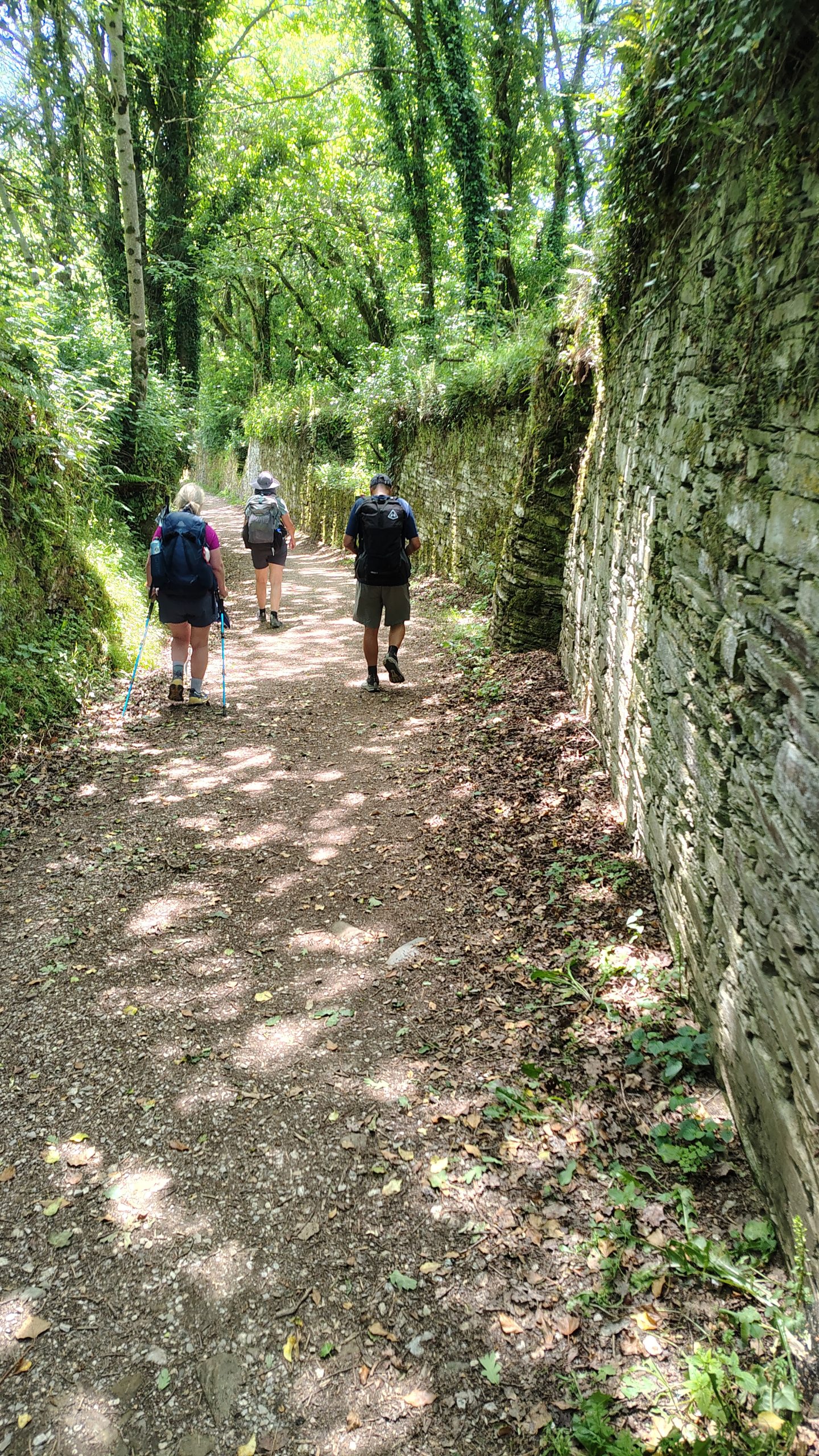
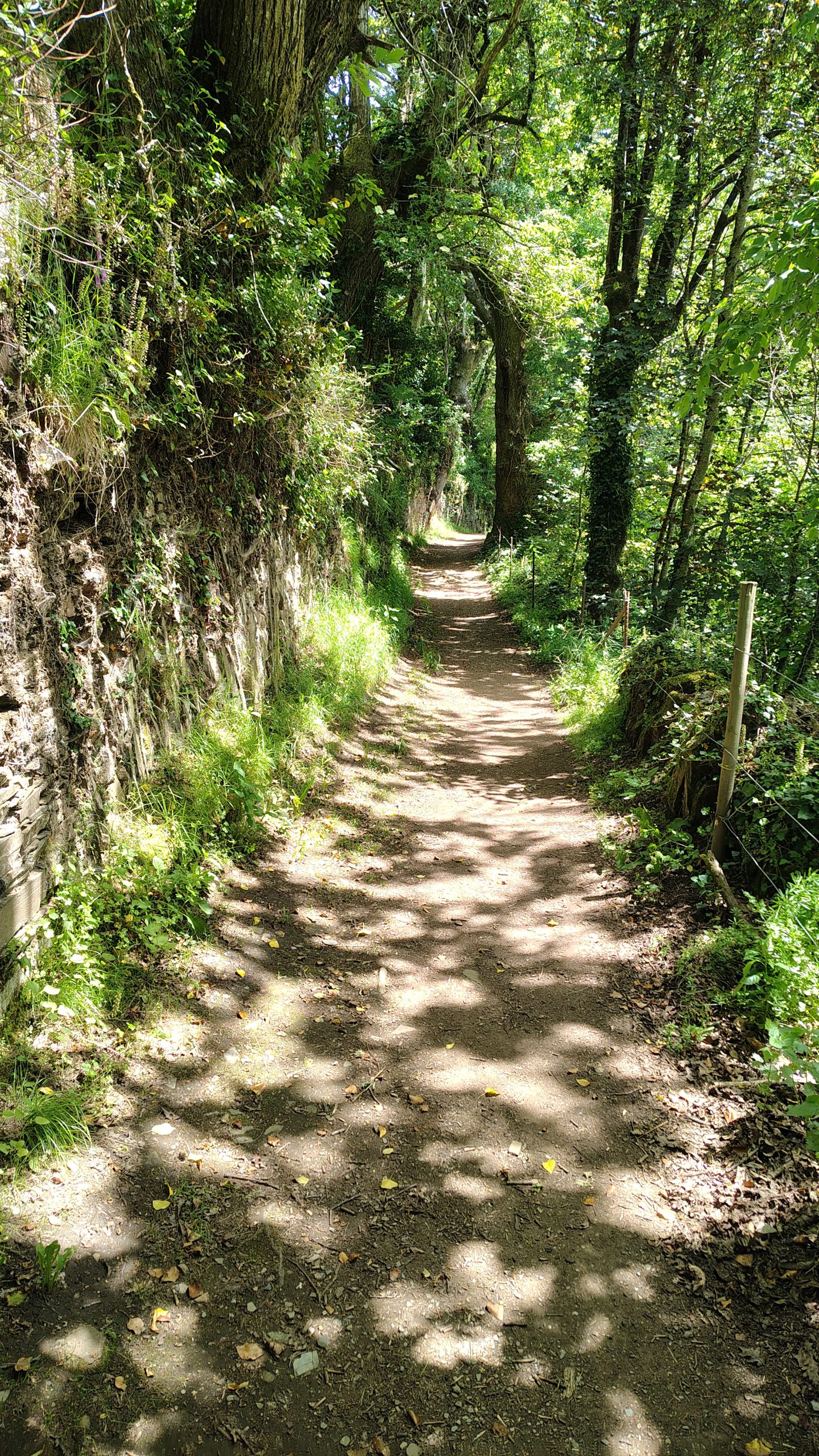
Leaving the village, we followed an old road cut into the hillside, lined with large chestnut trees and high, moss-covered rock walls. Birds sang in the canopy overhead while the bubbling creek played music below.
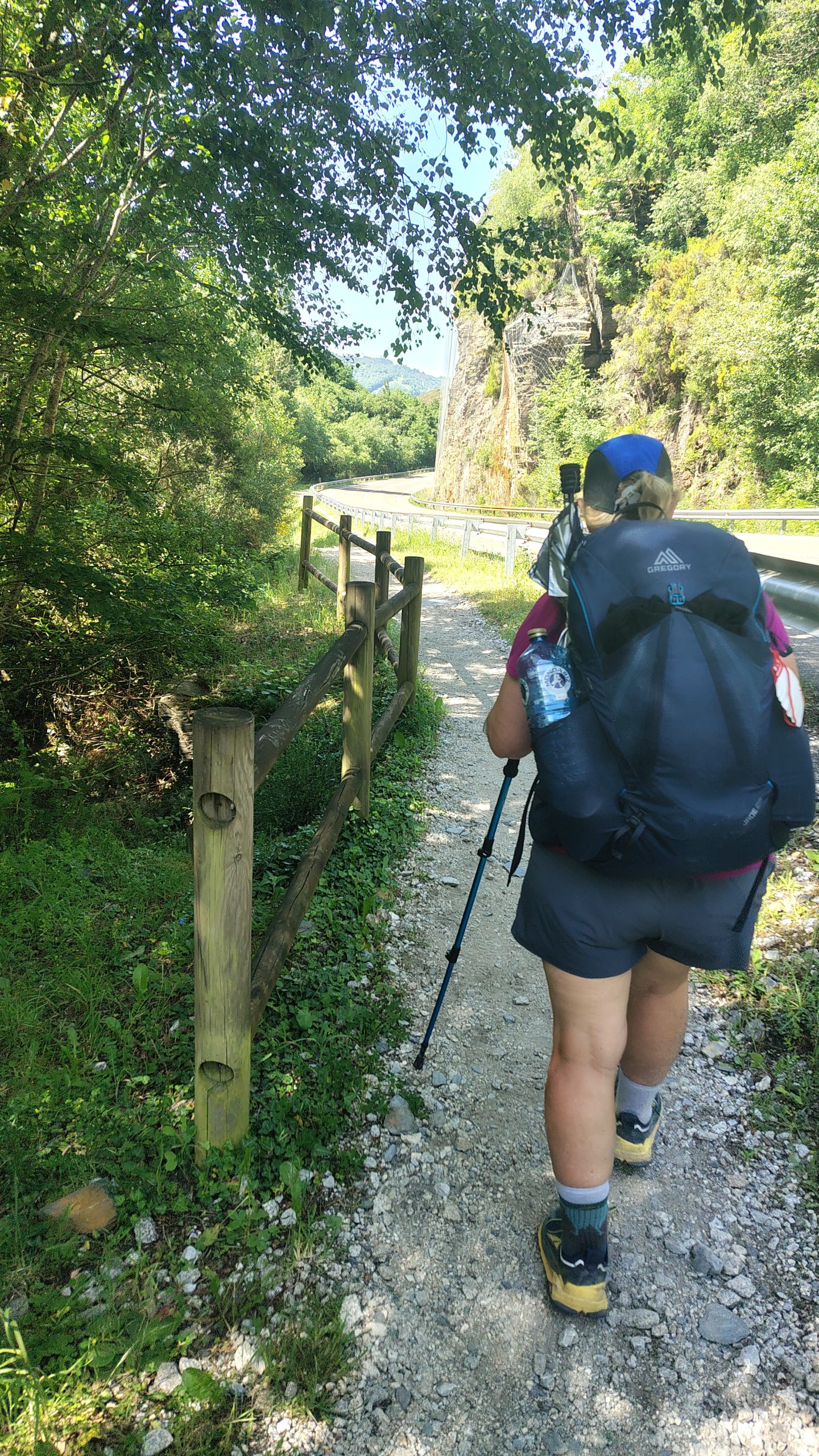
Hiker Trash In My Blood
We climbed up to a village of white washed buildings, passed a closed 1-room church where we peered inside for a cool breeze, and tackled one last hill.
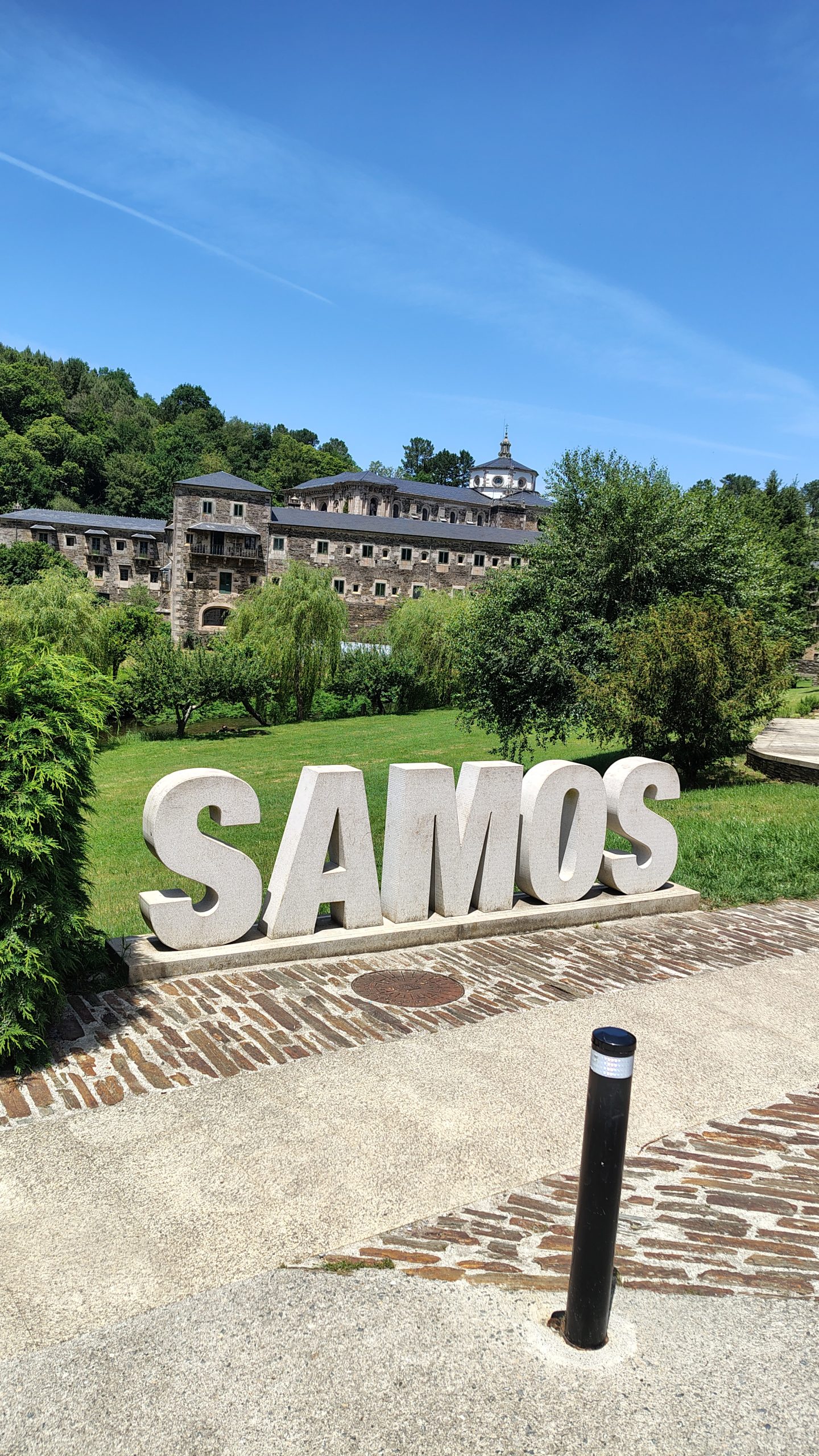
At the top, we caught our first view of the massive Samos Monastery below. A 12-foot-tall stone wall lined both sides of the path as we descended into town.
After dumping or packs on the top floor of our apartment building, we went out for food. While sitting at an outdoor table, we watched an older man leave ¾ of a bottle of wine behind. Like good hiker trash we made sure it didn’t go to waste.
Our New Friend
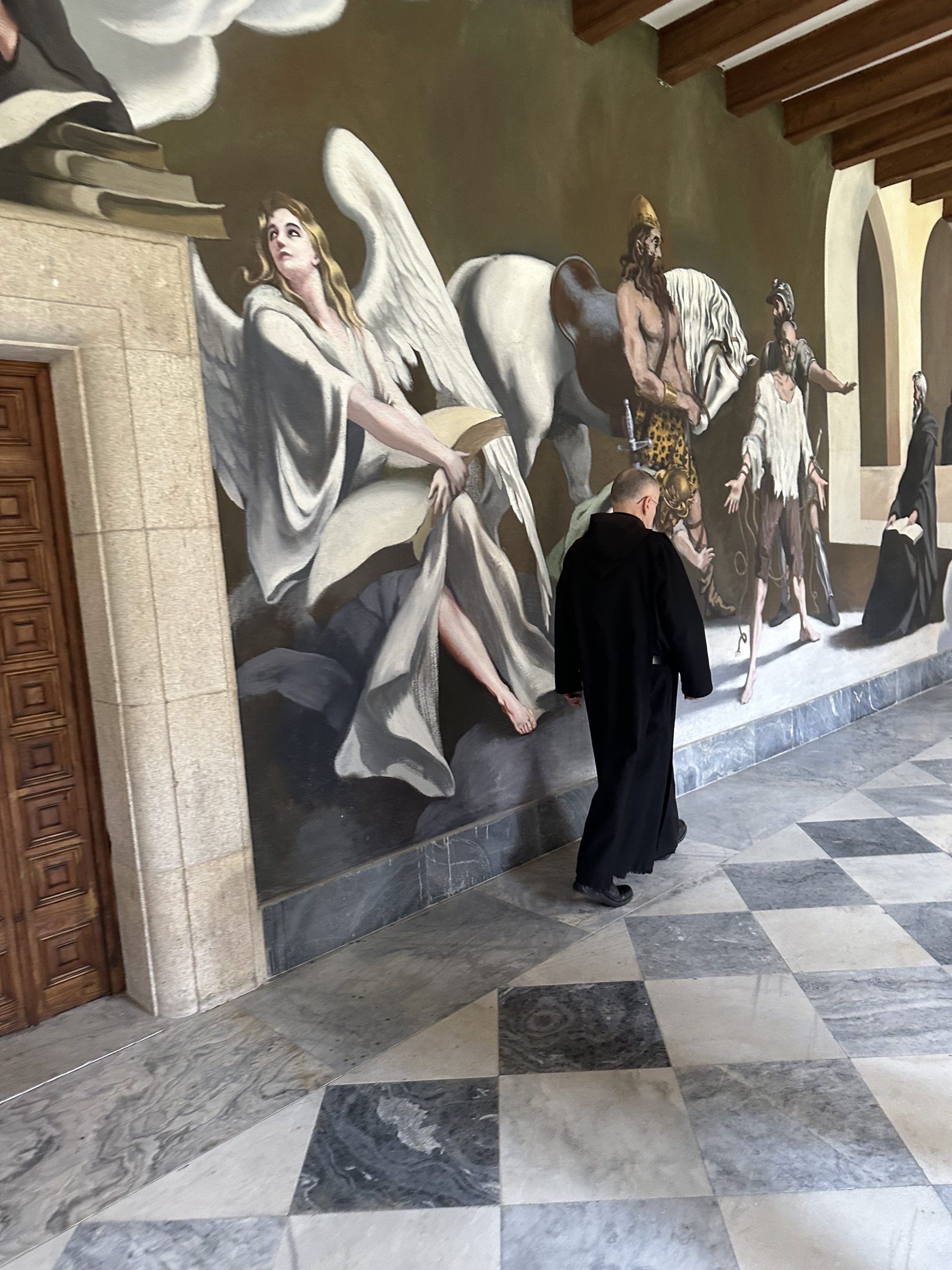
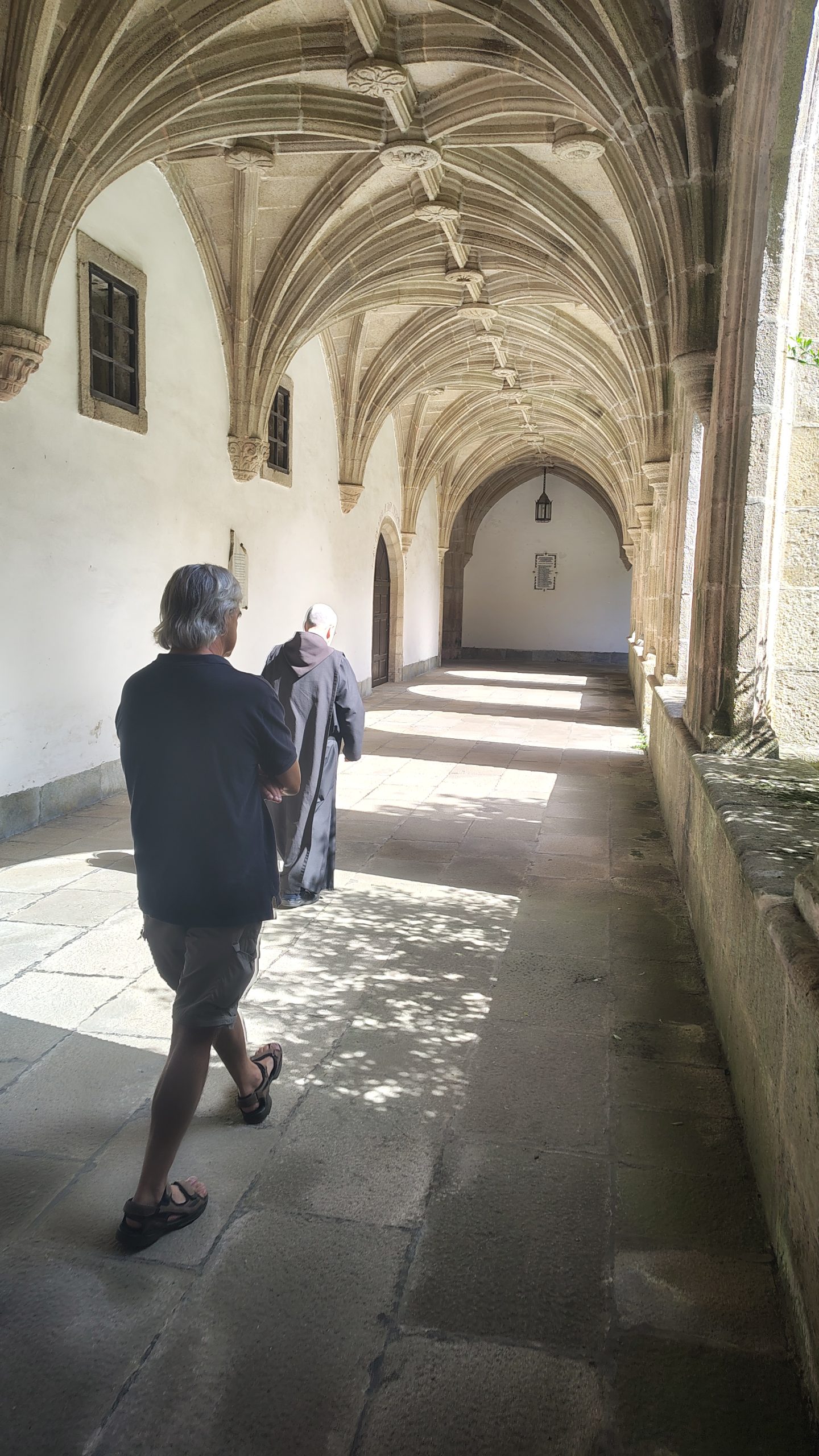
Later, we joined a tour of the monastery, which was recently restored following past abandonment and a fire.
- The Tour: Led by a black-robed monk who spoke no English, but a fellow pilgrim from Portugal kindly translated for us (a pilgrim who would become a friend in the days ahead).
- The Grounds: Featured two large cloisters (open courtyards) and a grand, cavernous cathedral with elaborate retablos.
We intended to return for 7:30 PM mass, but as we got back to our room, exhaustion set in and we fell asleep almost immediately.

This website contains affiliate links, which means The Trek may receive a percentage of any product or service you purchase using the links in the articles or advertisements. The buyer pays the same price as they would otherwise, and your purchase helps to support The Trek's ongoing goal to serve you quality backpacking advice and information. Thanks for your support!
To learn more, please visit the About This Site page.
