
 ">


Durston X-Dome Pro 1+ Review: Testing One of the World’s Lightest Freestanding Double-Wall Tents
Readers of my previous reviews know that I am a fan of Dan Durston’s gear, an opinion not uncommon within the ultralight backpacking community, and I was excited for the chance to test the Durston X-Dome Pro 1+.
In the past five years, trails have seen an absolute explosion of Durston Gear, starting with his wildly popular X-Mid trekking pole shelter series before branching out into packs, trekking poles and, now, freestanding tents. Like many brands within the ultralight space, Durston aims to solve mechanical flaws in traditional shelters, but what sets them apart is their ability to maintain direct-to-consumer pricing and engagement directly with online communities.
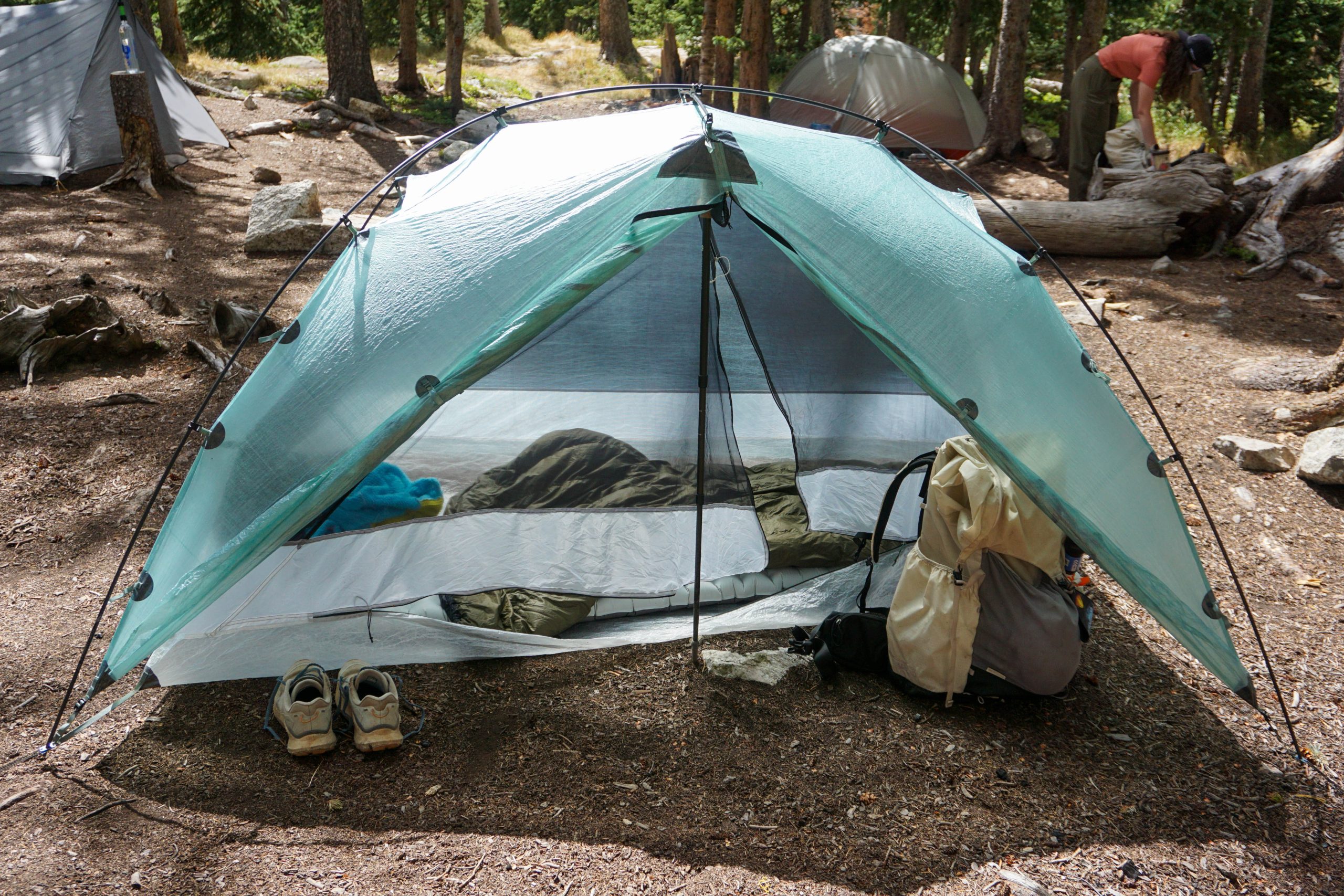
If you’ve ever seen a question or a critique of a Durston Gear product on Reddit or in the Durston Gearheads Facebook group, odds are that a helpful, kind, and thought out reply from Dan himself has appeared shortly after.
Nearly a year ago, Durston Gear released the X-Dome 2: a fully freestanding two person shelter clocking in at just under 3 pounds. Now, he’s back again with the X-Dome Pro 1+, advertising it as among the world’s lightest freestanding double-walled tents.
Durston X-Dome Pro 1+ At a Glance
MSRP: $849.00
Weight: 1 lb 11.5 oz (fly-only weight: 10.2 oz)
Floor Area: 23.5 sq ft (88″ x 52″)
Sizing: 1+ (room for two regular-width tapered pads or one wide pad plus gear)
Shop the Durston X-Dome Pro 1+
Intended Use
The X-Dome Pro 1+ is intended to be used as a shelter for a solo backpacker looking for a fully freestanding, double-walled, 3+ season tent. “3+ season,” in this situation, indicates a tent that can handle shoulder season weather on trail (such as snow and winds) but is too light for suggested use in extreme winter mountaineering.
This tent claims the title of the world’s lightest freestanding double-walled tent, making it an attractive option for hikers prioritizing a lower base weight without needing to switch to a single-walled or trekking pole tent. While two adults can fit inside the shelter if needed, the tent is most comfortable when used by an individual.
X-Dome Pro 1+ Tent Features
The main features of this tent can be broken down into three categories: Materials, design, and details.
Materials
DCF Rainfly: The most noticeable difference between the X-Dome and X-Dome Pro is the fabric used for the rain fly, with the Pro version using Dyneema Composite Fabrics (DCF) compared to the standard X-Dome’s silly. This material is famously lightweight and waterproof, making it very practical (albeit expensive!) as a rain fly.
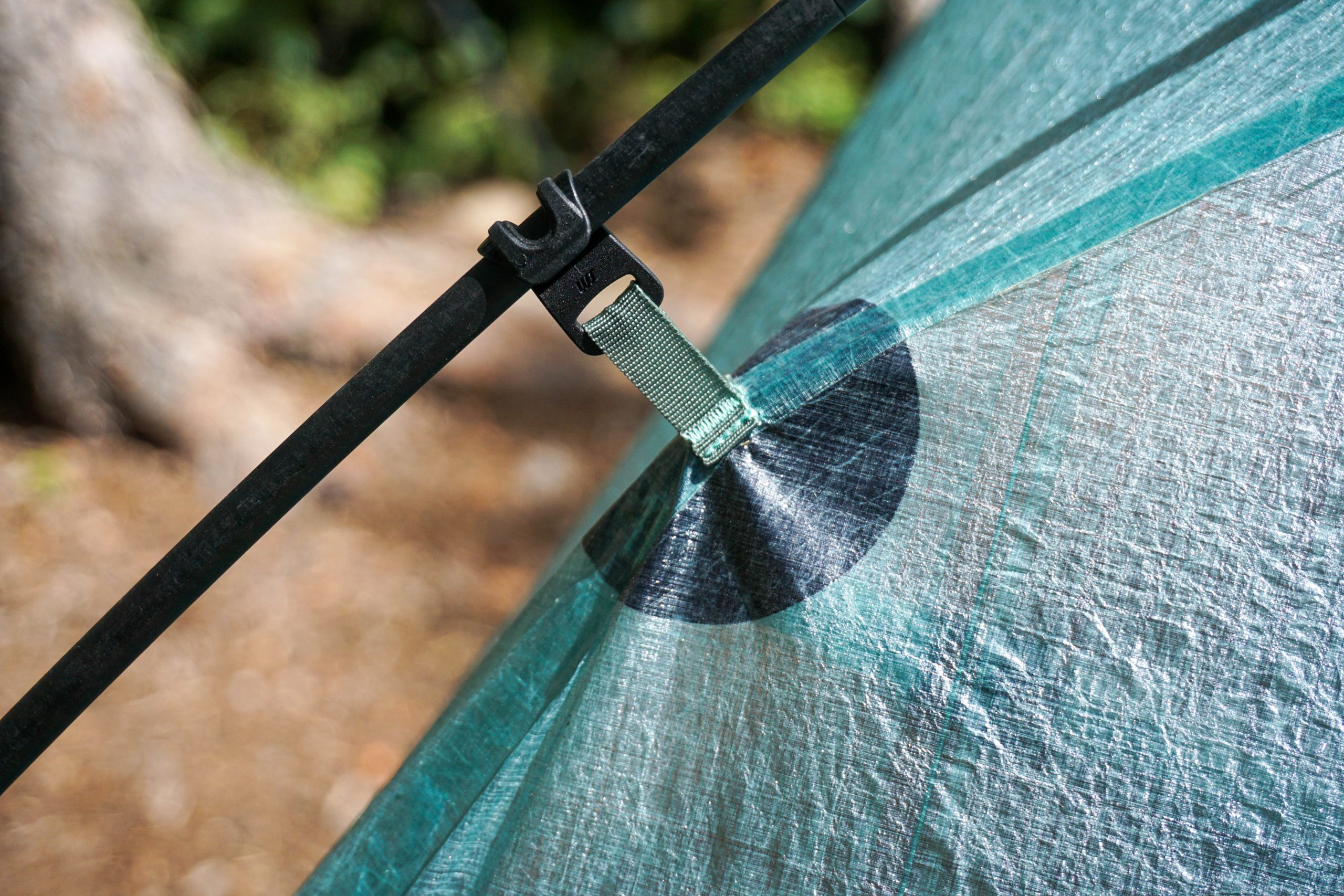
Reinforcements are added at stress points to increase the durability of the DCF.
Bonded seams: Companies have a few options for waterproofing a fabric at its seams. Many sew the fabric panels together and press tape over the seam, some use a liquid silicone to seal the gap, and others can fold the fabric in a way that adds fabric layers to the edges. The X-Dome Pro 1+ uses bonded seams, which fuse the overlapping layers directly together under heat and pressure. In doing so, the tent gets an airtight and watertight seal without punching needle holes through the fabric.
Carbon fiber tent poles: Additionally, the poles used are purely carbon: carbon fiber with carbon-composite inserts at each joint. Not only does this contribute to more weight savings, but the carbon joints help to address typical weak points in tent poles that bend or corrode over time.
Design
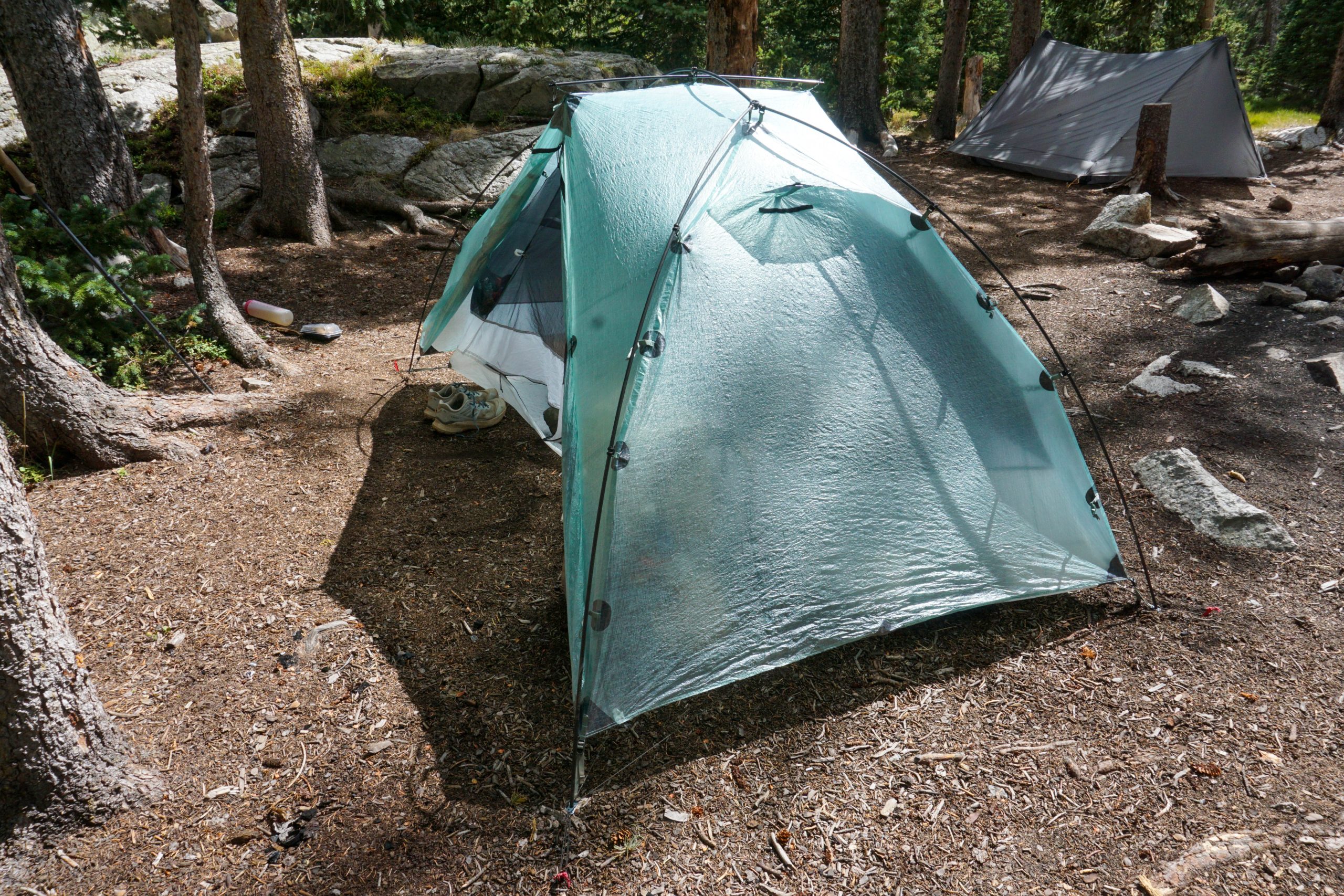
Unique floor geometry: Durston tents are identifiable through their floor geometry. Instead of a perfect rectangle throughout, the X-Dome combines a rectangular fly with an offset parallelogram as a floor.
Freestanding: The pitch is held through the carbon poles as opposed to tension from staking and trekking poles so that, in theory, the tent can function without any stakes.
Additional reinforcement options: If setting up in harsh conditions, the tent has pockets on the sides to slot a trekking pole into for extra bracing. Durston claims this additional reinforcement will take the frame’s wind resistance above 60 mph. The tent does have 12 optional attachment points for guylines should you need extra support.
The door and the opposite side of the tent both have pockets for trekking poles, which gives some additional bracing when needed.
Independent fly and interior setup: The rain fly and mesh interior are able to pitch independently of each other, which gives you flexibility to camp without a rain fly, with only a rain fly as a pseudo-tarp setup, and with both for the most external protection.
Details
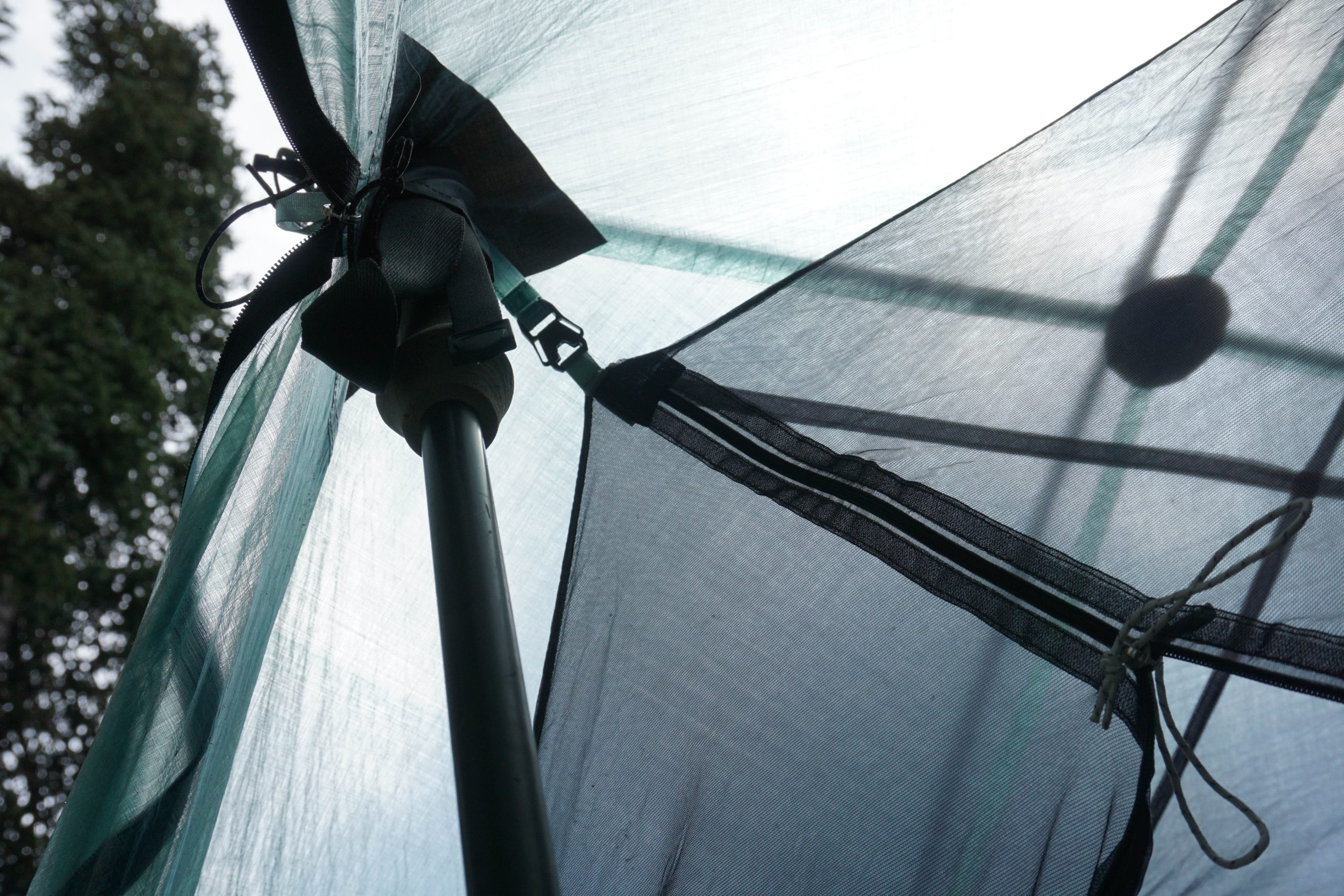
Roof vents: Practical usability carries over into the shelter’s smaller functional details. Vents placed near the tent’s roof allow for continuous air circulation, venting the warm air out before it condenses on the ceiling.
Internal storage: Internal storage is split between a mesh pocket next to the zipper for small items and a wider shelf running along the shorter end of the tent for bulkier gear.
Dual vents along the ends of the tent do a great job at mitigating condensation.
Magnetic toggles: As with the rest of the Durston tents, the X-Dome has easy, strong magnetic toggles to hold open both the fly and inner mesh when rolled.
Freestanding vs. Non-freestanding and Single-Wall vs. Double-Wall Tents
Tent design typically forces backpackers to make two big decisions: structural support and moisture management.
Non-freestanding shelters rely on trekking poles and guylines to maintain their shape, cutting out dedicated pole weight at the expense of requiring the ground around your campsite to hold tent stakes. Freestanding frames support their own structure, allowing quick setups on granite slabs, loose sand, or wooden platforms where driving stakes is difficult, though this usually comes with a significant weight penalty.
On the fabric side, single-wall shelters shave weight by eliminating an independent inner tent, but internal condensation collects directly on the interior ceiling or drips down the sides of the interior wall. Double-wall tents separate a breathable inner living compartment from an exterior waterproof fly, creating an air barrier that keeps moisture away from you and your gear.
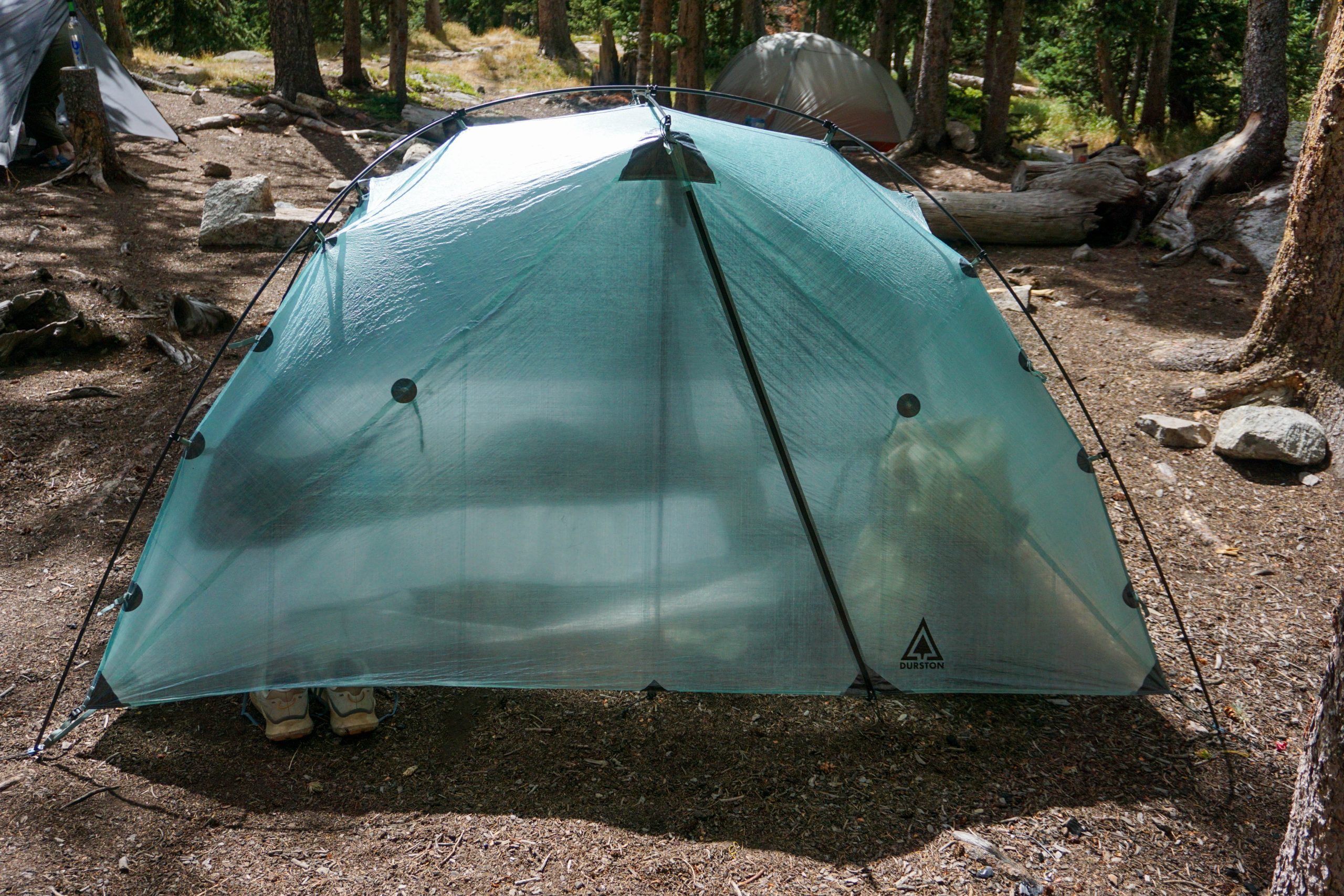
The tent can be pitched with or without the rain fly, though choosing to treat the tent as more modular will complicate the setup process.
Combining freestanding convenience with a true double-wall build traditionally leads to a dramatically heavier tent, which is why hitting a sub-two-pound mark with those two design choices puts the X-Dome Pro in a very unique category.
Usage
Now, let’s get into how the tent actually performs.
Moisture Management
One of my only complaints about the X-Dome 2 tent was the splashback under the silpoly fly. When it rained, I would often feel little drops hitting my face through the bug netting due to splatter kicking up under the rain fly. However, the X-Dome Pro 1+ appears to have fixed this.
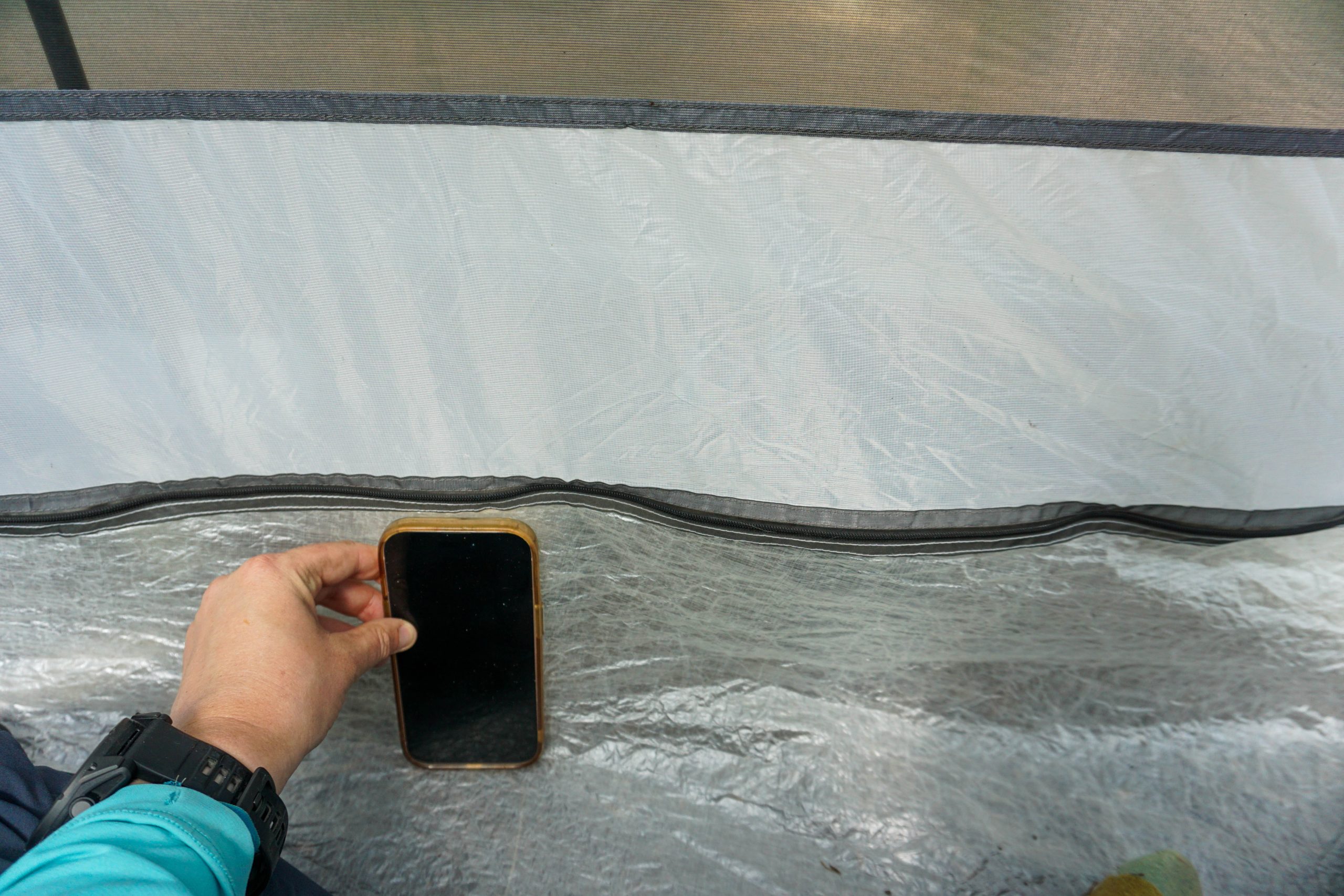
Not only does the bathtub floor extend about one iPhone length off the ground, but the strip of white fabric above also blocks splatter from entering the tent.
Not only does the door sit a little higher up on the design, but there is a large strip of material along the first foot of the tent that is tightly woven and, in my experience, has prevented splashback from getting into the tent itself. I have even been able to keep a door open in moderate rainfall; the design of the door diverts water away from the open vestibule.
Additionally, the rain fly does better in wet conditions than its silpoly predecessors. Since DCF doesn’t absorb water into its fibers at all, I have been able to pick up the tent in the mornings and shake most of the moisture off before packing up camp.
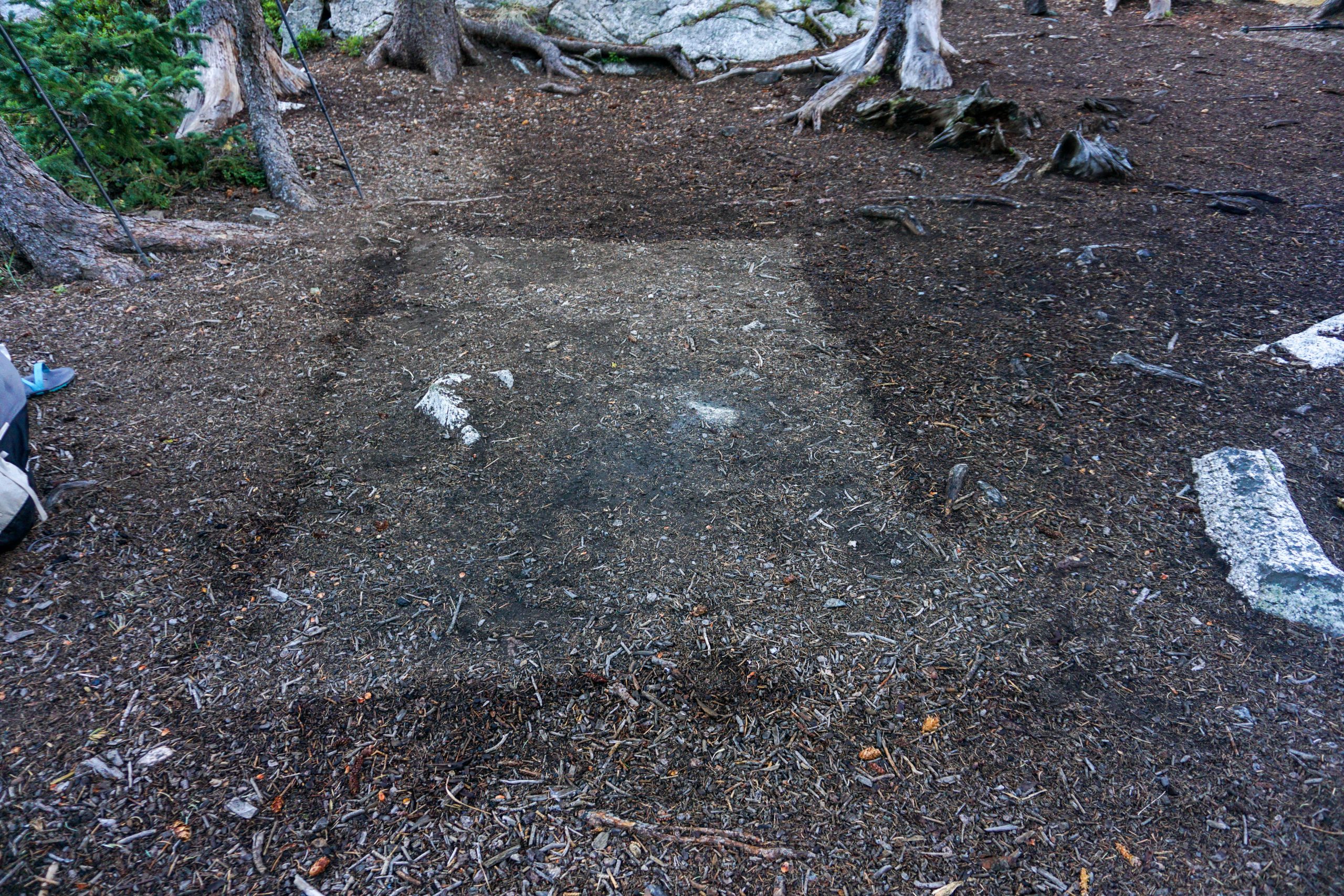
The tent was very effective at shedding rain; it was quite clear when I lifted the tent in the morning exactly where the walls funneled all the drips.
Setup
The X-Dome Pro lets you customize the setup: rain fly only, rain fly and inner, or just the inner bug net. While this is a neat feature, I have found that it’s not very practical to change your mind each night. When the two components are separated, you pitch the rain fly first and then clip the inner to the DCF. It’s not a terribly complex system, but it is a bit of a hassle to do each time you set up.
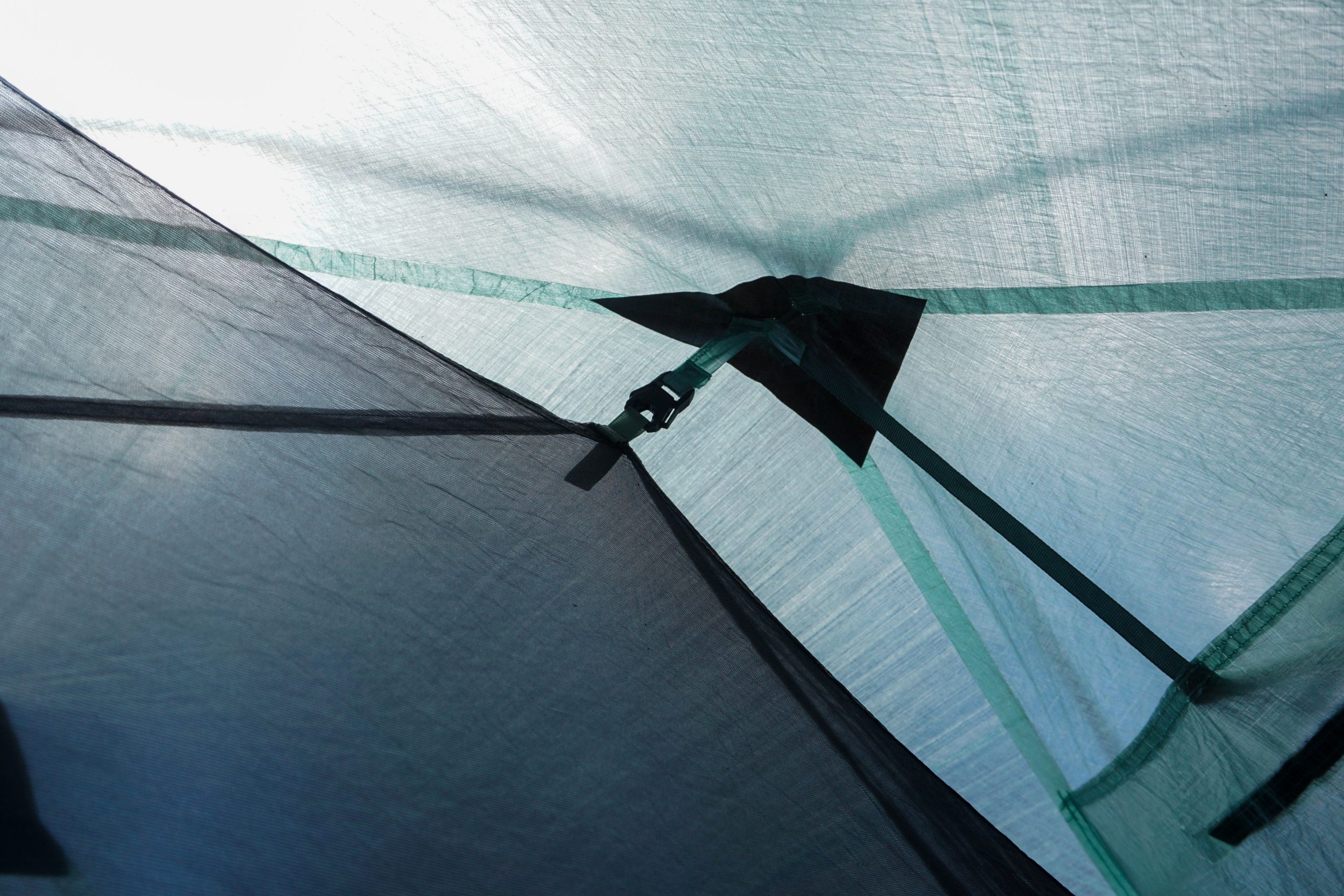
You need to crawl into the tent a bit to attach the inner to the outer the first time you set it up. You can then choose to leave these attached, or take the inner out if you want to pitch this as more of a freestanding tarp.
You are able to leave the inner attached to the rain fly, which then lets you pack both away together and pitch them at the same time during your next set up. I have found myself just keeping these two pieces together all the time; while there is that option to decouple them and treat the tent as a modular bug net and tarp, I personally would rather simplify setup.
Also, while the tent is absolutely fully freestanding, I found that I should always carry stakes with me as a backup. Under most conditions, not utilizing stakes would be absolutely fine, but I found myself caught in a particularly windy night where stakes were a necessity. Not only did the poles bend under the gusts and warp the tent structure in the night, but the tent is so lightweight that it was difficult to even get set up without it flying away.
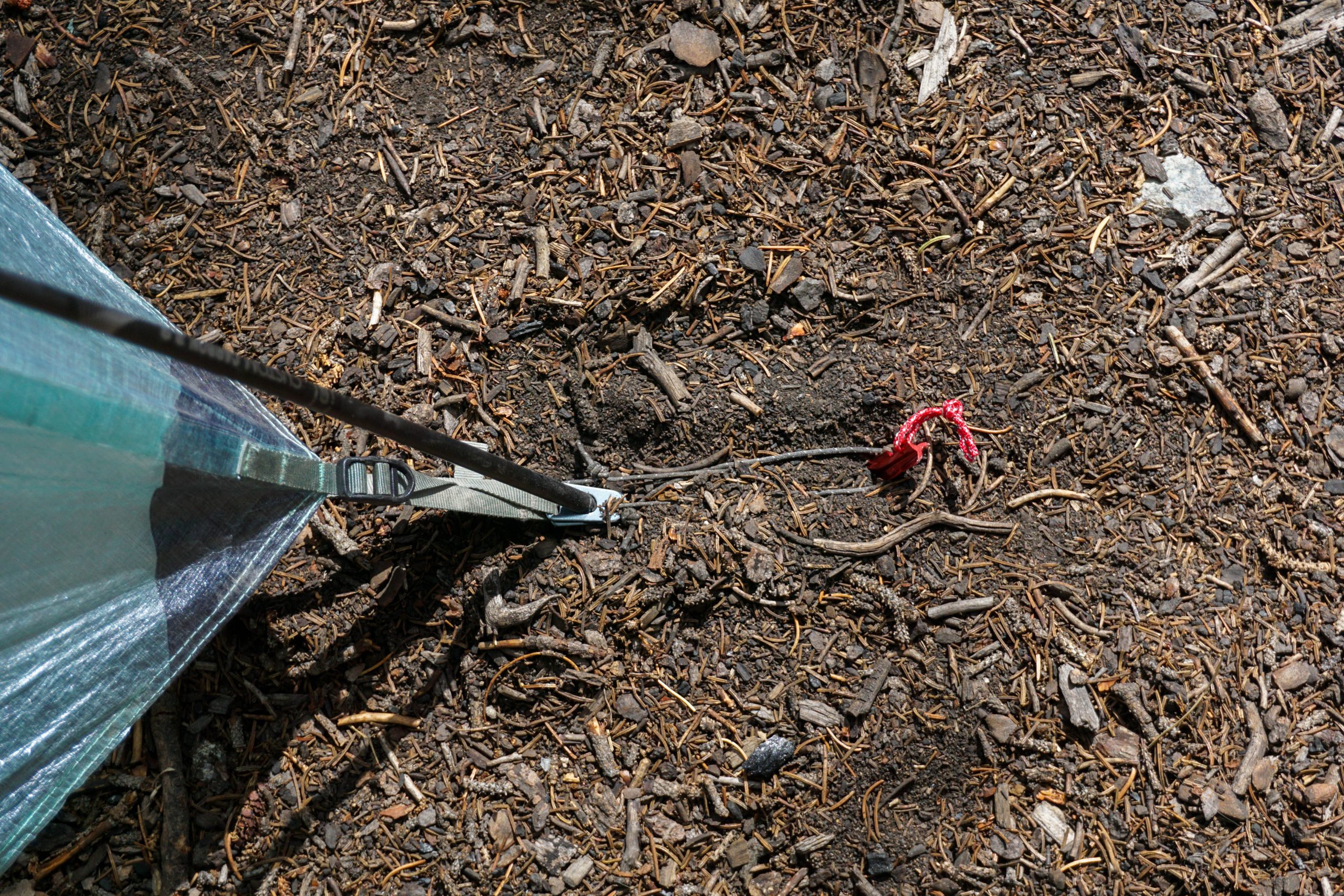
Stakes are not strictly needed, but will be helpful in gusty conditions.
Packability and Durability
Compared to silpoly, DCF gives the benefit of amazing weight savings at the trade-off of packed size and durability. The polyester is able to compress much more than DCF, and is malleable enough to fill the gaps at the bottom of a backpack. DCF is stiffer, and resists a lot of compression. While the packed size of the X-Dome Pro 1+ is still fairly small, it’s certainly bulkier than the same tent made from silpoly.
Additionally, DCF will be just a tad less durable. Dyneema is nearly impossible to rip or tear, but repeated folding and long-term abrasive friction will eventually form pinholes in the fabric. Silpoly handles repeated stuffing, rough handling, and ground friction with greater forgiveness. However, as mentioned above, DCF delivers its benefits when it comes to weight.
However, the new poles add a durability boost. Standard tent poles rely on metal insert sleeves or aluminum ferrules to join sections, introducing weak points where materials flex unevenly or corrode over time. The updated pole set on the Pro version replaces those traditional metal fittings with full carbon-composite inserts that match the makeup of the main poles. This creates a homogeneous structure that disperses bending stress evenly across the frame, lengthening the lifespan of the pole.
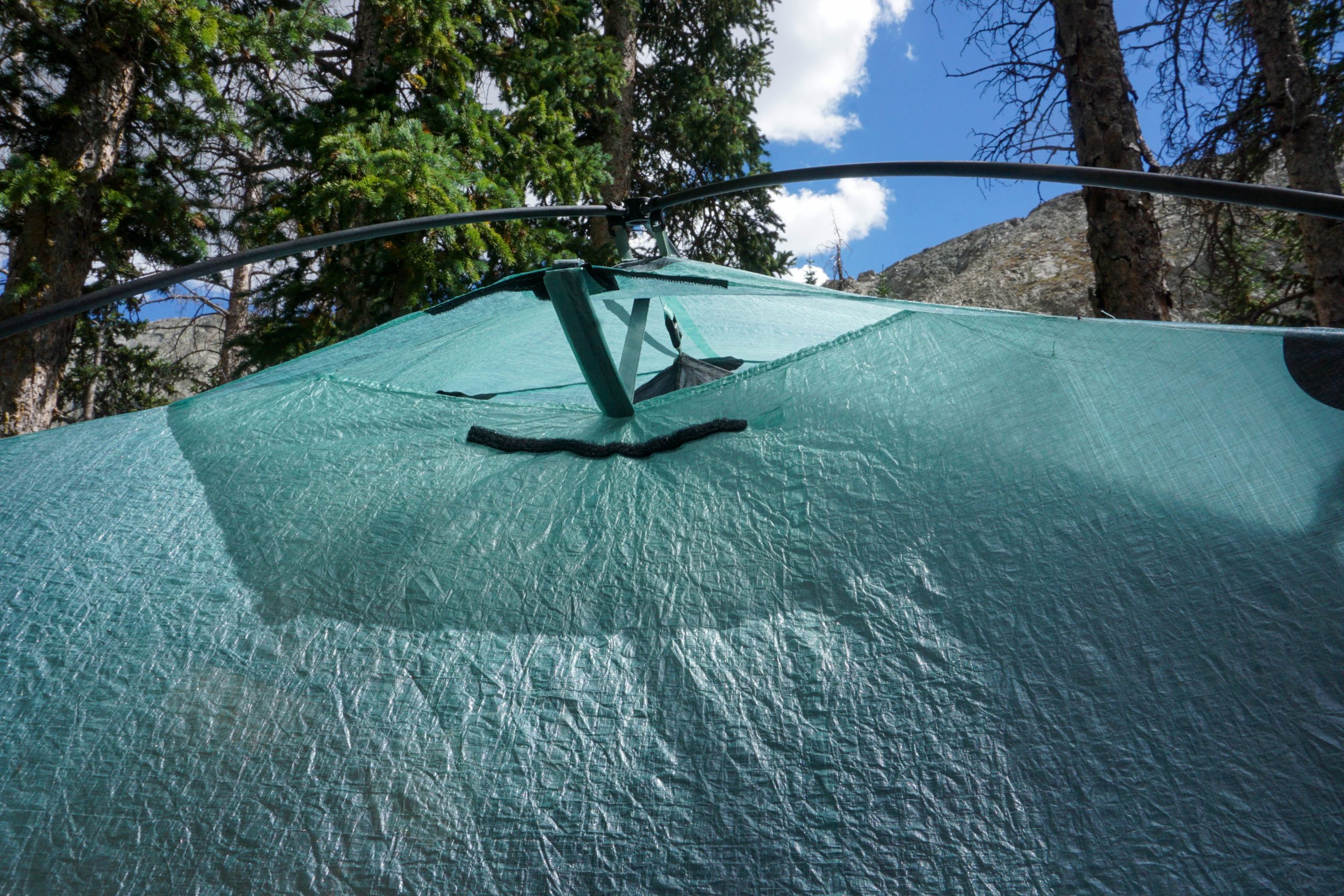
The poles are extremely lightweight without sacrificing durability.
Liveability
This tent feels like a palace.
It has an interior volume larger than most tents in the solo ultralight category, and plenty of vertical and horizontal space (for reference, I am 5’10”). Not only did I fit comfortably inside, but so did all my gear, my wide sleeping pad, my shoes, and an umbrella.
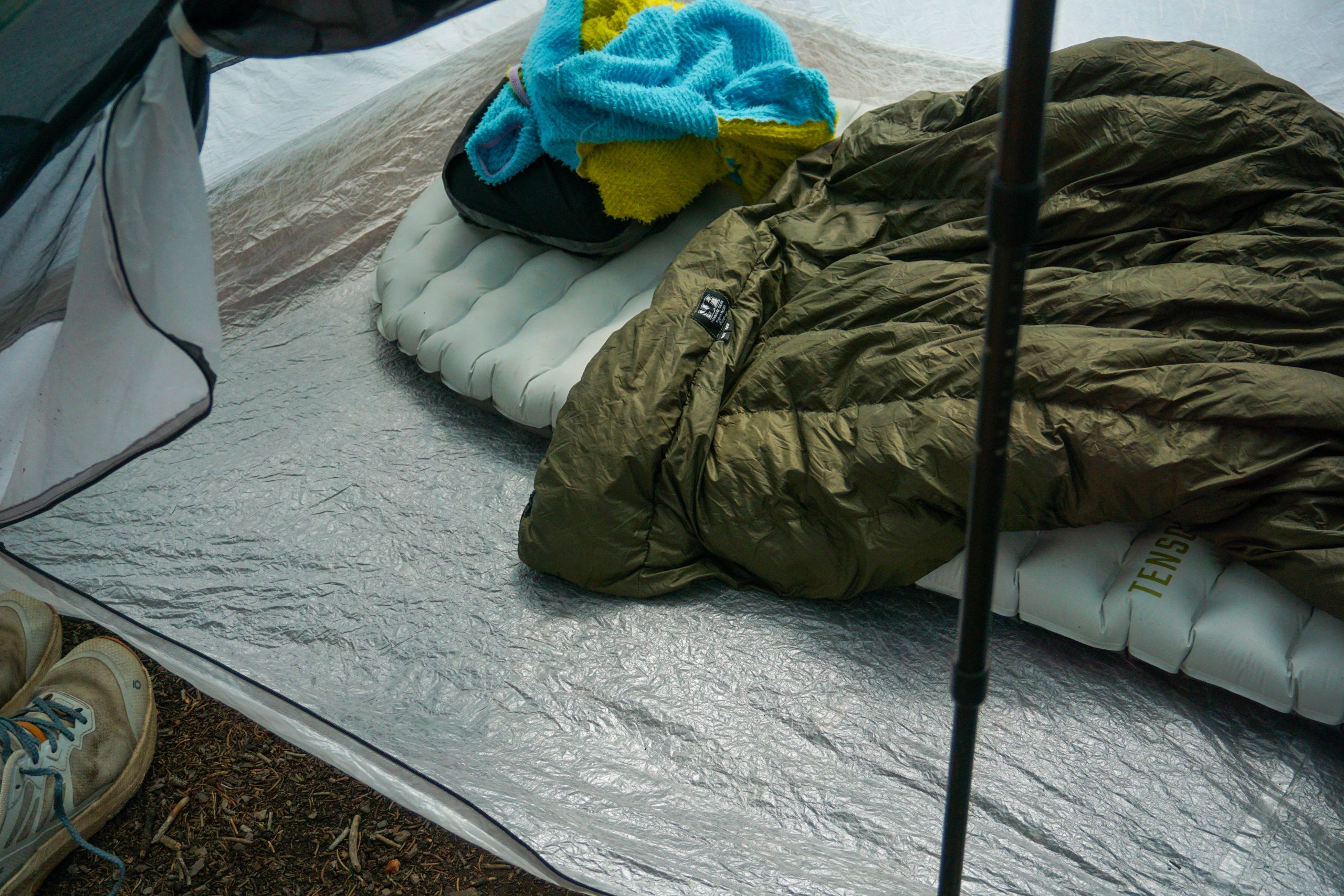
On this trip, I took a more narrow sleeping pad and could have fit a second person inside in a pinch. However, this tent should be treated as a roomy one person tent; cramming a second person in would be crowded at best.
For things you want stored outside of the body of the tent, there is a roomy vestibule on one side. Especially since there is only one vestibule, I would not recommend sleeping more than one person in this tent. In an emergency, two narrow pads could fit next to each other, but it would be a very cramped setup.
Durston X-Dome Pro 1+ Pros
Sub-Two-Pound Freestanding Weight: Tipping the scale at just 1 lb 11.5 oz, the design gives you a true double-wall and dedicated set of poles well below the weight of similar tents.
No Splashback: A low cut along the fly hem combined with dense, tightly woven fabric along the lower tent perimeter blocks ground splatter from kicking up through the mesh during heavy rain.
Fly Fabric: Non-absorbent DCF sheds water almost completely with a quick shake, preventing you from packing wet, heavy fabric into your pack the next morning.
The Interior Size: Generous floor area and vertical wall geometry provide ample headroom and width, leaving plenty of extra space alongside a wide pad for full packs and miscellaneous gear.
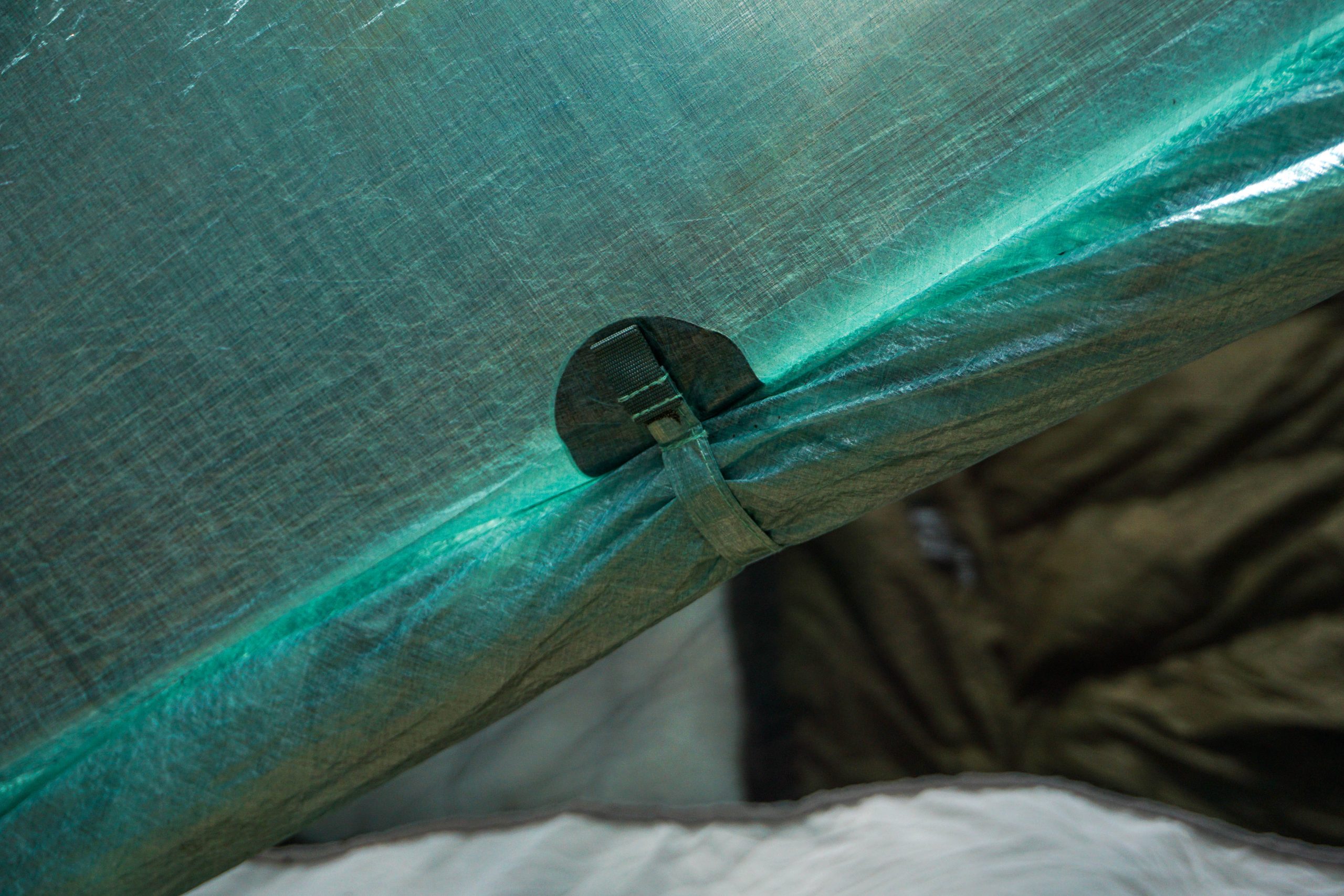
Both the inner and the rain fly are held open by magnetic toggles, which I found to be quite strong and useful.
Durston X-Dome Pro 1+ Cons
Price compared to X-Dome 1+: At $849, the premium for the tent materials creates a steep price jump over the standard silpoly version for relatively small weight savings.
Inconvenient to Pitch Fly and Netting Separately Each Time: Unclipping and managing the inner canopy separately adds time at camp, making modular pitching far more frustrating than just keeping the shelter pre-connected.
I have personally found it easiest to just leave the inner and the rain fly connected all the time.
Packed Volume: DCF resists squishing, taking up more pack space than a silpoly shelter of the exact same dimensions.
Would I Recommend It?
This is a tricky question, and I hope you’ll bear with me not giving a simple yes or no answer.
To start, this tent is fantastic. It has become my go-to tent to reach for when I head out on weekend backpacking trips, and I really had to think about things to call out as my complaints in its use and livability. However, there are still some reasons why I would pause before recommending purchasing the tent.
This tent is almost exactly the same tent as Durston’s original X-Dome 1+, except it has different materials, including the DCF and the carbon pole joints. Those additions do make the tent better, but it also makes it over twice the price as the silpoly version (419 USD compared to 849 USD). Personally, I’m not sure if the practical upgrades between the two versions will be worth 430 USD extra for most people.
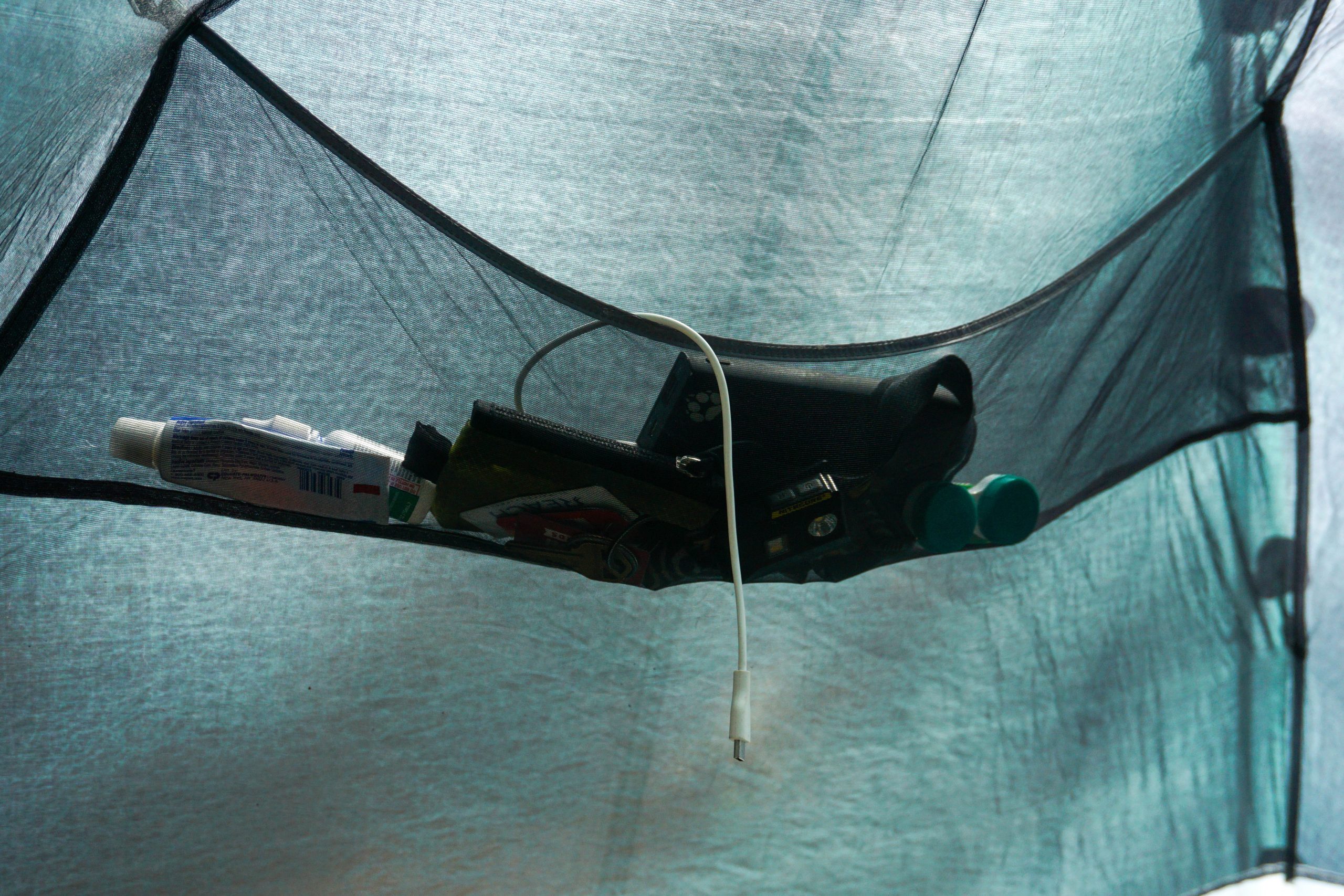
A long shelf pocket sits above the head side of the tent, letting you store bulkier gear.
If weight savings are paramount to you, I would suggest the non-freestanding, 17.1 oz X-Mid Pro 1 for $600. If weight savings are not among your top few concerns when it comes to a tent (for example, if you’re really hoping to prioritize a freestanding setup), I would direct you towards the X-Dome 1+ made from silpoly; it’s only 7.2 oz heavier than the Pro version, and over 400 USD less.
However, if you’re excited about the weight savings and durability added by the new poles, looking to enjoy the lifestyle benefits of the DCF fly (namely, the ability to shake off water), and not terribly concerned about the extra money, the X-Dome Pro 1+ is a great tent.
In short, you can’t really go wrong with any of Durston’s tents.
Shop the Durston X-Dome Pro 1+ Tent
Comparable Products
Durston X-Dome 1+
Price: $419
Weight: 34.7 oz
Structure: Double-walled
Hyperlite Mountain Gear Crosspeak 1
Price: $825
Weight: 28.7 oz
Structure: Single-walled
The Durston X-Dome Pro 1+ Tent was donated for purpose of review
Editor’s note: This article originally described the X-Dome 1+ as ‘the lightest freestanding double-wall tent in the world.’ While it is among the lightest tents in this category, it is not strictly the lightest option. The review has been edited to clarify this.

This website contains affiliate links, which means The Trek may receive a percentage of any product or service you purchase using the links in the articles or advertisements. The buyer pays the same price as they would otherwise, and your purchase helps to support The Trek's ongoing goal to serve you quality backpacking advice and information. Thanks for your support!
To learn more, please visit the About This Site page.

Comments 7
Great and thorough review. Thank you.
My only reservation would be the carbon poles. In my experience they are less reliable than aluminum.
Thank you! You’re not the first I’ve heard say this about the carbon poles. I don’t think I’m the world’s gentlest person with my gear, but I’ve never had issues with carbon poles in the past. Perhaps I’ve just gotten lucky? Every time I test a tent with carbon poles I stress them pretty severely because I constantly hear about reliability issues, but I have still yet to experience that!
However, I will be sure to update this review if I notice any issues with them with continued use.
I’d include the see+through fly as a con.
(Sorry for the double post!)
That’s super fair! I considered it, but ultimately decided not to because you can’t really see a person inside the tent once it’s closed. The fly is certainly see-through, but I think my picture almost does it a disservice by making the tent itself look less opaque than it really is. Once inside with the bug net closed as well, I didn’t feel any lack of privacy.
I’d include the see-through fly as a con.
Freestanding and double wall at that weight was the combination that seemed impossible for years. Testing it properly rather than quoting the spec sheet is what makes the review worth reading.