
 ">
Exped Ultra 10R Sleeping Mat Review: This Is One of the Warmest Backpacking Sleeping Pads Available
The Exped Ultra 10R Sleeping Pad is an ultralight, all-season inflatable backpacking mattress. Designed for maximum warmth in extreme temperatures (down to -40° Fahrenheit), its intended use if for winter backpacking, high mountain treks and alpine expeditions — and also for those of us who get really, really cold at night no matter where we’re sleeping.
The Ultra 10R’s weight-to-warmth ratio is outstanding: the pad has an R-value of 10.2, and the rectangular-shaped medium size (perfect for most of us) weighs less than 2 pounds. This is the warmest sleeping pad in the Exped Ultra Series.
Exped Ultra 10R Sleeping Mat At-a-Glance
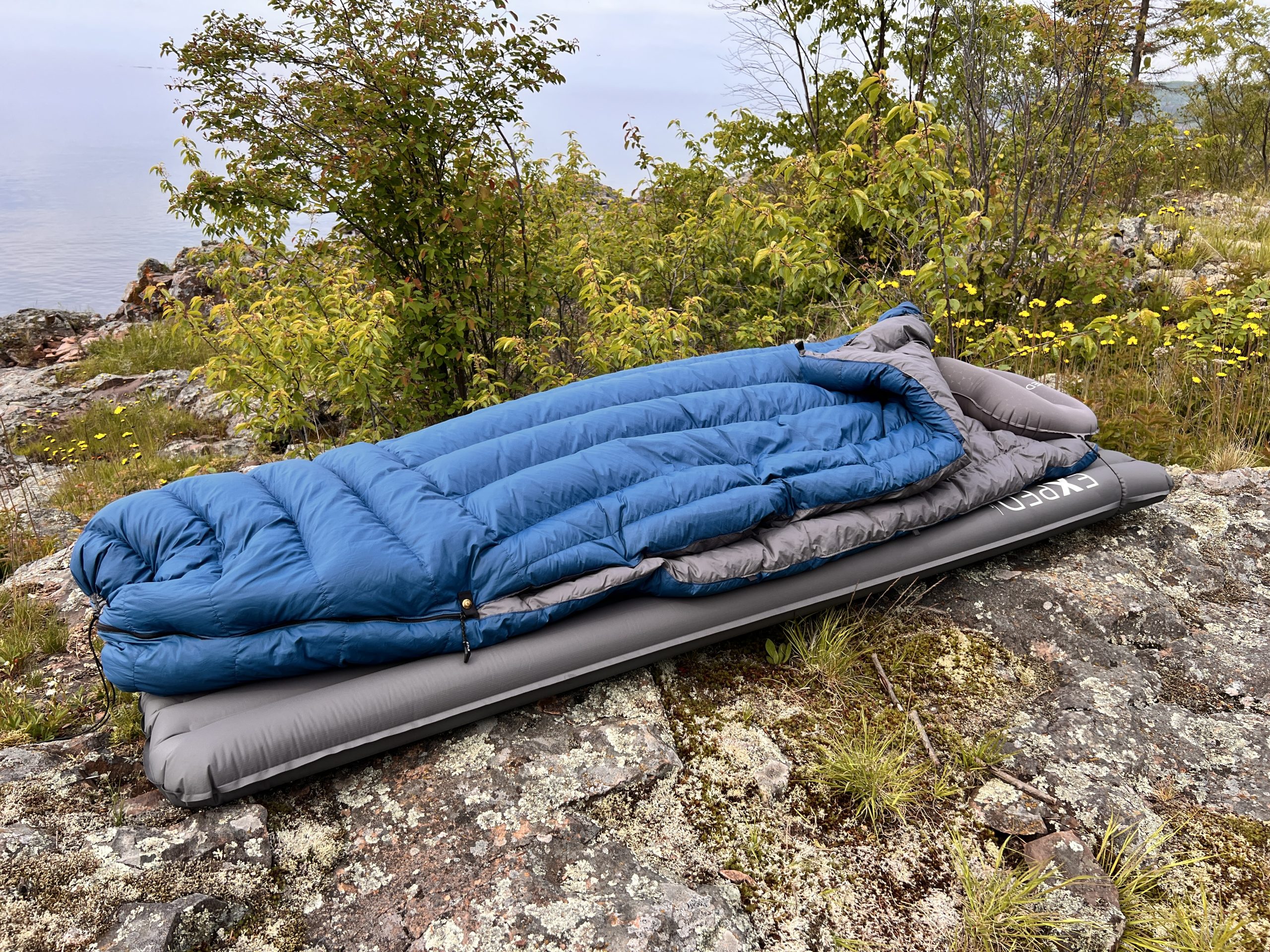
MSRP: $269.95 (USD)
Season: All-season, rated for -40° Fahrenheit
R-Value (ASTM): 10.2
Materials:
Outer: recycled 20 D ripstop polyester, TPU polyether film laminate
Insulation: recycled Texpedloft microfiber, reflective foil
Weight:
Medium: 1 lb. 11.5 oz.
Medium Wide: 2 lbs. 1 oz.
Long Wide: 2 lbs. 4 oz.
Dimensions:
Medium: 72 x 20.5 x 3.5 inches
Medium Wide: 72 x 25.6 x 3.5 inches
Long Wide: 77.6 x 25.6 x 3.5 inches
 Circumstances of Review
The Exped Ultra 10R Sleeping Mat is intended for cold weather adventures. We’re talking winter backpacking in the Boundary Waters, but also mountaineering and alpine adventures, and anything high altitude like the Himalaya.
And that is exactly where I brought the Exped to test in the field: I trekked in Upper Dolpo, an extremely remote and very high arid desert in Western Nepal. Temperatures would drop into the single digits at night, but more critically, the wind was fierce and the rocky ground was cold. Even in May, it snowed at night, but I slept blissfully unaware of all that on my personal cloud of comfort.
Exped Ultra 10R Sleeping Mat Features
Synmat Plus is Exped’s trademark insulation technology. It combines recycled synthetic microfiber with layers of reflective foil to create an efficient insulation that makes the pad uber warm and lightweight. I was floored by how quiet the pad was, not once crinkling as I moved around at night.
Schnozzel Pumpbag and FlatValves: The included pumb sack, paired with the separate inflate and deflate valves, make filling and emptying this beast easy and quick, even in thin air. That’s because you never have to blow into it with your mouth. You simply grab the ambient air in the bag and squeeze it in. While that technique takes a little practice, it would normally take me five bags of air to get the pad taut. In the morning, I simply folded the mat in thirds and rolled it up to press out the air.
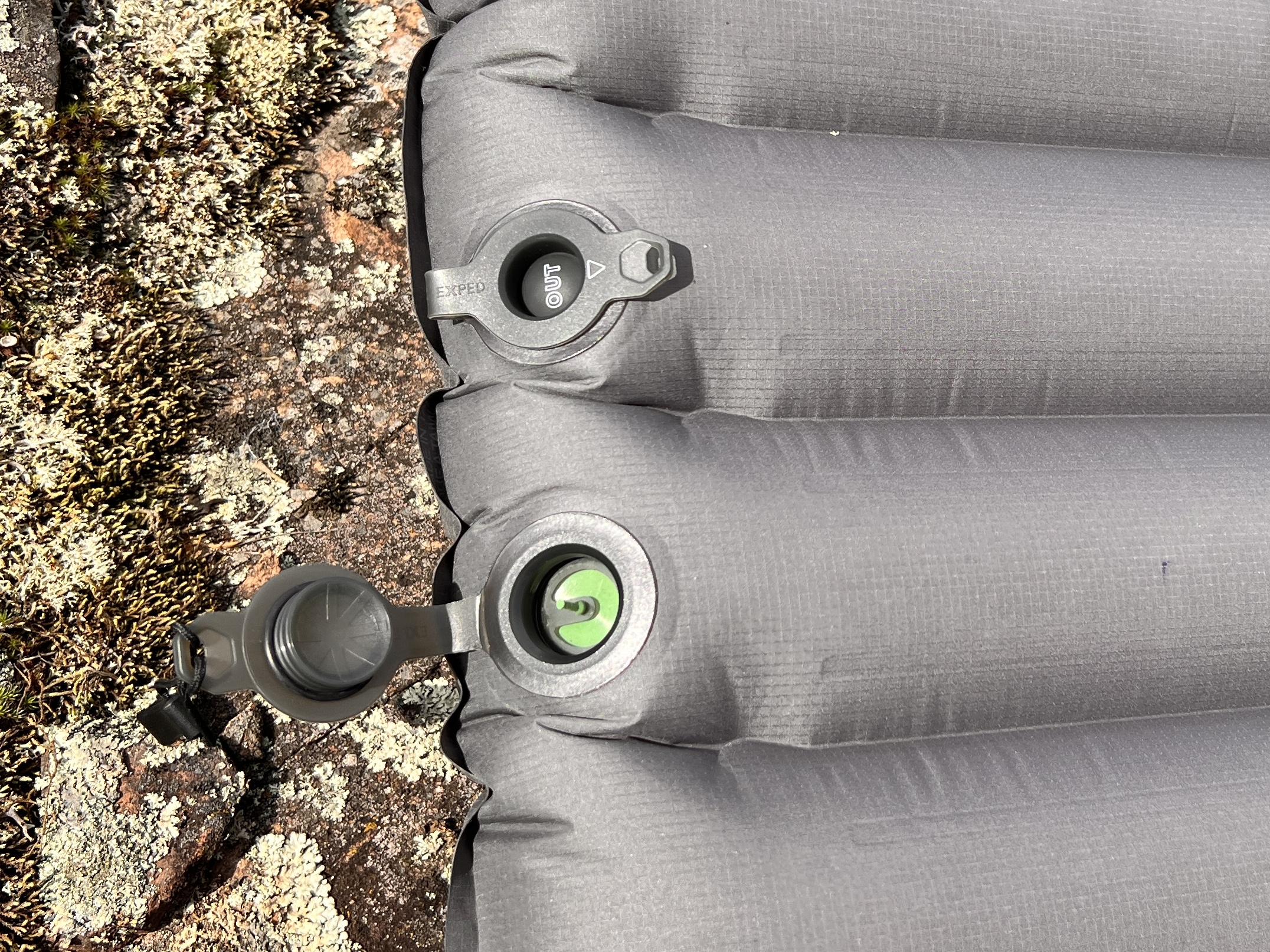
Comfort Cradle: The idea of this trademarked system is that the side rails are larger than the inner air chambers and they center you on the mat. As a restless sleeper who never ends up in the same spot by morning, this was essential for restful sleep.
Bluesign approved fabrics: The fabric in Exped Sleeping Mats are sourced from a supply chain that eliminates hazardous substances, conserves water and energy and protects factory workers. Also, the mats are made with recycled synthetic insulation that is more sustainable and environmentally conscious.
Exped Ultra 10R Sleeping Mat Usage
Warmth
One thing I have had trouble understanding is just exactly what R-value is and how we can know whether this mat will keep us warm when it’s minus 40°.
So I got educated.
Essentially, R-value measure a material’s thermal resistance, its ability to resist heat flow. It’s important to know because when we’re sleeping out in the wild, especially an extreme environment like the Himalaya, we want to ensure we don’t lose body heat. To test a sleeping mat’s R-value, Exped sends it to a lab for a rigorous, standardized test developed by ASTM International.
Here’s what that looks like: the mat itself is sandwiched between two metal plates in a temperature-controlled chamber. The top plate is heated to a normal body temperature, while the bottom is chilled. Over a period of time, testers measure how much electrical energy the top plate requires to maintain its temperature.
I can’t speak personally to this mat’s insulating performance at the lowest rated temperature (minus 40) since I only saw temperatures between 5 and 10° Fahrenheit. Still, 5 – 10˚F is very cold indeed to sleep on the ground, and I stayed warm.
The key with a high R-value pad is that it works in tandem with your sleeping bag, ensuring that you can achieve the bag’s stated level of warmth without all the heat trapped by the bag draining away into the ground. For comparison, on a different Himalayan expedition, I slept on a lighter pad with a R-value around 4. Even though my sleeping bag was rated to 20 degrees, I needed to cuddle up with hot water bottles at night to stay warm.
Comfort
When I got the pad all blown up and set into position, I have to be honest: it didn’t look particularly fancy. It’s a dark gray, rectangular pad that has a whiff of old-school feel (e.g., heavy and cumbersome). It also looked thin with that water-bed flavor that would either leave me uncomfortbaly wedged into a crevice or thrown off the pad completely by morning.
The reality was quite the opposite. While I want to make the caveat that I tend to prefer harder mattresses, I felt both cradled and supported on the Exped. Each vertical chamber is welded, keeping the pad from feeling like a bouncing balloon. The outer chambers have just a tiny bit more loft to keep you centered. Maybe most importantly, the pad remained absolutely silent while I faffed about in my sleep. Just a note here, many a camper sleeping near me has complained about my noisy sleep habits from noisy sleep pads over the years.
Another noteworthy comfort feature is the rectangular shape, which made this pad feel luxurious and more apt to hold my body while I slept compared to a more minimalist, mummy-shaped pad. Have you ever found it hard to keep your arms on your sleeping pad? They tend to flop off or feel unsupported. As a side-sleeper, I have often had my arms go numb overnight while backpacking. In contrast, the Exped Ultra 10R felt similar to my own cozy bed at home and my arms had plenty of support.
Ease of Use
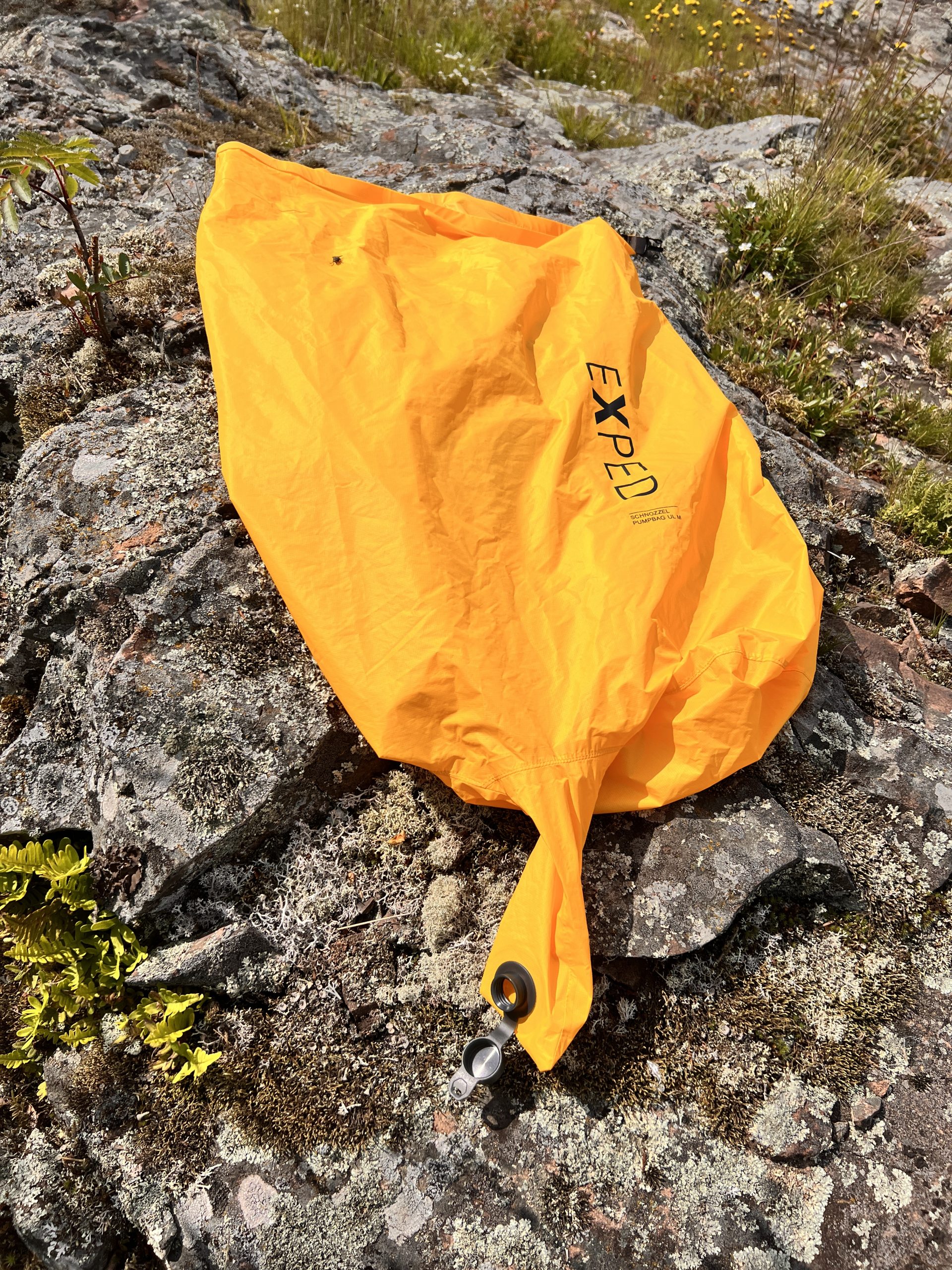
The Schnozzel pump bag is unassuming yet very effective
I admit it took a bit of practice to figure out how to fill the Schnozzel pump bag (though very fun to say Schnozzel pump bag over and over and elicit a giggle.) The Schnozzel pump bag is a multi-purpose dry sack that inflates the air mattress quickly. It works by your manually scooping ambient air into the bag, sealing the roll-top and then squeezing the air into the sleeping pad. This eliminates the need for bulky air pumps and prevents moisture from your breath from causing mold inside the pad.
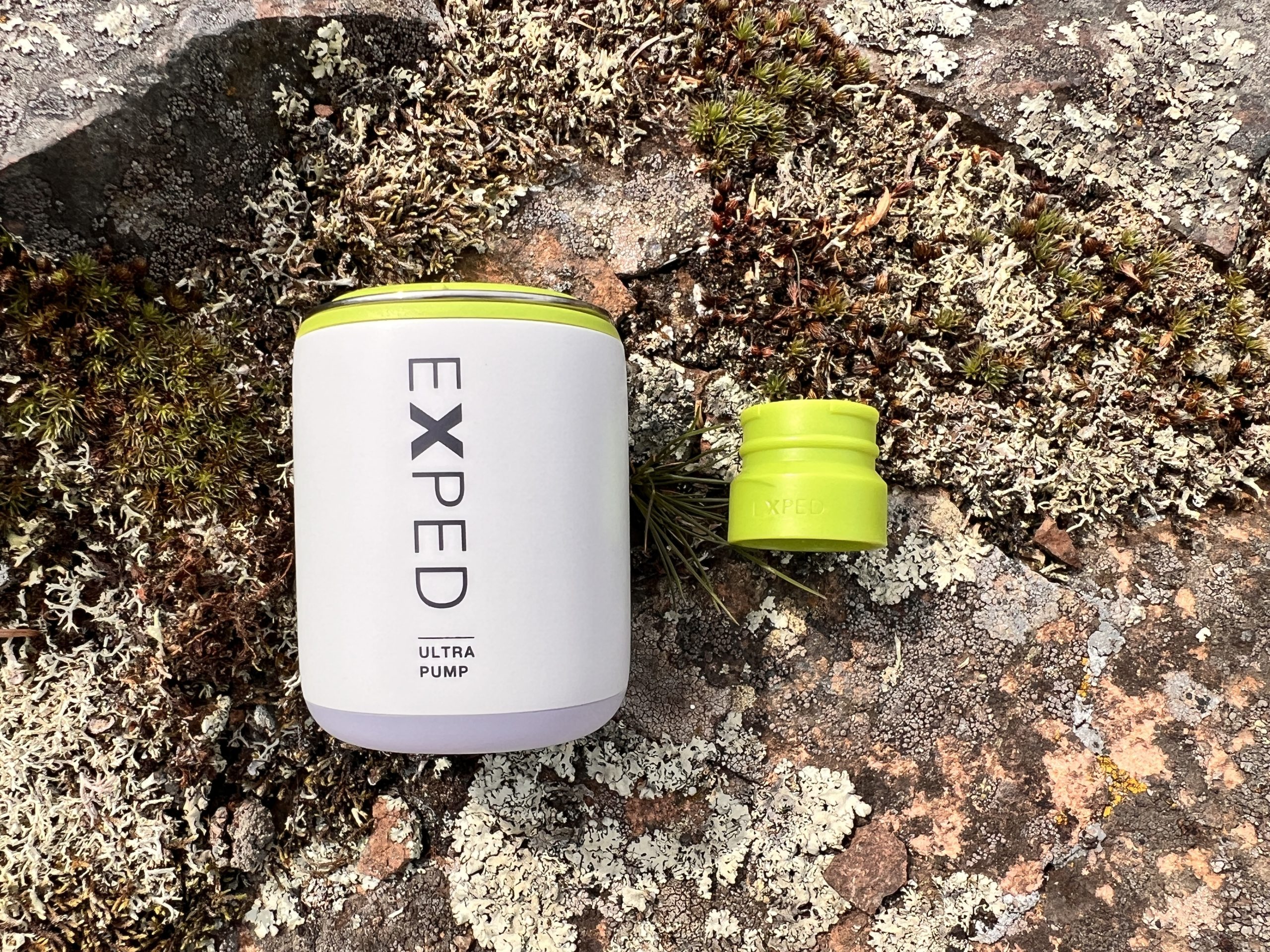
I never bothered sealing the roll-top. Instead I raised the bag or pointed it towards the wind if my tent fly was still open, then sent the air inside. Exped does sell separately a tiny, 3.5 ounce, rechargeable electric pump. I used it and it works like a dream. But honestly, this is not like filling a paddle board. If even I can fill the pad with my lousy Schnozzel skills, there’s really no need to take another piece of gear.
Packability
A caveat here: a trek in the Upper Dolpo region of the Himalaya requires a guide and is more feasible with the support of porters and a cook. As a result, I never had to carry the Exped Ultra 10R in my pack.
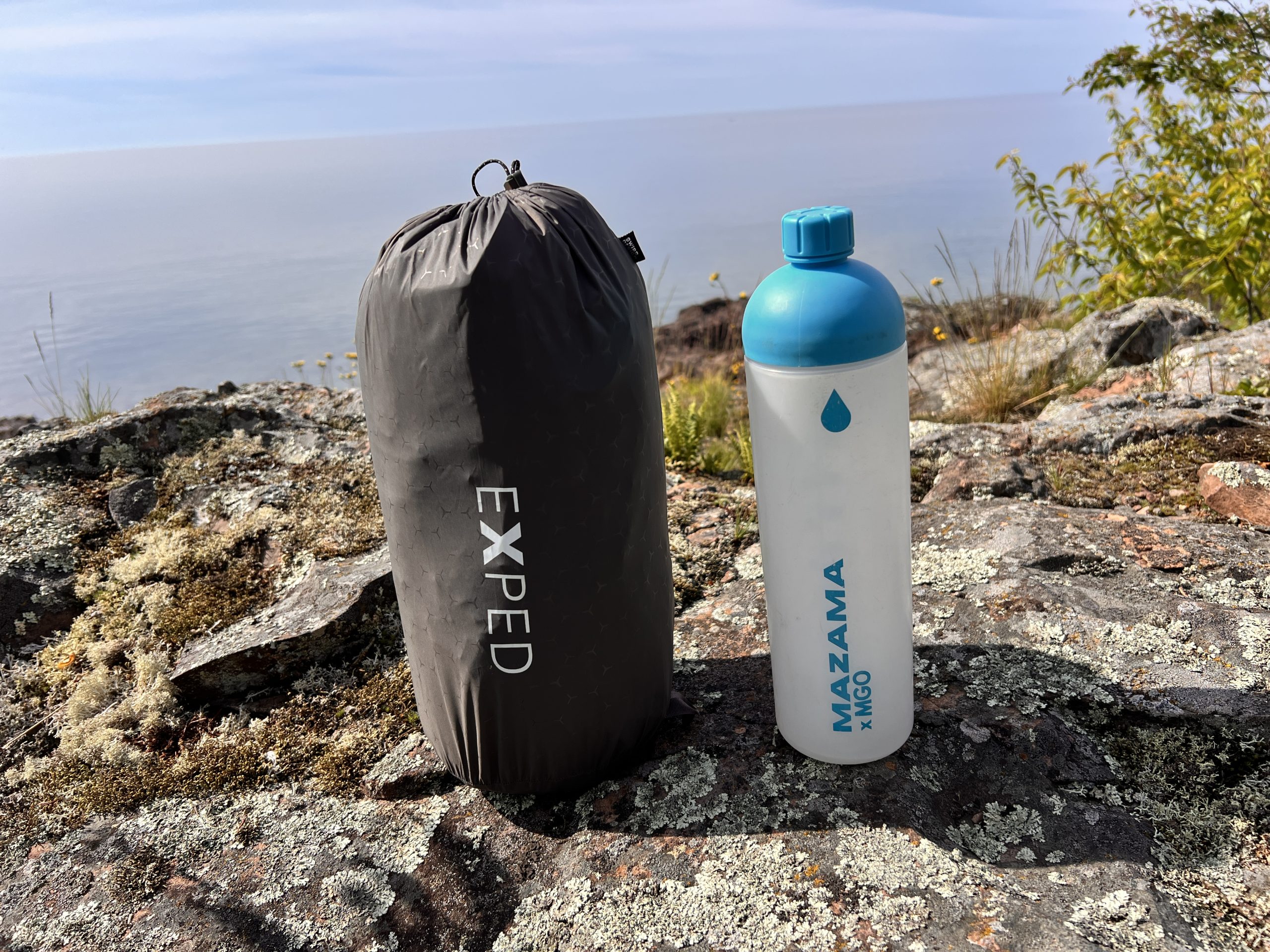
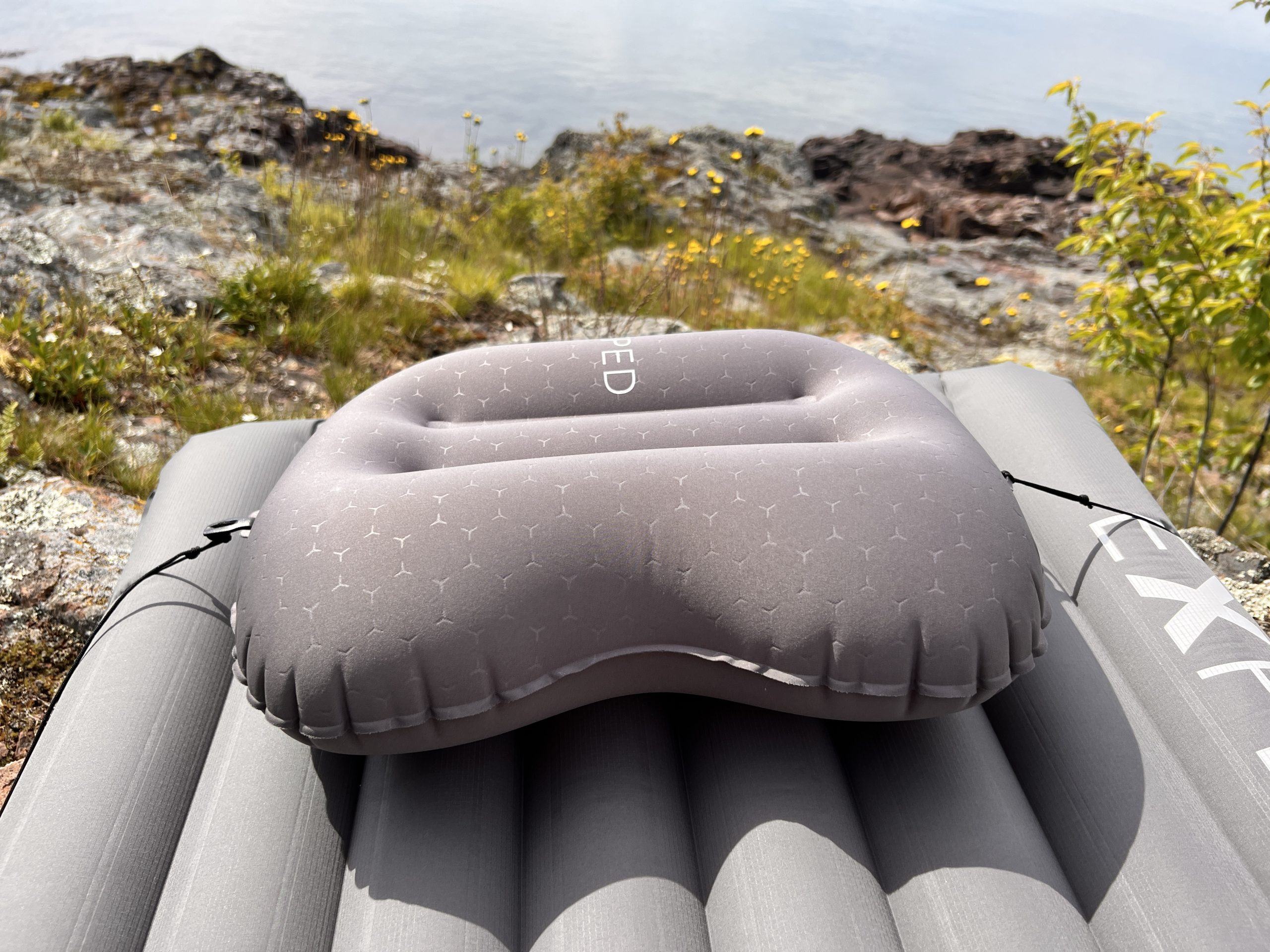
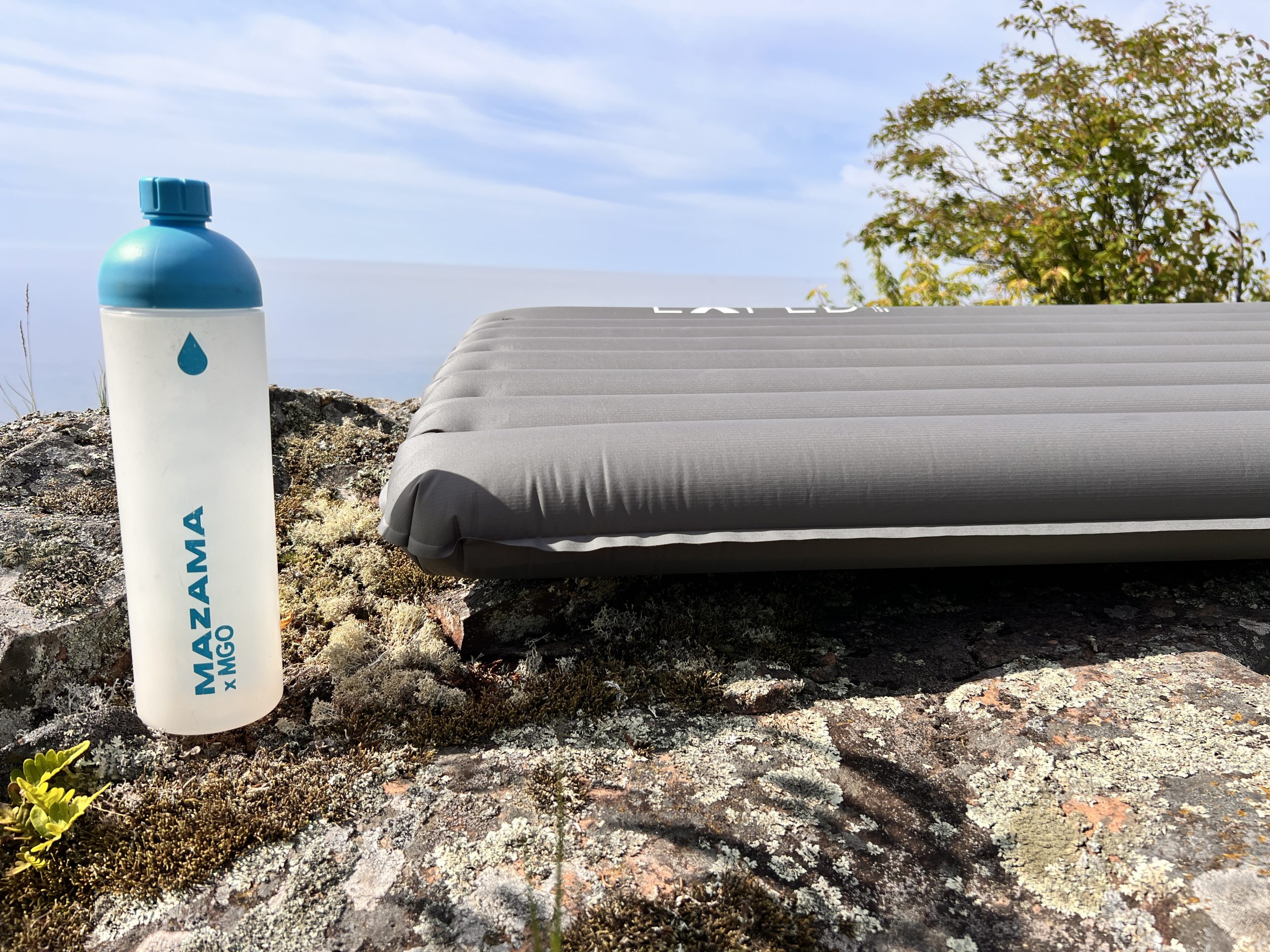
A little taller than a one-liter water bottle, the pad is not tiny, but I would liken its size to a small tent. Should you be using a pulk or sled while skiing or snowshoeing, or if gear is being transferred over many trips to high camps, the pad’s size is negligible. I was able to fit into the stuff sack not only the mattress, but also the Schnozzel pump bag and the very comfortable, attachable Exped pillow.
Durability
If you you could experience how a Nepali porter grabs a duffel, joins it with two other duffels by tying them tightly together, then attaches them via a tumpline to his forehead and carries them up and over 17,000-foot passes, you would be very humbled indeed.
The young man who carried my gear (who was well paid and given a good tip for all his work) would drop my bag on the ground as he sat down, unconcerned about what might tear or get damaged inside. One evening, I received my bag muddy and damp when he slipped at a water crossing. Nothing was damaged.
The Exped Ultra 10R Sleeping Mat is made of 20-denier ripstop polyester, which is light and packs down small while also holding up its strength. It’s comfortable, but tough. The lamination itself is water-resistant and airtight, which should enhance its longevity. I slept on it, sat on it, ate dinner on it a few nights, all over a 20-day trek and never saw one blemish.
Sustainability
Perhaps most notable about this Exped pad (and really all of Exped’s products) is the brand’s desiccation to sustainability. It finances certified climate protection to offset all emissions from the production and transportation of its products.
For over a year, Exped has intentionally manufactured all of its products without added PFAS and, when possible, from recycled materials.
Most critically, Exped focuses on using Bluesign approved textiles, the strictest standard for not only environmental but also consumer protections.
Exped Ultra 10R Sleeping Mat Pros
- Extremely comfortable: The combination of warmth, supportive baffles designed to keep you on the pad, and the generous rectangular cut of the pad make for a comfortable night’s sleep.
- High warmth-to-weight ratio: With an R value of 10.2, it is one of the very warmest inflatable camping pads on the market while keeping the weight under 2 pounds.
- Easy to Inflate and Deflate: Dedicated inflate and deflate valves make the process easy, while the included Schnozzel pump bag (or an electronic pad pump) take all the suffering out of blowing a pad up in thin air.
- For its category, very packable: Packed size is 6.7 x 9.1 inches — about the height of a 1L Nalgene and slightly wider.
Exped Ultra 10R Sleeping Mat Cons
- Highly specialized: This pad is intended for four-season camping and mountaineering. Most three-season hikers will find it overkill and can find a lighter pad that will still keep them warm enough.
- 27 ounce weight penalty: Related to the above, many ultralight backpackers will balk at the 1 lb, 11 ounce weight penalty on this pad. It is not an unreasonable weight considering its astounding warmth, but again, this pad is best suited to very cold trips.
Accessories
- Exped attachable Ultra Pillow: I found this pillow very comfortable. It is inflatable, weighs less than 2 ounces, and packs down small.
- Exped Ultra Pump: This 3.5 ounce, USB-C rechargeable electronic pump is an alternative to manual inflation via either breath or the Schnozzel pump bag. It also includes an integrated mini camp lantern.
 Overall Value
The Exped Ultra 10R has very little competition in its category: backcountry sleeping pads with an R-value this high are rare. Among the few pads at this warmth level that do exist, the Ultra 10R’s warmth-to-weight ratio compares favorably.
Weighing less than two pounds and offering an R-Value of 10.2, all at a comparable price point, purchasing this particular sleeping pad is money well spent. Throw in its generous size and unbeatable comfort level, non-crinkly materials, and ease of inflation, and the Exped Ultra 10R Sleeping Mat gets my highest recommendation.
Shop the Exped Ultra 10R Sleeping Pad
Comparable Items
MSRP: 100 GBP (roughly 133 USD at time of publication)
Weight: 2 lb
R-value: 11
Rab Hypersphere Down Sleep Mat
MSRP: $250 – $280
Weight: 1 lb 13 oz
R-value: 9.5
Nemo Tensor Extreme Conditions Pad
MSRP: $260 – $300
Weight: 1 lb 2 oz
R-value: 8.5
Thermarest NeoAir XTherm NXT Sleeping Pad
MSRP: $229.95 – $269.95
Weight: 15.5 oz.
R-value: 7.3
The Exped Ultra 10R Sleeping Mat was donated for purpose of review.

This website contains affiliate links, which means The Trek may receive a percentage of any product or service you purchase using the links in the articles or advertisements. The buyer pays the same price as they would otherwise, and your purchase helps to support The Trek's ongoing goal to serve you quality backpacking advice and information. Thanks for your support!
To learn more, please visit the About This Site page.

Comments 1
Greetings!
I have used exped pads exclusively for many years. Suggestion for you in packing these thicker pads that works well for me.
I evacuate the pad completely. Even sitting on it to make sure I get all the air out of it, and rather than rolling it, I just fold it so it fits right in the bottom of my pack. I have not had any issues with this.
As a sidebar, the schnozzle bag makes a good stuff sack from my quilt.
Happy trails from the East Coast!