
 ">
Gossamer Gear The Free Tent Review: A Freestanding Double-Wall Tent Under 2 Pounds?
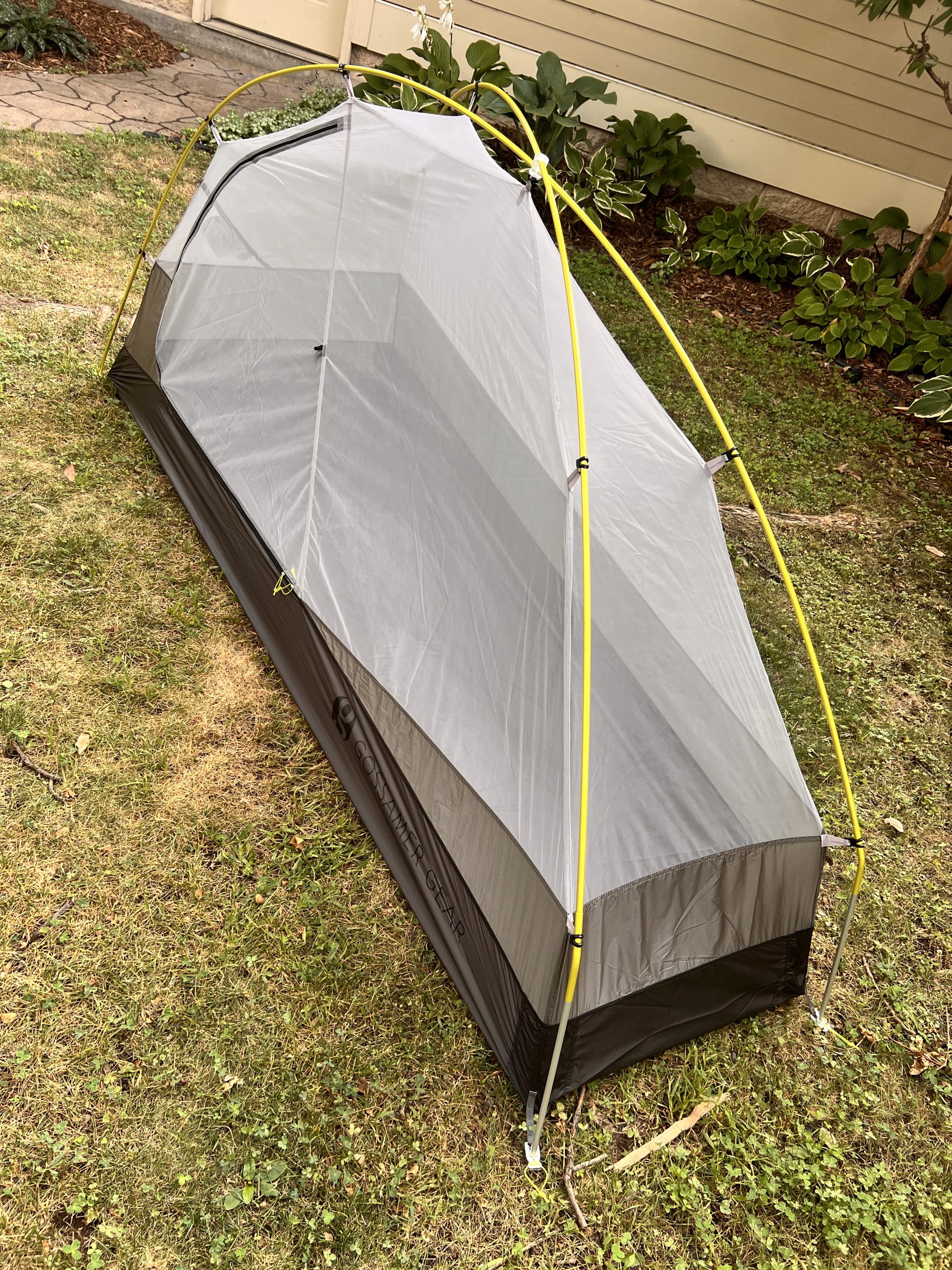
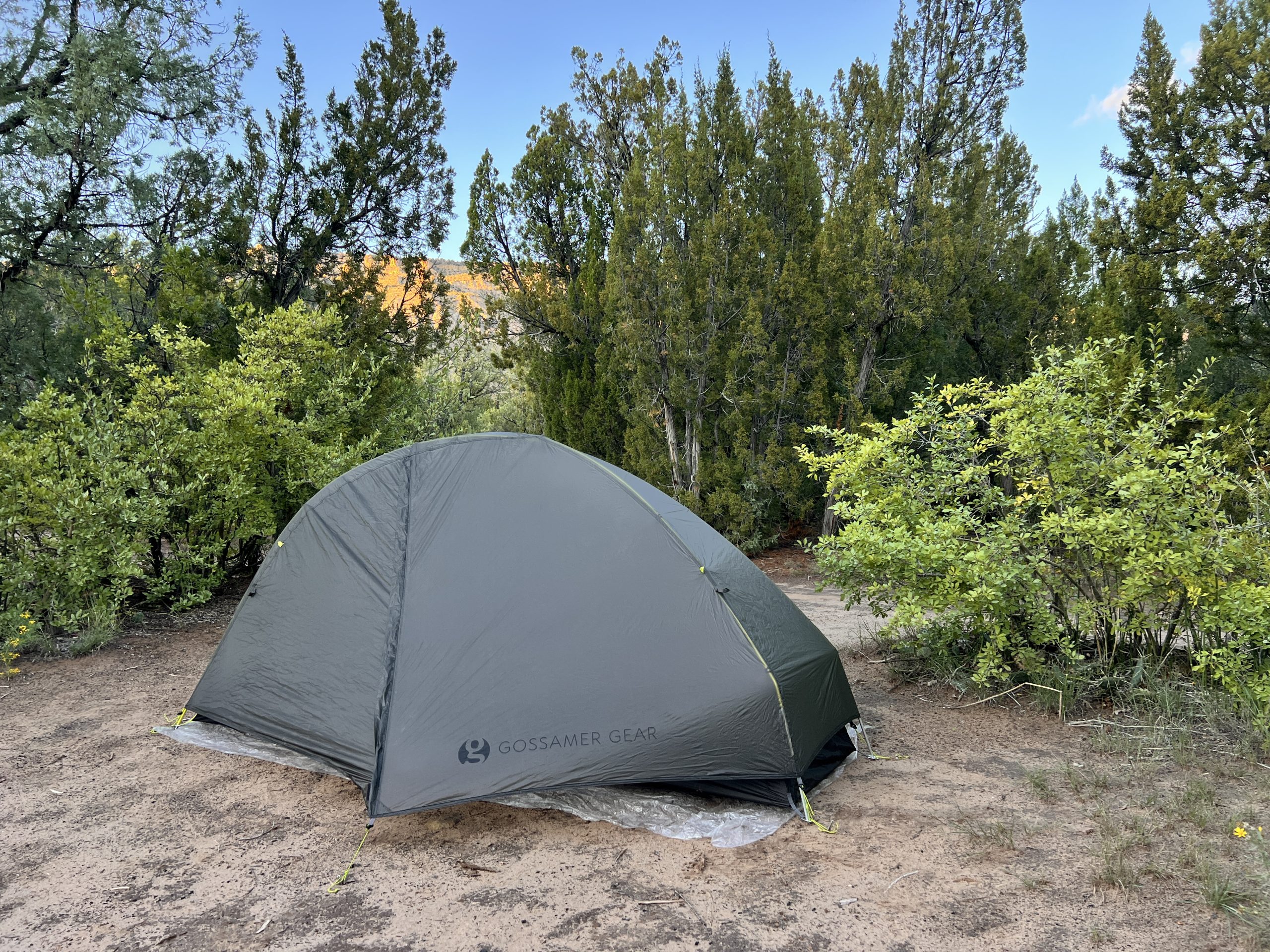
The Gossamer Gear The Free is a one-person, double-wall, freestanding ultralight backpacking tent. Unlike the brand’s traditional trekking-pole shelters, The Free uses a DAC aluminum hub-and-pole system to create a freestanding structure that can be easily repositioned at camp.
Constructed with Gossamer Gear’s exceptionally tear-resistant, PFAS-free nylon fabric, The Free aims to deliver durability and weather protection without unnecessary weight. At just 29.8 ounces, this tent joins the Durston X-Dome 1 and the Nemo Hornet Osmo 1 as one of the lightest freestanding, double-wall tents in the world — and it’s the most affordable of the three, to boot.
But does its minimalist design strike the right balance between weight savings, comfort, and practicality on the trail?
After taking The Free on a section hike of the Continental Divide Trail in northern New Mexico, I came away impressed by its weather-resistant construction and sturdy design. However, its narrow dimensions and some setup quirks left me wishing Gossamer Gear had not sacrificed quite so much interior space in the pursuit of ultralight performance.
Gossamer Gear The Free: At a Glance
- MSRP: $400
- Weight: 29.8 oz / 845 g
- Floor area: 16.5 sq ft / 1.53 sq m
- Peak height: 39 in / 99.1 cm
- Packed shelter dimensions: 17 × 5 × 5 in / 43.2 × 12.7 × 12.7 cm
- Recommended maximum user height: 6 ft 2 in
Materials and Construction
- Tent fabric: 15D recycled Robic fabric with a 20D dope-dyed ripstop SIL/PU coating
- Waterproof rating: 4,923 mm hydrostatic head
- Poles: DAC aluminum with green anodizing
- Stakes: Aluminum
- Zipper: YKK #3 coil zipper
- Floor design: Seven-inch-deep bathtub floor
- Seams: Factory-taped
Interior Dimensions
- Head width: 34 in / 86.4 cm
- Foot width: 21.5 in / 54.6 cm
- Length: 86 in / 218.4 cm
Circumstances of Review
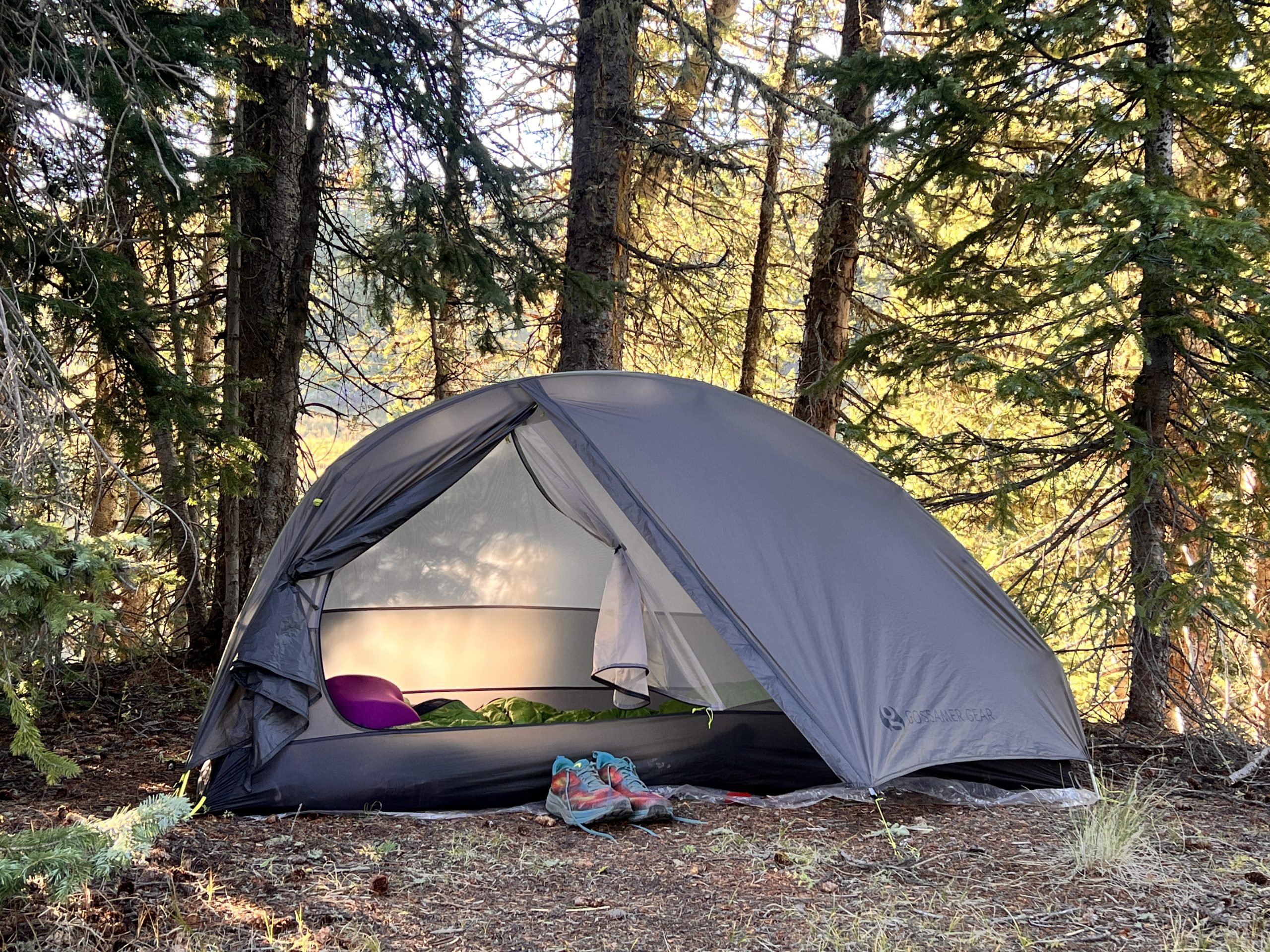
I tested The Free during a section hike of the Continental Divide Trail in northern New Mexico, during which the weather was frequently miserable and wet. The conditions gave me an excellent opportunity to evaluate the tent’s weather protection, condensation management, and overall durability.
One of the most noticeable differences between The Free and my previous shelters was its double-wall design. I appreciated being able to avoid the persistent dampness that comes from brushing against a single-wall tent’s interior in wet conditions. In addition, a few nights were particularly windy, and I was impressed by how solidly The Free held up.
However, my overall experience was mixed. I felt that The Free lacked the interior roominess I’ve grown accustomed to in The One. Despite being a relatively small user, I often felt cramped and occasionally claustrophobic.
Gossamer Gear The Free: Features and Performance
Ultralight, Freestanding Design
The Free’s DAC aluminum hub-and-pole system distinguishes it from Gossamer Gear’s traditional trekking-pole shelters. The tent can stand without stakes when pitched with its inner mesh body, making it possible to move the shelter to a different spot before securing it.
Like most freestanding tents, the fly requires staking out the vestible for proper tension, and additional stakes for guylines in less-than-ideal conditions. While the freestanding design sounds wonderfully convenient, I found the initial setup more complicated than expected.
ClearSkies Fabric and Weather Protection
Gossamer Gear developed a custom ultralight shelter fabric called ClearSkies. It combines 15D recycled Robic fabric with a 20D dope-dyed ripstop silicone/polyurethane coating. The company designed this material to improve strength and waterproofing while avoiding PFAS.
The fabric has a reported hydrostatic head rating of 4,923 mm — waterproof enough to withstand heavy downpours and wind-driven rain. The seams are factory-taped.
The fabric is manufactured using a dope-dye process, which incorporates color into the polymer before the fibers are formed. This can improve colorfastness compared with conventional surface dyeing and reduce water and energy consumption during manufacturing.
In the field, the fabric felt reassuringly robust for such a lightweight shelter. During wet and windy conditions, I appreciated the protection it provided without the bulk or weight of a heavier tent.
Condensation was a different story.
Although the double-wall construction kept me from directly touching the wet fly, moisture accumulated on its underside, particularly when I kept the vestibule closed to retain warmth overnight. By morning, the fly could be soaked and noticeably heavier.
The fly also sits close to the inner mesh body, helping maximize the available interior space. Unfortunately, that limited separation meant that contact between the inner tent and the wet fly could transfer moisture inside. The Free offers the advantages of a double-wall shelter, but its compact geometry makes condensation management especially important.
Setup: Freestanding, but Not Effortless
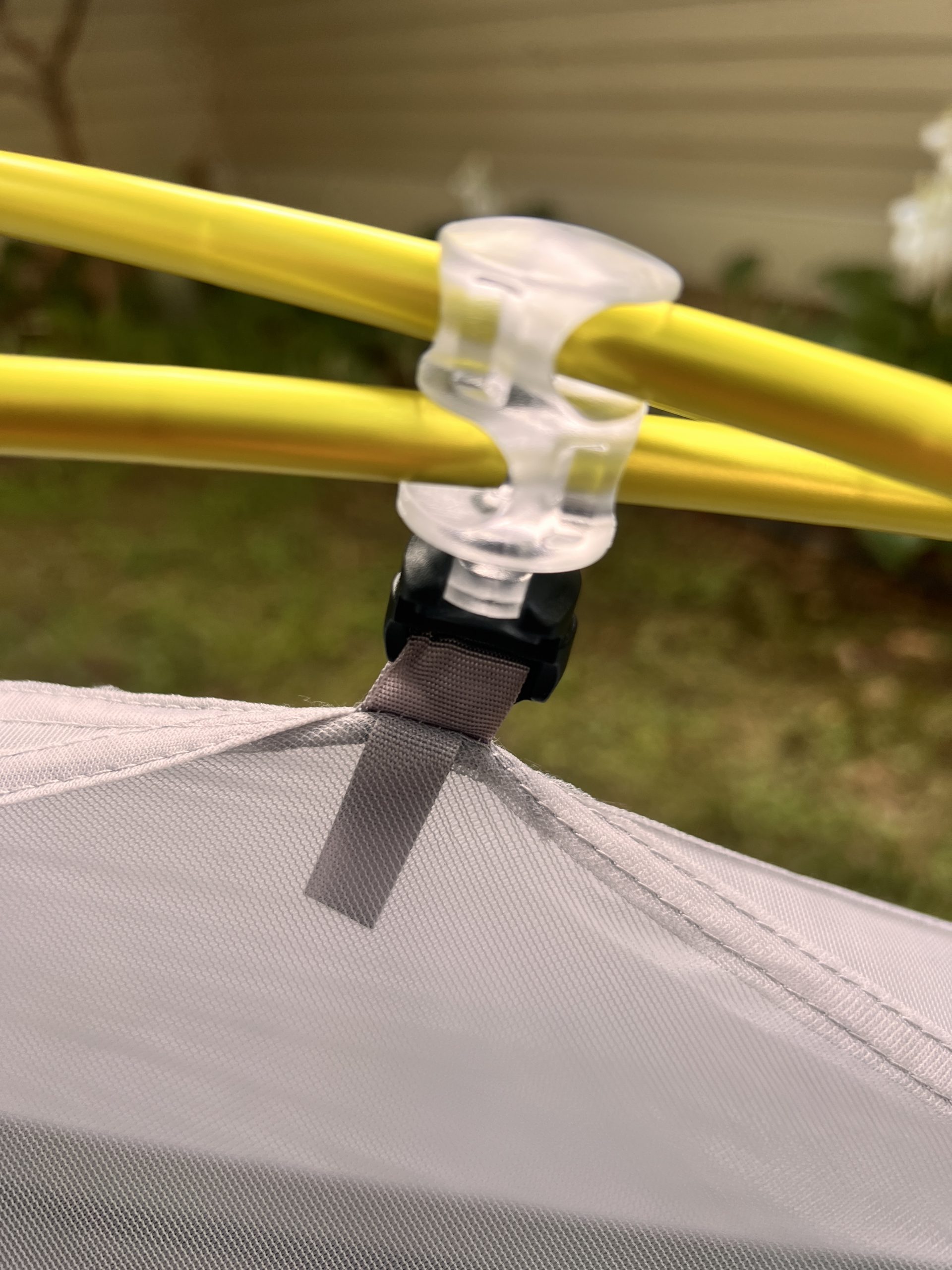
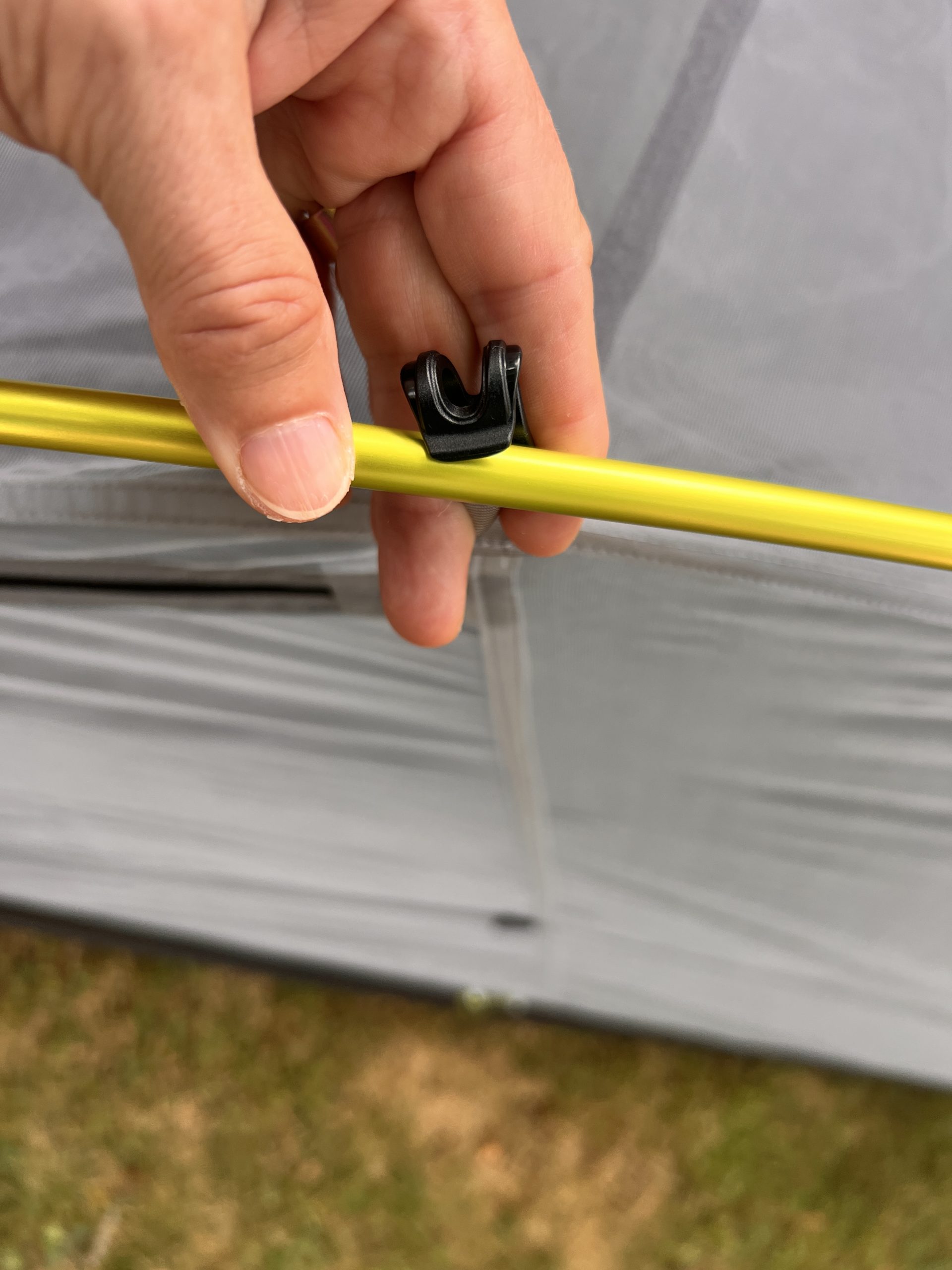
The Free’s inner mesh body must be pitched first. Two aluminum poles connect through a central pivoting hub that attaches to the inner tent’s ceiling, creating the tent’s basic structure.
This inner-first setup became a drawback in rainy weather. While I worked to get the fly in place, the mesh interior was exposed to the elements. Since the fly was often still damp from the previous night, assembling the shelter without adding more moisture wasn’t always easy.
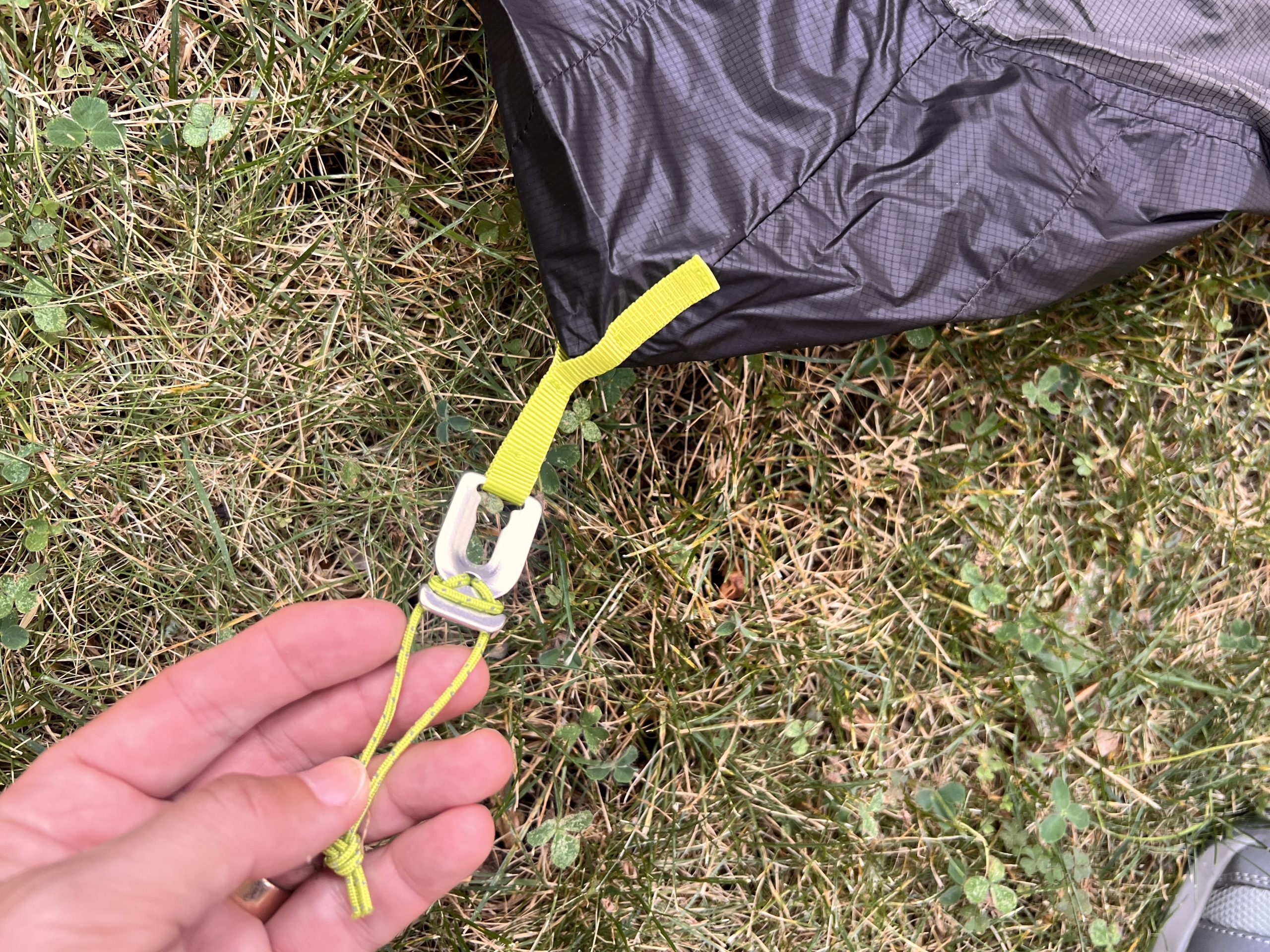
The color-coded poles and corresponding corner attachments help guide assembly, but I struggled to keep everything in place while inserting the poles into their designated corners (often with comical results). In breezy conditions, the lightweight tent threatened to slither away before I could finish setting it up. I initially tried holding the corners down with my feet, but eventually resorted to staking them down. That rather defeated the convenience I had expected from a freestanding tent.
The Free is reasonably straightforward once you become familiar with its pole arrangement, but I wouldn’t describe the setup as effortless, especially when the weather is uncooperative.
Interior Space and Comfort
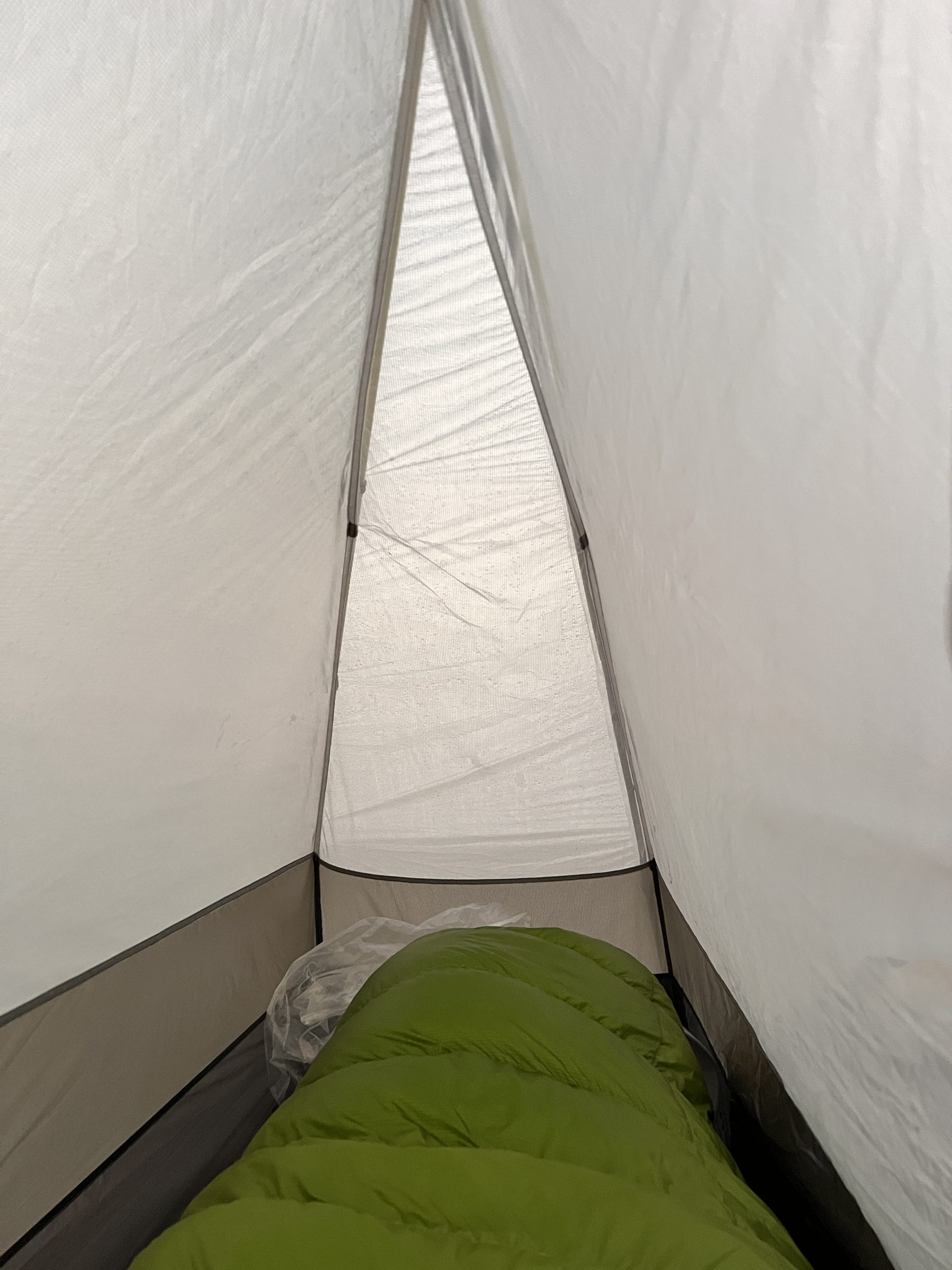
As I mentioned above, The Free felt more cramped to me than Gossamer Gear’s The One, which I have used extensively. Although the two tents have similar floor dimensions (The Free is even a few inches longer and wider), The Free has a significantly lower peak height and the angle of the side walls feels more restrictive.
The Free has a tapered floor measuring 34 inches wide at the head and 21.5 inches at the foot. At 86 inches long, it’s long enough for most solo backpackers, but the narrowing floor is a significant consideration when choosing a sleeping pad.
My pad fit comfortably, with a little room to spare. However, anyone using a wide sleeping pad should check the dimensions carefully. Per Gossamer Gear’s website, “while The Free’s floor dimensions don’t technically support a traditional 25″ wide pad, it does fit — it’ll just push the side walls a bit. For the best fit, we recommend going with a wide tapered pad instead.”
At 5 foot 7, I could sit upright and even stretch my legs inside. Still, I frequently brushed against the sides or top of the tent. When the fly was wet, those accidental touches could bring moisture into the living space. The compact dimensions are understandable in a shelter designed for minimal weight, but the trade-off was more noticeable than I expected. I often felt confined, particularly when spending extended periods inside during bad weather.
Gossamer Gear lists a maximum user height of 6 feet 2 inches, but height alone doesn’t tell the whole story. Sleeping-pad width, sleeping position, and how much room you want to sit up or move around all influence how comfortable this tent will feel.
Doors and Vestibule
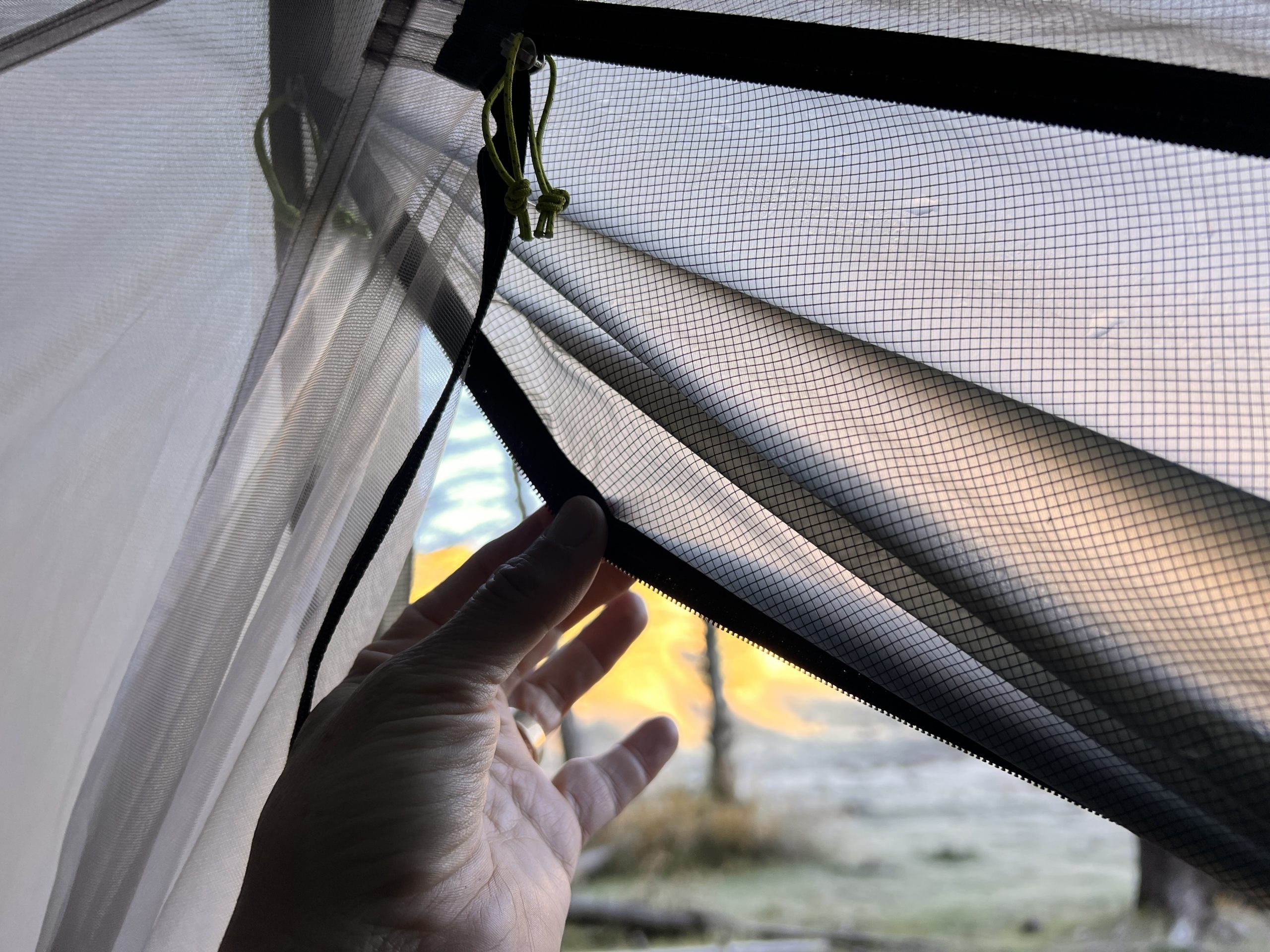
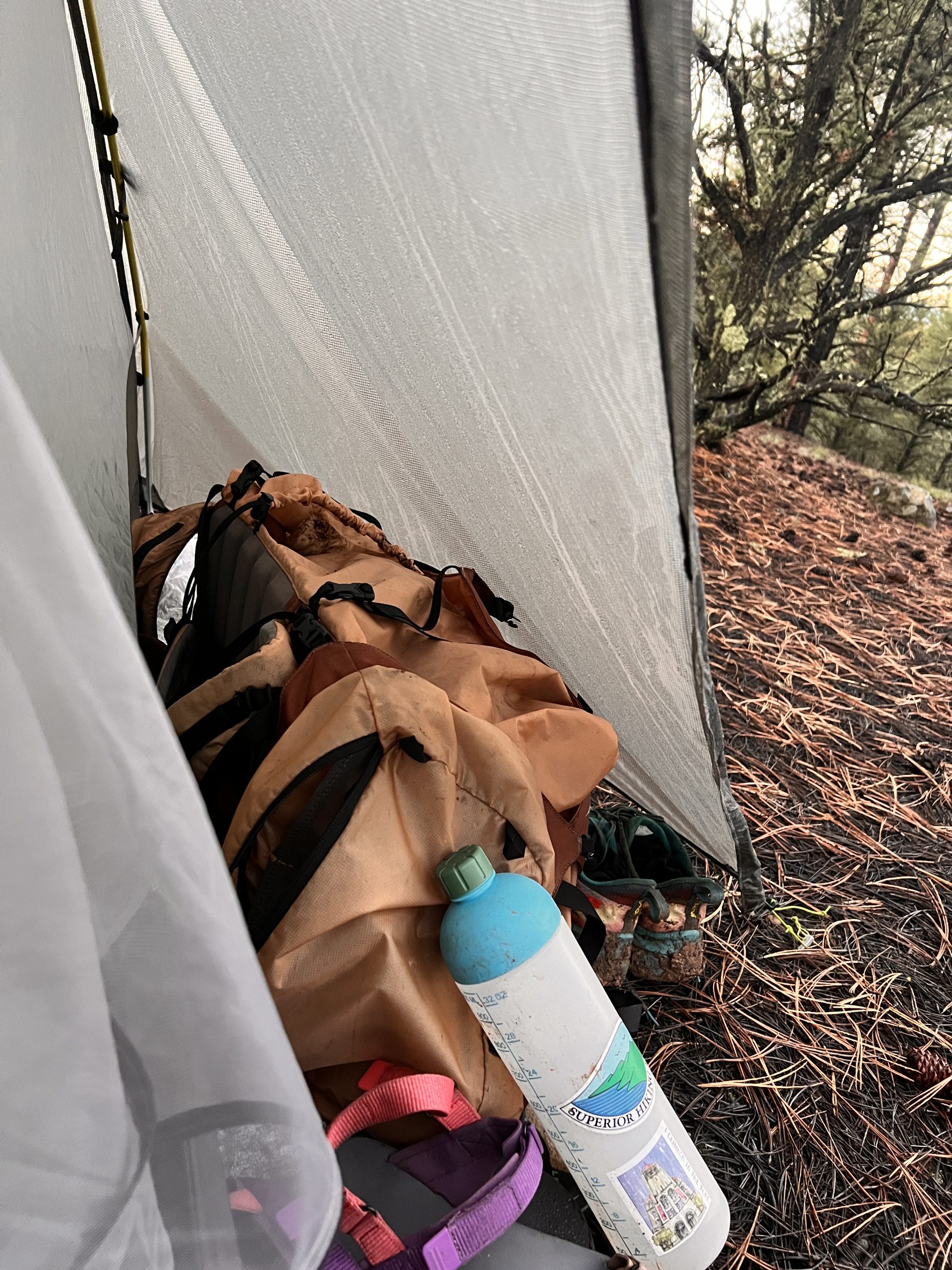
The D-shaped doors open into a modest vestibule with enough room for my backpack and a few smaller items. This was useful for keeping gear protected from the weather without cluttering the sleeping area.
My main complaint was the vestibule door’s toggle system. When rolled back and secured, the door tended to hang into the tent rather than staying neatly out of the way. One morning, I cinched it closed with the toggle, only to have accumulated ice fall directly onto my sleeping bag. Magnets or a more effective door-retention system would have made this detail less frustrating.
Interior Storage
The Free includes two interior pockets: one near the ceiling and another beside the door. While I appreciated having somewhere to stash small essentials, I found the pockets less useful than expected. Items tended to slide out, making it difficult to keep things securely organized. For an ultralight tent, the storage options are welcome, but I would have preferred pockets that hold their contents more reliably.
Gossamer Gear The Free Usage
Stormworthiness
The Free impressed me with its sturdy pole structure and durable-feeling fabric. It handled windy conditions well, and the double-wall design provided a welcome barrier between me and the wet fly.
However, the fly’s tendency to collect condensation and its close proximity to the inner mesh deserve consideration. Proper ventilation and careful pitching are important, especially in cold, damp conditions.
Comfort
This was the tent’s biggest weakness for me. Although I could sit up and move around to a limited extent, the tapered floor and close-fitting walls made the interior feel cramped. Taller users and anyone carrying a wide sleeping pad should pay particular attention to the dimensions.
Ease of Use
The color-coded pole system makes the design reasonably intuitive, but pitching the inner tent first can be inconvenient in rain or wind. I also found myself staking the corners during setup to keep the lightweight body under control.
The freestanding structure is useful, but it doesn’t eliminate every need for stakes or make the pitching process as simple as I had hoped.
Packability
At 29.8 ounces, The Free is impressively light for a double-wall, freestanding shelter. Its compact packed dimensions make it an appealing option for backpackers who want to keep their pack weight down without switching to a trekking-pole shelter.
Durability
The ClearSkies fabric feels like a thoughtful balance between low weight and ruggedness. Despite its delicate-sounding 15-denier thickness, the material is designed for improved tear resistance, and I was impressed by the tent’s overall robustness during my hike.
Sustainability
The use of recycled Robic fabric and PFAS-free materials is a welcome feature. The dope-dyed fabric construction is also designed to improve colorfastness. These choices make The Free appealing to backpackers who want a lightweight shelter without overlooking material considerations.
Gossamer Gear The Free Pros
- True double-wall construction
- Freestanding design
- Exceptionally low weight for its category
- Durable, tear-resistant, PFAS-free fabric
- Sturdy performance in windy conditions
- Compact packed size
- Factory-taped seams
- Adequate vestibule space for a solo backpacker’s gear
Gossamer Gear The Free Cons
- Narrow interior can feel claustrophobic
- Tapered foot end may not accommodate wide sleeping pads
- Inner tent must be pitched before the fly
- Setup can be awkward in windy or rainy conditions
- Condensation can accumulate on the fly and transfer to the inner tent
- Vestibule door toggle can allow the door to hang into the sleeping area
- Interior pockets don’t reliably retain smaller items
Included Accessories
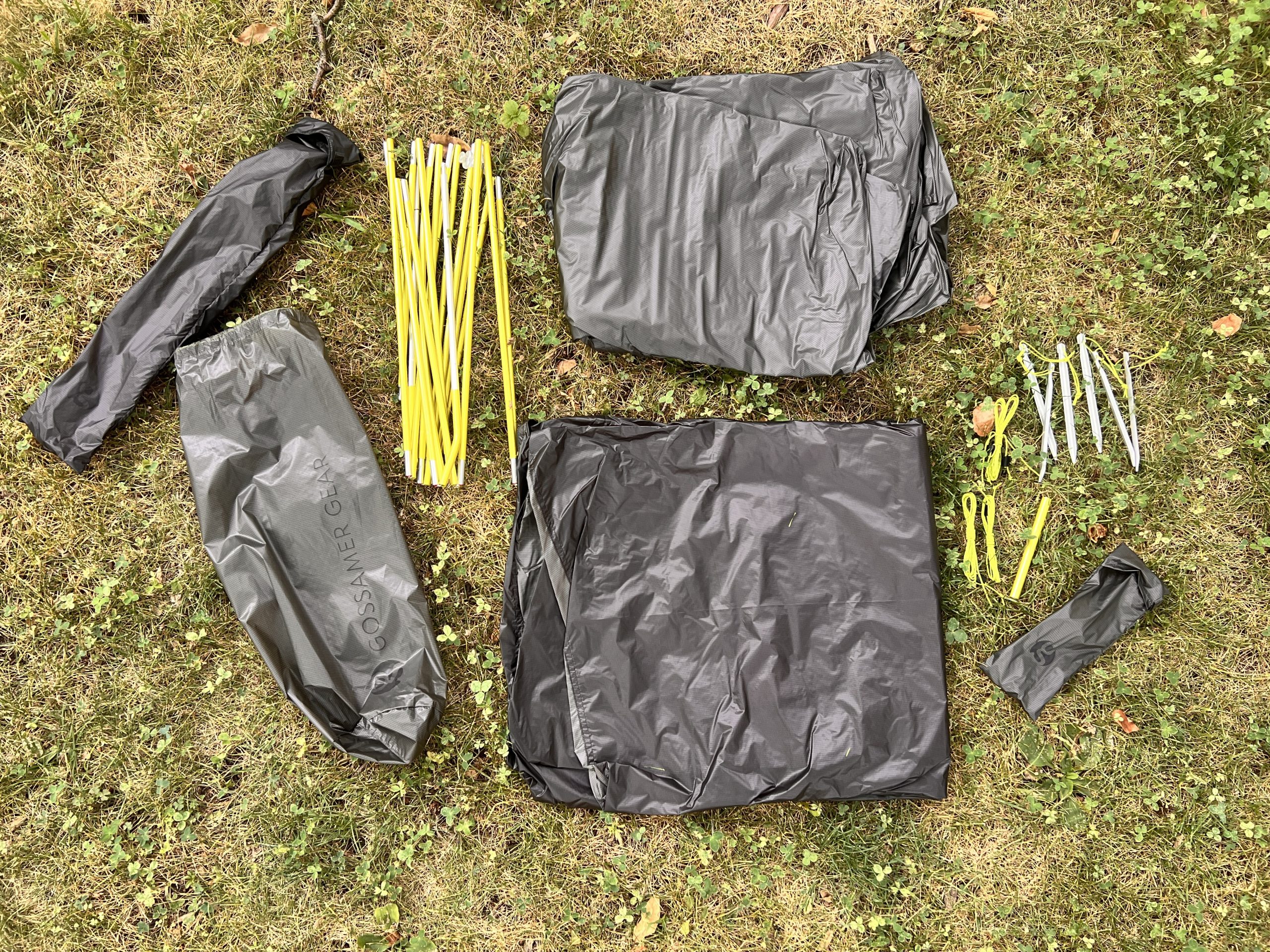
The Free comes with six aluminum stakes, four guylines, a pole-repair section, a stuff sack, and a pole bag.
Overall Value
The Gossamer Gear The Free makes a compelling case for an ultralight, freestanding backpacking tent. And while it isn’t the featherweight champion when compared to minimalist trekking pole shelters, The Free is still one of the lightest tents in the freestanding double-wall category. At $400, it wins heavily on its value-to-weight ratio. However, its impressive weight savings come with noticeable compromises in livability and convenience.
If minimizing pack weight is your top priority, it deserves a look. If comfort and easy setup matter just as much, I would consider a roomier alternative.
Shop the Gossamer Gear The Free
Comparable Tents
- MSRP: $495.95
- Weight: 29 – 36 oz
- Design: Semi-freestanding
- Material: Nylon
- MSRP: $419
- Weight: 34.7 oz
- Design: Freestanding
- Material: Nylon
- MSRP: $499.95
- Weight: 38 oz
- Design: Freestanding
- Material: Nylon
The Gossamer Gear The Free was donated for purpose of review.

This website contains affiliate links, which means The Trek may receive a percentage of any product or service you purchase using the links in the articles or advertisements. The buyer pays the same price as they would otherwise, and your purchase helps to support The Trek's ongoing goal to serve you quality backpacking advice and information. Thanks for your support!
To learn more, please visit the About This Site page.
