
 ">


Grand Teton Says “Poor Decisions by Park Visitors” Led to a Bear’s Death This Weekend
Grand Teton National Park staff euthanized a black bear last Friday after the bear displayed an escalating pattern of food-conditioned behavior. “We need to be clear—this bear was lethally removed because of poor decisions made by park visitors. It is everyone’s responsibility to help keep bears wild,” reads a park press release.
Rangers had received reports earlier in the year of a bear approaching visitors in the remote backcountry near Delta Lake, but at the time, they didn’t have enough information to determine whether this was an isolated occurrence. According to the park, that changed last week when the bear “received multiple human food rewards and repeatedly approached people.”
Park staff determined that the bear was displaying a pattern of escalating food-conditioned behavior that posed an unacceptable safety risk. They tranquilized the bear and euthanized it on site; its carcass was flown out of the backcountry the following morning.
“A Fed Bear Is a Dead Bear”
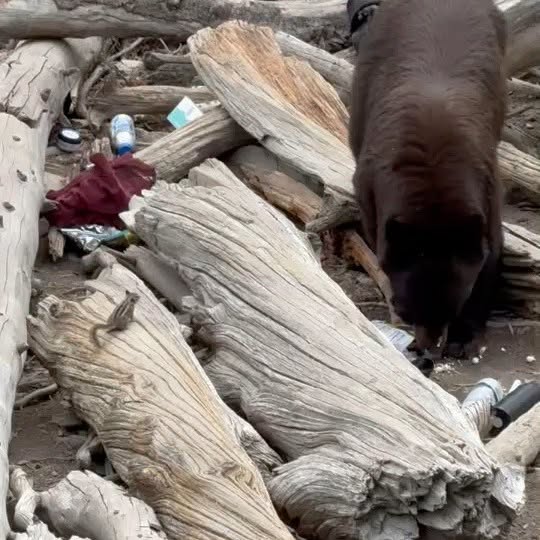
The bear in this incident investigating abandoned food and gear near Delta Lake. Photo: NPS
In its press release, Grand Teton National Park blamed irresponsible visitors for the situation. The park did not say whether any visitors deliberately fed the bear, but the release indicates that at least some of its access to human food came from abandoned food and gear. “Never leave food unattended, even for a moment. Gather all your belongings, especially your food, if a bear approaches. If you have time to grab your phone, you have time to grab your food,” the park service said.
Photos shared publicly by Grand Teton National Park show visitors near Delta Lake approaching within feet of the bear to photograph it, as well as the same bear getting into unattended food and gear.
The incident is a stark illustration of the common saying, “a fed bear is a dead bear.” Wildlife that gains access to human food can learn to associate people with food rewards and may begin approaching people more frequently, a scenario that can quickly turn dangerous.
For this reason, land managers may relocate or euthanize bears that display food-conditioned behavior. (Which route is taken depends on the severity of the bear’s behavior and its risk to humans, among other factors.)
“A Small Decision in the Moment Can Have Serious Consequences”
View this post on Instagram
“A bear that gets a food reward can learn that approaching people pays off. What may seem like a small decision in the moment can have serious consequences for the bear, other visitors and park staff. Help us keep bears wild by making the right choice every time,” said the park service.
The best solution is for park visitors to secure their food and other smellable items so animals cannot access them, even during the day. In Grand Teton’s backcountry, hard-sided bear canisters are required. Frontcountry visitors should keep food in a bear box or their vehicle.
Featured image: National Park Service.

This website contains affiliate links, which means The Trek may receive a percentage of any product or service you purchase using the links in the articles or advertisements. The buyer pays the same price as they would otherwise, and your purchase helps to support The Trek's ongoing goal to serve you quality backpacking advice and information. Thanks for your support!
To learn more, please visit the About This Site page.

Comments 1
Obviously, I can’t tell bears apart…those photos look like a brown bear