
 ">


He’d Never Backpacked Before His First FKT. Now Cody Taylor Holds a Long Trail Speed Record
Until three summers ago, Cody Taylor had never gone backpacking before in his life. On the very first backpacking trip he ever took — Ontario’s Bruce Trail in 2024 — he set a speed record, completing the 550-mile trek in 14 days while carrying all his supplies from day one.
His second long backpacking trip was an out-and-back, or “yo-yo,” of the Long Trail, completed this August. Again, he carried all his supplies from day one. Again, he set the Fastest Known Time for an unsupported hike.
Nearly identical in length to the Bruce Trail when hiked as a yo-yo, the Long Trail is well-marked but features some challenging terrain, including more than 130,000 feet of vertical gain. Taylor finished it in 17 days, 8 hours, and 42 minutes, establishing an FKT on a route where none previously existed.
Getting Through the First Four Days
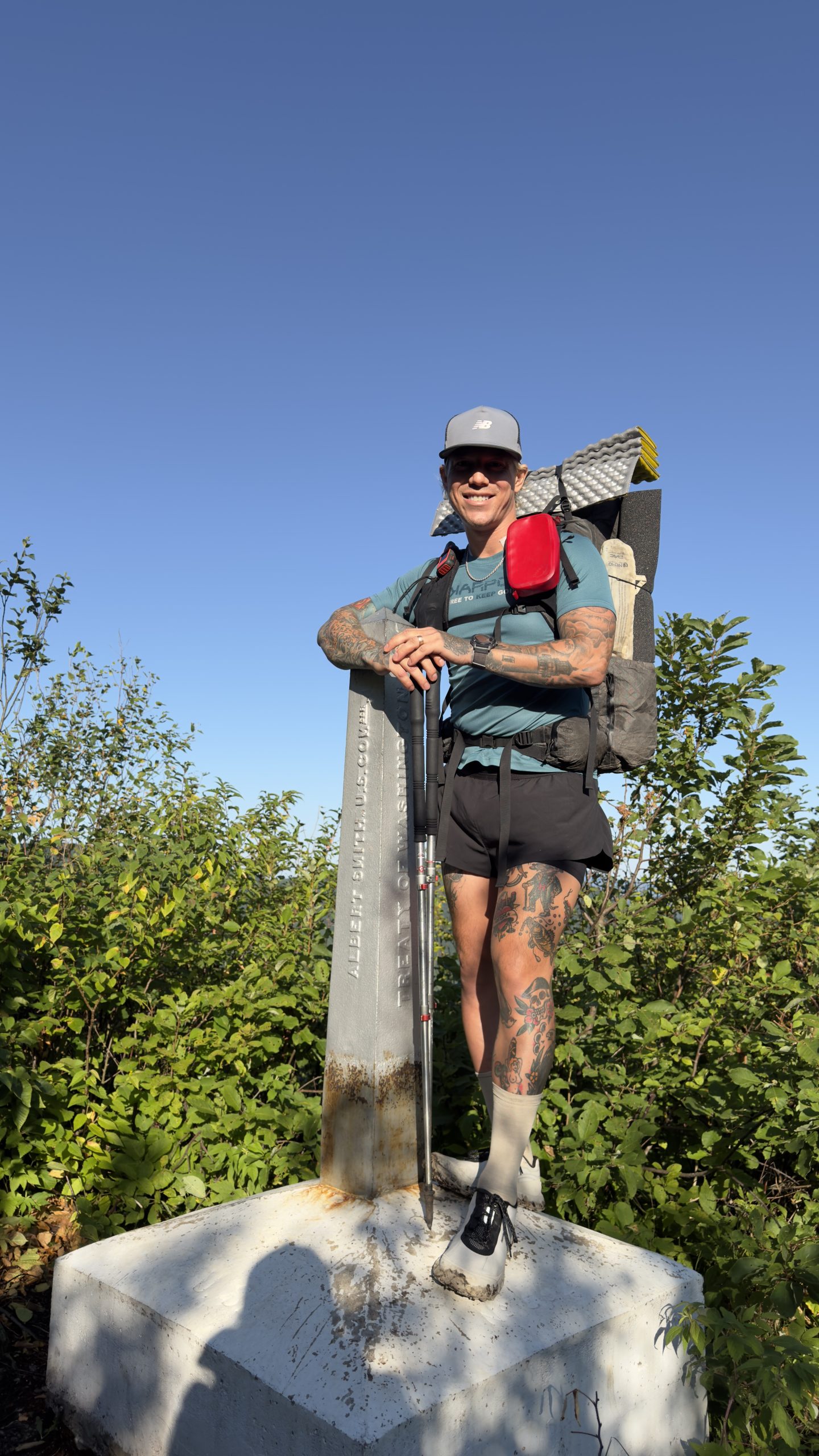
Taylor’s pack weighed 51 pounds at the start of his Long Trail yo-yo. Photo courtesy of Cody Taylor
His pack weighed 51 pounds on day one of the Long Trail, including enough food for the 16 days he initially planned to spend on the trail — roughly 2 pounds of nutrition per day. “I did not eat all my nutrition for the first 8 days, which in the end, saved this adventure,” Taylor wrote in his trip report, since it left him with enough supplies to push into an eighteenth day.
“I always tell people if you’re going to be going for an unsupported FKT, you just have to get through the first four days,” Taylor told The Trek over the phone. The weight penalty alone makes those first four days the hardest, and that was especially true for Taylor this August, since he started and ended his journey with the notoriously more rugged northern half of the trail.
“I fell a lot, and then for the first time ever, my hips were throbbing,” he said, attributing this to the extreme terrain and his heavy pack. “When I was going to bed at night, my hips were screaming till about 12 o’clock, and then it would go away and I’d get finally some rest till about 4 a.m., and then I’d wake up and start all over again the next day. So I think the challenge, honestly, was just the amount of climbing with that much weight on your back.”
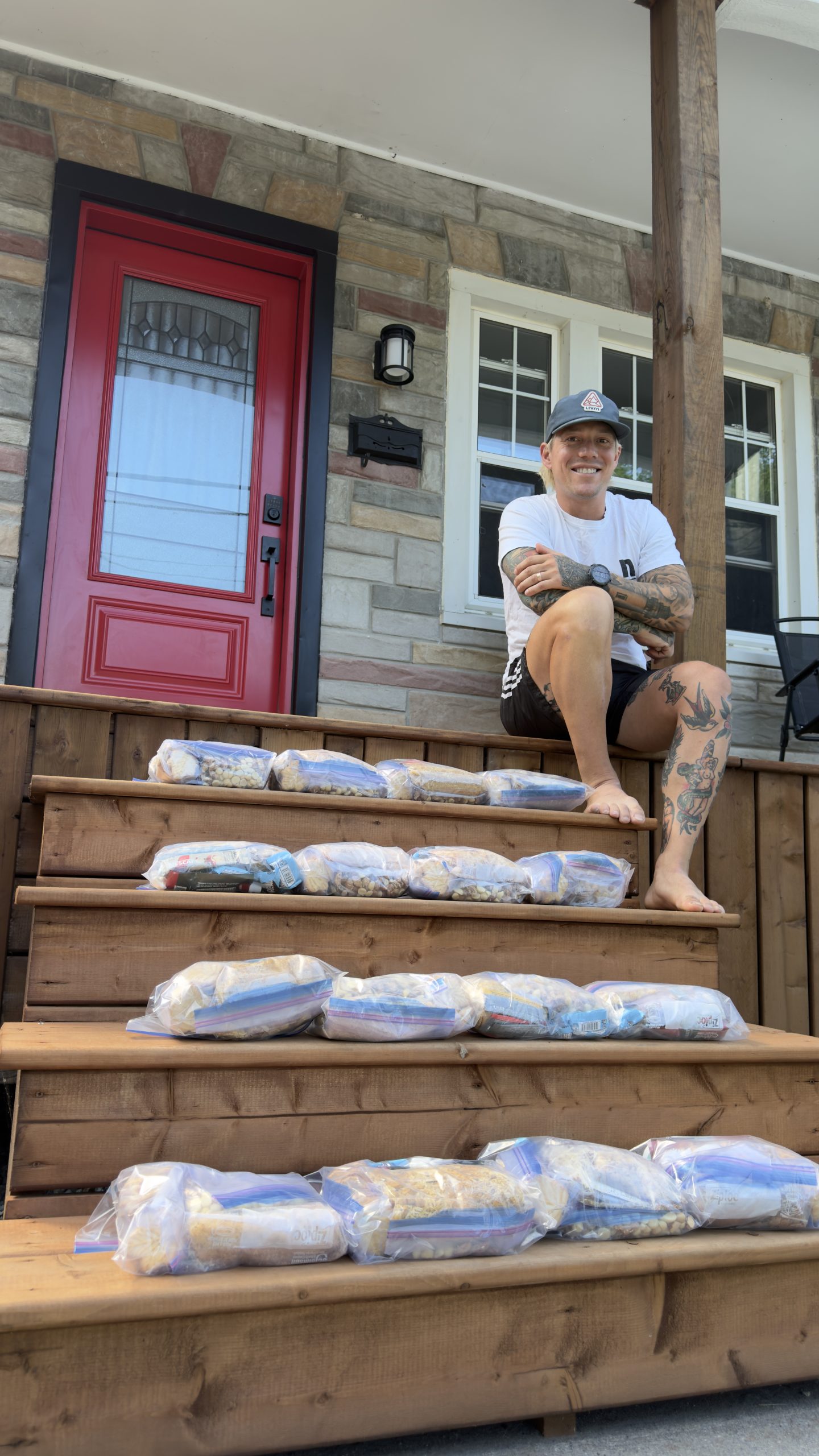
Taylor with 16 days of food laid out before the Long Trail. Photo courtesy of Cody Taylor
“Your Body Will Adapt”
It wasn’t easy, but he had a mantra for the tough days. “That’s literally the only thing I kept telling myself: just keep going, your body will adapt,” he said. “I’ve had back chafing … I’ve had blisters on my feet. I had a shin splint for five days on this trip. But everything went away.”
Was there ever a time when he doubted whether he could finish or considered quitting? “No, never.” He went into the attempt, not overconfident, but accepting of the journey on its own terms, and that took a lot of the pressure away. “I’m kind of at the point where whatever happens happens … If I was to fail on this project, it’s not a big deal. I’m gonna learn from that experience regardless. So I went in with a very positive attitude.”
And retained it for the whole 550-mile adventure, despite the pain in his hip, a brush with hypothermia, and poor sleep. “I was having the best time ever,” he enthused. Even on the last day, when his body was ready to stop and he was “screaming at the climbs because (he) was just so over it,” he remembered to slow down and savor the last few kilometers. “It was just beautiful, sunny, no wind, and I was just taking it all in … Vermont is so gorgeous, man. I learned so much out there.”
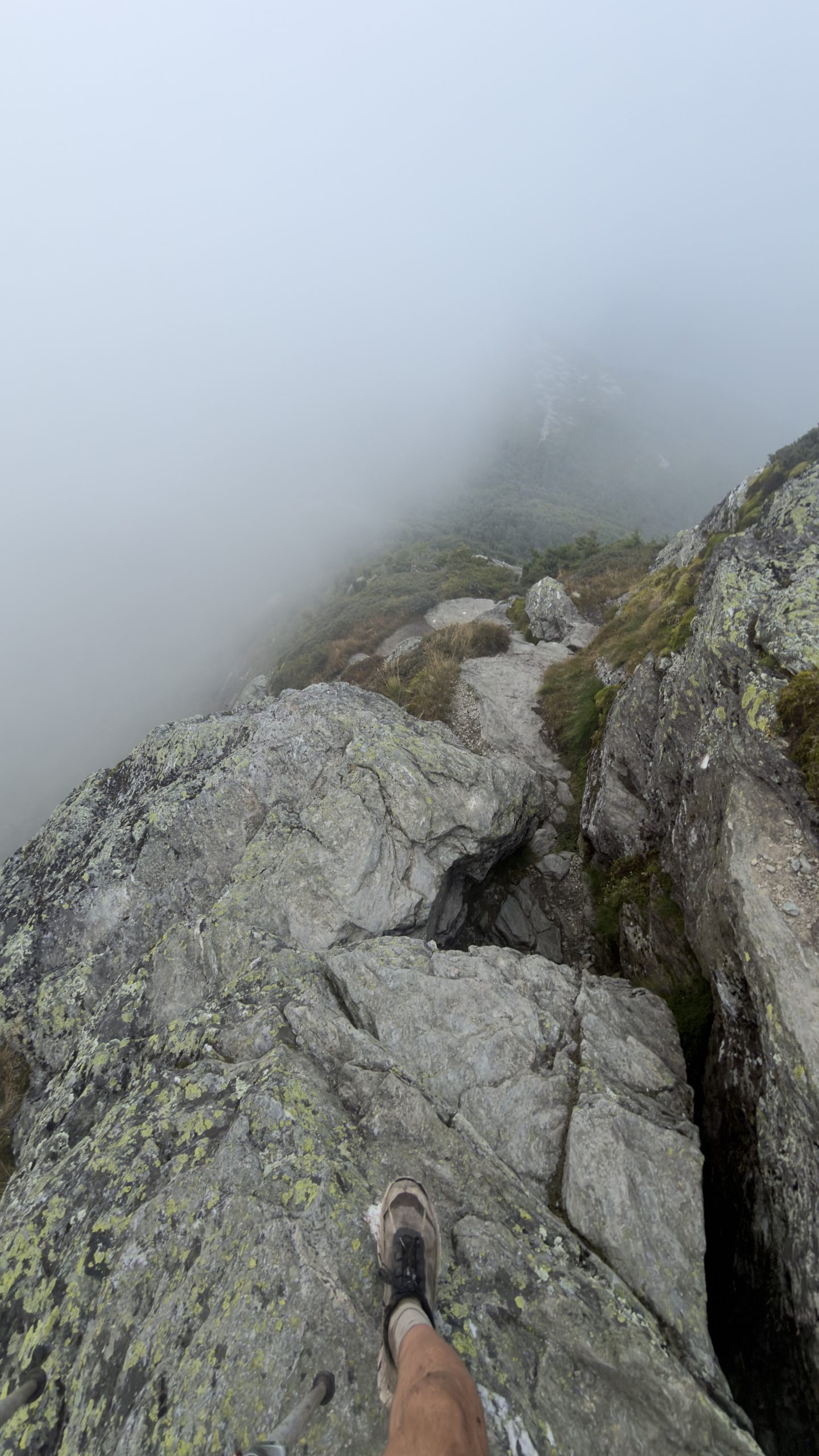
Photo courtesy of Cody Taylor
Learning Along the Way
One unique aspect of this experience for Taylor was meeting so many Appalachian Trail thru-hikers along the way, since the southern section of the Long Trail is concurrent with the AT. “I really for the first time got to experience that world,” he wrote of the thru-hikers in his trip report. “Usually when I’m out doing projects I’m not exposed to so many people enjoying the trails, but this was definitely a nice mental break.”
Compared to the Bruce Trail, which he tackled as a complete beginner, Taylor has said that he felt significantly better prepared this time around.There are a few minor tweaks he would make in the future — more caffeine in his nutrition plan, an inflatable sleeping pad to ease the pain he felt in his hips, and a poncho for better rain protection — but overall, the lessons he took from the Bruce Trail served him well.
More Than Just a Record
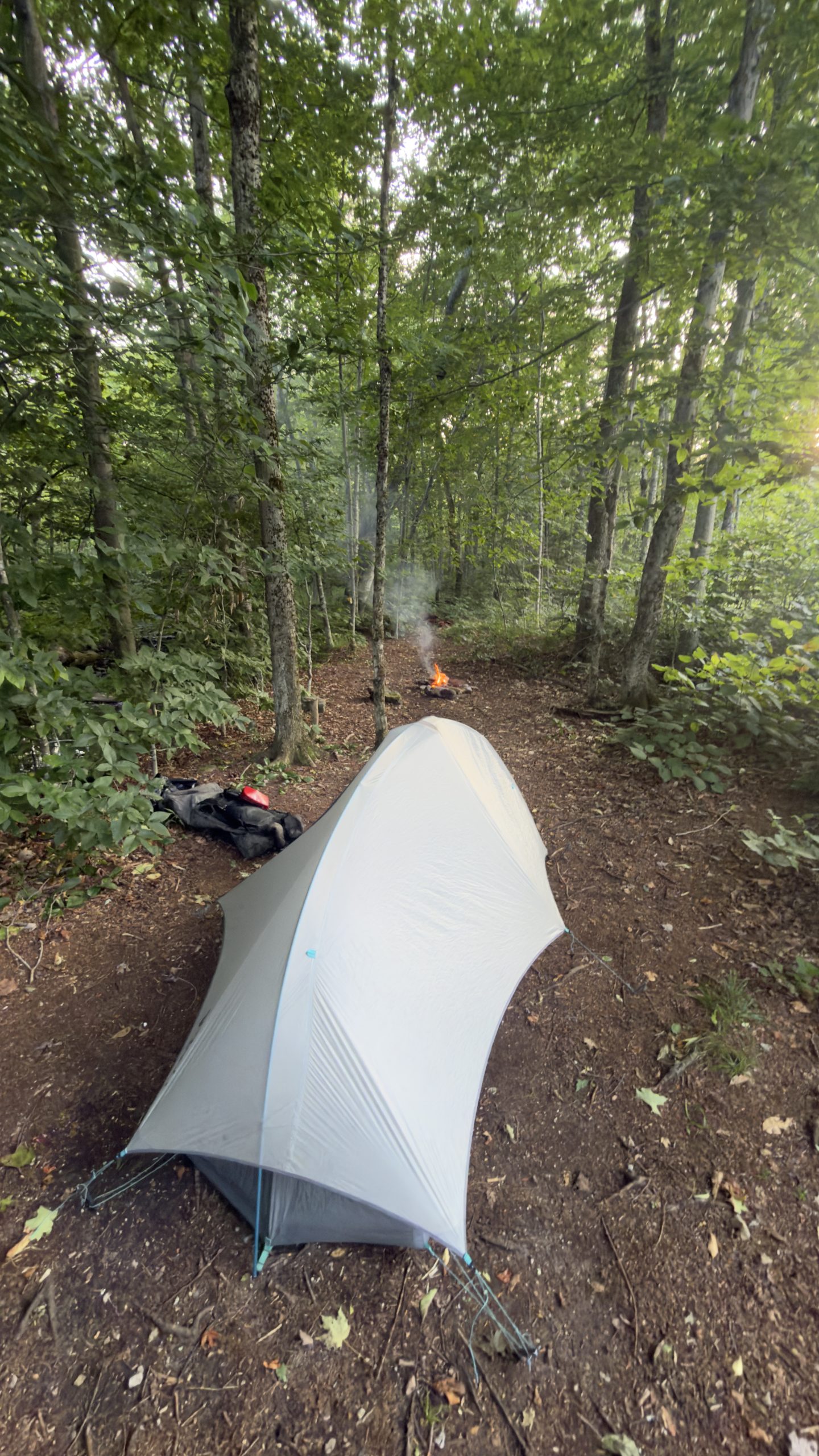
Taylor says limiting his time in camp made the FKT possible without rushing the experience on trail. Photo courtesy of Cody Taylor
Every time the subject of FKTs comes up, there’s inevitably some debate about whether record-seekers are missing the point of backpacking in their hurry to get to the terminus. Does Taylor feel like he’s missing out on something?
“The only thing I’m missing out on is hanging out at camp an extra hour or two, but I’m exploring and I’m having fun out there. There’s really not too many low moments I have out there.” How could there be, he muses, when he compares the experience of being on trail to a day spent at work? “You’re on trail the entire time. You’re climbing the same mountains as everyone else.”
While he was putting in long hours hiking every day, he still found time to call his wife daily, conversations that became a source of strength for him on the trail. “Thank you so much to my friends that came to see me finish, my parents surprising me at the end and my wife being my daily emotional support,” Taylor wrote in his trip report.
He also credits his mentor, ultrarunner Ray Zahab, with introducing him to the world of long-distance speed efforts, and his friend Jamieson Hatt with inspiring the Long Trail project specifically. “If you’re looking at doing something big or running your first ultra or doing your first big adventure, whatever it is, just surround yourself with people that are already doing it,” he advised. “Latch onto them and learn as much as you can. You will get to where you want to go that much quicker.”
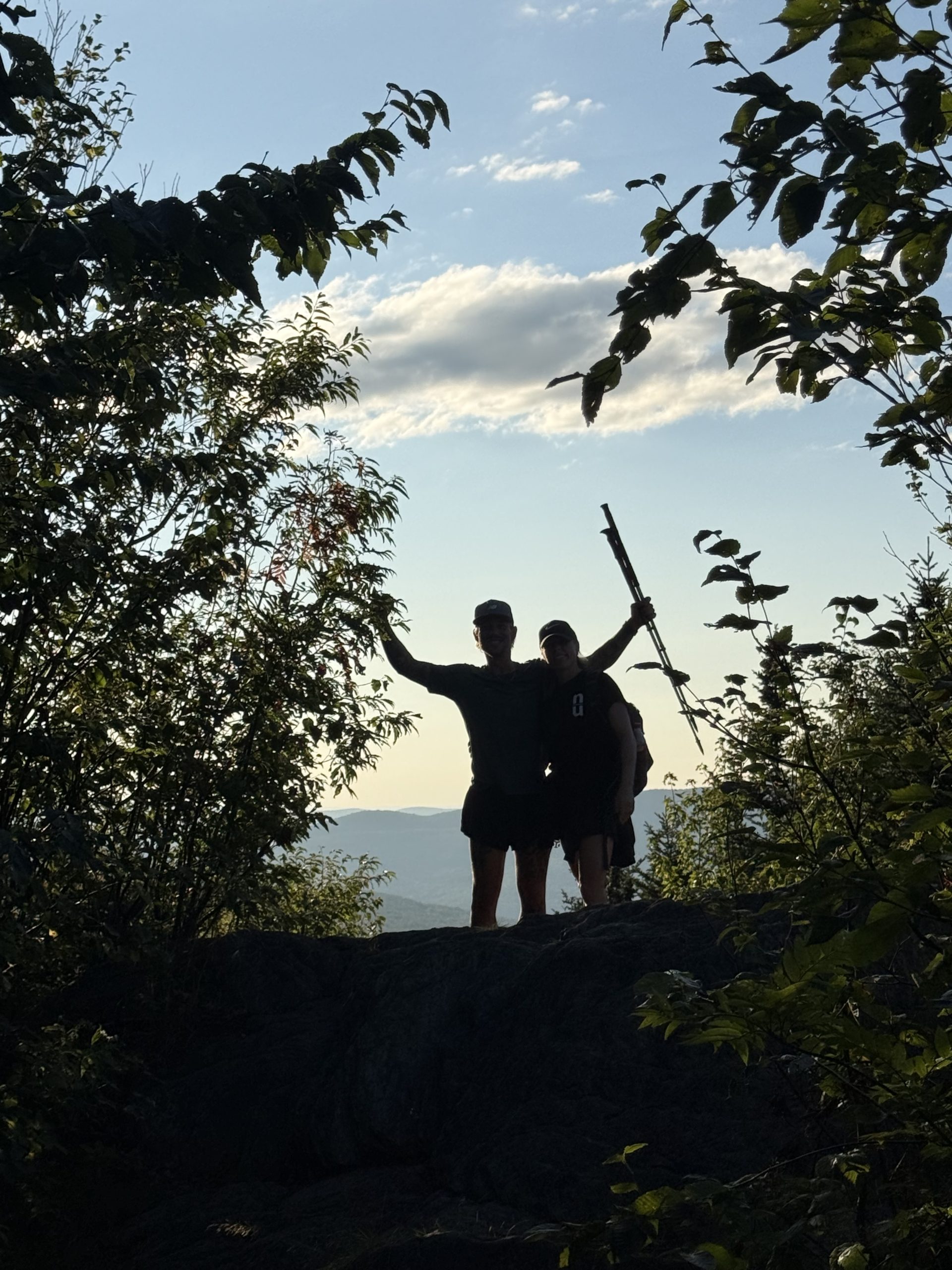
Photo courtesy of Cody Taylor
“I’m a very average person.”
The beauty of the unsupported FKT model, he feels, is in its simplicity. “A lot of people think it … sounds like a logistical nightmare. But it’s actually super simple. You just pack your nutrition, you pack your stuff that you’re gonna need for that long, and then you get dropped off, and then you get picked up at the end of it. There’s no crew, there’s no pacers, there’s no planning. You just go whenever you got a nice weather window, and then you just get out and get after it.”
It’s something he sees as accessible to anyone who wants to pursue it. “I’m a very average person. But I feel like a lot of people with my capabilities could go out and do these epic adventures. So it’s really kind of cool to put these things on the map, because anyone could go out and do these things.”
It’s a fitting philosophy for someone whose own introduction to backpacking was so unconventional. Taylor didn’t spend years working up to his first FKT attempt; he simply “got out there and got after it,” to use his parlance.
Now, after two FKTs and more than 1000 miles of long-distance hiking, he’s hoping others will do the same.
Follow Cody Taylor on Instagram, Youtube, and his website.
Featured image courtesy of Cody Taylor.

This website contains affiliate links, which means The Trek may receive a percentage of any product or service you purchase using the links in the articles or advertisements. The buyer pays the same price as they would otherwise, and your purchase helps to support The Trek's ongoing goal to serve you quality backpacking advice and information. Thanks for your support!
To learn more, please visit the About This Site page.
