
 ">

HHH chapter 4: A harp without a Harpist; water without a well
I set out at 08.30 after chatting with Jamie at the Llangollen hostel, where I had slept long and deep. I crossed the bridge over the roaring river. The bridge has been extended now, but dates from the middle ages. Llangollen has always been a key crossing of the river Dee.
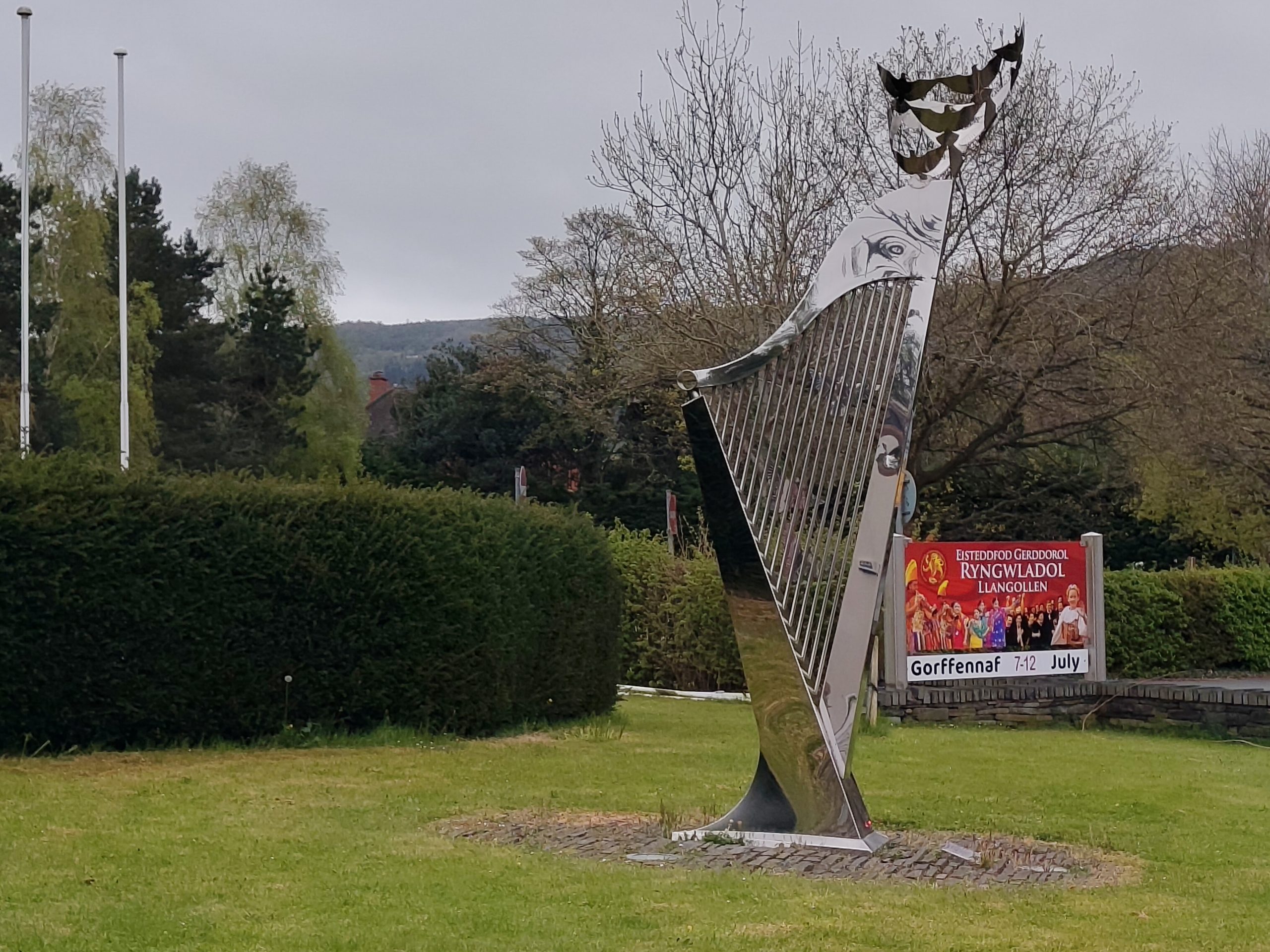
I have found my first harp on this journey … harpists have proved elusive so far. This huge sculpture near the Eisteddfod pavilion celebrates the musical culture of the town.
I joined gaggles of young people headed up the hill to school and slipped under the bridge to join the Llangollen canal, which I followed all the way to Chirk. Flat walking, no decisions about the route and sun shining through the trees, full of singing birds, made progress easy. I know for sure that slow and steady does NOT win any races, but does get me to my destination … eventually.

Walking in the air
My route brought me to the famous Pontcysyllte Aqueduct which was built over 200 years ago, to take the canal soaring high over the river Dee below. About 170 feet high!

There is a handrail on the towpath side (the canal path is called a towpath as originally horses towed the boats … before any kinds of engine), but on the boat side the edge is only some inches high. I loved watching the birds fly below me, and seeing the river rushing by far below.
Another Welsh First!

Many of the narrow boats on the canal are beautifully painted. They used to be working boats bringing lime or slate from the Welsh mountains to towns far away.

The Cake boat also had a little window … and sold cakes and drinks I enjoyed my first slice of Bara Brith this trip. It is a tea bread, full of fruits and spiced with cinnamon and nutmeg. Delicious served traditionally, spread thickly with salted butter. A wonderful late breakfast.

Memories, histories, meanings
I got to pondering a lot about memory along the canal side. I visited this area many times with my family as a youngster, on visits to the Eisteddfod or for picnics by the river. Happy times. Later I staggered across the aqueduct on crutches after my first hip replacement, on a cheering up brief trip with my husband. Memories make so much of what we are. When we can’t remember, as my friend’s mother cannot anymore, we seem to slip away as individual people. We call this dementia or cognitive impairment: people can’t remember themselves and even forget their loved ones. A harsh fate.
Is there light at the end of every tunnel?

I entered this tunnel gripping the hand rail, though I soon couldn’t see it in the darkness.I didn’t use my head torch or phone torch, in homage to the engineers and the brave workmen who constructed the tunnel, using hand tools and candles or lanterns. It must have been hard.

This sculpture uses the pickaxes to create an image, and shows the mines and limekilns that were also part of the industrialisation that took over so much countryside.
Building canals and later, the railways, was controversial at the time. Many felt their land was damaged and desecrated by the industrial era.
Later there was another, longer tunnel, a quarter of a mile long. It was cold and creepy, full of ghosts, so I did use my torch. Coming towards me four youngsters were bunking off school with their torches to explore their local heritage.
Is History everywhere?
There are layers and layers of history on this walk, in the wells, the man made structures, even the patterns of the fields and the plantation forest. When I read about the big US trails, they always seem like wilderness, much wilder than here. It’s bears, rattlesnakes and remote campsites that people talk about, not “history”. Yet First Nation people lived and worked in those same places, and history pervades the towns en route, the direction of the trail and who gets to use it now. I was fascinated by Joe Whittles writings on this. If we lose our collective memories, aka our histories, we will be as fully impoverished as those that suffer dementia as individuals.
A small aqueduct and it’s big brother for the railway
Emerging from the tunnel with relief, I was soon on an older, smaller but still impressive aqueduct, flanked by the later Railway viaduct, gracious in it’s 19th century glory. It even had niches for statues!

I was only 70 feet above the delightful Ceriog valley, and it still felt impressive. Rain had started, gently a while back, and was now heavy. Cheery and unexpectedly American voices greeted me from a passing boat . I waved and headed into town to dry out and meet my husband, who is driving over today.


This website contains affiliate links, which means The Trek may receive a percentage of any product or service you purchase using the links in the articles or advertisements. The buyer pays the same price as they would otherwise, and your purchase helps to support The Trek's ongoing goal to serve you quality backpacking advice and information. Thanks for your support!
To learn more, please visit the About This Site page.
Comments 2
Thank you for sharing! Thinking of you and hoping all that sunshine today also reaches Wales.
The engineering and construction of centuries gone by is so impressive to me given their tools and communication equipment. I love the cake boat! Holding good thoughts you meet a harpist soon! May the two “easier” trails you’ve just had propel you on ~