
 ">


6 Cheap Household Items That Double As Ultralight Backpacking Gear
Ultralight bros will eagerly boast about their itty bitty pack and teeny tiny tent, yet you rarely hear them mention how astonishingly light their wallet becomes after shelling out thousands of dollars on top-of-the-line backpacking gear. There is certainly a point to reducing the weight on your back, especially if you’re trying to mitigate injury on a long hike, but it’s unrealistic to expect everyone to throw themselves into debt just to meet the coveted sub-ten-pound base weight.
Luckily, “ultralight” doesn’t always have to mean specialized, expensive gear. Over the course of many thousands of miles, I’ve found several pieces of “gear” that fit the ultralight mindset (lightweight and minimal) while also costing less than $50. As a bonus, I’ve scrounged up some of these items from around my house!
Budget-Friendly Household Items That Double As Ultralight Gear
In the hopes of sending you off to a trail with a light pack and a heavy wallet, here are my favorite household items that double as ultralight backpacking gear.
1) Trash Compactor Bags
At about $0.50 a piece, trash compactor bags are a wonderful replacement for a pricier pack cover. And, as an added benefit, they do a better job at keeping your gear dry. Not only will they actually protect your gear if you accidentally submerge your pack in a river (been there, done that), but they also work better than a traditional pack cover in a heavy or extended downpour.

If (when) you fall into a river, a regular pack cover will do very little to protect the gear inside your pack.
Pack covers often fail in heavy rain due to inherent design flaws. For instance, they create gaps when worn on your back, allowing rain to creep underneath. Trash compactor bags, on the other hand, serve as a liner on the inside of your pack. They allow your bag to get wet while keeping your gear dry. As long as you’ve somewhat rolled the top of the bag when closing your bag, water is very unlikely to get to your quilt and clothes.
With trash compactor bags weighing 2-5 oz less — and being at least $20 cheaper — than a pack cover, this swap is an absolute no-brainer to me.
2) Dance Pants
Dance pants, often made of lightweight nylon or similar synthetic blends, are a fantastic, budget-friendly stand-in for specialized rain pants. Pricy rain pants, while technically waterproof, are often hot, clammy, and make that irritating “swish-swish-swish” sound with every step. They also typically cost upwards of $70.
Dance pants, on the other hand, usually retail for under $30, can be found almost anywhere, and breathe far better. While not “waterproof” in the technical sense, many are highly water-resistant, shedding light rain and drying incredibly fast after heavier downpours.
The key here is breathability. When you’re hiking hard, waterproofing often means you’re just getting soaked from the inside out with sweat anyway. These ultralight pants offer enough protection for most conditions without trapping all that moisture, making for a much more comfortable experience.

Protection from the cold, the wind, the rain, and the snow.
If you’re dead set on a standard rain pant, I’d recommend Frogg Toggs. They’re just as cheap as dance pants, but let me warn you: they will rip if you even look at them wrong.
3) Tyvek
That crinkly white material used for house wrap might seem like an odd choice for backpacking, but Tyvek is an ultralight hiker’s best friend, especially when replacing an expensive tent footprint or sit pad. A dedicated tent footprint, designed to protect your tent floor from tears and water, can easily run you $50-$100 and typically weighs upwards of 8-10 ounces.
Tyvek, on the other hand, can be bought by the yard at hardware stores for a fraction of the cost, usually less than $10, and will last you forever. It’s incredibly durable, waterproof, and can even be silent if you run it through your dryer on the no heat setting for a few hours with some tennis balls.

And, it can serve a third purpose as a sled when you want to glissade but don’t want to get your butt wet. A true ultralight legend!
You cut it to fit under your tent (or even just your sleeping pad for a minimalist shelter). As a bonus, you can pull it out during the day to use on breaks as a sit pad or yoga mat for some stretches. Your butt stays dry and your tent floor stays protected — all thanks to a material typically reserved for construction sites.
4) Talenti Ice Cream
Why pay $100 for a specialized rehydrating container for a cold-soaked meal when you could get a jar that does the same exact thing for $5? And, how often do you get to buy a piece of gear that comes with a pint of gelato for you to enjoy?
Cold soaking my lunches has totally changed the game for me. I hit a point where I couldn’t even think about choking down another tortilla and tuna packet, and now I have a much wider variety of meals to choose from. Think ramen, couscous, or instant mashed potatoes – I just add cold water and let it sit for half an hour while I hike to lunch.

A cold, dry tortilla is less depressing when paired with something cold soaked.
As a high-maintenance hiker, I cold-soak my lunches but use a stove for my dinners. However, if you’re tougher than I, this 2 oz jar could save you the weight of a stove, fuel, and dedicated pot.
5) Shower Cap
You know those flimsy plastic caps you find in hotel bathrooms? Don’t throw them out! These nearly weightless covers are an awesome hack for protecting your camera, phone, or other small electronics from rain and dirt. Dedicated camera covers can be bulky and cost upwards of $50, while a standard shower cap costs literally pennies (or is often free!).

Not stormy enough for a rain jacket, but definitely stormy enough for me to cover up my camera. My camera may not be ultralight, but it’s too expensive for me to mess around with!
I keep one of these in my fanny pack and stretch it over my exposed camera whenever a light rain starts up. It’s the perfect in-between for weather where I’m not bothering with a rain coat but I certainly don’t want to ruin my camera. It’s remarkably effective and easy to replace in town if it tears.
6) Razor Blades
I’ve gotten some heat before for saying this, but I think hiking with a Swiss Army Knife is overrated. I can count on one hand the number of times I’ve used any attachment other than the knife, and even then I’m usually just using it to open food packaging. Instead of carrying around a multi-tool that weighs several ounces and costs twenty bucks or more, I simply carry a single razor blade.
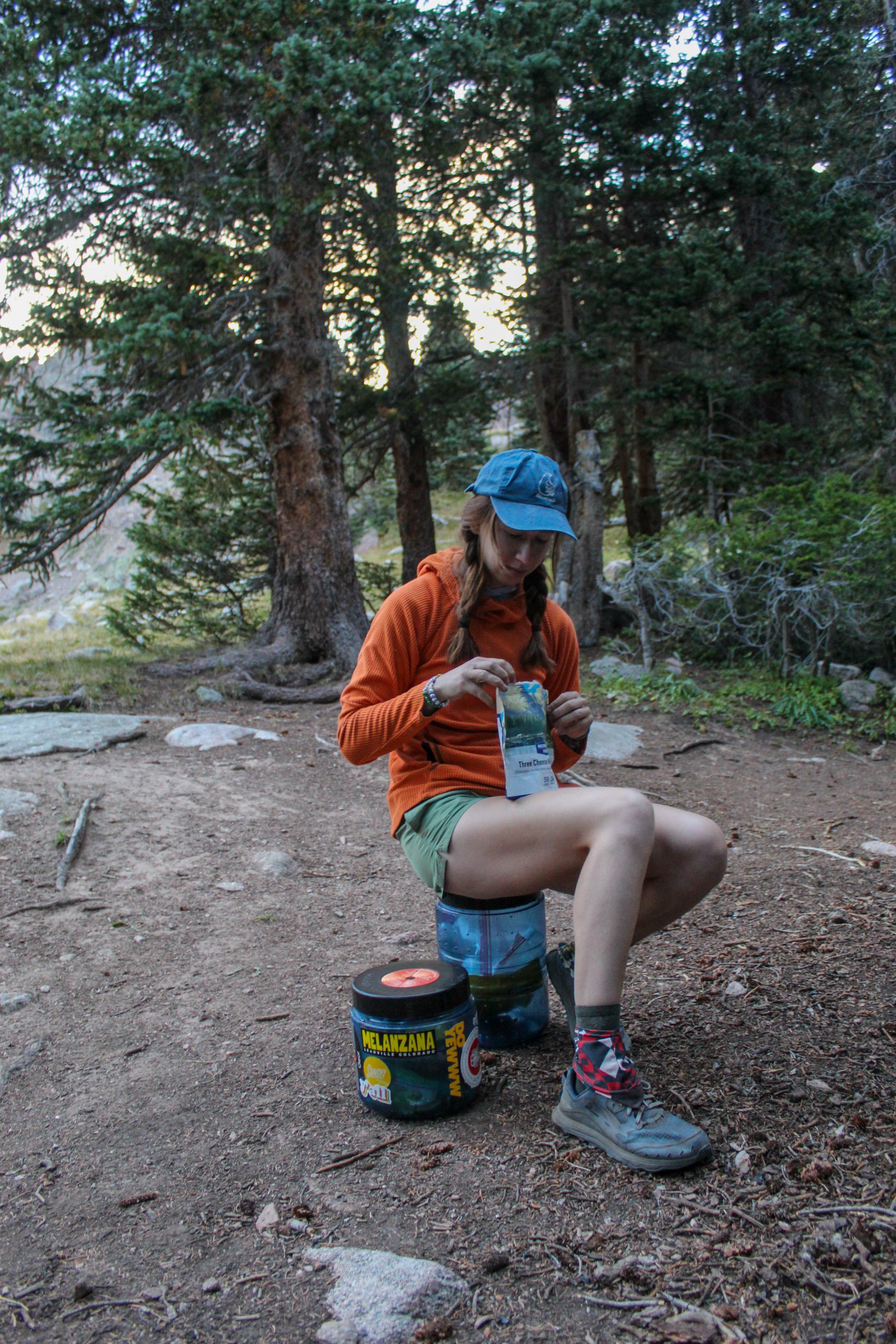
I am notoriously bad at opening packaging; a razor blade just makes things easier. I keep mine inside my BearVault to prevent it from slashing my clothes or other gear.
For about $0.25 (when bought in a multi-pack) and weighing practically nothing, a razor blade does everything I need: it effortlessly opens stubborn Mylar food pouches and cuts my Leukotape when my fingernails fail. There are no moving parts to break, no bulk to carry.
Just remember to tape it safely to the inside of your first-aid kit for safety; a loose razor blade in a pack is sure to do some damage.
Not All Gear Can Be Hacked
At the end of the day, you’re going to have to spend some money to dial in your perfect backpacking setup. There are certain pieces of gear — such as a coat or a quilt — where quality is interchangeable with safety. However, where you can, cut some corners! Not everything you own needs to be at the cutting edge of innovation, especially if some simple things from around the house can accomplish the same goal.
If you’re looking for some more ultralight tips, check out this article about lowering your pack weight by pounds.
Featured image: Photo courtesy of Katie Jackson; graphic design by Chris Helm.

This website contains affiliate links, which means The Trek may receive a percentage of any product or service you purchase using the links in the articles or advertisements. The buyer pays the same price as they would otherwise, and your purchase helps to support The Trek's ongoing goal to serve you quality backpacking advice and information. Thanks for your support!
To learn more, please visit the About This Site page.

Comments 13
I always break an old credit card or a store membership card in fourths and put it inside a taped foldlock sandwich bag on the lid of my bear vault (BV500). I use it to wedge between the two opening clicks on a BV and save my cold, tired fingers. It weighs a few grams, but makes getting into the BV so easy.
Genius!
A repurposed Crystal Light drink mix container is a terrific holder for reading/sunglasses.
We’ve probably all received a tyvek envelope in the mail, these are great to repurpose for sitting on or used as a welcome mat for my tent.
Tyvek is water resistant, not waterproof… Misinformation.
While technically, nothing is 100% ‘waterproof’ under all conditions like deep ocean pressure, for practical uses like a thru-hike, Tyvek performs like a waterproof material. Tyvek doesn’t get weaker or change when it’s wet; it’s as strong wet as it is dry. Water just sits on its surface in drops instead of soaking in. For a shelter on a trail, or a protective ground sheet, Tyvek is functionally waterproof!
My favorite use of a Tyvek mailing envelope is to use it as a placemat when dining in the woods. On a picnic table or the forest floor it is nice to have a clean spot to eat. Also keeps me from forgetting or misplacing something as everything like my spoon, lighter, etc. is in one place and easy to see. Can also serve as a stuff sack for gathering kindling, trash, or whatever you need a quick place to stash stuff. I’ll often grab a new clean envelope when passing by a post office.
I use an Amazon bubble envelope this way. Envelopes also works well as a wash bag if you need to wash clothing on trail. After using it as a welcome mat, I put it under my sleeping pad under my hips to give me a little extra padding if the air in the pad leaks during the night. The bubble wrap envelopes get holes in them but still function well for quite a long time with a few holes.
Pardon- but what in the Sam hell are “dance pants”?? I’m familiar with scrubs and rain, yoga, sweat, and the ever famous 80’s Hammer Pants, but never have heard of “dance” pants.
I learned about them recently, too! From my understanding, they are loose pants worn by dancers to keep generated heat in during a warmup, sort of in the same vein as athletes who jog in trash bags. And, as a bonus, they’re great for backpackers!
Thanks for the explanation of what Dad’s pants are, because I’ve never heard of them either. But can you please provide some example by URL or give us a couple brands with model names? For men and women please. I’m curious to check them out!
Forget rainpants…make a Tyvek rain skirt/kilt. No breathability issues at all.
Tyvek is used to deliver almost all lumber delivered in bulk to lumber yards. Most lumber yards have a dumpster filled with lots of lumber wrap (tyvek) and it has the added benefit of coming with your favorite logo like “Boise Cascade” “Georgia Pacific” etc. that says you are a real hiker who also recycles. Plus it’s free! Did I mention it’s free? Its free. I usually just ask a yard guy if they have any used lumber wrap and explain that I want to use it for a ground cloth under my tent. I usually grab a full lumber wrap, bring it home, cut out what I need and then cut the rest into 3 foot x 6 foot pieces and leave them in hiker boxes for someone else. They will last longer than an AT thru hike. And did I mention that its free?