
 ">
Alpha Direct: Ultralight Miracle Material or Overhyped Fad?
I do a LOT of outdoor recreation, and I can’t be limited to just the bluebird summer days. Rain or shine, burning heat or ice-cube chill, I’m outside doing endurance sports 12 months a year. I am also chronically cold.
My solution? Layers on layers on layers. I keep gloves in the pockets of all my jackets and have nearly a dozen active-insulation midlayers at home. The last few years, Alpha Direct has been my go-to fabric for getting outside when the temps drop too low for a simple base layer.
When I first reported on Alpha Direct (AD) hiking layers nearly three years ago, the fabric was just becoming part of the thru-hiking zeitgeist. I didn’t realize then that its popularity was about to explode, nor that many would come to see AD as the go-to layering system for adventure sports.
A huge factor in its adoption has been the multiplying cottage brands working with Alpha, and, more recently, even big brands like REI and Big Agnes taking a stab at products for the masses.

A Trek gear reviewer testing the Sambob Alpha 120 hoodie in 2024. Photo: Kate Richard
With more products in circulation and more time to age, criticism of the technology has grown as well. I’ve been using this fabric for nearly four years, including several garments I made myself. While I still reach for it for personal use, I’ll be the first to admit that it has drawbacks, and these days I only recommend it to a very specific type of user.
All that being said, is Alpha Direct really the miracle performance fabric of outdoor sports, or is it just another overhyped ultralight fad?
Alpha Direct Pros
Extreme Breathability
With its nearly transparent, open knit structure and hydrophobic polyester fiber, Alpha Direct is one of the most breathable fabrics on the market. This is especially true in lower fabric weights (with 60gsm and 90gsm being the most popular), where the insulating “tufts” of fiber are widely spaced, leaving lots of open channels for body steam to escape.
Featherweight
Three-season garments made of Alpha Direct typically weigh between 5 and 10 ounces, roughly half of what a standard grid fleece might weigh. This difference matters in backpacking. Even hikers who don’t consider themselves ultralight have to be conscious of weight and packed volume.
This low weight translates to insulating efficiency; Alpha Direct has one of the best warmth-to-weight ratios for synthetic insulations.
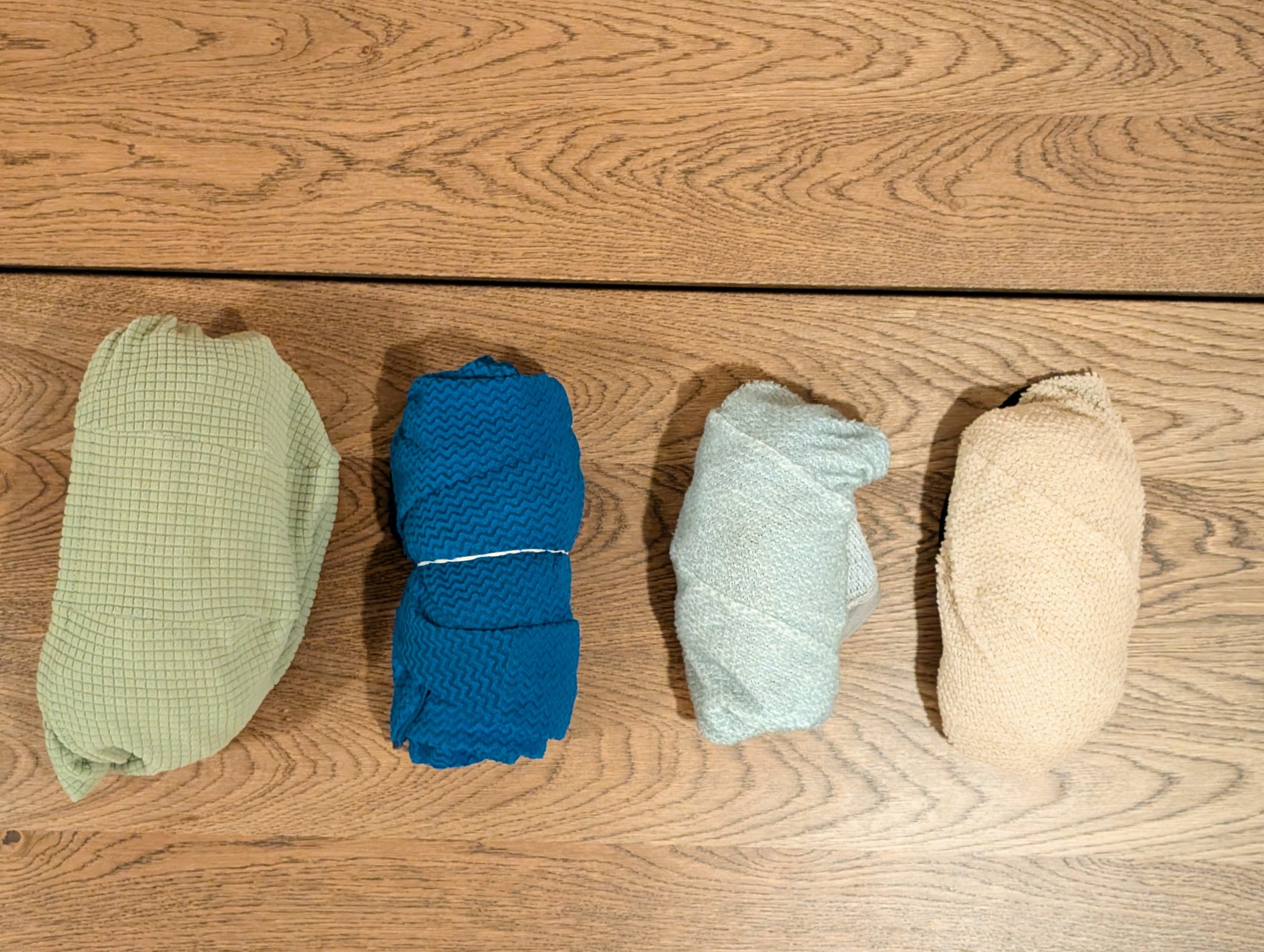
A packed-size comparison of various Polartec fleeces. Left to right: Power Grid High Warmth (15oz), R1 Air (10oz w/o hood), and two Alpha Direct 90s (4.9oz each). Despite being half the weight, the Alpha Direct hoodies fare well against the R1 Air (when capped with a wind shell).
Cozy Vibes
Aesthetics aside, I think part of AD’s appeal is that it feels comfortable as both a next-to-skin or midlayer, and it moves and stretches well. A nice touch of its non-absorbent nature is that it rarely feels clammy, even when wet or damp.
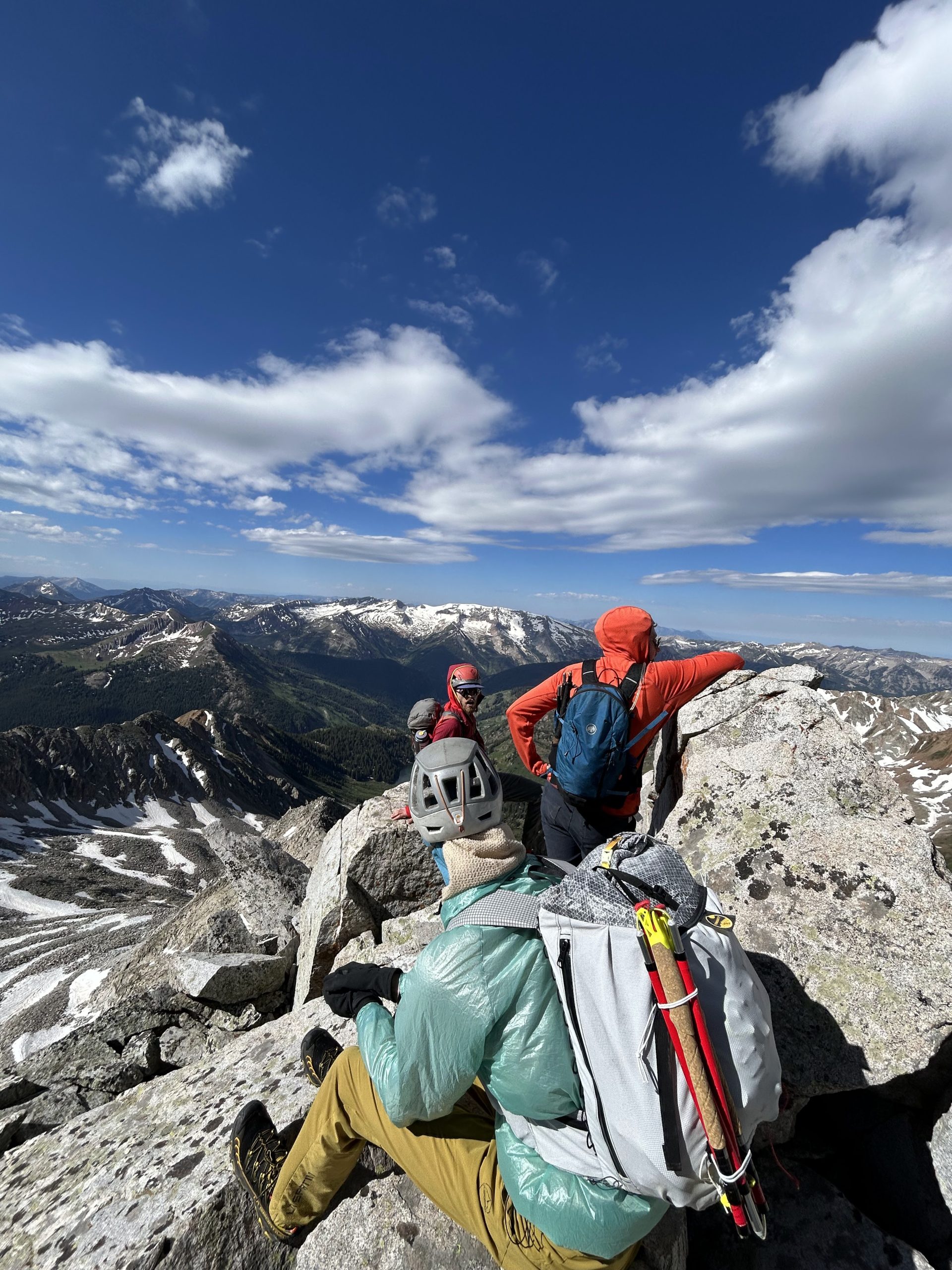
Rocking my classic wind shirt + Alpha Direct combo at 14,000ft. The route from camp was almost entirely 3rd- and 4th-class scrambling, which is exposed, slow, and high-output at the same time. I’m happy with my layering choice here.
Alpha Direct Cons
Plastic Woes
Polartec’s go-to fiber is polyester, aka plastic. The world is increasingly skeptical of plastic use, especially for food-and-water containers and clothing. The former is a huge concern for microplastics in the body, while the latter is criticized for microplastics in the environment.
Alpha Direct has earned itself a bad rap as an exceptional microplastic polluter, and fairly so. Having made quite a few Alpha Direct hoodies myself, I can confirm that the fabric sheds enough fibers to fill my lint trap during the first few washes. At a more microscopic level, polyester is generally known to break down quickly with age.
Fragile
When this fabric first hit the thru-hiking world, it was used almost exclusively by ultralight nerds who are used to their gear being as fragile as tissue paper. Once it became more mainstream, old heads and traditional backpackers were quick to balk at its transparency and tearability.
Alpha also has an obvious kryptonite: velcro. Even light contact will tear some loft out of the knit, if not rip the garment entirely. The open base structure and loose tufts are destined to snag and tear on anything pointy, including branches, gates, and even components of your other layers.
As much as I enjoy its breathability as an active layer, I’ve pretty much banished AD from my climbing wardrobe, where even a gentle graze on relatively smooth rock can create pulls in the material.
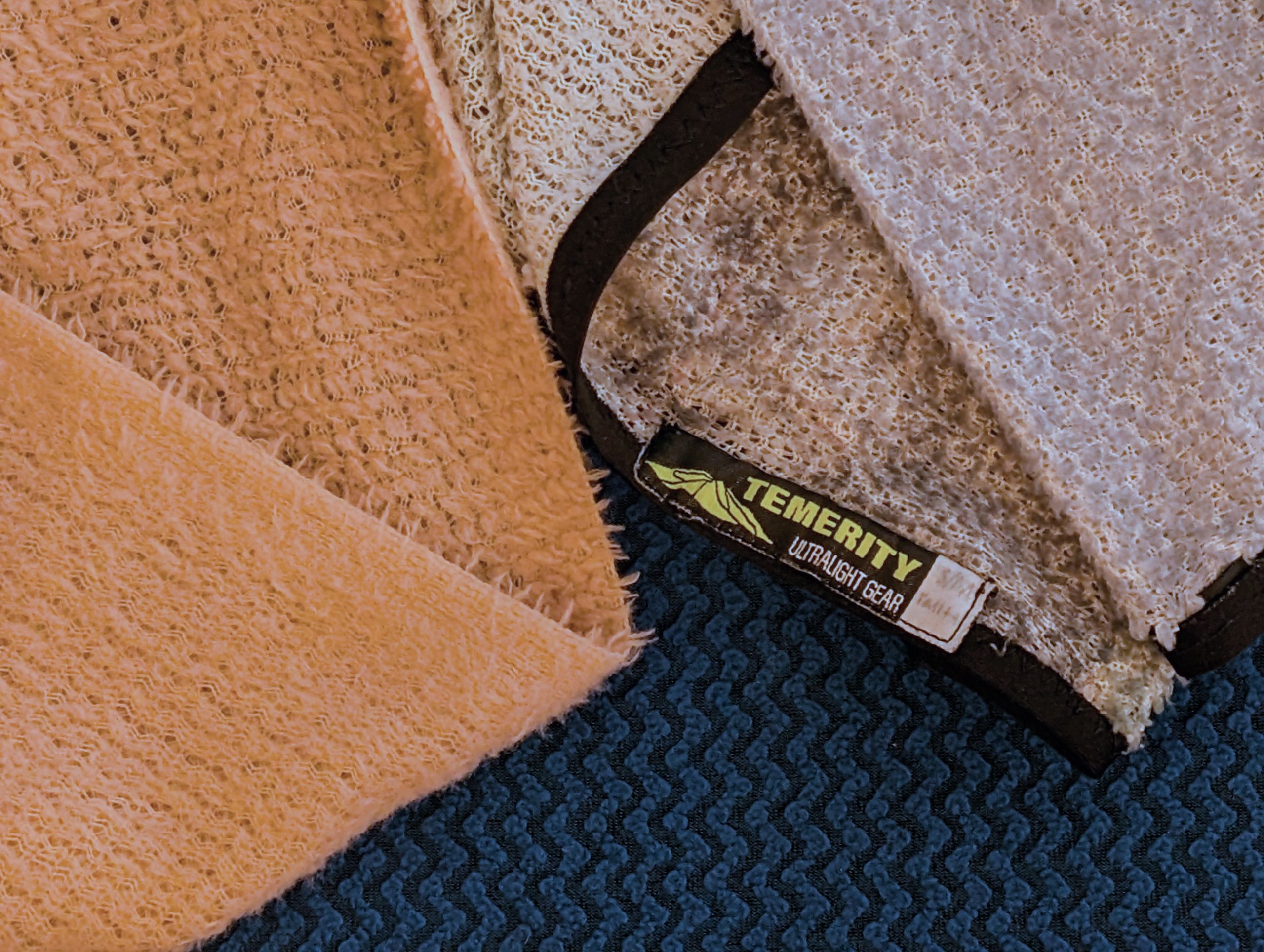
Fresh Alpha Direct yardage on the left, and 3 years well-loved on the right. It’s hard to tell by photos, but the fresh version has quite a bit more front-side loft and a visible pattern of ‘back side’ insulation. The older piece is matted from age and light on back-side loft (either from shedding or “light” batch variation).
This drawback is becoming increasingly visible as the product grows more popular. When you can easily pull an AD hoody off the rack at your favorite generic outdoor retailer, it will land in the hands of many uninformed and incautious users. I’m convinced a lot of these made-for-the-masses options are tried, torn, and trashed within six months of purchase.
Longevity
What time in the wardrobe has taught me most is that Alpha Direct mats and pills extremely fast. I didn’t see this coming; I was worried about overt fiber loss and ripping, not compression of the little fiber fuzzes that make AD work.
I’m not the only one who’s noticed. Diving into online forums, you’ll find quiet but increasingly common acknowledgments of quicker-than-expected wear. I’ve read about some hopeful fixes like “combing” it out or washing with certain soaps, but I haven’t found much that works in real life.
In a memorable critique, Jan of Nunatak Gear called it “FKT stuff … Alpha sheds, thins and rips readily. Besides environmental impacts the degradation lowers the performance faster than any other base layer I’ve owned.”
I still have my first Alpha layers nearly four years later, but I can’t say any of them are in great shape. Each shows the signs of being well loved: cuff trims torn off, holes from overgrown trails, and a noticeable reduction in loft, both from matting on the outside and actual fiber loss on the inside.
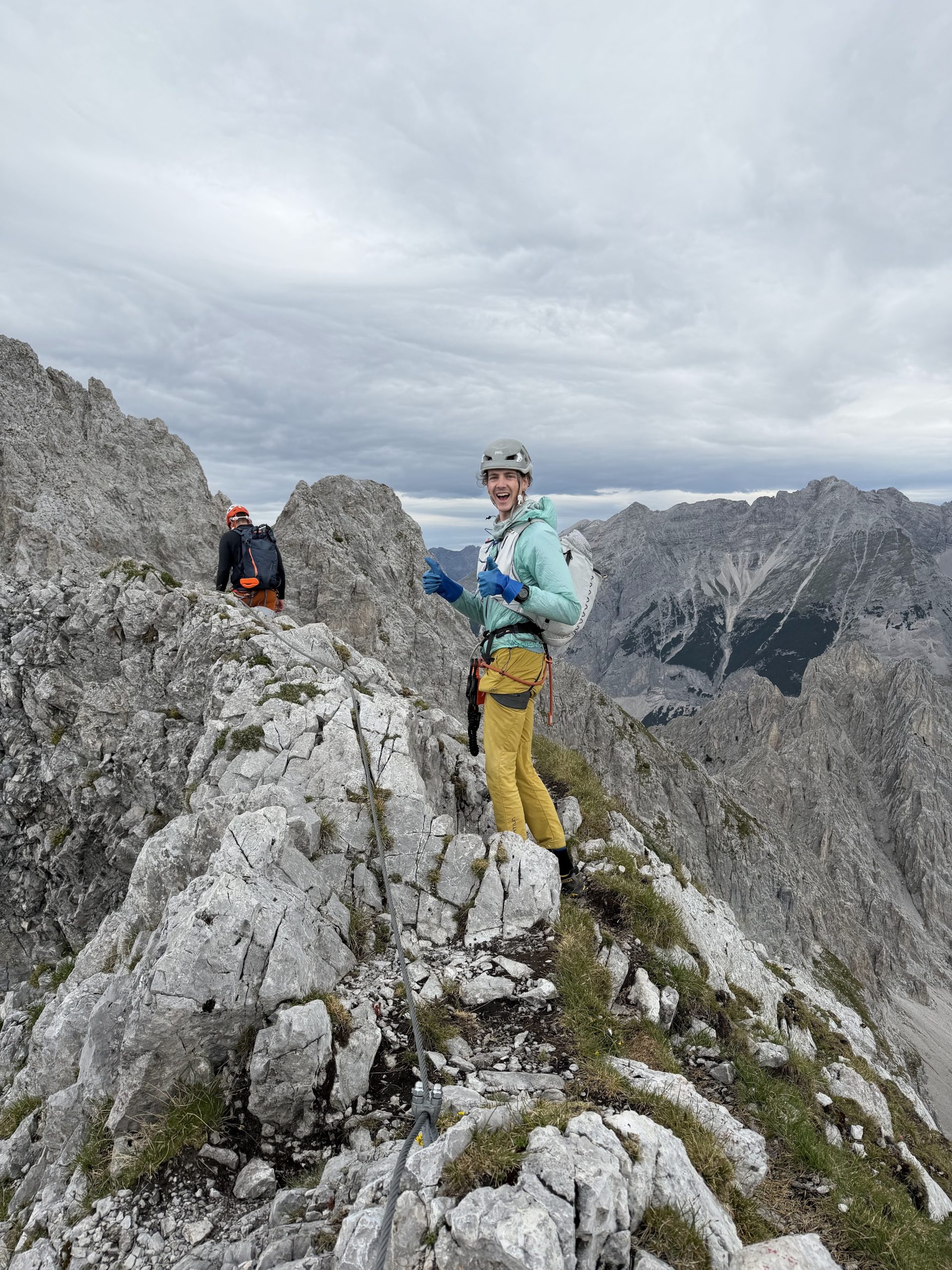
Layered up on the Innsbruck Via Ferrata. Yes, dish gloves and sleeping bag fabric is peak performance in cold and windy conditions.
Batch Variation
Perhaps this is a bit of insider baseball, but I’ll be damned if I don’t mention the significant batch variation of this particular Polartec product. Even new off the shelf, the actual loft of a “90gsm” Alpha Direct varies widely. In some of my Alpha Direct yardage, I can barely tell there is supposed to be loft on both sides of the web-like base, while others have a clear “line” of raised insulation running through.
I’ve seen several manufacturers who actively sell products with AD that criticize this online, with the cult-favorite Dan Timmerman writing, “Alpha Direct 60 and 90 has incredible variation from roll to roll. Some 60 is more like 90 and some 90 is more like 60. It’s pretty much all over the place … I think every roll of AD60 and 90 has its own levels and characteristics that don’t necessarily line up with the general product specs.”
This makes it pretty hard to tell how much your garment is actually going to weigh (boo-hoo for the gram weenies), and more importantly, how warm it is actually going to be. You should therefore always test a new Alpha Direct garment before you commit to using it on a thru-hike.
Polartec is releasing a next-gen Alpha fabric. Is it all about to get better?
Just a few weeks ago, Polartec announced a generational update to the full Alpha Direct product line. They promise to keep the same lightweight, breathable performance while improving strength, integrity, and snag resistance. This hopefully means less microplastic shedding and more time out in the wilds before a major tear.
How much better could this next generation actually be? The answer remains elusive. Polartec hasn’t published any stats or tests showing how much improvement we might see. But products made with the new Alpha Direct are already hitting the market, so consumers will soon find out for themselves. You can expect cult-classic brands like Senchi and new-to-AD brands like Patagonia to put new layers out in the coming months.
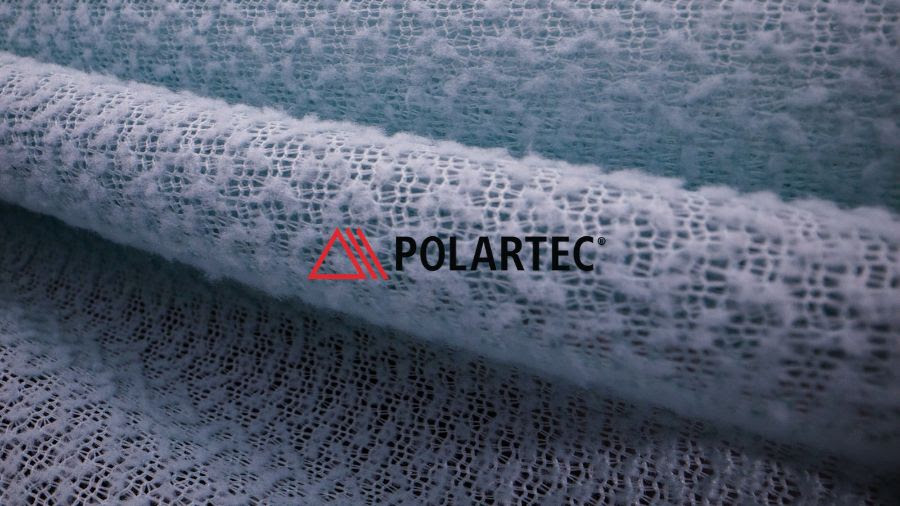
A photo of the next-gen Alpha Direct. Similar appearance, but will those puff balls stay in place better than the previous gen? Time will tell.
What will my closet look like going forward?
Honestly, I will continue to use Alpha Direct for at least as long as my current stock of clothes and yardage lasts. I like its efficiency, breathability, and layerability with different shells. I’m also fairly gentle with gear.
I am much more hesitant to recommend it to others now, though. The combination of fragility and fickle use in a larger clothing ecosystem puts a huge burden on the user to be educated.
In contrast, classic options like microgrid just work without you having to know anything about the fabric ahead of time. I’m also hesitant to promote a fabric with a known microplastic problem (which I still justify to myself by the lack of empirical data to the standard options).
Is it right for you? Maybe, maybe not. If you are a gram weenie or sensitive to layering just right while active, it’s probably worth a shot. If you are going in skeptical or just want something that works without the fuss, I would point you elsewhere. There’s a nearly infinite number of layering options out there.
“I’m over the hype and I want out. What are my other options?”
Octayarn is a similar fabric to Alpha Direct that is manufactured by Teijin. It functions similarly to the Polartec offering but has a stronger face fabric (e.g., snag protection and opacity) at the cost of warmth-to-weight efficiency. When people complain about fragile Alpha, Octayarn alternatives like the Mountain Hardwear Airmesh Hoody usually get a shout-out from disillusioned hikers.
Even brands that once staked their identity on Alpha, like Senchi, have broadened their horizons. They recently released a new hoody adorably called the TurboSheep that takes an Alpha-like construction but mixes in a healthy dose of merino wool. While standard Alpha Direct with Wool is heavier than straight-up AD, these new Senchi hoodies come in familiar low fabric weights (60, 90, and 120gsm compared to ADW’s 150gsm floor).
I’m generally skeptical of mixed-fiber fabrics (they can sometimes be “master of none” and create unrecyclable/uncompostable landfill trash), but I can at least hope that any fibers being shed have a chance of natural decay.
If the spider-web technology of Alpha feels a little too new-school-cool, going retro with a grid fleece or thin puffy is tried and true. I mix in my Melanza hoodie and R1 Air just as often as my AD layers, although I do live in Colorado where these options are standard streetwear.

This website contains affiliate links, which means The Trek may receive a percentage of any product or service you purchase using the links in the articles or advertisements. The buyer pays the same price as they would otherwise, and your purchase helps to support The Trek's ongoing goal to serve you quality backpacking advice and information. Thanks for your support!
To learn more, please visit the About This Site page.
