 ">

My 2026 Summer Hiking Gear
There’s this common misconception that there’s a standard set of gear that works for everyone. I talked about this a bit in my CDT gear post last year, but I think it’s great to revisit this as I prepare for my trek in the Sierra. I hate to break it to everyone, but there’s no perfect bag for every body, nor is there a perfect base weight. The gear experience is highly individualized, and folks tend to pick and choose what works best for them depending on their body types and what their needs are for specific trails. Given that I am hiking the Sierra and Tahoe Rim Trail this summer with no major anticipated snow, I can begin to start thinking about what I’ll need for my adventure.
Gear Preparation
To properly prepare for any hike, you need to know a couple of things:
- Number of Days Out
- Your Terrain (Buggy, Wet, Rocky, Sandy)
- Weather Conditions (Rain, Snow, Blazing Sun that Melts Your Face)
- Requirements and Regulations (Permits, Bear Canister Requirements)
- Your Self
The Most Important: Know Thy ‘Self’
Know yourself, know yourself, know your ‘self’. Can you live without cooked food, and just cold soak? Do you like free-standing tents, or can you get away with other options? Do you tend to run cold or hot? Can you handle wearing the same socks for 5 days, or will you want to change them? What’s the level of misery you know you can handle on trail? Some things you can plan for, some things you can not. If you try out a piece of gear and you don’t like it, switch it out and try something else. For example, I have tried ponchos twice. I don’t like them because of how, on ridges, they tend to billow out, and I can’t see my feet, especially when there’s snow. It might cut me back on weight in my pack, but I prefer to carry the weight.
My Base Gear
I promise you, just because I have it doesn’t mean you’ll like it. However, you might consider things because of my gear choices. This is my base gear given my body and the environments I’ll be putting myself in.
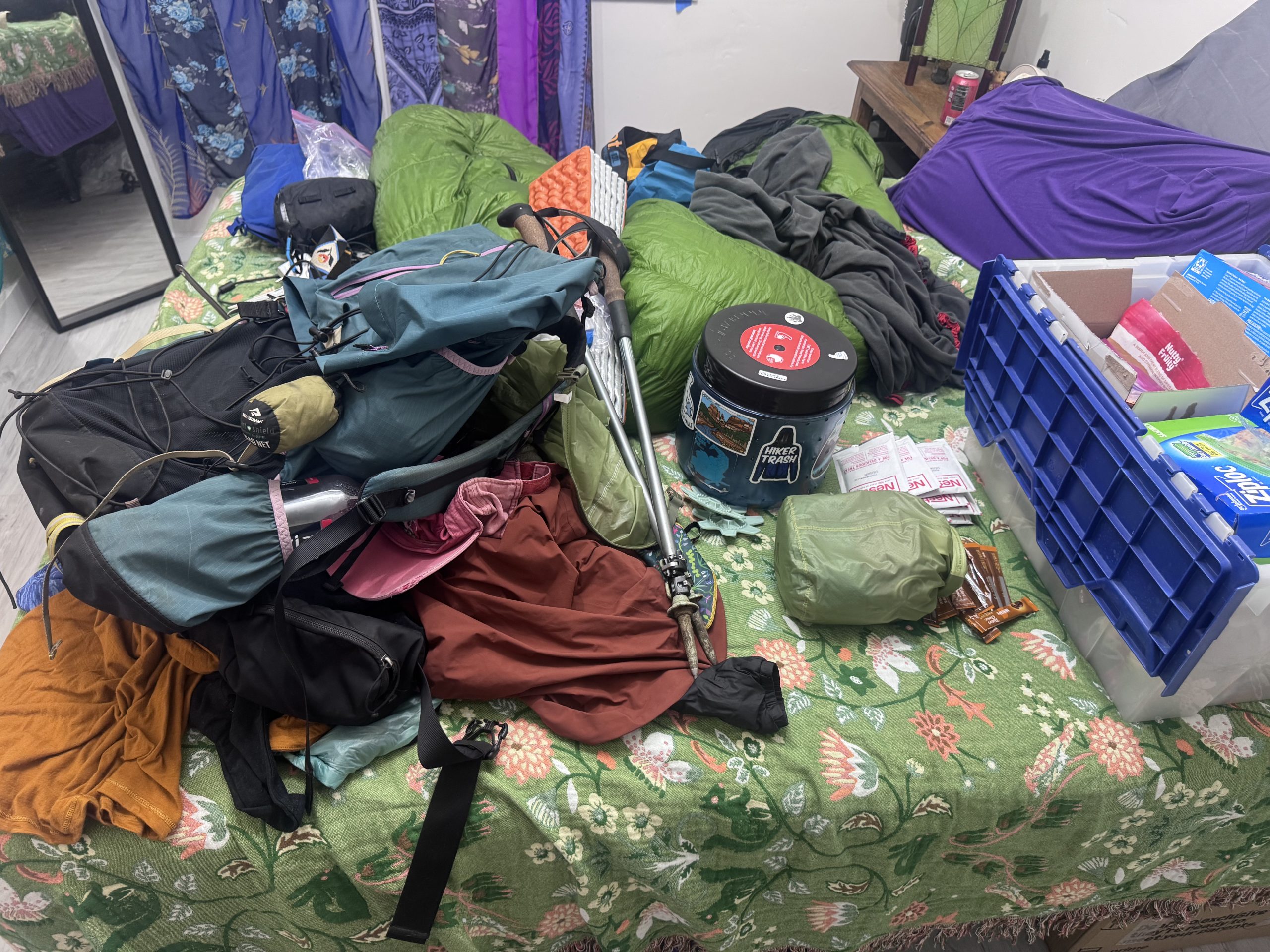
Image Source: Paige Combs, “Welcome to My Mess,” June 2026.
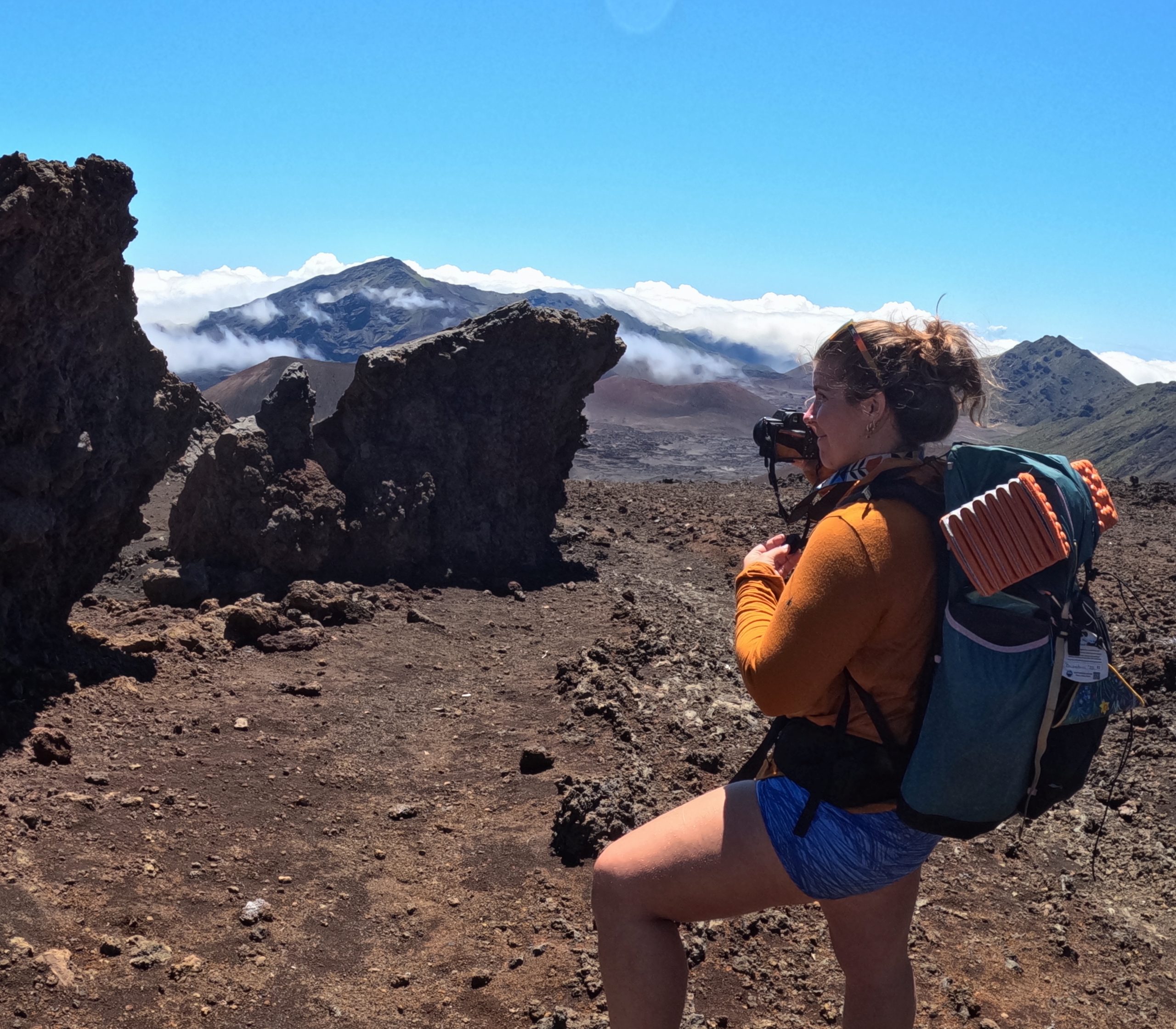
I find I like to throw things in piles and organize them. I just finished my hike around Haleakala National Park in Maui, so most of what I want is already decided.

Image Source: Paige Combs, “Organized Mess,” June 2026.
The first thing I do is organize everything and begin thinking about what I’ll be doing at each part of my day. This helps me as I begin to prepare, and then I actually make a note on my phone for things I need to grab the day before because I use them on a day-to-day basis. For example, my wallet and some of my fresher food items.
Main Gear
My main gear for me is my backpack, my tent, cook kit, and my sleeping bag.
- Backpack – Gossamer Gear Mariposa 60
- Sleep System – Western Mountaineering VersaLite Sleeping Bag, NEMO Sleeping Pad, Sea to Summit Aeros Lightweight Pillow
- Tent – Big Agnes Tiger Wall UL – 2-person
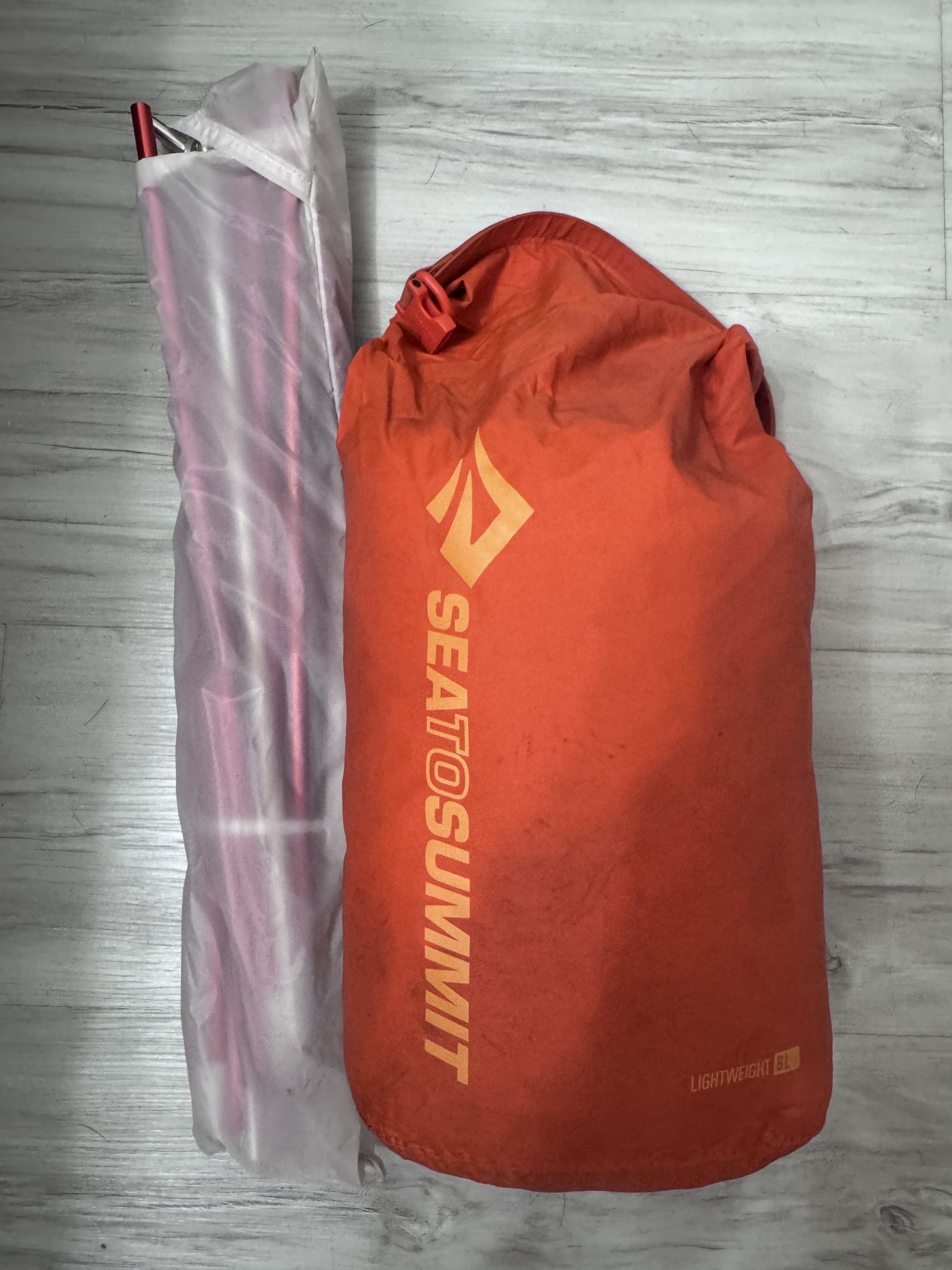
Image Source: Paige Combs, “Big Agnes Tiger Wall UL 2-Person in Sea to Summit Stuff Sack,” June 2026.
- Food Storage – BearVault and Sea to Summit Dry Bag
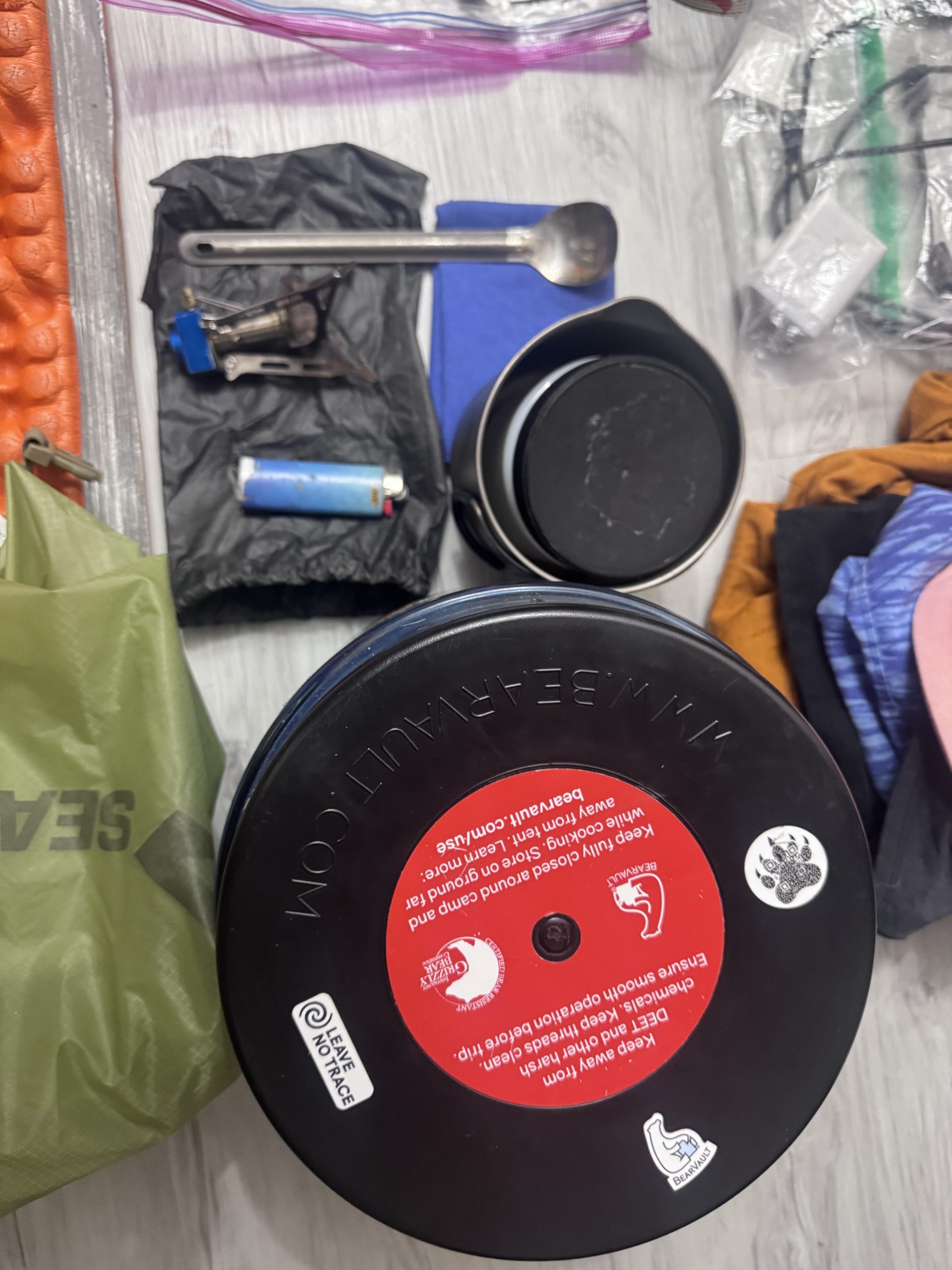
Image Source: Paige Combs, “Cook Kit Items,” June 2026.
- Cook Wear – Titanium Pot, Spork, Off-brand Pocket Rocket
Technology
- Garmin InReach Mini 2
- Camera – Sony A7RIII with attachments (I might leave out my GoPro for this trek)
- Battery Pack – Anker Portable Charger / Cordage
- Headlamp – NU25 UL Headlamp

Toiletries & ER Kit

Image Source: Paige Combs, “My Not So Extravagant Organization for Toiletries,” June 2026.

Image Source: Paige Combs, “Poop Kit, So Basic,” June 2026.
- Poop Kit – PACT Outdoors bathroom wipes, DirtySaw Deuce #2, hand sanitizer (personal choice)
- Emergency Aid Kit – ibuprofen, band-Aids, Benadryl (because bees love me), Azo (because I get chronic UTIs on trail)
- Grooming Kit – brush, toothpaste, toothbrush, floss, nail clippers, and qtips
- Kula Cloth – for those of us who squat when we pee
I really don’t have a fancy system. What’s interesting is that after hiking for most of the year last year, I think I have less anxiety about forgetting things. I’m not bringing microspikes or an ice ax because it’s going to be mid-July to late August and there’s going to be a designated trail from the Northbounders by this time. So I feel really comfortable with just my trekking poles and being careful while hiking. BearVaults are also required in the Sierra and Desolation Wilderness.
Full Itemized Gear List
This website contains affiliate links, which means The Trek may receive a percentage of any product or service you purchase using the links in the articles or advertisements. The buyer pays the same price as they would otherwise, and your purchase helps to support The Trek's ongoing goal to serve you quality backpacking advice and information. Thanks for your support!
To learn more, please visit the About This Site page.