
 ">

How To Thru-Hike the PCT With Type 1 Diabetes: Gear, Resupply, Logistics, and More
This is a guest post by Ben Bosch (full bio at the end).
Hello! I’m Ben, PCT Class of 2024 (and Colorado Trail ‘21). I’ve had Type 1 Diabetes for 24 years (since I was 8) and Graves’ Disease for 4 years. Over 5 months, my partner and I hiked 2440.7 miles from the US/Mexico border to the US/Canada border carrying everything we needed in our backpacks (15-35 lbs each depending on food/water).
We hiked 18 marathon or longer days and a seven day stretch covering 174.2 miles (24.9 miles/day). On average, every 3-5 days there was a town to resupply in, but, in the Sierra, it was 7 days between stops. This required detailed planning and confidence in my management plan combined with layers of backups.
I’m not the first person with diabetes to finish the PCT (there’s a Triple Crowner out there) and I wasn’t even the only one on the trail in 2024! However, I found very little online knowledge about this very specific niche (managing a chronic illness that requires constant management while hiking 25 miles a day and eating 7 plates of food at a buffet). I wanted to share my experience so, hopefully, others can be more confident in future years!
Because I want this to be useful for thru-hikers with Type 1 Diabetes, I’m going to assume knowledge of both facets. I’ll add background when necessary but will skip explaining what a resupply is or pump vs. MDI.
As a necessary disclaimer, none of this is medical advice, it’s just my experience and what I found that worked/didn’t work.
This post starts with what I used to manage my diabetes, then how I got more supplies, followed by analysis of what went right and wrong (with horror stories!) and what I would change.
I hiked the trail with my amazing partner. While this made many things easier, this isn’t necessary and I’d have no worries about starting the trail solo.
One more side note: my Graves’ Disease is well managed with half a pill 3 times a week, so this post will focus on diabetes management. For me, the hardest part for Graves’ Disease on the trail was remembering the day of the week to take the medication.
Gear List!
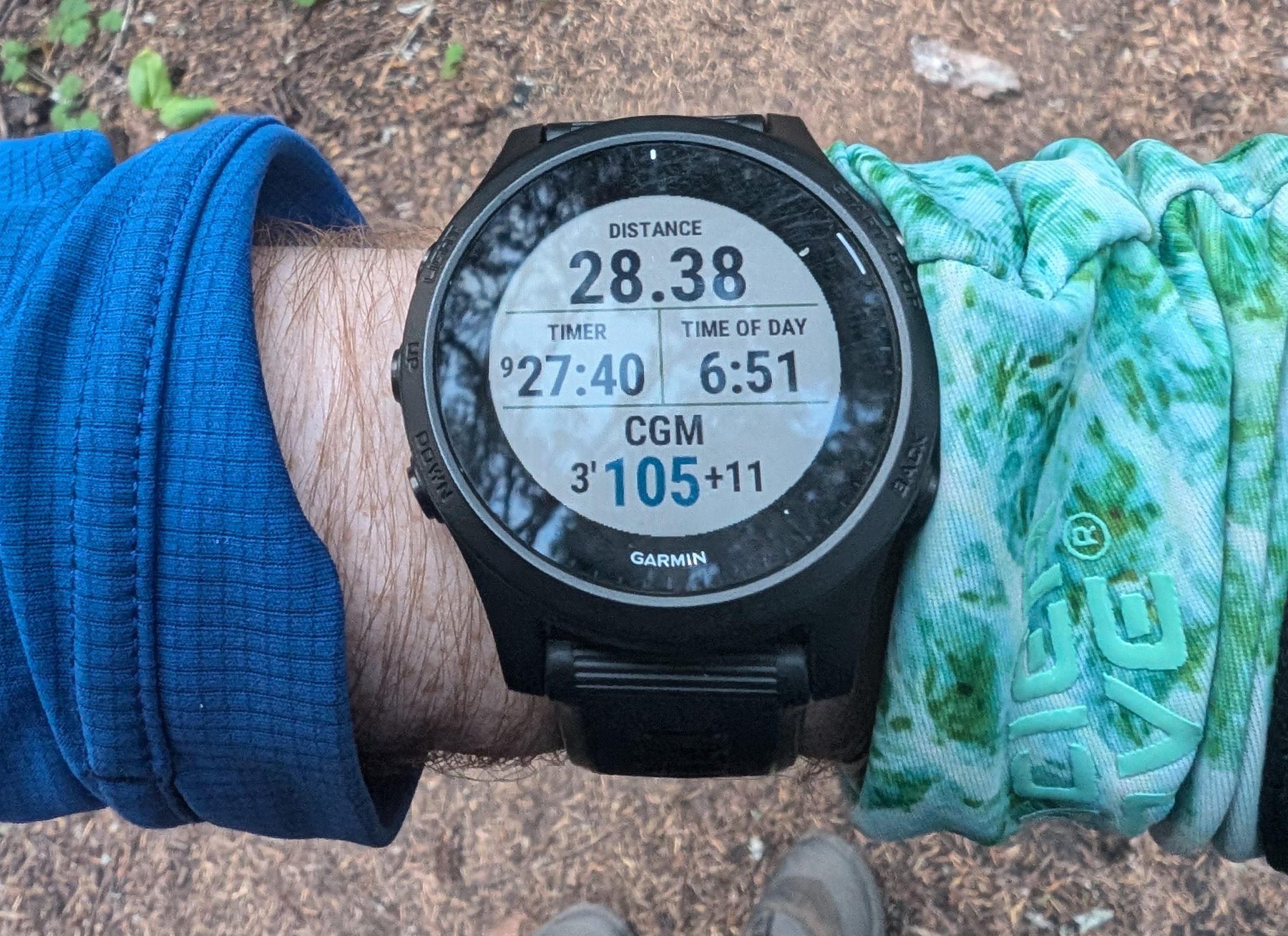
Did I make sure to get both a good blood sugar and a high mileage day? Of course! Photo: Ben Bosch
Sorry, not sorry that I tricked you into reading another gear list post, but here’s the diabetes related things I carried. On average, I was carrying ~8L of diabetes supplies. That’s 15% of my 55L pack volume and was something I had to remind myself of when the ultralighters went by with their tiny packs.
- Tandem t:slim X2 pump (and supplies): The Control-IQ was absolutely crucial to the hike going well.
- Dexcom G6: Wore it 100% of the time and it made everything better.
- Baqsimi: Glucagon that can survive anything. I never needed it but I wouldn’t hike without it.
- Novolog: I always had an extra bottle in case my primary one went bad.
- Lantus w/ syringes: In case the pump failed. Never needed but would carry again.
- Alcohol swabs: Important when you haven’t showered in a week and you fell in a stream likely full of giardia (aka always).
- Backup blood glucose meter: I used it a grand total of 3 times while my CGM was warming up but, again, it’ll always come with.
- Ketone meter: I never used it and would probably leave it home next time.
- xDrip+: Better than the Dexcom app for Android because it works offline and will integrate with more devices.
- Garmin Forerunner 945: GPS watch that could display my blood sugar.
- xDrip+/Spike/Nightscout Datafield: How my blood sugar actually got to the watch.
- 20,000 mAh Battery bank: A lot of things were electronics that couldn’t die so a big battery bank and very careful power management was necessary.
- Ursack: Not strictly diabetes related, but this was the easiest way to safely store food when a bear can wasn’t required. It was easy enough to access in the middle of the night as needed. I made sure to always pack some candy right at the top. We never slept with food in the tent and I don’t think having low supplies in the tent is worth the risk of critters. The two nights I woke up to a mouse in the tent reinforced this belief.
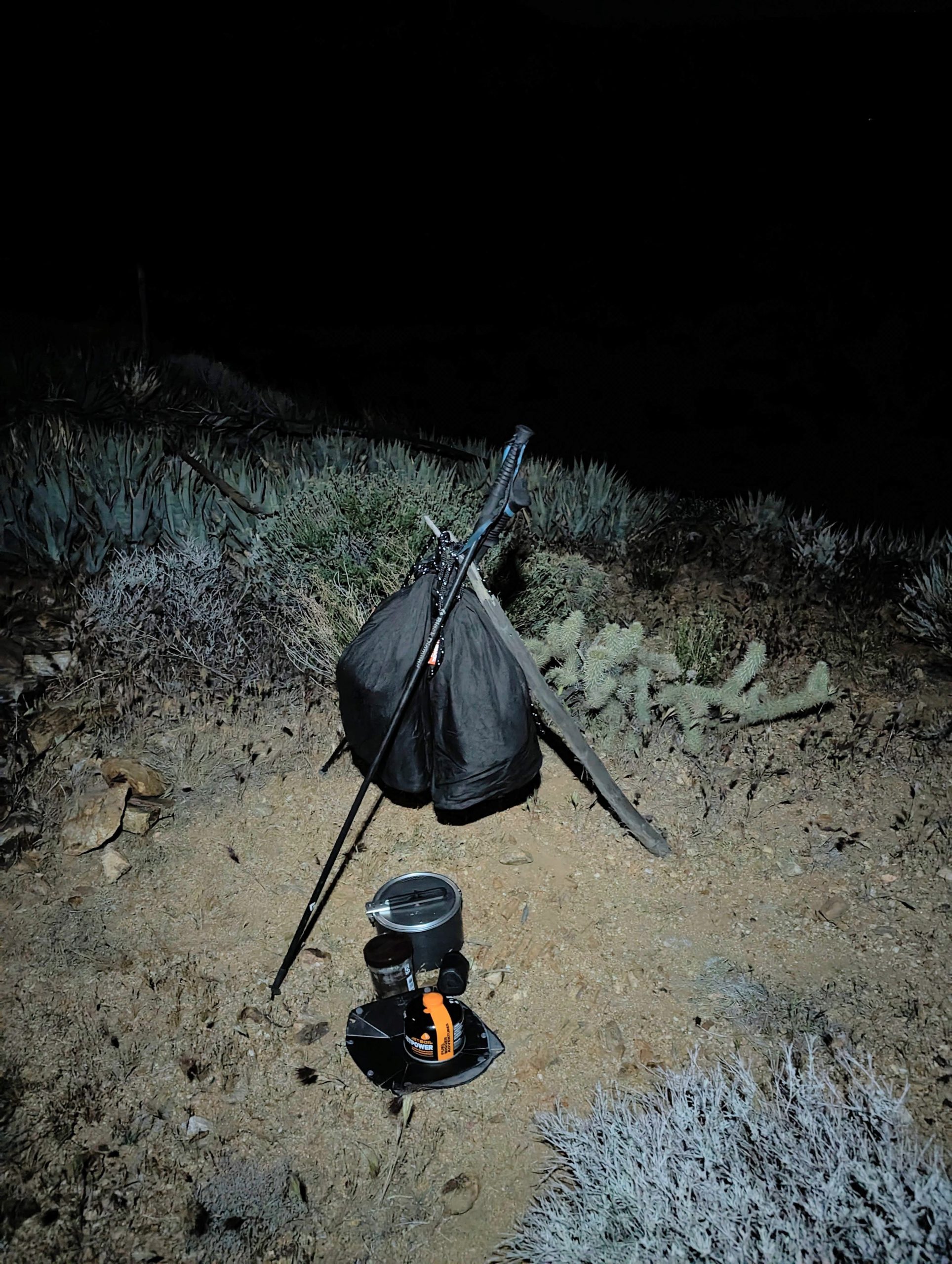
The availability of trees played a big part in the quality of our bear hang. Photo: Ben Bosch
Resupply Strategy
Obviously, I didn’t carry all my supplies for the entire trail from Campo, CA. Instead, I tried to carry about 2 weeks of supplies and, every week, would have a resupply package waiting at a local post office with another week’s worth of stuff. This means I always had a week’s buffer in case a box got lost (this never happened) or I needed extra (this happened a fair bit).
My mom was the real MVP of the trail who packed and mailed much of the food and all of the diabetes supplies needed for the next leg. This approach worked well, and I could pretty quickly replace something if a site fell out or a sensor failed to rebuild the buffer so I was never worried about running out before the next resupply.
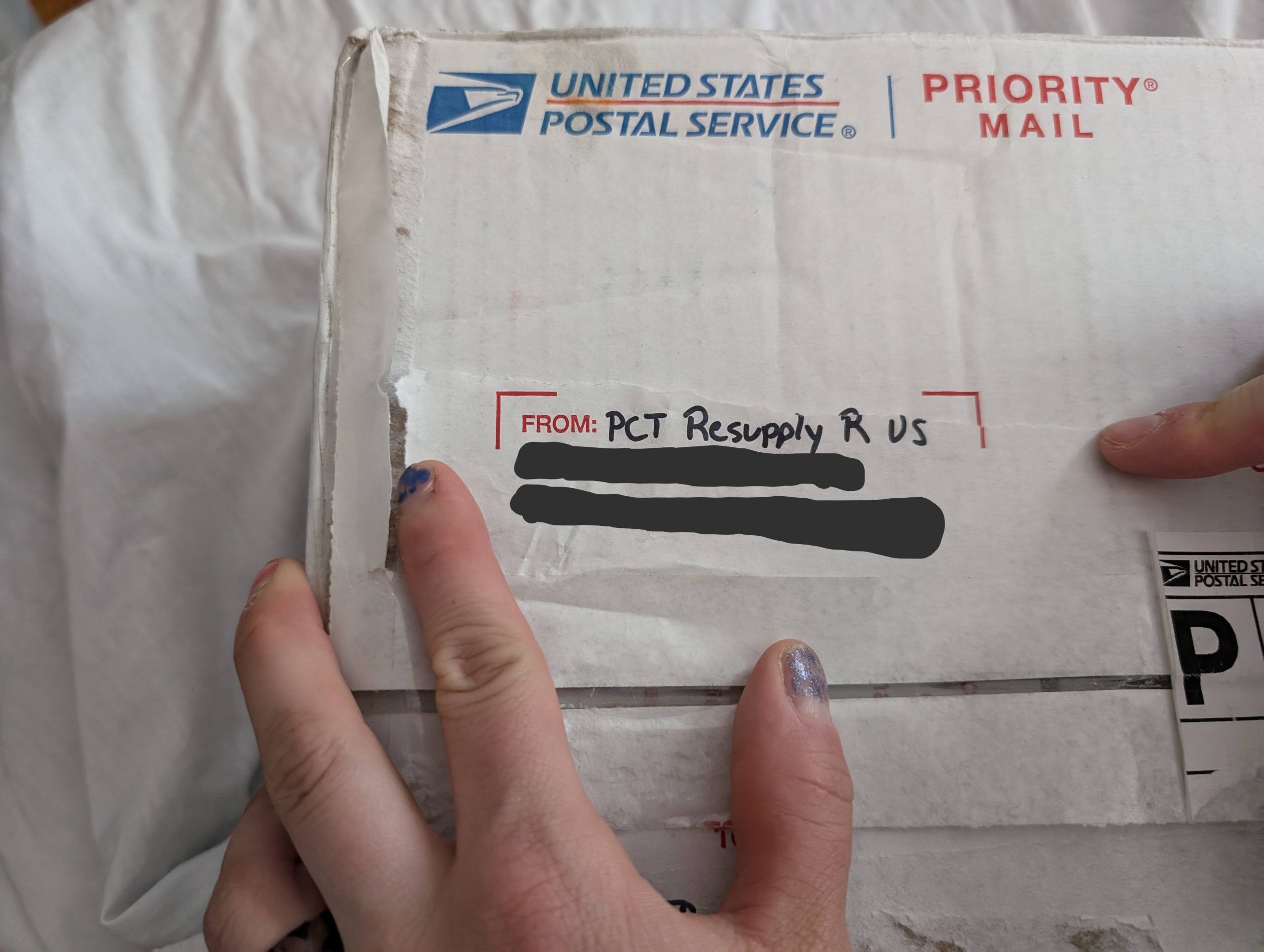
We never knew who we’d get a package from. Photo: Ben Bosch
As mentioned above, I tried to always have at least 2 vials of Novolog in case one went bad (Spoiler alert: they did). My mom shipped them with an ice pack to help keep them cool but, in general, the post offices didn’t tend to be unreasonably hot and they arrived intact. I avoided sending insulin to non-post office resupplies where the boxes were more likely to get hot.
Another strategy I heard about involved pre-planning pharmacies along the trail, which is the safest but seems like a lot of work. Alternatively, mailing a couple of months of insulin to trail angels who would put it in their fridge and picking them up when passing by worked for international hikers or people who didn’t have someone mailing packages.
I also carried a vial of Lantus and syringes in case my pump broke multiple days from town. Even though I never used it, I replaced it every ~2 months in case it had degraded.
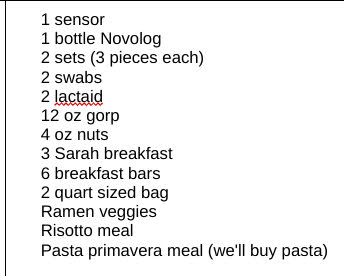
A sample resupply list with a fun mix of medical supplies and dehydrated food.
What Went Wrong (and What I’d Change)
The biggest issue was multiple bottles of insulin going bad due to the very hot weather. Luckily, it was one at a time and close enough to town where I had a new bottle waiting.
I had researched beforehand and learned that insulin that turns kind of brown and sludgy is still safe to use but will likely be basically useless. This was clearly the case when I used 196 units one day just to keep my blood sugar in check (I averaged <40 units/day). Obviously, I wouldn’t recommend this.
My strategy was to put my insulin in the center of my pack to keep it out of the sun and, hopefully, as cool as possible. This was simply insufficient when it’s 100°F+ with no shade during the day and 80°F at night. In the future, I’d add a Frio pack, which other people used effectively and never had insulin go bad. So yeah, definitely do that.
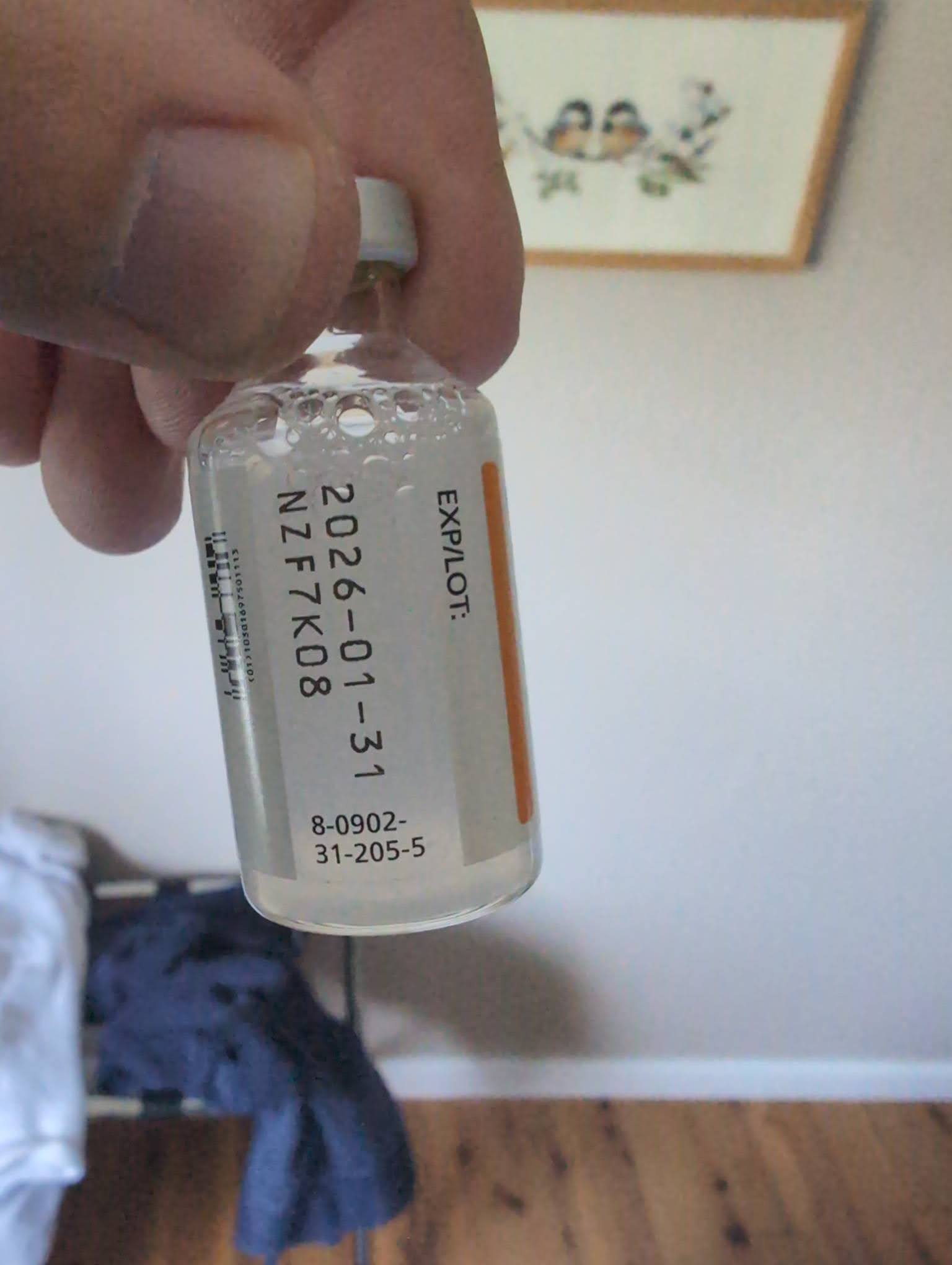
Novolog isn’t supposed to be that cloudy. Photo: Ben Bosch
We only had a couple of nights below freezing and, on those nights, would put the insulin in the quilt with us to stay warm overnight.
Control, in general, was not a problem (shortly after the trail, my A1C was 6.7). Overnight, Control IQ worked great and I woke up with excellent blood sugars and only had to get out of the tent to treat a low ~10 times the entire trip! Most of those were in the first two weeks as I was dialing in the “Hiking” profile I would use the rest of the hike.
Compared to my normal life, the overnight basal rates were slightly higher going to bed because we normally ate a late dinner/dessert and then half of regular basal rates for the rest of the night. For hiking, I set my basal to about 1/10 of normal, which wasn’t quite enough, but I would give micro boluses to correct if I started to go high. This let me eat whenever I wanted without needing to worry about going low.
My blood sugar would spike after dinner, and getting the insulin right was nearly impossible. The most effective thing we did was walking for an hour or two after dinner which was great for having energy at the end of the day and using the walking to help bring the blood sugar back into range.
Another helpful thing was a walking breakfast. I would mix my oatmeal with cold water when I got out of the tent and, after packing up, it was “cooked” enough to eat when I started to walk. Not only was this a good way to get extra miles, it reduced the blood sugar spike I’ve struggled with on trips where breakfast was 30+ minutes before starting walking.
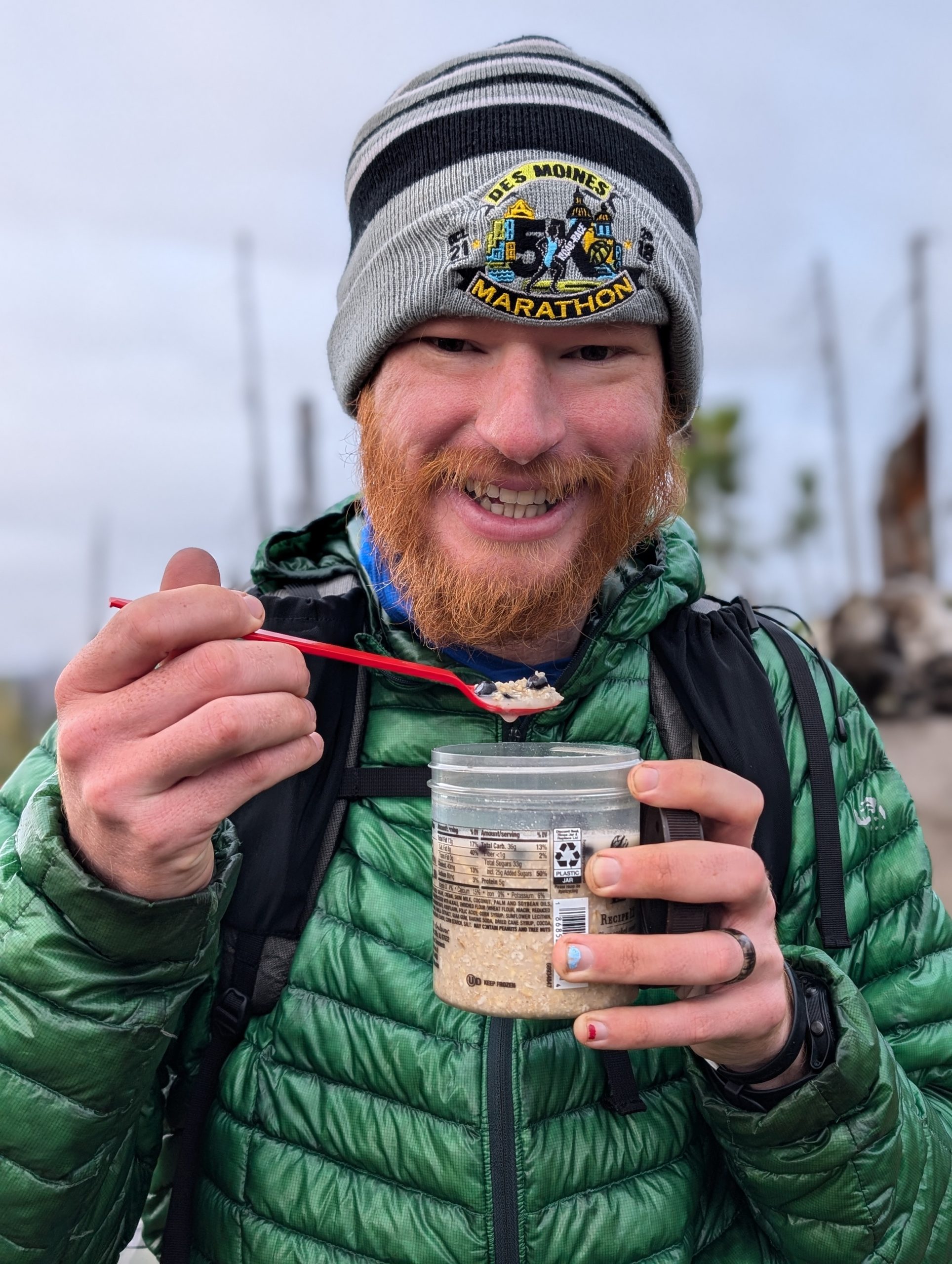
Wild blueberries made cold oatmeal much better! Photo: Ben Bosch
One unexpected problem was starting to run out of places to put infusion sites. Generally, old sites heal in 1-2 weeks for me but, on the trail, recovery simply wasn’t happening as fast because the body is continuously being pushed to its limit.
Everyone complained about minor scrapes never really healing, but old infusion sites were taking a month or more to heal, which meant I was very rapidly running out of good places to put a site and occasionally had to get creative (it turns out you can comfortably go lower on the butt when you never sit down!).
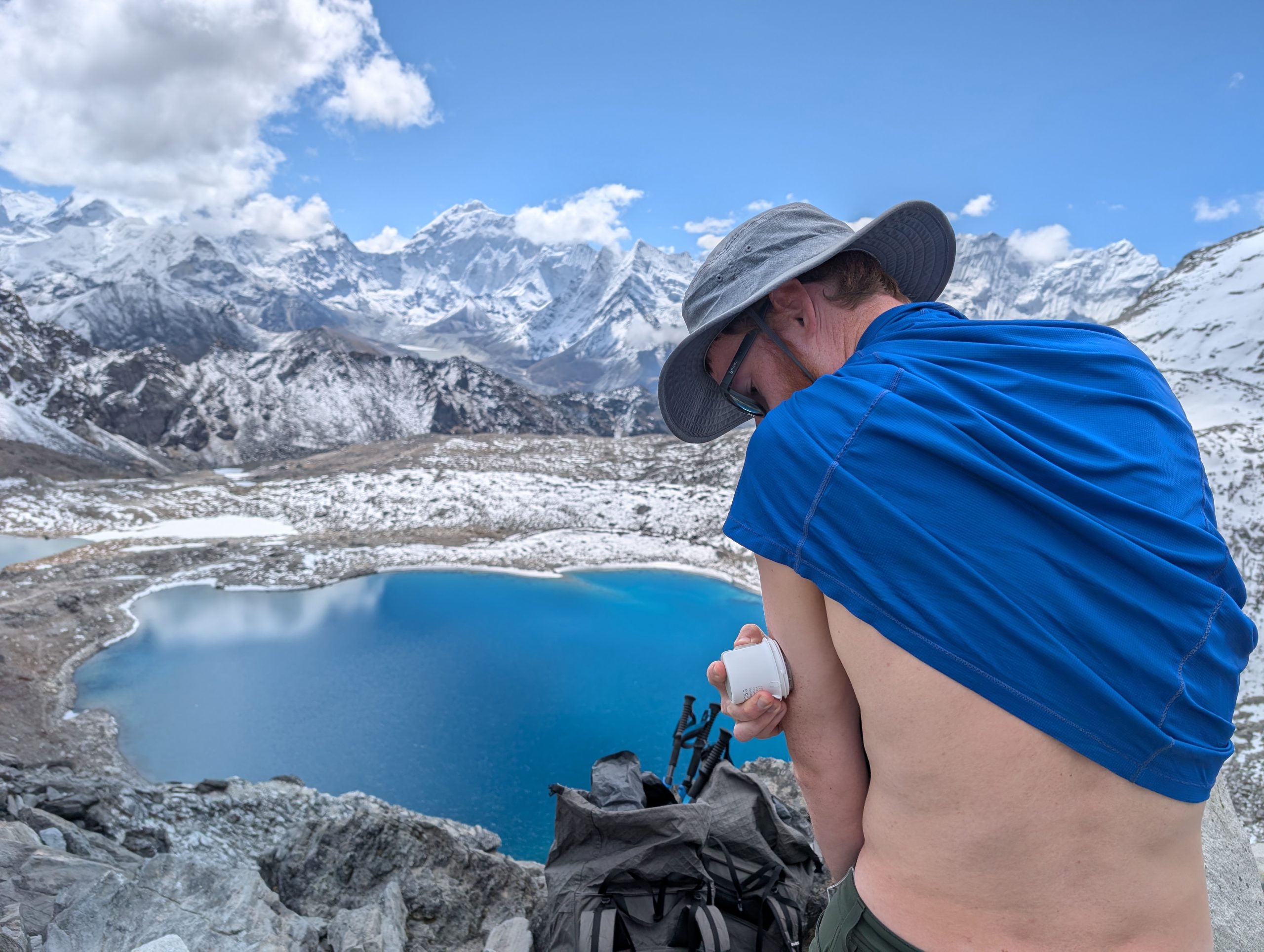
From a non-PCT trip where my sensor failed at the top of a pass. Photo: Ben Bosch
The next problem was more of an annoyance, but I worked really hard to run out of insulin at camp at the end of the day. Doing my site changes at the end of the day was designed to
- Have my pack already unpacked
- Have time to do a site change
- Give the site overnight to fully stick on less sweaty skin
In general, this approach worked really well and almost all my sites and sensors lasted their full life without needing to tape them down. However, every once in a while, I’d miss that I needed to do a site change and wake up at 2 a.m. to an out of insulin alarm.
Doing a site change at 2 a.m. is already pretty bad but doing a site change at 2 a.m. in a tent that’s 4 feet tall at the highest point while trying to avoid shining your headlight at your sleeping partner is a new level of terrible. Unfortunately, the only real solution to this is being less dumb, but at least you’ll know you’re not the only one when this happens to you.
Speaking of problem-solving at 2 a.m., that’s when I discovered it’s possible to crack the reservoir to the point that it won’t fit into the pump! Unfortunately, this was in the middle of the night and I was just trying to go back to sleep, so I don’t have a picture. My theory is that I had put the reservoirs horizontally along my bear can in the Sierra, so when fully loaded, they were bent around the hard plastic.
When I tried to load the cartridge into the pump, it would make it about halfway and then stick. I could see that it was bent and the middle of the cartridge was a couple of millimeters out from the pump and it wasn’t going to be possible to get it to load properly.
Only 2 were damaged this way and I had enough backups, so it wasn’t a serious problem, but it easily could have been if more had been damaged. After discovering this, I made sure to always load them vertically into my pack and next to softer things when possible, which was enough to avoid more trouble.
And the most exciting problem was a gusher! One morning, I did a site change and removed the old site. It had a tiny bit of blood in the cannula but I didn’t worry about it. A minute later, my leg felt wet, so I checked and watched blood squirting out of the old site with every heartbeat. I didn’t measure, but I’m guessing it could have flown for several feet if my pants weren’t catching it all.
In a bit of a panic, I called my partner over and she grabbed our pack towel to start putting pressure on it. After carefully getting down to the ground, we kept pressure on for 5 minutes which was enough to stop the bleeding. At this point, my pants were in desperate need of a wash (side note: the little bit of waterproofing on them meant all the blood stayed on the inside which is kind of nice, I guess). I rinsed them out in the river and put on wet pants to start the day!
The next few site changes after that, I made sure my partner was ready with the towel just in case, but it was never a problem again! Not sure what I could have done differently, and this could have happened in the front country, but it was a good reminder that something unexpected will always happen.
Happy Trails!
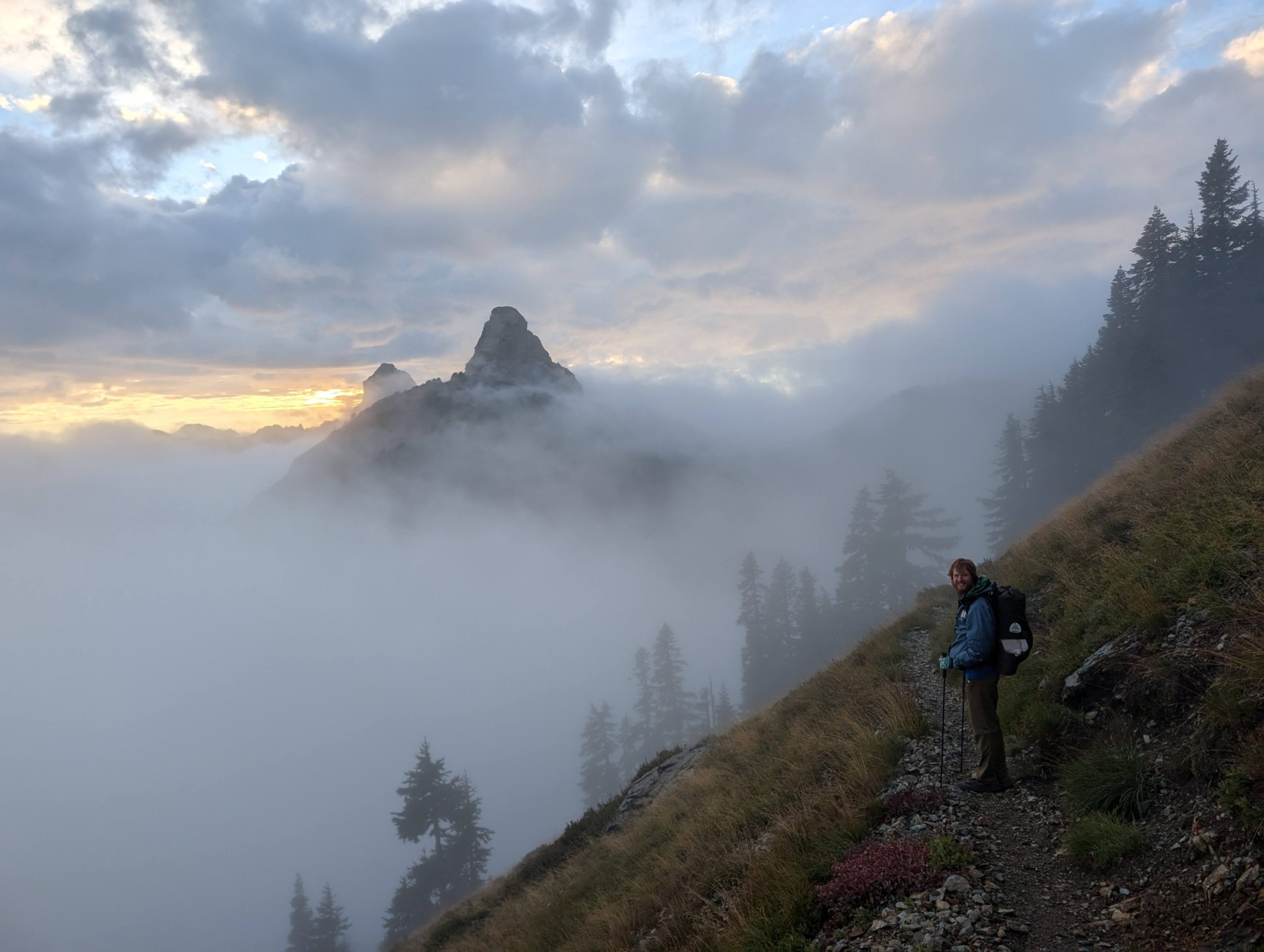
Photo: Ben Bosch
I loved my PCT thru-hike! Starting with one-night overnights and building to longer trips that included resupplies helped develop the skills and knowledge that made the hike a success.
Having diabetes definitely made it more challenging, but I’m proud that none of our worst problems (fire, Norovirus, mice) were related to diabetes. I learned a lot about myself and my body and can better plan for future adventures.
This post was meant to share some of that knowledge and, hopefully, will help more people tackle the trail in future years!
About the Author
I’m Ben (PCT ’24, CT ’21), a long-distance hiker and runner based in Boulder, CO! I’ve had Type 1 Diabetes since 2001 and Graves’ Disease since 2021. When not on trails (running, hiking, or cross country skiing), I can be found trying to pet cute dogs. I love talking about how I make all these things work well together!
Featured image: All photos courtesy of Ben Bosch

This website contains affiliate links, which means The Trek may receive a percentage of any product or service you purchase using the links in the articles or advertisements. The buyer pays the same price as they would otherwise, and your purchase helps to support The Trek's ongoing goal to serve you quality backpacking advice and information. Thanks for your support!
To learn more, please visit the About This Site page.

Comments 2
Thanks for sharing! My youngest nephew has type 1 and celiac disease. I don’t know if backpacking is his thing yet, but it’s great to know that people aren’t letting chronic diseases hold them back from these experiences. It definitely adds another layer of planning but it sounds very doable. Happy trails!
Hi! Planning to do my first longer, multi day hike soon and always go low when hiking. Any tips about how to pack the right amount of low snacks. I am scared of running out but don’t want to make my pack too heavy.