
 ">

My PCT Gear Recap: What Gear Survived 2,650 Miles?

About a year ago, I put together my PCT Gear List and initial gear blog for The Trek. I definitely chuckled when I reread it two months post-trail. Little did I know how much I would put my gear to the test. Five months of relying on what you can carry on your back gives you perspective on how little you actually need to survive, and how important it is for that gear to withstand heat, sand, rain, snow, and wind. So, what lasted? What failed? And what did I replace along the way? Read on to find out.
Shelter

Our lakeside campsite in Oregon
Chowder and I used the Durston X-Mid Pro 2 (Dyneema) for the entire trail, and so did half our PCT class cohort. In the Sierra, our vestibule zippers failed. We tried zipper lube, visited the “Zipper Whisperer” in Mammoth Lakes, and attempted every trick we knew, but nothing fixed it. Being unable to close the vestibule does become a safety concern in bad weather.
Fortunately, Durston sent us a refurbished tent to Sierra City, and we returned our original. Their customer service was excellent.
While we loved the weight and many features of the X-Mid Pro 2, I didn’t love how much space the tent footprint required. It was especially difficult to find suitable campsites in Washington.
Sleep System

Cowboy camping in the desert! I’m glad I had my sleeping pad and quilt to keep me warm.
My Enlightened Equipment Enigma 10° quilt kept me warm the entire trail. Sometimes too warm!
I used the Big Agnes Rapide SL sleeping pad until White Pass, WA, when it began to deflate and I couldn’t locate the leak. Luckily, we had a spare Therm-a-Rest NeoAir at my mother-in-law’s house, so I switched to that for the rest of the trail. The Rapide SL felt luxurious with its height and width, and its 4.8 R-value kept me warm. It was slightly heavier than other UL pads, but a good night’s sleep is worth the weight.
My NEMO Fillo Elite pillow also survived the entire trail with no issues.
Pack
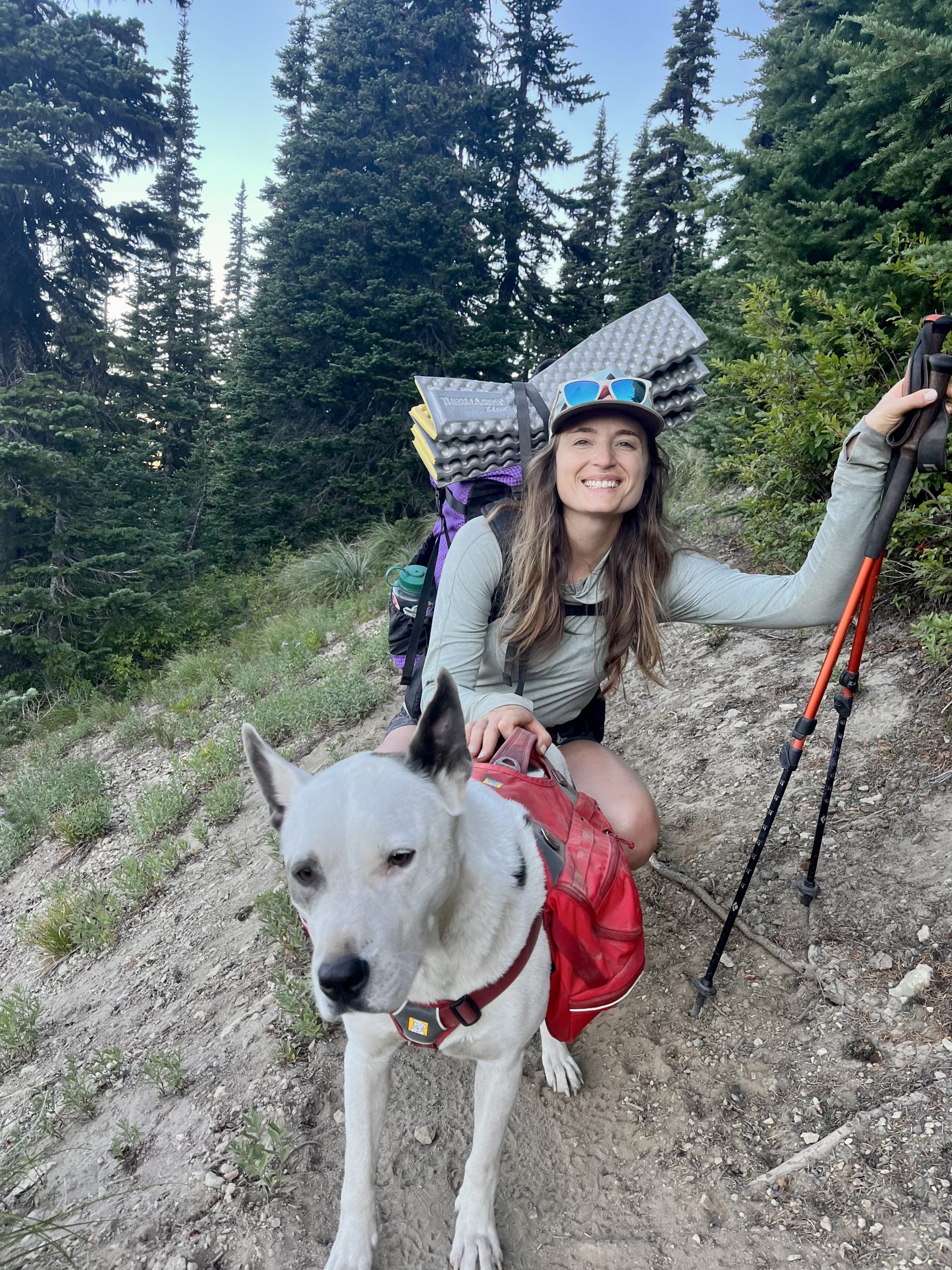
 I loved my ULA Circuit pack. I had already put several hundred miles on it pre-PCT, and it lasted the entire trail. One buckle broke in the Sierra, but I replaced it easily in Mammoth. The last 500 miles were less comfortable, but that’s likely due to losing weight. My hip belt began digging in to my hip bones. Despite that, I’d recommend the Circuit to anyone curious about a UL pack for a long trail.
At Kennedy Meadows South, I added the LiteAF Feather Weight Fanny Pack to my set up. I loved having a bum bag/fanny pack the rest of my hike. In fact, I still rock the same fanny pack around town.
Clothing

My four ride-or-die items were the JollyGear Sun Hoodie, Vuori running shorts, Skida Hat, and Pit Viper Sunglasses. I wore them the entire trail.
Beyond that, I went through:
- Five pairs of Altra Lone Peaks (three 7’s, two 9’s).
- Several pairs of Darn Tough socks.
- A Squak Mountain Co. Classic Grid Fleece as my mid-layer.

Like other gear, every hiker has their own shoe preference!
For outer layers, I used the Mountain Hardwear Ghost Whisperer 2. In California and Oregon, I paired it with a Frogg Toggs rain jacket. Lightweight and cheap, yes, but it lacked durability and wasn’t waterproof. In Washington, I swapped it for an REI rain jacket. Not ultralight, but much more reliable. If I did the trail again, I’d invest in a better, lightweight shell.
I sent my sleep shirt home early on, and slept in my Grid Fleece. I kept my synthetic base layer pants for sleeping, and they lasted the whole trail.
Kitchen
My BRS stove lasted until Bend, OR, where I replaced it with the TOAKS Titanium stove that carried me through the rest of the trail. My TOAKS titanium pot and Sea to Summit spoon also survived all 2,650 miles.
I carried a LiteAF food bag until the Sierra, where we swapped to bear cans. In Northern California, we switched to Adotec Bear Safe bags for the rest of the hike.
Filtration Setup
My Sawyer Squeeze made it until Mount Whitney, where I accidentally froze it by bringing it to the summit. Freezing compromises the filter, so in Bishop I bought a new one that lasted the rest of the trail.
My first Cnoc Vecto bag got a catastrophic slash on day four. I found a “new” one in a hiker box at Kennedy Meadows South and used it to the end. Later, Cnoc gifted me two Thru Bottles, which I used for most of Washington instead of Smartwater bottles.

Testing out the Cnoc Thru-bottles in Washington
Survival & First Aid

Our Garmin inReach made it the whole way. I adjusted my first aid kit as needed, but I’m very glad I carried one.
In the Sierra, I used Kahtoola MICROspikes and sent them home in Pinecrest, CA, along with my Corsa ice axe.
Electronics

My Anker power bank died as I reached Big Bear. I replaced it with a $10 off-brand 10,000 mAh bank I bought from a Marshall’s. Later, I ordered the popular Haribo ultralight 20,000 mAh battery bank to South Lake Tahoe.
I used the same wireless Bluetooth headphones I bought on Amazon years ago.
Our luxury item, the Flextail Zero Pump, also survived the entire PCT. It was fading fast near the Northern Terminus, but it was put to work pumping two sleeping pads every night for over 150 days.
Final Thoughts
Overall, most of my gear survived all 2,650 miles. Researching thoroughly and testing everything before starting made a huge difference. And honestly, some of it comes down to luck, too.
I hope this breakdown helps future PCT hikers dial in their gear and find what works for their hike!


This website contains affiliate links, which means The Trek may receive a percentage of any product or service you purchase using the links in the articles or advertisements. The buyer pays the same price as they would otherwise, and your purchase helps to support The Trek's ongoing goal to serve you quality backpacking advice and information. Thanks for your support!
To learn more, please visit the About This Site page.
