
 ">
On Being a Woman on the Pacific Crest Trail
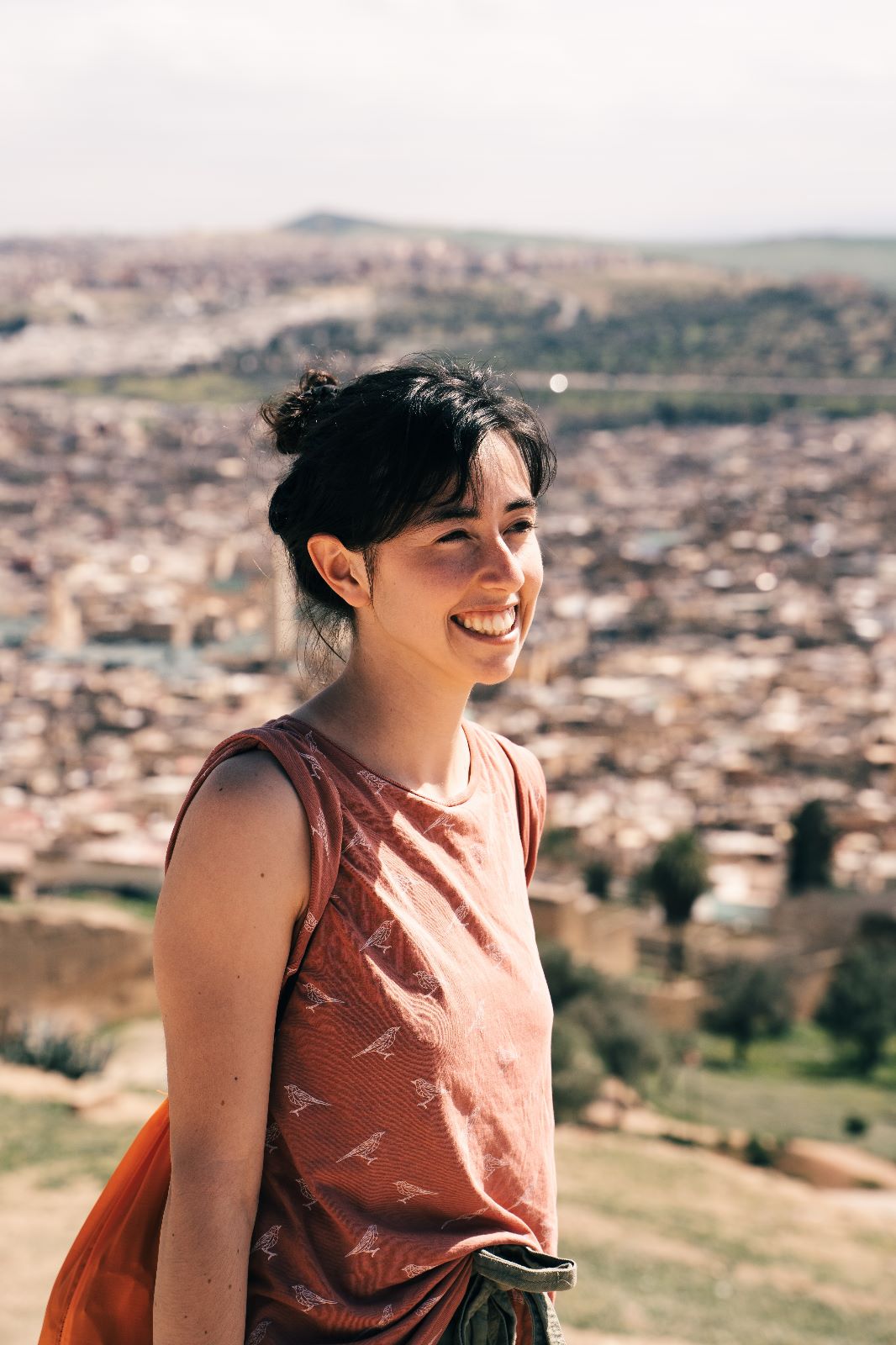
My name is Alice Yuki, or “Icy” on the trail. In 2025, I hiked the Pacific Crest Trail as a 22 year old female solo traveler. Before, during and after my time on the PCT I was often asked the same questions “Is it dangerous for a young woman to hike on her own?”, and “Aren’t you afraid out there all by yourself?”. Otherwise, I had: “Do you really camp alone?”, usually from people not very familiar with thru-hiking, or “What is the gender ratio on the PCT?” from the more data-driven. Finally, the unmissable remark: “ I would not sleep at night knowing my daughter is hiking alone. Please be safe!”. This post wants to share my experience as a young woman on trail and provide some answers to those questions because I would have loved to have a more women-centered perspective on the PCT challenges before starting my own journey.
Safety on trail
Let’s start with good news. Due to its remote location, the trail is generally safe, at least in the sections further away from civilization. The truth is that, for most of the trail, you are going to be in areas hard to access for whoever is not doing a multi-day hike. You are going to meet a very limited amount of people, and consequentially a very limited amount of potentially dangerous people. Most of the time, you will interact pretty much only with hikers and trail angels, a very welcoming and safe community, at least in my experience.
When I was alone, I tried not to camp too close to a road accessible to cars and to non-hikers, but other than that I did not take any specific precautions because I was a girl travelling solo. I camped by myself multiple times, I hiked solo, in a couple of situations I even hitchhiked on my own. The most dangerous situations on the PCT are town stops and hitches. Before getting in town, I made sure to have read Farout comments indicating sketchy situations, places or people to avoid. Most of the time, the hiker community is willing to help in those cases where there is safety in numbers. This means that people are willing to group up for hitchhiking or for roadwalking in unpleasant and potentially dangerous situations.
I am aware not everyone had a positive experience on trail with fellow hikers and trail angels and I cannot guarantee that the trail will be as safe for you as it was for me. But I can confidently say that it is quite likely to be a safer experience than life in most towns and cities. Most of the dangers we women face every day, such as catcalling, harassment, physical or verbal violence, are less likely to happen on trail than in almost every other so proclaimed “civilized” situation. For all the women out there: if you are thinking about hiking the PCT and you are afraid about starting solo I can tell you this: related to gender-targeted violence, the PCT is not as dangerous as most of the activities you have to carry on every day.
Representation on trail
Most of us hikers have read or watched “Wild” and are familiar with Cheryl Strayed’s reflections on being a minority on trail. In 1995, women were underrepresented on the PCT, but in only 30 years the situation has considerably improved. According to Halfway Anywhere, one of the biggest surveys on the PCT, in 2025 women were almost 40% of the total hikers. In my experience, this percentage seems quite realistic: I met so many other women that I did not feel part of a minority.
It is interesting to notice that, at least among the people I met, women are not equally represented across all age distributions of hikers. I thought that hikers in their 50s and 60s were predominantly males, but this was absolutely not the case with the younger generations, where females were definitely half the hikers. Maybe this is a sign that times are really changing, and more and more women are willing to start a long thru-hike. Seeing this shift on the trail made me genuinely happy to feel that I was contributing, even if only to a very small extent, to a positive change.
Facing prejudice on and off trail
I will start by saying that, in general, while on trail, I faced quite limited prejudice from other hikers. Sure, there were some usual not well-thought comments, like “It must be harder for a woman to be in the dirt!”, but overall I did not feel that people were considering me less able to complete my hike because I was a girl.
Most of the prejudices I had to demolish came from off trail, as I come from Italy, a country where it is still quite rare to see young female solo travellers, especially in the outdoors. A 22-year-old woman who talks about gear and plans to live outdoors for five months is a bit of an anomaly in the context I grew up in. This situation did not boost my confidence and really made me wonder if there was a reason why it was so unpopular for young women to hike alone. I am sure I am not the only woman who has to battle insecurities caused by the lack of examples of women who seek the independence that a thru-hike can offer.
Furthermore, I think it is harder for women to set aside their responsibilities, especially their family’s commitment, to get on trail. I do not want to undermine the sacrifices and effort that every single one of us has to do to get on trail, but I strongly believe that effort is, in most cases, significantly higher for women. I might have met as many women hikers as I met male hikers, but I definitely met more dads on trail than I met moms, more husbands and boyfriends than I met wives and girlfriends. We live in a world where the family’s responsibilities fall mainly on women and I think this would explain the decrease in women representation of hikers older than 40.
Lack of women-specialized gear
This comes from the perspective of someone who bought most of her gear in Italy and might not apply to someone who bought gear in the US, where the majority of the hikers do. I found it challenging to find outdoor gear designed specifically for women. I am mainly thinking about sleeping bags and sleeping pads. You have to be careful when you check the temperature rating of the gear. Unless otherwise specified, gear is tested on men and women should buy warmer material to withstand the same temperature. In my experience, I found a general lack of information about most gear, especially considering that most gear shops I went to did not train their staff on women-specific gear.
This might not be the case everywhere. I definitely noticed a positive trend: women-specific gear is increasing its market share and new female-oriented products are being developed. One example above all others: the Kula Cloth. It is a reusable and antibacterial pee cloth, definitely lighter and more practical than carrying extra toilet paper. I thought the Kula Cloth was a wonderful idea: it really improved my feeling of cleanliness while on trail. The Kula Cloth is not available in Italy, or in many other countries, but on the PCT is used by the majority of hikers who “squat when they pee”, to use the specific words of the brand.
On the same topic of women’s hygiene, I thought there should be more information available on how to deal with your period in the backcountry. Of course, every menstruating person will have a favourite product to use and a lot of it comes from trying out what works best for you, but overall I thought there was a general lack of advice on the subject. I could not always find tampons in smaller resupply spots, such as gas stations, when they should be a priority. Furthermore, often menstruating people skip or get really light periods while on trail. This seems an advantage -periods are never fun on trail- but it should not be: skipping periods is never healthy and I think it is far too normalized.
Female appearance
I thought it was interesting to see how the trail might change the pre-existing social norms about how a woman should look in society and how every woman adapts or challenges them in a different way.
On one hand, the trail is the perfect opportunity to ignore all those conventional beauty standards that mainly impact women. On the PCT, it is perfectly acceptable, sometimes even necessary, to stop shaving, to wear dirty clothes, and to have very messy hair. The trail provides you with the freedom of presenting yourself in the way you really are, and not the way society tells you should be.
On the other hand, I saw many wonderful examples of women who were proud of their style and decided to bring it on trail, because you can do a challenging thru-hike and still look amazing, if that is what you want. I saw women wearing earrings, nail polish, people matching the colors of their clothes and even someone who dyed their hair in town once in a while. The important point here, for me, is to acknowledge that there are very different examples of how you can look while on trail and to what extent you can connect to your more traditional feminine side. And I think this variety is wonderful: because it shows that there is not just a specific model of woman on the PCT.
Women’s community on trail
As mentioned before, hikers are generally happy to help each other when in need, and this trend is even stronger when it is about women helping each other. This could mean waiting for a fellow woman hiker before finding a ride into town, or deciding to camp together in potentially sketchy situations. I thought the women community on trail was well-aware and understanding of the problems we might face and more than willing to help each other.
Even more importantly, I thought being surrounded by brave, independent and passionate women hikers was a constant source of inspiration that helped me build my confidence on and off trail. The PCT gave me the chance to interact with women from different ages and backgrounds, an opportunity I don’t necessarily have in my daily life. This helped me develop friendships with people going through different phases in life and gave me some examples of role models that I was seeking for before starting my hike.
Personal reflection on the topic
There is no point in hiding that being a woman comes with additional challenges, on trail and in life. It is also true that someone must face those challenges, overcome those obstacles, break those conventions, so that the path can become easier for the next generation. The good news is that the trail is full of women proving that the journey is not only possible, but also enjoyable and rewarding for us as much as it could be for men. Throughout the journey, I felt more and more empowered and I owe this to all the inspirational women I encountered on trail.
Personally, I believe all those extra challenges, instead of discouraging me, gave me additional incentives and reinforced my motivation to finish my trail. I come from an environment where it is still exceptional to see young girls having the confidence to travel alone, especially in the outdoors. Because of this, I felt that completing my journey was going beyond a personal achievement, and instead, it could have a positive societal impact in my community, hopefully encouraging more women to pursue their ambitions. Acknowledging that by hiking solo as a young woman I was part of the change in the world I wanted to see gave me the strength and the grit when I needed them the most.
My experience, of course, does not imply that you should feel this way. Starting the PCT just because you are passionate about hiking is completely valid. Since we don’t ask men hiking the PCT to prove to us they are capable of something, why should we ask women to do so?
I met so many different examples of women on trail that I realised that it is not important your background, life situation, age, outdoor experience, physical fitness or personal reasons that push you to start a thru-hike. I can guarantee you, we all managed to overcome those additional challenges that being a woman on trail implies. If you are a woman dreaming about hiking the PCT, I want to reassure you: please take those first steps and before you will notice, you will find the strength and willpower to live your own journey. 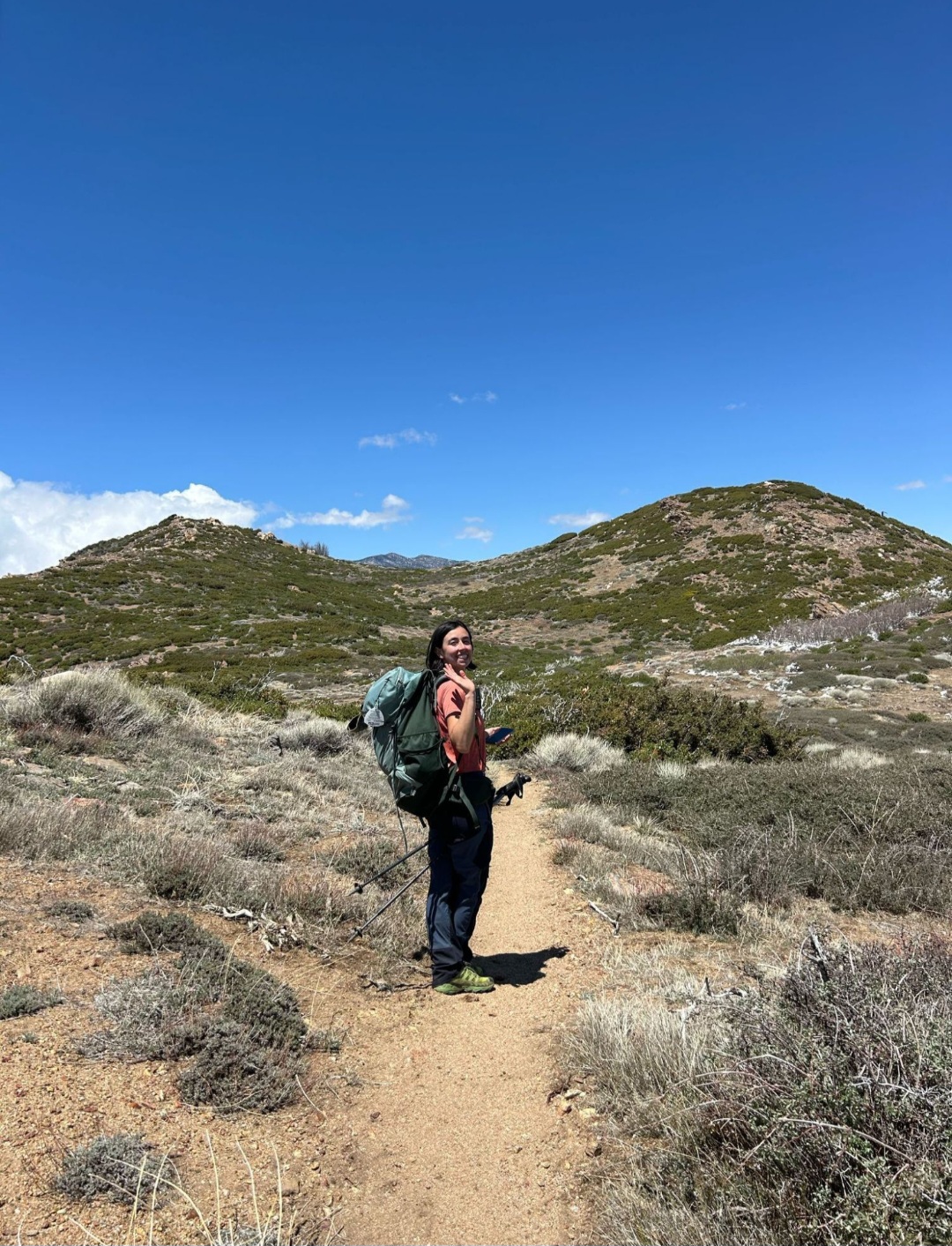

This website contains affiliate links, which means The Trek may receive a percentage of any product or service you purchase using the links in the articles or advertisements. The buyer pays the same price as they would otherwise, and your purchase helps to support The Trek's ongoing goal to serve you quality backpacking advice and information. Thanks for your support!
To learn more, please visit the About This Site page.

Comments 2
Great article, and congratulations on your thru hike! Also, I totally agree it’s so hard to get good ultralight gear for women here in Europe for backpacking! I hope you were able to pick up some things while you were in the States. They have some really amazing cottage brands making great gear.
excellent post. Old white mail occasional trail angel for my spot near the PCT halfway point all burned thanks to PG&E
When my wife and I got asked repeatedly on our bicycle trip from Yosemite to Taos NM if we had a gun we just said every ounce matters and that was extra weight.
People’s sense of danger always seems exaggerated to me and same thing with the fears folks have wilderness backpacking; mountain lions, weirdos, etc.
Something I learned on that bike trip from my wife’s ranger friend who lived at Natural Bridges Utah; stop referring to women as girls unless you are talking about boys and girls. Women give up some of their power being named as girls rather than women or whatever pronouns work for you.
Well thought out article and well written