
 ">
Pacific Crest Trail reflections: Our first 17 days
We started the Pacific Crest Trail – a 4260km continuous hike across the USA from the Mexican to the Canadian borders – on 13 May. I am writing from mile 275 Big Bear City. We spent last night at Van Dusen Canyon trail camp and walked into the city this morning to resupply before heading out again this afternoon. Here are my reflections from the first 17 days on trail:
Miles vs Kilometres – imperial vs metric
It has been so interesting for us to experience the disjuncture between imperial and metric systems. When we did our PCT planning back in South Africa over Jan – April of this year, we sat down most days for about 30minutes to and hour with a physical guidebook, maps and spreadsheets. We planned the entire route day by day, converting miles and feet in altitude to kilometres and metres in altitude. We brought part of the physical guidebook with us on trail and have our spreadsheets saved on our phones. While we anticipated some differences between the planned and the reality, what we did not anticipate is just how confusing and different it feels to be on a trail that is measured in miles when our panning was done in kilometres.
Let me explain what I mean – I know what a kilometre feels like in my body, and I know what 800 metre ascent feels like in my body. Day by day here all the trail markers and other hikers discussions are in miles and feet and so when someone says, “oh, the water point is about 3miles ahead”, I can of course do the arithmetic in my head and convert to kilometres, but I lack the immediate embodied reference in terms of what that mile feels like.
I have also felt that our planning is slightly ‘off’. Our conversions into kilometres are good enough, but not totally accurate. I suspect there is almost a subtle difference in experienced reality between metric and imperial. Perhaps this is an area of philosophical inquiry in the way that linguistic theory explores the way a world is constructed and represented based on different languages.
I imagine that it is only a matter of time before I will begin to know what a mile feels like intuitively, and get a feeling for xyz feet ascent, tackling it all without constantly trying to convert. For now, I am still in the interpretation phase, and like linguistic interpretation, I suspect there is both method to the craft and a little something more intangible that I have to experience in order to fluently explain.
Pack weight and comfort
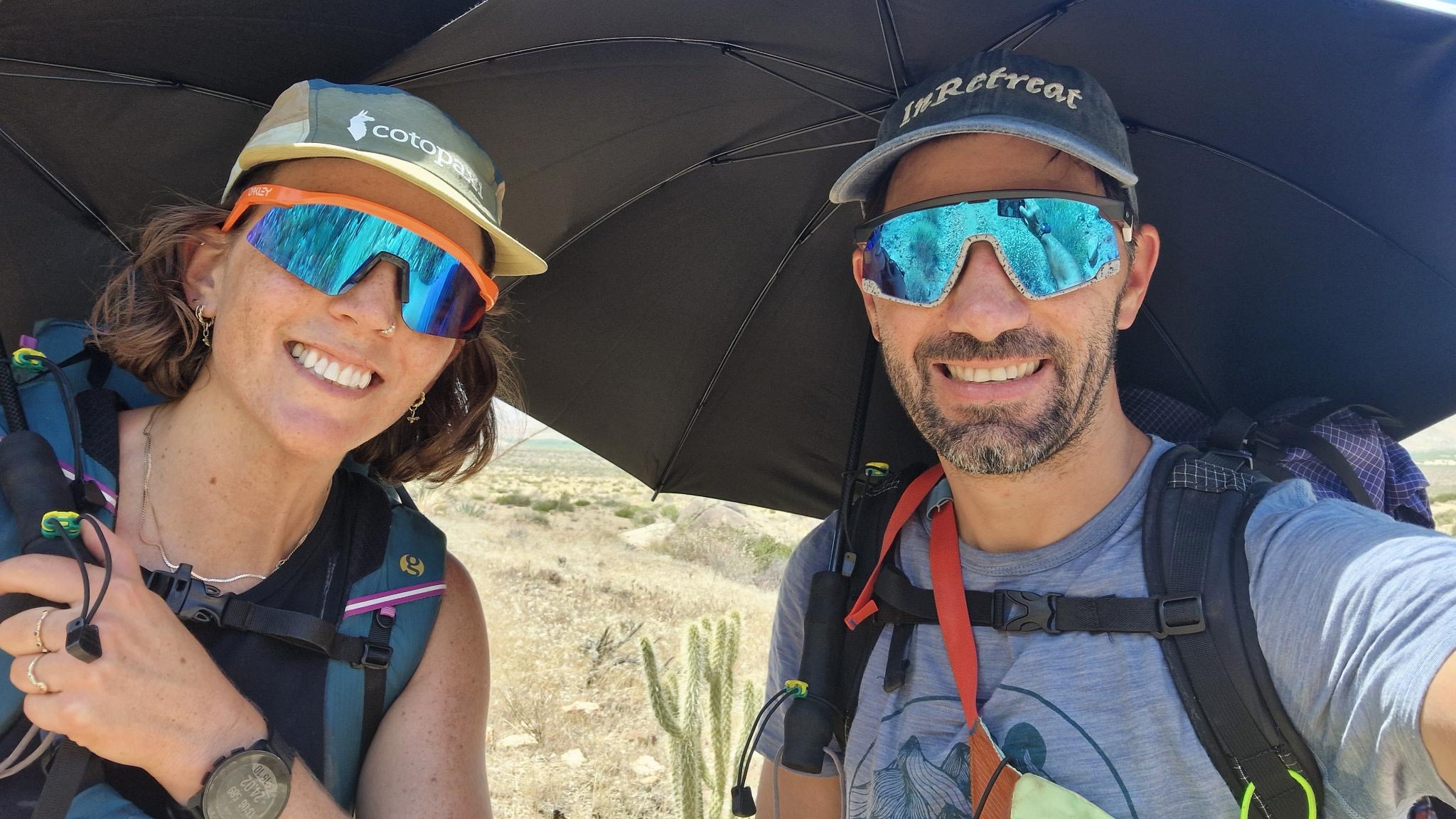
There is a bit of bravado and competitiveness amongst PCT hikers regarding pack weight. I picked this up from the very first night we spent out at CLEEF campground in Campo on the Mexico border. Hikers would lean over the camp table and look at our larger packs, whistling and asking what the ‘base weight’ is (in no other circumstance would such a question even be appropriate). The response to my answer is usually pity or something close to disdain. The religion on trail is less is best.
It’s a curious type of machismo this ultra-light hiking culture. All the bro’s on trail have the smallest and lightest packs and there is a strange pride in having absolutely nothing with you to maintain even a whisper of personal hygiene or comfort. My feeling is that if we are going to make it to Canada and still be married and still have our health, we better keep things clean, nutritious and allow a few moments of comfort each day. After a couple days of feeling shame over our larger packs, we’ve come to embrace this as our style of hiking and camping. If having freshly made coffee in the morning and proper cooked meals at night means taking 10days longer to complete the PCT, I’m ok with that.

Letting go of expectations – reading
When we were planning our PCT thru-hike, one of the small luxuries I was most excited about bringing with me on trail was a kindle. On previous multi-day hiking trails Chris and I have done, we have generally started early with first light but got in to camp and set up our tent by about 4pm. This allowed for a daily couple of hours of very restful and delightful reading. We anticipated that the same rhythm would follow on the PCT, and we spent a great deal of time talking about, planing and buying a whole small library of books to read over the 140-50 day hike.
The reality on trail so far – 17 days in – is that I have read about 76 pages of one book. In my normal daily life I can devour 2 novels over 17 days without even trying. Most days on trail so far we’ve got to camp by 6pm, set up, cooked, cleaned and then collapsed in a heap of exhaustion by 8:30pm. Initially, I was dismayed by the lack of reading time, but slowly I’ve come to accept that reading loads is an expectation I had and that reality has landed somewhere else. I’ll chalk this up as a life lesson in terms of not letting expectations rob you of the uniqueness of the present moment.

Finding our pace
We began on 13 May with a very young bunch on hikers. Chris and I are 38 and 37; the group of 20 or so that started with us at the southern terminus were all around 22–25 years old. I feel pretty old, like a caring aunt, giving out advice about blister management and warnings about poor diet. We are fit and relatively quick hikers, but keeping up with the kids has been a strange struggle.
When we arrived in Julien – a small historic miners town – for our first resupply, we felt battered and worn, stressed that we were a couple of hours behind the kids, who had started a rhythm of getting up before sunrise to hike, rest at midday, and then hike into the evening for a camp from about 8:30/9pm. We spent an afternoon, night and early morning in Julien to complete our first resupply and through the kindness and light-hearted interactions we had with trail angels and locals there, we decided to let the stress go, and embrace our own trail rhythm. This should be the magic of the PCT after all.


This website contains affiliate links, which means The Trek may receive a percentage of any product or service you purchase using the links in the articles or advertisements. The buyer pays the same price as they would otherwise, and your purchase helps to support The Trek's ongoing goal to serve you quality backpacking advice and information. Thanks for your support!
To learn more, please visit the About This Site page.

Comments 1
Wonderful writing! Happy hiking to you both.