
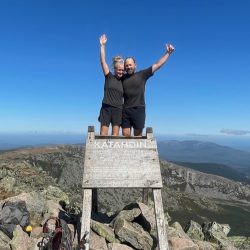
 ">

Stop Overthinking It: The No Anxiety PCT resupply guide
Now that our final box has shipped and we’re PCT bound, let’s talk about food, the merits of a resupply and the benefits of being flexible – all in 7 days or less. Note: This is by no means ‘ultimate’ or ‘complete’, as there is no such thing. You can plan all you want from the first step to the last – the point here is that things change, so do your best, chill out!)
The Conundrum
Resupplying for a thru-hike is a classic dietary dilemma with two distinct paths. You can “hunt and gather” as you go—a high-stakes game of gastrointestinal roulette featuring rolling pink hot dogs, foil-wrapped gas station sandwiches, and day-old potato wedges. Or, you can obsessively preplan every morsel, shipping your life ahead in carefully curated boxes while silently hoping the postal service is as committed to your calorie count as you are.
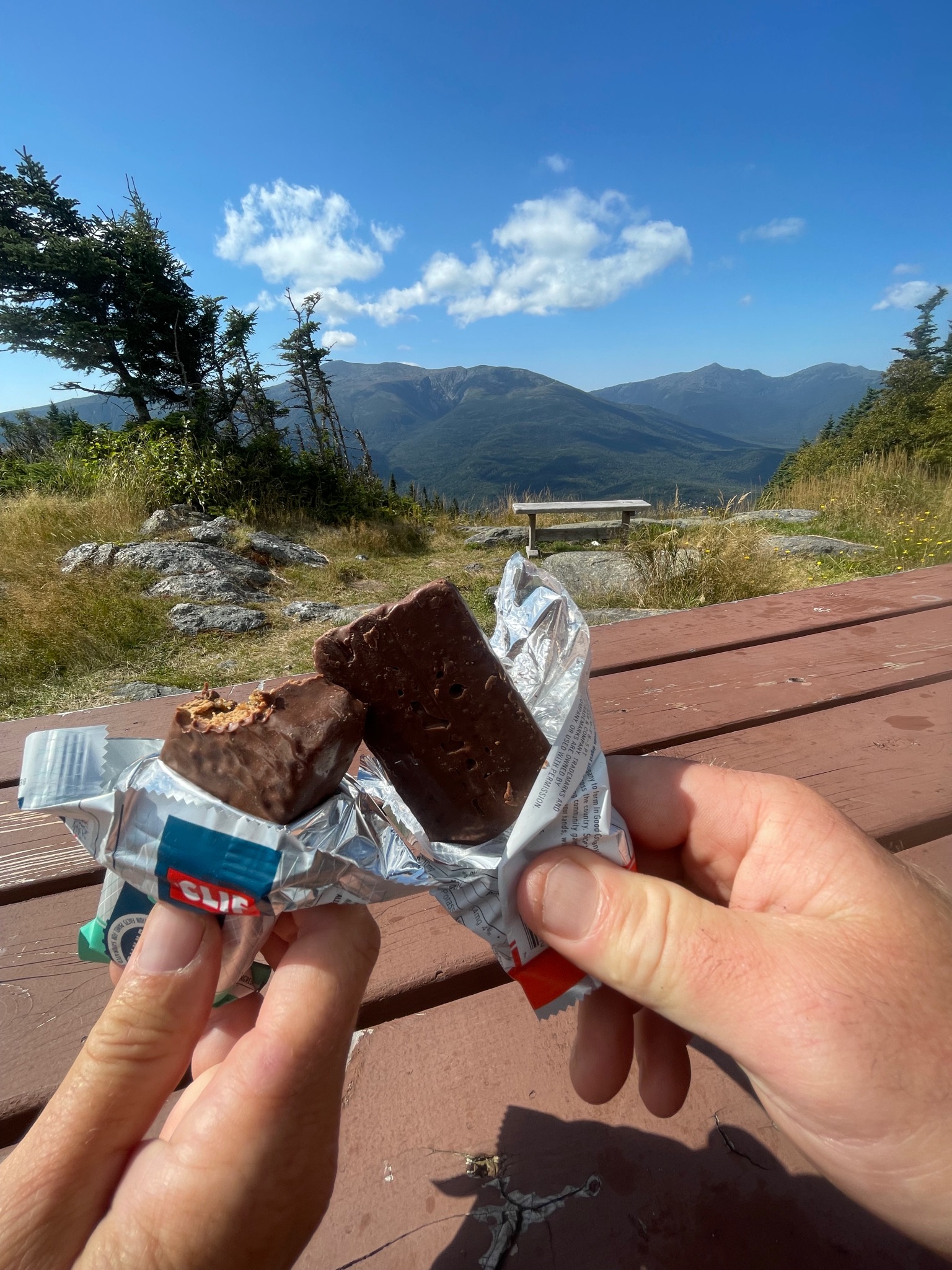
There’s that Mint Clif bar!
As a minimalist who obsesses over the efficiency of a vegan resupply box and the durability of a base weight that fits a nomadic life, I am choosing to put my faith into option B—and my wife, Sloane. She loves a good spreadsheet and gets a genuine adrenaline rush from ordering supplies three months ahead of our start date —the latter of which occupy our tiny living space, making a trip to the toilet an obstacle course.
You don’t have to be a logistics expert or a specialized eater to get this right. You just have to be honest about what your body needs to keep moving. Discomfort on the trail is predictable, but hunger shouldn’t be. We want to dispel the myth that shipping boxes is expensive or a hassle. Sure, it can get chaotic juggling the details—like making sure everything actually gets in the box! Trust me, extra snacks (like spare parts) will appear after your last box has been taped. Shove them in the next box and keep moving. It’s not a perfect science, and laughing it off is the best remedy.
The common response when people hear that we drop ship is: ‘Don’t do it…you’re going to get tired of eating the same thing everyday!’ That is entirely untrue. The same can be said if you don’t drop ship, you will eat the same thing everyday. That is why hikers get excited when a Walmart is 10 miles off trail! We all want something different. We’ve just done that work ahead of time. Most of us don’t limit ourselves to gas station groceries at home, so why would you want to do that on trail – when eating well is vitally important to our success.
The Investment
While a massive upfront resupply might cause sticker shock, it’s an investment that pays off.
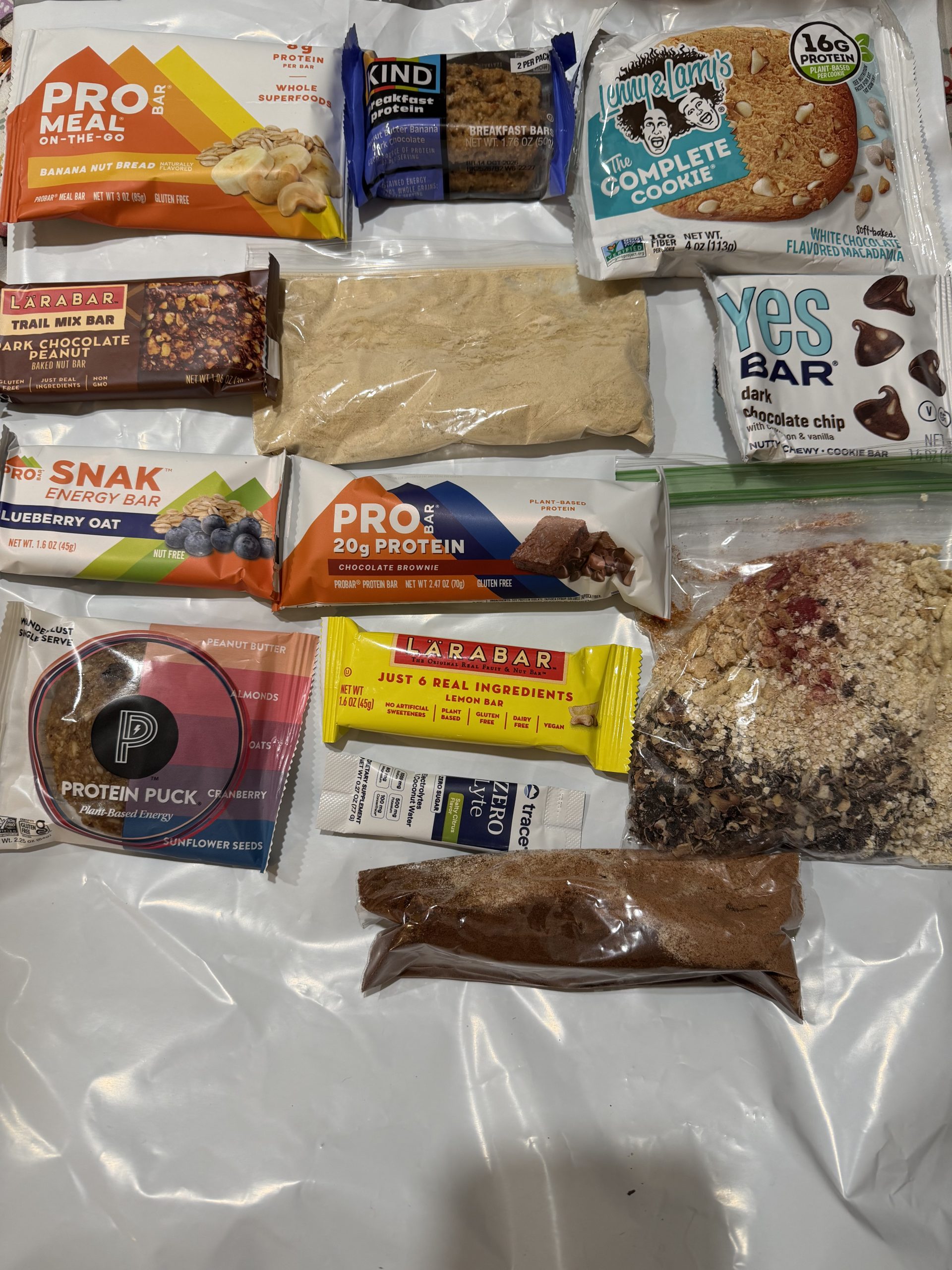
A sample meal plan.
Buying in bulk and on sale is almost always cheaper than paying premium prices at remote outposts, even after factoring in postage. We would have used that money for rent or weekly groceries anyway. For us saving on and off trail is important, so that ‘pre-payment’ is worth it.
Beyond the budget, there’s the menu fatigue. A “buy as you go” hiker is often limited to a revolving door of tuna pouches, cheese sticks, rice sides, and Pop-Tarts. By doing the pre-hike labor now, we ensure a diverse menu and free up our hiker brains for the trail rather than the grocery aisle—whereby at that point we are glazed over with hunger and a seemingly simple A or B decision ranks up there with a major life decision, like purchasing your first car.
The Risk
By no means does a resupply box guarantee you will be lucky enough to receive it. Our very first box on the AT, slated for Hiawassee, got sidelined at the Georgia distribution center for 21 days. By the time it arrived, it was well-worn—drop-kicked, actually—and by that point, we were well into North Carolina. This is where the best-laid plans go south and a survival mentality kicks in. It’s not the end of the world. We hit the local Piggly Wiggly to stock up on Indian pouch meals, black beans, rice, and an abundance of granola bars. Albeit heavier and not our first choice, it all worked out. We forwarded our original box home to eat later, quickly consumed the heavier grocery store stuff first, and took the glitch in stride.
Having a realistic goal and the courage to accept minor failures allows an “on-the-fly” hybrid model to save the day. Similarly on the PCT, there are inherent risks. Although we’ve confirmed that all of our packages have arrived to their destinations, there runs a high risk that unforeseen environmental conditions, like fire, smoke and snow, could derail our continual footpath to retrieve it. On the plus side, all packages regardless of carrier chosen, can be returned home. If using USPS, there is no charge incurred to return to sender or to bounce to another location further up the trail. Most USPS locations, hostels and stores will hold your package until October and are happy work with you to reconnect with your box, simply by giving them a call. There is no need to worry.
The Weight
Let’s circle back to seven days pre-hike. Sloane’s background is in logistics, which is the only reason we are now discovering floor space we didn’t know we had. Long before the bulk items are ordered in advance, we talk macros and calories: what do we need to maintain energy, muscle mass, and endurance? While the average hiker carries 2–3 pounds of food per day, we’ve honed ours to 1.6 pounds, based on our current weight and energy output and tucked into a 10L roll-top food bag or bear canister, where required.
On average, we will each burn roughly 4,000–6,000 calories per day, yet we’re often only able to carry about 3,000 of them. Consuming (and carrying) that much fuel is a constant battle in deficiency, because food equals pack weight and less pack weight equals hunger. We’re balancing proteins, carbs, fats, and electrolytes—the latter of which require water carries that can add five pounds alone! Carrying even the minimum calories needed to replenish your stores, vegan or not, can be a challenge in itself.
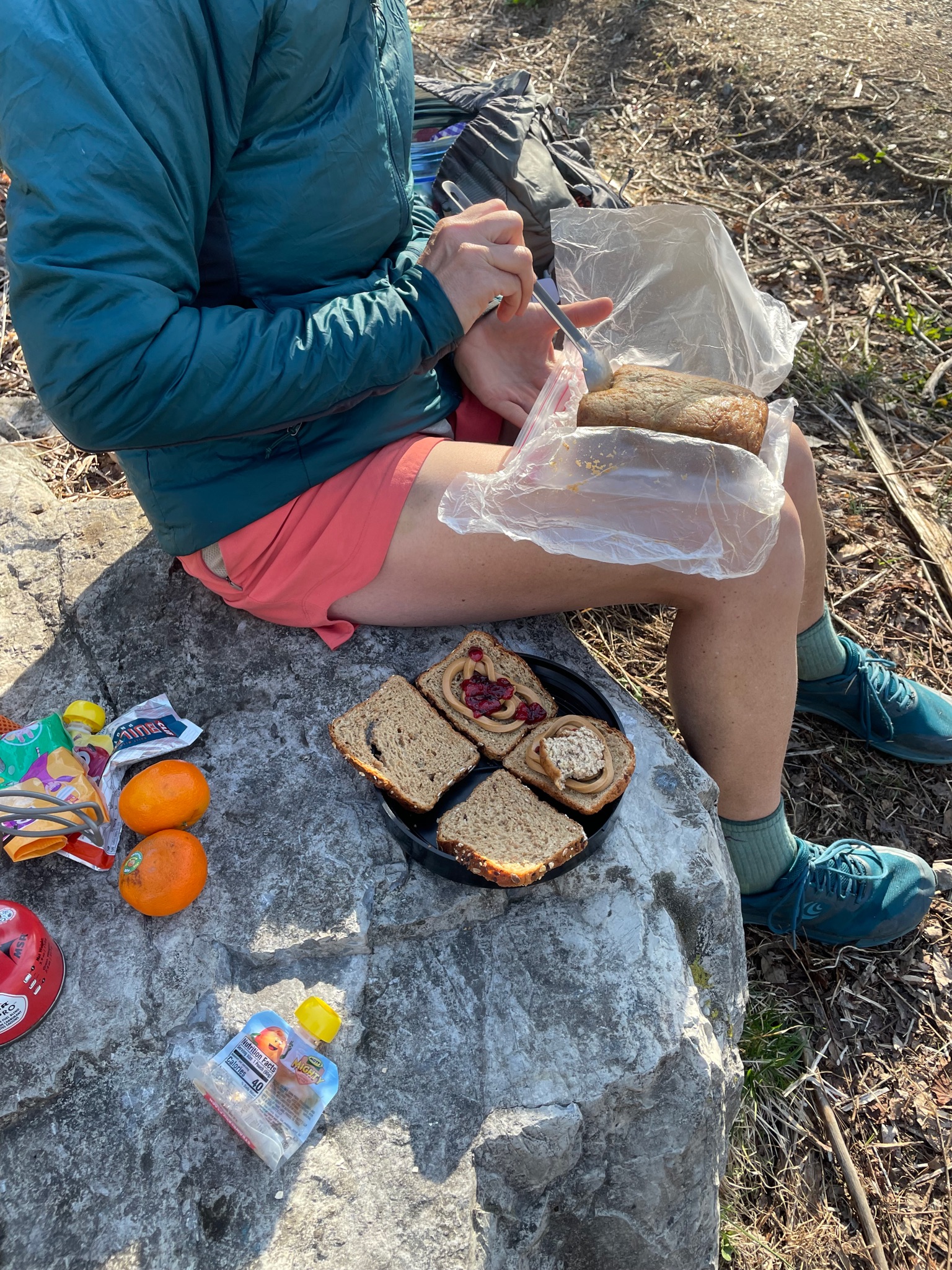
Getting creative – there’s actually banana bread in there!
The Strategy
Mailing boxes is our chosen path. Because we prioritize a high-calorie vegan diet for endurance, we can’t always rely on a quaint mountain store to have the vegan protein powder or minimally processed snacks our digestive systems require. We’re able to advance-purchase a diverse range of food with our eyes, not our stomachs. It takes more effort and cost upfront, but this time ensures our “engine” has the right fuel.
Buying on trail, conversely, offers freedom. You eat what you crave that day. But you’re at the mercy of small-town gas stations where a “balanced meal” may be a cheese stick and jerky, topped with corn chips and wrapped in a tortilla. Don’t forget the salsa packets!
Our Advice? Do a little of both. Send your basic dietary needs, “three squares” and things you can’t find anywhere else – like vitamins, supplements, and crave-worthy treats. We prepare and package dehydrated meals, protein powder, and plant-based bars to meet our minimum macros and caloric needs, and you can do the same regardless of any special diet or food plan you follow.
Let’s be real, though—it’s a balancing act. We certainly do not have the time to dehydrate everything ourselves (and run our electric bill through our tiny roof), so we buy in bulk and portion accordingly. We also very much enjoy a “zero day” cheat meal, skillfully cooked up by our brains over the previous 100 miles. After all, you can’t drop-ship a spur-of-the-moment experience that only the trail provides!
The Pickup
USPS has made many upgrades in the last couple of years to include services like Ground Advantage and Ground Advantage Cubic. Take ‘advantage’ of these, as they offer complimentary forwarding (bouncing), just like Priority and Flat Rate, but at a drastically reduced rate, making this an economical choice if shipping multiple boxes.
On the other hand, UPS and FedEx were significantly higher (by almost three times!) but were required for three boxes shipping to the most remote, seasonal locations—a reliable service, but once it arrives, it cannot be bounced, so choose its contents carefully.
If we were to calculate our total trail days by our shipping, handling and holding costs, the average is $1.39 per person, per day—that’s much less than the cost of one energy bar if purchased on trail!
Comparing, once again, on the AT, we shipped via USPS direct to hostels and stores, only being forced to ship to one USPS office—just plan their open hours with your daily miles. This time, for the PCT, we shipped primarily direct to USPS via General Delivery, factoring it into our mileage tracker to arrive Monday through Friday, or we plan a “zero” to compensate for any after hours arrival.
Prior to any shipment, we always call to verify that each location will accept and hold until our ETA, as well as determine charges, if any. It is a convenience to have someone keep a close eye on our food indefinitely, and even sweeter when done at no charge—for that, we are truly grateful. If a location charges, we weigh the costs and add them to our average. A $5 or $10 charge here and there is acceptable, but when costs are upwards of $40, we get creative or carry a bit more during those sections. It’s still appreciated, but no longer cost-effective.
Our Official Resupply
We shipped 35 boxes. Here is our list of drop points, based on ease of accessibility, proximity to trail (and/or zero days) and cost. (Note: These are commonly highlighted locations and exact miles will appear in FarOut)
California: Campo, Mount Laguna, Julian, Warner Springs, Mountain Center, Idyllwild, Big Bear Lake, Cajun Pass*, Wrightwood, Agua Dulce, Lancaster, Tehachapi, Walker Pass, Inyokern (KMS), Bishop, Mammoth Lake*, Tuolumne Meadows, Pinecrest (KMN), South Lake Tahoe, Sierra City, Belden, Chester, Burney, Castella, Etna and Seiad Valley *(no drop here, just grab snacks)
Oregon: Ashland, Crater Lake, Crescent Lake, Sisters, Government Camp (Timberline) and Cascade Locks
Washington: Trout Lake, Naches, Snoqualmie Pass, Skykomish, Stehekin
The Lesson Learned
You aren’t just packing snacks—you’re packing fuel. We look for the highest calorie-to-weight ratio possible; doing the math determines an item’s place on our list. If it’s light and loaded with healthy fats, carbs, and proteins, it goes in the box. We aim for roughly 3,000 calories per day and love a variety of seeds, nuts, fruits, beans, and healthy oils. A homemade trail mix is a staple in any hiker’s pack, but for the sake of space and convenience, we choose a variety of high-quality bars that can meet these requirements.
Variety is, after all, the spice of life! Creativity is the key to keeping not only your energy up, but your motivation to walk three miles off-trail (one way) to pick up that resupply box. We’ve learned to rotate flavors and textures, and we always add “surprise” treats to keep morale high. After all, you’ve earned it.
To this day, we laugh about that Mint Chocolate Clif bar that neither of us wanted to eat while hiking the AT. It would make its way to the bottom of our feed bag, and only out of desperation would we share the responsibility of eating it. On the PCT, we will not be eating anything with mint in it… lesson learned!
Finally, we use an app to keep track of our daily calories, macros and supplements. Scanning our nutrients pre-trail gives us a “plug and play” database. This isn’t strictly necessary, but it’s an easy tool to keep our hiker brains on track. At each resupply pickup, we’ll determine if there is a need to fill-in any unforeseen calorie or macro gaps—like protein or calcium.
The Moral of the Story
You don’t have to be a logistics expert or a specialized eater to get this right. You just have to be honest about what your body needs to keep moving.
Discomfort on the trail is predictable, but hunger shouldn’t be. We want to dispel the myth that shipping boxes is expensive or is a hassle. Sure, it can get chaotic juggling the details—like making sure everything actually gets in the box!
To drop ship or not to drop ship? The answer is, whatever works for you. The moral of the story, above all, is to be kind to your body, pack the food you love, be flexible and leave room for a few surprises!

This website contains affiliate links, which means The Trek may receive a percentage of any product or service you purchase using the links in the articles or advertisements. The buyer pays the same price as they would otherwise, and your purchase helps to support The Trek's ongoing goal to serve you quality backpacking advice and information. Thanks for your support!
To learn more, please visit the About This Site page.

Comments 2
Great blog! I always get excited to read about other vegans on trail. I’ll be walking the pct this year too. Maybe we can trade snacks. If you ever want to share any recipes for your dehydrated meals, I’d love to hear about them. I’m going SOBO so starting a bit later and still in the preparing stage. Hope to see you out there.
Thank you so much for reading and commenting! We’re glad you found our post useful. We hope to cross paths with you! This thru-hike we decided to simplify our diet, eating a similar meal each night with different seasonings and toppings. The base is dehydrated black beans, quinoa flakes, and TVP that we purchased in bulk to save time. For the rest of our diet we decided to pack a variety of snack bars, instant coffee, and snacks such as pretzels and peanut butter, granola, and salty-sweet trail mix of seeds, dried fruits, coconut, and dandies. We also supplement with electrolytes and trace minerals. We hope that helps!