
 ">

The Last Thing I Expected on My PCT Hike: Contracting MRSA
Bad. Things. Do. Happen. There, I said it. I have really enjoyed my time on the Pacific Crest Trail, but it’s impossible to control everything, and the risks encountered on-trail are more numerous than we can possibly imagine in advance.
Most are minor or easily mitigated through good decision making, but a small minority are very much beyond our control. In statistics, this is referred to as “tail risk” — the low probability of an extreme outcome. As humans, we are notoriously bad about evaluating tail risk, often dismissing it, putting on rose-colored glasses, and hoping for the best. The “tail” is home to “unknown unknowns,” those scenarios we could never think of in the first place, even if we tried. This is my story of encountering the “tail.”
Unknown Unknowns
I started my 2025 hiking season with confidence. I had successfully navigated myriad challenges during my 2024 thru-hike attempt of the Pacific Crest Trail, NOBO, ending the year with over 1,550 miles completed, including a stretch straddling the Bridge of the Gods and a couple of segments in Washington, reaching the northern terminus and crossing into Manning Park. This was despite encountering bad weather that chased me off of Mt. San Jacinto early on, flip-flopping to avoid numerous wildfire closures, and a couple of injuries that took me off trail for a while.
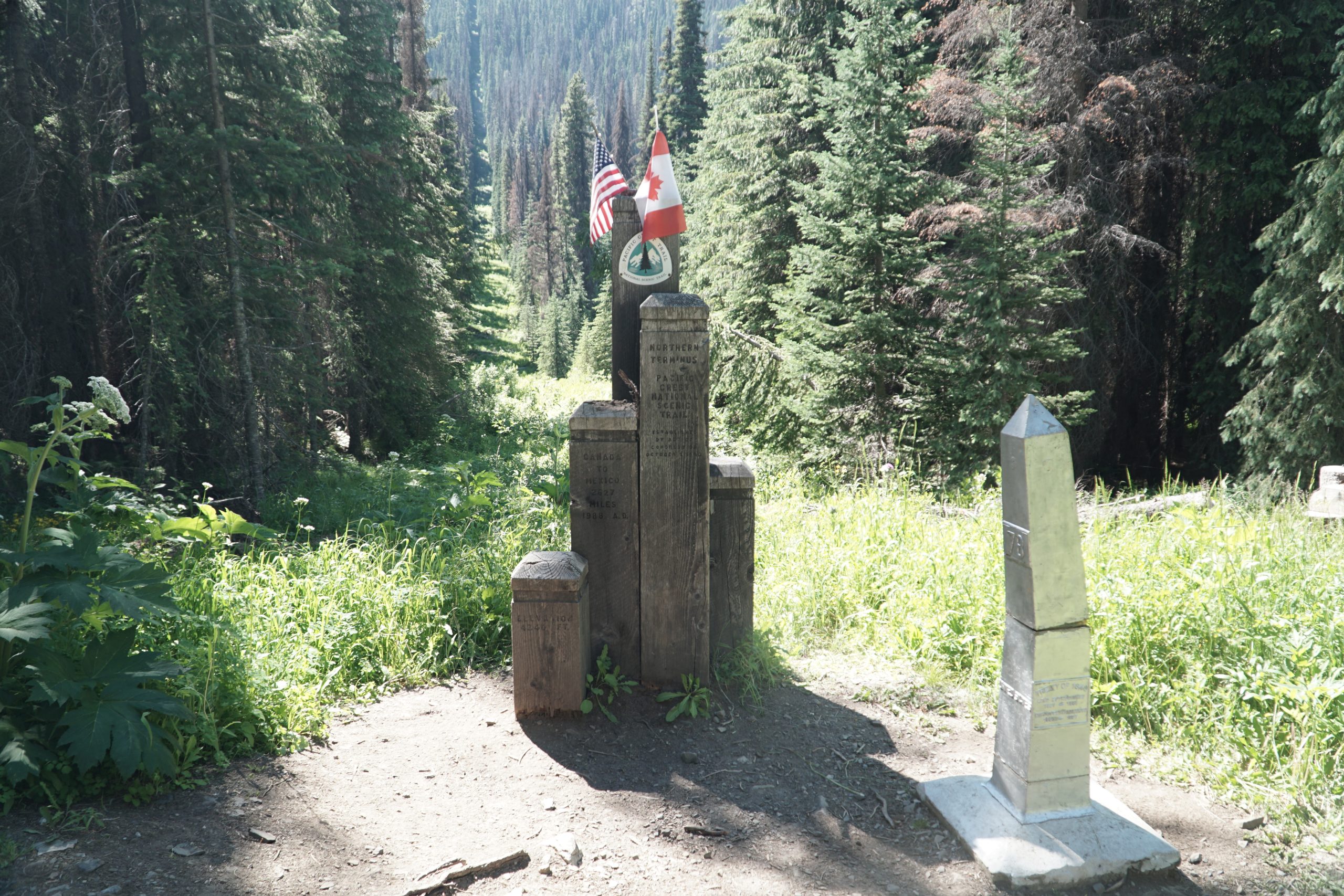
My goal for 2025 was clear: to connect my broken footpath from 2024 and leave only a couple of stretches to tackle in 2026. I didn’t have a full season available due to other commitments, so I tackled the remainder of Washington NOBO in August, then started Oregon SOBO from Timberline Lodge in September.
The several weeks in August I spent in Washington were largely uneventful, and it seemed that fortune was on my side. I was early enough to make it past Mt. Adams before another wildfire closure and for the notorious Section K to be somewhat maintained, exiting the trail down to Mazama one day before the Northern Cascades were socked in with wildfire smoke. My footpath through Washington was successfully linked, and I set my sights on part two of the plan: Oregon.
No Pain, No Gain?
Heading south from Timberline Lodge, I immediately noticed some nagging tightness in my right knee, likely related to a partially torn medial meniscus and aggravated by the long descent. I broke out the Advil and KT Tape, and after a few days, decided that it was a sustainable condition to hike through. No pain, no gain, right?
I took advantage of the more moderate terrain to bump up my daily mileage and made good progress, largely on plan. I got hit by two cold rainstorms a week apart, each threatening hypothermia and both causing me to hunker down early in the interest of safety. The second time, I awoke to the aftermath of a hard freeze, with the soggy trail having frozen solid overnight. The storm had passed, and onward I went.

Traversing the Rim Trail in Crater Lake National Park and taking advantage of some good cellular reception, I started contemplating the end of the Oregon journey past Mazama Village. My original plan had been to finish at Callahan’s and head home from Ashland, but the weather forecast was once again calling for a multi-day cold rain event in a few days, and I was not eager to test hypothermia for the third time in as many weeks.
I could expect good weather as far as Highway 140, where I figured I could hitch into Medford. It would cut about 50 miles off of my journey, and more importantly, 2 and a half days. I briefly considered exiting at Mazama Village, but ultimately decided to keep going towards Highway 140. Decision made, I lightened my resupply at Mazama Village and headed on.
“Something had clearly gone very wrong.”
During this last segment, I found that I had to increase my Advil dosage due to growing discomfort in my right knee. The last morning, I had to take a max dose in order to get moving, and it never did fully loosen up. I made it to the highway without any significant difficulty, and was lucky to get a quick hitch into Medford.
At the bus stop, my knee started really stiffening, and I hobbled onto the bus to Grant’s Pass, wondering what I had done to the poor knee. In Grant’s Pass, the knee was even more stiff, and I was having trouble walking. I did manage to heavily limp to a grocery store and a park to pass the time until my next bus.

I had significant difficulty limping back to the bus stop, and barely made it up the stairs onto the bus. Advil was no longer helping. By the time I reached Portland, I could barely stand and couldn’t walk for more than a few steps. Something had clearly gone very wrong.
Fast forward a few days of RICE — Rest, Ice, Compress, and Elevation — and I finally went in for medical attention, as my symptoms were not improving. My doctor was rather concerned about the lack of an obvious explanation for the swelling in my knee, and wisely sent me to the Emergency Room.
Contracting MRSA on the PCT: How Could This Happen?
After an initial battery of tests, I was sent home, but was called the next day to urgently return to the ER. The tests had come back, indicating that I had acquired a MRSA infection in my knee, a very serious and potentially life-threatening infection requiring urgent treatment. This strain of staph is highly resistant to antibiotics, making it difficult to eradicate.
How could this happen? I kept asking myself how, in the middle of the wilderness on the PCT, I had managed to acquire a MRSA infection most commonly acquired in hospital settings. While we could never answer this question definitively, one compelling suggestion is that it had been the result of an undetected tick bite.
I hike in long pants, long sleeves, and gaiters, so there isn’t much real estate for ticks to take advantage of. However, I had noticed a single tick at one point on this section, crawling around inside my tent. That’s proof that there had been ticks in the area, and that there could have been a bite that I never detected.

There’s a general belief that in this region of the country, ticks are not particularly concerning, as they don’t carry Lyme disease or Rocky Mountain spotted fever like they do on the AT or CDT. I had no idea that an equally concerning infection could be spread by ticks on the PCT.
Ed. note: Methicillin-resistant staphylococcus aureus (MRSA) is not a vector-borne disease and there are no documented cases of ticks transmitting MRSA. However, MRSA often enters the body through cuts and abrasions, so it might be possible that a tick bite could lead to a secondary infection. We are hikers, not doctors — consult a medical professional if you have concerns about your risk of contracting MRSA.
I was hospitalized for ten days, given regular doses of specialized antibiotics, and had two operations to flush out bacteria from the knee. After discharge, I had to self-administer more IV antibiotics for more than another month. By the time I started physical therapy, the range of motion in my knee was just 40 degrees, not enough to even walk properly.
After four months of physical therapy and another arthroscopic knee surgery, I’m just now on the cusp of being able to resume normal activity without crutches or a cane. Thankfully, my prognosis is good, subject to a lot more physical therapy.
Key Takeaways for Hikers
Given how unexpected my experience has been, there are two key take-aways I want to share with the thru-hiking community. First, ensure that you have good health insurance coverage when undertaking a thru-hike. Second, don’t cut corners on emergency connectivity such as satellite messaging devices.

When it comes to health insurance, many thru-hikers have quit jobs to take the time off to hike the trail, and that comes with losing employer-subsidized health insurance. It can be tempting to gamble that you won’t need coverage during your hike, and can resume coverage when you get another job.
Making that decision can be financially ruinous if the unexpected occurs. I strongly encourage all thru-hikers to ensure that they have quality insurance coverage during the duration of their thru-hikes. My medical bills would have amounted to multiples of six figures had I not been insured.
Even with coverage, I had to cover the full out-of-pocket maximum amount, something that some thru-hikers could struggle to cover. Better insurance could have lessened that burden, so think through what the worst-case scenario could look like financially when comparing policies.
While it didn’t directly factor into my situation, having some form of satellite messaging service is extremely important.The timing of my trail exit proved to be fortuitous. Had I been a day behind, or if I had continued past Highway 140, I could have found myself unable to walk, 20 miles from the nearest road, and with minimal foot traffic at the tail end of the hiking season.
I had a satellite messenger and could have pushed the SOS button in this scenario, but I shudder to imagine what would have happened if I couldn’t walk and couldn’t contact emergency services, with inclement weather rolling in for several days.

Risk Management
I’m sharing this experience not to generate sympathy, but as evidence that the unexpected can happen, and does happen to some thru-hikers. I wish every aspiring thru-hiker a fulfilling and uneventful journey, but also hope that everyone practices prudent risk management by planning ahead for low probability “tail risk” events.
I now have two stretches totaling a bit more than 400 miles of the PCT remaining, all in NorCal and the southern reaches of Oregon, and hope to complete those sections in the not-too-distant future after completing my recovery.
– Pine Nut
About the Author
I’m Pine Nut, long-distance hiker and avid world traveler based in Vancouver, Washington. I’ve completed the Colorado Trail and am working to complete my PCT journey, started NOBO in 2024.
Featured image: Graphic design by Chris Helm.

This website contains affiliate links, which means The Trek may receive a percentage of any product or service you purchase using the links in the articles or advertisements. The buyer pays the same price as they would otherwise, and your purchase helps to support The Trek's ongoing goal to serve you quality backpacking advice and information. Thanks for your support!
To learn more, please visit the About This Site page.
