
 ">
You’ve Probably Been Using the Wrong Tyvek Groundsheet This Whole Time
In the world of thru-hiking, gear innovation often comes in waves. There are breakthrough periods where it feels like a new piece of revolutionary gear drops every day, followed by slower stretches where progress is so incremental the average hiker might not even notice (even if that tent stake is technically 0.001 ounces lighter).
I am not a diehard gear junkie, but I have enough miles under my belt to appreciate a standout piece of equipment. In this case: my groundsheet.
What if I told you that one simple, inexpensive upgrade to your groundsheet material — an upgrade so subtle I first stumbled upon it by accident — could noticeably improve your hiking experience every single night? All you need to do is choose the right kind of Tyvek (and no, it’s not the kind you’re thinking of).
What Is Tyvek?
Tyvek is a name trademarked in 1965 by the controversial chemical company DuPont after they created a material made of high-density polyethylene fibers (HDPF) bonded together with heat and pressure. The process creates a material that is both tough and durable, combining properties of plastic, film, and paper.
Tyvek does not absorb water easily, being essentially waterproof to liquids while still allowing water vapor to pass through. Its durability-to-weight ratio is generally what makes it a winner in the world of backpacking.
Not All Tyvek Is Created Equal
This all started when I received my Amazon-ordered Tyvek many years ago and thought, “Hmm, this isn’t as loud and obnoxious as everyone says their Tyvek groundsheet is. I wonder why they make such a big deal about the sound and the texture of the material.”
As it turns out, I had accidentally purchased a superior type of Tyvek: Kite-Making Tyvek instead of HomeWrap Tyvek..
Best UL Groundsheet Materials: Kite-Making Tyvek vs. Tyvek HomeWrap
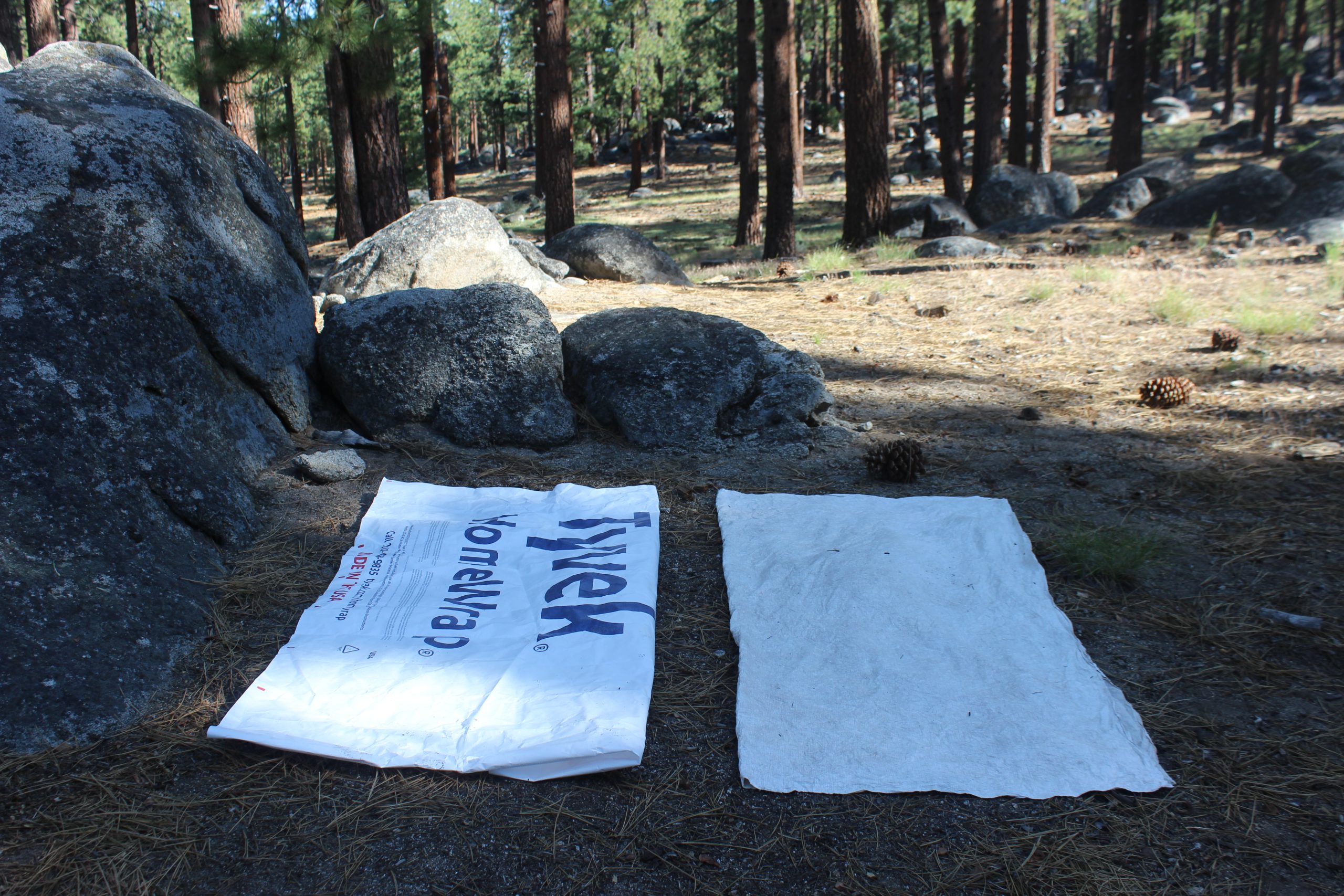
HomeWrap Tyvek (left), Kite-Making Tyvek (right)
HomeWrap Tyvek
Dimensions: 3 ft x 7 ft
Field Weight: 4.2 oz
Price: ~$20.57
This is the Tyvek groundsheet version most hikers end up buying and is cut from the same material found on construction sites. It’s cheap, fast to ship (especially with Amazon Prime), and light enough to earn a spot in an ultralight pack. It is also very waterproof and extremely durable.
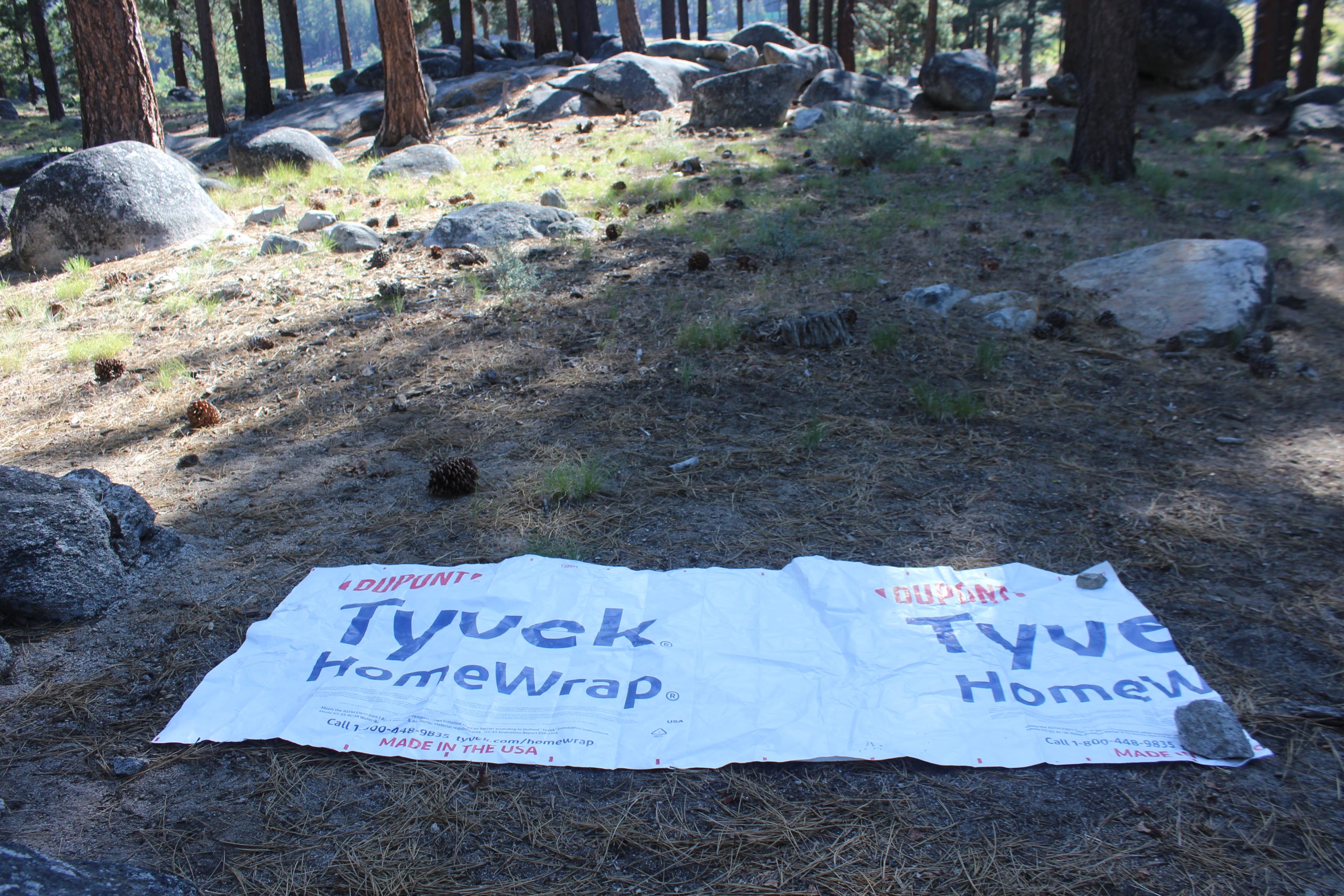
But it’s loud. So loud. The crinkly plastic-paper sound is annoying not just for you, but potentially for anyone camped nearby. Sorry trail family. It’s also not blank and reminds you immediately of a construction site thanks to the giant printed DUPONT TYVEK HOMEWRAP logo across the front.
If you’re in a time crunch or on a tighter budget, it works. But if comfort and quiet matter to you, HomeWrap may not be the best long-term solution and you may want to upgrade to the Kite-Making Tyvek instead.
Bottom line: Fine in a pinch, but the crinkly noise gets old fast when you’re setting up and packing up camp every single day on a thru-hike.
Kite-Making Tyvek (1443R)
Dimensions: 6.6 ft x 6.6 ft (must cut to size)
Field Weight: 4.1 oz
Price: ~$25
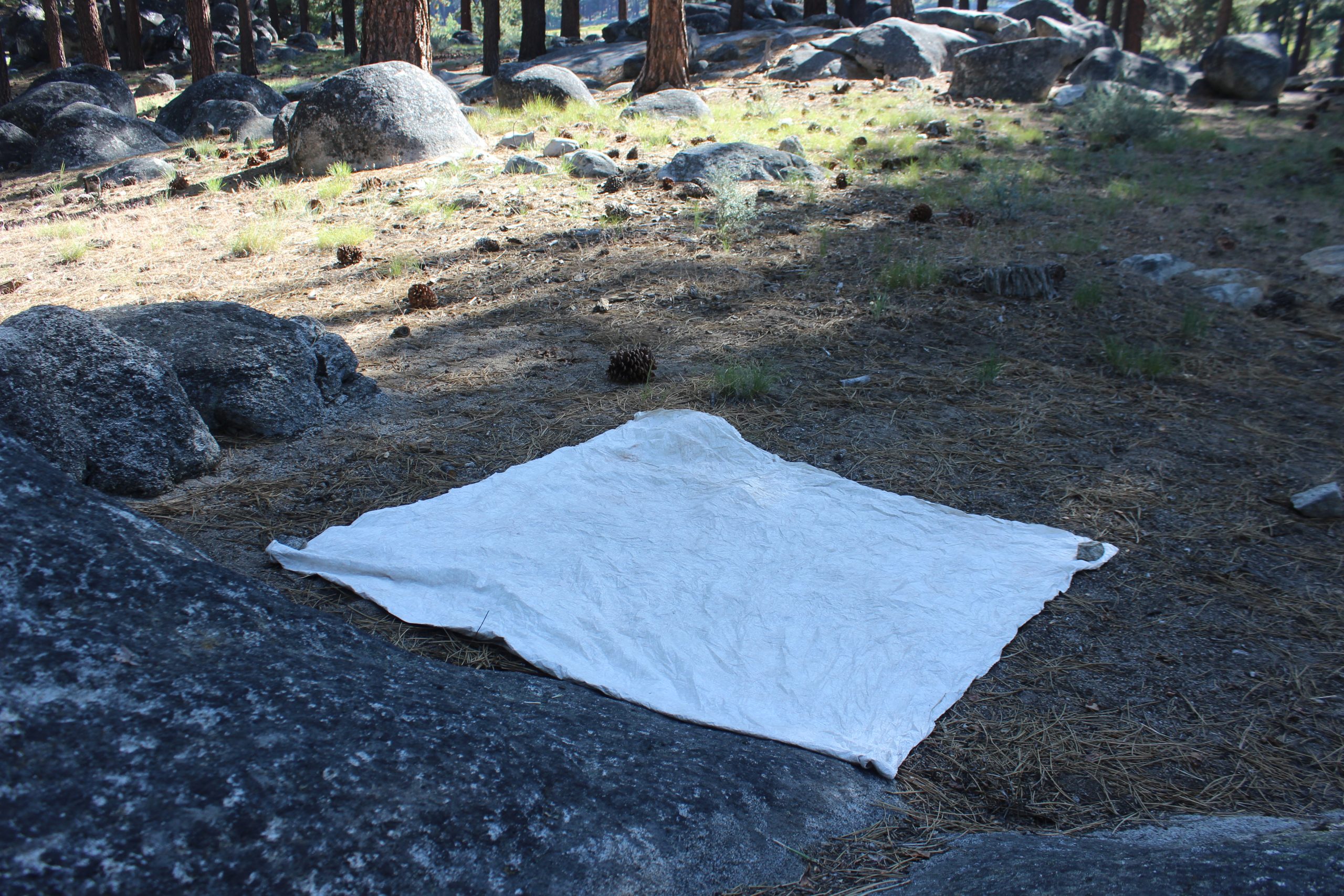
If you value quiet nights on trail, this is a game-changer. Unlike the standard HomeWrap Tyvek most hikers opt for, this version (technically used for making kites) is soft, pliable, and most importantly, not crinkly! You can toss and turn without waking up your whole camp and pack up in the morning with just as much ease.
Kite-Making Tyvek Is Less Crinkly. Here’s the Proof:
6-second sound bite of me rustling Kite-Making Tyvek:
6-second sound bite of me rustling HomeWrap Tyvek:
It is also extremely durable and waterproof, much like the HomeWrap version, although admittedly to a lesser degree. It is not as firm and filmy, having only one side with a film-like exterior to repel water.
On Amazon, it comes in a large 6.6 x 6.6 ft sheet that you can trim to your ideal dimensions of your tent. The custom sizing is a major plus, especially for hikers with odd-shaped shelters. It’s also plain white so you can use it to write HIKER TO TOWN, have your trail family sign their names on it, or basically write any other useful (or useless) message you would like.
That said, it’s not perfect. The same softness that makes it silent also causes it to pick up dirt, leaves, and ground debris more easily. A quick shake usually does the trick, but it won’t come out looking pristine after the first use in a wooded forest. Also, current Amazon shipping is a bit slow — expect 1–2 weeks — but in my opinion, it’s worth the wait.
A Note on Durability
Kite-Making Tyvek isn’t quite as durable or waterproof as HomeWrap Tyvek, but most campsites do not require that level of bombproofness anyway. I have been using the same Kite-Making Tyvek groundsheet for the last six years on multiple trails, including the Pacific Crest Trail and the Colorado Trail, and it still protects my tent bottom valiantly.
In total, it has been used for more than 400 nights on trail and is still going strong. The only holes it has gotten are small holes from campfire embers. Otherwise, it is functionally tear-resistant.
A Note on Waterproofness
Your hiking climate should also be a consideration when choosing a groundsheet. Out west where it is often dry, water-resistant material is not as important as it might be back east, where the climate tends to be much more moist. That said, my Kite-Making Tyvek groundsheet has provided enough water resistance for all my backpacking needs over the last six years.
In snow, my Kite-Making Tyvek does just fine as an effective moisture barrier. In rain, its more fabric-like properties make it less water-resistant than the HomeWrap Tyvek, but it still doesn’t wet through completely. I don’t mind drying my groundsheet out later alongside the rest of my gear and still prefer that to fussing with HomeWrap Tyvek.
Bottom line: Best for hikers who want a fix to the crinkly, noisy groundsheet and don’t mind a few bits of trail stuck to their sheet.
Why a Kite-Making Tyvek Groundsheet Beats Out HomeWrap Every Time
Choosing the right groundsheet can make a big difference for your sanity on trail. For me, the quieter, softer kite-making Tyvek (1443R) wins every time.
It may be a few dollars more than HomeWrap Tyvek and can take a few more days to arrive, but after hundreds of nights on trail, not cringing at the sound of crinkly plastic while still getting the same lightweight, protective outcome is worth its weight in gold to me.
If you’re just looking for something cheap and quick to throw under your tent for a weekend trip, the HomeWrap can do the job but in my opinion, the Kite-Making tyvek is usually the better option.
What Kind of Groundsheet Do You Use?
Have a different groundsheet option you swear by? Got a HomeWrap horror story to share? Leave a comment below!
If this helped you, consider sharing it with a friend or trail buddy who’s planning their next trip. A thoroughly protected tent bottom and one less crinkle in camp is the goal here. Happy trails!
Featured image: Photo courtesy of Kelsey Nannini; graphic design by Chris Helm.

This website contains affiliate links, which means The Trek may receive a percentage of any product or service you purchase using the links in the articles or advertisements. The buyer pays the same price as they would otherwise, and your purchase helps to support The Trek's ongoing goal to serve you quality backpacking advice and information. Thanks for your support!
To learn more, please visit the About This Site page.

Comments 17
Um, why exactly is DuPont “controversial”? Because the are a chemical company and that instantly makes them suspect?
Rather than compromise your principles, perhaps you should go without a Tyvek groundsheet. Buying one, using it successfully for six years, then griping about the manufacturer seems so inconsistent. Find another supplier and you might (hah) sleep better at night.
A really good point toadkillerdawg. If I didn’t want to support DuPont myself I would use something other than Tyvek, however, I don’t think I’m a large percentage of their business with my groundsheet purchase. I do buy much of my other gear from cottage industries when I want to be conscience of this.
If you’re curious why some find DuPont controversial, check out the movie Dark Waters (a movie based on the true story of an environmental attorney vs DuPont).
DuPont is mistakenly aligned with the Bhopal India chemical leak that killed and injured thousands… court of public opinion. It was Dow Chemical that many years after the disaster acquired DuPont, but nobody cares about facts anymore. I’ve had/have both home wrap and kite. kite for my 1p, wrap for my 3p, wrap is better than kite IMO
I have used Tyvek but now prefer plastic sheeting. Leaves stick to one side of Tyvek.
There you go! A great alternative.
I think that the loudness and the annoyance factor of standard Tyvek is overstated. You can mitigate this issue pre-hike by throwing the Tyvek sheet in a dryer with some tennis balls to soften it up. On trail, from constantly rolling and unrolling it during everyday use, it will continue to soften and will eventually be as supple and quiet as any other option. There is also enough white space in between the logos to write a large “Hiker To Town” message.
FWIW, the kite-making Tyvek linked to in the article is unavailable on Amazon. I have the other style that came with my tent and am so ready for something quieter.
Or you could use the cheaper Tyvek and wash it one time for the same quite bliss.
I used the same piece of home wrap Tyvek for 10 years, including an AT thru hike, probably 400 or more trail nights, mostly in the east. I put it through the washer and dryer before I started using it. Never found the noise to be an issue, but it did finally start to wet though during the 11th season of use. It actually outlasted the Big Agnes tent I got it for.
I used the house wrap tyvek and washed it before using. It worked great. But sadly in my case, the ground sheet started to fray after about 40 nights use. It started leaving tiny pieces of tyvek on the ground. I was very surprised by this outcome. And leaving bits of plastic in nature was a showstopper for me. Some here have used their tyvek for 400 nights without issue!
Has anyone experienced what happened to us?
I have returned to light plastic painting drop cloth but would have preferred to stick with the tyvek.
You can actually run Tyvek wrap thru the wash cycle on warm with no soap to soften/quiet it. I’ve made many things from Tyvek scraps that I get from home construction sites. Never experienced kite material to compare, but my method works great. Then you still have the thicker material so that you can add grommets if needed.
I use a $1-$2 blue tarp I bought from Harbor freight. Weight is only 5 oz. Waterproof. Folds up very easily even in the wind. One quick shake and dirt /leaves fall right off. Less than an ounce more than tyvek and $20 cheaper!
I have several hundred square feet of Tyvek on a roll, left over from building our house over 20 years ago. I used a 4×6 piece on one trip and it was crazy noisy. I saw the comments above about washing and drying, MAGIC! Thanks for the tip. It is very supple now, like a worn out blanket.
I love my homewrap tyvek and don’t mind the noise when it’s brand new. The more you use it, the softer and quieter it gets, which is a fun gear journey! My oldest sheet is as soft and supple as a thick linen but is still as strong and WP as ever!
mine was not that noisy , but i did mail for it cause the store here had a problem .. i forget what it was ..
BUT i find the biggest noise [ beside me and my fellow snorers ] was air pads and some sleeping bags
I have had experience with nylon, police, regular Tyvek and 1443R Tyvek, and hands-down the 1443R Tyvek is the best choice. Even after washing regular Tyvek multiple times, it still has been bulky and harder to use. The 1443R material is incredibly durable, and because it is has such a soft hand you can use it as a rain skirt or cape and can very easily use it for other purposes around camp such as for a sit pad or an area to lay your gear out when packing.
LOL – thanks AutoCorrect for turning polycro into police!