
 ">
“Walking 800 Miles Was the Quick Part”: The Making of the HAYDUKE Thru-Hiking Docuseries
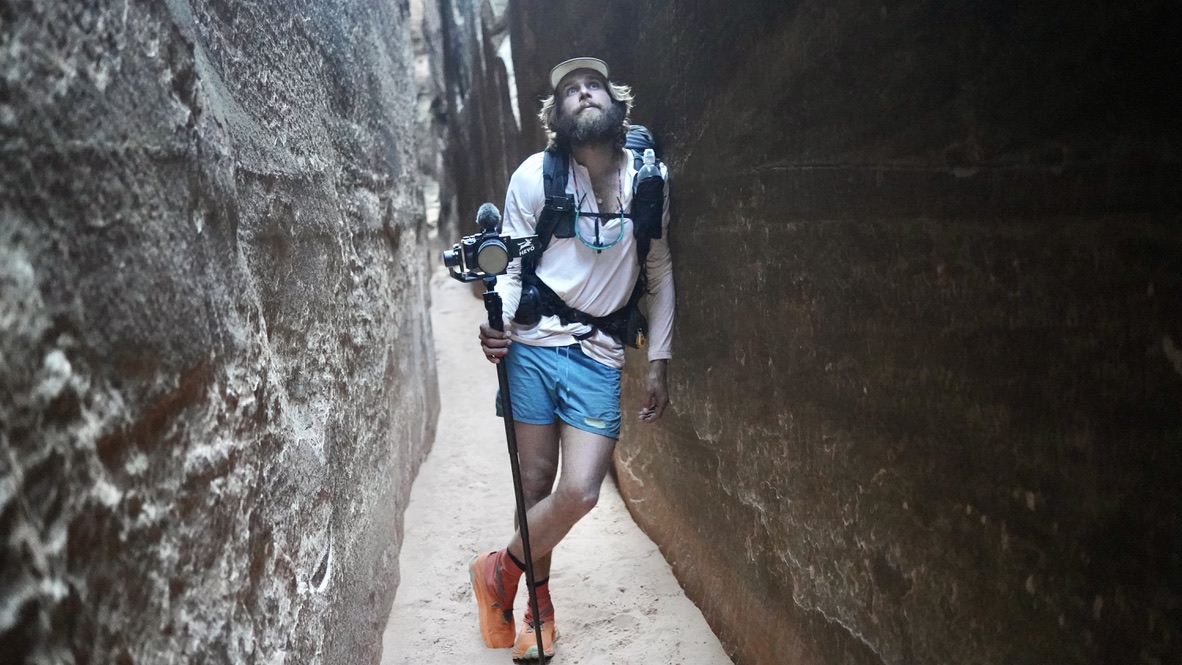
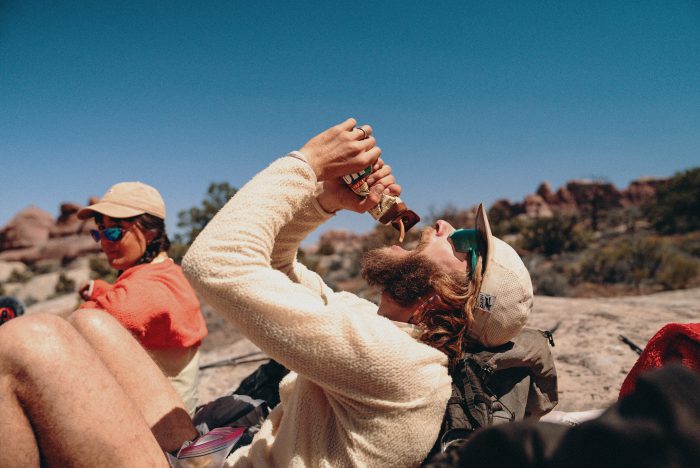
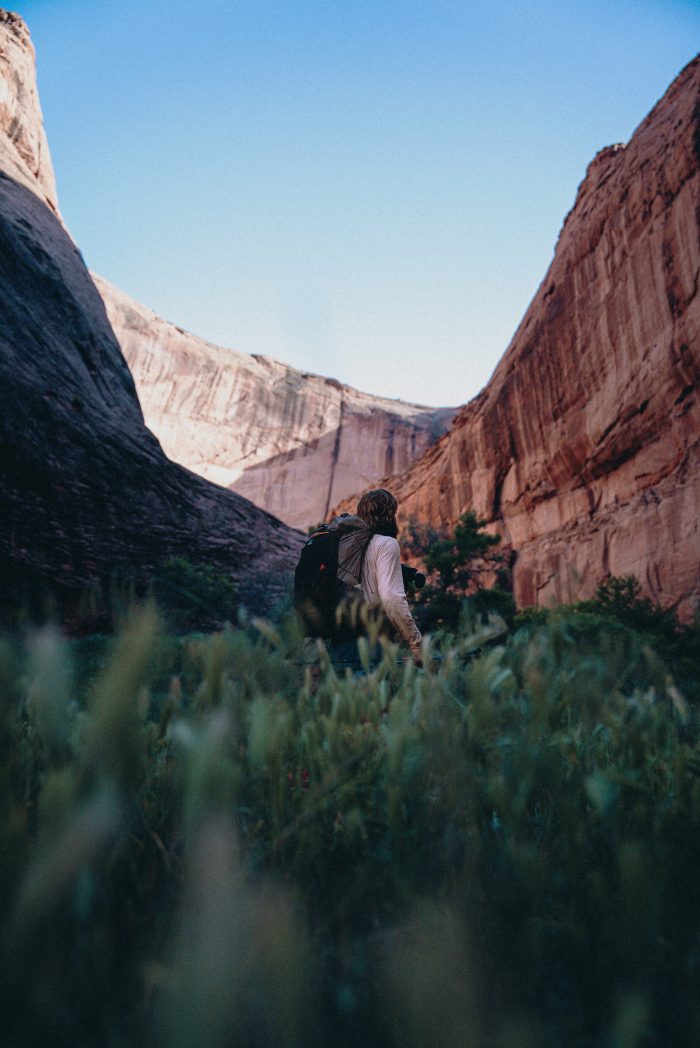
In 2023, four thru-hikers set out on the Hayduke, an 800-mile route through the canyon country of southeast Utah and northern Arizona. There is no trail to follow, and they hiked after a record snow year. Andy Laub, Elina Osborne, Zelzin Aketzalli and Peter Hochhauser carried four cameras and came home with 20 terabytes of footage.
Three years later, that footage is HAYDUKE, a four-part docuseries streaming on Camel’s Cabana. Andy and Elina co-directed it. For The Trek, they interviewed each other about walking it, filming it, and what it took to turn that mountain of footage into a story.
A Trail Film Without a Trail
ELINA: You’ve worked on other documentaries and hiking projects. What sets this one apart? Did something about this experience change how you approached the story?
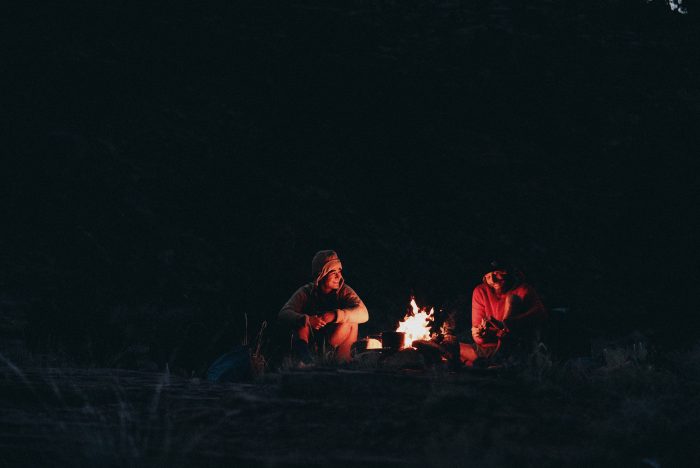
ANDY: We were making a trail film without a trail. That alone gave HAYDUKE its flavor.
With As It Happens: Pacific Crest Trail and THRU: The Pacific Northwest, I’d filmed adventures on American long trails. Each had its own personality, but there was generally a path. On the Hayduke, we took that same approach to filming a lived dirtbag experience, only now we had to figure out the path ourselves.
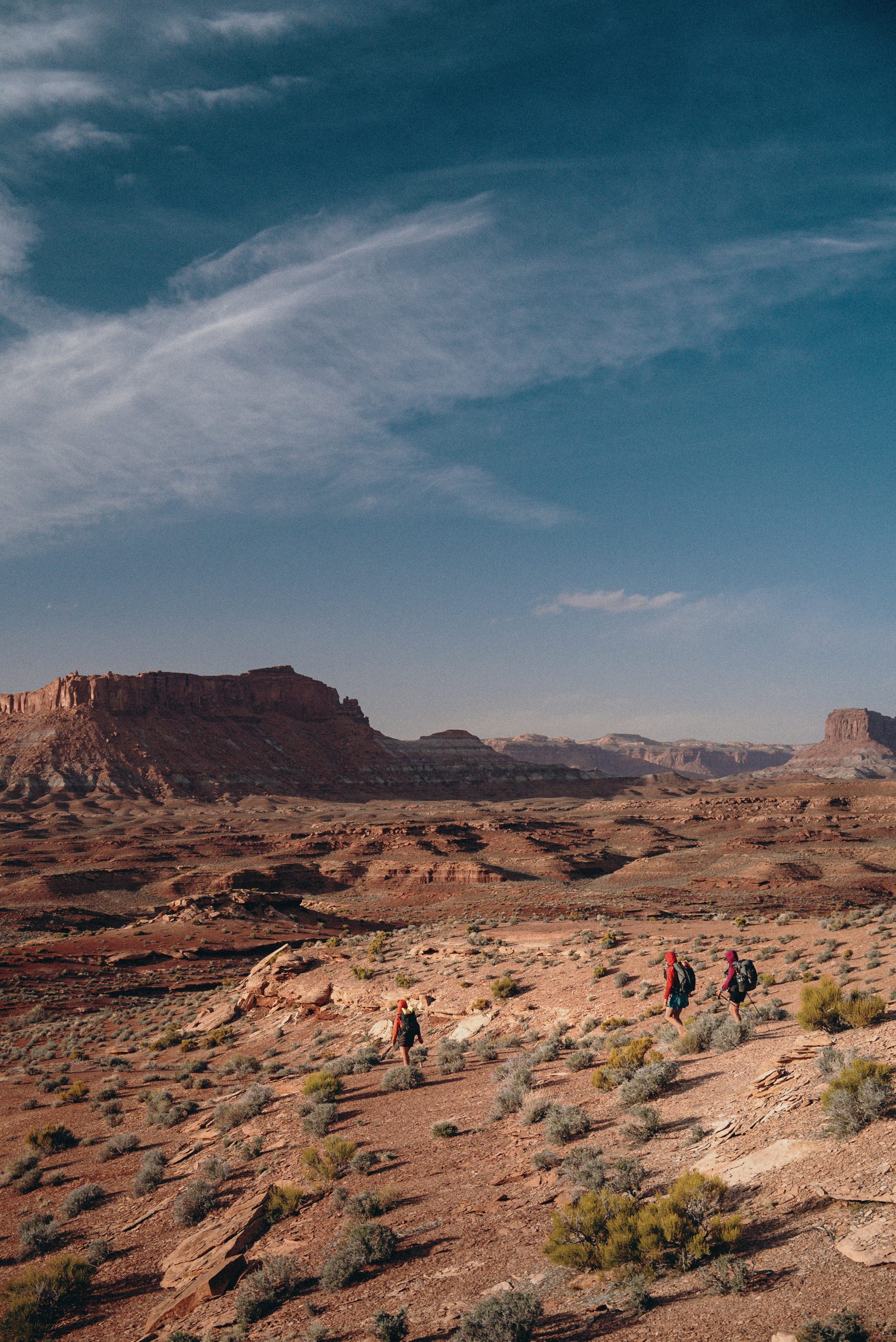
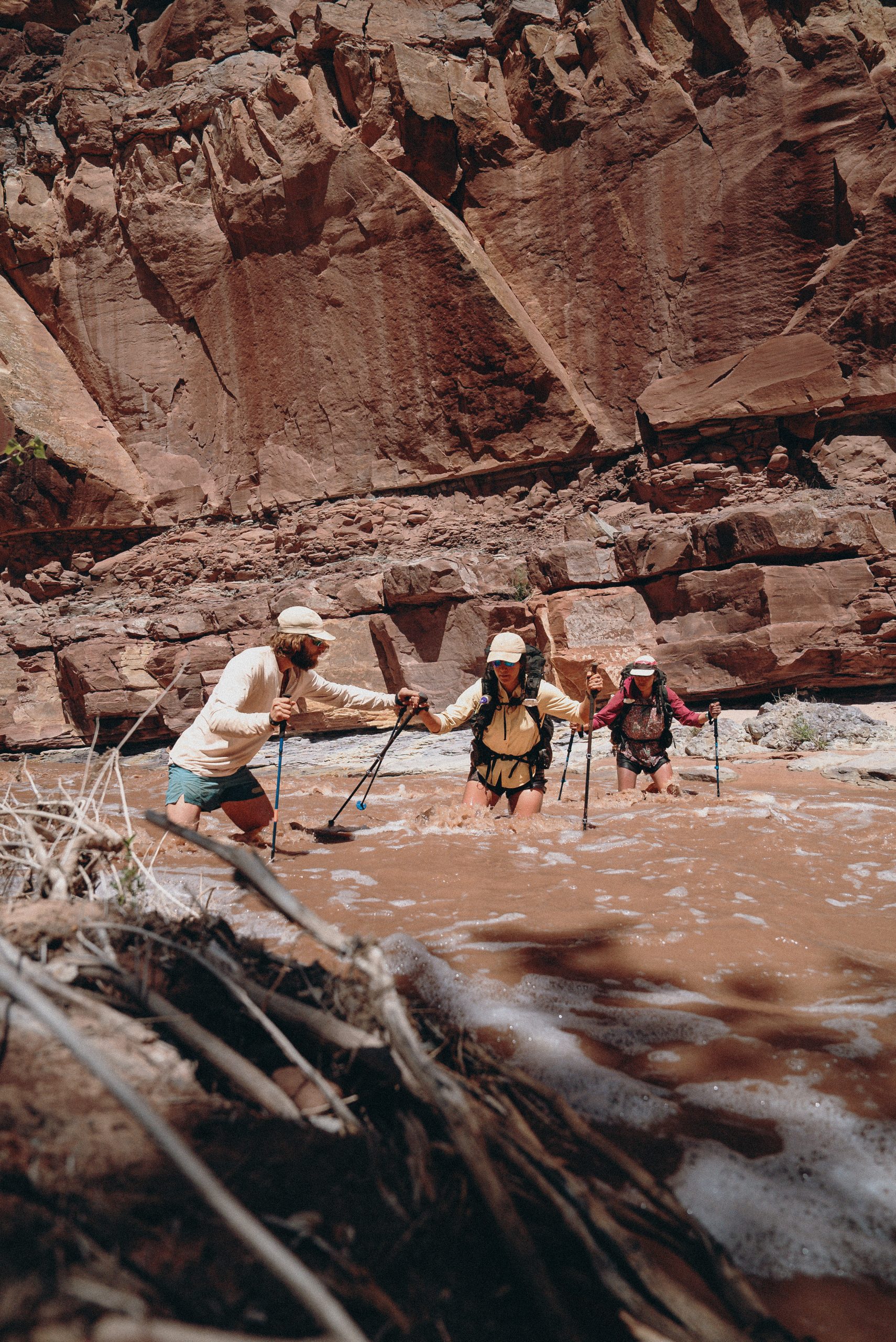
And we showed up in 2023. A state of emergency had been issued, as record snowmelt raced through the canyons we navigated. An already wild route became something else entirely. As we said out there, every day felt like an EPIC, a lifetime, and that experience really shaped the story.
Small Yet Mighty
ELINA: There are some pretty intense moments in the series. How do you create emotional impact without sensationalizing what happened?
ANDY: For me, the key was giving those moments room to live. The stakes were already there. They didn’t need heavy music cues or fast cutting.
Like when Z gets caught in quicksand in the Escalante. You and Peter are helping her, and Peter starts being sucked down too. I’m about 20 yards back in the reeds. We’d made a pact: if you can help, help. If you can’t, film. That shot runs for close to a minute. The emotional weight is in what’s happening, so the edit needed to let us stay with it.
But showing the intensity also meant showing how we worked together. We weren’t just stumbling from one dangerous situation into another. We were constantly reading the landscape, assessing independently, sharing what we saw, and deciding how to move forward. Like a family of ants, we were small yet mighty.
No to the episodic format. Yet here we are.
ANDY: When you first signed on, what did you imagine we’d make, and how different is that from the story we’ve finally released?
ELINA: When I got your email at the end of 2022 and agreed to jump on board the Andy (and Peter) train, I knew that whatever we made together would be beautiful. Seeing what you and Peter had made on THRU: The Pacific Northwest blew my mind.
The level of production and coverage that only a filmmaker and thru-hiker could accomplish changed what I saw as possible on a long, self-powered journey. I imagined it would be a story of four people coming together to experience something beyond any thru-hike they’d done before.
The story we released was exactly that, but much more layered. I didn’t think the theme of losing my Mum would be so central to how I approached it. And I remember we agreed from the outset: no to the episodic format! Yet here we are.
ANDY: What was it like returning to the hike year after year while making this? How did your relationship to those memories change?
ELINA: We were four people who hadn’t hiked as a team before, in high-stress situations that were literally life or death, which meant interpersonal conflict. There were a lot of moments of tension. I have vivid memories, not all captured on camera, where I truly questioned if completing the Hayduke was worth it. Did I even want to be here? Was this level of risk worth getting to the end?
My relationship to those memories softened. I don’t think they became romanticised, but I returned to them with a bigger-picture perspective. We included some of these scenes, but maybe not as many as we could have. They felt far less central to the story we were trying to tell.
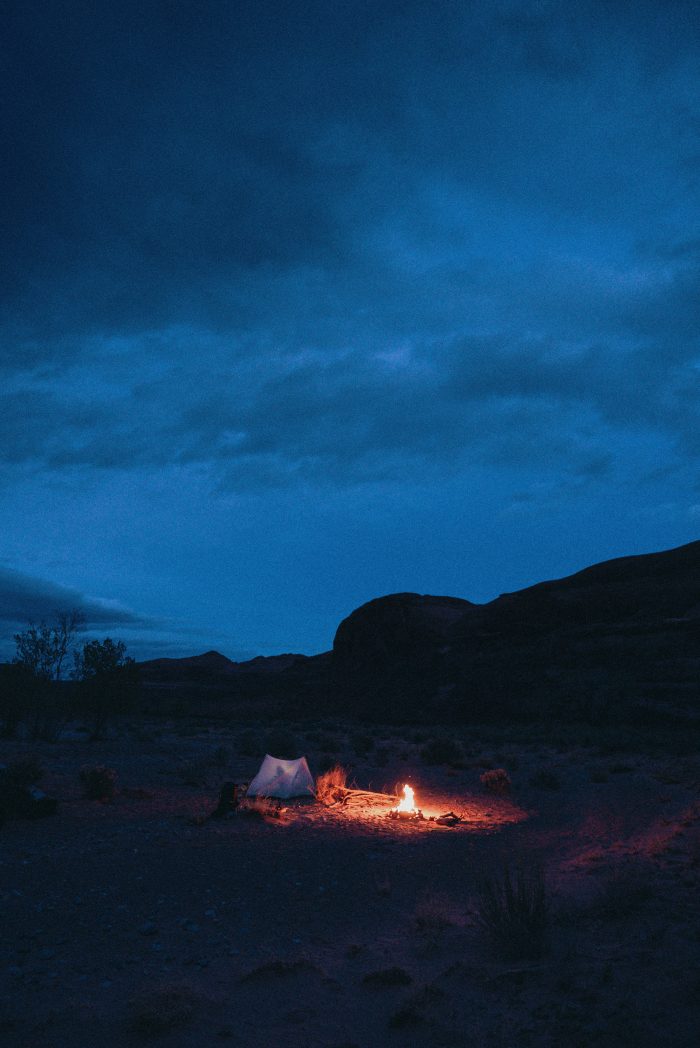
ELINA: We made a conscious decision to leave out a lot of specific location names. Why was that so important, and how did it affect the story?
ANDY: We kept the names we couldn’t avoid and left all others out. Part of that was wanting to help protect these places. But it also felt truer to anchor the story to our experience rather than pin every moment to a map.
The Muse and the Paintbrush
ELINA: How does carrying a camera change the experience of a thru-hike for you?
ANDY: On the Appalachian Trail, taking pictures wasn’t a priority. We finished with disposable cameras. I took maybe 100 photos across the whole hike, yet I treasured every one.
By the Pacific Crest Trail, I’d been working in network adventure TV, yet it was films like 180° South and filmmakers like Jimmy Chin that really inspired me to bring a camera and capture dirtbag adventures cinematically.
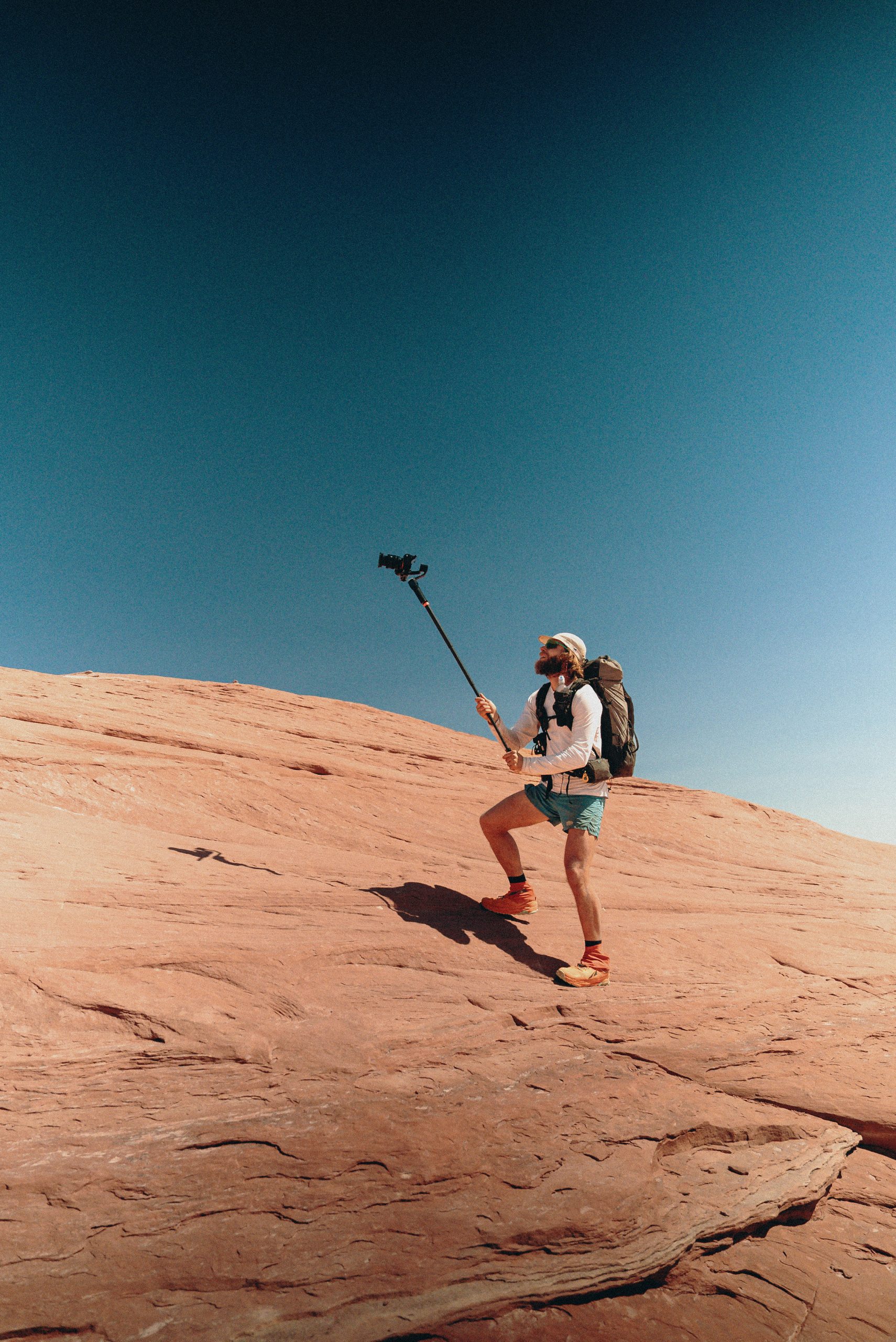
On the Hayduke, that meant 8-9 pounds of equipment, plus the energy it takes to use it. Every bend and conversation caught my attention. I loved it, but trying to capture so much eventually wore me out.
When we thought the gimbal died in the Grand Canyon, part of me was relieved. I needed my remaining energy to just get through. But when it miraculously turned on the next morning, my spark returned. I’d already accepted I’d film less, so every shot thereafter felt like a bonus.
And that’s the camera-on-a-hike conundrum. Whether I’m carrying a disposable camera or nine pounds of it, I keep coming back to the same thing: the hike comes first. The hike is the muse, and the camera is a paintbrush.
20 Terabytes
ELINA: You’ve hiked the Hayduke. You’ve endured 800 miles of its toughest terrain and a real test of will. How on earth do you begin sinking your teeth into 20TB of footage?
ANDY: Well, it turns out walking the 800 miles was the quick part! Haha.
We brought home hundreds of hours of material from 4 cameras, your recorded journals, and audio of nearly every dinner and siesta we had out there.
It took six months to review 80% of it, everything up to the final 12-day stretch in the Grand Canyon. I built a nearly 300-page outline and color-coded clips in Adobe Premiere in an attempt to memorize the footage. I can’t weave a story unless I know what I’m weaving with.
Then I took a year away for other projects and fundraised for HAYDUKE’s post-production. When I got back to its edit, festival deadlines meant I started assembling before I’d reviewed the Grand Canyon footage. Reviewing and editing at the same time was intense!
Our first cut was feature-length. It had story and flow, but we both felt it left too much heart and personality on the cutting room floor: the things that make a long hike beautiful : )
So, with a clearer structure, two years of perspective, and another long walk across Death Valley, we took a deep breath and reopened it. You rewrote the script, and I spent 7 months revisiting hundreds of hours of selects and reworking it. In the end, the three year process helped us move past the film we knew how to make and discover something entirely new.
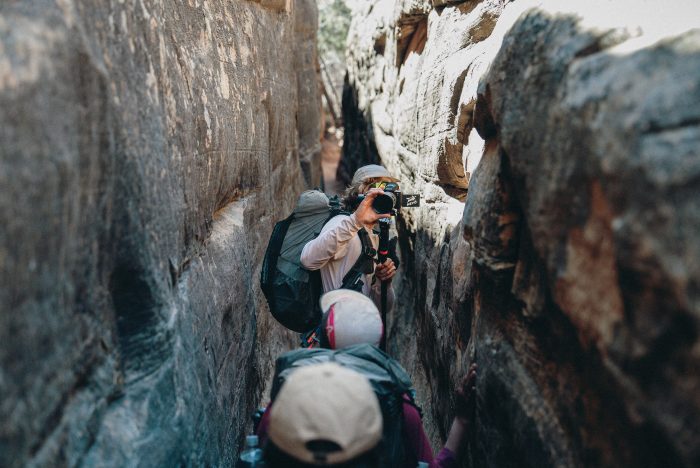
ANDY: Your writing helped give all that footage direction. How did you begin finding the moments that could hold this enormous adventure together?
ELINA: The beauty in both of us having hiked and filmed was that we both knew what we captured out there. We both knew what it was like to experience the Hayduke. The inner world of each person is something I didn’t experience.
But it was clear from the outset that some stretches held far more weight in terms of story, whether that was the level of risk, the people we encountered, or moments of awe. You did the due diligence of labelling a lot of these in the project file. The key was then knowing how to string them together into not only a cohesive A-to-B journey, but a story with several character arcs.
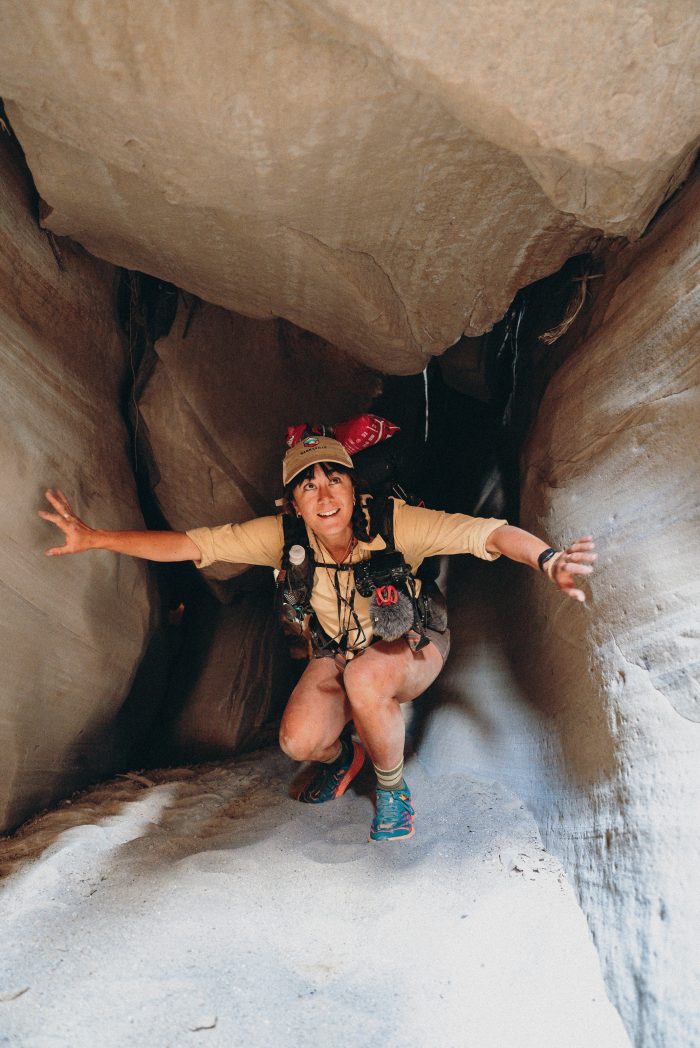
Writing From the Inside
ANDY: You were used to making films on your own. What was hardest about letting someone else help tell a story you were also living?
ELINA: I think with most creatives, we don’t want people to see our rough drafts: the versions that are awful, that don’t make sense, that are almost unreadable. It was hard to let go of the fear of being seen as bad or incompetent. But in this process, it was necessary. It was necessary to bounce ideas, to go back and forth, to trust the process, and trust each other.
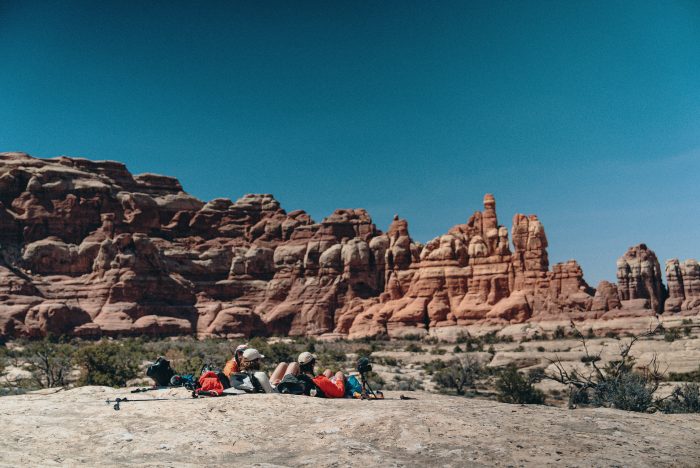
ANDY: It wasn’t until after the hike that we decided your writing would carry the series, and it goes much deeper into your personal life than anything you’d made before. What did it feel like to take that on?
ELINA: It was terrifying. I felt complete imposter syndrome. I felt a huge weight in doing justice to each person’s story, while also letting an audience into my own mind. Sometimes it’s a lot easier to hide behind the camera and let others’ voices carry the story. This time I understood that if I were to narrate a four-character series, I also needed to be someone who expressed their own vulnerabilities.
The kinds of stories that stay with me are the ones where the artist has been most vulnerable. I understood this in theory, but doing it in practice is a whole other thing. I constantly doubted how much was too much, or too little, and how much space my own thoughts could take up next to everyone else’s story. It helped having you encourage me throughout and have faith in my writing. That assurance, and a gentle push to dig deeper, let me open up more than I would have in isolation.
It was also the first time I asked someone to read over my work. My incredible sister, who is a writer, read through my final scripts. Her questions and feedback improved the final piece tenfold.
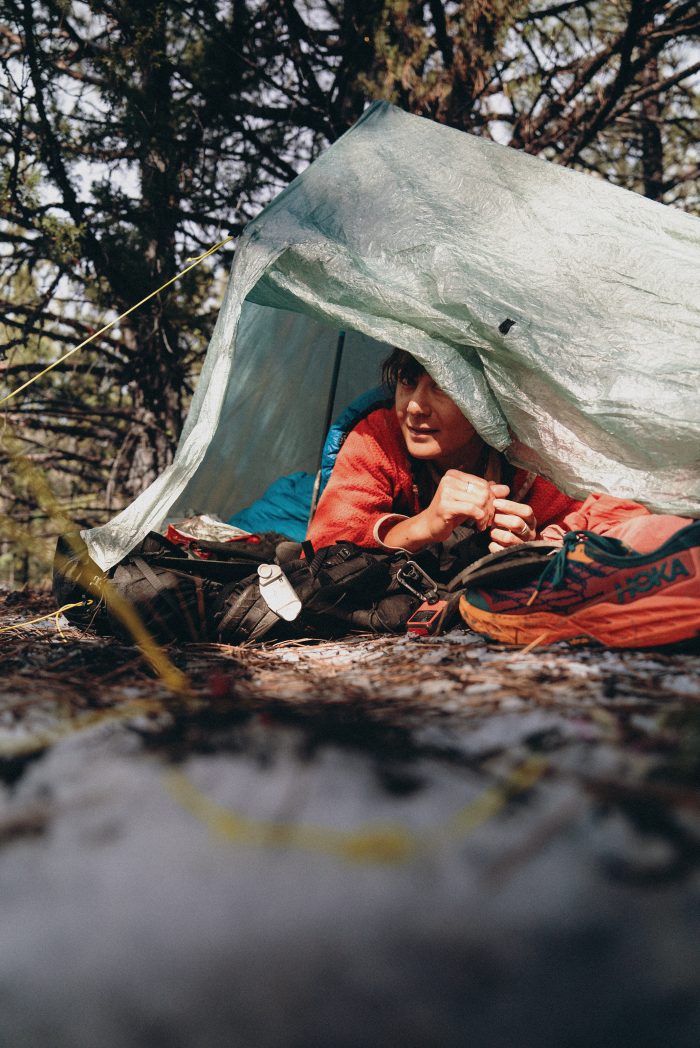
ANDY: What was it like returning to memories of your Mum through three years of writing, revision, and reflection?
ELINA: I probably cried a lot in the first drafts. With grief, the pain first hits like a tsunami. It pulls you under, and every other element of life feels irrelevant. As years pass, the pain subsides and comes in smaller, less frequent waves. Initially, digging back into that pain to bring it into my writing was draining. But the more I wrote through it, the more I could write from a place of excitement and joy in telling this story.
It truly clicked when I read Things Become Other Things by Craig Mod. He tells stories of walking through rural Japan to his friend who had passed away. The premise was sad, but the execution was filled with levity and whimsy and joy. It’s hard to imagine experiencing those highs again when you lose someone so close to you, but in time you learn that you will. And it’s what they would have wanted for you anyway.
Finding the Spark
ANDY: HAYDUKE was originally a feature-length film, but we both felt something was missing. What did doubling the runtime and making it a four-part series allow us to find?
ELINA: We realised the feature film was missing the spark. The magic! It missed the nuances of each person, little moments that felt big to us. Doubling the runtime gave us room not only to develop more of each character and their arc, but to let the project breathe. It gave us the space to let the audience feel moments as we did ourselves when we were out there.
Setting It Free
ANDY: For three years, there was always another version to write, scene to review, or problem to solve. What does it feel like to finally set this project free?
ELINA: HAYDUKE has felt like a phantom limb. Something I could feel, something I knew existed, but to everyone else in my life, there was nothing to be seen. To talk about a project in the hypothetical for three years, and for it to finally be out in the world, is release. It’s freedom. It’s an exhale.
The journey of making it has been the most challenging and rewarding thing I’ve ever done. And regardless of what happens with it, however it’s received, I feel content knowing we put everything we possibly could into getting it out into the world.
HAYDUKE is streaming now on Camel’s Cabana.

This website contains affiliate links, which means The Trek may receive a percentage of any product or service you purchase using the links in the articles or advertisements. The buyer pays the same price as they would otherwise, and your purchase helps to support The Trek's ongoing goal to serve you quality backpacking advice and information. Thanks for your support!
To learn more, please visit the About This Site page.
Comments 1
Absolutely amazing work — you should be proud of what you’ve accomplished here. Inspirational, and I look forward to seeing your future adventures!