
 ">


The Best Backpacking Tents for Thru-Hiking in 2026
Choosing a tent for your thru-hike is a big deal, but it’s also probably the least stressful home-buying experience you’ll have in your lifetime. Enjoy it. The best backpacking tents strike a balance between weight, cost, durability, livable space, ease of pitch, and stability.
Your tent should also be stable in snow, breathable in areas of high humidity, and waterproof. You should be able to comfortably keep your sleeping bag away from tent walls to prevent dampness, and also get in and out easily, sit up comfortably, and have enough space (if hiking with a partner) where you don’t feel like you’re whacking them every time you move or put on a layer.
How We Picked the Best Tents This Year
To make the list more objective and more inclusive for 2026, we compared the basic specs of almost 90 one- and two-person backpacking tents sold in the US market.
We compared their prices, weights (more on that in a moment), floor space, vestibule space, primary materials, and pole setups so you can see where each of our top tent picks fits within the broader market.
Specs aren’t everything, of course — these basic numbers can only tell you so much about real-world functionality, durability, and livability. That’s why we also rely on our writing/blogging team’s real-world experience, plus the data from our annual AT thru-hiker surveys, to inform these lists. Still, having some hard numbers is a good starting point for comparison between models. The full dataset is below.
A note on trail weight before we dig in:
Some manufacturers sell their tents complete with a full complement of stakes, extra guyline, and maybe even a footprint. Others just sell you the tent itself with none of these extras.
The result is that a tent that requires 10 stakes and a whole lot of guyline to pitch properly is going to look much lighter on paper than it will be in practice, and meanwhile, brands that give you more for your money are almost getting penalized with a heavier packaged weight that could turn off weight-conscious buyers.
So in the interest of consistency, we’re listing the minimum trail weight for every tent below. Minimum trail weight is the lightest possible configuration that will still give you a functional pitch — usually the tent body itself plus the minimum number of stakes (that means zero stakes for a fully freestanding tent), excluding any extra stakes, footprint, stuff sacks, repair kits, etc.
For tents that are not sold with stakes included, we used the MSR Mini Groundhog as a weight proxy. So if a tent requires six stakes to set up, that extra weight isn’t accounted for on the manufacturer’s site and they’re not included with the tent, we simply added the weight of six Mini Ground Hogs (0.35 oz x 6 = 2.1 oz total) to the tent weight.
This is obviously not a perfect system, but we hope it helps you make broad comparisons between tents. Just bear in mind that your actual mileage may vary depending on the type and number of stakes and extras you choose to pack out.

Quick Navigation
Best Backpacking Tents:
-
- Durston X-Mid 1P/2P (AT Hikers’ Favorite Tent)
- Hyperlite Mountain Gear Ultamid + Insert (Roomiest Tent Overall)
- Zpacks Pivot Solo (Lightest Tent Overall)
- 3F UL Lanshan 1 (Cheapest Tent Overall)
- MSR Freelite (Lightest Traditional Tent)
- Bonfus Solus 1 (Cheapest DCF Tent)
- Big Agnes Copper Spur 1 (Lightest Freestanding Tent)
- Tarptent Rainbow / Double Rainbow (Best Single Wall Freestanding)
- Lightheart Gear Solong (Best Tent for Tall People)
Best Backpacking Tents for Thru-Hiking FAQs:
Ultimate Backpacking Tent Comparison
How to Choose a Tent for Backpacking Podcast
Best Backpacking Tents for 2026
Durston X-Mid 1 and X-Mid 2 (AT Hikers’ Favorite)

Best backpacking tents for thru-hiking: Durston X-Mid
Category: Single-wall trekking pole tent
Interior space: 21.3 square feet 1P | 33.2 square feet 2P
Why We Love This Tent
This shelter has developed a devoted following since its days as the always-sold-out tent of mythical status. It’s easy to see why.
The X-Mid has soared in popularity in our annual thru-hiker surveys in recent years, and it was once again among the most popular models on the Appalachian Trail in 2025 (AT thru-hikers chose the 1-person model somewhat more often than the 2-person model, but both were popular).
Both the X-Mid 1 and X-Mid 2 are affordable, reasonably lightweight, simple to pitch, and have plenty of space, including two doors and vestibules — a luxurious touch for a one-person shelter. And when we say plenty of space, we mean it. The X-Mid lineup should be a top choice for any individual or pair who prizes living space. These things are huge inside.
A laundry list of well-thought-out details makes these tents exceptional in rough weather: factory-taped seams, polyester fabric that doesn’t sag or absorb water, steep roof panels that shed snow easily, a double-wall design and large mesh storm vents that minimize condensation impacts, and the fly sets up first to keep the tent interior dry.
Designer Dan Durston, who is perhaps the ultimate backpacking gear wonk, has thought through every aspect of the design, and you can read a thorough explanation of his thought process over on his site. And on top of it all, it’s among the cheapest tents on this list (especially considering the fact that the X-Mid comes with eight stakes and factory-taped seams).
While the X-Mid’s low price gets undercut by some ultra-cheap outliers, we firmly believe that you cannot find a better bang for your buck anywhere else in the universe. Heck, they ain’t the lightest tents, but if you’re willing to carry the extra weight of an X-Mid, it’s the best, or nearly the best tent, across the board.
Oh wait, Durston also makes DCF versions of both X-Mids, the X-Mid Pro 1 and X-Mid Pro 2, for those afflicted with ultralight madness. Like Zpacks, Durston offers a tent for nearly every need and budget, and all of them rank near the top of their category. If you’re in the market for a trekking pole shelter, then one version of the X-Mid or another should be near the top of your list.
Features
- Polyester-based design: In a market dominated by silnylon and Dyneema, Durston was one of the earlier manufacturers to opt for silicone-coated polyester (silpoly). Why? It’s cheaper than Dyneema, and it won’t sag or absorb water like nylon. It’s also more UV-resistant than nylon.
- Fly pitches first: … and gets taken down last. That means the tent’s interior will stay dry and cozy in rainy weather.
- Double-wall: For hikers who want the weight savings and simplicity of a trekking pole setup with the ventilation advantages of a double-wall, the X-Mid is one of just a handful of options. Large mesh vents further enhance airflow. Allows fly-only pitch.
- Dual side doors and vestibules: Thanks to the X-Mid’s eponymous X-shaped layout, where the tent floor is oriented diagonally to that of the fly, even the single-wall version offers ample vestibules and doors on both sides.
- Double-sewn seams: Increase the tent’s durability and speak to the overall quality and attention to detail of this design. The X-Mid is also designed to minimize the total number of seams, which improves waterproofness, durability, and weight efficiency.
Nobody’s Perfect
The major criticisms of the X-Mid are that it’s complicated to set up and that it has a pretty large footprint. You need 46.5 square feet under the fly for the X-Mid 1, which can make campsite selection challenging. It is also less accommodating of uneven ground than some other trekking pole tents, which can again limit suitable campsite availability.
Check out our interview with Dan Durston on Backpacker Radio.
Hyperlite Mountain Gear Ultamid 2 + Full Insert (Roomiest Tent Overall)\

Best backpacking tents for thru-hiking: HMG UltaMid 2
Category: Double-wall trekking pole tent
Interior space: 50 square feet
The UltaMid 2 is, simply put, gigantic. While many hikers opt to simply carry the Ulta Mid tarp itself and forego the mesh insert, this list focuses on full backpacking tents rather than just tarps. HMG’s mesh + DCF insert adds significantly to the weight and price tag of this shelter but makes this into a fully enclosed tent — and the 50 square feet of liveable space inside the insert blows every other two-person tent out of the water. (If you go with just the tarp alone you’ll have even more room — but again, that’s beyond our current scope.)
The rectangular floor is a generous 76 by 96 inches, so you could honestly squeeze three people, or certainly two people plus a dog, in here fairly comfortably, even if you’re pretty tall. It’s also a very generous 64 inches high at the peak, though it should be noted that this is a pyramid shelter, so functional headroom will be noticeably lower unless you’re sitting directly by the trekking pole support.
Besides the UltaMid’s overall gargantuan nature, which is definitely its headline feature, its extreme durability and build quality are also noteworthy. “I think I would put the UltaMid near the top in terms of how durable it is. Between the reinforced zippers, seam-sealed stitches, heavier DCF, and more robust (and reflective) guy lines, there is a lot more potential here to keep you dry in inclement weather, when other comparable tents might not,” wrote reviewer J Taylor Bell.
Features
Pyramid shape: Easy to pitch and also makes for steep walls that shed snow well.
Modular: We’re highlighting the tarp plus full insert in this list, but you can also go with just the tarp alone, the half-size insert, or the mesh insert with no floor depending on your own needs and preferences.
No need for a separate footprint: The DCF floor of the insert is durable enough that you won’t need to worry about adding the weight of an extra footprint underneath it.
Nobody’s Perfect
The spectacle of this ludicrously enormous, glowing white pyramid rearing up from the campsite floor might be a bit too much for some folks — this is definitely not a low-profile shelter. And because of its high volume you’ll need a fairly roomy campsite to accommodate it.
Because the interior is so tall, you’ll need to connect your two trekking poles together using HMG’s provided pole straps to get the necessary height for the central support pole. So even though it’s a pyramid design, you still need to use both of your trekking poles for the pitch.
Finally, and probably most importantly, the price tag is absolutely eye-watering. At $1,150 for the full setup, which doesn’t even include stakes, this is by far the most expensive of the almost 90 backpacking tents we compared for this list. You can make it cheaper by opting for a different insert option or foregoing the insert altogether, but either way, it’s definitely not budget-friendly.
Big Agnes Copper Spur 1 | Lightest Freestanding Tent

Best backpacking tents for thru-hiking: Big Agnes Copper Spur
Category: Double-wall freestanding
Interior space: 20 square feet
Why We Love This Tent
The Copper Spur is a skosh heavier than Big Agnes’s Tiger Wall and Fly Creek models, but unlike the other two, it’s a fully freestanding tent — technically, you could set it up with zero stakes, change your mind about campsite placement and pick the whole tent up and move it to a new spot, etc.
And at two pounds for the one-person model, it’s still the lightest freestanding tent on the market (excluding the Tarptent Rainbow Li, which isn’t inherently freestanding but can be modified to stand on its own with the use of trekking poles).
While freestanding tents do weigh a bit more, they’re easy to set up and basically guarantee you a perfectly taut, stormworthy pitch every time. Camping on bedrock, snow, or loose sand where driving stakes is an issue? With a freestanding tent, that’s no problem.
For many hikers, that’s worth the tradeoff of a few ounces, as attested by the Copper Spur’s enduring popularity throughout the years. Indeed, the Copper Spur 2 was the third most popular tent model on the Appalachian Trail in 2025, according to our annual thru-hiker survey. At $500 it’s not exactly cheap, but that price is honestly middle-of-the-road for a backpacking tent.
Features
- Large door: Don’t underestimate the value of a big door that’s easy to get in and out of, especially when you’re getting out to pee in the middle of the night.
- Front porch mode: The vestibule door can be fully unzipped and pitched as a shade awning in fair weather with the help of two trekking poles, letting you enjoy the view. Several other tents have since introduced a similar vestibule configuration, but the Copper Spur was one of (if not the) first to come up with it. It’s a great little feature to improve your tent’s livability on days when you get to camp early.
- Optional fly-footprint pitch: You can leave the tent body at home and just pitch the fly over the tent poles with a footprint underneath you for a significantly lighter, breezier, and more spacious tarp setup. In this case the total configuration would weigh 1 lb 10 oz.
- Pockets for days: Besides the standard side pockets that most tents have, the Copper Spur also has a ceiling pocket and an oversized bin pocket for even more organization, plus hang loops that can accommodate additional storage.
Nobody’s Perfect
One important caveat with the weight of this tent: we’re reporting the minimum trail weight, which doesn’t include the tent’s footprint. Whether or not a tent footprint is actually necessary is a subject of ongoing debate in the backpacking world, but this tent’s 20d ripstop nylon floor is definitely not going to be as abrasion-resistant as some burlier DCF floors featured in this list, so you may want to consider it. Adding a footprint will bump up the weight and price tag of this tent significantly.
Zpacks Pivot Solo (Overall Lightest Backpacking Tent)
Best backpacking tents for thru-hiking: Zpacks Pivot Solo
Primary material: DCF
Interior space: 21 square feet
Why We Love This Tent
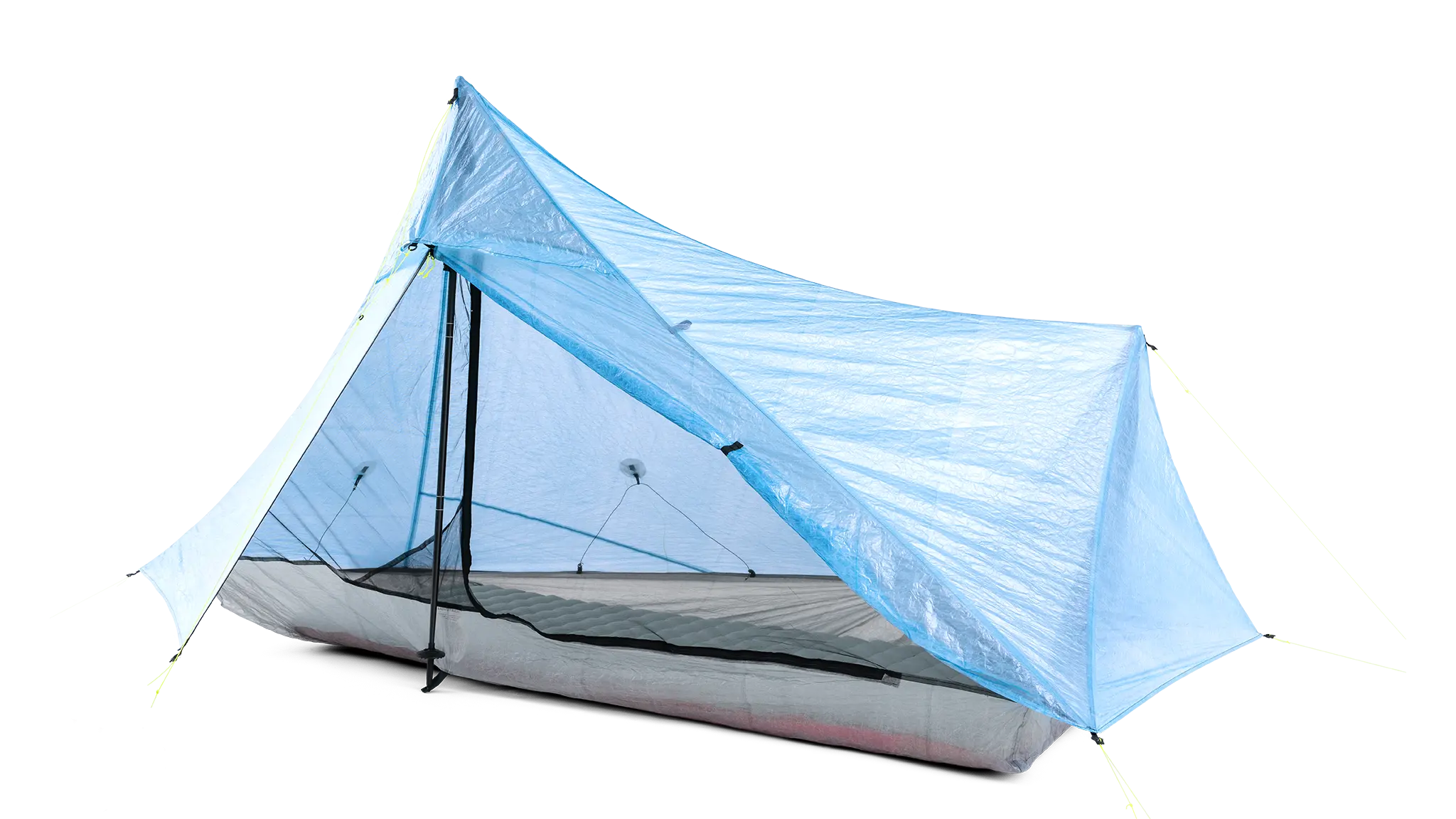
For solo hikers who are looking for the lightest fully enclosed shelter money can buy, this DCF tent from Zpacks is the one. The tent itself weighs a scant 13 ounces, and with the minimum six stakes required for pitching that number bumps up to about 15 ounces, give or take depending on the type of stake you choose.
Not only is the DCF extremely lightweight, but it’s also durable enough for an entire thru-hike while keeping a lucky hiker well-protected in even the worst conditions. Furthermore, even though DCF is bulkier than other fabrics, the Pivot is tiny when packed and easily carried in an external backpack pocket.
While the tent’s overall footprint is small, making it easy to squeeze into more cramped tent pads, the unique asymmetrical trekking pole configuration maximizes head and foot room.
Extreme ultralighters on the western trails might not need the included bug protection of the Pivot Solo and so might choose to go even lighter with a tarp or a floorless design like the Gossamer Gear DCF Whisper instead. But for anyone who doesn’t want to worry about questionable conditions, this tent has you covered. Easy setup, easy protection, every time.
If you are a taller hiker, the Zpacks Altaplex weighs almost the same but has a longer floor and slightly more head room at the peak. If you want more room or have a hiking partner, the Zpacks Duplex Lite is the lightest 2-person shelter (and, remarkably, the cheapest 2-person DCF shelter as well).
Features
- DCF Construction: This isn’t a perfect material, but it offers a lot of benefits to hikers who can afford it. In addition to its remarkably low weight, DCF is super strong and doesn’t sag or absorb water when damp. This makes a taught pitch more achievable and drying easier.
- Single Door and Vestibule: With only one person to accommodate, the Pivot Solo has just a single door and vestibule. This makes it more difficult to create a cross-breeze on warm nights, but the wide opening still allows ample access and mega views, provided it is oriented properly. Sunrise or sunset?
- Asymmetrical Shape: This tent’s offset design with two trekking poles of different heights creates steep walls and more functional headroom. There’s also enough room under both peaks that you can sleep with your head at either end.
Nobody’s Perfect
The complex geometry of the Pivot Solo requires a steeper than average learning curve and a lot of stakes to completely tension. Six stakes will get it standing, but you can use up to eight. Use all those stakes and the tent will be bomb-proof, but that’s a lot of fiddling.
Our reviewer, James, also noted that the bathtub floor at the door tends to sag when the door is unzipped and let dirt and debris inside the tent.
Finally, DCF single-wall tents all cost a lot and suffer from condensation issues. At $649, the Plex Solo Lite isn’t overpriced, it’s just a lot of money. Budget-conscious hikers can find a much cheaper tent, albeit heavier and less awesome.
Read our review of the Zpacks Pivot Solo.
3F UL Lanshan (Best Budget UL Tent)

Best backpacking tents for thru-hiking: 3F UL Lanshan
Category: Double-wall trekking pole tent
Primary material: 15d PU-coated nylon
Interior space: 22.2 square feet
Why We Love This Tent
At well under $150, the Lanshan 1 is the most affordable tent on the market right now while staying under 2 pounds for a functional setup. The Lanshan is made of polyurethane-coated nylon with the storm flap reinforced by UHMWPE-gridstop.
Where this tent shines, besides the price, is in versatility. Most thru-hikers will be OK with the standard three-season version of this tent, but there’s also a four-season version of the Lanshan for winter adventurers. Likewise, those who don’t mind spending a few extra dollars to save three ounces can upgrade to the $180, single-wall Lanshan Pro.
Unlike many UL manufacturers, 3F UL ships all over the world, a boon for international hikers.
At least one of The Trek’s bloggers has extensive experience with the Lanshan, having used both the one- and two-person models. She used the Lanshan 2 on the entirety of the PCT and plans to take the same tent on her upcoming AT thru. This is not one of the more popular models on the AT according to our surveys, but that may change as the overall cost of being alive continues to rise.
Features
- Single or double wall: The Lanshan Pro is lightest as a single-wall tent with a roof vent to reduce condensation. But if you prefer the ventilation and stargaze-ability of two walls, the Lanshan 1 is your best bet. You decide.
- Reinforced guyouts: All guyout points are reinforced with UHMWPE-gridstop to prevent tears.
- Fits tall hikers: The tent has a 90-inch interior length, enough to accommodate taller people comfortably.
Nobody’s Perfect
The Lanshan doesn’t come seam-sealed; you can do it yourself or pay $35 to have 3F UL do it. The tent body is also made of silnylon at a time when many manufacturers are switching to silpoly, which doesn’t sag and stretch when wet the way silnylon does. 3F UL is headquartered in China, which may be a downside for US consumers who aim to shop closer to home.
Finally, the bathtub floor is only 4.3 inches high, which is … not much. For comparison, many tents offer six to eight inches of depth in the bathtub. You’ll be vulnerable to splashback in this shallow tent.
MSR Freelite 1 (Lightest “Traditional” Tent)
Best backpacking tents for thru-hiking: MSR Freelite
Category: Double-wall semi-freestanding tent
Interior space: 20 square feet
Why We Love This Tent
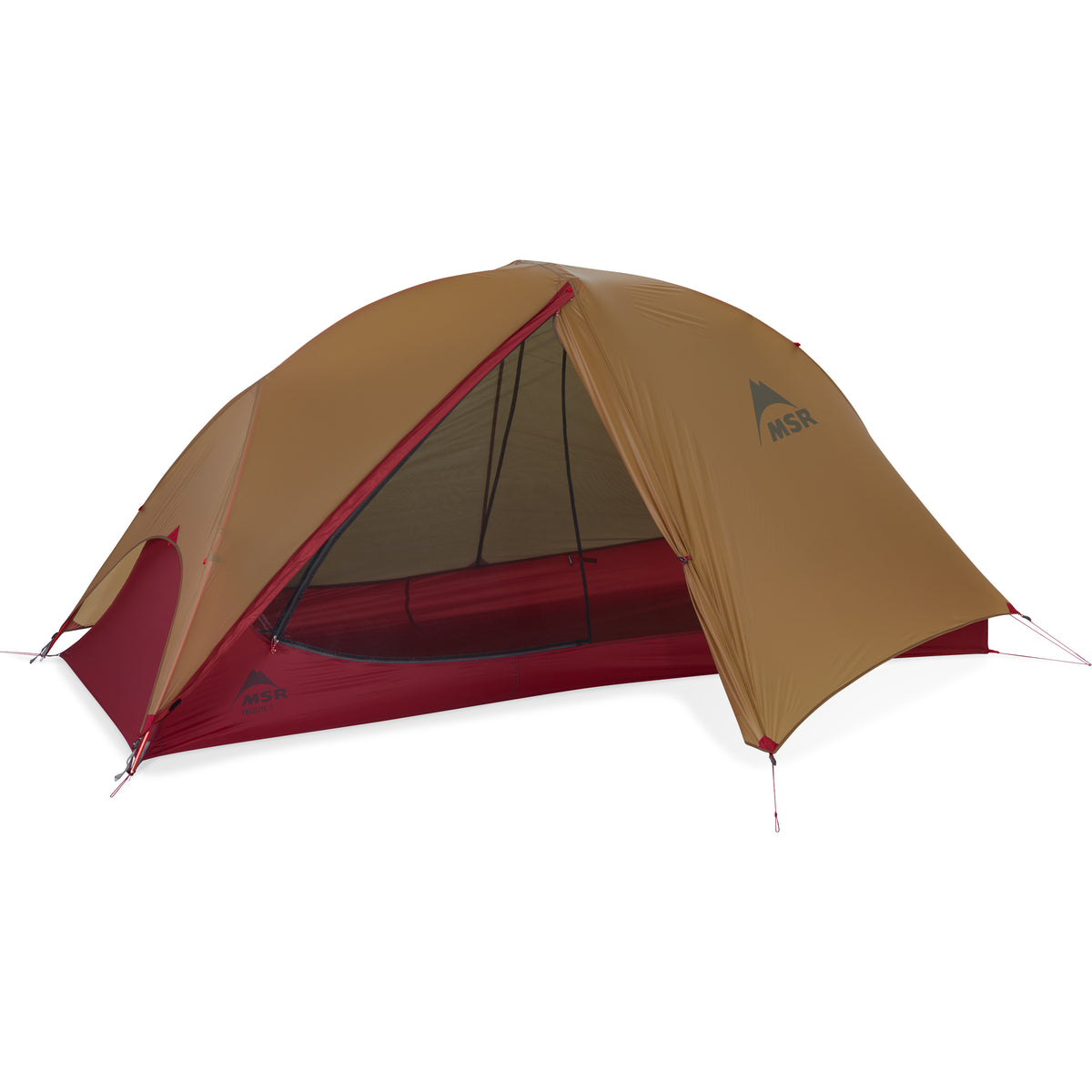
MSR is one of the OGs in the world of backpacking tents. We have recommended the brand’s flagship, fully freestanding Hubba Hubba model in the past. The Freelite is basically the Hubba Hubba but somewhat lighter due to being only semi-freestanding: you have to stake out the two back corners to give the tent full structure.
Despite that, it still boasts MSR’s durable, reliable build quality and ease of use. It’s been a while since we reviewed the MSR Freelite and the tent has seen some upgrades in the meantime, but our reviewer back in 2021 noted the ease of setting this tent up compared to pretty much any trekking pole tent, and that still holds true today.
Double-wall tents like the Freelite can be pitched without the rainfly for maximum ventilation and stargazing on clear nights. And when the fly is on, the extra level of mesh between you and the waterproof material will help keep condensation off of you and your gear in the mornings — probably one of the biggest advantages of double-wall designs and a primary reason hikers continue to choose this design despite the weight penalty.
If you want the advantages of double-wall, mostly freestanding construction but are also weight-conscious, the MSR Freelite 1 is the lightest option available to you right now.
Features
- DAC NFL tent pole: These aluminum poles are lightweight and durable. All poles, including the horizontal spreader bar across the top (for increased liveable room inside), are fully integrated with each other so you won’t lose track of one part.
- Seam taped: You won’t have to worry about separately seam-sealing this tent as all seams are fully taped to prevent leakage. The Freelite uses a more environmentally responsible PFAS-free waterproof coating.
- Cable ports in pockets: So you can keep your gear organized while charging or listening to music through your headphones.
Nobody’s Perfect
The Freelite is not a roomy tent, especially in terms of headroom. While the spreader bar across the top does help, the peak height is still less than 40 inches. It does have a reasonably large vestibule (eight square feet), so you can store your gear outside pretty easily and free up interior space.
While the Freelite’s 26-ounce minimum trail weight is pretty good, you can, of course, go a lot lighter by opting for either a single-wall or a fully non-freestanding setup.
Bonfus Solus 1 (Cheapest DCF Tent)

Best backpacking tents for thru-hiking: Bonfus Solus 1
Category: Single-wall trekking pole tent
Italy-based Bonfus is still a pretty obscure brand in the US (and full disclosure, we have not tested this model ourselves), but it does ship to the US — and even with the cost of shipping, the one-person Bonfus Solus is the cheapest DCF tent in our comparison, followed closely by the $599 Zpacks Plex Solo. Meanwhile, the Zpacks Duplex Lite is the cheapest DCF tent among our two-person models.
For any of our readers who are not US-based, steep import duties can make DCF tents from American manufacturers cost-prohibitive. The Solus 1 will be especially worth a look for y’all.
The Solus uses two trekking poles set at different heights to maximize wind resistance and also features 14 guyout points and a lower-to-the-ground pitch than typical DCF shelters, which the brand says makes it more stormworthy.
Again, we don’t have firsthand experience with this tent so we’re just going by what we can read online. If you have used the Bonfus Solus, hit us up with your thoughts in the comments section, please.
Features
- Stormworthy: As a company that was originally based in Norway, Bonfus designed the Solus for Nordic conditions with a low pitch, sloped ridgeline, and numerous guyout points to maximize wind resistance.
- Reinforced with Ultra100x: Laser-cut Ultra 100X is used to reinforce all mounting points and high-stress areas.
Nobody’s Perfect
One of the primary complaints we’re seeing online is that the tent feels a bit cramped inside. But to be honest, one of the biggest drawbacks of this tent for a cautious buyer will be the lack of firsthand user feedback — there are virtually no reviews available online. Bonfus as a company reviews well in the US, but you’ll be flying somewhat blind purchasing this specific tent, as far as we can see.
TarpTent Rainbow / Double Rainbow (Best Single-Wall Freestanding)

Best backpacking tents for thru-hiking: TarpTent Rainbow/Double Rainbow
Category: Single-wall free/semi-freestanding tent
Primary material: Silnylon, silpoly
Interior space: 22 square feet (1p) | 30.6 square feet (2p)
Why We Love This Tent
The single-wall, freestanding tent is one of the rarest combinations of features possible in the world of backpacking tents. There are only a handful of options: the Zpacks Free Zip 2 and the HMG CrossPeak 2, both of which are DCF and thus quite expensive, and the TarpTent Rainbow/Double Rainbow series.
While the “Li” version of these tents is made with DCF and is priced similarly to the Free Zip and CrossPeak, the standard versions are made with humble silnylon and silpoly and come in at a much more reasonable cost.
These tents are actually designed to be only semi-freestanding, which helps them keep their weight down despite using heavier fabrics, but the clever use of two trekking poles laid flat along the short ends of the tent to give them structure horizontally makes them freestanding with no additional stakes.
Features
- Simple pole architecture: This tent gets its structure from a single rainbow-shaped pole combined with a short cross-strut in the middle. To make it fully freestanding, your trekking poles can be added horizontally at either end to tension the corners of the tent.
- Optional condensation liner: Can be clipped into the interior of the tent to provide an extra level of separation between you and your condensation-soaked walls.
- Storm doors: Both sides open and can be converted to awning mode with trekking poles. Magnetic toggles easily hold the doors out of the way when not in use.
Nobody’s Perfect
Going into full freestanding mode requires the use of trekking poles and additional fiddling; it’s not straightforward like it would be with a traditional freestanding tent, where there’s zero guesswork involved. You also need trekking poles that are at least 140cm long to make it work, or else you’ll need to purchase TarpTent’s tip extenders.
LightHeart Gear SoLong (Best Tent for Tall People)
Best backpacking tents for thru-hiking: LightHeart Gear SoLong
Category: Hybrid double-wall trekking pole tent
Primary material: Silnylon
Interior space: 30 square feet
Why We Love This Tent
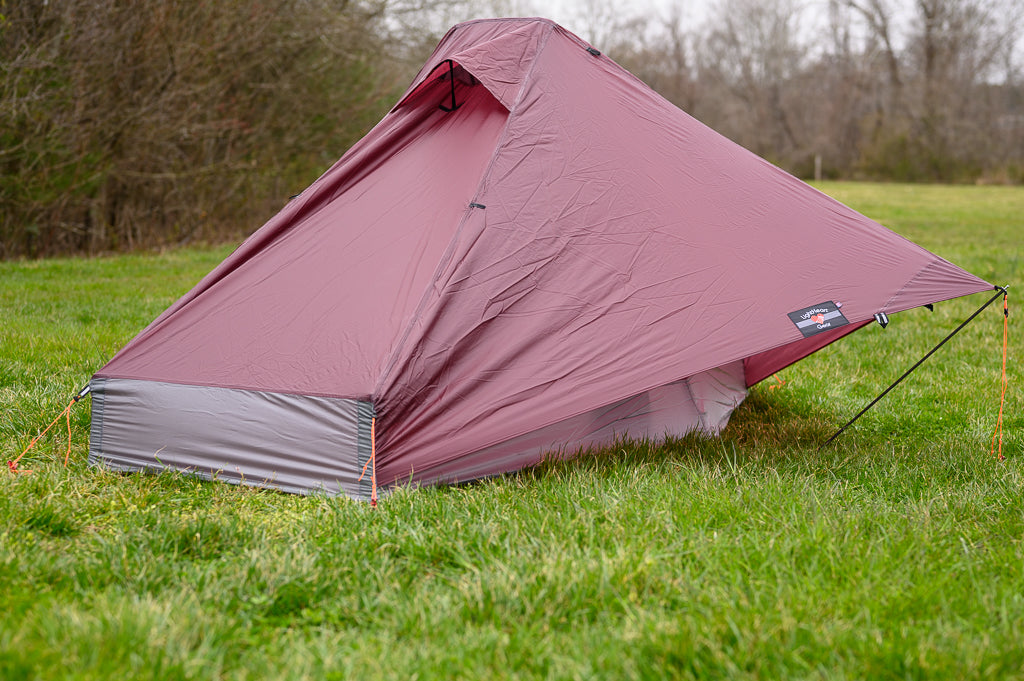
The floor of the SoLong is 100 inches long. LightHeart says it’s SO LONG (100 inches, to be precise) that hikers taller than six-foot-eight will still sleep comfortably in it. It’s nice that the Solong has an awning vestibule on one side: perfect if you want more airflow or to enjoy the view from bed without sacrificing overhead protection. The tent likewise has two generous peak vents to cut down on condensation. We also love LightHeart in general as a small, North Carolina-based, woman- and veteran-owned company.
Features
- Eight-inch bathtub floor: Much taller than average, great for preventing splashback.
- Awning fly: One of the vestibules can be propped up with a carbon fiber pole to create an awning.
- Lateral ridge pole: Creates more headroom and lateral stability during windstorms.
- Linelocs: For easy precision tensioning of all guyouts.
- 30D ripstop silnylon: Both fly and bathtub floor.
- Double-stitched seams: For added durability.
Nobody’s Perfect
The awning requires a carbon fiber pole to set up, which is sold separately and not factored into the base weight or price of the tent. I suppose you could also use a short trekking pole to set it up if you have a third one handy (the tent itself requires two).
Not necessarily a true con, but it’s worth noting that while the SoLong is extra long, it’s not extra tall: the peak is 45 inches tall, which is about typical for a backpacking tent.
Best Tent for Tall People Honorable Mention:
The Best Tents for Thru-Hiking for Thru-Hikers: FAQs
Do I need a freestanding tent for backpacking?

The Zpacks Duplex is a classic example of a trekking pole shelter. Photo courtesy Owen Eigenbrot.
Both freestanding tents and non-freestanding trekking pole setups are popular for thru-hiking. Trekking pole tents are lighter and pack up smaller than freestanding ones, but they require more of a learning curve to set up properly.
Traditional tents have dedicated poles to give the shelter structure and body. These tents will hold their shape without the need for stakes, so they’re referred to as freestanding. (Note: even for freestanding tents, one or two stakes are typically required for the vestibule(s), and the use of additional stakes will improve your tent’s stormworthiness). The MSR Hubba Hubba is a good example of a true freestanding tent. These shelters are simple to pitch, but the poles add both weight and bulk and are always at risk of bending or snapping.
Trekking pole tents are instead supported, obviously, by the user’s trekking poles. These tents are non-freestanding because they require stakes to hold their shape. The Zpacks Duplex is a good example. Trekking pole tents are much harder to set up than their freestanding brethren, but by ditching the tent poles, you’ll save a massive amount of weight and space in your pack. If you’re camping on bedrock, snow, or another medium that won’t readily take stakes, you’re in trouble. Deadman anchors, large rocks, tree trunks, and other objects can be used in place of stakes in a pinch.
Some tents, like the Big Agnes Tiger Wall, are semi-freestanding: they have dedicated poles that mostly support the tent, but they require stakes to give the footbox structure. This hybrid approach helps shave some ounces by simplifying the tent pole architecture while retaining the easy setup advantage of true freestanding tents.

The Zpacks Free Duo is a rare example of a single-wall, DCF, freestanding tent. Photo courtesy Owen Eigenbrot.
Is a 1-person or a 2-person tent better for thru-hiking?
It’s largely a matter of personal preference, but according to our AT thru-hiker survey, one-person shelters were the most popular in 2025.
That said, many solo hikers do choose to size up to a two-person tent for enhanced livability, Most 1p shelters take that designation literally: they’re just wide enough to accommodate a regular-sized human laying on their back with a few inches of space on either side, and that’s it. This makes the tent as light as possible, of course, but can undoubtedly feel cramped to some hikers.
Since your tent will be your home for several months on the trail, many solo thru-hikers choose to upgrade to a 2p tent so they can have a bit more room to spread out. The larger version of the tent usually weighs a few ounces more and is more expensive, but the tradeoff is worth it for many hikers. Similarly, couples often go with a 3p tent.
Should I use a single-wall or a double-wall tent for backpacking?
Single-wall tents, like the Zpacks Duplex, shave weight by eliminating the separate bug mesh. Single-wall designs are lighter and faster to set up once you get the hang of it. There’s no separate rainfly to fuss with because the whole tent is waterproof: the rainfly is the tent. This also makes it way easier and drier to set up and take down camp in wet weather.
On the other hand, they’re often poorly ventilated compared to their double-wall friends (though some single-walls do better than others). Condensation is one of the biggest issues with single-wall shelters, though double-walls aren’t immune to this issue either — the mesh just keeps the condensation from the rainfly at a slight distance from you and your stuff. Good campsite selection can help to mitigate this.
READ NEXT – 9 Tips To Help You Find a Perfect Campsite Every Time
Most single-walled tents are also trekking pole setups, while most double-walled designs are freestanding, but this isn’t set in stone. Double-wall trekking pole shelters like the Durston X-Mid and the Six Moon Designs Haven combo do exist. As do single-wall freestanding tents like the Zpacks Free Zip. Which style/combination of styles makes for the best backpacking tents for thru-hikers? It’s largely a matter of personal preference.
What features should I look for in the best backpacking tents?

The Big Agnes Tiger Wall has a good blend of space and weight savings, plus it has an idiot-proof pitch. Photo via Maggie Slepian.
Livable Space: A one-person tent is fine for ounce counters, but some hikers will appreciate a lightweight two-person tent for just themselves. It will allow you to spread out, stay away from the walls, and keep your gear inside with you. For two people on a thru-hike, some two-person models will work fine, but often pairs of hikers size up after a few hundred miles of bumping into each other when sitting up or changing. Consider interior space, vestibule space, and peak height.
General Conveniences: Consider that this is your home for months at a time. What features do you want in your portable house? Two doors and two vestibules for multi-person tents will alleviate any crawling over each other during midnight cathole excursions. Interior side pockets are nice for small items. The best backpacking tents balance functionality and weight.
Ease of Pitch: Test your setup before you leave. The last thing you want to be doing after an excruciating day on trail is fighting with your guylines to get the fly taut before the rain comes in. Or pitching your tent in the mud just to have it collapse on you a few hours later.
Weight-to-Space Ratio: Sure, you have 31 square feet of space, but your tent also weighs six pounds. Is this worth it? It might be, and that’s OK. On the other hand, you could prefer a 14-ounce, single-person trekking pole shelter and forgo the headroom. That’s fine too. More than likely you’ll wind up somewhere in the middle — many of the listed shelters have 27-29 square feet of interior space and weigh 2 – 3 pounds.
How much should a backpacking tent weigh?
The lightest tents on the market only weigh just over one pound, but these models are generally more expensive and harder to set up. In general, you will sacrifice some comfort and convenience to get a lighter tent.
A typical one-person tent will weigh somewhere around 1.5 pounds, and you shouldn’t need to go much over 2 pounds. Two-person tents typically weigh closer to 2.5 pound and you shouldn’t need to go much over 3 pounds. If you’re getting a 2- or 3-person tent to share with another hiker, this will reduce the weight either one of you has to carry.
What’s the difference between “packaged weight” and “trail weight?”
The packaged weight is the weight of the tent plus everything that comes with it, including instructions, repair kits, stuff sacks, extra stakes, extra guyline … you get the picture.
In contrast, the trail weight (or minimum trail weight) is the combined weight of the tent body, rainfly, and poles (if applicable). It does not include the weight of the stakes, footprint, or any extra guyline you might choose to carry.
As you can see, both numbers give an incomplete idea of the weight of your tent. This true weight will likely be somewhere in between the packaged and trail weights. Some cottage brands, like Zpacks and Gossamer Gear, will give you an itemized breakdown of the individual weights of each tent component down to the smallest stuff sack, adding much-needed clarity to the tent-buying experience.
Do I really need a footprint with my tent?
Yes and no. People have successfully camped footprint-free in all sorts of tents over the years. Still, the footprint (aka ground cloth) will prolong the life of your tent by protecting the floor from moisture and abrasive, puncture-making stuff like rocks, sand, and twigs.
Annoyingly, most tent purchases don’t include the footprint. After shelling out hundreds of dollars for the tent, you then have to fork over an additional $50 or $60 (plus several ounces of base weight) for the ground cloth. Meh.
As an alternative, you can make or buy an inexpensive, lightweight Tyvek or Polycro ground cloth. Some tents, like the Tarptent Protrail, have rugged, puncture-resistant bathtub floors and don’t require a separate footprint.

The Lunar Solo doesn’t require a separate footprint (though it’s probably still a good idea on abrasive media like sand).
Which backpacking tent material is best for thru-hiking?
Silnylon: Most traditional tents are made of silicone-coated ripstop nylon, or silnylon. Silnylon is popular because it’s inexpensive, waterproof, reasonably puncture-resistant, reasonably lightweight, and packs up small. It has a tendency to stretch out and sag when wet, making it tough to get a taut pitch. UV exposure also weakens it quickly.
Silnylon is available in different weights, which are measured in units of deniers (d). The larger the number, the tougher (and heavier) the material. The ultralight Big Agnes Tiger Wall uses thin 15d silnylon, the SMD Lunar Solo uses 20d, and the burlier MSR Hubba Hubba uses 30d. A ripstop nylon backpack, in contrast, might use 500d silnylon.
Silpoly: Silicone-coated polyester isn’t as strong as silnylon when new, but a growing school of thought says silpoly’s superior UV resistance makes it more durable in the long run. It also won’t sag when wet the way silnylon does. Silpoly is growing more and more common in the UL tent world as the fabric technology continues to improve. Six Moon Designs, Durston, and TarpTent have all embraced it over silnylon.
DCF: DCF (Dyneema Composite Fabric) is the cutting edge of ultralight fabrics. Originally designed for use in sailboats, DCF is an extremely lightweight and strong nonwoven/laminated fabric and the darling of the cottage gear trade. It’s completely waterproof and resistant to both tears and stretching, though it can still be punctured fairly easily. It’s easy to repair with a simple patch job, though. It also won’t sag or absorb water when wet.

The DCF One is Gossamer Gear’s update on the original silnylon version of The One. Photo courtesy Carl Stanfield.
Do I need to seam seal my tent?
Depends on the brand. Most big brand tents — Big Agnes, REI, etc. — have factory-taped seams and don’t require initial seam sealing. The factory treatment can wear out after extensive use, so you’ll eventually have to reseal them. Some cottage industry tents, like the Six Moon Designs Lunar Solo, don’t come seam-sealed to keep the price lower. You can pay a little extra for seam sealing service or save money and do it yourself.
Fortunately, seam sealer is widely available at camping and hardware stores and is easy to use. Just set up your tent (in a dry, non-dusty, non-windy place), ensure that the seams are clean and dry, and paint seam sealer over all seams that don’t adjoin mesh paneling. Leave the tent set up for several hours until the sealant has dried completely.
Backpacking Tent Alternatives
I wrestled with the possibility of including some fun non-tents and pseudo-tents this year, like the Gossamer Gear DCF Whisper (basically a floor-less tent for less than 10 ounces) or the Six Moon Designs Gatewood Cape (11-ounce tarp that doubles as a rain poncho). I decided against it, but I do want to note that tents aren’t your only options.
Many ultralight enthusiasts favor lighter options, like tarps, which provide weather protection but no bug protection, or bivy sacks, which provide full protection but are rather claustrophobic. Hammocks aren’t necessarily lighter than tents and are heavier in many cases, but some hikers find them more comfortable. A hammock is a great option when you’re hiking someplace with lots of trees. Meanwhile, tarps are awesome when you anticipate fairly stable weather and not too many bugs.
Why should you trust us?
Because we’re so incredibly intelligent, of course! Attractive, too. (Not to mention extremely humble).
But if that isn’t enough to impress you, there’s also the fact that everyone who contributed to this article is an experienced thru-hiker with thousands of on-trail miles under their belt. We’re gear nerds who love putting our equipment to the test on trails long and short, and we’ve tested dozens of tents in pursuit of a better night’s sleep in the backcountry.
Moreover, we survey hundreds of Appalachian Trail thru-hikers every year to learn about their behaviors, demographics, and — you guessed it — gear preferences. That means our picks for the best backpacking tents aren’t just our opinions. This list is based on years of feedback from the thru-hiking community.
Check out AT hikers’ picks for the best backpacking tents from the 2023, 2024, and 2025 thru-hiker surveys or browse surveys from all years here.

Competence and backpacking proficiency personified.
Ultimate 1-Person Backpacking Tents Comparison
| Brand | Model | MSRP (USD) | Min. Trail Weight | Packaged Weight | No. Stakes Required | Primary Material | Floor Space (Sq. Ft.) | No. Doors/Vestibules | Vestibule Space (Sq. Ft.) | Shelter Type | Single/Double Wall |
|---|---|---|---|---|---|---|---|---|---|---|---|
| 3F UL | Lanshan 1 | 137 | 1 lb 15.2 oz | 2 lb 0.7 oz | 6-8 (9 incl) | 15d PU-coated nylon | 22.2 | 1 | 8.5 | Non-freestanding | Double |
| 3F UL | Lanshan 1 Pro | 169 | 1 lb 12.3 oz | 1 lb 13.9 oz | 6-8 (9 incl) | Silnylon, silpoly | 22.2 | 1 | 8.5 | Non-freestanding | Single |
| Big Agnes | Copper Spur HV UL1 | 499 | 2 lb | 2 lb 6 oz | 0-8 (7 incl) | 15-20d ripstop nylon | 20 | 1 | 9 | Freestanding | Double |
| Big Agnes | Fly Creek UL 1 | 419 | 1 lb 11 oz | 2 lb | 5-10 (11 incl) | 15d ripstop nylon | 20 | 1 | 5 | Semi-freestanding | Double |
| Big Agnes | Tiger Wall UL1 | 469 | 1 lb 13 oz | 2 lb 2 oz | 6-8 (9 incl) | 15d ripstop nylon | 19 | 1 | 8 | Semi-freestanding | Double |
| Bonfus | Solus 1 | 559 | 1 lb 4.2 oz | 1 lb 2.2 oz | 6-10 (not incl) | DCF | ? | 1 | ? | Non-freestanding | Single |
| Durston Gear | X-Dome 1+ | 349 | 2 lb 2.7 oz | 2 lb 6.9 oz | 0-8 (incl) | Silpoly | 23.5 | 1 | 8 | Freestanding | Double |
| Durston Gear | X-Mid 1 | 269 | 1 lb 10.4 oz | 1 lb 13 oz | 4-8 (incl) | Silpoly | 21.3 | 2 | 10.2 + 10.2 | Non-freestanding | Single |
| Durston Gear | X-Mid Pro 1 | 599-689 | 1 lb 0.5 oz | 15.8 oz - 1 lb 1.5 oz | 4-8 (optionally incl) | DCF, silnylon (optional) | 20 | 2 | 11 + 11 | Non-freestanding | Single |
| Gossamer Gear | The One | 255 | 1 lb 4.4 oz | 1 lb 6.3 oz | 6 (incl) | Silnylon | 15.75 | 2 | Non-freestanding | Single | |
| Hyperlite Mountain Gear | Mid 1 | 675 | 1 lb 2.1 oz | 1 lb | 6-10 (not incl) | DCF | 21 | 1 | Non-freestanding | Single | |
| Hyperlite Mountain Gear | UltaMid 1 (+ full insert) | 725 | 1 lb 4.7 oz | 1 lb 2.6 oz | 6-11 (not incl) | DCF | 22.2 | 1 | Non-freestanding | Double | |
| Lightheart Gear | Firefly | 315 | 1 lb 15.5 oz | 1 lb 13 oz | 7 (not incl) | Silnylon | 26.8 | 1 | 3.75 | Non-freestanding | Hybrid Double |
| Mountain Laurel Designs | Solomid XL (+ InnerNet) | 455-805 | 1 lb 9.4 - 1 lb 12.4 oz | 1 lb 8 oz - 1 lb 11 oz | 4-8 (optionally incl) | Silpoly, DCF, Silnylon | 20 | 1 | Non-freestanding | Double | |
| MSR | Freelite 1 | 439 | 1 lb 10 oz | 1 lb 15 oz | 7 (incl) | 15d sil/PU-coated nylon | 20 | 1 | 8 | Semi-freestanding | Double |
| NEMO | Hornet Elite Osmo 1 | 599 | 1 lb 7 oz | 1 lb 13 oz | 6 (incl) | OSMO ripstop polyester/nylon blend | 21.8 | 1 | 6.9 | Semi-freestanding | Double |
| NEMO | Hornet Osmo 1 | 459 | 1 lb 13 oz | 2 lb 4 oz | 6 (incl) | OSMO ripstop polyester/nylon blend | 20.6 | 1 | 7.3 | Semi-freestanding | Double |
| NEMO | Tracker Osmo 1 | 429 | 2 lb 2 oz | 2 lb 8 oz | 6 (incl) | OSMO ripstop polyester/nylon blend | 23 | 1 | 7.5 | Semi-freestanding | Double |
| REI | Flash Air 1 | 329 | 1 lb 11.2 oz | 2 lb 5 oz | 6 (incl) | Ripstop nylon | 18.9 | 1 | 8.4 | Non-freestanding | Single |
| Six Moon Designs | Lunar Orbiter | 425 | 2 lb 8 oz | 2 lb 12 oz | 0-6 (incl) | Silpoly | 21.5 | 2 | 8 + 8 | Freestanding | Single |
| Six Moon Designs | Lunar Solo | 260 | 1 lb 12.1 oz | 1 lb 10 oz | 6 (not incl) | Silpoly | 26.25 | 1 | 8.5 | Non-freestanding | Single |
| Six Moon Designs | Skyscape Scout | 160 | 2 lb 10.1 oz | 2 lb 8 oz | 6 (not incl) | Polyester | 23 | 2 | 8 + 8 | Non-freestanding | Hybrid Double |
| Six Moon Designs | Skyscape Trekker | 275 | 1 lb 14.1 oz | 1 lb 12 oz | 6 (not incl) | Silpoly | 23 | 2 | 8 + 8 | Non-freestanding | Hybrid Double |
| Slingfin | Portal 1 | 580 | 2 lb 8 oz | 2 lb 14.5 oz | 0-10 (incl) | Silnylon | 19.25 | 1 | 9.8 | Freestanding | Double |
| Tarptent | Dipole 1 DW | 389 | 2 lb 1.3 oz | 2 lb 2.1 oz | 4 (incl) | Silnylon + silpoly | Roughly 21 | 2 | Non-freestanding | Single | |
| Tarptent | Dipole 1 Li | 699-779 | 1 lb 9.3 - 1 lb 9.9 oz | 1 lb 9.9 - 1 lb 10.5 oz | 4 (incl) | DCF (optional nylon floor) | 18.67 | 2 | 9.58 + 9.58 | Non-freestanding | Single |
| Tarptent | Moment DW | 339 | 2 lb 4.8 oz | 2 lb 3.9 oz | 2 (incl) | Silnylon | 24.5 | 2 | Semi-freestanding | Double | |
| Tarptent | Moment DW Li (mesh interior) | 669 | 1 lb 12 oz | 1 lb 12.7 oz | 2 (incl) | DCF + silnylon | 19.25 | 2 | Semi-freestanding | Double | |
| Tarptent | Notch | 329 | 1 lb 12 oz | 1 lb 12.9 oz | 4 (incl) | Silnylon + silpoly | 15.75 | 2 | 8 + 8 | Non-freestanding | Double |
| Tarptent | Notch Li | 649-699 | 1 lb 5.7 - 1 lb 6.7 oz | 1 lb 6.5 - 1 lb 7.5 oz | 4 (incl) | DCF (optional nylon floor) | 15.75 | 2 | 8 + 8 | Non-freestanding | Double |
| Tarptent | Protrail | 239 | 1 lb 7.3 oz | 1 lb 8 oz | 4 (incl) | Silnylon + silpoly | 21 | 1 | 10 | Non-freestanding | Single |
| Tarptent | Rainbow | 279 - 309 | 1 lb 14 oz | 2 lb 1.5 oz | 0-6 (incl) | Silnylon + silpoly | 22 | 1 | Roughly 8.3 | Freestanding (optional) | Single |
| Tarptent | Rainbow Li | 699 | 1 lb 7.4 oz | 1 lb 10.7 oz | 0-6 (incl) | DCF + silnylon | 22 | 1 | 8.3 | Freestanding (optional) | Single |
| Tarptent | Stratospire 1 | 349 | 2 lb 3.6 oz | 2 lb 4.5 oz | 6 (incl) | Silnylon + silpoly | 19.1 | 2 | 12.8 + 12.8 | Non-freestanding | Double |
| Zpacks | Altaplex | 669 | 15.3 | 13.2 | 6-10 (not incl) | DCF | 25 | 1 | 8.3 | Non-freestanding | Single |
| Zpacks | Pivot Solo | 649 | 15.2 | 13.1 | 6-8 (not incl) | DCF | 21 | 1 | 7 | Non-freestanding | Single |
| Zpacks | Plex Solo | 599 | 1 lb 0.6 oz | 14.5 | 6-10 (not incl) | DCF | 20.6 | 1 | 6.4 | Non-freestanding | Single |
Ultimate 2-Person Backpacking Tents Comparison
| Brand | Model | MSRP (USD) | Min. Trail Weight | Packaged Weight | No. Stakes Required | Primary Materials | Floor space | Number of doors/vestibules | Vest area | Freestanding? | Single/Double Wall |
|---|---|---|---|---|---|---|---|---|---|---|---|
| 3F UL | Lanshan 2 | 156 | 2 lb 8.6 oz | 2 lb 10.6 oz | 6-10 (8 incl) | Sil/PU- coated nylon | 26 | 2 | 8.5 + 8.5 | Non-freestanding | Double |
| 3F UL | Lanshan 2 Pro | 190 | 2 lb 2.3 - 2 lb 3.2 oz | 2 lb 3.6 - 2 lb 4.5 oz | 6-10 (8 incl) | Silnylon or silpoly | 29.7 | 2 | 8.5 + 8.5 | Non-freestanding | Single |
| Big Agnes | C-Bar 2 | 299 | 3 lb 11 oz | 4 lb 2 oz | 0-8 (incl) | PU-coated polyester taffeta | 28 | 1 | 7 | Freestanding | Double |
| Big Agnes | Copper Spur HV UL2 | 600 | 2 lb 10 oz | 3 lb | 0-8 (incl) | 15-20d ripstop nylon | 29 | 2 | 9+9 | Freestanding | Double |
| Big Agnes | Crag Lake SL2 | 349 | 3 lb 12 oz | 4 lb 4 oz | 0-8 (10 incl) | PU-coated ripstop nylon | 28 | 2 | 9 + 9 | Freestanding | Double |
| Big Agnes | Fly Creek UL2 | 450 | 1 lb 14 oz | 2 lb 45 oz | 5-10 (11 incl) | 15d ripstop nylon | 28 | 1 | 8 | Semi-freestanding | Double |
| Big Agnes | Salt Creek SL2 | 349 | 3 lb 11 | 4 lb 1 oz | 0-8 (incl) | PU-coated ripstop polyester | 28 | 2 | 10 + 10 | Freestanding | Double |
| Big Agnes | Tiger Wall 2 Platinum | 649 | 1 lb 15 oz | 2 lb 3 oz | 6-8 (8 incl) | 7d ripstop nylon | 28 | 2 | 8 + 8 | Semi-freestanding | Double |
| Big Agnes | Tiger Wall UL2 | 500 | 2 lb 3 oz | 2 lb 8 oz | 6-8 (9 incl) | 15d ripstop nylon | 28 | 2 | 8+8 | Semi-freestanding | Double |
| Bonfus | Bonfus Duos 2 | 739 | 1 lb 9.9 oz | 1 lb 7.8 oz | min 6 (not incl) | DCF | 34.4 | 2 | Non-freestanding | Single | |
| Durston Gear | X-Dome 2 | 499 | 2 lb 12 oz | 3 lb 1.5 oz | 0-6 (8 incl) | Silpoly | 32 | 2 | 9 + 9 | Freestanding | Double |
| Durston Gear | X-Mid 2 | 319.0 | 2 lb | 2 lb 4 oz | 4-8 (8 incl) | Sil/PE polyester | 33.2 | 2 | 11.5 + 11.5 | Non-freestanding | Single |
| Durston Gear | X-Mid Pro 2 | 639-789 | 1 lb 5.3 oz - 1 lb 7.3 oz | 1 lb 6.7 - 1 lb 8.8 oz | 6 (8 incl) | DCF/optional silnylon floor | 28.75 | 2 | 11.6 + 11.6 | Non-freestanding | Single |
| Gossamer Gear | The Two | 320 | 1 lb 10.4 oz | 1 lb 12. oz | 6-8 (incl) | Silnylon | 26.25 | 2 | Non-freestanding | Single | |
| Hyperlite Mountain Gear | Cross Peak 2 | 950 | 2 lb 2 oz | 2 lb 2 oz | 0-8 (not incl) | DCF | 28.4 | 2 | 7.6 + 7.6 | Freestanding | Single |
| Hyperlite Mountain Gear | UltaMid2 (+ full insert) | 1150 | 3 lb 0.9 oz | 2 lb 15.1 oz | 5-8 (not incl) | DCF | 50 | 1 | Non-freestanding | Double | |
| Hyperlite Mountain Gear | Unbound 2 | 775 | 1 lb 8.8 oz | 1 lb 6 oz | 8 (not incl) | DCF | 28 | 2 | Non-freestanding | Single | |
| Lightheart Gear | Duo | 340 | 2 lb 6.8 | 2 lb 4 oz | Min 8 (not incl) | Silnylon | 38.2 | 2 | Non-freestanding | Hybrid Double | |
| Lightheart Gear | Solong | 325 | 2 lb 2.1 oz | 2 lb | 6 (not incl) | Silnylon | 30 | 2 | 5.4 + 5.4 | Non-freestanding | Hybrid Double |
| Mountain Laurel Designs | Duomid (+ InnerNet) | 485-585 | 15.5 oz | 1 lb 14 - 2 lb | 4-8 (not incl) | Silpoly, DCF, silnylon | 31.25 | ? | Non-freestanding | Double | |
| MSR | Freelite 2 | 500 | 2 lb | 2 lb 5 oz | 8 (incl) | 15d PU- and silicone-coated nylon | 29 | 2 | 7.5 + 7.5 | Semi-freestanding | Double |
| MSR | Hubba Hubba LT2 | 549.95 | 3 lb | 3 lb 6 oz | 0-8 (incl) | 20d PU- and silicone-coated nylon | 32 | 2 | 8 + 8 | Freestanding | Double |
| NEMO | Dagger Osmo 2 | 600 | 3 lb 5 oz | 3 lb 15 oz | OSMO ripstop polyester/nylon blend | 30.6 | 2 | 12.1 + 12.1 | Freestanding | Double | |
| NEMO | Dragonfly Osmo 2 | 550 | 2 lb 13 oz | 3 lb 5 oz | 0-8 (incl) | OSMO ripstop polyester/nylon blend | 29 | 2 | 8.6 + 8.6 | Freestanding | Double |
| NEMO | Hornet Elite Osmo 2 | 700 | 1 lb 11 oz | 2 lb 1 oz | 4-8 (incl) | OSMO ripstop polyester/nylon blend | 27.3 | 2 | 6.7 + 6.7 | Semi-freestanding | Double |
| NEMO | Hornet Osmo 2 | 480 | 2 lb 1 oz | 2 lb 8 oz | 8 (incl) | OSMO ripstop polyester/nylon blend | 27.5 | 2 | 7.1 | Semi-freestanding | Double |
| NEMO | Tracker Osmo 2 | 459 | 2 lb 8 oz | 2 lb 15 oz | 4-8 (incl) | OSMO ripstop polyester/nylon blend | 28.9 | 2 | 7.5 + 7.5 | Semi-freestanding | Double |
| REI | Flash Air 2 | 429 | 2 lb 2.1 oz | 2 lb 13.7 oz | 6-10 (10 incl) | Ripstop nylon | 28.7 | 2 | 10.6 + 10.6 | Non-freestanding | Single |
| REI | Half Dome SL2+ | 329.0 | 4 lb 13.3 oz | 5 lb 15.1 oz | 0-10 (10 incl) | Ripstop nylon, polyester taffeta | 31.8 | 2 | 9.17 + 9.17 | Freestanding | Double |
| Samaya | Inspire2 | 770 | 2 lb 11 oz | 3 lb 8 oz | 12 incl | 3-layer laminated proprietary nylon wpb fabric | 29.6 | 1 | Freestanding | Single | |
| Six Moon Designs | Haven | 375 | 2 lb 4.1 oz | 2 lb 2 oz | 6 (not incl) | Silnylon | 27 | 2 | Non-freestanding | Double | |
| Six Moon Designs | Lunar Duo | 395 | 2 lb 15.1 oz | 2 lb 13 oz | 6 (not incl) | Silpoly | 34 | 2 | 6 + 6 | Non-freestanding | Single |
| Six Moon Designs | Lunar Duo Outfitter | 210 | 3 lb 11.1 oz | 3 lb 9 oz | 6 (not incl) | Polyester | 34 | 2 | 6 + 6 | Non-freestanding | Single |
| Slingfin | 2Lite | 475 | 2 lb 10 oz | 2 lb 14.2 oz | 6-10 (10 incl) | Silnylon | 28.45 | 2 | 10.45 | Non-freestanding | Double |
| Slingfin | Portal 2 | 610 | 2 lb 14 oz | 3 lb 5 oz | 0-10 (10 incl) | Silnylon | 27.45 | 2 | 8.4 + 8.4 | Freestanding | Double |
| Tarptent | Dipole 2 DW | 439 | 2 lb 11.2 oz | 2 lb 12 oz | 4 (incl) | Silpoly | 33.44 | 2 | Non-freestanding | Double | |
| Tarptent | Dipole 2 Li | 799-899 | 1 lb 10.1 - 1 lb 11.4 oz | 1 lb 14 - 1 lb 15.3 oz | 4 (incl) | DCF | 32.25 | 2 | 9.5 + 9.5 | Non-freestanding | Double |
| Tarptent | Double Rainbow | 349 | 2 lb 4.2 oz | 2 lb 8.1 oz | 0-6 (6 incl) | Silpoly, silnylon | 30.6 | 2 | 8.3 + 8.3 | Freestanding (optional) | Single |
| Tarptent | Double Rainbow Li | 799 - 879 | 1 lb 11 oz (dcf floor) - 1 lb 12.15 oz (nylon) | 1 lb 14.4 oz (dcf floor) - 1 lb 15.6 oz (nylon floor) | 0-6 (6 incl) | DCF, optional nylon floor | 30.6 | 2 | 8.3 + 8.3 | Freestanding (optional) | Single |
| Tarptent | Mesospire 2 | 299 | 2 lb 8.2 oz | 2 lb 9 oz | 6 (incl) | Silpoly, silnylon | 31 | 2 | 9.6 + 9.6 | Non-freestanding | Single |
| Tarptent | Stratospire 2 | 389 | 2 lb 10.9 oz | 2 lb 11.8 oz | 6 (incl) | Silpoly, silnylon | 31 | 2 | 12.8 + 12.8 | Non-freestanding | Double |
| Tarptent | Stratospire 2 Li | 819 | 2 lb 0.8 oz | 2 lb 1.55 oz | 6 (incl) | DCF | 29.6 (wide interior) | 2 | 12.1 + 12.1 | Non-freestanding | Double |
| Tarptent | Stratospire 2 Ultra | 519 | 2 lb 7.2 oz | 2 lb 7.7 oz | 6 (incl) | Ultra | 32.7 | 2 | Non-freestanding | Double | |
| Zpacks | Duplex | 699.0 | 1 lb 4 oz | 1 lb 1.9 oz | 6-8 (not incl) | DCF | 28.1 | 2 | 8.33 + 8.33 | Non-freestanding | Single |
| Zpacks | Duplex Lite | 669.0 | 1 lb 1.7 oz | 14.9 oz | 8 (not incl) | DCF | 25 | 2 | 8.33 + 8.33 | Non-freestanding | Single |
| Zpacks | Free Zip 2 | 899 | 1 lb 15.5 oz | 1 lb 15.5 oz | 0-10 (not incl) | DCF | 26.3 | 2 | 4.15 + 4.15 | Freestanding | Single |
| Zpacks | Pivot Duo | 849 | 1 lb 5.4 oz | 1 lb 2.6 oz | 8 (not incl) | DCF | 29.2 | 2 | 8.17 + 8.17 | Non-freestanding | Single |
Original article by Maggie Slepian. Alex “GPS” Brown and Rachel Shoemaker contributed to the 2023 update of this list. Owen Eigenbrot updated for 2024. Kelly Floro updated for 2025 and 2026.
Featured image: Graphic design by Chris Helm (@chrishelmdesign).

This website contains affiliate links, which means The Trek may receive a percentage of any product or service you purchase using the links in the articles or advertisements. The buyer pays the same price as they would otherwise, and your purchase helps to support The Trek's ongoing goal to serve you quality backpacking advice and information. Thanks for your support!
To learn more, please visit the About This Site page.

Comments 56
What a wealth of options, especially if one is wealthy.
I’m reminded of advice I received over four decades ago, “Once you make your decision and purchase your tent, put away the catalogs for six months because as soon as you buy a tent, someone will come along with a better one for less money.”
Steve / pearwood
Big Agnes Scout UL2 beats all of these.
Put away the catalogues for 3-5 years, lest you’re haunted by buyer’s remorse!
IKR?! I went with a 1 person tent on clearance wit weighs over 4 pounds! Not what I would go with if making the purchase today. But it saves me money and I have emotional attachment to it now.
It’s a good starter.
Tarptent Li series tents do not need to be seam-sealed.
I looked at that one but was confused if it’s a tent or just rain cover. Is it fully enclosed so a mouse couldn’t crawl in?
This is the real question because I’m only half joking when I say I’d rather deal with a bear than a rat. Bear spray may work a loud whistle may work but mice have zero cares in the world to give. They will just stand in your tent and watch you blow your whistle. I don’t know why, but I am irrationally afraid of them.
I can’t believe that you left out the Dan Durston X-Mid 2p from that list. It blows the doors off all of these tents for the weight to cost to feature ratio. Please take a look at it. We even did a video on it on our youtube channel, as have many others.
+1, this is a solid list but I was quite surprised by the complete absence of the X-Mid 1p or 2p given it’s weight/cost/feature profile and popularity among owners.
Yeah Baby
Love my Durston 1P and wish I had the 2P instead of the $400 2P I have. Just got the 2P earlier.
I started through the list and thought Wait a second, somethings missing here!
The X-Mid 1P did make the list. Maybe they added it later or something?
Yes I have this tent too but never see any one use it but people buy them like no tomorrow.. Its easy to set up and requires less stakes to set up then most tents out there.. They have the one 1p on here because its 28oz but the other one is 38 oz with stakes … Most hikers take t poles any way ….Yes finding spot to put it but you get room to put all your stuff out and cook on other side and put junk on other ..
My husband and I have used a Hyperlite UltaMid 4 for about 5 years now on Vermont’s Long Trail and about half of the AT. I don’t see any tents here that I would prefer to the Hyperlite. It beats all of them in every category, except for price. Which we didn’t mind, since it is a lifetime purchase.
Bonus: Made in Biddeford Maine!
I can’t say enough good about Hyperlite’s packs either. I bought a 2400 Southwest in 2013. I use it for everything, 2 week backpack trips, dayhikes, long ski tours, and it is still going strong. I saw xc skiers training for the Canadian Ski Marathon in the Gatineau using this pack!
You seem to have gotten mixed up between the ProTrail and ProTrail Li. The Li line with Tarptent are DCF so they need to be seam-sealed and it won’t sag overnight for the same reason. Also as far as weight goes, it’s pretty similar to other solo tent when you don’t include the stakes in its weight.
The li, DCF line from TarpTent doesn’t need to be seam sealed. You have it backwards.
Much is made of the condensation issues on single-wall tents. In my experience with double-wall tents, the inner almost always has substantial mesh on the roof. When condensation forms on the inside of the rain fly (which it does just like a single wall tent), the slightest movement of the fly sends condensation raining down onto the mesh and hence all over the contents of your tent. Having used both extensively, I see very little difference in the performance of single and double wall tents with regard to condensation management (the one exception being the “physically touching the tent wall” scenario). If you really want to manage condensation, try picking campsites with a breeze (and open your vestibule to allow the breeze to sweep your tent) and avoid valley bottoms where cold air settles – not always possible of course, and in stormy weather all bets are off, but there’s no miraculous difference between single and double wall tents for avoiding condensation.
Your comment is exactly what I learned over time.
Once I understood that it was easier to switch to a single wall tent and to keep it condensation free on the Appalachian Trail.
Great detailed information! I’m upgrading to Tigerwall UL2 to get me into both, solo or hiking with my partner.
But also curious to know abt Slingfin tents review. Though they are smaller company, they’ve great tents but not very popular.
I wish they did a sub category for best UL tents for tall people. I’ve found listed dimensions differ than actual usable inside dimensions on some tents.
My friend is 6’4″. He uses the Zpacks Triplex and sleeps diagonally. Says it’s perfect.
All great options, but I have my eye on the SlingFin Portal. Overkill for many, but I love winter backpacking and the storm-worthiness of the Portal is something I really value! Hoping for an early February ’23 or ’24 AT NOBO hike, all of these tents would be great (love my Lunar Solo!) but SlingFin is a nifty company!
I find that a true 1p tent needs about 19-20 square feet and a true 2p really needs about 30 to work for most people for more than a week or two at a time.
I’ve made do with less (my wife and I put about 1200 miles on our Copper Spur), especially with vertical sides which make the interior feel bigger, but the extra space is huge in making a tent livable.
I’ve really noticed that since moving to a Triplex life has really been better when we tent.
I see a similar dynamic with the Durston cult members. That is a 32 square foot 2p tent. People using it are often just much happier.
I realize that some do ok with less space. There is that group of couples who hike while sharing a 1p tent. However, for us, for a 5’5” and 5’8” couple, I’ve found that 27-28 square feet is too little for long term use on a trail.
It was great for short trips, but for month after month it started to feel cramped.
37 square feet is grand, especially in the rain and keeping your gear inside the tent instead of the vestibule. And it is in line with what twice a 1p interior adds up to.
The difference the extra space makes is subtle, but 20-30 days into a backpacking trip you will find yourself more likely to look forward to alternatives to your tent every night if it is “too small.”
And I suspect how much rain you are getting makes a difference as well as to what is “too small.”
With more space I’m suddenly much more willing to use the tent instead of a shelter or looking for a hostel as we finish the AT.
Thought I’d bring that up. Curious what you think the right space numbers are and what factors into it.
Any chance you could put the international weights please against these tents (like 1025 grams in brackets – to save us googling every one). 2 pounds 4 ounces is complete gibberish to most people 🙁
What about LightHeart Gear? For tall people, they are the best.
This year on the PCT I saw a lot of Altaplex style tents on the trail. I was surprised at the inroads that tent has made but it seems like it is lighter and roomy enough for one.
I also saw a fair number of li Tarptents.
I’m really curious to see what 2023 brings.
The best freestanding tent I’ve found is a Zpacks Duplex with the additional Free Standing Flex Kit.
The combination just gives you so many OPTIONS.
If you just want to use the trekking poles only, that’s fine.
If you just want to use the Free Standing Flex poles only, that’s fine. I could set up the Duplex in a parking lot if I wanted to. Many times I wouldn’t even use stakes.
If you use BOTH the trekking poles and the Free Standing Flex pole in combination…the tent is virtually indestructible against wind.
On the CDT the wind is SUPER strong in places. The combo of trekking poles AND free standing poles stood up to the wind with no problem. Winds at times were sustained at around 40-50mph. ANY tent is going to be a bear to set up in such winds, but once the Duplex was up, and all the lines were well secured…perfect.
for Colorado bikepacking I’ve narrowed my choice down to 2 options – Six Moons Design Lunar Solo and Durston’s X-Mid 1. leaning towards the X-Mid (it’s in stock!) but can anyone make a strong case for the Lunar Solo?
Great article and portfolio of tent options. I’ll be switching it up between the X-Mid 2 Pro and the HMG Mid 1.
You should check out the Tarptent Dipole li tents- these tents are innovative with a huge interior for a ul tent, with great airflow and views, and solid wind stability. My Dipole 2 li is my favorite tent.
I have a Durston 1P. For winter camping I unclip the inner and only use the outer tent. I put down a tarp to sleep on. Super easy to set up. I added longer cords for the corners so I could use deadmans.
Used polypro as the ground cover on snow once. I swear that stuff has a negative coefficient of friction on snow (at least zero). Pretty sure every time I turned over I proved the right-hand rule.
Disappointed I don’t see the tarp tent notch in this list. After more than 15k miles (ECT, PCT, CDT, and AT 2 more times) the notch is the best tent I’ve owned- and it weighs the same as the duplex but is double walled. I’ve seen all of the tents listed saggy and or failed when the notch can be pitched tight and withstand anything you can throw at it.
Has anyone remade the Moss Stardome tent? A little heavy, but it was strong enough that you could stand on top of it.
It probably saved my friend and I one winter camping just outside of Snowbird UT. We got 3′ of snow that night, not many tents could hold up under that weight!
@Dan – Have visited PCT / AT / FTF / etc for six years for journalism – there’s a 400% increase in your tents on PCT than AT. 2022, there were four at trail days. 2023 – 17. 2024 – 20.
I love my Durston XDome +1. Can pitch in a flash and the vestibule comes in clutch. The option to add poles makes it super sturdy in high winds.
Great article. Thx.
Just a warning to all. If your tent uses carbon fiber poles, they are fragile and expensive. Be careful.