
 ">
The Button: Coming to terms with the nuclear option on the JMT
JMT Day 1: Happy Isles to Clouds Rest Junction
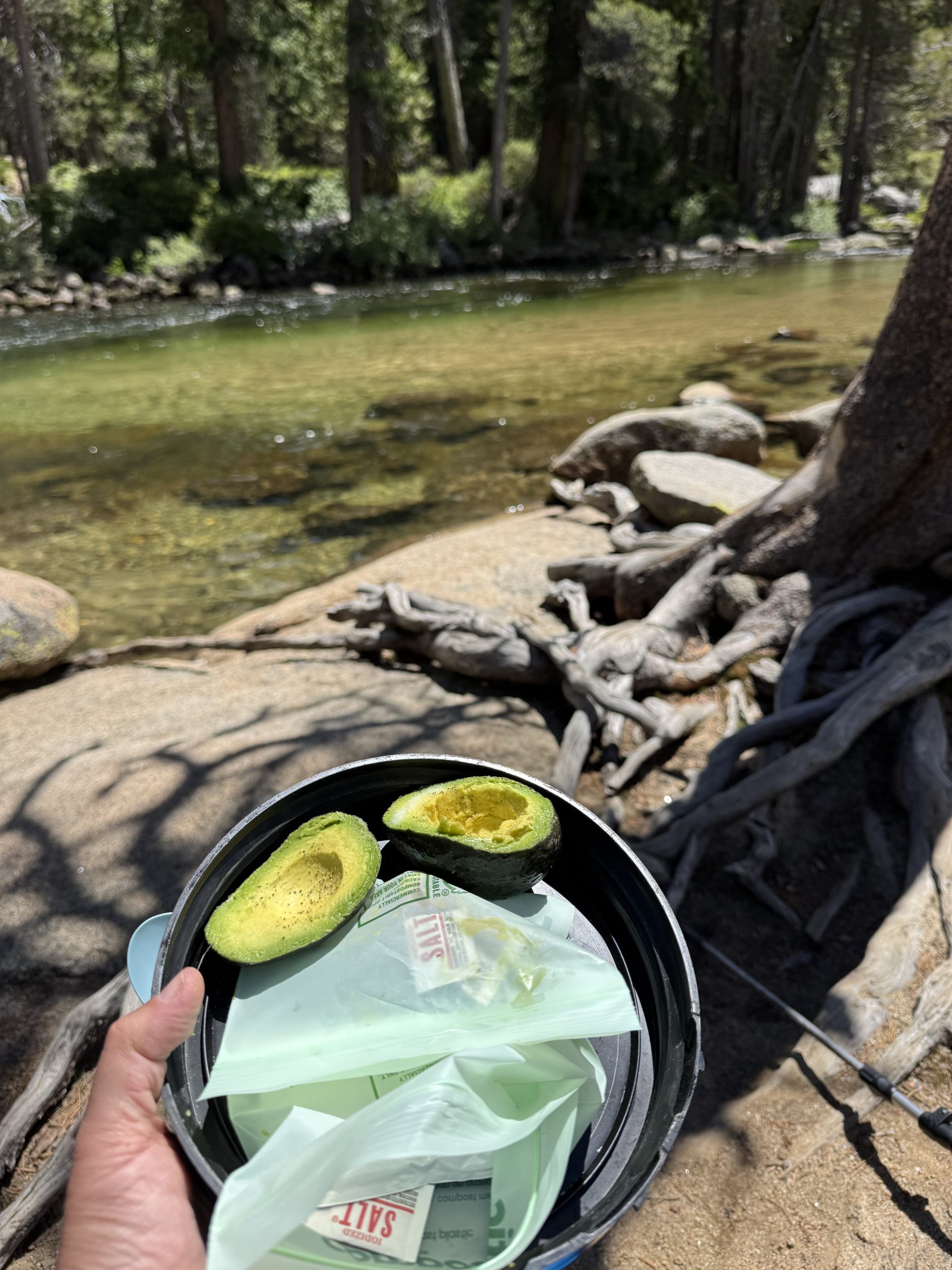
Feeling solid on the initial climb, but the crowds! I feel like I need a “Wide Load” sign with yellow flashing lights on it so people will see me with my 30+ pounds of gear. For lunch, I had an avocado at the top of Nevada. Best avocado ever! The final miles into camp were rough, but that was to be expected.
JMT Day 2: Clouds Rest Junction to Cathedral Lakes
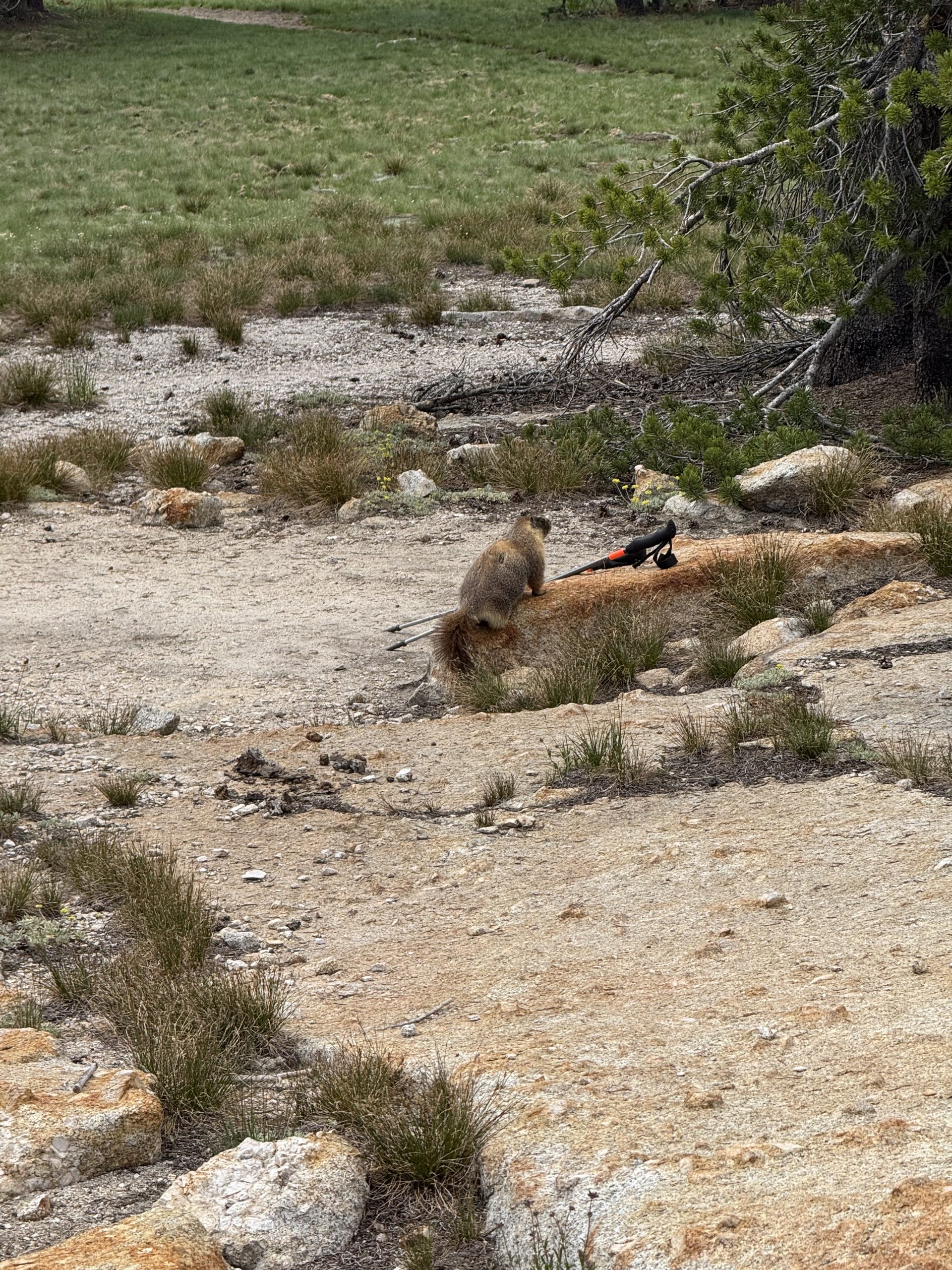
A bit of a rough start out of camp for some reason. The climbing continues and I’m not exactly sure where the trail is planning to take me, as I look out to the horizon. I don’t worry too much about the maps and over analyzing the elevation profile and every curve of the trail. The brush is thick and low to the ground, covering the trail. Sections seem like burn scars. I slowly make my way up the switchbacks to Sunrise, and across the meadow. Beauty is everywhere I look. Cathedral Pass was pretty brief, but I could tell I was slowing down. A marmot decided to try my trekking poles for an evening snack until I chased him away!
JMT Day 3: Cathedral Lakes to Lyell Canyon
It was generally downhill into the Meadows, but something in my lungs was simply not right. I was extremely slow, when normally I cruise on the downhills. Even resting for a while in the hiker tent outside of The Grille, something was off; something felt strange. My resupply bucket was a bit further down the trail, at the trailhead near the Wilderness Office, so I had to break from the group to go get it. Instead, I took a side trip to the Wilderness Office. I really wanted a medic to check me out before heading deeper into the wilderness and leaving Yosemite. When the Ranger told me to sit down and take some deep breaths while they called the medics, I lost it. The tears came. The possibility of the trip ending before it even began was hitting me. And I was simply scared. What the heck was happening to me! The medics come and do their thing. My blood pressure and pulse are a bit high, but no other obvious issues. They give me the option to either go to the hospital to be checked out more thoroughly or to eat a big lunch and camp for the night just outside the Meadows perimeter and come back tomorrow if I’m still not feeling better. I’m a hiker, you know I didn’t opt for the hospital! I did as I was told, grabbed my resupply bucket, and slowly climbed my way out of the Meadows and crossed the minimum camping perimeter. The maps said the next known site was still 3 miles up. No way was I going to make that. My body was just having a bad day, I told myself. I found a big space, where others were camped for the night, and I called it a day. Tomorrow would be better, I told myself.
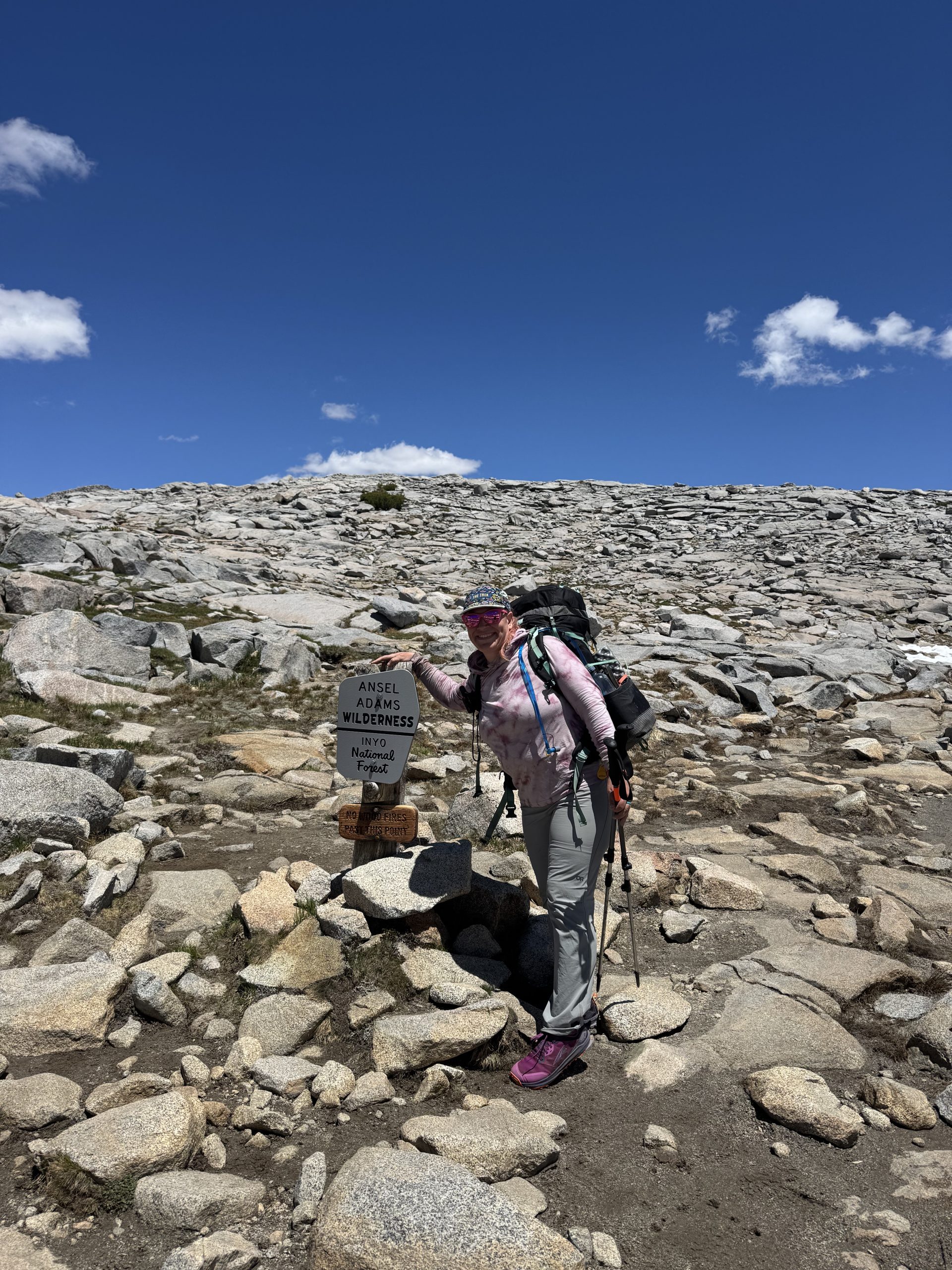
JMT Day 4: Lyell Canyon to Island Pass
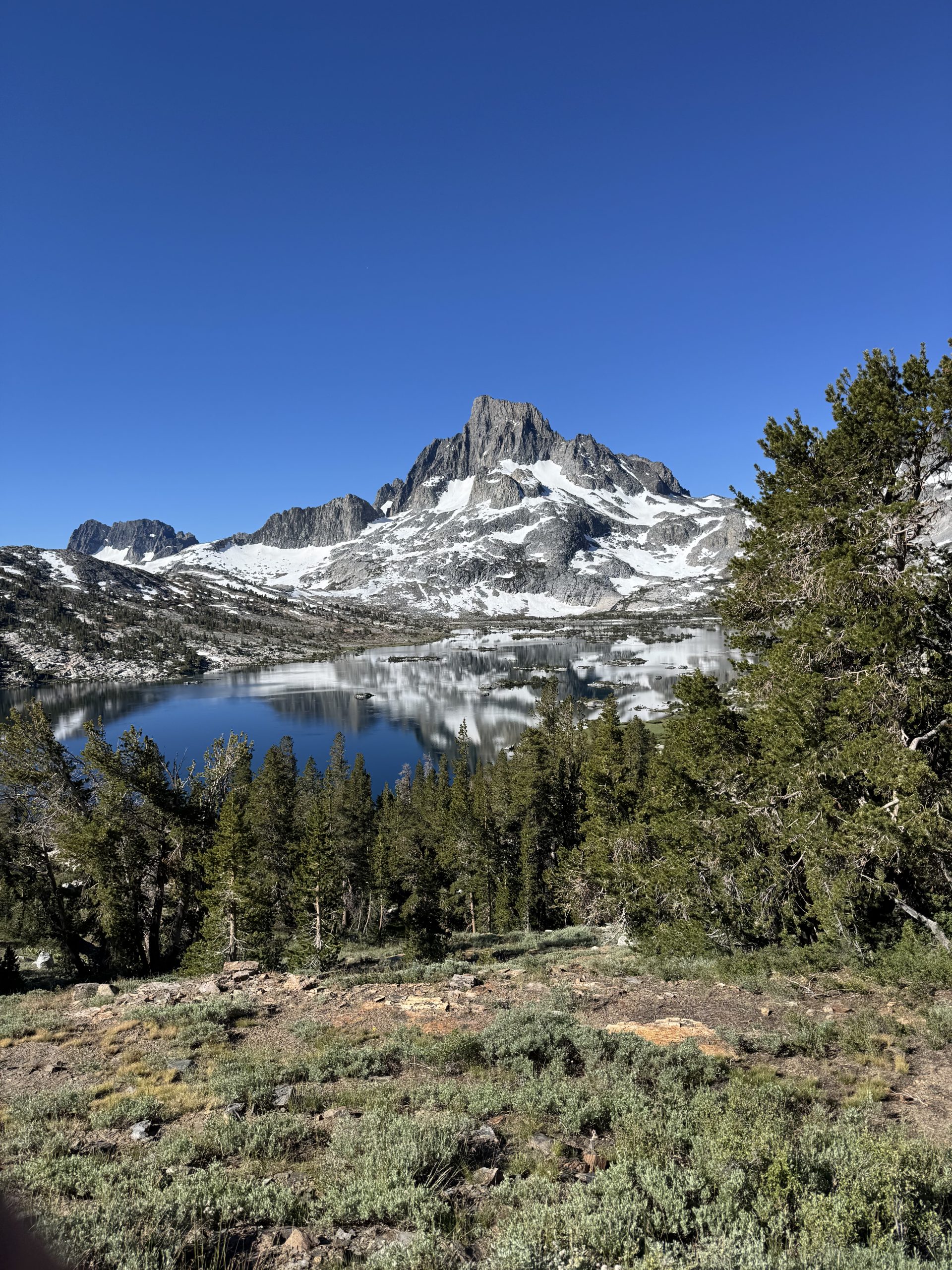
I was out of camp by 8am in the morning. I knew I had about 6 miles to go to get to the top of Donahue Pass. At my speed recently, that would be around 2pm. I could do that. I slowly climbed through the canyon, but as soon as the first set of rocky switchbacks started, bam! My body was still just not having it. Breathing was difficult and causing my chronic anxiety to become panic at every turn. I slowed down, and practiced the deep breathing the medics were talking to me about yesterday. Deep breathing was nothing new to me, so it’s a bit funny that I had to be coached. I finally stopped and had a mini meltdown. I opened my inReach Messenger and did an emotional check-in with a hiking friend back home. I also checked in with my family. After a few minutes, I picked myself up, and moved up a few more switchbacks. I stopped again and had another mini meltdown. That was it. I was done. My lungs were done. The medics the day before said they could come and get me if I needed them. But I think I still had enough in me to get myself down. I turned back and a few minutes later my Messenger lit up with messages from back home, encouraging me to keep going. Rest when I needed to rest but keep going. Through the tears, I decided they were right. I wiped away my tears and pushed forward. It was really slow going, and I refused to look at my maps to check my progress. I hated the rocky switchbacks and I cherished the lush, green traverses. I could feel myself getting a little stumbly, but I kept going. Just below the final push up to the Pass, I connected with a group of four other hikers, going the same way. They had a great attitude and were really friendly and supportive. They invited me to stick with them if I wanted. My heart leaped with joy knowing I may have just been offered a lifeline for the push I needed to find my “trail lungs” and get this first pass over with! They had the energy that I wanted and needed so badly. If I could just cross this first one…. It was still slow, and I hated looking up to see the Pass looming high above me with rock and snow. How the heck…! Seeing the group slowly traversing the snow and rock, kept me going. They found a route across and I followed closely behind. We made it! Before my 2pm deadline. I had a signal on my cell phone, so I quickly called home to share the news. I would be okay. Or so I thought. The group and I navigated our way down the back of Donahue and onward towards their goal camp for the night: Thousand Island Lake. After a brief break at a creek, I discovered we had to cross Island Pass, a baby pass with a 500 foot vertical climb. Oh great. I really was not sure I could do it, but I leaned on the energy of the group to keep me going. The games they played as they hiked, made me smile. These are good people; really good people. The trudge up Island was painful for me. I eventually fell behind the group to the point I could not see them and that worried me slightly. I had to keep moving because I did not have much of a choice, even though my lungs were angry. Every few steps felt like I was starting to hyperventilate. It was starting to hit me that I should have in fact turned back and kept going down earlier in the day. Continuing up the Pass was a mistake. Just as the thoughts were hitting me, I took a small step up and my pack slowly went to the left and took me with it. I fell on the most minor step of the day. I cried and yelled. I believe that was when I knew my hike would soon be over. I got to my feet and soon found the group, scouting for a campsite with a view rather than descending to the lake. I was grateful to be done for the day. I needed to rest and think. The thought of setting up camp was exhausting though. Even without my pack on, each step was difficult. But the view! Banner Peak loomed across from us with a beautiful pink glow surrounding it. We enjoyed our evening meal in awe of where we were and how grateful we were to even be there; the challenge we faced to earn this view.
JMT Day 5: Island Pass to Thousand Island Lake evac
I woke up on Day 5 after a rough night sleep. I had 2 days of hiking ahead into Red’s Meadow where I had a cabin reserved and warm meals planned. 2 days of hiking with 17 miles and another 500+ feet of vertical to conquer. My mind could not fathom those numbers. I cycled between deep breathing and trying to stay calm, and tears of panic. I informed the group that I was close to pressing The Button. Every single step continued to feel like a brick pressing sharply on my sternum. I could not even lift my pack without difficulty. The group was so, so supportive. I knew they had miles to make and I did not want to hold them back. They offered to stick with me for a while to see how I felt and we’d just take it easy. We slowly descended. When we stopped at a view point just above the lake, I decided it was time. I informed the group that I did not feel like I could continue safely anymore. I was stumbling and struggling with every step. I also refused to hold them back and be dependent on them for my safety. We agreed that they would get me down to the lake and find me a safe place to wait. When we arrived, they went through things with me again. Am I sure? Am I sure? What if? It came down to the fact that I was not able to continue safely on my own. I was risking a bigger accident in my current condition. What if my minor fall last night had been on one of the switchbacks, and I tumbled off the cliff? I could not continue safely. I was at a popular alpine lake so I could easily be found, and other hikers would be passing throughout the day. I would be safe. I wished the group well as we said our sad goodbyes. It was hard, but I knew it was for the best. A few minutes later, I sat down in the shade of a pine tree at Thousand Island Lakes and pressed the SOS button on my Garmin.
Post Evac
I was not sure what to expect after I pressed The Button, but a sense of calm came over me. I’m not sure what that meant or where it came from. While I responded to the messages on my inReach, I noticed hikers stopping for a rest on the rocks next to the lake. I believe many of them were PCTers. I just sat there quietly, monitoring my messages and responding to their questions. I was not in a panic. I was also not interacting with the other hikers sitting a few feet from me. I came to learn they had to send a helicopter to get me since I was a full days hike each way out of Mammoth Lakes yet. The idea frightened me, but I agreed. I also knew the information they were sharing with me was a fact since I could see the maps in front of me. I knew the realities. I was pretty zoned out while I waited. The winds made it chilly by the lake, so I added some layers and updated SAR to what I was wearing. An hour earlier than expected, I heard it first, then saw the blue and white helicopter come over the ridge from the north. The other hikers looked up, and I jokingly said, “That’s for me” like it was nothing. They looked at me like, what the heck! One of them came over and said she was actually a SAR back home and wanted to know how she could help. I explained I was having trouble breathing and couldn’t even lift my pack. She helped me get ready for the helicopter to land and prepared me for what they might do. When the copilot came to get me, he stated they could not bring the weight of my pack, so I could only bring things I needed. The SAR hiker gave me her information and told me that she would take care of it. She knew what to do. I grabbed my wallet, phone, Garmin, and my pocket of medications, and headed for the helicopter, leaving the JMT behind.
I was transported to Mammoth Lakes airport, where an ambulance was waiting to take me to the hospital. Tests were done over and over again. Labs were taken. I was in a heavy daze the whole afternoon. My brain was not functioning very well for whatever reason. I was glad my medications were well organized and the hospital staff could easily get the information they needed. I eventually realized that I needed to get in touch with my family. I had warned them earlier in the morning that I was not well and I would likely have to push my button for help. I picked up my phone to see messages from them. Apparently I had emergency contact information in my Garmin so they were contacted not long after I pressed my button. The county had been in touch with them the whole time. Wow. I was grateful that I would not have to use my limited energy to try to explain the events of the morning.
The hospital could only confidently determine that I was severely dehydrated. All the other tests were inconclusive. So what actually happened up there was anyone’s guess. I worked with my family and the hospital to find a hotel for the night after my evac. I asked my family to look into how I could get my pack off the mountain. In the heat of the moment, I had forgotten my glasses and contacts up there, so the hospital helped problem solve that situation.
Two days after my rescue, I was reunited with my pack in Mammoth Lakes after a trail runner responded to my request for help in one of the Facebook groups. Buying her pizza for her efforts to successfully retrieve my pack did not seem like enough, but that is the trail community we’re part of; we help each other when and how we can. Four days after my rescue, I boarded the bus to Reno to fly home.
Takeaways So Far
It was a hard decision to share my story, but I knew it was one that needed to be shared. We hear about hikers being rescued from the trail all of the time, and generally the stories take a negative attitude towards the hiker. I did not want to end up as the butt of someone’s joke. I did not want the public to come out in judgement of me and try to hyperanalyze the choices I made, or didn’t make. I definitely did not want to hear any other person’s opinions about what happened out there. We get enough of that unhealthy judgement in our everyday lives. Social media can be a really cruel, unforgiving place. I did not want to go there. Instead, why don’t we try to change the conversation about situations when hikers need to press The Button. Why do the situations always need to be bad? Why does the hiker always have to be the bad guy or a screw up? And why do we always overanalyze the situations?
My takeaways, so far, are these:
- I should have followed my gut on Day 4 and continued descending. My friends and family on the other end of my inReach meant well. They really did. However, they were not out there, facing the same obstacles that I was, in the same body that I was. No one could possibly be in my shoes. No one else could make the decision except me. I knew what the right choice was, but I allowed myself to be talked out of it by well-meaning people who cared about me and knew how invested I was in the trip.
- I knew I was not safe. Period. I knew I was at a greater risk of greater accidents if I continued hiking. Thousand Island Lakes was a safe place for me to wait for help. I was in a mental and physical state where I could still move around slightly, so it would be easier for people to help me.
- The hiking community shows up! The number of hikers who supported me during this struggle is amazing. Plus, there were countless other hikers I got to talk with or hike with along the way. We are lucky to share a community that is extremely kind and supportive. No one really ever hikes alone. I am grateful for all of you who showed me kindness on my journey. I will pay it forward in multitudes.
- We cannot also carry the weight of our investment. The amount of time, energy, and money I invested in this hike is wild. Which, as expected, got in the way of me doing what I knew was right: turning back while I still could under my own power. The weight of the financial investment is massive and we need to stop carrying it once we leave the trailhead. Out there, money is, dare I say, irrelevant. Safety is paramount.
Final Thoughts
It has now been 2 weeks since I was pulled off the mountain. I am still grieving the loss of an epic trip. It took me a long time to start telling people that my trip was over. I did not, and in some ways still do not, want to talk about it. I still fear the questions and the judgment of people who were not there. It’s wildly easy to judge when you’re not in the same difficult circumstances. I still fear the repercussions of putting my story out there. I am also still trying to make sense of what exactly happened up there, above 8,000 feet. I did not actually feel better until after I returned home, and was just above sea level again. All I can conclude is this: my body could simply not tolerate the altitude, despite having been up there for a week before I was pulled out. I had been to even higher altitudes before, for a longer period of time. I never had any issues until now. What was different this time was the weight of my pack, and I went into the trip under a great deal of stress. A lot was happening just before I left for the mountains, so I think my body just said NO. Anyone who spends time in the mountains knows that the mountains have the final say for all of us. This time, the mountains told me no.
Maybe some day I will return to the JMT to complete the trail, but that possibility cannot even enter my mind. I am still hit with the occasional phantom feeling pressing sharply on my sternum from those days in the Sierra. It’s a process to tell myself that it is not real. For some reason, I am afraid to even hike near my house, in places I know well. I’ve tried to get out a few times, but it’s difficult. The trails scare me right now; the peace and comfort they used to bring me has been broken. I know I will find my way back eventually. Epic trails like the JMT will still be there when that day comes. For now, I just need to rediscover the peace the trails give me, and take baby steps towards overcoming what happened up there. I’ll get there, someday.

This website contains affiliate links, which means The Trek may receive a percentage of any product or service you purchase using the links in the articles or advertisements. The buyer pays the same price as they would otherwise, and your purchase helps to support The Trek's ongoing goal to serve you quality backpacking advice and information. Thanks for your support!
To learn more, please visit the About This Site page.
Comments 3
Glad you are ok. Thanks for sharing your story!
hello Emily, thank you for sharing. I had a very similar experience on the same section of the JMT in 2002. Donahue pass haunted me for well over a decade. I felt defeated, and decided I’d never hike a long trail, but in 2015 I hiked the PCT, failed to reach the end, but had the time of my life. Destinations rarely compare to the journey. I hope you’ll get back to finding peace in the wilderness.
-toots
To me, it’s not about what you didn’t do. Yosemite Valley, Vernal and Nevada Falls, Little Yosemite Valley, Cathedral Pass, Tuolumne Meadows, Lyell Canyon, Donahue Pass, Island Pass, Thousand Island Lake, the views of Mt Lyell, Mt Ritter and Banner Peak. I get thrilled thinking of each of those places you travelled through. The JMT took you there. There is no shame in turning around. Walk in beauty and enjoy. The trail(s) are always there. I’m glad you returned safely. Live, learn and hike another day. The beauty is there when you’re ready.
No Hurry