
 ">


This 2.7 Ounce Garmin Smartwatch Can Replace Your inReach
Quick Verdict
The Garmin Fenix 8 Pro is a do-it-all powerhouse that can replace multiple pieces of backcountry gear. If you’re willing to pay a premium, its built-in satellite messaging, mapping, and utility features make it one of the most capable (and unique) watches ever built for long-distance hiking.
Best for
- Ultralight hikers looking to consolidate gear
- Backpackers who want built-in satellite communication
- Data-driven hikers and navigation-heavy trips
Not ideal for
- Budget-conscious hikers
- Anyone who prefers smaller, low-profile watches
- Hikers who don’t need satellite messaging
Standout feature
Built-in inReach satellite messaging. The ability to send messages, trigger SOS, and share location directly from your wrist is convenient and saves weight.
Biggest drawback
Price and niche appeal. It’s extremely expensive, and most hikers won’t need everything it offers.
Bottom line
If you want the convenience of a wearable satellite communicator that retains the tracking and navigation features of a Garmin smartwatch, the Fenix 8 Pro is the way to go.
When I talk about ways to lower your pack weight, I mainly bring up two things: leaving items at home and finding gear that serves multiple purposes. With this mindset, it’s been previously tough to justify carrying a smartwatch along on a long thru-hike — until now.
Garmin has just released its newest watch — the Fenix 8 Pro — and, along with the standard metric recording Garmin is known for, it also includes satellite messaging capabilities. It’s the first smartwatch to integrate full inReach satellite communication technology, allowing you to leave your standalone satellite messenger at home.
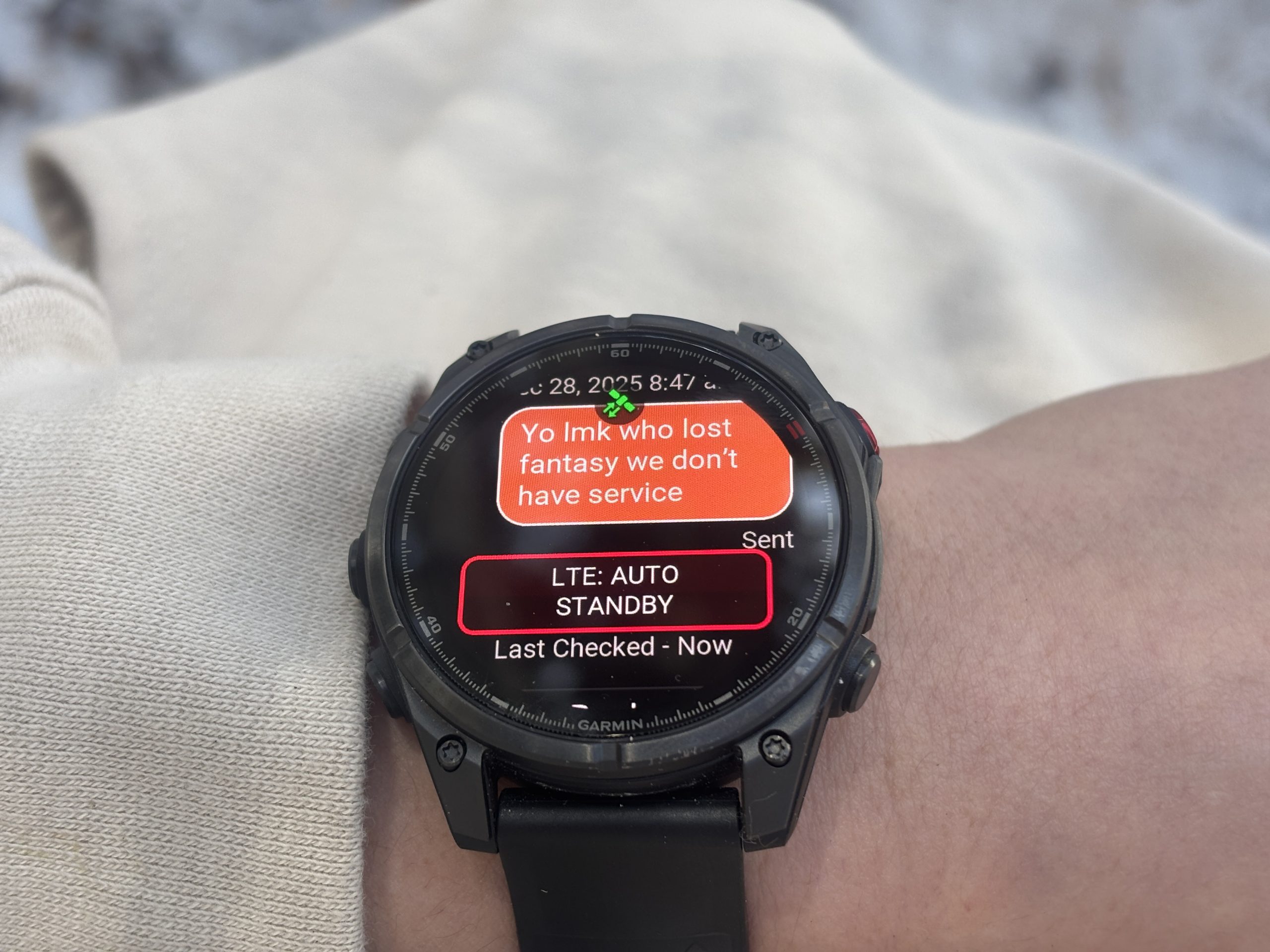
The integrated InReach lets you send the most important messages to your loved ones.
Garmin Fenix 8 Pro At-a-Glance
Price: $1,199.99
Weight: 2.7 oz
Case Size: 47 mm (Also available in 43 mm and 51 mm)
Screen Display: AMOLED
Battery Life: Up to 15 days (Smartwatch Mode) / 48 hours (GPS Only)
Why Would You Wear a Smartwatch While Hiking?
Before we jump into the features, pros, and cons of this specific watch, let’s first talk about why you would even want to carry around a smartwatch (and charger!) while hiking.
Is a smartwatch necessary? Absolutely not. However, a watch is a relatively lightweight luxury item, and it provides some interesting and useful information while hiking.
The most immediate benefit is the convenience of glanceable data without having to pull out your phone. When you want to know how much vertical you have left on a climb, your current altitude, or even just what time it is, it’s so nice to be able to find out by just looking at your wrist. I love the accessibility of this data even off-trail; now I know I took 6.2 million steps on the CDT and exactly how many miles I hiked, even including walking around in towns.

An example of some of the stats I was able to visualize from tracking my CDT thru-hike with a smartwatch. More CDT stats here.
On a long-distance hike, your body is under constant stress. Modern watches help monitor your heart rate data and overnight sleep quality so you can see if your body is actually recovering each day. If your resting heart rate is spiked and your sleep score is low, it’s a good sign that you might need a day off or a less ambitious mileage goal.
More importantly, smartwatches have safety features like TracBack, a function allowing you to retrace your recorded GPS track. If you lose the trail in a boulder field or a sudden storm rolls in and drops your visibility to zero, the watch can lead you back to your last known point or your campsite.
Finally, the latest generation of Garmin watches has changed the game by integrating inReach satellite messaging abilities. By moving those SOS and messaging capabilities to your wrist, you can ditch the satellite communicator entirely. This lets you keep all the benefits of both devices while actually lowering your base weight (win-win!).
However, a smartwatch is a big investment, and using one as your sole satellite communicator places a lot of trust in a piece of gear to not fail on you when you need it most. Let’s dive into my experiences with the Garmin Fenix 8 Pro to see if I trust it enough to justify the cost.
Circumstances of Review
With a pricetag in the four-digit range, I wanted to take this out on a hike to see how well the inReach functionality actually worked. Additionally, I wanted to test the base features Garmin is known for (mainly activity tracking, altitude measurements, and mapping) to make sure those continue to deliver in this watch. Finally, since this is the first time using a watch with an AMOLED display, I wanted to see how easy the screen was to read in direct sunlight.
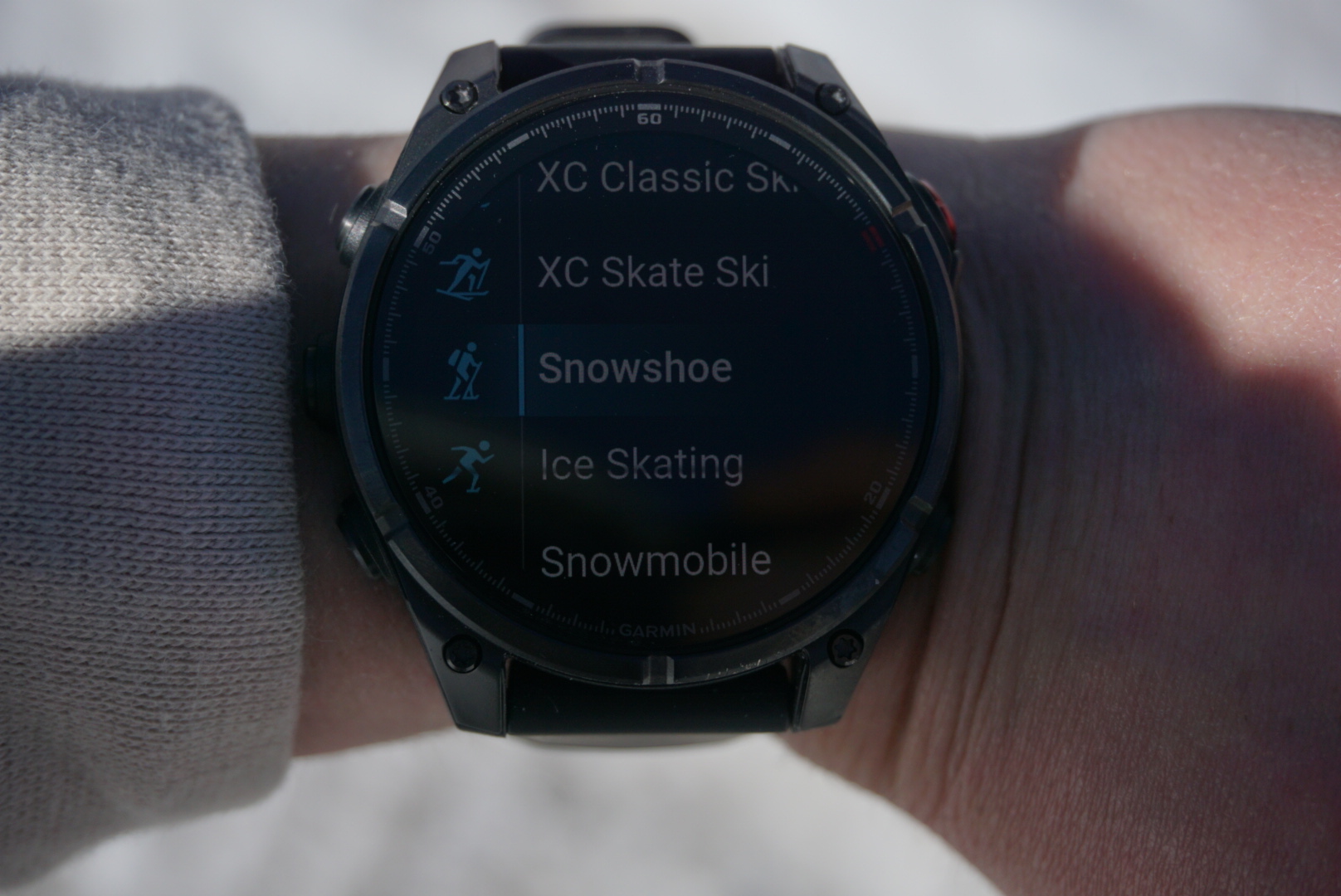
In direct sunlight, the screen doesn’t photograph very well, but you can see that it’s still very visible as you’re messing around with it.
Garmin Fenix 8 Pro Features
Built-In inReach Technology: At least for backpackers, this is the watch’s headline feature. The Fenix 8 Pro allows you to send and receive two-way satellite messages, trigger an interactive SOS to the 24/7 Garmin Response center, and share your location via LiveTrack without using a phone or a separate device. As with an inReach, it does still require you to have an active subscription to the satellite service.
AMOLED Display: The AMOLED display is a massive upgrade from older MIP screens in terms of brightness and crispness, but some criticize AMOLED displays for being hard to read in direct sunlight.
An AMOLED display means that each pixel is an individual light source that can be turned completely off, whereas a MIP screen uses external light (like the sun) to illuminate the screen. This is why, in direct sun, MIP displays only become easier to read while AMOLED displays need high brightness to overcome the sun’s glare. The hallmarks of AMOLED displays are a lower battery life but a clearer picture, while MIP displays have the inverse.
Built-In Flashlight: The watch also features a built-in LED flashlight (with red light mode!). On a previous Garmin watch, I didn’t expect to care that much about the flashlight, but now I use the watch light instead of a headlamp on some shorter trips and rely on it more than expected in my day-to-day at home.
Waterproof: The watch has leak-proof buttons and is dive-rated to 40 meters, meaning it will survive any river crossing or torrential downpour you encounter on a thru-hike.
Advanced Mapping: The watch comes preloaded with TopoActive maps and relief shading. The maps include contour lines, bodies of water, forests, and specific points of interest like campsites or springs. In theory, you can see exactly where the trail is relative to a river or a ridge. If you need to find a flat spot to camp or a nearby stream for water, you can look at your wrist instead of digging out your phone or trying to find a comment on FarOut.
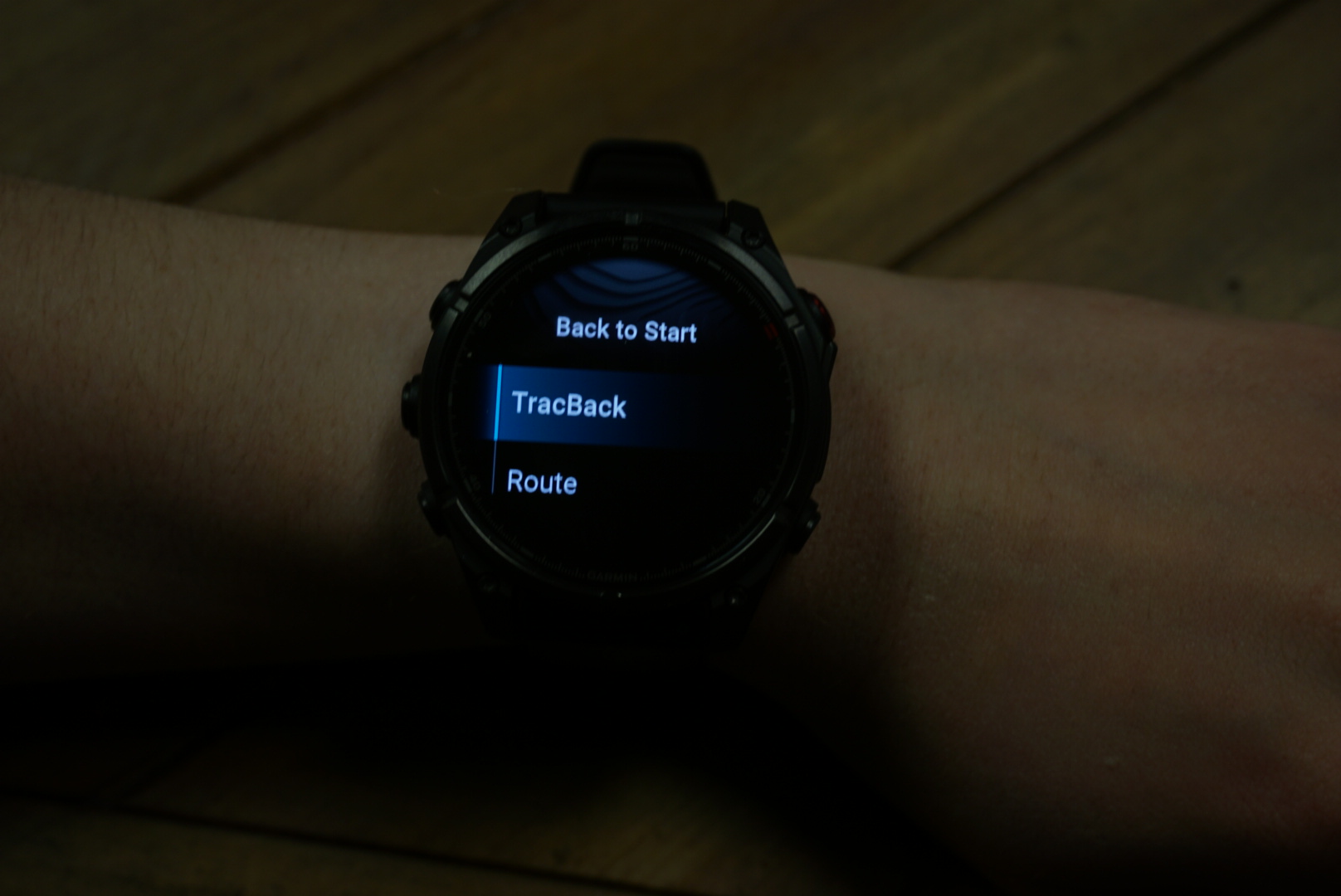
One feature I love is the TrackBack, which lets you route yourself back to the start of an activity. While wandering around some unmarked trails, I found this very helpful in getting me back to my starting point.
Battery Life: Despite the bright screen, the 47 mm model claims to offer up to 15 days of battery life in smartwatch mode. However, unlike some other versions of Garmin watches, this watch does not offer solar charging.
Garmin vs. Coros vs. Apple Watches for Thru-Hikers
For thru-hikers, the debate between watch brands usually comes down to two factors: battery life and navigation. With the release of the Fenix 8 Pro, Garmin has added a third, massive variable to the equation: safety. Thru-hikers tend to gravitate towards one of three brands when evaluating smartwatches: Garmin, Coros, and Apple.
Garmin: With the addition of the InReach capabilities, the Fenix 8 Pro is currently the undisputed king of consolidation. Other Garmins (like the Fenix 7 or Instinct 3) do still offer incredible mapping and battery life, but the Fenix 8 Pro is the only one that allows you to leave your satellite phone at home.
Coros: Coros watches are almost universally known for their battery life. If you absolutely hate charging your electronics, Coros (specifically the Vertix line) is usually the hiker favorite. They have a battery life that often outlasts Garmin’s non-solar models and come in at a lower price point. However, the mapping features aren’t as detailed as Garmin’s.
Apple Watch: The Apple Watch Ultra is a fantastic tool for day hikes and front-country adventures, but it struggles to keep up on a thru-hike. Even with the “Ultra” battery, you are looking at needing to charge it every 2 to 3 days, which adds some anxiety to your power bank and battery management.
Apple has introduced emergency satellite SOS, but it lacks the two-way, non-emergency messaging and tracking capabilities of the inReach and requires third-party apps to get topographical maps that even begin to rival what Garmin installs by default.
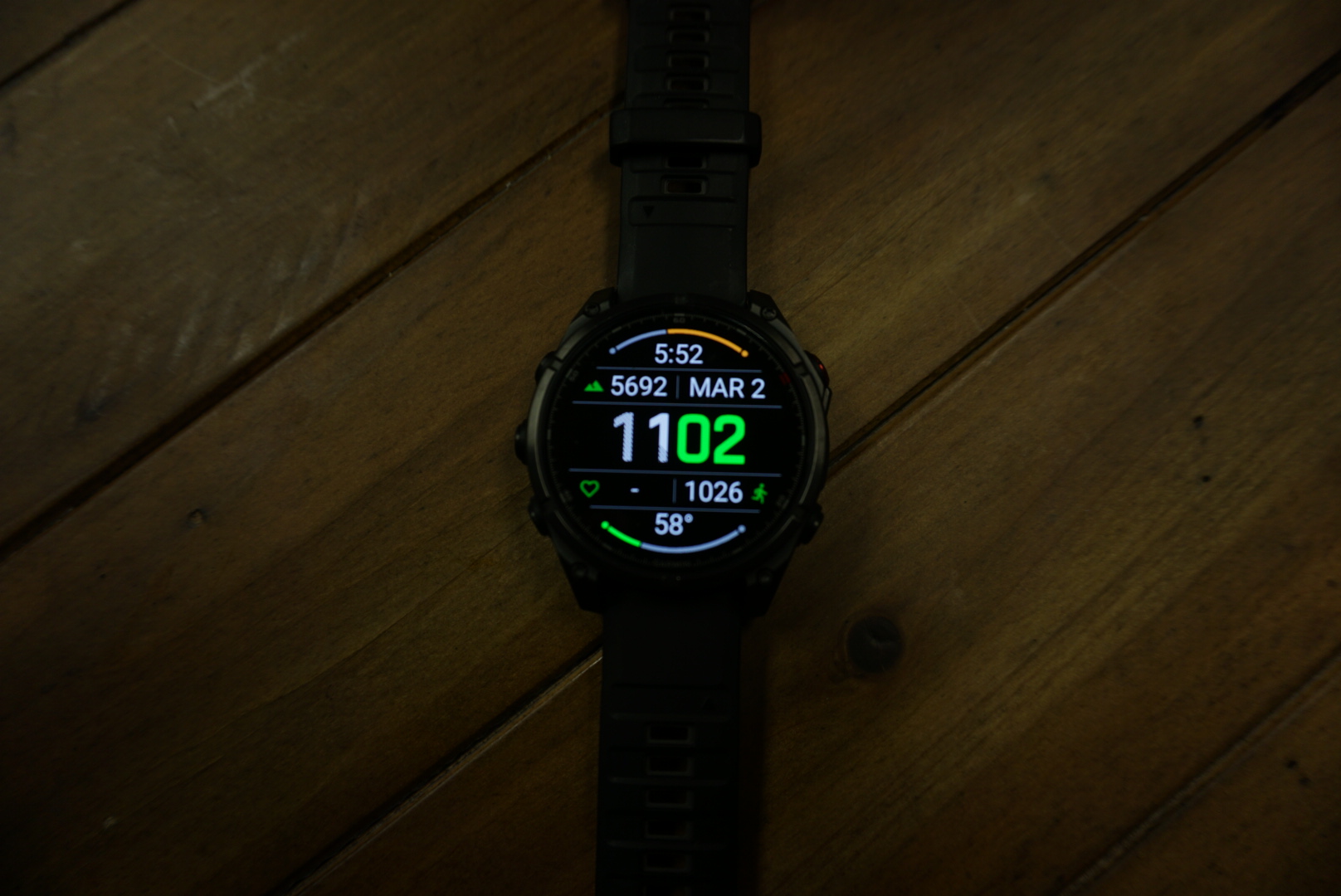
You can customize the main screen to show what is important to you, including time, altitude, date, temperature, heart rate, time to sunset, and more.
Garmin Fenix 8 Pros
Consolidation: The name of the game when packing for a long backpacking trip is consolidation. Not only do I want everything in my pack to serve a vital purpose, I ideally want every item in my pack to serve multiple purposes. This watch hits that sweet spot: not only do you get the fun benefits of stats and recovery tracking, but you’re also able to replace both your satellite device and headlamp.
I don’t take that statement lightly; both a satellite phone and a headlamp are absolutely vital, must-have pieces of safety equipment in the backcountry. Changing up either of those two things is a big step, and one that I don’t want you to make after reading one review of this watch online (even if the reviewer is incredibly knowledgeable, likeable, and persuasive). If this change is something you’re interested in, I think it’s almost a necessity to test the watch yourself before you choose to leave other pieces of gear at home.
It took many trial trips before I felt comfortable leaving behind a headlamp, and there are still some use cases in which I bring one as a backup. I feel confident in saying this watch can replace those two pieces of gear, not that it should for everybody.
Screen: The watch’s AMOLED display proved my fears wrong; not only was it bright enough to see clearly in direct sunlight, but the detail and depth of color was actually quite noticeable compared to my other MIP-display watches. I found myself actually using the topographical maps loaded on the watch, since they were vibrant and easy to see while hiking.
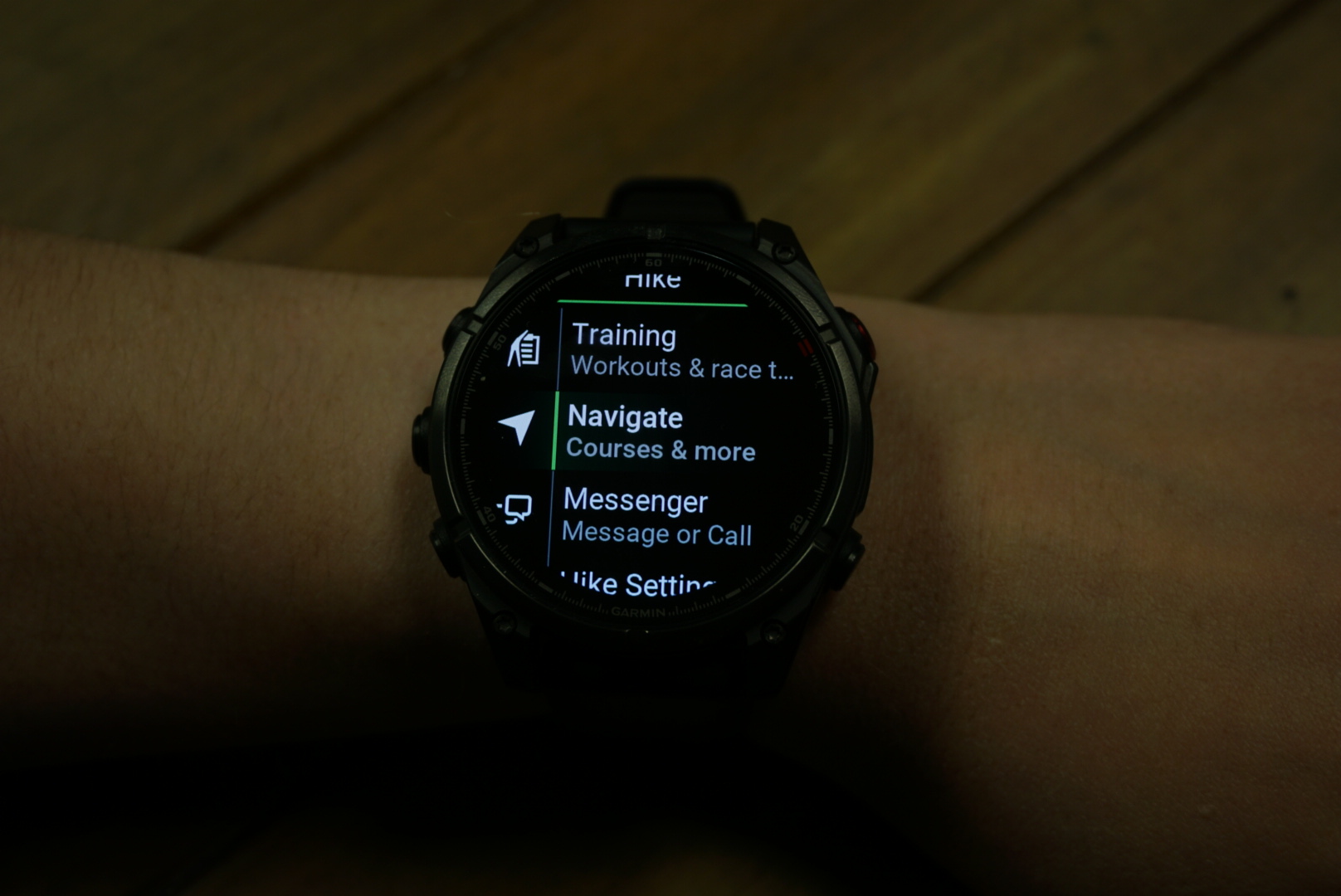
Within the hiking activity, you can load course races, map out aid stations, plan a workout, or use the InReach connectivity to send a message.
The claimed battery life of 15 days is pretty consistent with my testing, though frequently shifting the watch to a tracking mode did significantly cut into that time. However, that’s pretty standard with smartwatches, and I don’t think the AMOLED display is a notable contributor to the shorter battery life.
Durability: This watch is basically thru-hike-proof. It’s fully waterproof, built with leakproof buttons, and the screen has held up very well to abrasion and scratches during scrambling. I would not be worried about this watch’s durability at all on any major hiking trail.
Garmin Fenix 8 Cons
Price: As with most backpacking gear, I can’t help but get hung up on this price. The watch itself is already $1,200, and that doesn’t even include the monthly cost of a Garmin inReach subscription, which is required to use the SOS or messaging features. And, with Apple continuing to roll out (free, for now) satellite messaging, Garmin’s increasing subscription costs for their messaging is hard to justify.
The true value-add for hikers with this watch, in my opinion, is the satellite capability. However, you’ll be paying a $100–$200 premium over the standard Fenix 8 for the privilege of paying more money to Garmin to be able to access the actual service.
How much of a deal-breaker is this con? I suppose that depends on how much you have in your budget for fun hiking gadgets.
Lack of Solar Charging: One of my favorite features on my other Garmin smartwatch is the solar charging feature. It feels like the perfect addition to a watch for thru-hikers, who are often out and under the sun for days at a time. While the battery life on this watch isn’t a con, and it’s actually has quite an impressive range on it, I just wish we could have gotten solar charging with this one, too.
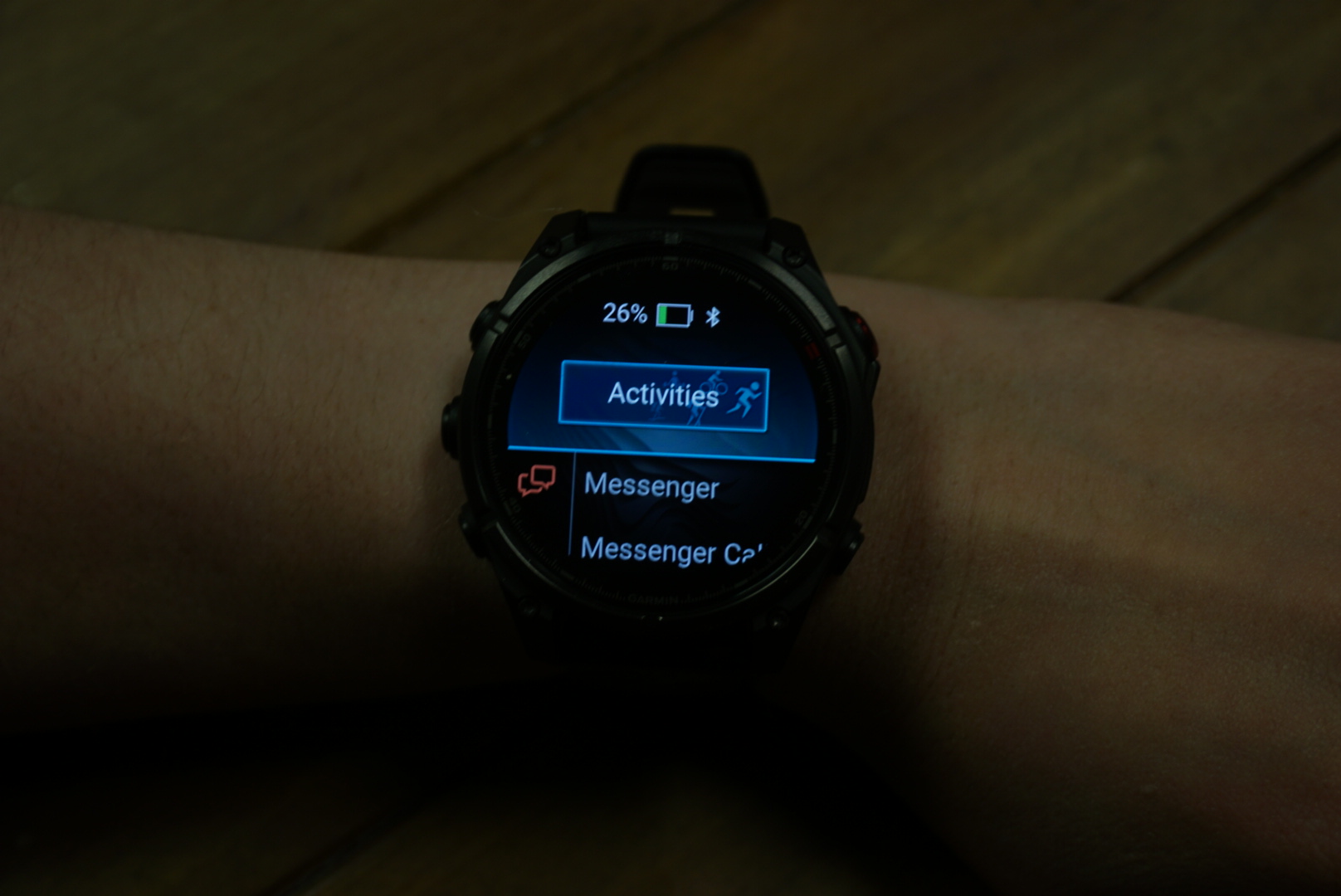
Especially when tracking an activity, the watch’s battery only lasts a few hours. I did not find this capable of lasting an entire ski day if I were to track the whole time.
Garmin does actually offer a solar version of the Fenix 8, but that version doesn’t integrate the InReach satellite messaging capabilities like the Fenix 8 Pro does. In a perfect world, the watch would combine the functionality of the two watches while also slashing about $300 from the pricetag.
The Size: The watch is big. Really big. It’s big enough to catch on my backpack strap when I’m putting it on and big enough that I have to force it through the cuffs of some sweatshirts. Garmin does offer a 43mm version of the Fenix 8 Pro, but, much like with the solar charging, they only offer the satellite messaging integration on their 47mm and 51mm versions.
For this review, I tested the 47mm watch face and still found it overly large. Unlike my other Garmin watch, I don’t feel like this one can hide in the background during day-to-day events; I must take it off for more formal events.
Would I Recommend The Garmin Fenix 8 Pro Smartwatch?
The short answer: Yes, but only if you are a very specific kind of gear nerd.

The InReach feature functions like the iPhone satellite messaging. You’ll be prompted to move around until your watch points at a satellite, and then it takes a few minutes to connect and send a message.
I would recommend this watch solely for its ability to consolidate your kit by replacing both a standalone satellite messenger and a headlamp. For the ultralight who is obsessed with lowering their base weight, has the budget to match, and the experience to know when they can safely leave behind a satellite messenger and headlamp, the Fenix 8 Pro is great. It is the only device on the market that allows you to move your emergency lifeline and your backup light source onto your wrist.
However, I would not recommend this watch as a necessity for the average hiker. It is a niche, high-luxury item, and for most people, it’s frankly overkill. If you’re just looking for a solid hiking watch, there are plenty of smaller, cheaper options that won’t require a second mortgage or a 47mm wrist.
Comparable Items
Garmin Forerunner 165
Price: $299.99
Battery Life: 11 Days
Coros Pace 4
Price: $249
Battery Life: 19 Days

The Garmin Fenix 8 Pro Smartwatch was donated for the purpose of review.

This website contains affiliate links, which means The Trek may receive a percentage of any product or service you purchase using the links in the articles or advertisements. The buyer pays the same price as they would otherwise, and your purchase helps to support The Trek's ongoing goal to serve you quality backpacking advice and information. Thanks for your support!
To learn more, please visit the About This Site page.

Comments 2
Katie, I think you forgot Suunto. The brand goes a long way back and is a quality build with good battery life. Very popular in the trail running community.
I’ve had a Fenix 7S Solar Sapphire for four years now, and I was reading up a bit on the 8 Pro specifically because of its satellite comms options, to see if I would feel comfortable leaving my InReach Mini2 at home. For anyone in a similar boat, I’d suggest doing a lot more reading up elsewhere on this feature. The 8 Pro does not use the same satellite network (Iridium) that is used by the InReach, and . . . TL;DR: the 8 Pro may be fine or “good enough” for your use case, most of the time, but it is *not* a true one-for-one swap for an InReach, if that’s what you’re after.