
 ">


Ultralight Is Taking Over Thru-Hiking … Or Is It?
Backpacking gear has been getting steadily lighter for decades, a trend that only seems to have accelerated in recent years.
The Trek’s own AT thru-hiker surveys reveal that hikers have overwhelmingly traded heavy leather hiking boots for lightweight trail runners, and bulky mummy sleeping bags for more streamlined quilts. Meanwhile, online forums are full of chatter about the best ways to slash base weight, with suggestions ranging from swapping out major gear items for ultralight alternatives to simply bringing less stuff altogether.
The result of all this is a perception that the “ultralight” fad has taken over the backpacking world, with trendy lightweight gear items conferring both utility and status.
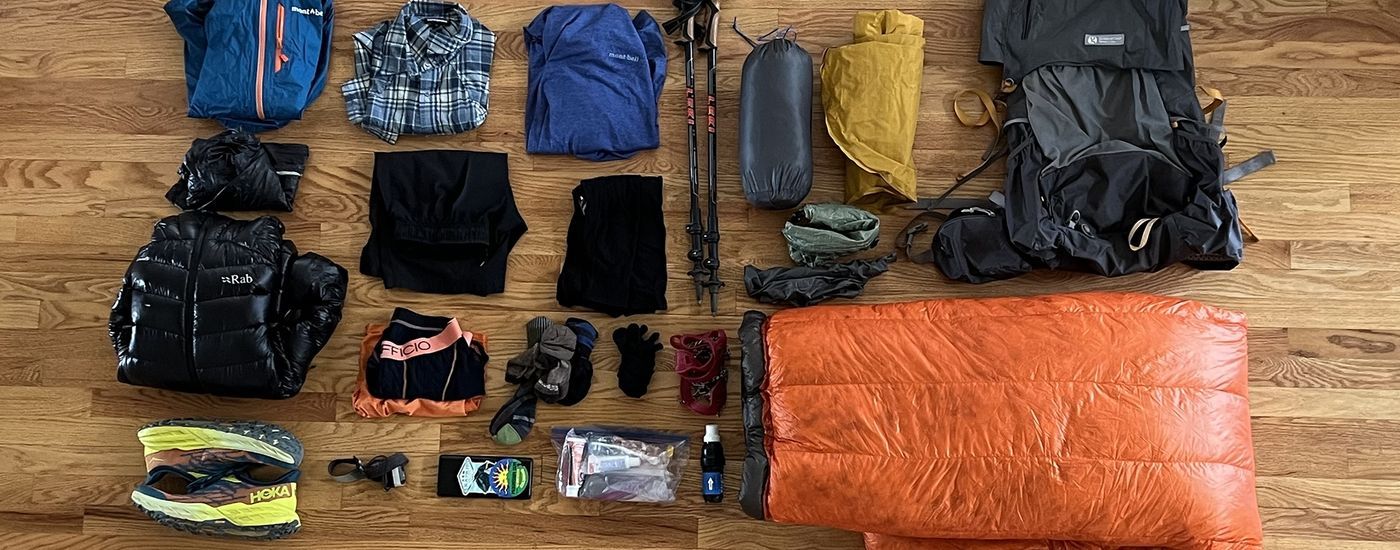
Speaking for myself as an interested thru-hiker and through my years working at The Trek, I’ve certainly felt like all things UL have been getting more and more ubiquitous. Innovative designs and materials (single-wall, trekking pole tents, quilts, DCF, Alpha Direct, etc. etc.) have become mainstream, and indivual gear items seem to get lighter and lighter.
But is ultralight actually taking over?
Is Ultralight Taking Over? Here’s What the Data Actually Shows

The commonly used metric for determining if a hiker is “objectively” ultralight is a base weight under 10 pounds. Yet only a tiny fraction of the 279 respondents to The Trek’s 2025 Appalachian Trail thru-hiker survey fell into the sub-10-pound base weight range. In fact, the average hiker in our survey started the trail with a 20-pound base weight and ended with an 18-pound base weight.
The first year that The Trek collected base weight data for our survey was 2016. The average typical base weight for an AT thru-hiker that year was 19 pounds — so basically, exactly the same as 2025 — and the numbers have consistently stayed in this range in the intervening years.
Numbers appear similar on the PCT. Halfway Anywhere’s 2025 PCT thru-hiker survey reported an average starting base weight of 17.8 pounds and an average ending base weight of 15 pounds for thru-hikers. The 2016 PCT thru-hiker survey reported an average starting base weight of 19.6 pounds and an ending weight of 15.5.

Photo: Trek writer Madeline Newel used hand-me-down gear from the 1970s before investing in her own ultralight gear setup. Photo: Madeline Newel
It’s worth noting that neither The Trek’s nor Halfway Anywhere’s survey data extends far enough back in time to capture significant UL gear innovations (the first DCF tent, the first inflatable sleeping pad, etc.). If we could look back substantially further to the days of towering external frame packs stuffed with heavy-duty textiles, elaborate mess kits, and all that, we would almost certainly see base weight trending down.
Yet the fact remains that in the past 9 years, at least, it does not appear that thru-hiker base weights are gradually creeping lower or that an ultralight utopia of featherlight backs is on our horizon, despite the common perception that UL gear is taking over. Perhaps that perception is driven more by marketing and flashy social media posts than actual reality on the ground.
Ultralight vs. Ultralight
Perhaps ultralight gear itself is gaining popularity more than the underlying minimalist philosophy of the ultralight movement. Investing in featherlight gear does help you reach a sub-10-pound base weight, if that’s your goal, but hitting this ambitious benchmark also requires hikers to be very intentional about what goes into their packs and to eliminate most luxury items and redundancies.
For many hikers who don’t have a deeply held goal to get their base weight into single digits, saving a few pounds by investing in DCF, titanium, and 1000-fill down might simply be a straightforward way to make room in their pack for an extra-wide sleeping pad, a few extra pairs of clean socks, or a paperback novel.
Maybe for most people, an 18-pound base weight simply feels light enough, and ultralight gear is a way to stay in that range while still carrying everything they need to feel safe and comfortable in the backcountry.
How Light Is Too Light?
While carrying less weight definitely makes hiking feel easier and takes pressure off the joints, I have often felt there is a point of diminishing returns. If your minimalist camping kit leaves you achy and sore by morning, does that count for more or less than the aches and pains you saved by having a lighter pack?
I hypothesize, based on my own experience and my observation of others’ kits, that most of us pick up a few ultralight pieces of gear here and there to supplement our kits without fully overhauling them. I have a Zpacks Duplex and a Katabatic quilt, but you’ll have to pry my 7 R-value full-length Therm-a-Rest NeoAir XTherm out of my cold, dead hands.
On a related note, in our 2025 AT survey, the Zpacks Duplex and Durston X-Mid were the number one and two tent models, respectively, but number three was the definitely not ultralight Big Agnes Copper Spur. Meanwhile, light-but-not-ultralight backpack models like the Osprey Exos and the ULA Circuit dominated thru-hikers’ backpack choices.
The survey also shows that AT hikers’ average backpack capacity was 53 liters last year: much more space than anyone with a true ultralight setup would need. (In backpacking, as in life, if we have more space available, we tend to fill it up even if we don’t “need” to; as you can imagine, a roomy pack is therefore anathema to a sub-10-pound base weight goal).
What Have We Learned?
Innovations in backpacking gear have brought the weight of some items surprisingly world, and ultralight gear has indeed become quite popular and mainstream — but it’s too much to say that it’s ubiquitous. Many hikers today are carrying a combination of ultralight and “normal” backpacking gear and have a base weight closer to 20 pounds than the mythical 10-pound cutoff for ultralight.
Ultralight means different things for different people, and while this base weight benchmark is a useful metric, some hikers see it more as a philosophy of minimalism and intentional gear choices without needing to quantify it.
If getting your base weight below 10 pounds is an important goal for you, today’s gear market makes it more attainable than ever. But however you slice it, data suggests that the majority of thru-hikers don’t share that ambition.
Featured image: Photo via Madeline Newel. Graphic design by Chris Helm.

This website contains affiliate links, which means The Trek may receive a percentage of any product or service you purchase using the links in the articles or advertisements. The buyer pays the same price as they would otherwise, and your purchase helps to support The Trek's ongoing goal to serve you quality backpacking advice and information. Thanks for your support!
To learn more, please visit the About This Site page.

Comments 2
I think there is sample bias. The heavier pack hikers are less likely to obsessively check or even weigh their pack at all.
I’m getting back into backpacking after a 30 year hiatus. OMG the gear is so much better it’s ridiculous. My base weight is 15 pounds which is “good enough” for me right now. If I do the AT like I’m planning I’ll probably shed a pound or two with a lighter sleep system and stove and gain a pound or two of luxuries. I feel good at that weight.