
 ">


Appalachian Trail Gear: What 7 Thru-Hikers Actually Use
The below is adapted from The Trek’s video interviews with Appalachian Trail thru-hikers at Trail Days. Minor edits have been made for clarity and readability.
What Appalachian Trail gear do thru-hikers actually carry once they have hundreds of miles behind them? We sat down with seven AT thru-hikers at Trail Days in Damascus, Virginia, and asked about their shelters, their backpacks, and the gear they’d never leave behind.
Their setups range from double-wall freestanding tents to trekking pole shelters and an all-in-one hammock. Every answer below comes from a hiker who was carrying that gear on the AT, including what they’d change and the advice they’d give the next class of thru-hikers.
What Tents Do Appalachian Trail Thru-Hikers Use?
One hiker started with the top tents from The Trek’s annual thru-hiker survey (here are the latest top tents and shelters from the 2025 AT Thru-Hiker Survey).
“I actually looked at some of the top-used tents on The Trek survey from last year.”
Big Agnes Tiger Wall and Copper Spur
“My tent is the Big Agnes Tiger Wall.”
“I have the Big Agnes Copper Spur 2, which I love. For a two-person tent, it still fits me nicely and it’s not too spacious. I know I’m leaving a smaller footprint with it still.
“What I love about the tent is I learned how to be able to put it up fly first. I love having a double-wall tent because I don’t have to worry about the moisture or anything like that. I have my vestibule I can hang out in and put some stuff in there if I want to.
“In a full downpour, I was able to throw the footprint down, put the fly up, toss my bag and everything underneath, and then build the tent from the inside so I can keep my gear and I can stay a little bit drier.
“When it is raining, I can still have my body up against the tent and not have to worry about it leaking in because I’m pressing up against the tent. I have this extra wall that’s going to keep me safe for that.”
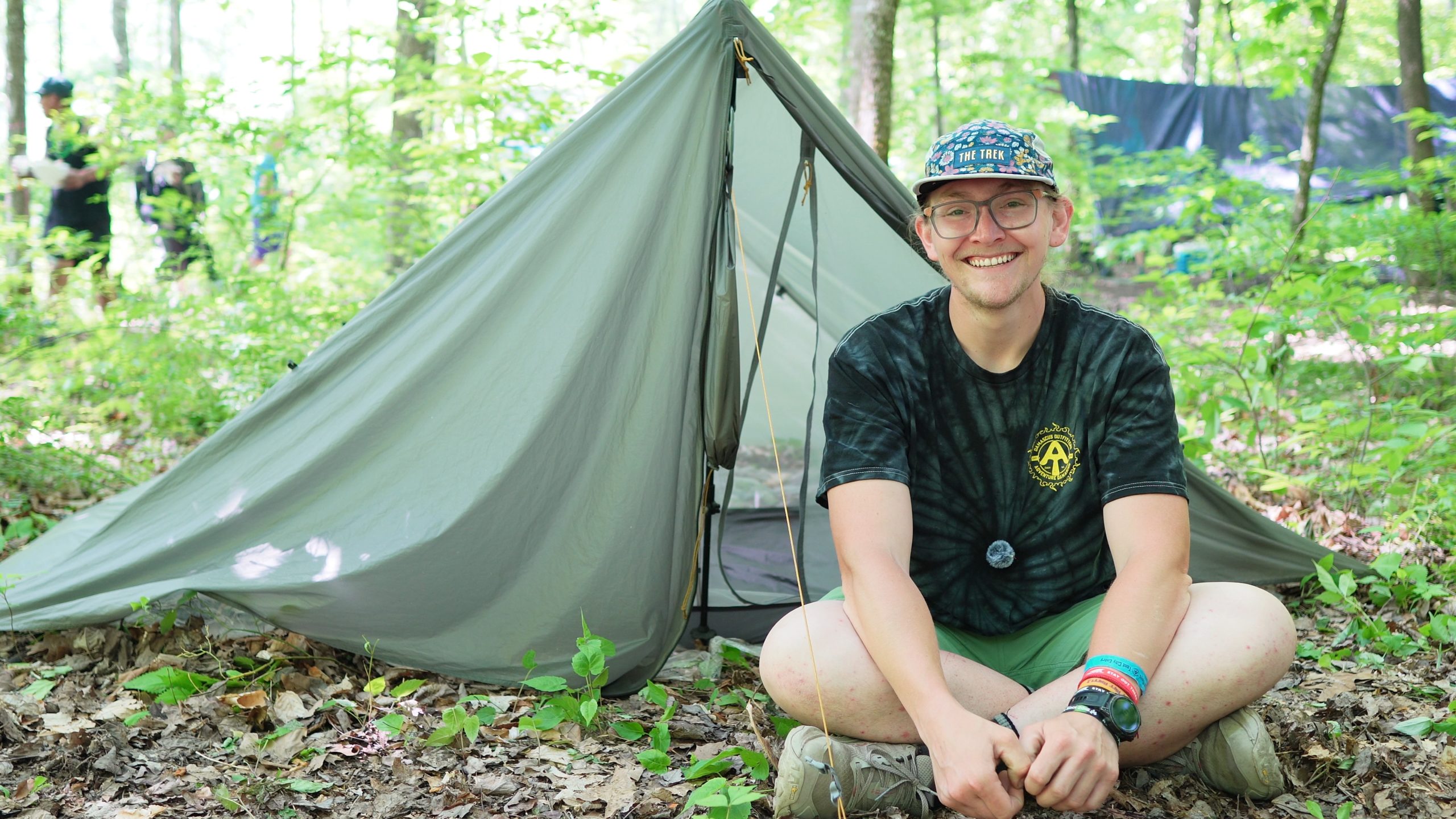
Gossamer Gear The One and The Two
“This is the Gossamer Gear The One.”
“My shelter system is the Gossamer Gear The Two.”
“I picked this tent because I watch Backpacker Radio, listen to Backpacker Radio, and I heard everybody talk about this tent, and I love the style. I love it because of its space. It’s really open, enough room for me and my pack, all my stuff.
“It’s great in the wind, it’s great in the rain. I just found out you can open the other side of the door, and so now I’m not sweating when I’m sitting inside my tent.
“My favorite thing about my shelter system is opening this second flap and having a wide-open view.”
Why Choose a Trekking Pole Tent?
“I went with the trekking pole tent over the freestanding tent because every freestanding tent I have owned felt like the poles were super heavy.
“My favorite piece of gear is definitely my trekking poles because I need them to walk up mountains more than anybody else. And I was like, if I’m already carrying trekking poles and they make trekking pole tents, it just makes sense to do that to save weight.”
For a deeper look at shelter types, see Andrew Skurka on mastering ultralight tents and shelters.
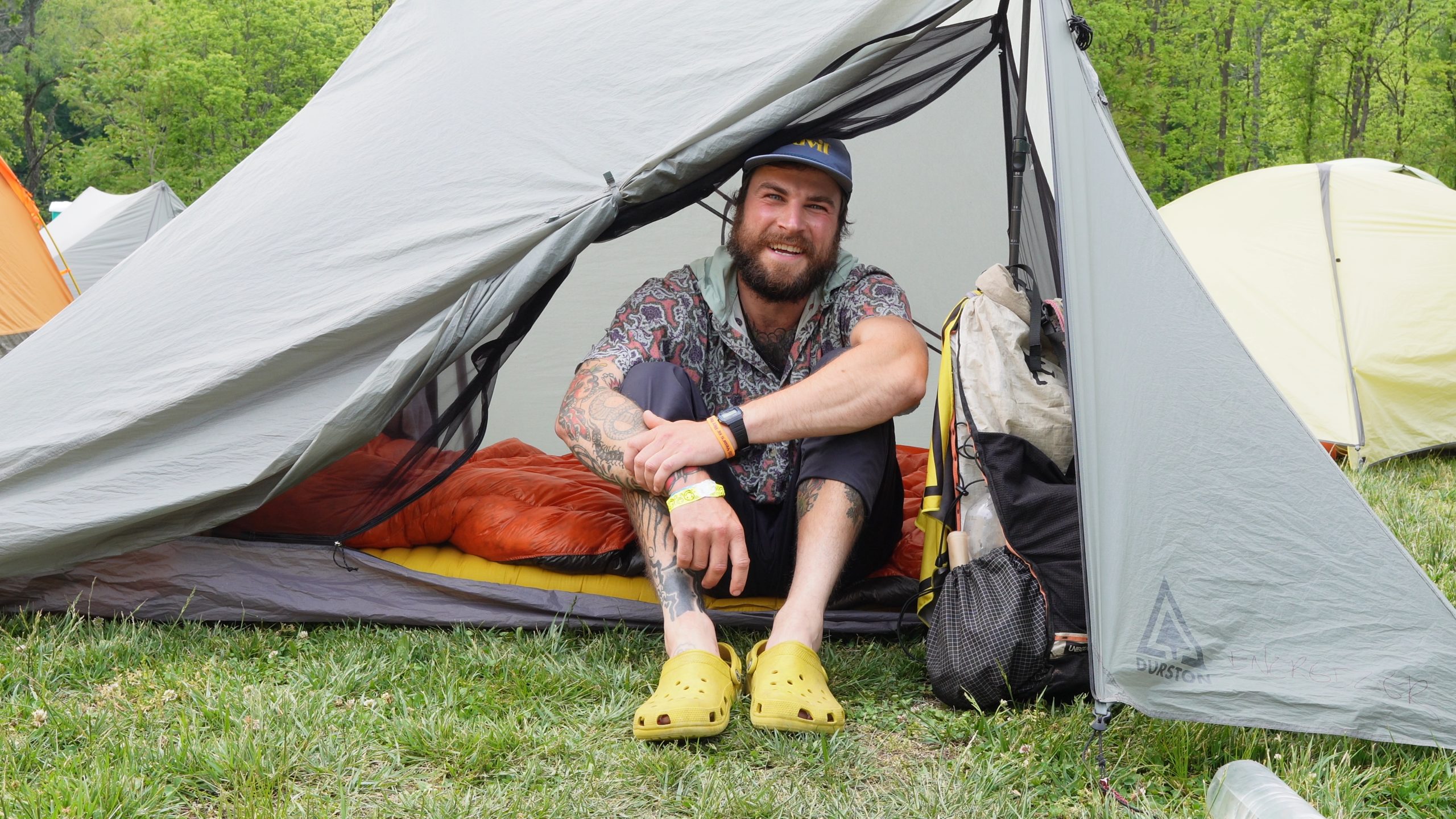
Durston X-Mid 1 and X-Mid 2
“The tent I use is a Durston X-Mid 1, the double-wall one.”
“Durston X-Mid 2, and I really like the size and how easy it is to set up, and the price is hard to beat.”
“I picked this shelter because it was pretty light and it’s double-walled. I don’t like waking up wet.”
“I was really reluctant. I didn’t want to go with the trekking pole tent originally, but the combination of simplicity in setting it up and the weight…
“It’s super easy to pitch and it’s very durable. Once you get the hang of using the trekking poles and things like that, it’s super spacious. I can get all my stuff in there.
“So when it’s raining, everything’s dry. It’s really, really nice from that standpoint. I like how much space there is in the vestibules, and it pitches super low. So even when it rains, the vestibules don’t get any water in them.”
Is a Hammock Better Than a Tent on the Appalachian Trail?
“My shelter is a hammock setup, as you can see.”
“My shelter system for the trail this year is the Kammok hammock. It is an all-in-one hammock system. I absolutely love it. I sleep like a baby in this thing.
“I pity you, ground dwellers.”
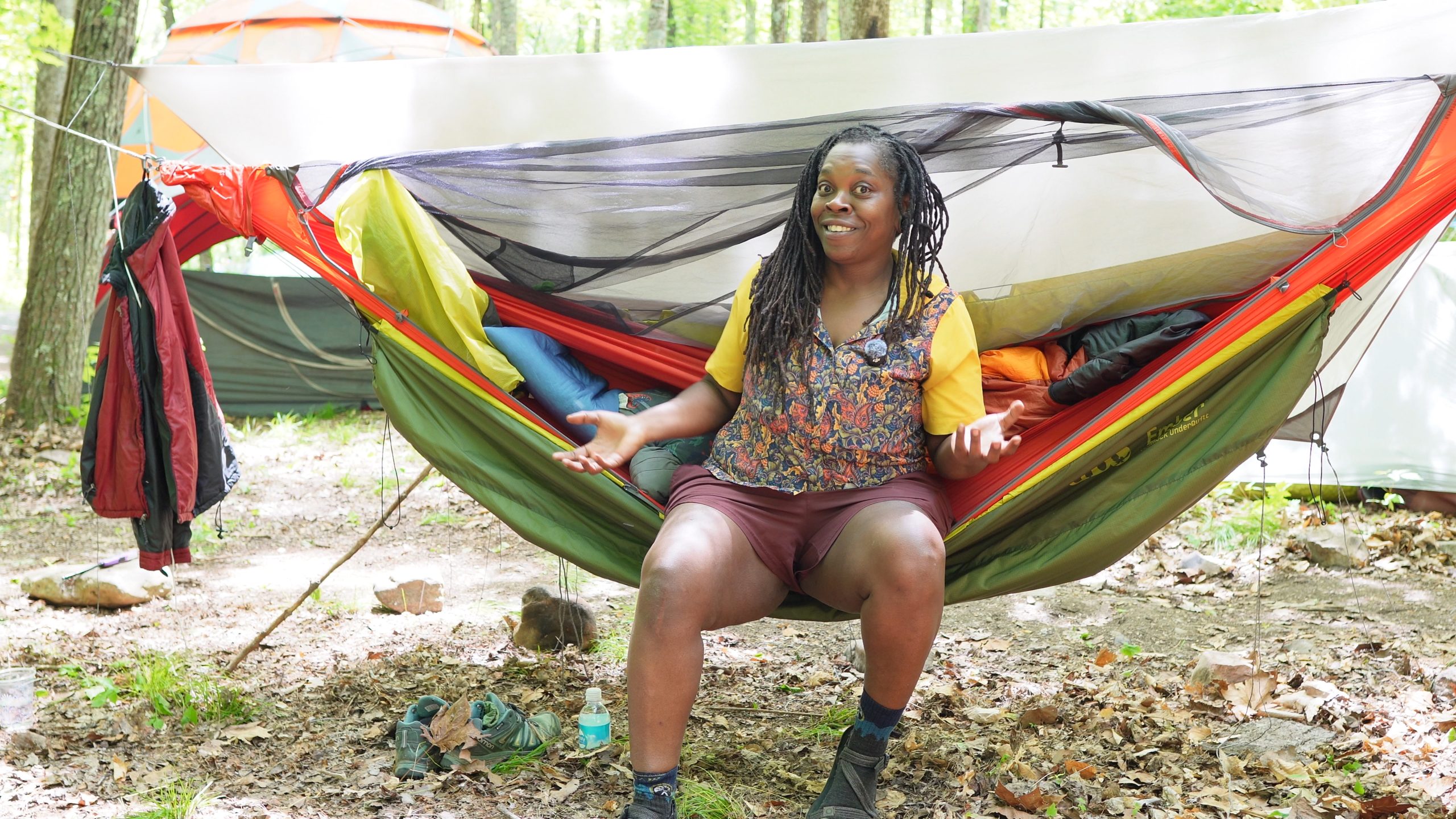
“I chose a hammock purely because of the quality of sleep. It has some drawbacks. It’s heavier. It’s more bulky. It’s more effort than a tent.
“But I sleep so well that I can do more miles during the day, even if it is heavier. So I absolutely love it.
“It’s actually two pounds, three ounces about. And then I decked it out to make it a little less weight.
“I think as long as you’re below tree line, in my opinion, a hammock is far superior to tenting.
“So I would recommend this hammock for somebody who is less than six feet and wants a complete hammock system and doesn’t want to go through the learning curve.”
What Thru-Hikers Don’t Like About Their Shelters
“Something I dislike about the tent is it’s a little bit heavier than a lot of the options that are out there. It’s not much heavier. It’s a tiny bit heavier, but really it’s not that much heavier. It’s one of the lightest double-wall tents you can find.”
“I’ve had a few leaks in some of the bigger rains. Waking up with a drip on your forehead is not the best way to wake up at three in the morning.”
“Something I dislike about The Two is the condensation situation. And I noticed at the booth that the new version coming out has little vent flaps. So I’ll definitely be upgrading to that eventually.”
“I wish it had a vestibule on the other side and could still be a one-person tent, having both sides to open where I can shove all my gear on one side and get out of the other.”
“In unideal spots to pitch a tent, it can be tough to get a good pitch, especially if it’s uneven surfaces or minimal space.”
“Especially the space with The Two is tough sometimes because it does have a big footprint.”
“The zippers aren’t too strong. I already broke one.”
“I don’t like the tarp. It is not a full tarp. It doesn’t have a door system. So if I would change one thing, I would probably upgrade to a full Dyneema tarp system with the closing doors.”
“I’ve found, because I’ve tried both tenting and hammocking on the AT, that when it gets windy, just because it’s so much more elevated off the ground, the tarp catches the wind and it gets a lot louder and more uncomfortable than a tent would when it’s windy.”
What Backpacks Do Appalachian Trail Thru-Hikers Use?
Here’s what our seven hikers carried. To see how their picks compare with the wider class, check out the top backpacks from the 2025 AT Thru-Hiker Survey.
“I use a Hyperlite Unbound 40-liter pack.”
“I am using the REI Flash Air 50.”
“I am carrying the Durston Kakwa 55.”
“I’m using the Gossamer Gear Gorilla 50-liter.”
“Exos 48-liter. Earlier attempt at a UL bag.”
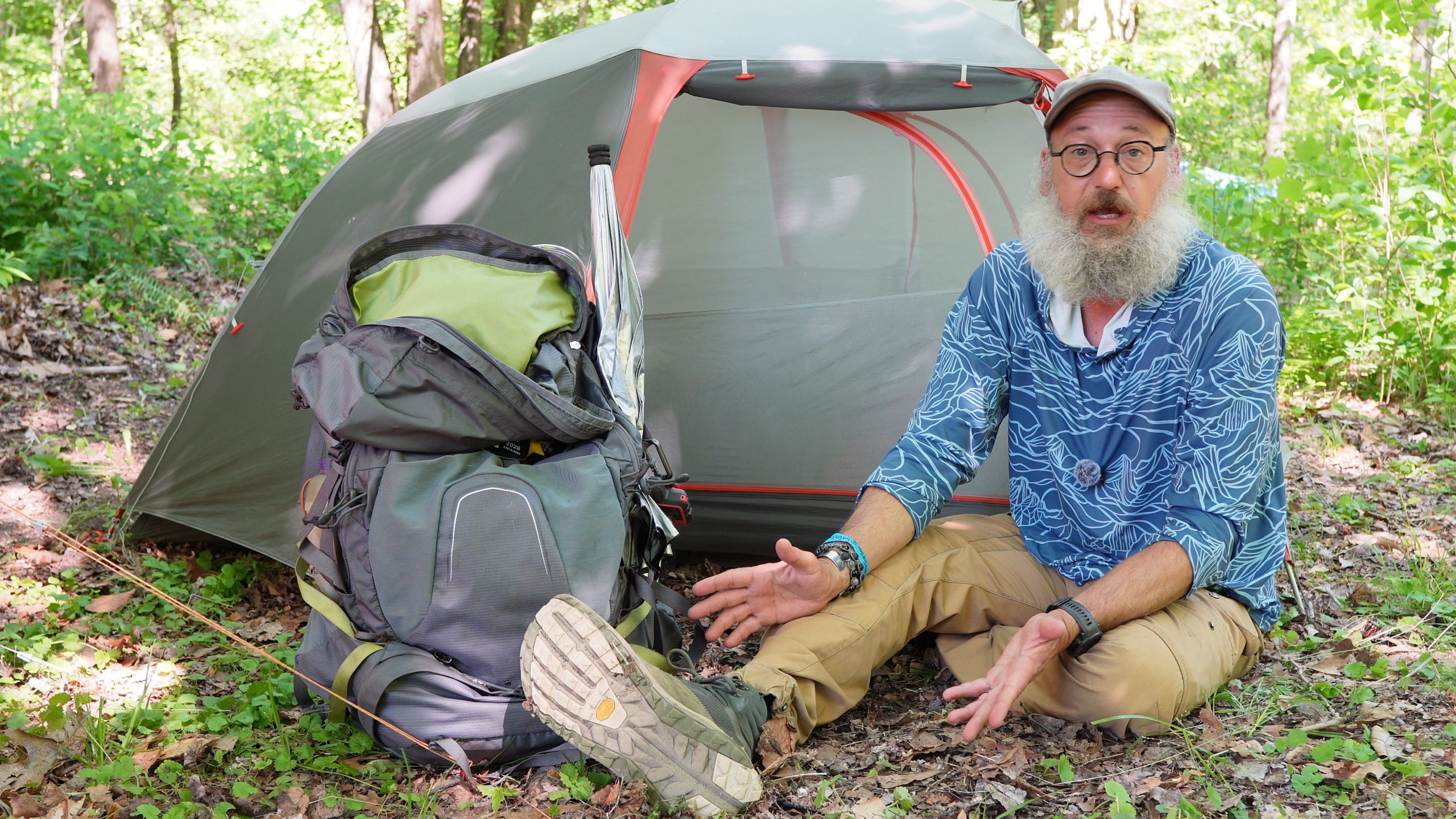
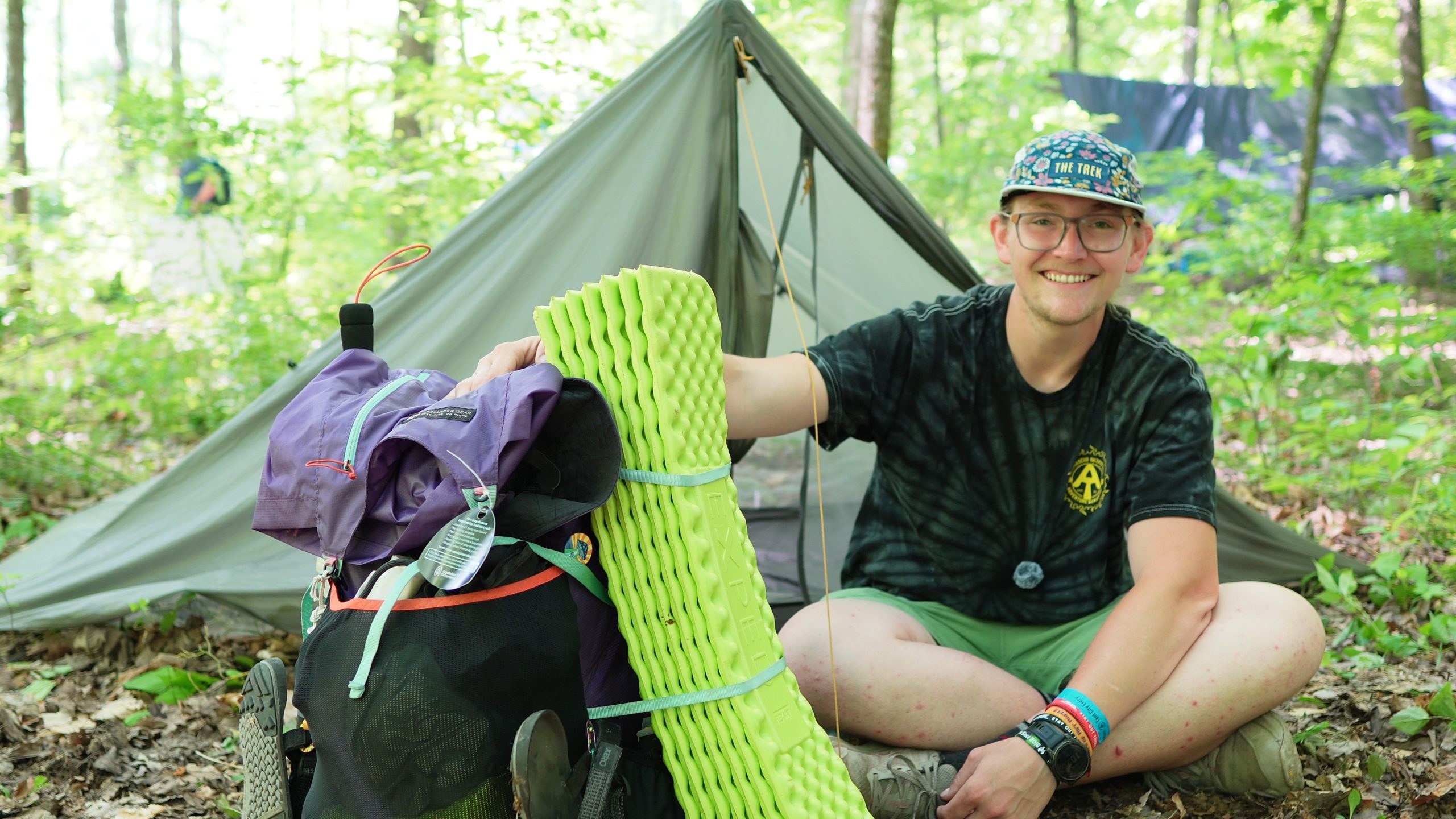
“It’s the Mystic Rage colorway. I obviously chose it because of the sick purple color.
“It’s about two and a half pounds, so not quite there. But I love that it has the AirSpeed on the back. It keeps my back off of the pack. And so this gets wet, but the pack itself doesn’t.
“You’ve got a pack liner anyway, but it’s just for breathability. It’s been fantastic. Fits all my stuff great.
“I’ve been really happy with the pack overall.”
“They had little Gear Aid tape with shapes, so there’s a little Bigfoot patch.”
How Thru-Hikers Chose Their Backpacks
“One thing I dislike about my pack is how sweaty my back gets. The lack of an air vent or any separation is a little rough, but I think I’d be sweating anyway, so it’s kind of a non-issue.”
“Currently I am using an Osprey backpack. It’s right here. It has been with me for a couple of years. I chose it because it’s the one I had at home. I didn’t want to spend the money before going on trail.”
“So the backpack I’m rocking is a Gossamer Gear. And I love them. They are phenomenal gear.”
“I chose the Osprey because it was a plus-size backpack. It is really hard when you’re a bigger person to find equipment that will fit you and fit you well. And it’s specifically designed to fit a bigger body.”
“I wanted a framed backpack that was close to two pounds or less and that fit the criteria. I ordered it, tried it on, and it seemed to fit pretty nicely.”
“So this has been the evolution of my lightweight hiking. As my gear shrunk, so did my bag.”
“I’m going to be changing my backpack in just a couple of days. I have the ULA Catalyst waiting for me at a hostel because it is literally becoming too small for me, too big for me. So I can’t attach it to my hips anymore. So, good news.”
“I really like that it’s relatively waterproof. And it sounds very small, but the zippers on the hip belt are very easy to use. I had a different backpack and the zippers were very hard to use on the hip belt, so switching to this is really, really nice.”
“You know, number one, the thing that sold me right away was the fact that I just love how easy it is to get this out.”
“Why do I love them? It’s everything you need and nothing you don’t. The weight is phenomenal and their customer service is superb. They sent me a replacement bag on trail. So thank you, Gossamer Gear.”
What Thru-Hikers Don’t Love About Their Backpacks
“One thing I did make an adjustment to that I guess would be what I dislike is there’s a little bungee thing in here. I don’t know if it was the proper use for it, but I was using it to kind of keep my water bottle a little bit more secure in here. So I didn’t like that it broke on me right away if that was what it was intended for.
“So I made a little change with it. I added my own little bungee here and good as new. Still love it that way.”
“I wish it was a bit more comfortable when I had heavier loads. When I have full water and food, I’m around 30 pounds. And at that point, it is not as comfortable as I would like.”
“I know that the Hyperlite material is super waterproof. I like having a 40-liter pack as well. And it has a removable hip belt, and I don’t use a hip belt.”
“When I was fit testing a lot of the Dyneema bags and stuff, there’s a lot of weight on your shoulders. I’ve got a bad back, so I carry most of my weight on my hips. This has had the most comfortable hip belt for me.”
“I don’t use a hip belt because I had an inguinal hernia repair surgery. Where the hip belt rides is extremely uncomfortable for me.”
“This is invaluable for me to have because I’m scrawny with no hips and no abs. The longer you hike, the more scrawny you get.”
“They took it in for me. It just feels super comfortable on me. It’s not frameless. I know a lot of really light packs are frameless. This has two rods in it and it just fits me perfect.”
“Of course, like every piece of gear we ever carry, I wish it could be a little bit lighter. But that’s really the only downfall I’ve had with this backpack.”
Would These Thru-Hikers Recommend Their Backpacks?
“I would definitely recommend the Gossamer Gear Gorilla 50 to any thru-hiker. A lot of these ultralight folks, there are smaller options as well. If I were a little more efficient, I could probably rock the 36 or something like that.”
“I would definitely recommend this backpack, especially for anybody that needs to carry more weight on their hips than on their shoulders.”
“I do have a few complaints. I wish the hip belt pockets were a little bit bigger. It doesn’t feel like you can… it’s good for trash. That’s about it.
“And then on the back, I wish this pocket was a little bit bigger and I could shove more into it. It feels like it gets tight really, really quick.
“But overall, those are really the only complaints I have with this bag. It’s treated me very well.”
“I would recommend it if you’re someone who is looking for something ultralight and isn’t ready to spend a whole lot of money on a pack.”
“I would recommend this depending on the hiker. If you’re somebody who is carrying more stuff or going to carry heavier gear but want a lighter pack, this is a good pack to carry heavier weight.
“If you’re somebody who’s not carrying a lot of stuff to begin with, I would say go with a different pack. Go with something that doesn’t have a frame on it.”
Favorite Appalachian Trail Gear and Luxury Items
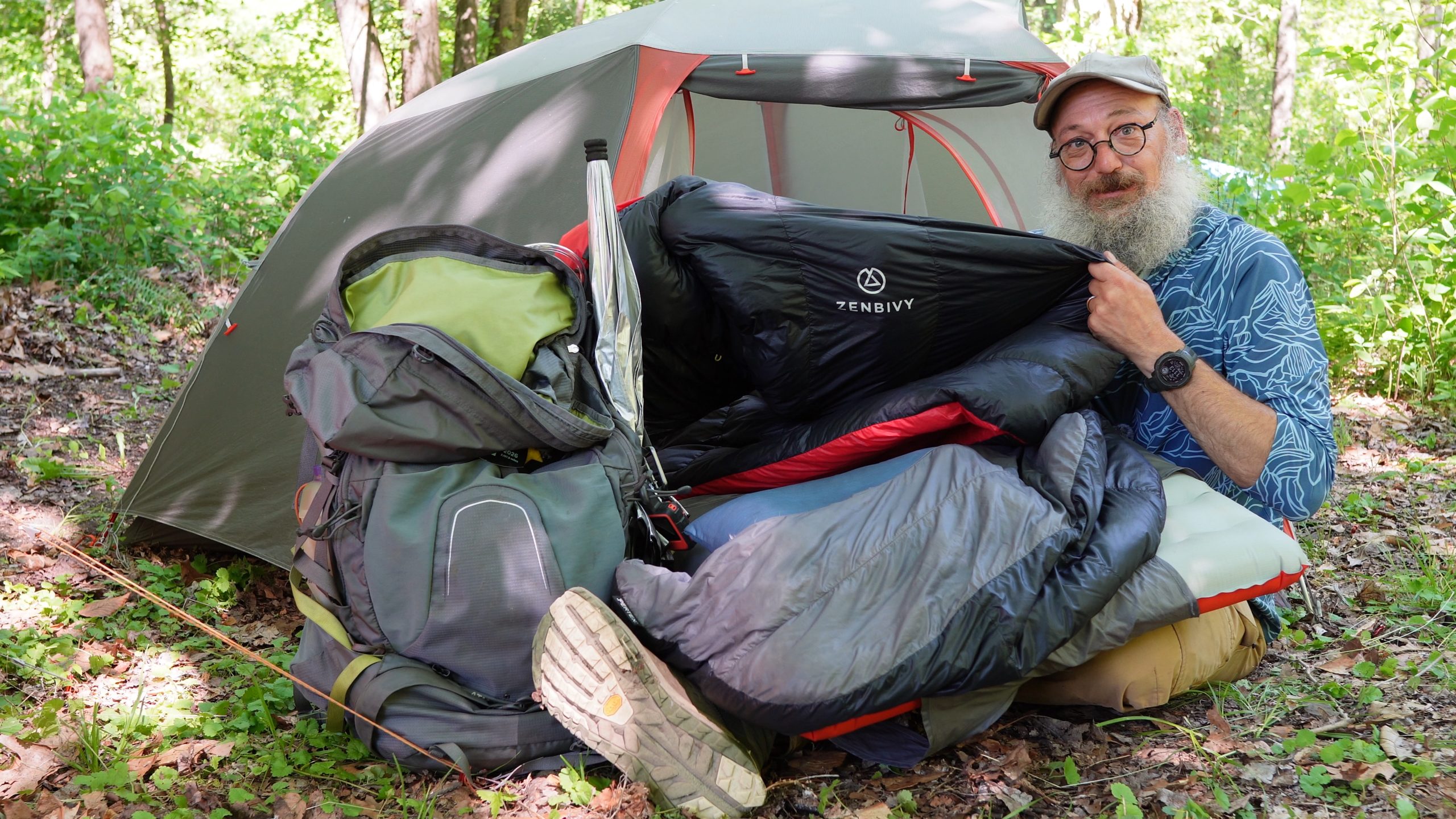
“My favorite piece of gear that I’ve been carrying, I definitely have fallen in love with the Zenbivy system. Having just that amount of mobility you get with this particular sleeping bag, with the Zenbivy system, it was a game changer for me.”
“My favorite piece of gear is actually my butt pad. It’s a Therm-a-Rest Z Seat. I picked it up in Hot Springs. I initially was against having one of these, and honestly it is now my lightest and most favorite piece of gear.”
“My favorite piece of gear is for sure my Enlightened Equipment Revelation quilt. It’s a 20-degree. We had some super cold weather in the Smokies and it was excellent for it.”
“My favorite luxury item? Two pillows.”
“A piece of gear that I really like are my Shokz OpenFit 2. The reason I like these: I’m deaf in one ear, and I know people don’t want people wearing Bluetooth stuff and speakers blaring and everything, but I still want to listen to some music on trail sometimes and listen to Backpacker Radio or something like that.
“So me being deaf in one ear and having this, this allows me to put this in. I can still hear out of this ear.”
“I really think this sit pad is the one. It’s this and a hairbrush. Those are my two luxury items.
“I’ve got long hair and your head gets kind of nasty. It’s nice to scratch the itch without your hands. And the sit pad is just… I don’t like having a wet butt.”
“My favorite piece of gear is right here. Before the trail, I did not have a puffy coat at all. It’s super warm. I wear it every single night.
“And my favorite part of it is that it can carry tons of Snickers.”
“Honestly, that’s all I’m carrying on trail, by the way, is like, am I going to sleep great tonight after I bang out these miles?”
Gear Advice for Future Appalachian Trail Thru-Hikers
“I think if there was one piece of gear that I wish I would have brought, I wish I would have brought my Outdoor Research rain jacket as opposed to my Frogg Toggs.
“I have ripped more holes in my Frogg Toggs in the last two months than I have in the three years that I’ve owned my Outdoor Research rain jacket. So I wish I would have gone with a nicer rain jacket, but I wanted something I could abuse out here.”
“My piece of advice would be to not wait too long to switch out your shoes. I made that mistake and I put 700 miles on a pair of Lone Peaks and my feet were killing me.”
“My piece of advice for the next class would definitely be: do a good gear check. Not just, ‘Oh, a night out in my backyard.’ No, you need to, if that’s what you have accessible, do it when it’s a torrential downpour. Do it when it’s snowing. When it drops below freezing. Cover all your bases within the safety of a local campground or whatever prior to actually getting out here, because when you do have something fail, you need to know how to fix it.”
The Bottom Line
There’s no single best gear list for the Appalachian Trail. These seven hikers carried everything from double-wall freestanding tents to trekking pole shelters and a hammock, and packs from sub-two-pound framed models to a plus-size Osprey. Most were happy with what they chose, and they were candid about what they’d change.
The common thread is fit: a shelter that keeps you dry, a pack that matches your body and how you carry weight, and gear you’ve tested in real weather before you start.
Subscribe to The Trek on YouTube 👉 Click here to subscribe!

This website contains affiliate links, which means The Trek may receive a percentage of any product or service you purchase using the links in the articles or advertisements. The buyer pays the same price as they would otherwise, and your purchase helps to support The Trek's ongoing goal to serve you quality backpacking advice and information. Thanks for your support!
To learn more, please visit the About This Site page.
