
 ">
Wolf Spotted Near PCT in Southern California for First Time in Over 100 Years
GPS collar data has confirmed that a wolf entered the mountains of Los Angeles County last month, making this the first time a wolf has been documented in the area in modern history. This 3-year-old female grey wolf, known to scientists at the California Department of Fish and Wildlife as BEY03F, has made history by venturing further south than any other wolf since her species’ reintroduction to the lower United States in the mid 1990s.
You can watch the footage obtained by the California Department of Fish and Wildlife here, in a news report by CBS News LA.
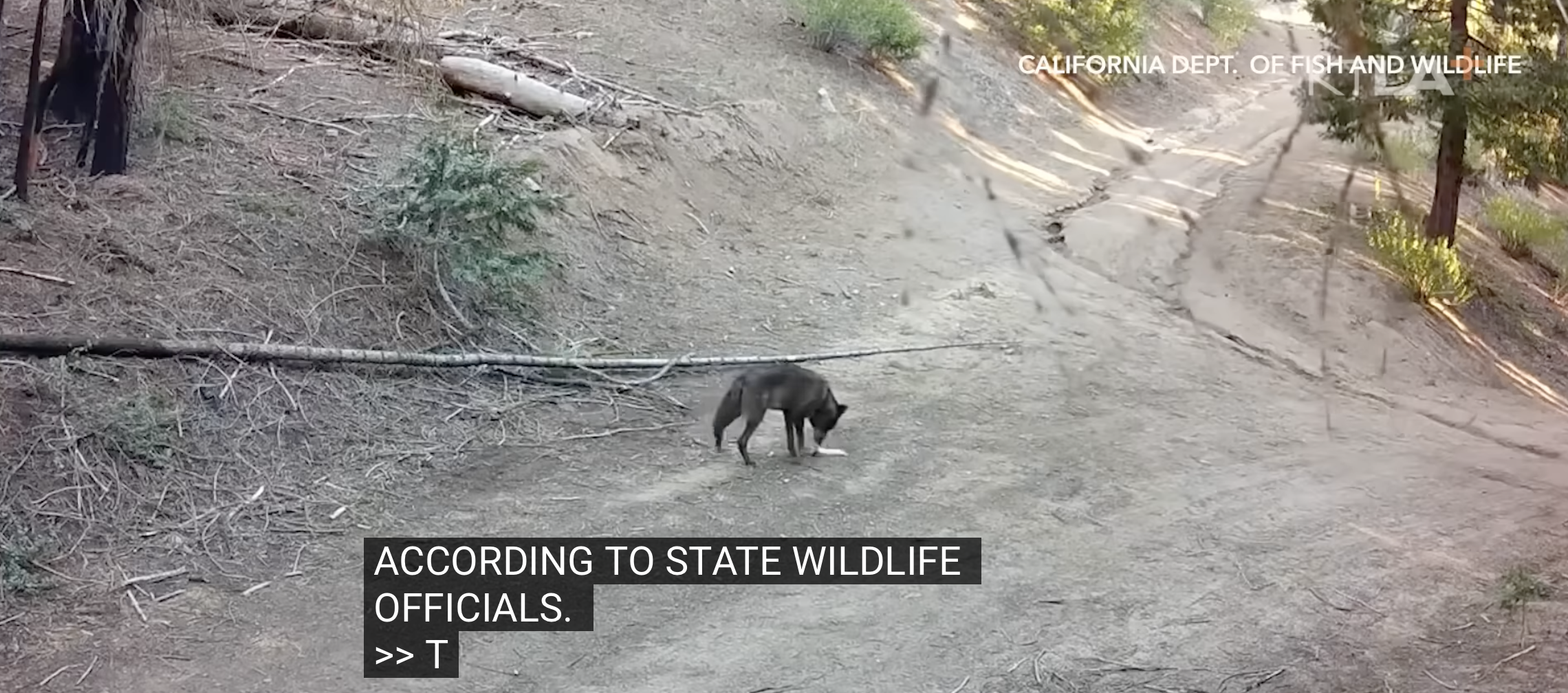
Still image generated from California Fish and Wildlife (CDFW) video footage
The History of Wolves in California
Prior to BEY03F, the last confirmed wolf in California was killed in 1924 in Lassen County, directly east of the Pacific Crest Trail as it passes through Lassen Volcanic National Park.
Wolves were extirpated from the lower 48 states due to human-wildlife conflicts during the westward expansion. As cattle grazing and open-range livestock began to spread west into wolf habitat, wolves, which preyed on these animals, began to be treated as economic threats and were killed in response.
Recovery and Return
With protections under the Endangered Species Act since 1973, reintroduction efforts in the 1990s to Yellowstone National Park and Idaho, and finally the natural dispersal of these wild animals, wolves made their way back into northern California in 2011 and have been slowly repopulating the state ever since.
Maybe even more interesting than being the southernmost wolf in recent history, wolf BEY03F is in some sense a thru-hiker herself.
She was born in northern California’s Plumas County, which sits between Sierra City (a PCT trail town) and Lassen Volcanic National Park (which the PCT travels directly through), and over the last few years, she has traveled the entire length of the Sierra Nevada mountain range, heading SOBO to Los Angeles County.
In her most recent tracking update on February 14th, GPS collar data showed she was moving even closer to the popular trail town of Tehachapi. Currently, she is thought to be in the Tehachapi mountains and moving NOBO towards the Sierra Nevada once again. California Fish and Wildlife experts have said it is likely she is heading north in hopes of finding a mate after not encountering any of her kind this far south.
Can You See a Wolf on the PCT?
For Pacific Crest Trail hikers, particularly those moving through the desert section between the Mojave and the southern Sierra, this development adds a new layer of context to the landscape during the upcoming hiking season.
During previous hiking seasons, four out of the five main sections of trail were known to be wolf habitat: the Sierra, Northern California, Oregon, and Washington. Now, although it’s likely BEY03F will make her way back into the Sierra, the Desert section has been added to this list, making these PCT sections five for five for wolf activity.
Although exciting news, one roaming individual does not automatically classify the desert section of the Pacific Crest Trail as established wolf territory, and hikers should still not expect encounters.
Wolves in general are very elusive animals that tend to avoid humans and are still at very low densities throughout California. Most of what we know about wolf activity is due to GPS collars, camera monitoring, and DNA evidence. Even in areas with established wolf packs, direct visual encounters are still extremely rare. In fact, there are no confirmed observations of wolves by hikers on the PCT.
Think you’ve seen a wolf while hiking on the Pacific Crest Trail?
Report any documentation to local wildlife agencies. Here is the reporting form if your sighting is in California.
BEY03F’s appearance in Los Angeles County represents a significant milestone in California’s ongoing wolf recovery, made even more interesting by her closeness to the Pacific Crest Trail. For thru-hikers, it’s a reminder that the trail passes through landscapes still influenced by wild, wide-ranging animals—the wolves are out there, even if they remain largely out of sight.
Featured image: A grey wolf photographed in the US Midwest in 2011 (not a picture of BEY03F, the wolf in this story). Photo via USFWS Midwest Region.

This website contains affiliate links, which means The Trek may receive a percentage of any product or service you purchase using the links in the articles or advertisements. The buyer pays the same price as they would otherwise, and your purchase helps to support The Trek's ongoing goal to serve you quality backpacking advice and information. Thanks for your support!
To learn more, please visit the About This Site page.

Comments 2
This is good news. And for anyone expressing alarm about hiker safety, here is a trivia question and answer: How many human deaths have there been from wolves in the United States? The answer: none, in over 100 years! Similarly, there is an average 2 to 3 deaths from mountain lions every year, and less than one death per year on average from black bears. That compares to 20 to 22 deaths every year from cows (not including collisions with vehicles, which would make the cow death toll much higher).
Wonderful news. Returning the balance of nature. 100% thrilled.